
ここのところ、大雪に伴う本格的な雪かき非常態勢にかまけていましたが(笑)「四百年間のいのちの履歴書」シリーズ・深掘りは進めてきています。日本全国規模の信長だ、秀吉・家康だという歴史とは位相の違う歴史探究で、いわば血肉の感じられる「庶民史」という新規領域。
前回ブログ(1月6日【故地・入野 入植210年で先祖が、420年で子孫が巡る】)以来、故地についてさまざまな書類に目を通し続けました。そのなかには著名な山陽地域史の研究者・西向宏介氏(当時・広島県立文書館研究職勤務)からの情報や、故地・入野を含む「河内町」の教育委員会・近貞氏からの現地聞き取り探索情報などを詳しく参照させていただいた。〜次兄の探究での大きな反応成果。〜
わたしの世代として6代前の先祖(六世の祖と表現)が、その3代前の祖父で広島浅野藩の「所務役」を務めた祖先の事跡を故地・入野を尋ね書き残した記録書に基づいて家系調査を進めてきている。
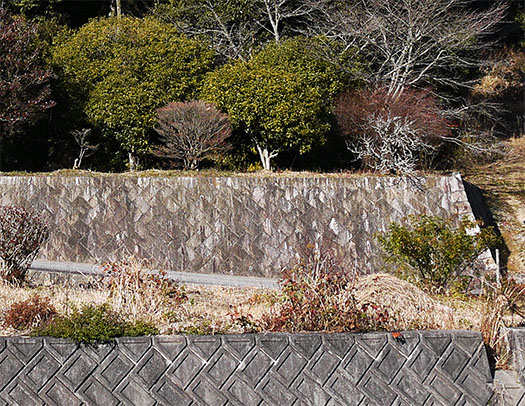
この探究を進めてきて最近気付かされているのが、当地で見続けていた「垣地」のこと。まるで城郭石垣と同様の石垣が家系の墓域と伝わっている場所の麓にあり、古い江戸期の地名にも「北之垣内」という名前が遺されているということ。
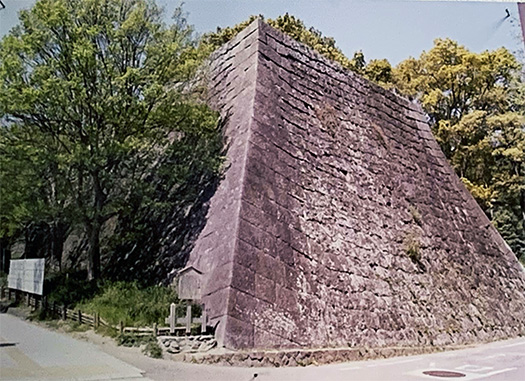
上の写真はその麓の石垣。下の写真はわたしが先年訪れていた紀州・和歌山城。戦国から江戸初期、城郭造りの名人とされた武将・藤堂高虎の築城とされる「高石垣」の様子であります。わたしには土木についての知識はまったくありません。しかし上の写真の最底辺部分には現代の「石垣」が写っていますが、素人目で見ても石垣の造作に時代的な違いがあると思われ、どうも「高石垣」との相似も感じ取れる。
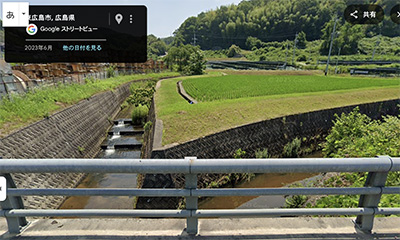
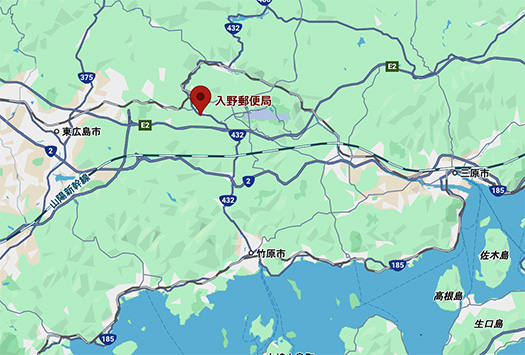
こちらの写真は、GoogleMapから。右側の奥の山地から故地・入野を流れる入野川支流はがっちりと築堤された様子が見て取れる。やや高台の「垣地」といい紀州からこの地に入植した家系は、河川土木管理に対しての一定の技術力と知識をもっていたので転封で広島に国替えきた浅野藩としては、この水害も想定される要衝地に家系を人員配置したという想像。後の時代に関わることになる「塩田」土木技術とも符合する。
「平安期律令制度での駅家が置かれ大宰府と都を結ぶ最重要官道・古代山陽道が通る要衝で、政治・経済・軍事の要として機能し物流・人の往来が活発な地域」であるこの入野の支配管理を重視して、わが家系をこの地に「管理人」として配置したという類推が浮かんできたワケです。
●お知らせ
拙書「作家と住空間」幻冬舎から電子書籍で発刊
お求めはAmazonで。
https://amzn.asia/d/eUiv9yO
English version⬇
Wandering through the 400-year-old ancestral lands of “Iri no” in Kawachi, Higashihiroshima City…
Guided by a Hiroshima Prefecture regional historian who rigorously scrutinized the materials, and focusing on local “insights” and observations. The precision of this flesh-and-blood chronological exploration gradually deepens…
Lately, I’ve been preoccupied with the full-scale snow removal emergency mode triggered by the heavy snowfall (lol), but I’ve been steadily progressing with the in-depth research for the “Four Hundred Years of Life’s Resume” series. This is a different dimension of historical inquiry compared to the nationwide narratives of Nobunaga, Hideyoshi, and Ieyasu—a new frontier, so to speak, of “commoners’ history” where you can feel the flesh and blood.
Since my last blog post (January 6th: [Homestead: Irino – Ancestors Return After 210 Years, Descendants After 420 Years]), I’ve continued reviewing various documents about the ancestral homestead. Among these, I have carefully referenced information from Mr. Kosuke Nishimukai, a renowned researcher of Sanyo regional history (then employed as a researcher at the Hiroshima Prefectural Archives), as well as field investigation and oral history information from Mr. Sadayoshi Chika of the Kawachi Town Board of Education, which includes my ancestral home, Irino. ~ Significant findings from my second brother’s research. ~
As a member of my generation, I have been conducting genealogical research based on records written by my sixth-generation ancestor (referred to as the sixth-generation progenitor) who visited our ancestral home, Irino, and documented the deeds of his grandfather, three generations prior, who served as a “Sokumyaku” (administrative official) for the Hiroshima Asano Domain.
What has recently struck me as I’ve pursued this research is the persistent presence of “kakuchi” (enclosed plots) in this area. Stone walls resembling castle ramparts exist at the base of locations passed down as family burial grounds, and an old Edo-period place name, “Kita-no-Kakuchi,” remains preserved.
The photo above shows the stone wall at that base. The photo below is Wakayama Castle in Kishu, which I visited several years ago. It shows the “Takaishigaki” (High Stone Wall), attributed to the warlord Todo Takatora, renowned for his castle-building skills from the Sengoku period to the early Edo period. I have absolutely no knowledge of civil engineering. However, even to my untrained eye, the very bottom section of the top photo, which shows a modern “stone wall,” appears to have a different construction style from the stone wall, and I can’t help but feel a similarity to the “Takaishigaki.”
This photo is from Google Maps. You can clearly see the embankments firmly constructed along the tributary of the Irino River flowing from the mountainous area in the far right background through the ancestral lands of Irino. The family lineage known as “Kakiji,” who settled here from Kishu on slightly elevated ground, possessed a certain level of technical skill and knowledge in river and civil engineering management. It is conceivable that the Asano clan, transferred to Hiroshima as part of a domain transfer, strategically placed this lineage in this key location, anticipating potential flood damage. This also aligns with the salt field civil engineering techniques that would become relevant in later periods.
This led me to infer that my family lineage was placed here as “administrators” precisely because of the importance placed on governing and managing Irino—a region that functioned as a political, economic, and military hub. It was a vital point where the ancient Sanyo Road, the most important official route connecting Dazaifu and the capital, passed through, established under the Heian period’s Ritsuryo system. It was a place of active logistics and human traffic.
●Notice
My book “Writers and Living Spaces” published as an e-book by Gentosha
Available on Amazon.
共有:

Posted on 1月 11th, 2026 by 三木 奎吾
Filed under: 未分類



コメントを投稿
「※誹謗中傷や、悪意のある書き込み、営利目的などのコメントを防ぐために、投稿された全てのコメントは一時的に保留されますのでご了承ください。」
You must be logged in to post a comment.