本文へジャンプ

【野生への「加虐」〜カモへの虐待「餌付け」証拠発見】


 本日はいつものブログ入力環境にエラーが発生。やむなく発出時間が大幅に遅れました。またちょっと入力のスタイルが変動しているので、もし不具合などありましたら、ご容赦ください。
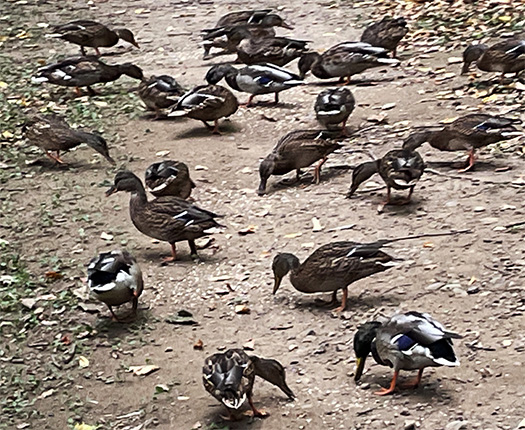
 写真は10/6早朝、札幌の円山公園の「円山川」流路にある池の付近での光景であります。わたしの毎朝の散歩コースのひとつでこの周辺を歩いてきて、池をねぐらとしているカモたちの様子を見させてもらってから、開拓神社〜北海道神宮と参拝して回る順路に当たります。しばらく、この散歩コースはご無沙汰していてたぶん1ヶ月ぶりくらいだと思います。
 で、近づいていくとカモたちの様子に異変が見られた。ふだんは池の周辺であるいは寝ていたり、すこし池に浮かんでいたりするのがかれらの生態なのですが、写真のように多めの数のカモたちが、どうも「エサ」をついばんでいるのです。それも「おお、超ウメエ〜」みたいな嬌声をあげているかのようだったのです。不審に思ってそのかれらに近寄って、写真に収めたのですが、オイオイ、であります。
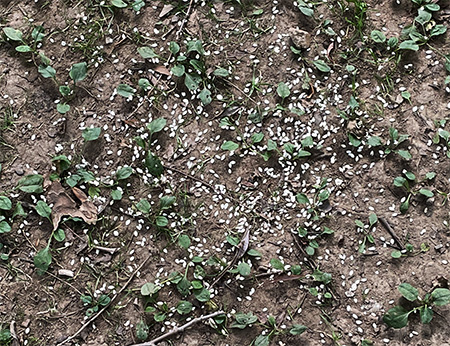
 地面には大量の米粒が散乱されている。
 とんでもない野生動物への禁止行為。たしかにかれらカモたちは人間社会によって改変された自然とは言えない環境に順応しながら、自然動物としての生態を生きている。けれど、それはあくまでかれらが、生き延びる環境として選択した結果であって、人間たちのペットとして生きたいということではない。
 そうであるのに、まことに勝手気ままな人間が、かれらを「餌付け」してしまっている現場だったのです。それも、いま高値で人びとが苦しめられているコメを散乱させてしまっている。
 2重3重に痛苦な現場を見させられてしまった。
 カモたちは「おい、人間どもはこんなウマいものを食っているのか」と大騒動しているように感じられた。最近のヒグマの行動の背景に、無分別な人間の給餌行為が一因としてある、と情報発信されていますが、まことにとんでもない悪行。
 このあと、神社参拝で、この不埒な人間の行為について深く心中で謝っておりました。このように「告発」することで、なにとぞこうした行為について反省されて、悔い改めていただきたいと祈念します。

●お知らせ
拙書「作家と住空間」幻冬舎から電子書籍で発刊
お求めはAmazonで。
https://amzn.asia/d/eUiv9yO
English version⬇

【“Cruelty” to Wildlife: Evidence Found of Duck Abuse Through “Feeding”】
Feeding wild animals is an act that destroys the “rules” between human society and wildlife. It may also impact the brown bear incident. Absolutely unacceptable. …

 Today, an error occurred in my usual blog input environment. This unfortunately caused a significant delay in posting. Also, my input style has changed slightly, so please bear with me if you encounter any issues.
The photo shows the scene near a pond along the Maruyama River channel in Sapporo’s Maruyama Park, taken early on October 6th. This area is part of my regular morning walking route. After observing the ducks that make the pond their roost, I proceed to visit the Kaitaku Shrine and Hokkaido Shrine. I hadn’t taken this route for a while—probably about a month.
As I approached, I noticed something unusual about the ducks. Usually, they’re either around the pond’s edge, sleeping, or floating a bit on the water—that’s their normal behavior. But as you can see in the photo, a larger-than-usual number of ducks were pecking at something. And they seemed to be doing it with what sounded like cries of delight, like “Oh, this is super yummy~!” Feeling suspicious, I approached them and took this photo. But hey, wait a minute.
The ground was littered with a huge amount of rice grains.
 This is an outrageous act of feeding wildlife. True, these ducks have adapted to an environment altered by human society, one that can hardly be called natural, while still living out their natural animal behavior. But that is solely the result of their choice of a survivable environment; it is not that they wish to live as pets for humans.
And yet, this was a scene where truly selfish humans had gone and “fed” them. And what’s more, they were scattering rice—a staple now suffering from high prices that cause people hardship.
I was forced to witness a scene of double, triple suffering.
The ducks seemed to be in an uproar, as if saying, “Hey, are humans eating something this delicious?” Recent reports indicate that reckless human feeding practices are one factor behind the recent bear activity. Truly an outrageous misdeed.
 Afterwards, while visiting the shrine, I deeply apologized in my heart for this unconscionable human behavior. By “exposing” it like this, I pray that people will reflect on such actions and repent.

●Notice
My book “Writers and Living Spaces” published as an e-book by Gentosha
Available on Amazon.

Translated with DeepL.com (free version)

【明治後期、幼な子連れの北海道移住・家づくりのリアル】


 本日目覚めたら、Facebookから「新しい才能」バッジを獲得しました、という知らせ。
 「え? わたしそれほど<新しく>ない前期高齢者ですが・・・」と脳ミソは反応していたのですが、ブログ表現者として先方のメガネに適ったと言うことだそうです。ありがたく。一応、ご報告いたします。
 で、本日もふたたび「カラー化」による過去時間のリアルタイム化探索であります。
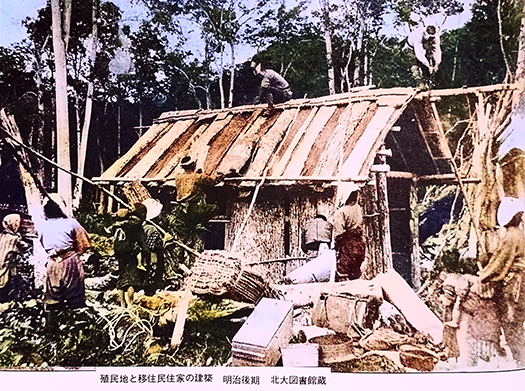
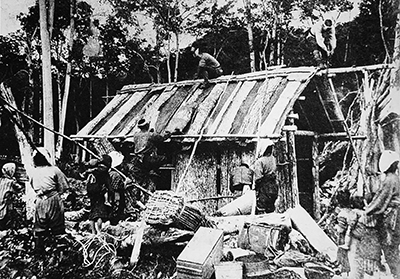
 写真は北海道大学図書館所蔵の「殖民地と移住民住家の建築」と題された記録写真と、その当時の空気感に迫りたいということからモノクロ画像のカラー化を試みた画像&元画像。
 この明治後期という時代には、わたしの家系、祖父が北海道岩見沢市郊外の栗沢に入植した。もちろんその時代の「写真」は、ごく一部の写真専門家が特殊な機材を持参して撮影したもの。なので、わが家系にはそうした伝承写真などはまったくありません。しかし時代背景と「殖民地(入植地)」の雰囲気はほぼ同様だと思える。
 わたしの家系は30代早々の祖父と祖母、幼子2人という家族で入植したので、その居所(住宅というにはあまりにDIY的簡素さ)の建築に当たって、この写真のように近隣の方々にお手伝いいただいたことが推定できる。
 移住に当たっては郷里・広島県備後地域の地縁のある北海道先住の方を手づるにしたということなので、概ねこのような光景が展開していただろうと思われるのですね。蓋然性がきわめて高い。

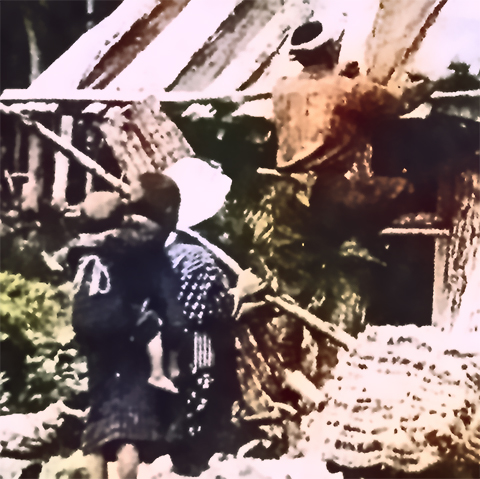
 モノクロ写真を凝視していたら、幼子が背中におぶさっている。その足がほんのりとカラー化されて、心象が強く刺激されてくる。わが家系でもわたしの伯母にあたる幼子がこのように背負われていたに違いない。やはり写真からの情報伝達が一気に「血肉化」してくるような気分。
 明治後期の北海道移住、そのリアルタイム感が迫ってくる。
 しかしそれにしても、本州温暖地での「小屋組」での簡素な家。
 極寒の北海道で、こういう小屋に住み暮らし始めた血脈の人びとの辛苦が深く胸に迫ってくる。

●お知らせ
拙書「作家と住空間」幻冬舎から電子書籍で発刊
お求めはAmazonで。
https://amzn.asia/d/eUiv9yO

English version⬇

The Reality of Late Meiji-Period Migration to Hokkaido with Young Children and Building Homes
Our ancestors boldly migrated to snowy, frigid Hokkaido with these DIY log cabins. Chronologically, this perfectly aligns with my own family lineage. …

 Woke up today to find a notification from Facebook saying I’d earned a “New Talent” badge.
My brain reacted with, “Huh? I’m not exactly —I’m a pre-elderly person…” but apparently it means I fit their criteria as a blog writer. Grateful for that. Just thought I’d share.
 And so, today once again, it’s an exploration of bringing past times into real-time through “colorization.”
The photos are from the Hokkaido University Library collection titled “Architecture of Colonies and Immigrant Settlements.” I attempted to colorize these monochrome images to capture the atmosphere of that era, along with the original images.
 During this late Meiji period, my family lineage—my grandfather—settled in Kurisawa, on the outskirts of Iwamizawa City, Hokkaido. Naturally, “photographs” from that era were taken only by a handful of specialized photographers who brought their own equipment. So, my family has absolutely no such inherited photographs. However, the historical context and the atmosphere of the “colony (settlement)” seem almost identical.
 My family settled there as a small household: my grandfather and grandmother in their early 30s, and two young children. When building their dwelling (too DIY and simple to call it a house), it’s reasonable to assume they received help from neighbors, much like in this photo.
For the migration, they reportedly used connections to existing Hokkaido settlers with ties to their hometown region of Bingo, Hiroshima Prefecture. So, scenes like this were likely common. The probability is extremely high.
Staring intently at the black-and-white photo, I notice a young child being carried on someone’s back. The child’s legs are faintly colored, powerfully stirring my emotions. In my own family, my aunt as a child must have been carried like this. It feels as if the information conveyed by the photo suddenly becomes deeply personal.
 The real-time sense of late Meiji-era migration to Hokkaido presses in.
Yet even so, a simple house built with a “small frame” in the warm regions of Honshu.
The hardships endured by the bloodline who began living in such huts in the bitter cold of Hokkaido deeply move me.

●Notice
My book “Writers and Living Spaces” published as an e-book by Gentosha
Available on Amazon.


【記録写真から時空間旅行〜三浦綾子・静狩峠記念館】


 先日来、チャレンジ中の「モノクロ画像のカラー化」による人間意識の考察。
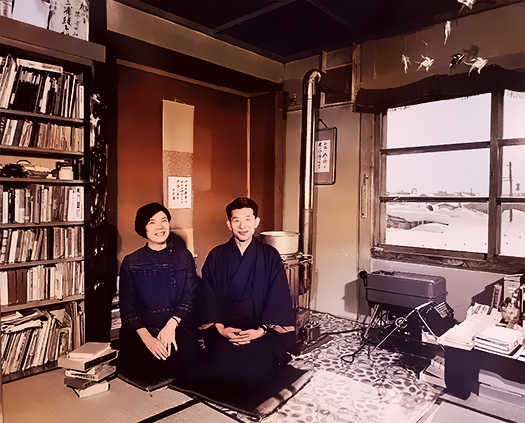
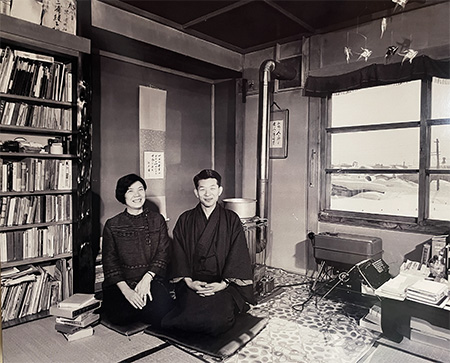
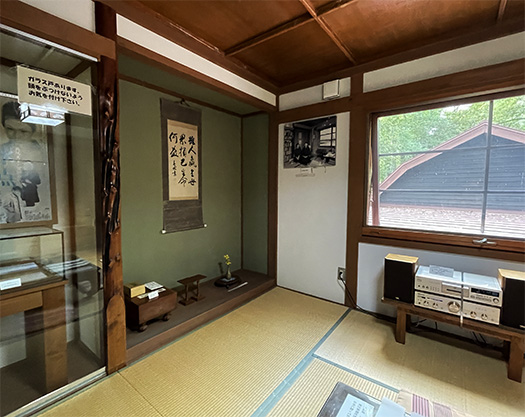
 ひとつの実験として、写真撮影OKだった表題の記念館で展示されていた1枚のモノクロ写真と、そしてシーンとして復元されていた作家の執筆表現の「空間」を事例としてみた。
 こちらの塩狩峠記念館は三浦綾子のヒット小説「塩狩峠」にちなんで、作品執筆の場であった店舗併用住宅を、旭川市内から物語の舞台である塩狩峠に移築保存させたもの。主人公の鉄道員が塩狩峠駅に勤務していたその駅舎の背後、小高い丘の上に立地している。背景シーン感も抜群。
 ここは春の花見シーズンには道北屈指の観桜人気スポットでもある。
 写真上は作家とご主人のツーショット。ご主人は病身であった彼女の「口述」を筆記することで、いわば二人三脚で彼女の作家活動を支えていた。口述筆記とひとことで言うけれど、実際に想像してみるとその困難さがよくわかる。やはり強い「相見互い身」という心象があって初めて成立するものだと思う。
 そうすると、その作品生産の場の「雰囲気・空気感」というものに興味が深まる。まさに人間性と情報生産の「結節点」。それを可能な限りに「再生」させることを来訪者としては願う。
 そんな狙いから、モノクロ写真のカラー化をこころみてみた次第。
 受け取るのは感覚領域なので明晰に数値化できる事柄ではないけれど、やはり「臨場感」は格段に高まるし、当然ながら「時間」の超越感はある。いま現代にその人たちが「生き続けている」感覚。
 言ってみればモノクロ写真は記録であるけれど、カラー化写真からは生命感がそこに復元する。さまざまな内語での「対話」が生まれ出てくる気分。撮影した時の撮影者と被写体の2人のコトバのやり取りにまで意識が向かっていく。

 そして現実の「空間」としてはこのように復元され、その空気感を体感することができる。
 作家記念館という場所では、超越的な空間体験を持つことが可能。カラー化はさらにそれを加速させる効果があると思える。・・・人間の記憶領域を求めて、さらに(笑)。

●お知らせ
拙書「作家と住空間」幻冬舎から電子書籍で発刊
お求めはAmazonで。
https://amzn.asia/d/eUiv9yO

English version⬇

【Journey Through Time and Space via Archival Photos: The Miura Ayako Shizukari Pass Memorial Museum】
The colorization of monochrome images that “restores and revives” the lives of myself and my family. What about a writer’s memorial museum? An example…

 Recently, I’ve been exploring human consciousness through the challenge of “coloring monochrome images.”
As one experiment, I examined a monochrome photograph displayed at the memorial hall mentioned in the title—where photography was permitted—and the “space” where the author’s writing process was recreated as a scene.
 This Shioharidōge Memorial Hall commemorates Miura Ayako’s bestselling novel Shioharidōge. The house-cum-shop where she wrote the work was relocated and preserved from Asahikawa City to Shioharidōge Pass, the story’s setting. It sits atop a small hill behind the station building where the protagonist, a railway worker, served at Shioharidōge Station. The backdrop scene is truly outstanding.
During spring’s cherry blossom season, this spot is also one of northern Hokkaido’s most popular viewing locations.
 The photo above shows a two-shot of the author and her husband. Her husband supported her writing career by transcribing her dictation, as she was in poor health, working together as one. While we call it dictation, imagining the actual process reveals its immense difficulty. I believe it could only succeed through a profound sense of mutual understanding and support.
This deepens my interest in the “atmosphere and ambience” of this place where the work was produced. It was truly the “node” connecting humanity and information production. As a visitor, I hope to “recreate” this as fully as possible.
With that aim in mind, I attempted to colorize the monochrome photographs.
While perception resides in the realm of sensation and cannot be precisely quantified, the sense of “presence” is significantly heightened, and naturally, there’s a transcendence of “time.” It creates the feeling that these people are “still alive” in the present day.
 You could say monochrome photos are records, but colorization restores a sense of life to them. It feels like various internal “dialogues” emerge. My awareness even extends to the exchange of words between the photographer and the subject at the moment the photo was taken.

 And as a tangible “space,” it has been restored in this way, allowing visitors to experience its atmosphere firsthand.
At this writer’s memorial museum, one can have a transcendent spatial experience. The colorization seems to further accelerate this effect… seeking the realm of human memory, and beyond (laugh).

●Notice
My book “Writers and Living Spaces” published as an e-book by Gentosha
Available on Amazon.

【事業譲渡後2年。ステージの変化へ】


 昨日は関係会社の「新年度」スタートアップ会議ということで、2年前に社員一同から「蕎麦打ち」セットを送られていたのに一度もふるまいを出来なかった罪滅ぼしに、スタッフ全員に手料理をプレゼント。
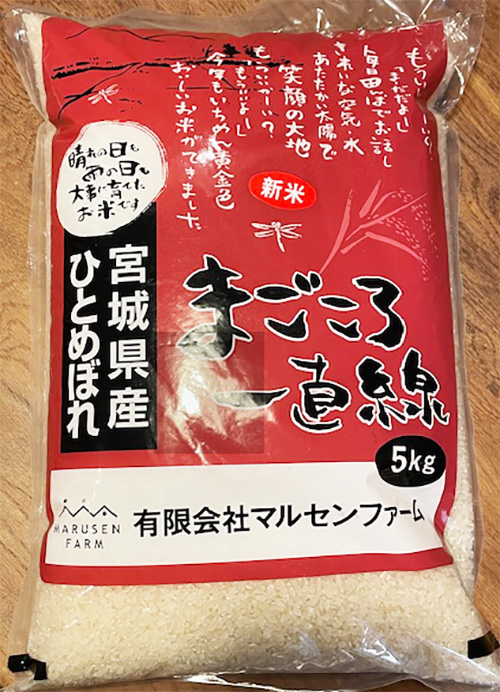
 メニューは、先日ご紹介した宮城県産の新米「ひとめぼれ」による「おにぎり」と、具だくさんに仕立てたあったかお蕎麦のセットメニュー。総数22人へのふるまいなので、おにぎりは40個ほど、お蕎麦は山菜類各種、タケノコ、キノコ類3種類、ゴボウなどなど12-3種類の具を煮込んだ蕎麦汁を超大鍋でつくった。
 わたしは普段食では主食のコメは十穀米のようにして食べているけれど、より新米の味を引き立てるように昨日は合計で1.6升ほどをコメだけで炊いた。炊飯器は5.5合リミットですが、加水少なめでOKの新米なので6合程度を一度で炊くのを3回。残ったお米はわたしたち夫婦でパクついた。カミさんダイエットの敵(笑)。
 会議前のお昼時、息抜きしていただけたものと思います。
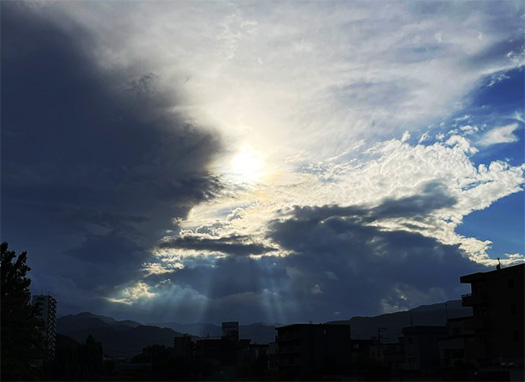
 さて上の写真。天は、その運気を「天気」として表すのでしょうか。写真は一昨日の散歩道での琴似発寒川からの見晴らしで見た光景。「天使の階段」と言うには光線は2スジ程度と少なめですが、なかなか幻視的。
 いろいろな人生模様があっての高齢期ですが、まぁ気分的には区切りに差し掛かってきたかと。
 どうしても自分自身のことよりも、手掛けてきた事業とスタッフのことが気に掛かり続けてきたのですが、本格的に「フリー」な立場で自分の活動を再構築したい。この間でいろいろ情報収集していた資料類も、ようやく昨日から整理整頓を始めていました。ジミジミと、自分自身の目的意識を明瞭にしていきたいと思います。
 アメリカにも先駆けて、アマテラスの国・日本で女性総理が実現しそうなことも暗示的かも。天との対話、天の定める天運を見続ける人生航路も面白そうかなぁ・・・。

●お知らせ
拙書「作家と住空間」幻冬舎から電子書籍で発刊
お求めはAmazonで。
https://amzn.asia/d/eUiv9yO

English version⬇

【Two Years After the Business Transfer. Moving to the Next Stage】
There are moments when I gaze at the sky and become captivated by its ever-changing expressions. The LDP leadership election also brought scenes I’d never seen before. Well, change is constant. On to the next stage. …

 Yesterday was the startup meeting for the new fiscal year at our affiliated company. To make up for never having served the soba-making set we received from all employees two years ago, I treated the entire staff to a homemade meal.
The menu featured rice balls made with the new Miyagi Prefecture rice variety “Hitomebore” I introduced recently, paired with a set of hearty, warm soba noodles loaded with toppings. Since it was for 22 people, I made about 40 rice balls. For the soba, I prepared a huge pot of broth simmered with 12-13 kinds of ingredients: various wild mountain vegetables, bamboo shoots, three types of mushrooms, burdock root, and more.
 While I usually eat rice mixed with ten grains for my staple food, I cooked about 1.6 sho (approx. 2.7 liters) of plain rice yesterday to better highlight the new rice’s flavor. My rice cooker has a 5.5-cup limit, but since new rice requires less water, I cooked about 6 cups at a time, three times total. My wife and I polished off the leftover rice. The enemy of my wife’s diet (laugh).
 I hope it served as a nice break for everyone during the lunchtime meeting.
Now, about the photo above. Does heaven express that fortune as “weather”? The photo shows the view from Kotoni Hassamu River during my walk the day before yesterday. While the light beams are a bit sparse for calling it “Angel’s Staircase,” it’s quite ethereal.
 Old age comes with all sorts of life patterns, but emotionally, I feel like I’m approaching a turning point.
I’ve always been more concerned about the business I’ve built and my staff than myself, but now I want to seriously rebuild my activities from a truly “free” position. I finally started organizing the materials I’ve been gathering over this period yesterday. I want to steadily clarify my own sense of purpose.
 It might also be symbolic that Japan, the land of Amaterasu, could see a female prime minister before America. A life journey of dialogue with the heavens, of watching the celestial destiny they decree, sounds intriguing too…

●Notice
My book “Writers and Living Spaces” published as an e-book by Gentosha
Available on Amazon. 


【北海道集団移住の新十津川の子が描く未来形】


 先日訪れていた「新十津川」の開拓記念館で出会った印象的な絵。
 「母村」奈良県十津川の記録的大水害から北海道への集団移住を決意して、新天地を切り開いてきたひとびとのことは、北海道人として強い同胞感を持っている。それまでの日本社会が定住開発できにくかった寒冷な北海道で、必死に開拓努力されてきたことは、強く共感を刺激される。
 一方で最大人口1.6万人にまでなった新十津川は現在6,000人台で人口が推移。<昭和30年の16,199人をピークに長期的に減少傾向にあり、令和2年には6,484人。>
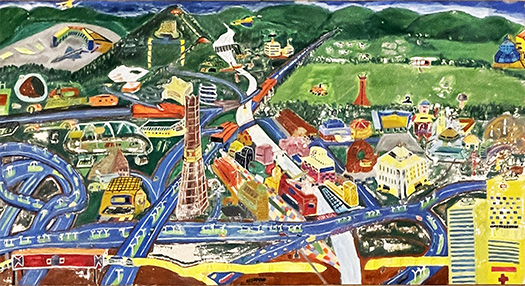
 この絵は、その新十津川の小学校6年生の生徒たちがイマジネーションたくましく、新十津川の輝かしい未来を描いたものです、という説明文が添えられていた。
 一見して、交通手段というものへの強い憧憬がうかがわれた。移動交通という発展方向へのシンプルなキャッチアップ姿勢。画面中央には石狩川が描かれ町の中心を流れている。その流路を横断して道央圏・滝川市への大動脈幹線道路。そしてタテ方向には画面下部の先に札幌都市圏への幹線道路。町中にも立体の道路ICが描き出されている。さらには航空施設と見なせる図も示されている。幹線道路の交差点にあたる位置には、一見テレビ塔とも思える高層建築。
 いかにもな、近現代の社会目線に則した利便性重視「都会化」が未来目標と感じられる。わたしたち現代人の持っている「地域発展」という概念がビジュアル化されたものだと受け止められた。こどもたちの「イマジネーションたくましく」というよりも当然ながら現代のオトナ社会からの教化が反映されたものと思えた。


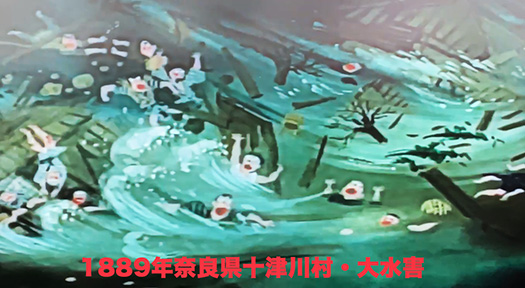
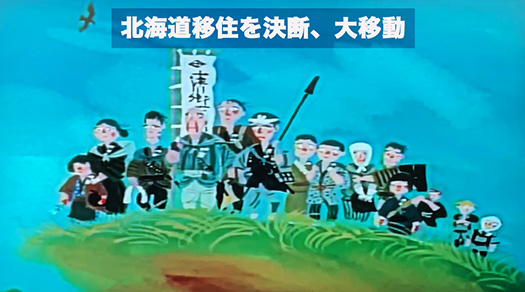
 ひとの「思い」というものはビジュアル表現で明示される。こちらのイラストは同じ新十津川の開拓記念館で見た「母村」を襲った大水害と、移住決意のイラスト表現。いかにも切実な未来投企姿勢。
 このような表現を超えて、リアリティを持って「未来のカタチ」を想像する必要がある。オトナたち、あるいはもうすぐ辞世する高齢年代こそは、もうちょっと「面白み・人間味のある」未来形を示すべきか、と。

●お知らせ
拙書「作家と住空間」幻冬舎から電子書籍で発刊
お求めはAmazonで。
https://amzn.asia/d/eUiv9yO

English version⬇

【The Future Envisioned by Children in Shintotsukawa, Hokkaido’s Group Relocation Project】
A sudden doubt arises about the future shape modern society so casually presents to children. Is this really an exciting future? …

 An impressive painting I encountered at the Shin-Totsukawa Pioneering Memorial Museum I visited recently.
As a native of Hokkaido, I feel a strong sense of kinship with the people who decided to collectively migrate to Hokkaido after the record-breaking flood disaster in their home village of Totsukawa, Nara Prefecture, and who carved out a new frontier. Their desperate pioneering efforts in the cold climate of Hokkaido, where Japan’s society at the time struggled to achieve settled development, deeply resonate with me.
 Meanwhile, Shin-Totsukawa, which once reached a peak population of 16,000, now hovers around 6,000. It has been in long-term decline since its peak of 16,199 in 1955 (Showa 30), reaching 6,484 in 2020 (Reiwa 2). >
The accompanying description stated: “This painting depicts the bright future of Shintotsukawa, imagined with great creativity by sixth-grade elementary school students from the town.”
At first glance, a strong yearning for transportation was evident. A simple desire to catch up with development focused on mobility. The central Ishikari River flows through the town’s heart. Crossing its course is a major arterial highway connecting to the central Hokkaido region and Takikawa City. Running vertically toward the Sapporo metropolitan area is another main artery visible at the bottom of the image. Multi-level road interchanges are depicted within the town itself. Additionally, what appears to be an aviation facility is shown. At the intersection of these highways stands a tall structure that could be mistaken for a television tower.
 This clearly reflects a future goal of modern, convenience-focused “urbanization” aligned with contemporary societal perspectives. It felt like a visual representation of the concept of “regional development” held by us modern people. Rather than children’s “robust imagination,” it seemed, unsurprisingly, to reflect the indoctrination from contemporary adult society.

 Human “thoughts” are explicitly conveyed through visual expression. This illustration depicts the devastating flood that struck the “home village” and the decision to relocate, both seen at the same Shintotsukawa Pioneers’ Memorial Museum. It embodies a profoundly earnest attitude toward envisioning the future.
 We must go beyond such expressions and imagine the “shape of the future” with realism. Shouldn’t adults, or rather the elderly generation nearing the end of their lives, show a future form that’s a bit more “interesting and human”?

●Notice
My book “Writers and Living Spaces” published as an e-book by Gentosha
Available on Amazon.


【AIなどの活用で「時間を超える」探索へ】


 長寿社会になってきて、高齢期の過ごし方というものが変容してきている。
 これまでの社会常識としてある程度の年齢になれば「引退」が自然な流れだったものが、個人によって大きくバラツキはあるけれど、全体として健康で長生き出来る人が増えてきた。そういう人間にとって「サンデー毎日」(一種自虐的なコトバだけれど、毎日が日曜日という意)ではオモシロくない。
 わたし自身も半ばそういった状況になってきていますが、現代のAIなどを活用した「進化」によっていろいろ可能性が広がっていく中で、画像による人生整理・整頓に興味を持っています。
 まぁ簡単に言えば「来し方行く末」に思いを致すということ。それに最新技術が利用できる。
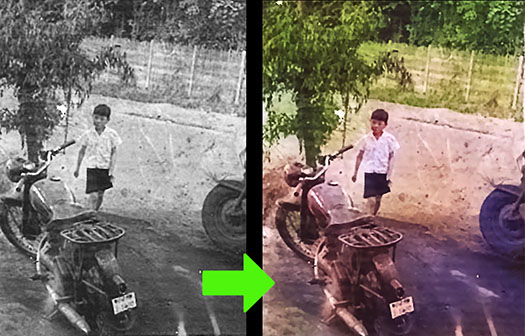
 写真はわたしの小学校入学前か、入学直後の70年近い過去写真ですが、それにPhotoshopの「カラー化」テックを利用して現実感を「復元」させてみたモノ。
 印象は人によって大きく違うでしょうが、写真雑誌を作ってきた人間としては、この「時間復元」の切り口に非常に強く惹かれています。リアリティの追体験・その入口。
 写真という画像保存技術は人類史でも特筆すべき「革命」だったでしょうが、モノクロ写真がカラー化することで、リアリティ認識・復元レベルがさらに深化する。

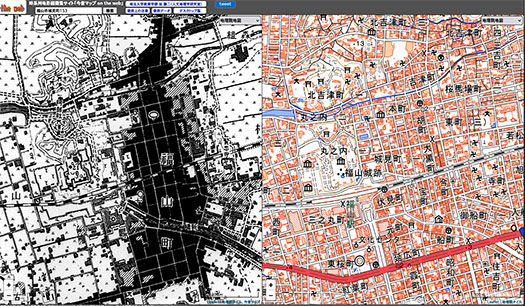
 一方、こちらは「過去の街並み」を記憶復元させてくれるデータベース型のサイトの様子。わたしの祖父から以前の血縁は広島県福山市周辺、備後地方で生きていたのですが、祖父が北海道に移住してくる直前、1905(明治38年)段階で特定された「居住地」周辺の過去地図と、現在地図の対比画像。
 住宅雑誌では豊富なカラー写真で「空気感」も表現する、という姿勢でやっていましたがそういった「志向性」が、過去時間に対しても機能するようになってきた。同時に「空間性」という面で、地図探索の深化も大いにパワーを与えてくれる。
 人間の「時間を超える想像力・探索力」が大きく次元レベルでの進化が起こっている。深く興味を刺激されてきています。

●お知らせ
拙書「作家と住空間」幻冬舎から電子書籍で発刊
お求めはAmazonで。
https://amzn.asia/d/eUiv9yO

English version⬇

【Using AI and Other Technologies to Explore Beyond Time】
The invention of photography triggered a dramatic revolution in human consciousness. Advances in AI technology further deepen its potential. By harnessing this, we aim to bring the past to life. …

 As society ages, the way people spend their later years is changing.
While it used to be common sense that reaching a certain age meant “retirement” was the natural path, there’s now greater variation among individuals. Overall, more people are living longer and healthier lives. For such individuals, a “Sunday Every Day” (a somewhat self-deprecating term meaning every day feels like Sunday) isn’t very interesting.
 I myself am approaching this stage, and as modern “evolution” driven by AI and other technologies expands possibilities, I find myself drawn to organizing and tidying up one’s life through images.
Simply put, it’s about reflecting on the past and contemplating the future. And the latest technology can be used for this.
This photo is from nearly 70 years ago, either before or just after I entered elementary school. I used Photoshop’s “colorization” technique to “restore” its sense of reality.
 Impressions will vary greatly from person to person, but as someone who’s worked on photo magazines, I find this “time restoration” approach incredibly compelling. It’s a re-experience of reality, an entry point into it.
Photography as an image preservation technology was surely a remarkable “revolution” in human history. Now, by colorizing black-and-white photos, the level of reality perception and restoration deepens further.

 On the other hand, this is a database-type site that helps reconstruct memories of “past streetscapes.” My grandfather and earlier relatives lived around Fukuyama City in Hiroshima Prefecture, in the Bingo region. It shows comparison images of past maps around the “residence” identified in 1905 (Meiji 38), just before my grandfather migrated to Hokkaido, and current maps.
 While residential magazines have pursued an approach of conveying “atmosphere” through abundant color photography, this same ‘orientation’ now functions effectively with respect to past time. Simultaneously, in terms of “spatiality,” deepening map exploration provides tremendous power.
Human “imagination and exploration capabilities transcending time” are undergoing a major dimensional-level evolution. This deeply stimulates my interest.

●Notice
My book “Writers and Living Spaces” published as an e-book by Gentosha.
Available on Amazon.

【大都市札幌「ヒグマ出没・事故」での生活危機】


 朝夕はすっかり冷気を感じるように季節が進んできている札幌。
 散歩道では落ち葉が吹き溜まっている光景も目にするようになって来ました。
 そういうなか、図はわが家から直線距離2−3kmのヒグマによる傷害事件発生箇所。
 早朝散歩に勤しんでいる前期高齢者ですが、散歩道選択では最近は交通繁華な都市環境を選択するようになってきた。やはり最近のヒグマ出没・襲撃被害の多発、自衛行動が背景。
 札幌は南側全域が山地になっていて藻岩山〜手稲山にかけての広大な森林地帯が後背地。その森林隣接地が今年はヒグマの出没によって「注意報」発令地域になってしまっている。
 わたしの生きてきた70年以上を通して、こうしたヒグマ注意報の記憶はない。
 札幌市のLINE広報を受信していますが、ことしはヒグマ情報ニュースのオンパレード。札幌市の中でももっとも緑地の多い南区が中心なのですが、徐々に緑に隣接する全住宅地に拡散してきている。
 ヒグマに対しての防護策は開拓期アメリカのように各人が銃器を持って自衛するなどはもちろん論外で、ひたすら公共対応しかないのですが、わたしたち市民生活の側でも大いに「変容」影響が出てこざるを得ない。
 先日は「夜に犬の散歩で家の近くの公園を散歩していて」ヒグマに襲撃された方もいた。
 こういった人間行動の制約条件は今後とも「恒常化」せざるを得ない。知床の殺害事件などを受けてことしの「観光客数」はどのように推移しているのか、社会全体で都市計画レベルの対応を迫られてくるのではないか。
 これまでは「自然景観」というものが最高の「暮らしの彩り」と認知されてきたものが、根底的に変容する可能性がある。安全環境という価値観が再優位になってくる可能性が高い。とくに子育て期の住宅選択では。
 ヒグマの跋扈はこういう人間社会の変容を引き起こしていく可能性があるでしょう。さて。

●お知らせ
拙書「作家と住空間」幻冬舎から電子書籍で発刊
お求めはAmazonで。
https://amzn.asia/d/eUiv9yO

English version⬇

Life in Crisis Amid “Brown Bear Sightings and Accidents” in the Metropolis of Sapporo
The natural landscape, once highly valued as the ultimate “color” of life, may undergo societal transformation with safety now taking top priority. Even in Hokkaido. …

 In Sapporo, the season has advanced to the point where a distinct chill is felt in the mornings and evenings.
Along walking paths, scenes of fallen leaves piled up by the wind have also become common sights.
Amidst this, the map shows locations within a straight-line distance of 2-3 km from my home where brown bear injuries have occurred.
As a pre-elderly person diligently taking early morning walks, I have recently started choosing walking paths in the busy urban environment with heavy traffic. This shift stems from the recent surge in brown bear sightings and attacks, prompting self-defense measures.
Sapporo’s entire southern area is mountainous, with the vast forested region stretching from Mount Moiwa to Mount Teine forming its hinterland. This year, the areas adjacent to these forests have been designated as “advisory zones” due to brown bear activity.
In my 70-plus years of life, I have no memory of such brown bear advisories.
 I receive Sapporo City’s LINE notifications, and this year they’ve been flooded with brown bear alerts. While the most heavily forested Minami Ward has been the epicenter, the threat is gradually spreading to all residential areas bordering green spaces.
Protective measures against brown bears, like the American frontier days where individuals armed themselves for self-defense, are obviously out of the question. Public response is the only option. However, this inevitably forces significant “changes” and impacts on our daily lives as citizens.
 Recently, someone was attacked by a brown bear while walking their dog at night in a park near their home.
These restrictions on human activity will inevitably become permanent. Given incidents like the fatal attack in Shiretoko, how will tourist numbers trend this year? Society as a whole may be forced to respond at the urban planning level.
 What was previously recognized as the ultimate “colorful aspect of life” – the natural landscape – may undergo a fundamental transformation. The value placed on a safe environment is highly likely to regain primacy. This is especially true for housing choices during child-rearing years.
The rampant presence of brown bears has the potential to trigger such transformations in human society. Now then.

【56億7千万年後の救世主「弥勒如来」を巨人・運慶が造仏】


 わたしは東京では上野に旅宿することが増えている。
 それは、東京国立博物館や科学博物館などの国家最高の芸術・知見が集約していることが大きい。その上、東京駅などのビジネス上のターミナルにも山手線で10分ほどという利便性。そしてアメ横などの大衆性もあって、いごこちがいいのですね。
 で、今回の移動でいちばん芸術的「興味」が膨らんでいたのが東京国立博物館での「運慶展」。
 仏教の教えでは、現世は「釈迦如来」ガウタマ・シッダールタという実在した人物が仏教を開き、衆生救済に当たられたということが起点。仏教伝来以降、日本社会では最重量を掛けてこうした仏の造形がされてきた。やはり、観念だけではなく具体的に「視覚化」することが求められたということでしょう。奈良や鎌倉の「大仏」=大日如来が典型。
 そしてお釈迦さまのNEXTの世を救済される存在として「弥勒如来」が考えられている。その期間が56億7千万年後というまるで人知を越えるはるかな時間が設定されている。
 そういう観念上の存在をわたしが魅了されている運慶さんが造形したのです。それはぜひ見てみたい。
 興福寺北円堂での開示機会に行って拝むことは可能でしょうが、今回は東京の上野で見ることができて、しかも脇を固める国宝仏像も一挙に展示公開されていたのですね。あ、11/30までこちらで公開されています。
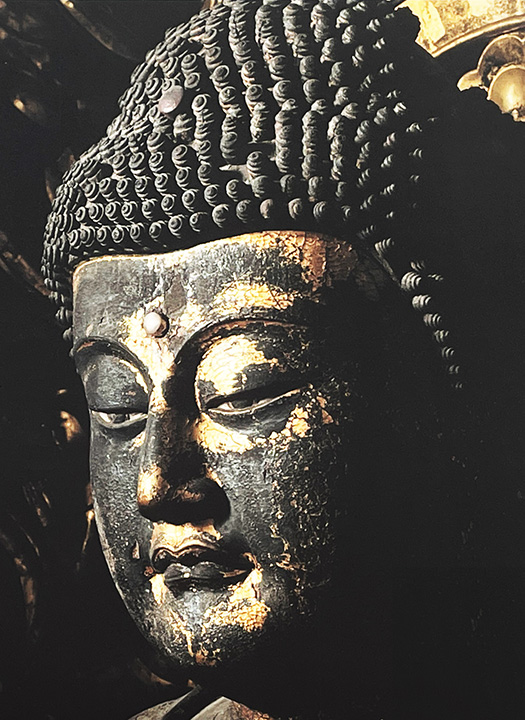
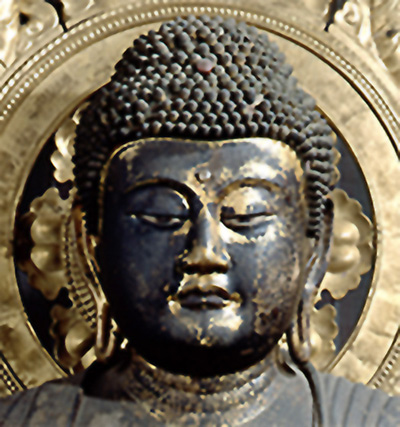
 で、写真2点は今回展覧会のポスター画面ショットと興福寺のHPからのもの。人形は顔がいのち、というのは至言だと思いますが、運慶さんはこの顔相造形に至るにあたって、相当考え抜かれたという展示会の解説。
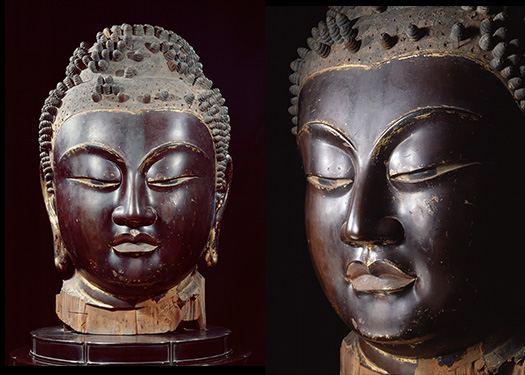
 ちなみに同じ興福寺に置かれている「釈迦如来」像はこちら(同寺HPより)。

 違いは白毫(仏像の眉間にある白い毛で光明が放たれ世界を照らし出す。水晶やガラスなどの突起物をはめ込んで光を表現するのが一般的)の有る無し。「この像の眉間からは自然に光が発せられたので白毫はつけなかった」とされる。一方の上の「弥勒如来」には表現されている。
 さてそこから先が、運慶さんとわたしたち凡百との内心での「対話」ということになりますね。
 もちろんまったくわからないのですが(笑)日本社会が生んだ最高レベルの芸術家と語り合える、稀有な機会だと思いました。みなさんはいかが? さて、う〜む。

●お知らせ
拙書「作家と住空間」幻冬舎から電子書籍で発刊
お求めはAmazonで。
https://amzn.asia/d/eUiv9yO

English version⬇

【Giant Unkei Sculpts Buddha Statue of Maitreya, Savior of 5.67 Billion Years Hence】
A masterpiece by Unkei, Japan’s foremost sculptor. The eyes, in particular, captivate with their ultimate expression. …

 I’ve been staying in Ueno more often when in Tokyo.
This is largely because it concentrates Japan’s finest art and knowledge, like the Tokyo National Museum and the National Museum of Nature and Science. Plus, it’s conveniently just about 10 minutes on the Yamanote Line from business hubs like Tokyo Station. And with popular spots like Ameyoko, it just feels comfortable.
So, the thing that piqued my artistic “interest” the most during this trip was the “Unkei Exhibition” at the Tokyo National Museum.
 According to Buddhist teachings, the present world originates from Shakyamuni Buddha, Gautama Siddhartha, a historical figure who founded Buddhism and dedicated himself to saving all beings. Since Buddhism’s arrival in Japan, immense importance has been placed on creating sculptures of these Buddhas. It seems the need was not just conceptual but to concretely “visualize” them. The Great Buddhas of Nara and Kamakura, representing Dainichi Nyorai, are prime examples.
 Then, as the being destined to save the world in the next era after Shakyamuni, Maitreya Buddha is conceived. The timeframe set for this is an unimaginably distant 5.67 billion years.
It is precisely this conceptual being, created by the sculptor Unkei—whose work fascinates me—that I long to see.
 While it’s possible to go to the Kōfuku-ji Temple’s North Round Hall during its unveiling to pay respects, this time I could see it right here in Tokyo’s Ueno. Moreover, the accompanying National Treasure Buddhist statues were all displayed together for public viewing. Ah, it’s on display here until November 30th.
The two photos are a poster screenshot for this exhibition and one from Kōfuku-ji’s website. The saying “The face is the soul of a statue” is profoundly true, and the exhibition commentary explains that Unkei must have pondered deeply to achieve this facial expression.
Incidentally, here is the “Shaka Nyorai” statue also housed at Kōfuku-ji (from the temple’s website).

 The difference lies in the presence or absence of the white hair (the white hair between a Buddha statue’s eyebrows from which light radiates to illuminate the world. It is typically depicted by embedding protrusions like crystal or glass to represent the light). It is said, “Since light emanated naturally from this statue’s brow, the white hair was not added.” On the other hand, it is depicted on the Miroku Nyorai above.
Now, from there onward, it becomes a kind of “dialogue” in our hearts between Unkei and us ordinary mortals.
 Of course, I have absolutely no idea what it means (laughs), but I felt it was a rare opportunity to converse with one of the highest-level artists Japan has produced. What do you all think? Well, hmm.

●Notice
My book “Writers and Living Spaces” published as an e-book by Gentosha
Available on Amazon.


【本年度産「新米」60kg 宮城県の友人農家から到着!】


 わが家では主食のお米、宮城県に在住する元住宅建材企業勤務で退職後、出身の親元の農家を継承して営んでいる友人から、直接購入しています。縁の深かった東北への思いもあり、またかれの「営業活動」に賛同したとも言えるし、結局「人の縁」がいちばんと思っているということなのか、よくわかりません。
 ここのところの「コメ騒動」で、かれの地元でも「大量買い付け」などの投機的なコメ品薄状況があって、かれ自身が直接生産した、わたしの方に回せるコメが無くなってしまっていた。やむなくコメを集約している農協組織の「周辺のコメ」を送ってくれたりしていた。価格も大幅に値上がりしたけれど、それでも最低限必要な量は送ってくれていた。
 「ことしの新米はキッチリと送れるから、待っていてね」と言われていた。
 その2025年産の新米が東京移動中に到着していた。なんと、わが家のお米が底を突く寸前(笑)。でもいまのお米も先述のコメ騒動の渦中に送ってくれていた最後の最後のもの。すぐに新米を食し始めるのではなく、最後までしっかり食べきりたい。で、本日ともう1日分が残っている状況ですが、あすから10月とキリもいいので、明日以降、新米にチェンジして行きたいと思います。もう1日分については、そのあと、早めに感謝の気持ちを込めて食べきりたい。
 価格については、これまでの経緯を踏まえてお互いになんとか「納得できる」水準にいたしました。あえて公表はいたしません。仁義。
 ということですが、やはり「ありがたい」。
 わたしには農家の経験は無いけれど、一度は出張の寄り道でかれの農場にも訪問させていただいている。川にほど近い、いかにも「宮城の農園地帯」らしい風景が迎えてくれた。この天地から友人の手による農作業を経てきたコメを日頃食べさせてもらっていることが、深く認識できた。この世で生きていて、その根源にあたるエネルギーの発祥場所という感覚。
 人間なんだから、そういう感覚を日々持っていられることも「ありがたい」と思う。
 到着の連絡と代金振込の連絡をしたら、返信で最近の健康状態やらを知らせてくれていた。こういう交流が得られるのも、現代では稀有なことだと思っています。いつまでもよろしく。

●お知らせ
拙書「作家と住空間」幻冬舎から電子書籍で発刊
お求めはAmazonで。
https://amzn.asia/d/eUiv9yO

English version⬇

【This Year’s New Rice Harvest – 60kg Arrived from My Farmer Friend in Miyagi Prefecture!】
A guy who loves cooking, grinding his own rice daily to make perfect meals. Massive shipment of his staple food arrived (lol). Even amid the rice turmoil, I want to cherish the bonds between people. …

 At our house, we buy our staple rice directly from a friend who used to work for a housing materials company in Miyagi Prefecture. After retiring, he took over his family farm back in his hometown. I suppose it’s partly because of my deep connection to Tohoku, partly because I support his “business efforts,” and partly because I believe human connections are ultimately the most important thing—though I’m not entirely sure myself.
 Recently, the “rice turmoil” led to speculative buying and shortages even in his hometown. The rice he personally produced and could send to me ran out. He had no choice but to send us “rice from nearby” sourced through the agricultural cooperative that aggregates rice. The price had risen significantly, but he still sent us the minimum amount we needed.
 He told me, “This year’s new rice will definitely be sent, so please wait.”
That 2025 new rice arrived while I was moving to Tokyo. Amazingly, our household rice was about to run out (laugh). But the rice we have now was the very last batch he sent us right in the middle of the aforementioned rice turmoil. I want to finish eating this rice completely before starting the new rice. So, we have today’s portion and one more day’s worth left. Since tomorrow marks the start of October, a nice round date, we plan to switch over to the new rice starting then. As for that final day’s portion, we’ll finish it off soon after, eating it with gratitude.
Regarding the price, considering everything that’s happened, we’ve managed to settle on a level we can both “accept.” I won’t disclose it publicly. That’s just honor among us.
That said, I’m truly “grateful.”
 I have no farming experience myself, but I once visited his farm during a detour on a business trip. It welcomed me with a landscape typical of Miyagi’s farming region, close to a river. I deeply recognized that I regularly eat rice that has come from this land, through the farming work done by my friend’s hands. It felt like the origin of the fundamental energy that sustains life in this world.
 As human beings, I think it’s truly “grateful” to be able to hold onto that feeling every day.
After I notified him of my arrival and the payment transfer, he replied with updates on his recent health and such. I feel this kind of exchange is rare in modern times. I hope we can stay in touch forever.

●Notice
My book “Writers and Living Spaces” published as an e-book by Gentosha
Available on Amazon.
 

【上野・不忍池のカモたちと多民族化ニッポン】


 昨日、札幌に帰還いたしました。
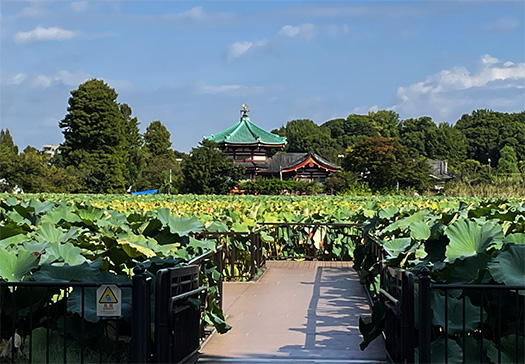
 ここ最近、移動時の「インバウンド」ぶりがさらに加速、ドライブが掛かっている。観光地で聞こえるのは、外国語ばかり。上野を中心に宿泊することが多いのですが、写真の不忍池で早朝散策していても目にするのは外国人多数。一時期のチャイナオンリーではなく、欧米系中心かなぁという状況。
 ランチなど飲食店でも日本人からの接遇を受けることの方が希少機会。
 日本の「少子化」状況を受けて労働力の確保という抜き差しならない必要性から、実質的な移民政策が取られている証明か。国際金融での「円安」進行もこうした要因を反映して「そうしやすい環境」を意図的に作り出しているようにも思える。このままアメリカのように「多民族化」していくことが趨勢と言えるのでしょうか?「経済政策」の根幹テーマとしてきちんと論じて欲しい。
 参院選での参政党の伸展要因は「日本人ファースト」という理念が広範に日本人意識に芽生えつつあることの証明とも考えられる。
 たしかに移動しながら感じるのは多民族化への自分自身の内心での化学反応。
 どうもこれまでの日本社会とは大きく様相が変わってきている、と。
 一昨年、京都に行っていてあまりのインバウンドぶりに内心、悲鳴を感じて「まだマシ」な奈良方面それも「なるべく外国人がまだ来ない」地域として飛鳥や橿原に行動しておりました。「より日本的なるもの」にこころが向かっていくのは自然でしょう。
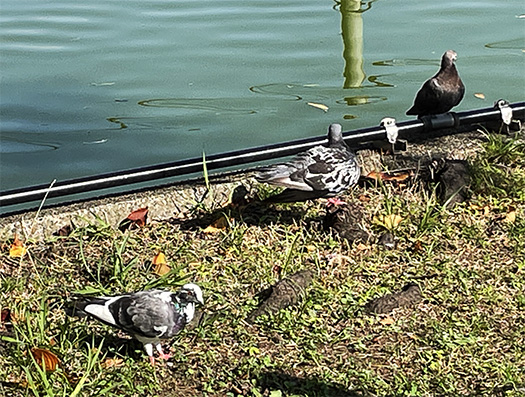
 ・・・ということで池のほとりでたわむれているカモたちを観察していると、しかし実にその品種は多様だと気付かされる。わたしがいつも散歩している札幌円山公園ではほぼ1種類のカモとオシドリという近縁種だけですが、どうもカモといっても多様だと驚いた。まぁきっと昔からそうなんでしょうが、池の畔の「説明板」には以下の記述。
 「不忍池にはいろいろなカモ(中略)が多いとき1万羽を超えることも。キンクロハジロ、ホシハジロ、オナガカモがベスト3。カルガモ、ヒドリカモ、バン、ハシビロカモ、マガモなど・・・」
 なんだそうであります。
 多民族化というのは、日本列島という交流の多い環境では自然な流れなのでしょうか。幕末明治の変動もこの列島社会では「受け入れやすい」から、アジアで先駆けたということなのかなぁ。

●お知らせ
拙書「作家と住空間」幻冬舎から電子書籍で発刊
お求めはAmazonで。
https://amzn.asia/d/eUiv9yO

English version⬇

【Ueno’s Shinobazu Pond Ducks and Multicultural Japan】
A classic Tokyo stroll. What catches the eye is the ducks’ “diversity.” Quite different from Sapporo in “feather color.” But no Mandarin Ducks. I wonder if they don’t get along…

 Yesterday, I returned to Sapporo.
Recently, the “inbound” trend during travel has accelerated even further, gaining momentum. All you hear at tourist spots is foreign languages. I often stay around Ueno, but even during early morning strolls around Shinobazu Pond (pictured), I see mostly foreigners. It’s no longer just Chinese tourists; it seems more Westerners are coming now.
Even at lunch spots and restaurants, receiving service from Japanese staff has become a rare occurrence.
 Is this proof that Japan is effectively implementing immigration policies, driven by the urgent necessity to secure labor amid its declining birthrate? The ongoing weakening of the yen in international finance also seems to reflect these factors, as if intentionally creating an environment conducive to such trends. Is it inevitable that Japan will follow America’s path toward becoming a “multiethnic society”? I wish this core theme of “economic policy” would be properly debated.
 The growth of the Japan First Party in the Upper House election could be seen as proof that the “Japanese First” ideology is taking root in the consciousness of many Japanese people.
Indeed, as I move around, I feel my own inner reaction to this multiethnic shift.
It seems Japan’s society is changing significantly from what it was before.
 The year before last, while in Kyoto, I inwardly screamed at the overwhelming influx of tourists. I headed for the Nara area, which felt “still bearable,” specifically to places like Asuka and Kashihara, hoping to avoid areas still largely untouched by foreigners. It’s natural for one’s heart to gravitate toward “more Japanese things.”
…And so, observing the ducks frolicking by the pond, I realized just how diverse their breeds actually are. At Sapporo’s Maruyama Park, where I always walk, there’s basically just one type of duck and its close relative, the Mandarin duck. But I was surprised to learn that ducks themselves are quite diverse. Well, I suppose it’s always been that way. The information board by the pond reads:
“Shinobazu Pond hosts various ducks (omitted)… sometimes exceeding 10,000 birds. The top three are the Common Pochard, Tufted Duck, and Long-tailed Duck. Others include the Spot-billed Duck, Gadwall, Common Moorhen, Shoveler, Mallard, etc…”
So it seems.
Is this multiethnic trend a natural progression in the Japanese archipelago, an environment rich in exchange? Perhaps the upheavals of the late Edo and Meiji periods were “easier to accept” in this island society, making Japan a pioneer in Asia.

●Notice
My book “Writers and Living Spaces” published as an e-book by Gentosha
Available on Amazon.