
先日来、チャレンジ中の「モノクロ画像のカラー化」による人間意識の考察。
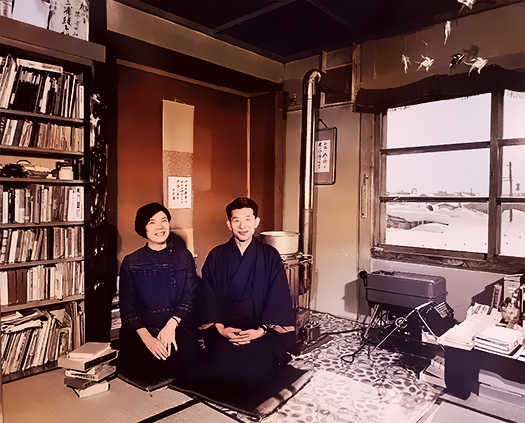
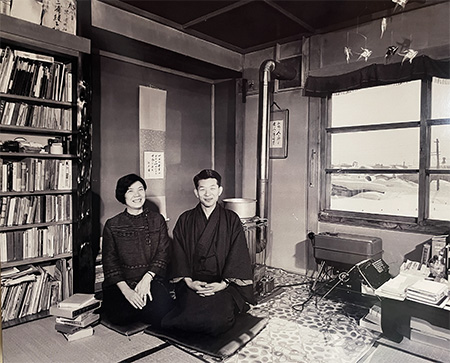
ひとつの実験として、写真撮影OKだった表題の記念館で展示されていた1枚のモノクロ写真と、そしてシーンとして復元されていた作家の執筆表現の「空間」を事例としてみた。
こちらの塩狩峠記念館は三浦綾子のヒット小説「塩狩峠」にちなんで、作品執筆の場であった店舗併用住宅を、旭川市内から物語の舞台である塩狩峠に移築保存させたもの。主人公の鉄道員が塩狩峠駅に勤務していたその駅舎の背後、小高い丘の上に立地している。背景シーン感も抜群。
ここは春の花見シーズンには道北屈指の観桜人気スポットでもある。
写真上は作家とご主人のツーショット。ご主人は病身であった彼女の「口述」を筆記することで、いわば二人三脚で彼女の作家活動を支えていた。口述筆記とひとことで言うけれど、実際に想像してみるとその困難さがよくわかる。やはり強い「相見互い身」という心象があって初めて成立するものだと思う。
そうすると、その作品生産の場の「雰囲気・空気感」というものに興味が深まる。まさに人間性と情報生産の「結節点」。それを可能な限りに「再生」させることを来訪者としては願う。
そんな狙いから、モノクロ写真のカラー化をこころみてみた次第。
受け取るのは感覚領域なので明晰に数値化できる事柄ではないけれど、やはり「臨場感」は格段に高まるし、当然ながら「時間」の超越感はある。いま現代にその人たちが「生き続けている」感覚。
言ってみればモノクロ写真は記録であるけれど、カラー化写真からは生命感がそこに復元する。さまざまな内語での「対話」が生まれ出てくる気分。撮影した時の撮影者と被写体の2人のコトバのやり取りにまで意識が向かっていく。
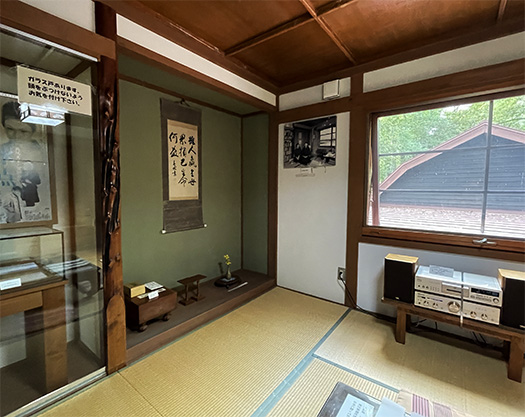
そして現実の「空間」としてはこのように復元され、その空気感を体感することができる。
作家記念館という場所では、超越的な空間体験を持つことが可能。カラー化はさらにそれを加速させる効果があると思える。・・・人間の記憶領域を求めて、さらに(笑)。
●お知らせ
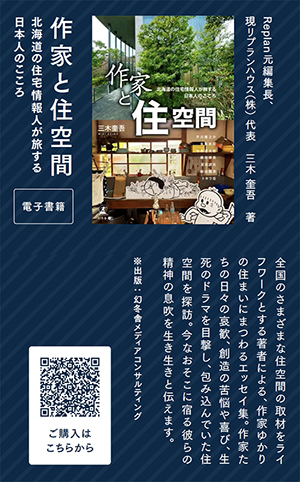
拙書「作家と住空間」幻冬舎から電子書籍で発刊
お求めはAmazonで。
https://amzn.asia/d/eUiv9yO
English version⬇
【Journey Through Time and Space via Archival Photos: The Miura Ayako Shizukari Pass Memorial Museum】
The colorization of monochrome images that “restores and revives” the lives of myself and my family. What about a writer’s memorial museum? An example…
Recently, I’ve been exploring human consciousness through the challenge of “coloring monochrome images.”
As one experiment, I examined a monochrome photograph displayed at the memorial hall mentioned in the title—where photography was permitted—and the “space” where the author’s writing process was recreated as a scene.
This Shioharidōge Memorial Hall commemorates Miura Ayako’s bestselling novel Shioharidōge. The house-cum-shop where she wrote the work was relocated and preserved from Asahikawa City to Shioharidōge Pass, the story’s setting. It sits atop a small hill behind the station building where the protagonist, a railway worker, served at Shioharidōge Station. The backdrop scene is truly outstanding.
During spring’s cherry blossom season, this spot is also one of northern Hokkaido’s most popular viewing locations.
The photo above shows a two-shot of the author and her husband. Her husband supported her writing career by transcribing her dictation, as she was in poor health, working together as one. While we call it dictation, imagining the actual process reveals its immense difficulty. I believe it could only succeed through a profound sense of mutual understanding and support.
This deepens my interest in the “atmosphere and ambience” of this place where the work was produced. It was truly the “node” connecting humanity and information production. As a visitor, I hope to “recreate” this as fully as possible.
With that aim in mind, I attempted to colorize the monochrome photographs.
While perception resides in the realm of sensation and cannot be precisely quantified, the sense of “presence” is significantly heightened, and naturally, there’s a transcendence of “time.” It creates the feeling that these people are “still alive” in the present day.
You could say monochrome photos are records, but colorization restores a sense of life to them. It feels like various internal “dialogues” emerge. My awareness even extends to the exchange of words between the photographer and the subject at the moment the photo was taken.
And as a tangible “space,” it has been restored in this way, allowing visitors to experience its atmosphere firsthand.
At this writer’s memorial museum, one can have a transcendent spatial experience. The colorization seems to further accelerate this effect… seeking the realm of human memory, and beyond (laugh).
●Notice
My book “Writers and Living Spaces” published as an e-book by Gentosha
Available on Amazon.
共有:

Posted on 10月 6th, 2025 by 三木 奎吾
Filed under: 未分類





コメントを投稿
「※誹謗中傷や、悪意のある書き込み、営利目的などのコメントを防ぐために、投稿された全てのコメントは一時的に保留されますのでご了承ください。」
You must be logged in to post a comment.