
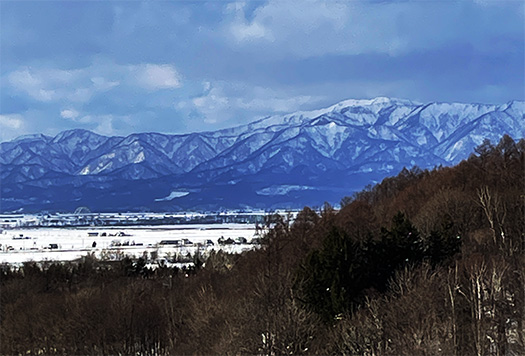
昨日は好きな温泉である美唄市の高台に位置する「ビバの湯・ゆーりん館」でまったり。
ここから見える西北方の山並みに不思議とヨワイ(笑)。
どうという特徴があるわけでもないのですが、この時期になってくるとその積雪の表情が心象に迫ってくる。とは言っても、人生時間でこの風景に関わっていた記憶は非常にレア。小学校低学年の時に、母親の実家である三笠市の農家の家にときどき遊びに行っていて、雪原越しボーッとに見ていた記憶がうっすらとある。名前もよくわからない。暑寒別岳方向ではあるけれど・・・。
で、その心象風景を小学校で「俳句」という表現を習って、自作していたように記憶している。そのとき心に浮かんでいたのが、この山容だったという希薄な「波動」なのです。
高齢期になってくると、こういうこころの「ルーツ」のようなものが、強くせり上がってくる。
こういう「風景の記憶」領域は、日本の短文文学の主要な部分なのでしょうが、昭和中期の子どもたちには、学校で言われたから表現した、という程度の認識だった。そのことはその後の生き様の中でも、とくに無頓着にいたけれど、ある時期、たぶん北海道各地をクルマで走り回ることが多くなってきて、この山容風景が、どうも自分には内面世界的に重たい位置を占めていることがわかってくるのですね。
たぶん誰にもそういう風景があるでしょう。
その短文表現・俳句は「・・・遠い連山」という最後の7文字だけが記憶に残っている。
いまも、こういう心理を繰り返し再生させていただけているので、その当時の小学校の授業には深く感謝しています(笑)。そういえば、同じ小学校時期には絵が専門の先生から北米のポートランド市と札幌市が「姉妹都市」となったことを記念して子どもたちの絵の交換行事があって、わたしの描いた絵が先方に贈られたこともある。
自分では「ボーッと」過ごしていた記憶が大きい時期だけれど、いまになってもこんな風に強く迫ってくるなにものかがあるのだと実感させられる。
さて年の瀬がだんだん迫ってくる。来週からはいろいろ予定で多忙。体力を温存しておきたい。
お知らせ
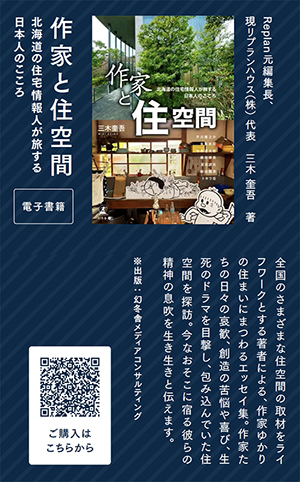
拙書「作家と住空間」幻冬舎から電子書籍で発刊
お求めはAmazonで。
https://amzn.asia/d/eUiv9yO
English version⬇
【Favorite Scenery / Snow-Capped Western Mountain Range from Sorachi and Bibai】
Today’s blog takes a break from the serialized theme. Memories of the “distant mountain range” I used to gaze at blankly during elementary school. I don’t know why I like it, but it’s a landscape that inexplicably draws me in. …
Yesterday I relaxed at my favorite hot spring, “Biba no Yu Yurin-kan,” perched on a hill in Bibai City.
I’m strangely drawn to the mountain range visible to the northwest from here (lol).
It doesn’t have any particularly striking features, but this time of year, the look of the snow-covered peaks really resonates with me. That said, memories of actually spending time with this scenery are incredibly rare in my life. I vaguely recall visiting my mother’s family farmhouse in Mikasa City during my early elementary school years, staring blankly across the snowfields. I don’t even remember the name of the mountains. They were in the direction of Shokanbetsu-dake, though…
And I remember learning about “haiku” as an expression in elementary school and composing my own. The faint “vibration” that came to mind then was the shape of these very mountains.
As one enters old age, these kinds of “roots” in the heart surge strongly to the surface.
This realm of “landscape memories” is probably a major part of Japanese short-form literature, but for children in the mid-Showa era, it was merely something we expressed because we were told to in school. I remained particularly indifferent to this throughout my subsequent life, but at a certain point—probably when I started driving around Hokkaido frequently—I realized this mountain landscape held a profoundly significant place within my inner world.
I imagine everyone has such a landscape.
Of that short verse, that haiku, only the final seven characters remain in my memory: “…distant mountain range.”
Even now, this feeling keeps coming back to me, so I’m deeply grateful for that elementary school lesson (laugh). Come to think of it, during the same elementary school years, an art teacher organized an exchange of children’s drawings to commemorate Portland, North America, becoming a sister city with Sapporo. My drawing was sent over there.
Though I mostly recall this period as one spent “zoning out,” it makes me realize there are still things from then that come rushing back to me this strongly, even now.
Well, the year’s end is gradually approaching. Next week brings a busy schedule with various plans. I want to conserve my energy.
Notice
My book “Writers and Living Spaces” published as an e-book by Gentosha
Available on Amazon.
共有:

Posted on 12月 7th, 2025 by 三木 奎吾
Filed under: 未分類




コメントを投稿
「※誹謗中傷や、悪意のある書き込み、営利目的などのコメントを防ぐために、投稿された全てのコメントは一時的に保留されますのでご了承ください。」
You must be logged in to post a comment.