

さて、唐津という魅力的な街に別れを告げ、県庁所在都市・佐賀市のお城見物へ向かった。
書いてきた通り、九州全県を回るのが今回のツアーの初心であり、その中でも佐賀県というのは大分県と並んで、全国でなぜかこれまで一度も来たことがなかった。まぁ北海道人としては特別に用事がなければ、九州では福岡中心に、鹿児島までの中央部縦断型の旅路が一般的でしょうね。
そういうこともあって、佐賀県という存在への知見はまったくないに等しい。
有田や唐津といった「焼き物・陶芸」というイメージがある程度で、あとは北海道の開拓期に「肥前(佐賀)」の島義勇が、北海道神宮の主祭3神を天皇の命令で背中にくくりつけて(背負って)持ってきてくれたことへの感謝の念を持っているというところだろうか。これはわたしのふだんの散歩道として、北海道神宮を朝、参拝するのが日課になっていることが大きい。わたし以外の人は、あまり縁を感じないかも知れない。
わたしもその程度しか知識がなく、佐賀県についての正確なMAP感すら持っていなかった。事前に訪問先を調べておくこともカミさんにすべてお任せで、せいぜい縁づいた福岡県久留米市周辺について、すこし知識を得ていた程度。まぁ成り行き任せ、カーナビ任せのノー天気旅(笑)。
まぁでも、そういうカラッポが無垢にその土地を感じられ、ジワジワとくる感じが楽しい。
・・・なんですが、2泊した唐津から早朝に佐賀市の中心部に向かって走り始めて、カーナビに任せていたルートなのに、どこまでも一般道を走っていることに気付く。自分でもそれくらいは事前に調べろよ、と思うのですが、高速道路になかなかたどりつかない。
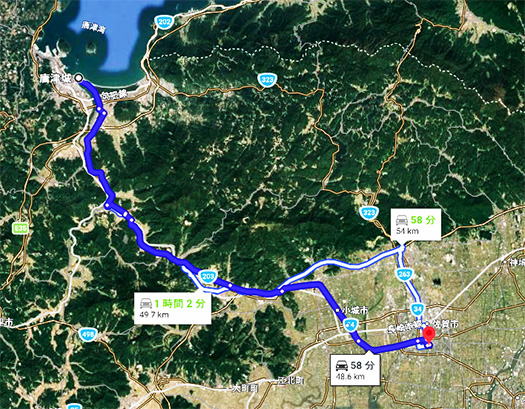
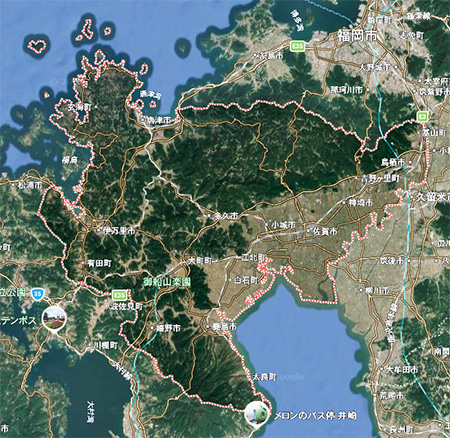
2枚のMAPの通り、一応断続的に高速道路はあるのだけれど、かえって遠回り(一般道で48.6km、高速併用で54km)になっていた。ナビが選んだのは山林を縦断する国道203号線。日本海・玄界灘から県庁所在地への重要動線とは思えないほどの見事な「山道」ぶりでした。
北海道で札幌から各主要都市に行くのに、メインが高速道路ではないというのはなかなか遭遇しないので、ちょっと驚き半分の道中体験。佐賀市というのは県の各地域の「中心」的な交通動線とは言い切れないのだなぁ、という実体験。
でもそれが九州の地形や風土、そして地域の歴史の縮尺を感じさせてもらったドライブで、非常に印象深いモノがありました。
●お知らせ
拙書「作家と住空間」幻冬舎から電子書籍で発刊
お求めはAmazonで。
https://amzn.asia/d/eUiv9yO
English version⬇
[The only way from Karatsu to Saga City is via a mountain road on a national highway—hmm…]
This is a carefree trip where I’ve left all the travel planning to my wife. It’s nice to be spontaneous, but we’ve reached the point where I’m thinking, “Wait, aren’t we on the highway yet?” …
Well, after bidding farewell to the charming town of Karatsu, I headed to Saga City, the prefectural capital, to visit the castle.
As I’ve mentioned before, the original goal of this tour was to visit every prefecture in Kyushu, and among them, Saga Prefecture—along with Oita Prefecture—was one of the few places in the country I, for some reason, had never visited before. Well, as someone from Hokkaido, unless I have a specific reason to go elsewhere, my typical trip to Kyushu usually centers on Fukuoka and follows a route running north-south through the central region all the way to Kagoshima.
For that reason, my knowledge of Saga Prefecture was practically nonexistent.
My impression was limited to the “pottery and ceramics” associated with places like Arita and Karatsu, and perhaps a sense of gratitude for the fact that during Hokkaido’s pioneering era, Shima Yoshiyuki of “Hizen (Saga)” brought the three principal deities of Hokkaido Jingu Shrine to Hokkaido by tying them to his back (carrying them) on the Emperor’s orders. This is largely because visiting Hokkaido Jingu in the morning has become part of my daily routine—it’s my usual walking route. Other people might not feel much of a connection to the place.
My knowledge was limited to that extent as well; I didn’t even have a clear mental map of Saga Prefecture. I left all the research on where to visit to my wife beforehand, and at most, I’d gained a little knowledge about the Kurume area in Fukuoka Prefecture, which I had some connection to. Well, it was a carefree trip where I just went with the flow and relied on the car’s GPS (lol).
But actually, that kind of blank slate allows me to experience the land with a pure, innocent eye, and I enjoy the way the feeling gradually sinks in.
…That said, after spending two nights in Karatsu, I set off early in the morning toward the center of Saga City. Even though I was following the route the GPS suggested, I realized I was driving on local roads with no end in sight. I thought to myself, “You should’ve checked that much beforehand,” but I just couldn’t seem to get onto the expressway.
As shown on the two maps, there are expressways here and there, but taking them actually made for a longer route (48.6 km on local roads vs. 54 km using a mix of local and expressways). The navigation system had chosen National Route 203, which cuts straight through the mountains and forests. It was such a spectacular “mountain road” that it was hard to believe it was a major route connecting the Sea of Japan and the Genkai Sea to the prefectural capital.
In Hokkaido, it’s quite rare to travel from Sapporo to major cities without using the expressway as the main route, so this was a journey that left me half surprised. It was a firsthand experience that made me realize Saga City cannot be described as the “central” transportation hub for all regions of the prefecture.
However, it was a drive that allowed me to get a sense of the scale of Kyushu’s topography, climate, and regional history, and it left a very deep impression on me.
● Announcement
My book, *Writers and Living Spaces*, has been published as an e-book by Gentosha.
Available on Amazon.
共有:

Posted on 7月 3rd, 2026 by 三木 奎吾
Filed under: 未分類




コメントを投稿
「※誹謗中傷や、悪意のある書き込み、営利目的などのコメントを防ぐために、投稿された全てのコメントは一時的に保留されますのでご了承ください。」
You must be logged in to post a comment.