
現世、という言葉がある。なにげなく使っているけれど、自分自身が生かされているDNAの流れ、家系の血脈を考え始めると「過去世」が徐々に復元され、自分自身という現し身を越える、他者ではない「主体意識」が姿を現してくる。
どちらも「人の世」でありさまざまな機縁・出来事には共通する普遍性がある。その当時の社会の一般的な実相を踏まえて自分のDNAが遭遇したことを追体験するという痛切なリアリティ。
いわゆる歴史とは違う「いのちの履歴書」であるのかも知れない。
高齢化社会、長寿社会ではこういった領域が興味深い人間探究テーマになると実感している。
こういう探究を志向するとき、もっともわかりやすい機縁は博物館など「ミュージアム」の社会機能。わたしの場合は作家とか表現者のミュージアムで、その「人物の実相」とめぐり会うことが数寄になっている。その経験知を踏まえて自分のDNA史を重ね合わせてDNAを探究したいということ。
そういう領域にとって現代の歴史探究最前線「地域史」の盛り上がりは最大のバックグラウンドになる。もう誰もが興味を持つ一般的歴史、信長だ家康だ秀吉だ、というレベルではない、庶民目線主体の歴史。
・・・庶民史としてわたしの家系は広島県福山市松永のすぐ隣の「今津」から北海道に移住してきたのだけれど、この間の地域的結びつきへの想像力がイマイチ実感できないで生きてきた。それがルーツを掘り起こす旅路を始めて見て、機縁が明確になってきている。
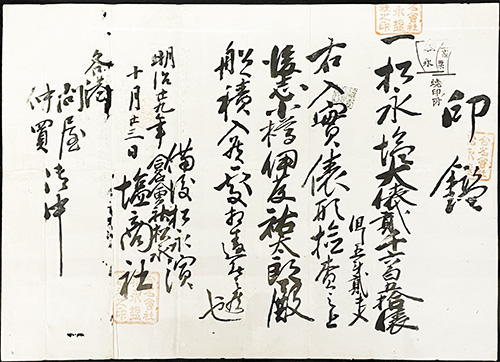
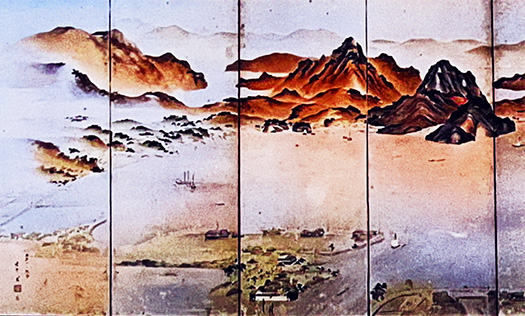
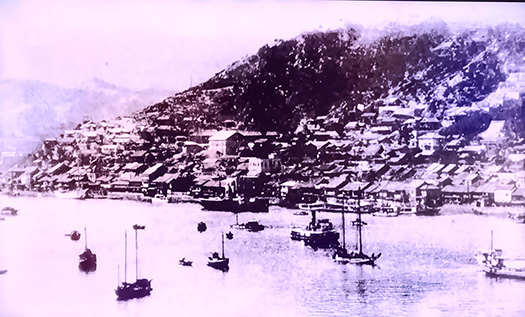
今回松永の「資料館」で発見した一番上の文書。筆文字なので、ちょっと見方は必要だがあきらかに内容は、松永塩を北海道「後志(しりべし)小樽」に向けて船便で送った明治29年の証文。図は塩を生産した松永の製塩風景であり、描かれているのは山陽道の本陣宿・今津周辺の山並み。すぐ隣接の尾道の港から「北前交易船」が利用された。折から北海道ではサケを本州市場に送る「塩蔵」処理が進みコア材料として松永塩が移出された状況がわかる。
松永の資料館では「ほぉ、北海道から来られた?」となかば呆れられ、次の瞬間、深い「同胞」感を持って驚かれていた。江戸期・明治の頃はもっと縁が近かったのに、大正・昭和・平成・令和と時代を経てきてむしろ縁遠くなっていたのが現実だったのでしょう。
証文は、遠いけど強い絆を物語ってくれている。
●お知らせ
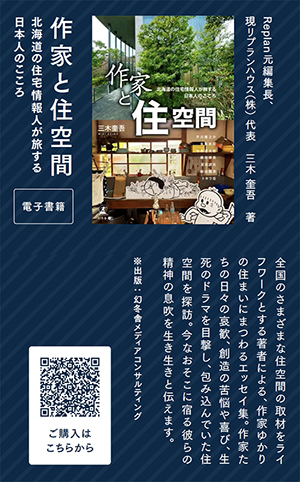
拙書「作家と住空間」幻冬舎から電子書籍で発刊
お求めはAmazonで。
https://amzn.asia/d/eUiv9yO
English version⬇
【Matsunaga Salt: From Onomichi to Otaru, Hokkaido – “Shipment Certificate”】
The words “Shiribeshi Otaru” appear on a Northward Trade document. During the Edo and Meiji periods, Onomichi and Fukuyama were close to Hokkaido. Yet by modern times, the distance had grown vast…
There is a term called “this life.” We use it casually, but when we begin to contemplate the flow of DNA that sustains our own existence, the bloodline of our family lineage, the “past lives” gradually come to light. We awaken to the sensation of a “sense of self” emerging—one that transcends our present incarnation, yet is not that of another.
Both are “human realms,” and the various causes, conditions, and events share a common universality. It compels a poignant reality: reliving what one’s DNA encountered, grounded in the general realities of society at that time.
It might be what you could call a “life resume,” distinct from conventional history.
In an aging society, a society of longevity, I feel this realm becomes a fascinating theme for human inquiry.
When pursuing such inquiry, the most accessible opportunity lies in the social function of museums. For me, it has become a passion to encounter the “true essence of individuals” at museums dedicated to writers or artists. Building on that experiential knowledge, I wish to overlay my own DNA history and explore my DNA.
For this domain, the current boom in “local history” – the forefront of modern historical inquiry – provides the greatest backdrop. This isn’t the general history everyone knows—the level of Nobunaga, Ieyasu, or Hideyoshi—but history primarily from the common people’s perspective.
…As commoners’ history, my family migrated from “Imazu,” right next to Matsunaga in Fukuyama City, Hiroshima Prefecture, to Hokkaido. Yet, I’ve lived without truly grasping the imagination of the regional connections between these places. Starting this journey to unearth my roots has made the connection clear.
The top document I discovered at Matsunaga’s “Museum” this time. It’s written in brush script, so it requires a bit of deciphering, but the content is clearly a certificate from Meiji 29 (1896) confirming the shipment of Matsunaga salt by sea to “Shiribeshi Otaru” in Hokkaido. The illustration depicts the salt production scene in Matsunaga, and the mountains depicted are those surrounding Imazu, the honjin post station on the Sanyo Road. The “Kitamae trading ships” departed from the adjacent port of Onomichi. At that time, Hokkaido was advancing the “salt preservation” process for sending salmon to Honshu markets, and Matsunaga salt was exported as a core material.
At the Matsunaga Museum, the staff reacted with a half-astonished “Oh, you came all the way from Hokkaido?” followed immediately by a deep sense of kinship and surprise. Though ties were closer during the Edo and Meiji periods, the reality is that they grew distant over the Taisho, Showa, Heisei, and Reiwa eras.
The contract documents tell a story of a bond that, though distant, remains strong.
●Notice
My book “Writers and Living Spaces” published as an e-book by Gentosha.
Available on Amazon.
共有:

Posted on 12月 28th, 2025 by 三木 奎吾
Filed under: 未分類



コメントを投稿
「※誹謗中傷や、悪意のある書き込み、営利目的などのコメントを防ぐために、投稿された全てのコメントは一時的に保留されますのでご了承ください。」
You must be logged in to post a comment.