
わが家では1905年(明治38年)に仏壇を背負って北海道に移住した。居住地は札幌から旭川へ北上する途中の岩見沢近郊。その地に故地・福山での地縁者が入植して成功を収めていたので、当主である祖父はその縁を頼って住み着いた。当時30歳を超えた時期。その「動機」については詳しく伝承を聞いてはいなかった。
「恋女房」と思われる祖母と、ふたりの娘を抱いての北海道移住の動機がよくわからなかったのだ。
しかしその動機と思える「状況証拠」が今回の福山市松永はきもの資料館への探訪で、徐々に見えてきた。
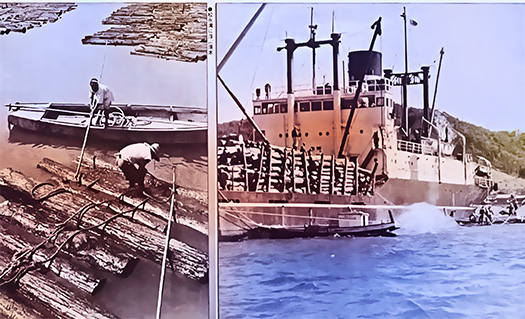
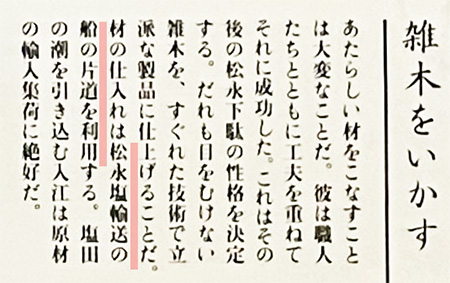
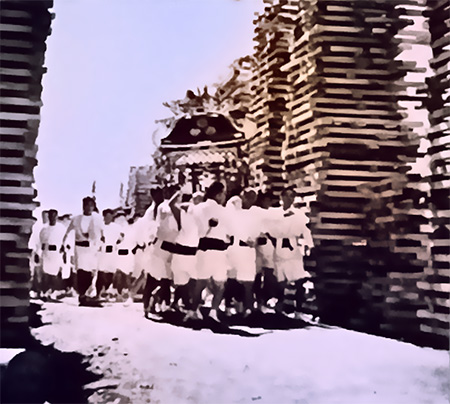
写真は大正初期と思われる尾道港〜松永海岸での「木材集積」の様子。展示での説明文部分も拡大してみた。松永の塩田事業は、国内での過剰生産からの価格の低落圧力や、やがて到来した1905年の国家による「塩専売制」の導入などで、事業としての成長性は限界だった。江戸期以来、松永塩田の生産から尾道の商家となることで流通に至るまでの領域で活動してきた家系は、あらたな事業領域を目指していた。その時期に松永の「下駄産業」の旺盛な拡大は、刮目すべき事業エリアとして目の前に開けていた。
わたしの祖父は、その下駄産業の原材料供給を目指し開拓の熱気に沸く北海道を事業目途とした。松永塩の北海道への輸送の「帰り便」貨物として原材料を積載させること。そういう様子は写真からも明示的。
ビジネスの狙いとか動機は、それが成就してはじめて明かすもの。その狙いが失敗してしまったとき、その内容を明かすことは「繰り言」に過ぎない。しかし子孫としては正視して知るべきだろう。浮沈からの前進。
こういう事業目的からの移住であり、しかしその木材の輸送において痛恨の失敗を犯してしまったワケだ。
家系の縁者には広島県内の山林事業者もあったらしく温暖地でのノウハウ獲得はあったようだが、北海道・積雪寒冷地での造材事業者の経験知はやはり未熟だったのだ。
わが家系の場合、そこからの復元は次世代の教育努力に向けられたと思える。30代早々での事業の失敗後、入植時の縁者の小作として生き延び、子どもたちに高等教育を受けさせる方向へ向かった。そして戦争〜終戦。さらに小作開放という劇的な転換を経て、商品作物の大阪市場への投機的参入など、祖父の商家家系としての挑戦は継続していくことになる。
●お知らせ
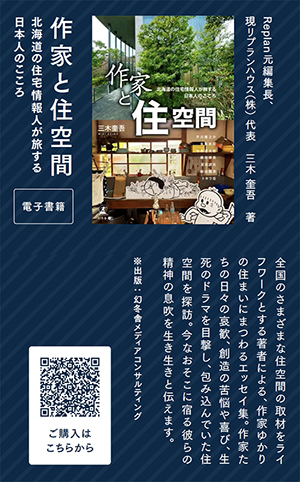
拙書「作家と住空間」幻冬舎から電子書籍で発刊
お求めはAmazonで。
https://amzn.asia/d/eUiv9yO
English version⬇
The “Entrepreneurial Spirit” of Late Meiji: Supplying Logs for the Regional “Geta” Industry
Failure is profoundly important. Human affairs are ever-changing. I believe descendants especially must confront this truth. Advance through each ebb and flow.
My family migrated to Hokkaido in 1905 (Meiji 38), carrying our Buddhist altar on our backs. We settled near Iwamizawa, along the route north from Sapporo to Asahikawa. Relatives from our hometown of Fukuyama had already successfully settled there, so my grandfather, the head of the household, relied on those connections to make his home. He was over thirty at the time. I never heard detailed accounts of his “motivation” for this move.
I never quite understood why he moved to Hokkaido with his wife, whom I assume was his beloved, and their two daughters.
However, circumstantial evidence suggesting his motivation gradually came into view during my recent visit to the Matsunaga Kimono Museum in Fukuyama City.
The photograph shows what appears to be timber stockpiling at Onomichi Port and Matsunaga Beach in the early Taisho era. I also enlarged the explanatory text from the exhibit. The Matsunaga salt field business faced limited growth potential due to price pressures from domestic overproduction and the eventual introduction of the state-run “salt monopoly system” in 1905. My family lineage, active since the Edo period in the entire domain from Matsunaga salt field production to distribution through Onomichi merchant houses, was seeking new business opportunities. At that time, the vigorous expansion of Matsunaga’s “wooden clog industry” presented itself as a remarkable business opportunity.
My grandfather set his sights on Hokkaido, then abuzz with pioneering fervor, aiming to supply raw materials for this clog industry. The plan was to load raw materials as return cargo on ships transporting Matsunaga salt to Hokkaido. This is clearly evident in the photographs.
Business objectives and motivations are only revealed once they are achieved. When such aims fail, disclosing them becomes mere repetition. Yet as descendants, we should confront and understand them. Progress through trial and error.
This migration stemmed from such business objectives, yet it resulted in a bitter failure in timber transportation.
While relatives in the family lineage apparently included forestry operators within Hiroshima Prefecture, suggesting some expertise in warmer regions, their knowledge of timber production in Hokkaido’s snowy, frigid climate remained insufficient.
In our family’s case, recovery from this setback seems to have been directed toward educational efforts for the next generation. After the business failure in his early thirties, he survived as a tenant farmer for relatives from the original settlement and steered his children toward higher education. Then came the war and its end. Following the dramatic shift of tenant liberation, my grandfather’s merchant lineage continued its challenges, including speculative ventures into commodity crops for the Osaka market.
●Notice
My book “Writers and Living Spaces” published as an e-book by Gentosha
Available on Amazon.
共有:

Posted on 12月 29th, 2025 by 三木 奎吾
Filed under: 未分類




コメントを投稿
「※誹謗中傷や、悪意のある書き込み、営利目的などのコメントを防ぐために、投稿された全てのコメントは一時的に保留されますのでご了承ください。」
You must be logged in to post a comment.