
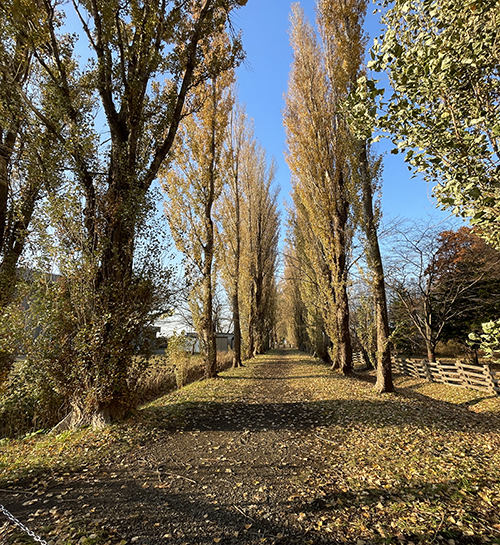
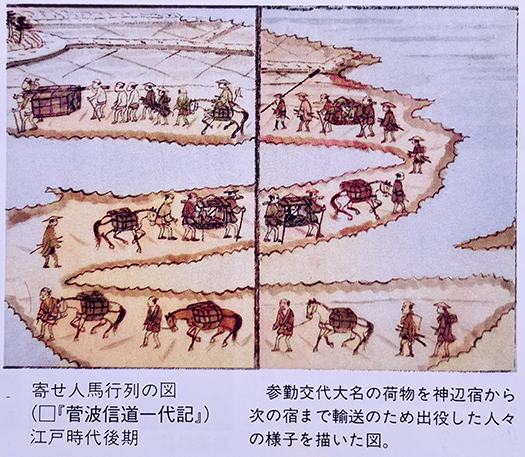
写真は明治の日本の「西洋化」変化を象徴する北海道大学に残るポプラ並木。一方は昨日も触れた「参勤交代」の様子。幕末から明治維新を日本史は経過して社会構造は激変していくことになる。
江戸期に武家の独裁支配に対応・順応していた地域商家ビジネスのありようは激変を余儀なくされる。いやそもそも武家各藩は金融事業者・高利貸しからの借入・返済で財政的に完全破綻。参勤交代をビジネスとする地方事業者に対して、その支払いが円滑に行われたかどうかも疑わしい。とはいえ、江戸期の地方商家事業者としては、その体制の中での最適解を求めて身を処する他に道はなかったに違いない。
時代は黒船来航〜明治維新の政権交代を経て西洋化・市場経済導入に向かった。そういうなかでも従前の政商的・封建体制即応型ビジネスも中央集権体制の一部ではしぶとく形を変えて生き残ったとは思われる。しかしそれは政権掌握した新政府軍側の一部の政治家とその「取り巻き」だけ。そういう手づるのない地方の商家にとっては、1862年段階での地域的政商・参勤交代ビジネスモデルの完全消滅インパクトは強烈だっただろう。
そうでなくても幕末期各藩は経済的に破綻していたので、参勤交代ビジネスモデルも瓦解過程だった。武家も商家も皆等しく岐路に立たされた。さらに「地租改正」でそれまでの「年貢」が「税金」に変わった大変化は農民層にも過酷で巨大一揆を誘発していった。
参勤交代ビジネスで「今津本陣」としての収入をきのう現代貨幣換算で5,000-7,000万円と推定したけれど、そもそもこの時代の日本全国のGDPは現代の1/4,000という推計規模。逆に言えばこの「参勤交代ビジネス」は、貨幣経済の行き渡った現代と単純比較はムリだけれど、もし想像すれば相当するビジネス価値。まさに「地域経済」そのものだった。
そうしたビジネスモデルの崩壊をわたしの家系は目の当たりにしたことになる、怖ろしい。驚天動地という言葉があるけれど、まさにそういった局面だったのだ。
そういうなかで写真のような「西洋化」による開拓に沸き立っていた北海道は、祖父の目にまぶしい光芒を放って映っていたに違いない。
お知らせ
拙書「作家と住空間」幻冬舎から電子書籍で発刊
お求めはAmazonで。
https://amzn.asia/d/eUiv9yO
English version⬇
【Meiji Restoration and Social Revolution: What Happened to Edo-Period Merchants Amidst the Upheaval?】
The disappearance of an entire “regional economy” estimated at roughly 200 billion yen in modern terms. Samurai, merchants, and peasants alike were literally left destitute. …
The photograph shows the poplar tree-lined avenue at Hokkaido University, symbolizing Japan’s “Westernization” during the Meiji era. On the other hand, we see scenes of the “Sankin-kotai” system mentioned yesterday. As Japanese history progressed from the Bakumatsu period to the Meiji Restoration, the social structure underwent drastic changes.
Regional commercial businesses, which had adapted to the feudal samurai class’s autocratic rule during the Edo period, were forced to change. Indeed, the feudal domains themselves were financially bankrupt, burdened by borrowing and repaying loans from moneylenders and usurers. It is doubtful whether payments to local businesses that operated the sankin-kotai system as a commercial venture were ever smoothly settled. Nevertheless, as regional economic actors in the Edo period, they undoubtedly sought the best possible solution within that system.
The era progressed from the arrival of the Black Ships through the Meiji Restoration, a change of government, towards Westernization and the introduction of a market economy. Even within this context, elements of the feudal, political-commercial system likely persisted, stubbornly transforming within the centralized regime. However, this survival was limited to certain domain politicians within the new government forces that seized power and their “entourage.” For local merchants without connections, the complete disappearance of regional political-commercial networks and the sankin-kotai business model by 1862 must have been devastating.
Even without this, domains were already economically bankrupt by the Bakumatsu period, so the sankin-kotai business model was undoubtedly already collapsing. Both samurai and merchants alike surely stood at a crossroads. Furthermore, the Meiji “Land Tax Reform,” which transformed the previous “annual tribute” into “taxes,” triggered massive uprisings among the peasantry.
While I estimated the income from the “Imazu Camp” in the sankin-kotai business at 50-70 million yen in modern currency terms yesterday, the estimated GDP for all of Japan in this era was only about 1/4,000th of today’s. Conversely, while it’s difficult to make a direct comparison with today’s monetized economy, imagining the scale of this “Sankin-Kotai business” suggests a value roughly 4,000 times greater—about 200 billion yen. It was truly the very essence of a “regional economy.”
My family witnessed the collapse of this business model firsthand. It was terrifying. There’s a phrase “earth-shattering,” and I believe this was precisely such a moment. Amidst this, Hokkaido, bubbling with development driven by “Westernization” as seen in the photograph, must have appeared dazzlingly bright.
Notice
My book “Writers and Living Spaces” published as an e-book by Gentosha
Available on Amazon.
共有:

Posted on 11月 25th, 2025 by 三木 奎吾
Filed under: 未分類



コメントを投稿
「※誹謗中傷や、悪意のある書き込み、営利目的などのコメントを防ぐために、投稿された全てのコメントは一時的に保留されますのでご了承ください。」
You must be logged in to post a comment.