
わたしの家系は江戸後期に福山藩領・今津にほど近い塩田経済地域・松永で塩経済の1プレーヤーとして、交易都市・尾道の商家株を入手し活動していたことがほぼ確定している。それを立脚点にしながら、同時に今津で「本陣」宿を拝命する河本家の経済面を一部担っていた様子が伝わってきている。きのうのブログで平戸藩主・松浦静山の旅行随筆に先祖が記述されていることをお伝えした。
江戸期の株制度に基づいた商家として活動する一方で、この時期の先祖は今津の本陣家への奉公関係から支援されて「独立」できた経緯もあり、本陣家(河本氏)に対し最側近的「ヘルパー」も兼ねていた。
はるかな子孫としては、その当時の「本陣宿」の経済構造を知りたくなってくる。
しかし今津本陣では江戸期と明治期に火災や「一揆焼き討ち」にあって資料が残っていない。そこで地理的に近い廿日市(はつかいち)と玖波(くなみ)の本陣宿記録が「福山市史」にあったので参照した。
福山市史の解説では「伝馬人足」の収入が大きかったと。
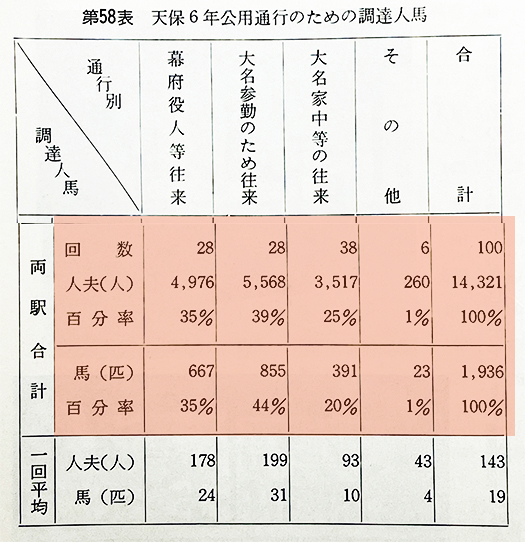
伝馬は1835(天保6)年段階で約1,000匹。人足はおおむね7,000人。AIに確認すると伝馬人足とは「人や物資の輸送のために用意された馬、およびその馬を扱う人夫(馬子)を指す。また大名の駕籠人足、重い荷物(武具、米、道具)の移動使役」。
江戸時代は武家による独裁政治時代なので現代世界の常識は通用しない。なので公的通行への役務について一種の税と見なして無償奉仕させられることもあったが西国大名家50家内外が頻繁に往来する「山陽道」本陣宿では、他地域のように地元に無償奉仕させることはできず、対価が支払われた可能性がきわめて高いとAIは返答する。それなりに多額の「通行料収入」があったと推定。
だとすると表の部分は貨幣で支払われた可能性が高い。推計させると年間で現代貨幣換算では5,000〜7,000万円相当とAIは返答。
現代貨幣社会とは違ってこうした貨幣の「実質価値」は相当倍にあたっていることが推認出来る。なんといっても1日中貨幣を使わない暮らしが庶民にはごく一般的な時代なのだ。
江戸期のわが家系の経済状況の一端、その解明のヒントが見えてくる。・・・
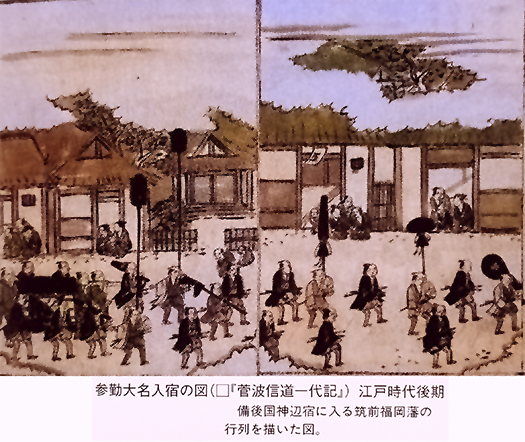
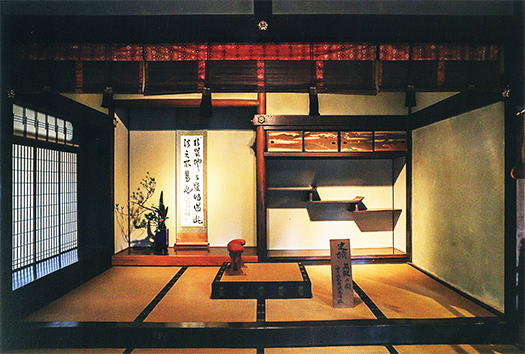
<写真イラストは広島県立博物館資料よりと今津脇本陣・蓮華寺「上段の間」>
お知らせ
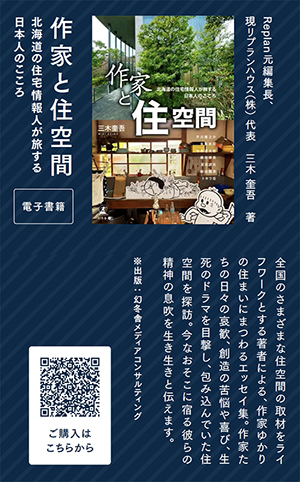
拙書「作家と住空間」幻冬舎から電子書籍で発刊
お求めはAmazonで。
https://amzn.asia/d/eUiv9yO
English version⬇
【The “Economy” Under Samurai Autocracy: A Glimpse into the Revenue of Sankin-kōtai Headquarters】
The headquarters inns along the Sanyō Road, where roughly 50 daimyō families from the western provinces concentrated. This explores a facet of their annual economy. The reality of their precious “cash income” economy. …
My family lineage is almost certainly confirmed to have operated as a player in the salt economy in Matsunaga, a salt-producing region near Imazu within the Fukuyama domain during the late Edo period. They acquired merchant shares in the trading city of Onomichi and conducted business activities. While grounded in this foundation, it has also been passed down that they simultaneously bore part of the economic burden for the Kawamoto family, who were entrusted with managing the “honjin” inn in Imazu. Yesterday’s blog mentioned that my ancestors are described in the travel essays of Matsuura Seizan, lord of the Hirado domain.
While operating as a merchant based on the Edo-period shareholding system, my ancestors during this period were also supported through their service relationship with the Honjin family in Imazu, enabling their “independence.” They also served as the closest “helpers” to the Honjin family (the Kawamoto clan).
As a distant descendant, I find myself wanting to understand the economic structure of the “honjin lodging” at that time.
However, the Imazu honjin suffered fires and “rebellion arson attacks” during the Edo and Meiji periods, leaving no surviving records. Therefore, I referred to records of the honjin lodgings in the geographically close towns of Hatsukaichi and Kunami found in the “Fukuyama City History.”
The Fukuyama City History commentary noted that income from “relay horse laborers” was substantial.
Relay horses numbered approximately 1,000 in 1835 (Tenpō 6). Laborers numbered roughly 7,000. AI confirms that “denma-ninjaku” refers to “horses prepared for transporting people and goods, along with the laborers (umako) who handled them. It also includes daimyo’s palanquin bearers and laborers tasked with moving heavy cargo (armor, rice, tools).”
The Edo period was an era of feudal military rule, so modern-day common sense doesn’t apply. While labor for public passage was sometimes treated as a form of tax and provided without compensation, the AI response indicates that at the honjin inns along the Sanyo Road—frequently used by around 50 western daimyo families—it was highly unlikely that local residents were forced to provide unpaid labor as in other regions. Payment was instead almost certainly made. It is estimated that a fairly substantial amount of “toll revenue” was generated.
If so, the red-marked sections on the chart likely represent payments made in currency. When estimated, the AI responded that this would equate to approximately 50 to 70 million yen per year in modern currency terms.
Unlike modern monetary societies, the “real value” of such currency can be inferred to have been significantly higher. After all, this was an era where living without using currency all day was perfectly normal for commoners.
A glimpse into the economic circumstances of my family lineage during the Edo period emerges, offering clues to its understanding. …
Notice
My book “Writers and Living Spaces” published as an e-book by Gentosha
Available on Amazon.
共有:

Posted on 11月 24th, 2025 by 三木 奎吾
Filed under: 未分類




コメントを投稿
「※誹謗中傷や、悪意のある書き込み、営利目的などのコメントを防ぐために、投稿された全てのコメントは一時的に保留されますのでご了承ください。」
You must be logged in to post a comment.