
過去の「わが家の足跡」を丹念にたどる旅は、時間の逆回転と現実空間との行き来で、次元の違う「興奮」がもたらされる。非常に「新鮮」なのです。
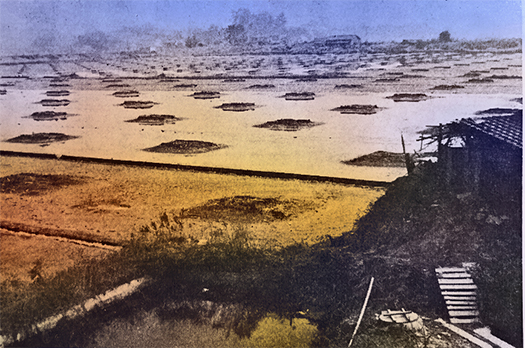
肉親たちによる探究努力の成果がベースになってその上でいろいろな現代的手法、AIなどで探究を深めることで面白い想像力ゾーンが広がってくれる。写真上はだんだん符合が重なってきて、わが家は福山市近郊の瀬戸内海で尾道と隣接する松永・今津地域に深く関わっていることが見えてきた。その松永はこの江戸後期には瀬戸内海の「塩田」事業が大活況を呈していて、そのことが日本資本主義の本格的揺籃期でもあったことが伝わってきている。写真は古写真による松永の入り浜式塩田。
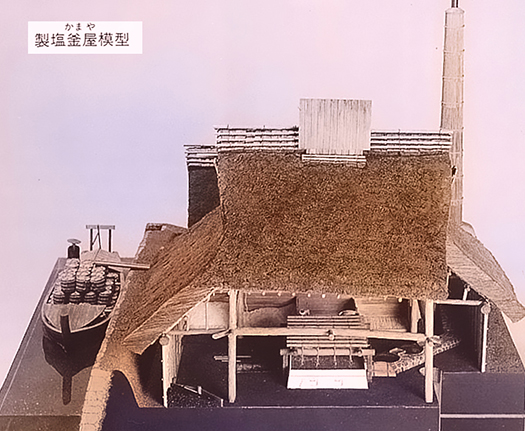
そしてその下は、そうした塩田から集めた濃度の高い塩水から窯で製塩していく窯場の資料写真。
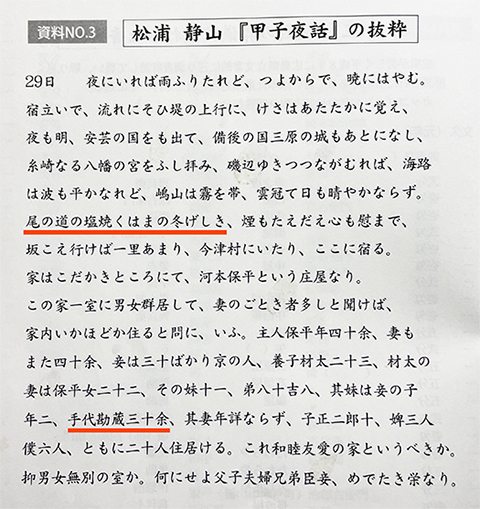
さらに江戸期の肥前平戸藩主で「甲子夜話」という記録文を遺した松浦静山公のその文章から、尾道から今津宿までの道中の塩田風景描写が見られる。そこで「わが家系の先祖」が、かれら貴人のための旅宿「本陣家」で、接遇に立ち働いている様子が活写されている。
「手代」というように記述されているけれど臨時的な応接接遇に本陣家の助っ人を務めている様子。この本陣家・河本家は「国造」以来のこの地域の格式高い名家であり、薩摩藩などの有力藩主たちが定宿として利用してきた。強固な身分制社会のなかで、その頂点のような大名家を応接するという気が張り詰める「サービス業」に緊張感を持って従事している様子。
松浦静山はまるで1室で多人数が「常時」暮らしていると殿様らしく誤解しているが(笑)、貴人を接待するという非日常事態に非常的体制で応接助力に全力だったのが実際でしょう。藩主たちに直接対面して言葉を交わすことも必然だっただろうし、さまざまな用向き、飛脚の手配などや地域での人力動員などの指揮監督のようなことも日常化していただろう。「いつ何時でも」の即応体制。
旅先での藩主としての特異な「外交的取り持ち」のようなこともあった。とくに薩摩藩が定宿として利用していたことから、機密に属する書状交流など介在することもあった。
歴史と産業状況把握を進めていくとわが家系の記録文の重ね合わせで、そのときの「空気感・臨場感」が伝わってきて興味深い。
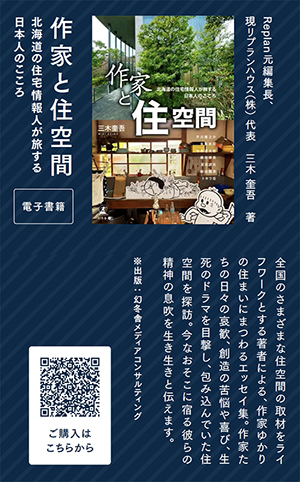
お知らせ
拙書「作家と住空間」幻冬舎から電子書籍で発刊
お求めはAmazonで。
https://amzn.asia/d/eUiv9yO
English version⬇
【My Family Line in 1802: Appearing in “Kōshi Yawa” by Matsuura Seizan of the Hirado Domain】
A renowned late Edo period chronicler depicts a scene from the sankin-kōtai system. The breath of my ancestor five generations back seems to ripple through the pages. …
The journey of meticulously tracing our family’s past footprints brings a slightly different kind of excitement by moving back and forth between the spatial experience of present reality and its temporal reversal. Moreover, exploring the sense of “past spatial sites” feels remarkably fresh.
Building upon the results of our relatives’ investigative efforts, we can deepen our exploration using various modern techniques, including AI, which opens up fascinating realms of imagination. In the photographs, patterns gradually overlap, revealing our family’s deep connection to the Matsunaga and Imazu regions near Fukuyama City, adjacent to Onomichi on the Seto Inland Sea. Matsunaga, during the late Edo period, saw a boom in the Seto Inland Sea’s salt field industry, a time that also marked the true cradle of Japanese capitalism. The photo shows Matsunaga’s inlet-style salt fields from an old photograph.
Below that is a reference photo of a kiln site where salt was produced in kilns from the highly concentrated brine collected from such salt fields.
Furthermore, writings by Lord Matsuura Seizan, the Edo-period lord of Hizen-Hirado Domain who left behind the recorded texts “Kōshi Yawa,” describe the salt field scenery along the route from Onomichi to Imazu-juku. There, the vivid portrayal shows “ancestors of my family line” actively engaged in hospitality duties at the “honjin” (official inn) serving these noble travelers.
Though described as “clerk,” they were likely temporary helpers assisting the honjin inn’s staff with reception duties. This honjin inn, the Kawamoto family, was a prestigious local family dating back to the kuni no miyatsuko (provincial governors) era, serving as a regular lodging for powerful daimyo like those of the Satsuma domain. Within the rigid class system, they worked with intense focus in this high-pressure “service industry” of attending to daimyo families at the pinnacle of society.
Matsuura Seizan seems to misunderstand this as multiple people “constantly” living in one room, as befits a lord (laughs), but the reality was likely that they were operating under an emergency system, giving their all to assist with reception during the extraordinary situation of entertaining dignitaries. Directly meeting and conversing with the feudal lords would have been inevitable, and tasks like handling various errands, arranging couriers, and directing the mobilization of manpower in the region would likely have become routine. It was a state of readiness “at any time, day or night.”
There were also unique “diplomatic mediation” duties as a feudal lord while traveling. Particularly since the Satsuma domain used it as their regular lodging, he sometimes mediated confidential correspondence exchanges.
As I delve deeper into historical and industrial contexts, overlaying records from my family lineage brings the “atmosphere and immediacy” of those times vividly to life—truly fascinating.
Notice
My book “Writers and Living Spaces” published as an e-book by Gentosha
Available on Amazon.
共有:

Posted on 11月 23rd, 2025 by 三木 奎吾
Filed under: 未分類




コメントを投稿
「※誹謗中傷や、悪意のある書き込み、営利目的などのコメントを防ぐために、投稿された全てのコメントは一時的に保留されますのでご了承ください。」
You must be logged in to post a comment.