
今週は亡父の命日供養での兄弟姉の集いや、幹事役を務めた高校同期の友人たちとの再会イベントも無事終了して、ようやく一段落。日常への復元。日常とはブログの執筆・思索や写真の整理整頓、さまざまな画像編集など「表現する」営為のことと自覚しています。
今回のイベント集中のためAdobe-Photoshopの画像編集機能のAI的進化と考えられる「カラー化」技術を本格的に利用していました。同窓会で保持している記録は55年前の写真類なのでほぼモノクロ画像。それに対してこのソフトの技術を適用させた。同時に、父母の記録写真などもほとんどモノクロだったので、これもカラー化させてみた。結果は、過去と現在との時間差の擬似的な超越体験。
そうしたら不思議と、いまブログで興味を持って考えつづけている「日本的・七五調短文文化」の心理のコアな部分への気付きも得られたと感じられた。日本的気候風土環境の中で特徴的な「庵」住文化を求める日本的心情と、この七五調短文文化の基本旋律はきわめて近縁的なのではないかと。
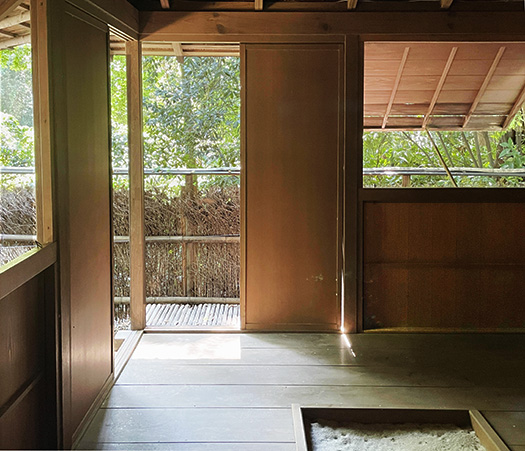
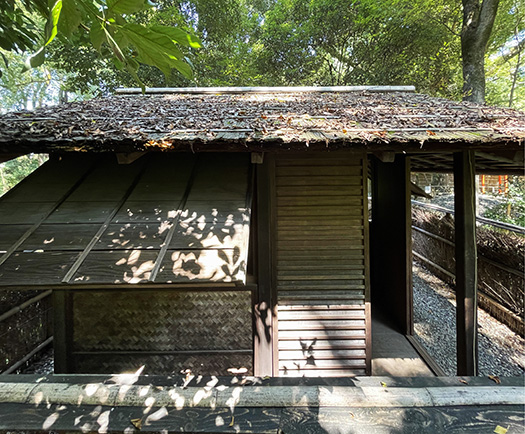
この写真の方丈庵は日本の短文的随筆の3大傑作のひとつとされる「方丈記」執筆と深い相関性がある。戦乱期と京都の大火の連続期に遭遇した作家・鴨長明は、そこに「もののあはれ」と「無常感」を深く感受し、この復元された庵住居に「終の住み処」心理を見出していたと気付かされた。
さらに思索を進めれば、七五調短文文化を住形式で表現するとすればこのような「庵」が最適解だとも思えてくる。後の世の「侘び寂び」的茶室志向とも通底するように思える。こういった住宅文化が、やがて「立って半畳・寝て一畳」という達観的住宅観に日本人を誘ったとも言える。
一方わたしたち積雪寒冷の地の日本人として「よき住宅」を望んだとき、こうした七五調短文文化と通底する住形式文化には「技術思想」を学ぶことはできなかった。比喩的に言えば、やわらかき母性を求めたのに、過酷な父性的精神性を唱えられてしまった、みたいな無力感と言えるだろうか。
やむなく北海道人は、北欧スウェーデンの住宅哲学「よき住宅」に範を求めた。
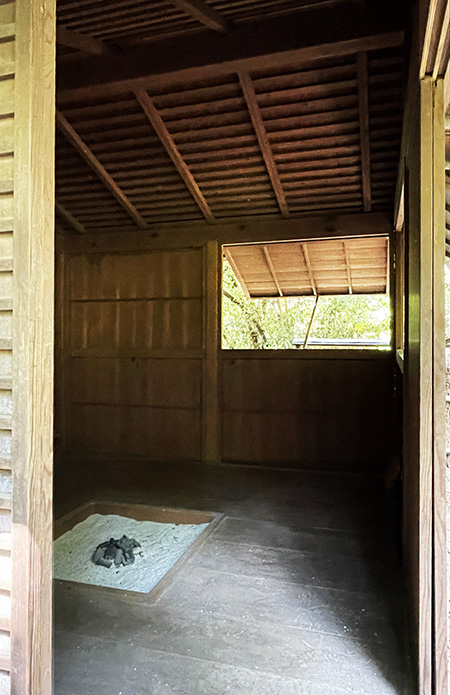
いまだに写真のような「庵」と高断熱高気密住宅技術は邂逅していない。
しかし北海道人も日本人であり、こうした鴨長明さんのたどりついた住宅意識それ自体には深い愛惜も感じている。愛着ではなく「愛惜」というコトバの選択だけれど。・・・
そして現代のわたしたち積雪寒冷地域人間にとって、七五調短文文化は今後どうなっていくのか。
どうも迷宮のような、スフィンクスの問いかけのような心理が木霊してくる。
●お知らせ
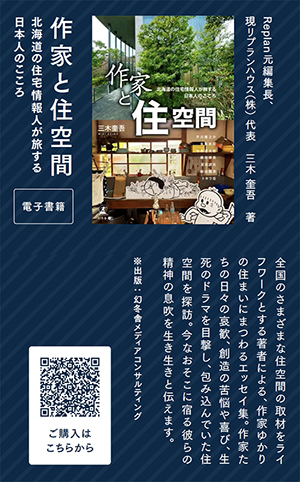
拙書「作家と住空間」幻冬舎から電子書籍で発刊
お求めはAmazonで。
https://amzn.asia/d/eUiv9yO
English version⬇
【The Culture of Seven-Five Syllable Short Prose and the Simple “Hermitage” Living Space / Kamo no Chōmei’s “Hōjō-an” -4】
Hermitages that visualize the pathos of things, wabi-sabi tea rooms. Will modern Hokkaido residents, who cherish high insulation and airtightness, be abandoned by Japanese culture? …
This week, with the memorial service for my late father and the reunion event with my high school friends—where I served as organizer—both successfully concluded, things have finally settled down. Back to daily life. I realize that daily life means engaging in the act of “expression”: writing and reflecting on my blog, organizing photos, and various image editing tasks.
To prepare for these events, I began seriously utilizing Adobe Photoshop’s “colorization” technology, which represents an AI-driven evolution in image editing. The photos preserved from our high school reunion are nearly all monochrome, dating back 55 years. I applied this software’s technology to them. Simultaneously, since most of my parents’ photographs were also monochrome, I colorized those as well. The result was a pseudo-transcendent experience bridging the temporal gap between past and present.
Then, strangely enough, I felt I gained insight into the core psychology of the “Japanese 7-5 rhythm short-form prose culture” I’m currently exploring with interest on my blog. The Japanese sentiment seeking the characteristic “hermitage” dwelling culture within Japan’s climate and environment, and the fundamental melody of this 7-5 rhythm short-form prose culture, seem to be extremely closely related.
This photo of the Hōjō-an hermitage has a deep correlation with the writing of the “Hōjōki,” considered one of the three great masterpieces of Japanese short essay writing. I realized that the author, Kamo no Chōmei, who encountered a period of continuous war and the great fires of Kyoto, deeply sensed the “mono no aware” (pathos of things) and the “sense of impermanence” there, finding in this restored hermitage dwelling the psychology of a “final place to live.”
Taking this thought further, if one were to express the culture of short, seven-five syllable verse in a dwelling form, such a “hut” seems the optimal solution. It also appears to share a common ground with the later “wabi-sabi” aesthetic found in tea ceremony rooms. This residential culture may well have gradually led the Japanese to embrace the detached view of housing encapsulated in the saying: “Standing, half a tatami mat; lying down, one tatami mat.”
On the other hand, as Japanese people living in snowy, cold regions who desired “good housing,” we could not learn “technical thinking” from this housing culture that shares a common ground with the culture of short, rhythmic prose. Metaphorically speaking, it might be described as a sense of helplessness—like seeking gentle motherly warmth, only to be presented with a harsh, fatherly spirituality.
Thus, Hokkaido residents inevitably sought inspiration in the Nordic Swedish housing philosophy of “good housing.”
To this day, the “hut” depicted in photographs has yet to encounter high-insulation, high-airtightness housing technology.
Yet Hokkaido residents are also Japanese, and they feel a deep sense of cherishing for the very housing consciousness that Kamo no Chōmei arrived at. Note the choice of the word “cherishing” rather than “attachment.” …
And for us modern inhabitants of snowy, cold regions, what will become of the culture of short, rhythmic prose?
A labyrinthine, sphinx-like question echoes in my mind.
●Notice
My book “Writers and Living Spaces” published as an e-book by Gentosha
Available on Amazon.
共有:

Posted on 9月 13th, 2025 by 三木 奎吾
Filed under: 未分類



コメントを投稿
「※誹謗中傷や、悪意のある書き込み、営利目的などのコメントを防ぐために、投稿された全てのコメントは一時的に保留されますのでご了承ください。」
You must be logged in to post a comment.