
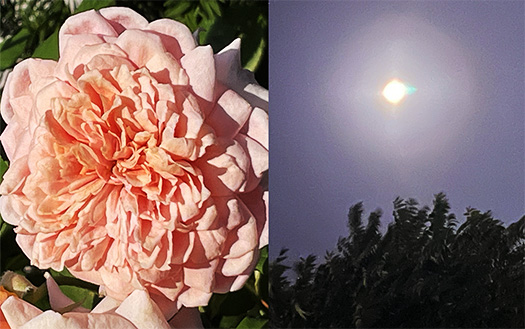

日本人の感受性を象徴する花鳥風月というもの。
やはりこの「方丈の庵」では、その日本人らしさを素で味わわせてもらっていた。
そして、北海道でより過酷な「花鳥風月」雪と氷が支配する世界がそこに加わって、なによりも住環境がより母性的に進化しなければ人間を守り切れない環境に生を得た人間には、この方丈の庵の居住環境には、愛着ではなく、愛惜の念を持つと記した。
たしかに日本人的感性はこのような居住環境構成のなかで永く育まれてきたのだろう。
こうした感性の「揺籃」の過程から「七五調」の短文文化も生成してきたのではないだろうか。たしかに「はな」「つき」「かぜ」「とり」などの2音節名詞群が日本語の基本であり、それに1音節の「を」「か」「が」「の」「と」などが接続することで基本的なコミュニケーションの「場」が形成出来る。それが基本的な音感的リズム感を派生させていって、言の葉を語り合う「よろこび」が担保されてきた。
日本人は漢字文化導入を経て、ベースにあった「やまと言葉」との調和を、民族挙げて取り組んでいった結果、かな文字を発明して独自言語を創成していったのだろう。漢字文化の全面導入という世界でも有数の「文化大革命」を咀嚼して来る中で、七五調短文文化も整理整頓されていった。
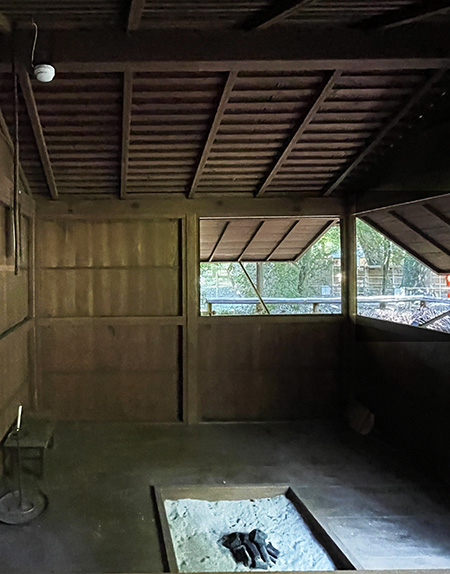
そういった日本人的「花鳥風月」世界観には、この「方丈の庵」のありようは適合的だろう。京都市年平均気温 15.9℃という環境の中では、開口部を締め切って囲炉裏で採暖すれば、冬もなんとか「受け流す」ことができてサクラの開花とともに穏やかな花鳥風月を満喫できるのだろう。それはそれで喜ばしいけれど、北海道人には「たしかにそこから移っては来た民ですが・・・」という心理的留保が発生する。ちなみに北海道の年平均気温は5℃から10℃程度。
やはりまったく新たな「花鳥風月」感性を寒冷地人は創造しなければならないのだろう、と。
考えて見ると、漢字文化導入期と比肩するような「文化大革命」を、少ない割合の民の人数で成し遂げなければならないということなのか。深い「愛惜と哀愁」感が募ってくる・・・。
●お知らせ
拙書「作家と住空間」幻冬舎から電子書籍で発刊
お求めはAmazonで。
https://amzn.asia/d/eUiv9yO
English version⬇
【The Supreme Space Cradling the Culture of Flowers, Birds, Wind, and Moon / Kamo no Chōmei’s “Hōjō-an” -5】
The differences between us and them that this spatial arrangement allows us to endure. The 7-5 syllable rhythm language culture born from that sensibility. What of our sensibilities within this isolated environment of snow and ice? …
The concept of “flower, bird, wind, moon” symbolizes the Japanese sensibility.
Indeed, at this “Hōjō no Iori,” I was able to experience that quintessential Japanese quality in its purest form.
And then, in Hokkaido, where a harsher “flower, bird, moon, and wind”—a world dominated by snow and ice—was added to this, I wrote that for humans born into an environment where the living conditions must evolve more maternally to fully protect them, the living environment of this Hojo no Iori evoked not affection, but a feeling of cherishing.
Indeed, the Japanese sensibility must have been nurtured over time within such living environments.
Didn’t the culture of short, seven-five syllable phrases also emerge from this cradle of sensibility? Indeed, the two-syllable nouns like “hana” (flower), “tsuki” (moon), “kaze” (wind), and “tori” (bird) form the foundation of Japanese. By connecting these with one-syllable particles like “wo” (with), “ka” (that), “ga” (that), “no” (of), and “to” (to), the fundamental ‘space’ for communication is established. This derived a basic sense of phonetic rhythm, ensuring the “joy” of exchanging words.
After introducing kanji culture, the Japanese people, as a nation, worked to harmonize it with the existing “mountain language” (native Japanese). This effort likely led to the invention of kana characters and the creation of a unique language. As they assimilated the comprehensive introduction of kanji culture—a “cultural revolution” unparalleled in the world—the seven-five rhythm short-sentence culture was also refined and systematized.
The existence of this “Hōjō’s Hut” would be well-suited to that Japanese worldview of “flowers, birds, wind, and moon.” In Kyoto’s environment, with an annual average temperature of 15.9°C, sealing off the openings and warming oneself by the hearth allows one to somehow “weather” the winter, enjoying the gentle beauty of nature alongside the cherry blossoms. While that is certainly delightful, for a Hokkaido native, a psychological reservation arises: “True, we are people who moved here from there…” Incidentally, Hokkaido’s annual average temperature ranges from 5°C to 10°C.
It seems we cold-climate dwellers must forge an entirely new sensibility for “flower, bird, wind, moon.”
Thinking about it, does this mean we must achieve a “cultural revolution” comparable to the era of introducing kanji culture, but with a much smaller population? A deep sense of “regret and melancholy” wells up…
●Notice
My book “Writers and Living Spaces” published as an e-book by Gentosha
Available on Amazon.
共有:

Posted on 9月 14th, 2025 by 三木 奎吾
Filed under: 未分類



コメントを投稿
「※誹謗中傷や、悪意のある書き込み、営利目的などのコメントを防ぐために、投稿された全てのコメントは一時的に保留されますのでご了承ください。」
You must be logged in to post a comment.