
先日「書道」の展覧会を参観させていただく機会があって、すっかり興味を深めています。
筆ペンをあれこれ買い込んできてはヘタな「書」を書いてその「表情の奥行き」に我がことながら、なぜここまで「心情」が表現されるのか、とワクワクさせられている次第。
で、筆ペンで書いていると、自ずと俳句とか和歌とかの「短文表現」文化に引き寄せられてくる。写経というような日本に根付いた伝統文化もあるけれど、それ以上にこういった文章文化に思いが至る。
70代になるまで主に仕事上の必要性・必然性から写真表現や長文文化の世界にどっぷりと浸かってきて、こういう文化世界に初めてと言っていいほどの遭遇感。主に「住宅建築」的な視点で近現代の作家の足跡をたどることをライフワークと考え始めて、たしかに正岡子規とか、さらに時代を遡って松尾芭蕉などの短文文学者の足跡機会も持ってきている。
そこから一歩進めて、短文文化自体の興味分野にも分け入ってみたいと思っています。
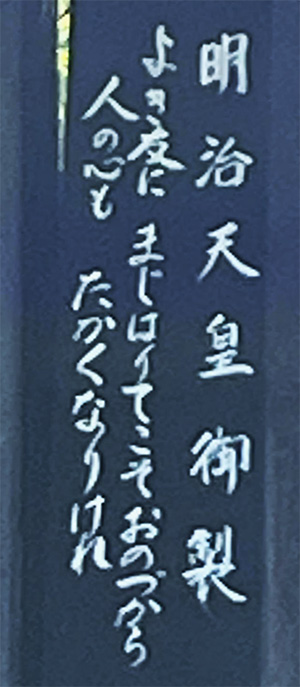
写真はそんな思いを脳裏に浮かべながら、日頃の散歩道で遭遇した明治天皇の「御製」。北海道神宮境内の「手水舎」ヨコにそっとあって、これまで気付くことがなかった。日本人は、こういう場でも短文表現で心象を相互に「通わせ」て、一種の行動規範として生かしてきている。
寄る年波ということでしょうか、いろんな場所で「御製」とめぐり会うことが増えてきているけれど、今更ながらその社会的コミュニケーションのありように内心、驚愕する思い。「よき友に まじはりてこそ おのづから 人の心も たかくなりけれ」。
こういう日常的ななんでもない習慣性空間で、ふとこういう「深み」に気付かせられる文化というものはやはり世界でも稀有なものだと思わされるのですね。
その機縁のありがたさに導かれてみたいです。
●お知らせ
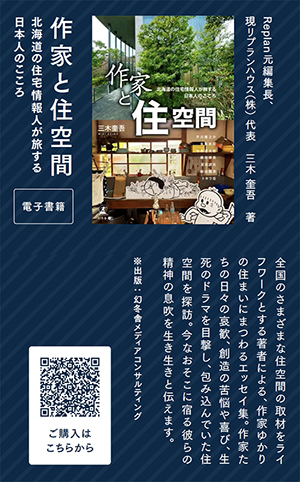
拙書「作家と住空間」幻冬舎から電子書籍で発刊
お求めはAmazonで。
https://amzn.asia/d/eUiv9yO
English version⬇
[The depth of Japanese original “5-7-5” poetry culture]
A text quietly placed as a “coincidence” in a place of Japanese customary behavior, the hand-washing basin at a shrine. A unique area of Japanese culture where one can enjoy its connotations. …
I recently had the opportunity to visit a calligraphy exhibition, which has deepened my interest in the art form.
I’ve been buying various brush pens and writing my own clumsy calligraphy, marveling at the depth of expression in the strokes and wondering why they convey so much emotion.
When I write with a brush pen, I naturally feel drawn to the culture of “short-form expression” like haiku and waka poetry. While there are traditional Japanese cultural practices like copying sutras, I find myself more drawn to this kind of literary culture.
Until my 70s, I had been deeply immersed in the world of photographic expression and long-form culture primarily out of necessity and inevitability for work. This encounter with such a cultural world feels almost like a first. I have begun to consider tracing the footsteps of modern and contemporary writers from a “residential architecture” perspective as my life’s work, and I have indeed had the opportunity to explore the footsteps of short-form literary figures like Masaoka Shiki and, going further back in time, Matsuo Basho.
From there, I would like to take a step further and delve into the field of short-form culture itself.
While pondering these thoughts, I came across Emperor Meiji’s “imperial poem” during my daily walk. It was quietly placed next to the “hand-washing pavilion” within the grounds of Hokkaido Shrine, and I had never noticed it before. Japanese people have used short-form expressions to convey their inner feelings to one another in such settings, and have incorporated them into a kind of behavioral norm.
Perhaps it is due to advancing age, but I have been encountering imperial poems in various places more frequently lately, and I am inwardly astonished by the nature of this form of social communication. “By associating with good friends, one’s heart naturally becomes elevated.”
Such a culture that subtly reveals such “depth” in everyday, ordinary, habitual spaces is indeed rare in the world.
I would like to be guided by the gratitude for such an opportunity.
●Notice
My book “Writers and Living Spaces” has been published as an e-book by Gentosha.
Available on Amazon.
共有:

Posted on 8月 17th, 2025 by 三木 奎吾
Filed under: 日本社会・文化研究



コメントを投稿
「※誹謗中傷や、悪意のある書き込み、営利目的などのコメントを防ぐために、投稿された全てのコメントは一時的に保留されますのでご了承ください。」
You must be logged in to post a comment.