
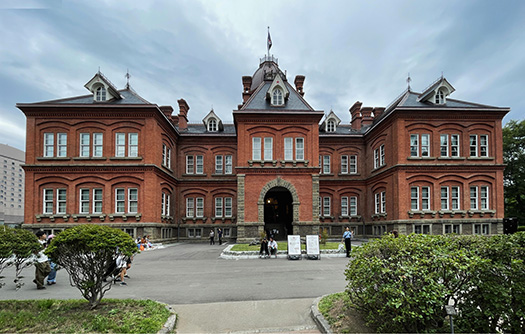
14日に道庁裏手の老舗旅館・中村屋で行われていた高校同期会の準備会&麻雀会の帰路、くだんの工事完了した赤煉瓦庁舎を通りすがってみた。ちょうど時間が17時直前で、内観の参観には時間もないし、またなによりも「ボロ負け」状態の麻雀結果で精神的に疲労感がMAXだったので(笑)外観参観のみ。あ、友人一同そこそこの分別盛りですので賭け麻雀ではありません(キッパリ)、念のため。
知人の札幌市立大の羽深先生のSNSなどで情報は知っていたのですが、どんな工事内容だったのかなど詳しくはまだ未調査。なんですがわが家の新築当時、北海道人として「北海道らしさ」にささやかなこだわりを持って、ほぼ地域独自と言ってもいい「コンクリートブロック造」でなお「外断熱」仕様とした上で、外断熱にするとブロック以外の素材でも「外皮」が構成できることをメリットと捉えて、その一部分を赤レンガの壁にしたかったのですね。
やはり北海道らしい素材として赤レンガ、そしてそのシンボルとしての建築・道庁赤煉瓦庁舎への地域住民的な「愛着感・プライド」があったのです。実際に積み上がっていくわが家の赤煉瓦壁を見ていると「家を建てている」という施主としての強い実感を持つことが出来た。
煉瓦壁工事を担当してくれた事業社の社長さんも自ら仕上げを確認してくれて「いい壁できたね(笑)」とうれしそうに言葉を掛けてくれたことが深く思い出される。個人によって家づくりの意味合いはそれぞれでしょうが、わたし個人としてコンクリートブロックと赤煉瓦仕様には思い入れが強い。
煉瓦建築からは白濁のように外皮に斑紋が表れるのですが、それは積層させていくときにつなぎ材として使うモルタルからアルカリ成分が浮き出てくる。普通はそれは「見たくない」と思われるのですが、わたしはそれもなにかの痕跡のように思えてキライではない。道庁赤煉瓦庁舎でも、築137年以上(1888年建築)経過していてなお、その斑紋が浮き出ているのを見て、かえってうれしく思えている。
ということで今回は外観参観だけでしたが、ほぼ無限の建築生命感に打たれていました。・・・
●お知らせ
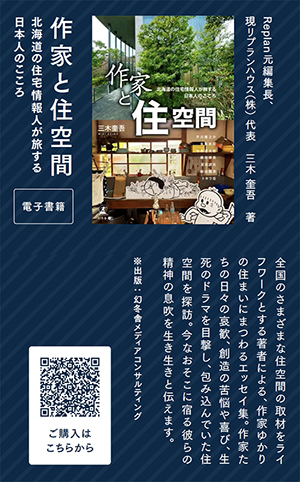
拙書「作家と住空間」幻冬舎から電子書籍で発刊
お求めはAmazonで。
https://amzn.asia/d/eUiv9yO
English version⬇
[Renovation of the former Hokkaido Government Office Building, known as the “Red Brick Building”]
The Japanese government entrusted its strong feelings toward the new frontier of Hokkaido to this building. We pray for the longevity of this red brick building so that the message from our predecessors will live on forever. …
On the 14th, on my way home from a preparatory meeting and mahjong game for a high school reunion held at Nakamuraya, a long-established ryokan behind the prefectural office, I happened to pass by the red brick government building where the construction had been completed. It was just before 5:00 p.m., so I didn’t have time to look inside, and besides, I was mentally exhausted from losing badly at mahjong (laughs), so I just looked at the exterior. By the way, my friends and I are all of a certain age, so it wasn’t a gambling mahjong game (to be clear), just to be sure.
I had heard about the construction through my acquaintance, Professor Habuka of Sapporo City University, but I hadn’t yet investigated the details of the construction work. However, when our house was newly built, as a Hokkaido native, I had a small obsession with “Hokkaido-ness,” and opted for a “concrete block construction” that could almost be called regionally unique, with an “external insulation” specification. I saw the advantage of being able to use materials other than blocks for the “exterior envelope” with external insulation, and wanted to use red brick walls for part of it.
Red brick is a material that embodies the essence of Hokkaido, and there was a sense of attachment and pride among local residents toward the Hokkaido Government Red Brick Building, which serves as a symbol of the region. Watching the red brick walls of our home being built gave me a strong sense of ownership as the homeowner.
The president of the construction company responsible for the brick wall work personally inspected the finish and cheerfully remarked, “What a nice wall!” That moment remains deeply etched in my memory. While the meaning of home construction varies from person to person, I personally have a strong attachment to the combination of concrete blocks and red brick.
In brick architecture, white spots appear on the exterior surface, which are caused by alkaline components from the mortar used as a binder when layering the bricks. While this is typically considered undesirable, I find it reminiscent of some kind of trace and do not dislike it. At the Hokkaido Government Red Brick Building, which has been standing for over 137 years (built in 1888), I was actually delighted to see those patterns still visible.
So, this time it was just an exterior tour, but I was deeply moved by the almost infinite sense of architectural vitality. …
●Announcement
My book “Writers and Living Spaces” has been published as an e-book by Gentosha.
Available for purchase on Amazon.
共有:

Posted on 8月 16th, 2025 by 三木 奎吾
Filed under: 未分類



コメントを投稿
「※誹謗中傷や、悪意のある書き込み、営利目的などのコメントを防ぐために、投稿された全てのコメントは一時的に保留されますのでご了承ください。」
You must be logged in to post a comment.