
わたしのような戦後生まれで戦後教育で育った年代からすると明治期以降の散文・長文の文学作品、具体的には夏目漱石などの年代以降がその後の日本文化の基本のように受容してきていた。そういう人間からすると「おくのほそ道」やその構成要素である七五あるいは五七の音節の余韻文化には、古語という感覚が大きかった。たぶん明治以降の脱亜入欧気分、近代化現代化という日本社会の基本的な「右肩上がり志向」が人間のこころに大きな干渉を与え続けていたのだと思える。しかしその夏目漱石は無二の友人として正岡子規がいて、四国松山で同じ住居で同棲(笑)までしていた肝胆照らす関係だった。根っこの表現が生まれてくる「波動」的な部分でお互いに共鳴し合っていたに違いない。
俳句にしろ短歌にしろどれもが「5と7」の音の組み合わせで構成されている日本語の詩文。その由来については一般的に以下のような説が強い。
●大和言葉は、二音節の単語(例: 花、月、雪)と三音節の単語(例: 命、心、力)を基本としていて、これらの単語を組み合わせることで、自然と五音と七音のリズムが生まれる。
●英語のような強弱のリズムではなく、音節の数でリズムを刻む。そのため五音と七音の組み合わせが、日本語話者にとって心地よいリズムとして認識されやすい。
●ほかにも稲作が広まり人々の生活に根付いたことで、二拍子や四拍子のリズムが自然に受け入れられたとも。
こういう詩文の日本文化のなかで、1644ー1694年という50年間を生きた松尾芭蕉さん。
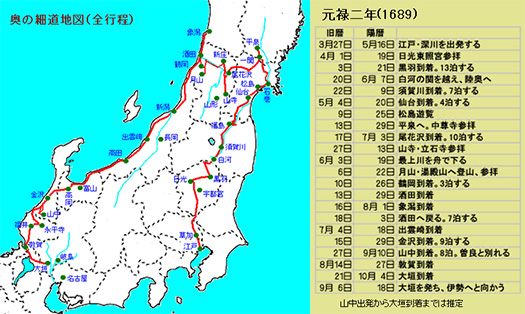
「おくのほそ道」という最高傑作で民族を代表する文学者として記憶されてきている。日本の近代以前の「文学者」として西行と並ぶほどの存在感を示している。50年の生涯のうち1675年にこの詩文文学での本格的活動を江戸で開始した。30歳前後。そこから1689年44歳の時にこの「おくのほそ道」取材&現地での「興業」旅は行われている。この旅から4−5年でかれは世を去っているワケだから、まことに儚い。やはりその後の作品の無数の出版が、かれの事跡を大きく評価させていったということなのだろう。
日本においてこういう詩文文化がどのように経済的に「あり得ていたか」も非常に興味深い。現代社会では出版と言うことは一般化して、またテレビという情報拡散に圧倒的なツールもあるけれど、そうではないメカニズムの中ですらこの作品は圧倒的に存在感を示し続けてきた。
●お知らせ
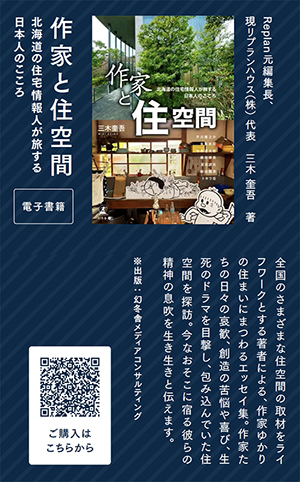
拙書「作家と住空間」幻冬舎から電子書籍で発刊
お求めはAmazonで。
https://amzn.asia/d/eUiv9yO
English version⬇
[Matsuo Basho’s journey in “Oku no Hosomichi”]
This journey took place four or five years before his death. The meaning of life had changed, but that is precisely why I am attracted to the spirit of literary creation and its stylistic nature. …
For someone like me, born after the war and raised under postwar education, literary works of prose and long-form writing from the Meiji period onwards—specifically those from the era of Natsume Soseki and later—have been accepted as the foundation of Japanese culture. From such a perspective, the cultural resonance of the seven-five or five-seven syllable structure in “Oku no Hosomichi” and its constituent elements evoked a strong sense of archaic language. I think the Meiji-era mindset of “leaving Asia and entering Europe,” along with Japan’s basic “upwardly mobile” orientation toward modernization and industrialization, continued to exert a significant influence on people’s minds. However, Natsume Soseki had a close friend in Masaoka Shiki, with whom he shared a residence in Matsuyama, Shikoku, even living together (laughs). They must have resonated with each other in the “wave-like” part where the root expressions were born.
Whether it be haiku or tanka, all Japanese poetry is composed of combinations of “5 and 7” sounds. The following theory is generally accepted as the origin of this.
●Yamato words are based on two-syllable words (e.g., flower, moon, snow) and three-syllable words (e.g., life, heart, strength), and combining these words naturally creates a rhythm of five and seven syllables.
●Unlike the stress-based rhythm of English, Japanese rhythm is based on the number of syllables. Therefore, the combination of five and seven syllables is easily recognized as a pleasant rhythm by Japanese speakers.
●In addition, as rice cultivation spread and became rooted in people’s lives, two-beat and four-beat rhythms were naturally accepted.
Matsuo Basho lived during this 50-year period of Japanese cultural poetry from 1644 to 1694.
He is remembered as a literary figure representing the nation through his masterpiece “Oku no Hosomichi.” He demonstrated a presence rivaling that of Saigyo as a “literary figure” in pre-modern Japan. He began his serious literary activities in Edo in 1675, at the age of 30. He was around 30 years old at the time. From there, in 1689, at the age of 44, he undertook the research and “performance” journey for “Oku no Hosomichi.” He passed away four to five years after this journey, which is truly tragic. It is likely that the numerous publications of his works afterward greatly contributed to the evaluation of his achievements.
It is also fascinating to consider how such poetic culture could have economically sustained itself in Japan. In modern society, publishing has become widespread, and television serves as an overwhelming tool for information dissemination. Yet even within such mechanisms, this work has continued to exert an overwhelming presence.
●Notice
My book “Writers and Living Spaces” has been published as an e-book by Gentosha.
Available for purchase on Amazon.
共有:

Posted on 8月 18th, 2025 by 三木 奎吾
Filed under: 日本社会・文化研究




コメントを投稿
「※誹謗中傷や、悪意のある書き込み、営利目的などのコメントを防ぐために、投稿された全てのコメントは一時的に保留されますのでご了承ください。」
You must be logged in to post a comment.