

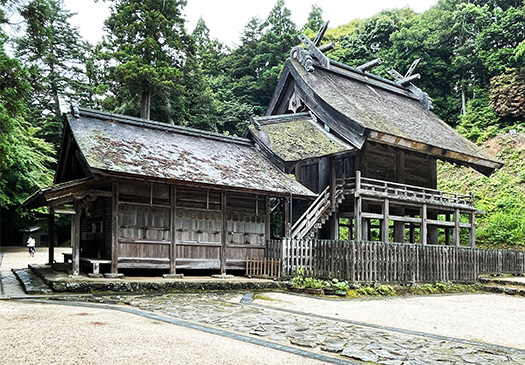
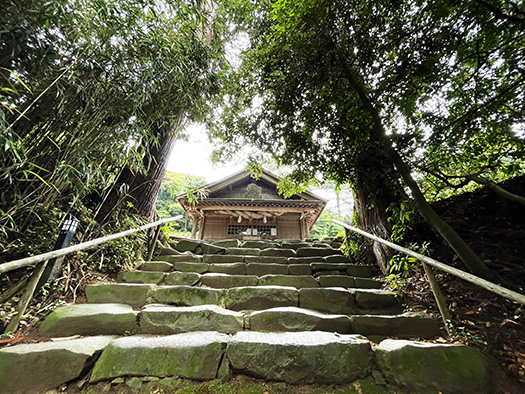
奈良県橿原在住の知人の日本画家から、山陰への旅に当たってかれの出身地の古社として紹介されていたのがこの神社。出雲大社の殿舎はなんども火災にあっているけれど、この神魂神社の殿舎は古格の出雲大社建築の工法を最古のカタチで伝承してきている。心御柱古材に「正平元年丙戌十一月日」の墨書銘があり柱古材は1346年当時の柱と考えられる。現存建築としては築679年経過ということになりたしかに最古級。そうしたことから建築として日本最古の大社造りであり国宝に指定。また、石段には自然石が使われていて「男坂」として結構な急勾配。なんとか登り切った。
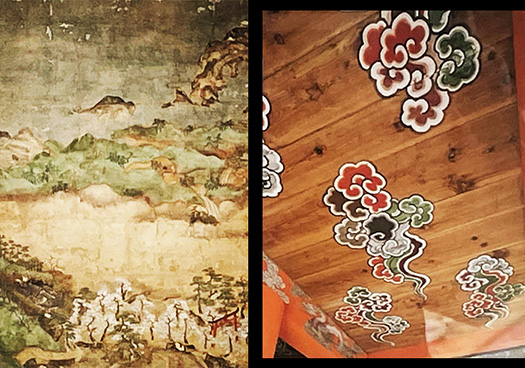
出雲国造府が立地していたことが推定されその鎮守として存在してきた。祭神は伊弉諾・伊弉冉。神社の「案内」には以下記述(要約)。〜当社は出雲国造の太祖「天穂日命(アメノホヒノミコト)」がこの地で創建。以来その子孫が出雲国造として奉仕された。本殿は3間四方で高さ4丈。床が高く柱が太く宇豆柱が壁から著しく張り出しているなど大社造の古式に則っていて昭和27年3月に国宝指定された。本殿内には狩野派の画家・土佐光起(江戸期1617-1691年)の壁画9面と天井画に五色の瑞雲が彩られている。〜
さらに、天穂日命が高天原から天下る際に乗って来られたと伝わる古い「鉄窯」も祀られていることも興味深い。山陰地域はその山並みに豊かな鉱物資源が存在し、古代において鉄の生産が国産ではできなかったためにさかんに朝鮮半島国家との政戦があったけれど、そうした戦いが停止したことの裏側にはこの地で本格的に国内生産がはじまったことが大きい。神話と鉄器のクロスは刺激的。
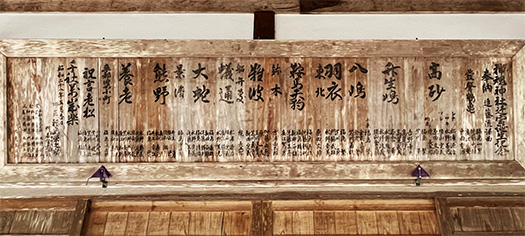
ここでは神前結婚式のあと「神楽」まで奉納される。という古格ぶりに敬虔に参拝していたらこの神社で50年前に結婚式を挙げたご夫婦と出会って談笑。この古格な神社での結婚費用を50年前、若気の至りで極少金額(あえて金額は公表しません)の奉納で済ませていたという白状。おお、そんだけかよ、と釣られて大爆笑。しかしそういうご縁に感謝し続け、現在お住まいの滋賀県からクルマで足繁く通われているのだそう。神縁・ご加護か。
●お知らせ
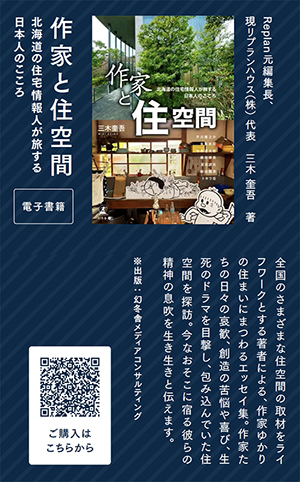
拙書「作家と住空間」幻冬舎から電子書籍で発刊
お求めはAmazonで。
https://amzn.asia/d/eUiv9yO
English version⬇
Kamosu Shrine, the oldest national treasure and a tale of marriage.
An ancient shrine where kagura (traditional Shinto music and dance) is dedicated. A couple got married with a very small amount of money and have been worshipping at the shrine for more than 50 years out of gratitude. A true divine favor. The shrine is a Shinto shrine.
A Japanese-style painter acquaintance of mine who lives in Kashihara, Nara Prefecture, introduced this shrine to me as an ancient shrine in his hometown on a trip to the San-in region. Although the Izumo-taisha Shrine building has been damaged by fire many times, this Kamikami Shrine has inherited the oldest construction method of the ancient Izumo-taisha building. The old wood of the central pillar has an inscription in ink, “Shohei-gen-nen hei inu juichigatsu” (11th day of the 11th month of the 1st year of the Shohei-gen era), and it is thought that the old pillar was built in 1346. This means that the oldest surviving building in Japan is indeed 679 years old. The oldest existing building in Japan, the Taisha-zukuri is designated as a National Treasure. The stone steps are made of natural stone and are quite steep as a “men’s slope. I managed to climb it.
It is estimated that the Izumo Provincial Government was once located here, and the shrine has existed as a Shinto shrine. The deities are Izanagi and Izanami. The shrine’s “Guide” describes the shrine as follows (in summary) 〜The shrine was founded here by Amenohohinomikoto, the founder of the Izumo-no-kunizo clan. Since then, his descendants have served as Izumo kokuzo. The main hall is 3 ken (3 ken) square and 4 meters high. It was designated as a National Treasure in March 1952 because of its high floor, thick pillars, and Uzumabashira, which protrudes significantly from the wall, in accordance with the ancient Taisha-zukuri style. The main hall is decorated with nine mural paintings by Tosa Mitsuki (Edo period, 1617-1691), a painter of the Kano school, and the ceiling paintings are decorated with five-colored auspicious clouds. ~
It is also interesting to note that an old “iron kiln” is also enshrined here, which is said to have been ridden by Amahoninomikoto on his descent from the high heaven. The San’in region has abundant mineral resources in its mountain ranges, and in ancient times, because iron could not be produced domestically, there were many political battles with the Korean peninsula, but the cessation of such battles was largely due to the start of full-scale domestic production here. The cross between mythology and ironware is exciting.
The shrine even dedicates a kagura (traditional Japanese music and dance) performance after the wedding ceremony. While I was respectfully worshipping at this ancient shrine, I met a couple who had married 50 years ago at this shrine and had a chat with them. They confessed that they had paid for their wedding at this ancient shrine with a very small amount of money (we dare not disclose the amount) in a youthful indiscretion 50 years ago. Oh, that’s all there is to it? But he continues to be grateful for that kind of connection, and he commutes to the shrine frequently by car from Shiga Prefecture, where he currently lives. A divine fate or blessing?
Notice
My book “The Writer and the Living Space” is published as an e-book by Gentosha.
Please visit Amazon for more information.
共有:

Posted on 6月 27th, 2025 by 三木 奎吾
Filed under: 出張&旅先にて




コメントを投稿
「※誹謗中傷や、悪意のある書き込み、営利目的などのコメントを防ぐために、投稿された全てのコメントは一時的に保留されますのでご了承ください。」
You must be logged in to post a comment.