
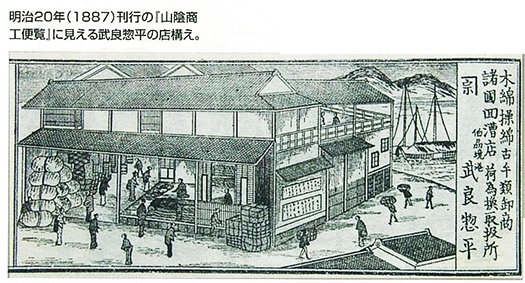
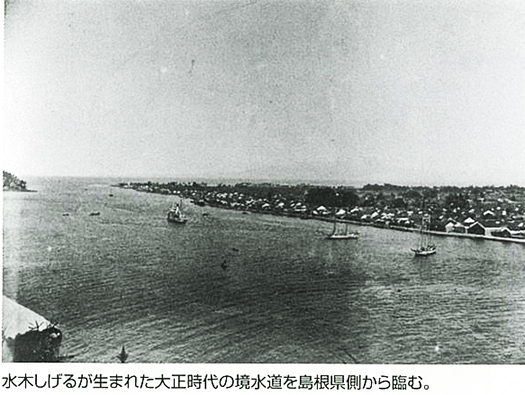
水木しげるは、1922(大正11)年に生まれている。出生届出地は父の勤務の関係で大阪だったが生後間もなく、実家のある境港に移り住んだ。記念館のパンフに掲載されている写真を見ていて、わたしの父母とも時系列的にほぼ同時代性を感じる写真群で、深く癒されている。私の父母とは十数年〜数年程度のタイムラグがあって水木しげるはやや年少になるけれど、ほぼ同時代と言える。北海道と鳥取という遠隔地だけれど、同じような「時代の空気」に揺籃されていたのだと伝わってくる。それがまた、わたしの父母への思いとも重なって癒される次第。
人間のなかのある種の人たちは「歴史」に惹かれるものだろうけれど、その心象のコアにはこういった空気感への共感があるのだろうと思う。血脈の説得力から時代環境への温度感のあるあたたかさ。わたしの祖父母たちの年代は、こうした風景の「日本海交易」の船便を利用して瀬戸内海側の鞆か尾道から船出して、遠く北海道の小樽まで移住大移動をしていた。日本民俗史のなかですれ違いするのだけれど、袖擦れ合うも他生の縁、という言葉もあるけれど、そのような残響がこだましてくる。
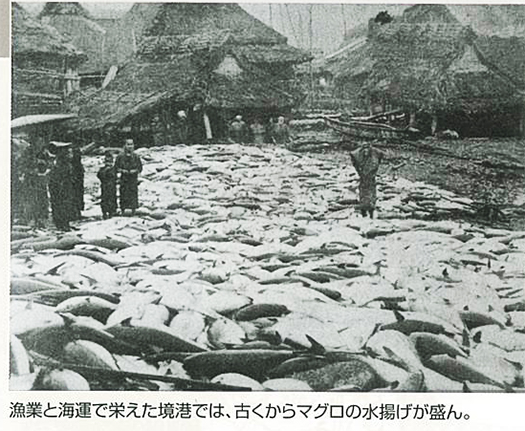
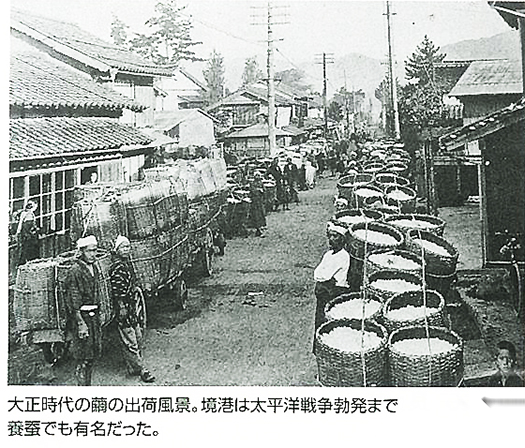
こちらの写真は境港の漁港の水揚げ風景と養蚕・まゆの出荷風景。こういう時代風景の中から多くのひとの人生がスタートしていたのだと詠嘆させられる。そして先日掲載したような宍道湖の夕景のような自然の輪廻の中で日々の暮らしがあったことが想像力に沸き立ってくる。
北前船交易の主役としての「廻船問屋」という存在はまさに地域経済を引っ張る存在だったことだろう。あらゆる地域産品生産者と直接つながり、全国の交易相手に地域産品を売りさばく。まさに経済中核。マンガ文化勃興期から現代に至るまで、水木しげるはその環境で活躍したけれど、血脈はこのような社会背景の中で存続し生き長らえてきた存在であった。
●お知らせ
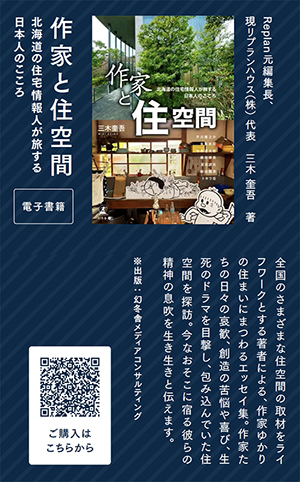
拙書「作家と住空間」幻冬舎から電子書籍で発刊
お求めはAmazonで。
https://amzn.asia/d/eUiv9yO
English version⬇
[Bloodlines of the Kitamae trading “Kaisen wholesaler” – Going to see Shigeru Mizuki – 4]
When I grasp the social background and time line, I feel “Sleeve rubbing together is another life’s fate”. The intersection of each bloodline. The Sea of Japan, quiet waves. The Sea of Japan, quiet waves.
Shigeru Mizuki was born in 1922. His birthplace was Osaka due to his father’s work, but soon after his birth, he moved to Sakaiminato, where his parents lived. Looking at the photos in the pamphlet of the museum, I am deeply comforted by the fact that they are almost chronologically the same as those of my parents. Although there is a time lag of about ten to several years between my parents and Mizuki Shigeru, and Mizuki Shigeru is slightly younger than my parents, I can say that they were almost the same age. Although they lived in remote locations in Hokkaido and Tottori, I can feel that they were cradled in the same “atmosphere of the times. This also overlaps with the feelings I have for my parents, and it soothes me.
I believe that certain people are attracted to “history,” and that at the core of their emotional response is a sense of empathy with this kind of atmosphere. From the persuasive power of the bloodline to the warmth of the temperature of the environment of the times. In my grandparents’ generation, people of their generation used the “Sea of Japan Trade” shipping services to leave Tomo or Onomichi on the Seto Inland Sea side and migrate as far away as Otaru in Hokkaido. Although our paths crossed in the course of Japanese folklore history, there is an echo of the phrase, “Sleeve rubbing against sleeve is another life’s karma,” that echoes through the air.
The photos here show a scene of a fishing port in Sakaiminato, where fish are landed and silkworms and silkworm cocoons are shipped. It makes me marvel at the fact that many people’s lives began in these scenes of the times. And the evening view of Lake Shinji, as shown in the previous article, brings to the mind’s eye the idea that people lived their daily lives in the cycle of nature.
The presence of “shipping wholesalers” as the main players in the Kitamae-bune trade must have been a driving force in the local economy. They had direct connections with producers of all kinds of local products and sold them to traders all over the country. They were the very core of the economy. Shigeru Mizuki was active in this environment from the rise of manga culture to the present day, but his bloodline has survived and thrived in this social context.
●Notice
My book “The Artist and the Living Space” is published by Gentosha as an e-book.
Please visit Amazon for more information.
共有:

Posted on 6月 20th, 2025 by 三木 奎吾
Filed under: 日本社会・文化研究



コメントを投稿
「※誹謗中傷や、悪意のある書き込み、営利目的などのコメントを防ぐために、投稿された全てのコメントは一時的に保留されますのでご了承ください。」
You must be logged in to post a comment.