
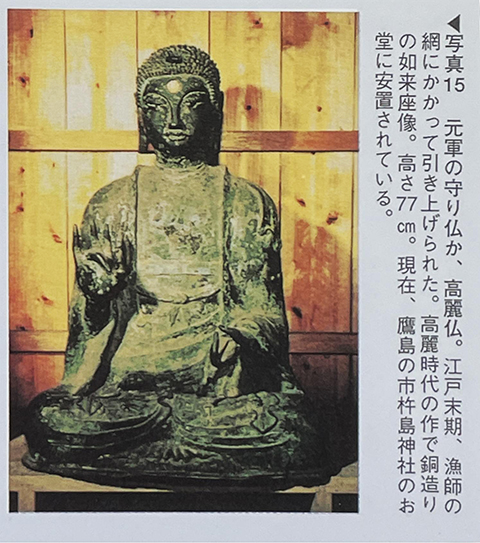
写真上はきのう紹介した元の軍船団が集結していて大型風台風の直撃を受けた「鷹島」海域の海岸線に打ち上げられていた高麗の船のものと推認される仏像。軍船のなかで「守り仏」として機能させていたのではないかと言われる。軍人たちの精神世界を映し出している「鑑」。そうした信仰対象として仏教がこの時代、非常に浸透していたことがわかる。
このような仏教信仰はこの時代、東アジア世界では汎世界性を持っていた。元はこうした世界帝国を目指して侵略活動を広げていったけれど、一方で仏教信仰においてはチベット仏教を篤く崇敬したとされている。
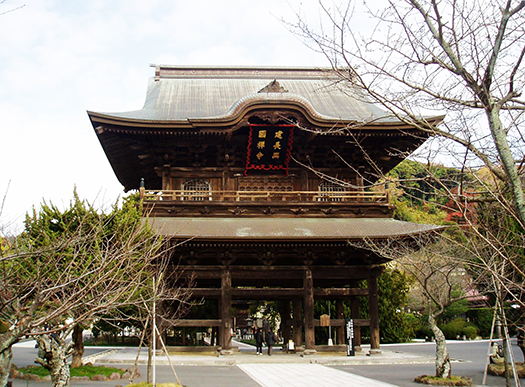
一方、下の写真は鎌倉に現存する「建長寺」の山門建築。こちらは南宋の仏教文化の勧請であって、深く「禅宗」に帰依した歴代の鎌倉幕府執権・北条氏によって開かれた大寺院。鎌倉幕府を挙げての巨大建築群として鶴岡八幡宮や大仏建立などと並んで政権最大の公共建築作事だったことがわかる。その傾注努力たるや今日の大阪万博ごときの比ではなかっただろう。開山にあたっては宋から蘭渓道隆という禅の宗教的権威者が来朝して最高指導者を務めていた。言ってみれば鎌倉幕府としての外交姿勢、その端的な表明だとも言える。
日本も元もどちらも世界宗教としての仏教を尊崇する権力だけれど、宋と元の大陸国家の独裁権力争奪の強い影響が反映していたと思える。とくに鎌倉幕府は武家政権という新興勢力としての新規性もあってか、宋でも新興期にあった禅宗に深くひかれて、この建長寺には、そのときの「元号〜建長」とまで名付けていわば権力を挙げてその興隆を支えていた。中国・宋から禅の最高権威を招聘するほどの肩入れぶり。さらには「武士道とは死ぬことと見つけたり」という葉隠の記述はそれ自体は江戸期の著作だけれど、武士という存在の精神性をえぐり出した言の葉だと思う。そういう武士たちの「生き様」の背骨には禅宗の醸し出す世界観が似つかわしく感じられるのだろう。
そういった鎌倉幕府指導層にとって、元と宋の対立という大陸権力争奪状況においては日頃から敬愛する南宋出身の蘭渓道隆などの政治姿勢が大いに影響を与えたと思える。そういう禅僧、宋の時代に興隆を勝ち取った禅宗勢力としては、元に対して否定的な立場であっただろうことは容易に推測できる。
English version⬇
[Buddhism and its connection with conquering powers and politics: The Genko Historical Museum – 12]
The contrast between he and ego conveys the religious beliefs of the people at the time of the Genko invasion. The Kamakura warriors accepted the Zen Buddhism culture of the Sung dynasty as a strong expression of their spirituality. …
The photo above shows a Buddhist image that is presumed to belong to a Goryeo ship that was washed up on the shoreline of the “Hawk Island” area, where the Yuan military fleet was assembled and was directly hit by a large wind typhoon, as introduced yesterday. It is said that it may have functioned as a “guardian Buddha” among the military ships. A “mirror” reflecting the spiritual world of the soldiers. It is clear that Buddhism was very prevalent in this period as an object of such faith.
Such Buddhist beliefs had a pan-world character in the East Asian world during this period. The Yuan Dynasty expanded its invasion activities aiming at such a world empire, but on the other hand, it is said that Tibetan Buddhism was revered as an object of Buddhist faith.
The photograph below shows the gate of Kenchoji Temple in Kamakura. This is a large temple that was opened by successive regents of the Kamakura Shogunate, the Hojo clan, who were deeply devoted to Zen Buddhism and were encouraged by the Buddhist culture of the Southern Song dynasty. As a huge group of buildings, it was the largest public building project of the Kamakura Shogunate, along with the Tsurugaoka Hachiman-gu Shrine and the Daibutsu (Great Buddha). The effort devoted to this project could not be compared to today’s Osaka Expo. At the opening of the temple, a Zen religious authority from the Song dynasty, Lanxi Doryu, came from the Song dynasty and served as the supreme leader. In other words, it was a clear statement of the Kamakura Shogunate’s diplomatic stance.
Both Japan and the Yuan were powers that venerated Buddhism as a world religion, but it seems that the strong influence of the Song and Yuan continental states’ struggle for dictatorial power was reflected. In particular, the Kamakura Shogunate, perhaps due in part to its novelty as a new power in the warrior government, was deeply attracted to Zen Buddhism, which was also in the emerging phase of the Song dynasty, and even named this Kenchoji temple Kencho, the name of the temple at that time, Kencho, to support its rise to power. He was so devoted to Zen that he even invited the highest authority on Zen from the Song dynasty of China. Furthermore, the statement by Hagakure, ‘Bushido is found in death’, is itself a work from the Edo period, but I think it is a phrase that has revealed the spirituality of the samurai. The world-view created by Zen Buddhism seems to fit the backbone of the “way of life” of such warriors.
For such leaders of the Kamakura Shogunate, the political stance of Lanxi Doryu and others from the Southern Song dynasty, whom they respected and admired regularly, had a great influence in the conflict between the Yuan and Song dynasties for power on the continent. It is easy to assume that these Zen priests, the Zen Buddhist power that had achieved prosperity during the Song dynasty, would have been in a negative position towards the Yuan.
共有:

Posted on 5月 14th, 2025 by 三木 奎吾
Filed under: 歴史探訪



コメントを投稿
「※誹謗中傷や、悪意のある書き込み、営利目的などのコメントを防ぐために、投稿された全てのコメントは一時的に保留されますのでご了承ください。」
You must be logged in to post a comment.