
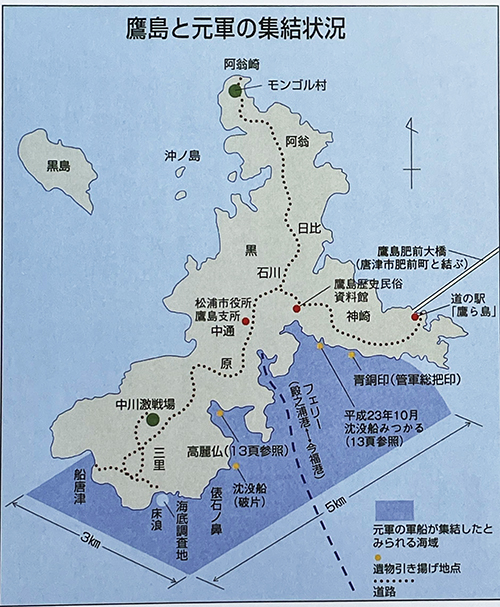
今回の元寇史料館訪問でわかったことの最大のポイントはやはり海上からの侵略行動にとって、もっとも枢要な要件は海洋気象ということが明確になったこと。要するに台風である。
長崎県伊万里湾口の鷹島沖海域を埋め尽くしていた元の軍船団が実に1281年8月17日にほぼ潰滅している。
侵略側の記録でも「元軍の帰らざる者、約10万。高麗軍の帰らざる者7000余人」(高麗の史書)「風が船を破る」「風に遭って、船ことごとく壊す」と元側の記録にも短く、その悔しさ、無念さを滲ませているという。
新暦の8月17日は台風襲来の頻発する二百十日にほど近い。九州大学の故・真鍋大覚博士の樹齢数千年の屋久杉の研究調査から、このときの台風は中心気圧950hp、最大瞬間風速55.6mという超大型台風だったとされる。この鷹島海域の伊万里湾地域では風速30mの強風が夜通し20時間にわたって吹き荒れた。
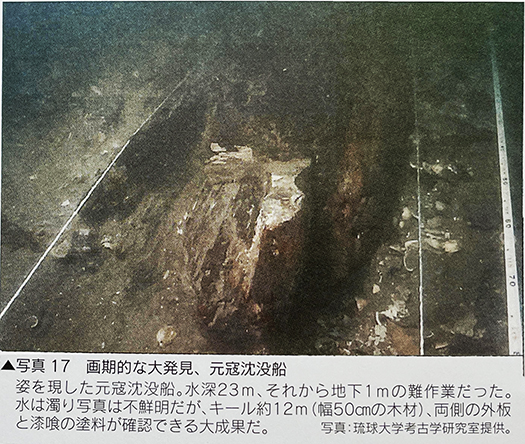
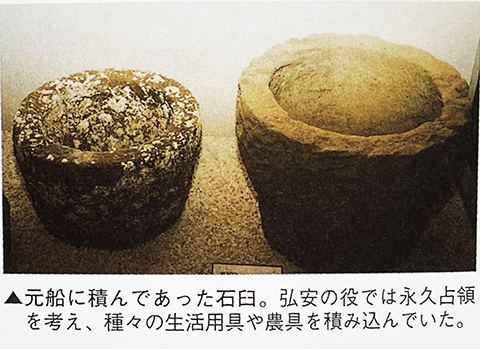
こういう台風に際して、厳重に港に停泊させていたワケではない木造大型船、それも4000余艘もの大船団がひしめき合っていた状態では、相次いで玉突き状態に陥り、沈没し波に呑み込まれてしまったことは自明。事実としても、この海域の水中からは水中考古学の知見からもたくさんの証明事実があきらかにされてきている。また、この鷹島の沿岸地域からはたくさんの物証が歴史的に発見されてきている。
しかしこの海域に1カ月間以上逗留し続けていたことは、元軍側の作戦行動の拙劣さを表している。当然、海を渡っての軍事行動であり、そういった気象や現地地形情報収集は完璧にされていたと考えられる。それなのになぜ、という疑問。この海上部隊はこの歴史段階ですでに元に滅ぼされた「南宋」の軍部隊が主力であったこともこういった消息と重ね合わせて考えるべきポイントであるかも知れない。そもそも「なんで元のために命をかけてまで戦う必要があるのか?」というこの旧南宋軍の士気レベルの低さ。そういう気分の上に日本側の防壁の堅さへの「へきえき」感。
一方、元にとってはこの軍隊が疲弊することは潜在的脅威の排除にもなり、必ずしも悪い事とも言えないという背景事情も存在していた。元のフビライにしてみれば征服した南宋と高麗の軍勢が消耗することは、それほど大きな損害とは言い切れない。
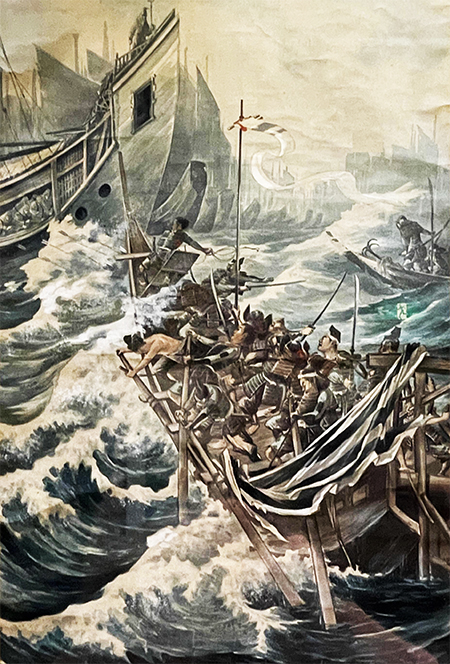
一方、上のイラストはわたしの先祖伝承にも名の出る伊予の「河野通有」が元の軍船に奇襲を仕掛けている図。鎌倉幕府もこの武功は公式に認めたとされる。河野家は水軍の棟梁であるので海上での戦い方のプロとも言える存在。巨大な元の軍船に対して夜襲を掛けて戦果を上げていたという。河野家はこの元寇の時代より前の源平争乱期の四国「屋島」の戦いでも義経のもとに馳せ参じた記録が残っている。この弘安の役に関しての同様の海上ゲリラ的な攻撃は「松浦」の現地水軍なども仕掛けていただろう事が容易に想像できる。
こうした攻撃によって元軍は「手を焼いて」全軍を上げての太宰府侵略をためらっていたかも知れない。
English version⬇
[Typhoon of 950 hp, direct hit on Yuan forces assembling in the southern waters of Hawk Island, Yuan Pirates Historical Museum – 11]
On 17 August 1281, Yuan’s military fleet was destroyed by more than 100,000 ships. analysis of the unwillingness to stay at sea for more than a month. …
The most important thing that became clear from this visit to the Genko Historical Museum was that the most critical requirement for an invasion action from the sea was the maritime weather. In short, typhoons.
The Yuan military fleet that filled the waters off Takashima Island at the mouth of Imari Bay in Nagasaki Prefecture was almost completely destroyed on 17 August 1281.
The record of the invaders also states: “The number of the Yuan forces that did not return was approximately 100,000. The records of the Yuan side are also short and express their frustration and regret, saying ‘The wind breaks the ships’ and ‘The ships were all destroyed by the wind’ (Goryeo history book).
17 August of the new calendar is close to the 20010th day of the year, when typhoons frequently strike. According to research conducted by the late Dr Daikaku Manabe of Kyushu University on the several thousand year-old Yakusugi cedar trees, the typhoon at that time was a super typhoon with a central pressure of 950 hp and a maximum instantaneous wind speed of 55.6 m. In the Imari Bay area in the Takashima Sea region, strong winds of 30 mph blew for 20 hours throughout the night.
In such a typhoon, it is obvious that large wooden vessels, not all of which were anchored strictly in port, and a large fleet of more than 4,000 boats, were crowded together, one after the other, and sank and were swallowed by the waves. Underwater archaeology has revealed many facts that prove the fact that this area was underwater. Also, a lot of physical evidence has been found historically in the coastal area of Hawk Island.
However, the fact that they stayed in this area for more than a month shows poor operational behaviour on the part of the former military. Of course, it was a military operation across the sea, and such weather and local terrain information gathering was considered to have been perfected. The question, then, is why. The fact that these maritime units were mainly military units of the “Southern Song”, which had already been destroyed by the Yuan at this stage of history, may be a point to consider in conjunction with this kind of disappearance. In the first place, ‘Why should we risk our lives to fight for Yuan?’ The low morale level of the former Southern Song army. On top of such a mood, there was a sense of ‘heki eki’ at the solidity of the Japanese defensive wall.
On the other hand, there was also the background situation that for Yuan, the exhaustion of this army was not necessarily a bad thing, as it would also eliminate a potential threat. For Yuan’s Hubilai, the exhaustion of the armies of the conquered Southern Song and Goryeo could not be said to be a serious loss.
On the other hand, the illustration above shows “Kono Michiari” of Iyo, who is mentioned in my ancestral traditions, launching a surprise attack on the Yuan’s warships. The Kamakura Shogunate is said to have officially recognised this military feat. The Kono family were the masters of the navy and could be said to be professionals in fighting at sea. They are said to have attacked the huge Yuan warships at night and achieved great results. There is a record of the Kono family coming to the aid of Yoshitsune in the Battle of Yashima in Shikoku during the Genpei War, which preceded the period of the Genko Incident. It is easy to imagine that similar guerrilla attacks on the sea during the Kouan War would have been launched by the local navy of Matsuura.
Such attacks may have ‘burned the hands’ of the Yuan forces and made them hesitant to invade Dazaifu with their entire army.
共有:

Posted on 5月 13th, 2025 by 三木 奎吾
Filed under: 歴史探訪




コメントを投稿
「※誹謗中傷や、悪意のある書き込み、営利目的などのコメントを防ぐために、投稿された全てのコメントは一時的に保留されますのでご了承ください。」
You must be logged in to post a comment.