本文へジャンプ

【ルーツ伝承への旅路 伊予河野氏探訪-1】


さて本格的に仕事生活からの「総括」期に差し掛かってきて、NEXTの「生き方」として表現の領域に入ってきつつあります。そういう初源として「作家と住空間」(文末に案内)の発刊があったのですが、そこを起点としてさまざまな表現の探求に向かってきています。これはきわめて「個人的」な人生航路なのですが、行きがかり上、書き続けてきたこの個人ブログでも並行して関連的なテーマを書いてみたいと思います。
 折に触れてわたしは「ルーツ探索」みたいなことを行ってきています。本州から開拓移住してきた家系の第3世代として、もちろん自分自身は北海道に骨を埋めることを決定(けつじょう)しているものですが、やはり自分自身の生命というものを客観的に考えれば、そのルーツのことに思いを致すのは当然のことでしょう。父母という存在が自分を生み育ててくれたことに深い感謝の念を持ち、そして祖父母への感謝の念を持つ。そうした「血脈」にリスペクトの思いを持つのはひととして自然。
 そういう暗夜行路の道筋の探索から徐々に愛媛県・道後温泉近くの伊予河野氏という存在に興味を持ってきています。四国については加齢してきてからの夫婦旅の地域としてよく行くようになって、そのなかでこの地域の歴史的な経緯を知るようになって来ています。やはり日本語が通じて、情報交換の質がきわめて深い地域はうれしい。
 おっと、最近の拙ブログは「前書き」が長め(笑)。反省。
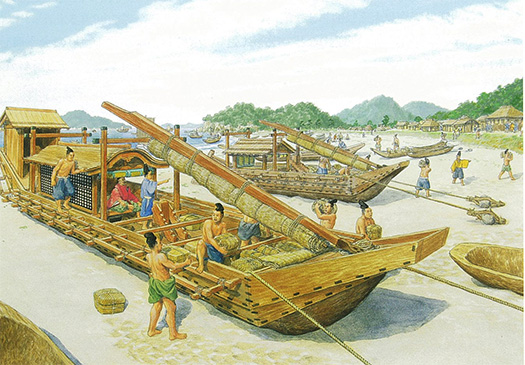
 図版は、「道後公園誇れるまちづくり推進協議会」発行の冊子「湯築城物語」からのものです。文中に「大いにPRして」という要旨が書かれてありますので、利用させていただきます。香川元太郎氏の作画。この絵は794〜1191年の平安時代の伊予地方の港の様子を想像復元したものとのこと。
 説明では「当時、船への物資の積み下ろしは,潮の干満を利用して行われた」とある。当時の瀬戸内海交通の主力であった船舶について、その構造などが活写されていて、目を奪われる。船から港で荷物の搬出入するのに、潮がそこそこ満ちている時間に着くように計って船を着けて干上がって行くのを待って荷物を扱っていた。おお、であります。わかりやすい。そうするとそれに合わせた生活時間ライフサイクルがひとびとの経済活動の大きなメルクマール(指標)だったことが自明になってくる。遠い先人たち・血縁につながる人たちはこのようなライフスタイルだったのかと、圧倒的な「共感」が湧き上がってきます。 <明日以降に続く>

●お知らせ
拙書「作家と住空間」幻冬舎から電子書籍で発刊
お求めはAmazonで。
https://amzn.asia/d/eUiv9yO
English version⬇

A Journey to the Traditions of the Iyo Kono Clan: Exploration of the Iyo Kono Clan-1
A desire to trace the “origin” of my own life. Such a quest has been absorbed by the beaches of Iyo (laughs). Oh, you finally landed on the shore. …

Now that we are approaching the period of “summing up” from our work life, we are entering the realm of expression as a “way of life” for NEXT. The publication of “Writers and Living Space” (see the end of this document) was the starting point of this process, and from there we have been moving toward the exploration of various forms of expression. This is a very “personal” life path, but I would like to write about related themes in parallel on my personal blog, which I have continued to write as a matter of course.
 From time to time, I have been on a sort of “roots search. As a third generation immigrant from Honshu, I have decided to bury my roots in Hokkaido, but when I think objectively about my own life, it is natural for me to think about my roots. We are deeply grateful to our parents for giving birth to us, and we are also grateful to our grandparents. It is natural for people to have respect for such a “bloodline.
 From my search for such a “dark night” path, I have gradually become interested in the Iyo Kono clan near Dogo Onsen, Ehime Prefecture. As I have gotten older, I have been traveling to Shikoku more often as a married couple, and have come to know the historical background of this region. I am glad to see an area where Japanese is spoken and where the quality of information exchange is extremely deep.
 Oops, my blog recently has a long “preface” (lol). I regret it.
 The illustration is from the booklet “Yuzuki Castle Story” published by the “Dogo Park Proud Town Development Promotion Council. The text contains the gist of the book, “Promote it greatly,” so I will use it. Drawing by Mototaro Kagawa. This painting is an imaginary reconstruction of a port in the Iyo region during the Heian period (794-1191).
 The explanation says, “In those days, loading and unloading of goods to and from ships was done by using the ebb and flow of the tide. The structure of the ships, which were the mainstay of Seto Inland Sea traffic in those days, is vividly depicted in the museum, and is a fascinating sight to behold. The author explains, “The ships were loaded and unloaded at the port, waiting for the tide to rise and then unloaded at the port. Oh, that’s right. It is easy to understand. It becomes obvious that the life cycle of people’s economic activities was a major indicator of the time of their lives. I felt an overwhelming sense of empathy for the lifestyles of my distant ancestors and those who were related to me by blood. .

Notice
My book “Writers and Living Space” is published in e-book format by Gentosha.
You can purchase it at Amazon.


【さっぽろ円山公園の自然アートの新作発見!】


 昨日、しばらく懸案になっていた案件について一段落。個人企業とは言え、いろいろな社会的責任に対しては、なにより誠実対応が肝心。ほっ、であります。
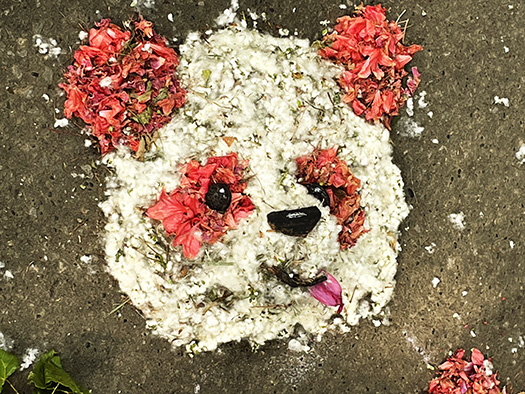
 ということですが、毎朝の散歩道inさっぽろ円山公園では最近、写真のような「自然利用」アート作品を発見。わたしのブログでも何回かこういう作品に触れてきていますが、これまでは雪の時期にそれを利用した作品と遭遇することが多かったので、イマドキ時期というのはちょっと驚かされた。
 円山公園の地下鉄駅からの公園入口にほど近い歩道上で、なにやら数人規模での「人だかり」がみられ、歓声が上がっているではありませんか。その人たちの会話情報を側聞して、その場所に「野次馬」的に夫婦で直行。そうしたら写真のようなアート作品と遭遇した次第です。まことに圧巻!
 上の作品はこの時期、風に舞っているシラカバやポプラの綿毛を丹念に集めて「白地」を構成してのパンダとおぼしき作品。アクセントに赤色の花があしらわれて、さらに「画竜点睛」のように木の実が目になっていた。なにより、白い花粉をこのように丹念に集合させるには相当の執念が必要でしょう、すごい。
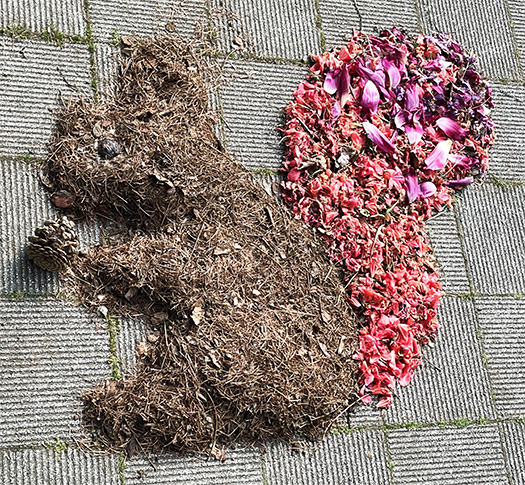
 下の作品はこの時期、足許に散乱している木枝のクズを丹念に拾い集めて「リス」を造形。こちらでも赤い花で尻尾を形取って、そして木の実を目に納めて仕上げている。
 仏像制作などでも目の表現は非常に執着する部分でしょうが、木の実を使われると、おおっと、その着眼に深く納得させられる。って、自然のものを拾い集めて利用することで「以心伝心」性が非常に高まる。すばらしい。
 さすがに毎度楽しませていただいているので、すこし作家についてWEBで調べたら以下のような情報。要旨引用。
 〜作品は公園・施設の案内サインやパンフレットなどのデザイナーとして活躍する田中宏美さんが手掛けた。仕事の息抜きに自宅近くの公園を散策していたところ、あるシーンが頭に浮かんだ。「ここで雪だるまが遊んでいたら楽しいと思って手足のついた雪の男の子をベンチに座らせてみた」。人間のように帽子とマフラーも身につけた「雪ボーイ」を主人公に雪に覆われた冬の公園でのストーリーを想像しながら次々と作品にした。 〜ということ。
 今回の作品もいかにも「もののあはれ」的で、北海道での日本人ハートを感じさせてくれました。深く感謝。

●お知らせ
拙書「作家と住空間」幻冬舎から電子書籍で発刊
お求めはAmazonで。
https://amzn.asia/d/eUiv9yO

English version⬇

New Nature Art in Sapporo Maruyama Park!
Artworks using natural materials that add richness to the morning walkway. As a Hokkaido native, I was inspired by the Japanese sense of “mono no ahare”. It is a “Sukiyomi”. A few…

 Yesterday, we settled a matter that has been pending for some time. Even though we are a private company, it is important for us to respond to our social responsibilities with sincerity. I am relieved.
 On that note, I recently discovered the “nature use” artwork shown in the photo at Sapporo Maruyama Park, where I take my morning walk every morning. I have mentioned this kind of artwork several times in my blog, but until now I have mostly encountered artwork that utilized it during the snow season, so I was a bit surprised to see it during the “Imadoki” season.
 On the sidewalk near the entrance to the park from Maruyama Park subway station, I saw a “crowd” of several people and heard them cheering. We overheard their conversation and went straight there as “onlookers” with our husband and wife. Then we came across the artwork shown in the photo. It was truly breathtaking!
 The work above appears to be a panda created by carefully collecting pollen from birch and poplar trees that are flying in the wind this time of year, and composing a “white background. Red flowers were used as accents, and nuts were used as eyes to add the finishing touch. Above all, it must have taken a great deal of persistence to painstakingly assemble the white pollen in this way.
 In the lower part of the work, a “squirrel” was sculpted by painstakingly collecting scraps of tree branches that were scattered around his feet at this time of the year. Here, too, a red flower is used to form the tail, and nuts are used for the eyes.
 The eyes are a very important part of Buddhist sculptures as well, but when he uses nuts, I was deeply impressed by his use of nuts. The use of natural materials in this work enhances the “mind-to-mind” effect. It is wonderful.
 As you can see, I have been enjoying this work every time, so I did a little research about the artist on the Web and found the following information. The following is a summary quote.
 〜The work was created by Hiromi Tanaka, a designer of signs and pamphlets for parks and facilities. When I was taking a walk in a park near my house for a break from work, a scene came to my mind: “A snowman was playing here. I thought it would be fun to see a snowman playing here, so I put a snow boy with arms and legs on a bench. He created a series of works, imagining a story in a snow-covered winter park with “Snow Boy,” who also wore a hat and scarf like a human being, as the main character. 〜The story is about a snow-covered winter park.
 This work was also very “Mono no ahare” and made me feel the Japanese heart in Hokkaido. We are deeply grateful.

News
My book “Writer and Residential Space” is published by Gentosha as an e-book.
You can purchase it at Amazon.


【50年前に回想復元「石和温泉」と社員旅行文化】


 高齢者専門の精神科医・和田秀樹氏の著作「70歳が老化の分かれ道」を読了しました。氏の高齢期についてのさまざまな情報発出は社会全体に大きな「気付き」をもたらせていると思います。
 これまでの日本社会が経験したことのない長寿命社会が実現してきている中で、社会システムとしてはその財政的危機の側面ばかりが強調されてきている。財務省が「増税」一択のように政治に対して影響力を色濃くさせてきていることの背景には、こうした高齢化社会の財政負担増への危機感があるのでしょう。
 そこにはひたすら貯蓄し続ける高齢層、という刷り込み認識が大きいように思えてならない。しかしどうなのだろうか、と思う。経済面ではこの高齢者が生み出すあらたなタイプの需要とそのマーケットの顕在化という側面があまり注目されていないのではないだろうか。高齢者マーケットというもの。
 和田先生の著作で表現されている現代の高齢者は、少なくとも70代を健康寿命を維持しながら活動的に過ごすことが示されている。自分自身で考えてみても、あたらしい分野への興味を持って「情報市場開拓」的にマーケティングを考えている次第。社会的に「ピンピンコロリ」的消費市場に着目して、その魅力を掘り起こし需要を喚起する動きというのは着目されて然るべきだと思う。和田先生の一連の著作がベストセラーになったりSNSでの情報発信に大きな注目が集まっている状況はその大きなあらわれだろう。
 わたし自身も、この著作の中で深掘りされた年代になって自分自身を掘り下げて見て、そういった前向きな要素に反応させられてきている。そのような動きも実際に顕現してきている。
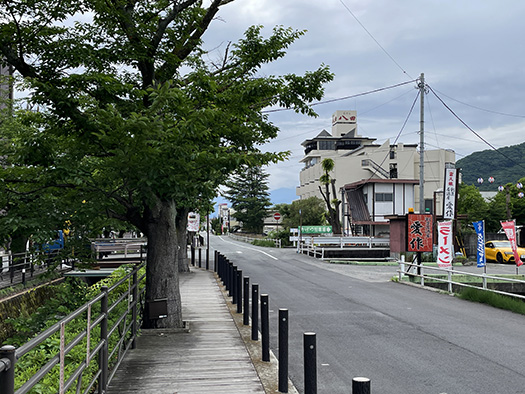
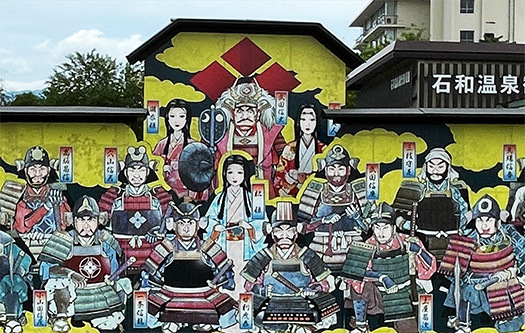
 写真は先日の環・富士山レンタカー行脚で立ち寄っていた「石和温泉」。武田信玄の本拠地・甲府にほど近い温泉街で、50年前の社会人スタートのころ入社していた会社の社員旅行で来ていたことがフラッシュバックしていた。入社した会社は武田の家臣伝承を持った一族経営の会社で、そうした経緯から甲府にほど近いこの温泉地が社員旅行の旅先に選定されていた。なんか宴会のシメでは「武田節」までが歌われていた(笑)。
 現代ではこういう「社員旅行」文化というものは衰退していると思われ、マーケティング的にも温泉旅館群は苦境にあるのではないかと思い至っていた。個人的にはある感慨、ノスタルジックなそれを感じていたけれど、しかし、マーケティング課題として捉え直してみると、過去の蓄積を活かしての「打つ手」はありえるのではないかとも思えていた。あらたなマーケットへの気付き・・・。

●お知らせ
拙書「作家と住空間」幻冬舎から電子書籍で発刊
お求めはAmazonで。
https://amzn.asia/d/eUiv9yO

English version⬇

Ishiwa Hot Springs and Company Travel Culture Recalled 50 Years Ago]
The “company travel culture” is a “cultural legacy” created by postwar economic development. Can’t we unearth this culture and make use of it to expand the market base for the elderly? ……

 I have just finished reading “70 is the turning point of aging” written by Dr. Hideki Wada, a psychiatrist specializing in the elderly. I believe that the various information he has published on aging has brought about a great deal of “awareness” to society as a whole.
 While Japanese society is realizing a longevity unprecedented in the past, the emphasis in the social system has been on the financial crisis aspect of it. The fact that the Ministry of Finance is exerting a strong influence on politics, as if it has a single choice of “raising taxes,” is probably due to the sense of crisis over the increasing financial burden of such an aging society.
 There does not seem to be a large imprinted perception of an elderly population that just keeps on saving. However, I wonder what is going on. In terms of the economy, I think that not much attention has been paid to the new type of demand created by the elderly and the emergence of a market for it. The market for the elderly.
 The elderly of today, as described in Dr. Wada’s book, are shown to be active and maintain a healthy life expectancy at least into their 70s. I myself am thinking of marketing in terms of “information market development” with an interest in new fields. I think that the social “pinprick” consumer market deserves attention for its attractiveness and demand stimulation. The bestseller status of Dr. Wada’s books and the attention paid to information transmission via social networking services (SNS) are major signs of this trend.
 I myself have been inspired by such positive elements of his writings, as I have delved deeper into my own life at the age that he describes in his writings. Such a movement is actually becoming apparent.
 The photo is of Ishiwa Hot Springs, a stopover on my recent rental car trip to Mt. It is a hot spring resort close to Kofu, the home of Takeda Shingen, and I had a flashback to a company trip I took there 50 years ago when I was starting out in the workforce. The company I joined was a family-owned company with Takeda vassal lore, and because of this, this hot spring resort near Kofu had been selected as the destination for the company trip. At the end of the banquet, they even sang the “Takeda-bushi” (laugh).
 I had come to realize that the “company trip” culture seems to be in decline today, and that the onsen ryokan groups may be suffering from a marketing perspective as well. Personally, I felt a certain emotion, a nostalgic feeling, but when I looked at it again as a marketing issue, I thought that there might be a “move” that could be made by utilizing the past accumulation. I am aware of a new market….

My book “Writers and Living Space” is published in e-book format by Gentosha.
Available at Amazon.com.
 

【交通量増大の「首都高」〜高速道に信号機】


東京・関東以外のドライバーのみなさん、クルマで都内関東あたりを走るとき、当然「首都高」を利用しますよね。その時もしカーナビが付いていなかったりしたらお手上げですよね。わたしもカーナビが登場する前までは、記憶ではあんまり都内をクルマで走った経験がないと思います。東京に住んでいた当時、いまから54〜45年前ころにはそもそもカーナビがなかったはずなので、たまに運転する機会があったとしても、事前にルートを確認して、エイヤっと慎重に運転していたのだと思います。もちろん、現代とは首都高自体も比較的単線的で、わかりやすかったような記憶がある。
 それとクルマだけで長距離移動するという、最近のわたしのような移動手段選択はしていなかったと思う。東京から札幌に生活拠点を変えて以来、上京機会はたいへん多く毎年2−3回程度は行っていたけれど、あんまりクルマ移動は多くありませんでした。14-5年前くらいから比較的にレンタカーや自家用車(一時期社用車を賃貸住宅周辺の駐車場に常置させていた)でのクルマ移動を経験してきている。とくに一時期は関東地域への営業活動も行っていたし、取材などでも多く出張・長期滞在などしてきた。
 いきおい首都高は当然利用するけれど、あの複雑な路線を脳内にブックマークすることはまず不可能。必然的にカーナビに依存しての運転となっています。まぁ、カーナビはふだんの北海道内移動でもほぼ必需なので、現代生活ではクルマ運転そのものと一体化していますよね。
 で、首都高もそういうふうに便利に使わせていただいていた。
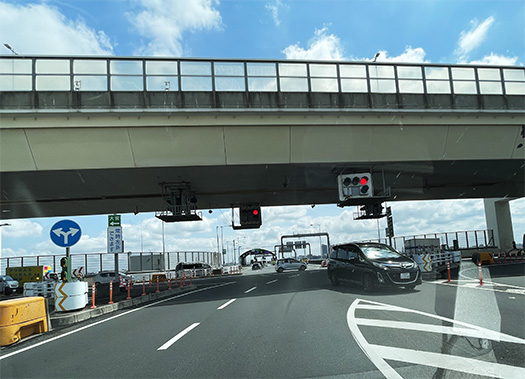
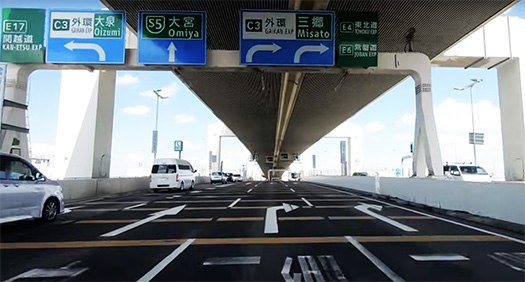
 ・・・なんですが、その日常化していた首都高利用でも、はじめて「信号機」に遭遇してしまったのです。事前に「交差点」みたいな注意喚起があって「え、なに、おい」と思っていたら、ついにごらんのような信号待ち状況に。ただただ驚いてばかりだったのですが、時間待ち停車がかなり長かったので、ケータイで撮影。また下の写真はyoutube動画番組からの首都高「交差点」ワンショット。

 たしか関越方向から「美女木」JC周辺箇所ではないかと記憶しています。今回5月末のドライブツアーでのワンシーン。まぁ首都高の路線が拡張につぐ拡張で、それらを「つなげる」という必要性も加速度がついてきて、とうとうこういう信号機交差点というものが出現したのでしょう。でっかいどう、北海道の人間からすると目が点になるような気分がしておりました。要安全運転。首都高、すごい交通状況ですね。

●お知らせ
拙書「作家と住空間」幻冬舎から電子書籍で発刊
お求めはAmazonで。
https://amzn.asia/d/eUiv9yO

English version⬇

[Traffic volume increasing on the “Metropolitan Expressway” – traffic lights on the expressway] Traffic jams on the “Metropolitan Expressway” make you hit the brakes and even stop at traffic lights. The etranse of driving in an unusual situation is the only choice to depend on a car navigation system. …….

Drivers outside of Tokyo and the Kanto region naturally use the Metropolitan Expressway when driving around Tokyo and the Kanto region. If you don’t have a car navigation system, you’re in deep trouble. Before the advent of car navigation systems, I don’t think I had much experience driving in Tokyo from what I remember. When I lived in Tokyo 54-45 years ago, there were no car navigation systems, so even if I had the occasional opportunity to drive, I would have checked the route beforehand and drove very carefully. Of course, I remember that the Metropolitan Expressway itself was relatively single-track and easy to understand compared to today.
 I don’t think I had the same transportation choices as I do nowadays, traveling long distances only by car. Since I moved to Sapporo from Tokyo, I have had many opportunities to visit Tokyo, about 2-3 times a year, but I did not travel much by car. 14-5 years ago, I started to experience car travel by rental car or private car (for a while I kept my company car in a parking lot around my rental house). I have experienced car travel by rental cars and private cars (for a while I kept a company car in the parking lot around the rental house) since 14-5 years ago. In particular, for a period of time, I was engaged in sales activities in the Kanto region, and I also made many business trips and extended stays for interviews and other purposes.
 Naturally, I use the Metropolitan Expressway, but it is impossible for me to bookmark those complicated routes in my brain. Inevitably, I have to rely on the car navigation system. Well, since a car navigation system is almost a necessity for everyday travel in Hokkaido, it has become an integral part of driving itself in modern life.
 So, the Metropolitan Expressway was also used conveniently in this way.
 However, I encountered a traffic light for the first time on the Metropolitan Expressway, which had become a part of my daily routine. I had been warned in advance that there was an intersection, and I thought, “What the heck? I was just amazed, but the wait was quite long, so I took this photo with my cell phone. The photo below is a one-shot of the Metropolitan Expressway “intersection” from a youtube video program.

 I remember that this is the area around “Mimegi” JC from the Kan-etsu direction. This is a scene from a driving tour at the end of May. Well, with the continuous expansion of the Metropolitan Expressway, the need to “connect” them has been accelerating, and this kind of traffic light intersection must have finally appeared. As a person from Hokkaido, I felt as if my eyes were dazzled. Driving safety is a must. The traffic situation on the Tokyo Metropolitan Expressway is amazing.

I am very happy to announce that my book “Writers and Residential Space” is now available as an e-book from Gentosha.
You can purchase it at Amazon.

【仏像設置の「好み」とその選別眼】


 先日「白象が鎮座する鐘楼」について書きましたが、こちらの埼玉県飯能の観音寺の仏像たちにはどうも「好み」を感じさせられていました。やはり白象を設置するという独特の感性が、寺の個性として伝承されるのではないかと。
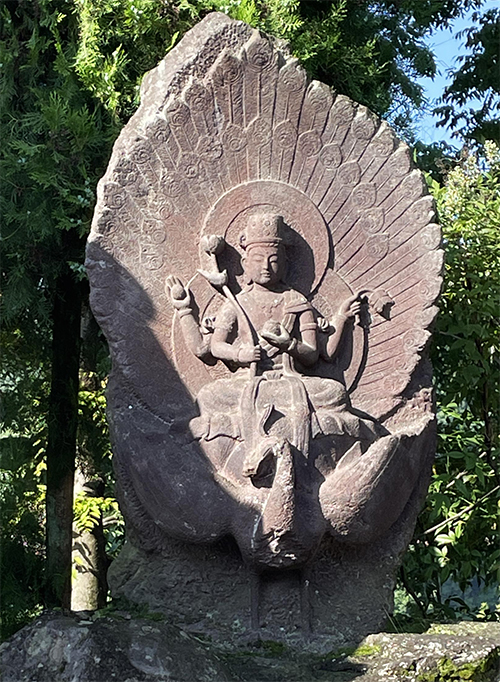
 その象徴的な仏像がこちらの「孔雀明王」仏像。
 わたしは別に宗教について深い知見があるとか、仏教美術にこだわりがある、ということではまったくありませんが、好悪という意味ではけっこう数寄なのだと思っています。とくに止利仏師の作である「飛鳥大仏」を拝観して以来、その独特の表情に魅せられ、かれ止利仏師の東大寺に収められている本尊の表情との相似性を強く感じて、日本史に残る感性表現のひとつのわかりやすい極点だと感じ続けています。
 さらに額田王がモデルとされた仏像にも強いインパクトを受けさせられていた。仏教がこの国にもたらされて以降、こうした仏像は多くのひとびとの心象に大きく関わってきただろうことは疑いようがない事実。仏像を彫る側も、そしてそれを感受する側も、その作品の雰囲気の部分で、ある共有感があるでしょう。
 こちらの「孔雀明王」さんの説明石碑があったので以下に。
 〜古来インドでは孔雀は、コブラなどの毒蛇や害虫を食べることから、孔雀明王には人びとの災厄や苦痛を取り除く功徳と、人間の煩悩の象徴である三毒(貪り・○り・痴行〜一字不明)を食らって仏道に成就せしめる功徳があるとされます。また孔雀明王を拝むことで一切の恐怖をなくし、安楽を得させるともいわれます。孔雀明王の御前でご真言をお唱えし、自らの大願成就に向けて、魔除けや煩悩退散の力をお授けくださいますよう、お祈りください。 孔雀明王ご真言。オン マユラ キランディ ソワカ 令和4年 観音侍従職○○〜
 「ご真言」というのが突然、宗教的な梵語呪文になっていてまるで、この仏様のありがたいお言葉に聞こえてくる(笑)。まことに真言、なのでしょう。般若心経はわたし暗記して唱えられますが、最後の部分にはこういう「梵語」がやはりもれなく付いてくる。古代インド発祥の素性を明示していますが、この列島社会のひとびとの素直な「受け入れ」姿勢にもいつも驚かされる。たぶんこの辺が心に印象強く沈殿している。
 こういった素直さ・従順さこそが日本人らしさの根源なのか?オモシロいなぁといつも感じさせられています。

●お知らせ
拙書「作家と住空間」幻冬舎から電子書籍で発刊
お求めはAmazonで。
https://amzn.asia/d/eUiv9yO

English version⬇

[The “taste” of Buddhist statue installation and its selective eye]
sutras that conclude with foreign Sanskrit words. The attitude of a spirit that accepts a wide range of languages. Is it a Japanese sensibility? And the world-sharing softness of the Buddha image. The “taste” of the sutras.

 The other day I wrote about the “bell tower with a white elephant sitting in it,” but the Buddhist statues here at Kannon-ji Temple in Hanno, Saitama Prefecture, gave me a sense of “taste. I thought that the unique sensibility of installing white elephants might be handed down as the individuality of the temple.
 The symbolic Buddha image here is the “Peacock Myoo” Buddha image.
 I do not have a deep knowledge of religion or a particular interest in Buddhist art, but in terms of likes and dislikes, I am quite a picky person. In particular, ever since I saw “Asuka Daibutsu,” the work of Buddhist monk Toributsuji, I have been fascinated by its unique expression, and I strongly feel that it is similar to the expression of the principal image in Todaiji Temple by Toributsuji, and I continue to feel that it is a simple extreme point of sensitivity and expression that remains in Japanese history.
 Furthermore, the Buddhist statue modeled after King Nukata had a strong impact on me. It is an indisputable fact that since Buddhism was brought to this country, these Buddhist statues have had a significant impact on the mental images of many people. Both the person who carves the Buddha image and the person who perceives it will have a certain sense of sharing in the atmosphere of the work.
 The following is an explanatory stone inscription of the “Peacock King” here.
 〜In ancient India, the peacock eats poisonous snakes and insects such as cobras, so it is said that the peacock has the merit to remove people’s misfortunes and pains and also the merit to achieve Buddhahood by eating the three poisons that symbolize human troubles (greed, covetousness, and lasciviousness – one character is unknown). It is also said that by worshipping the Peacock King, one can eliminate all fear and attain peace of mind. Please recite the Mantra in front of Myoo, and pray that he will grant you the power to ward off evil and dispel troubles and worries in order to fulfill your great desire. The Mantra of the Great Peacock King. On Mayura Kirandi Sowaka, 2022, Kannon Samurai Assistant Office XX~
“Goshinto” suddenly sounds like a religious Sanskrit incantation, as if it were the grateful words of this Buddha (laughs). It must be a true sincerity. The Heart Sutra can be recited by heart, but the last part of the sutra is always accompanied by this kind of Sanskrit. It clearly shows its origin in ancient India, and I am always surprised at the honest attitude of “acceptance” of the people of this archipelago society. Perhaps this is the area that has left a strong impression on my mind.
 Is this kind of honesty and obedience the root of Japaneseness? I always find it interesting.

Notice
My book “The Writer and the Living Space” is published in e-book format by Gentosha.
Available at Amazon.com.

【お米価格高騰に民の怒りの爆発が始まったか?】


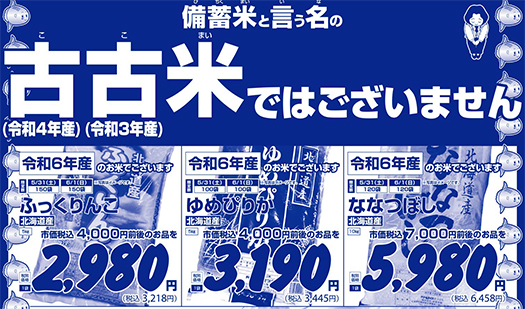
 写真はわたしが好きでよく買い物させてもらう近所の安売りスーパーさんの電子チラシ。
 わたし自身は先日も書いたように、まだ25kgほどの買い置き備蓄米が自宅にあり、わが家だけのペースだとたぶん半年程度は持つのですが、事務所兼用住宅なので働いてくれているスタッフ(一応離れたので別会社ですが)のために今後、感謝のふるまい握り寿司づくりなどを考えると、もうちょっと早くに足りなくなるかもと、心細いかなぁという心理も持っております。
 なんにせよ、お米は日本人の生活文化の基盤としてあり続けた主食。その主食がどのような市場価格の構造変化で高騰したのか、まだメディアでも識者からも解明の全体像が見えてきていない。早急にこの暴騰プロセスは解明されて欲しいです。この局面ではナタを振るうみたいな立場の政治家は大きなアピールポイントにはなるでしょう。前の利権構造どっぷりのようだった農水大臣の失脚と別人のポピュリスト系新大臣という動きにはそういった「思惑」が表出しているのでしょう。
 まぁ庶民としてはなんとか価格高騰が抑えられ、お米が低価格で潤沢に流通することが希望。
 そういう希望に対して非常にわかりやすい「消費者の願いに沿う」小売店舗の動きには注目が集まる。この局面では消費者心理に的確に対応する店舗が支持を高めるのは間違いがない。ということで、さっそくに「2000円台」の価格で訴求する宣伝チラシであります。「備蓄米という名の古古米ではございません」というメッセージはわかりやすい。まぁわたし自身は古古米に対してあんまり否定的な感覚はありません。
 たしかに知人の宮城県農家から直接、毎年の新米を大量購入してきましたが、それはむしろ農家のみなさんへの応援の気持ちが大きく、新米のおいしさ大好き、という嗜好性ではありません。それよりもお米農家への感謝の気持ちの表現というのに近い心理でした。おいしいのであればさらにウレシイというような心理。
 なので、こうしたスーパーのチラシに表現された米価への庶民の気持ちに、はるかに共感するものです。
 カミさんは、参議院選挙頃に相当に米価は下がっていくだろうという見通し判断。当面のお米というよりも、家庭備蓄の強化が目的であるのでこうした「市場動向」を見据えながら、慎重に購入タイミングを計っていきたいと思います。
 なにより農家のみなさんの経営の安定、庶民の暮らしの安定実現を。

●お知らせ
拙書「作家と住空間」幻冬舎から電子書籍で発刊
お求めはAmazonで。
https://amzn.asia/d/eUiv9yO

English version⬇

Has the outburst of public anger over soaring rice prices begun?
The retailers’ direct response to the anger of the general public at the soaring rice prices is the focus of attention. The flyer expresses the sentiment that one cannot survive if one is insensitive to this phase. …

 The photo is an electronic flyer from a local supermarket that I like to shop at.
 As I wrote the other day, I still have 25 kg of stockpiled rice at home, which will probably last for about half a year at the pace of my own home, but when I think about making nigiri sushi for my staff (who work for a different company, since we have moved away from the office) in the future, I am not sure if I will run out anytime soon. I am also worried that we may run out of rice a little sooner than I would like.
 Whatever the case may be, rice is a staple food that has remained the foundation of Japanese life and culture. We have yet to see the whole picture of how this staple food has skyrocketed in price due to structural changes in the market price, either from the media or from intellectuals. I would like to see this runaway process clarified as soon as possible. It would be a great appeal point for politicians who are in a position to take a machete to the ground during this phase. The loss of the former Minister of Agriculture, Forestry, and Fisheries, who seemed to be full of interest structures, and the appointment of a new populist minister, who is a different person, may be indicative of such “speculation”.
 Well, as for the common people, their hope is that the price hike will be somehow controlled and rice will be distributed in abundance at a low price.
 The moves of retail stores that “follow the wishes of consumers” are very understandable in response to such hopes are attracting a lot of attention. There is no doubt that stores that accurately respond to consumer sentiment will gain support in this phase. So, here is an advertising flyer that immediately appeals with a price in the “2,000-yen range. The message is easy to understand: “This is not old rice in the name of stockpiling. Well, I myself am not too negative about old rice.
 I have purchased a large amount of new rice every year directly from a farmer in Miyagi Prefecture whom I know, but that is more out of support for the farmers, and not out of a preference for the deliciousness of new rice. It was more like an expression of gratitude to the rice farmers. If the rice is delicious, it is even more gratifying.
 Therefore, I am much more sympathetic to the feelings of the general public toward the price of rice expressed in these supermarket flyers.
 Kami made the judgment that the price of rice will probably drop considerably around the time of the House of Councillors election. Since our goal is not so much to buy rice for the time being, but rather to strengthen our household stockpile, we would like to carefully consider the timing of our purchases while keeping an eye on these “market trends”.
 We hope that farmers will be able to stabilize their business and the lives of the general public will become more stable.

Notice
My book “Writers and Living Space” is published in e-book format by Gentosha
Available at Amazon.com.

【見知らぬ町、散歩道河辺の寺・鐘楼に「白象」発見】


 平安ー鎌倉期の西行さんや、江戸期の芭蕉さんなど日本史上では多くの「漂泊」の旅人文化があります。踊り念仏の一遍さんなどもそうした系譜の中で捉えた方がふさわしいとも感じます。で、高齢化社会という日本人のあらたな社会環境のなかで再発見されるべき「生き様」文化のひとつの領域ではないかと思っています。
 かれらの時代にはひたすら歩きまわるという道行きで、しかも和歌や俳句などの詩文文化によってこころの陰影感を表現する活動だった。そういったはるかな先人たちの道行きとは違って現代のわれわれらしい行程というのもあるでしょう。わたしはビジネス生活としては住宅情報の世界で生きてきましたが、その基本は「現地での取材・撮影」行動。そういったライフスタイルは血肉になっているので、日本文化の「建築」に関連した公開的施設を巡り歩き、その周辺で可能な限り「住宅」の撮影機会を探る、という生き方を選択してきています。そういった流れから「公開された住宅」としてそこで生きていたことが明示されている「作家」住宅に着目したところ。
 基本はブログという文章表現で「書き留めて」そのあとで写真を交えた空間性表現の「深化」をこころみる、というような指向性。一方建築としても各地の宗教寺院や神社などの公共的空間を歩くことになる。
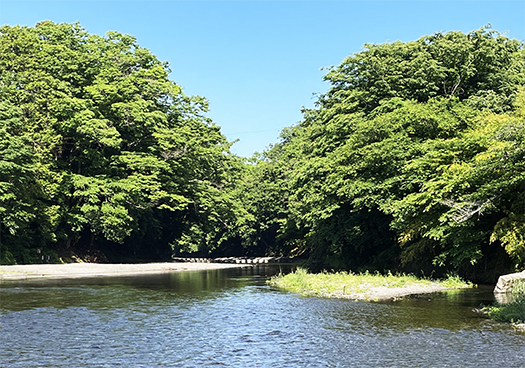
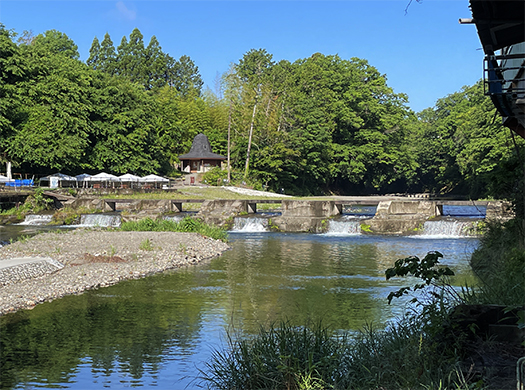
 今回はそうしたなかから埼玉県飯能市という地方を歩いてみた。こういう目立たない(失礼)地方都市は、庶民的な生き方探訪には格好の対象。で、早朝ホテルでヒアリングした周辺を散歩。飯能河原という素朴な自然美のそばに真言宗寺院をみつけ朝の礼拝をと願った次第。あ、わたしけっこう神社とか宗教は好きなんです。奥の細道(笑)。
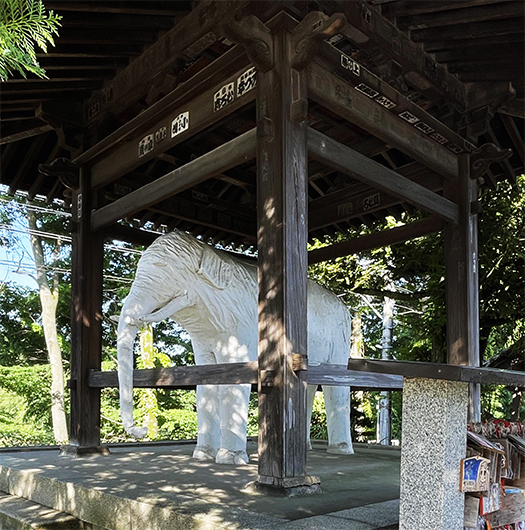
 そうしたら上の写真のような光景に遭遇。この「観音寺」では通常鐘楼とされる場所に、なんと白象が端座していたのであります。
 寺のHPには以下の記述要旨。「白象はお釈迦様の生母マーヤ夫人の夢に現れ釈迦の誕生を予言した。こうした説話の白象を、昭和40年代に祭事にからんである檀家の方が作られた。それを縁あって鐘楼堂に収めさせていただいた。以来、観音寺檀家信徒の方々や飯能幼稚園生徒たちを優しく見守っている」。
 戦争最中で鐘楼の鐘は供出されて空虚になっていた場所に白象が収まったことになる。なかなか良い姿であり、またその縁起も楽しい。手づくり感のあふれる姿とその周辺の空気感に深く癒されていました。

●お知らせ
拙書「作家と住空間」幻冬舎から電子書籍で発刊
お求めはAmazonで。
https://amzn.asia/d/eUiv9yO

English version⬇

[In a strange town, a “white elephant” is found in the bell tower of a temple on the riverside of a walking path]
Drifting journey like Saigyo’s is a lifestyle that should be reviewed in an aging society. On the road, white elephants are showing us nirvana (laughter)….

 There have been many “drifter” traveler cultures in Japanese history, such as Saigyo in the Heian and Kamakura periods and Basho in the Edo period. I feel that Ippen, the dancer and nembutsu practitioner, should be considered as part of such a lineage. I believe that this is one area of “way of life” culture that should be rediscovered in the new social environment of an aging Japanese society.
 In their time, they used to walk around and express the shadows of their hearts through poetic and literary culture such as waka and haiku. Unlike the paths taken by their predecessors, there may be a path that is unique to us today. I have lived in the world of housing information in my business life, but the basis of my business life has been to “go to the site and take pictures. This lifestyle is in my blood, and so I have chosen to live my life by visiting public facilities related to the “architecture” of Japanese culture and seeking out opportunities to photograph “houses” in the vicinity of such facilities whenever possible. In that vein, I have just focused on “artist” residences that clearly indicate that they were lived there as “public” residences.
 The basic orientation is to “write down” in the form of a blog, and then try to “deepen” the expression of spatiality with photographs. On the other hand, as for architecture, I will walk through public spaces such as religious temples and shrines in various regions.
 This time, I walked around Hanno City in Saitama Prefecture. Such an inconspicuous (pardon the pun) regional city is an ideal target for exploring the way of life of the common people. So, I took a walk around the area I had heard about at the hotel early in the morning. I found a Shingon temple near the simple natural beauty of Hanno Kawara and wished to pray there in the morning. I like shrines and religions a lot. I love shrines and religion.
 Then, I came across the scene shown in the photo above. In this “Kannon-ji” temple, a white elephant was sitting in the place that is usually used as a bell tower.
 The temple’s website has the following description. The white elephant appeared in the dream of the Buddha’s mother, Mrs. Maya, and predicted the birth of the Buddha. In the 1965’s, a parishioner made the white elephant from this story in connection with a festival. The elephant was placed in the bell tower of the temple. Since then, it has been gently watching over the parishioners of Kannonji Temple and the students of Hanno Kindergarten.
 The white elephant was placed where the bell of the belfry had been left empty after the bell was offered during the war. It is quite a nice figure and its auspiciousness is also enjoyable. I was deeply healed by the full of handmade appearance and the atmosphere of the surrounding area.

●Notice
My book “Writers and Residential Space” is published by Gentosha in e-book format
Available at Amazon.


【空の旅路〜津軽半島「十三湖」と同定か?】


 昨日夕刻、東京から富士山地域をめぐるツアーから帰還しました。
 旅中はいま話題の臨床医師・和田秀樹氏の著書「70歳が老化の分かれ道」を読書しておりました。わたし自身は、読書の対象としては自然科学系などの本が多くて、いわゆる「文学作品」に偏ることはしません。基本的には「事実に即した」表現物に惹かれる。
 自分自身もこの書に書かれた年代に差し掛かってきて、健康管理というよりもさらにそれを超えて「自己の生き方管理」みたいな部分に強く感応させられてきています。まぁ、当然ではありますが。日々、自分の生命力の状態をしっかり把握しながら、できれば前向きな生き方を実践していきたい、というところ。そういう事柄についてこの方の著作は非常にわかりやすく述べられていて参考になる。わたし自身、いくつかの病理と対話しながら「元気よく生きる」という方針でいたいと思うので、そういった事柄の参考意見と言えるでしょう。
 ただ、この先生はいまその動向でなにかと政治的にも話題になってきているようで、その点はよくわからないのであくまで慎重でありたい、純粋に「書かれた内容」が面白かった、ということです。
 ・・・あれ、本日のテーマから大きく逸脱(笑)。
 昨日の帰りのフライトではフィリピンからの観光の方たちと同乗になり、片言ながら楽しく交流。でもあんまり話題が深まりすぎるのも言語系脳の酷使になって困るので、基本的には最近のフライトの定番である「窓際」席からの「空中散歩」視覚ツアーを楽しんでおりました。どうも昨日の富士山ブログといい、こういうのに興味分野が大きくなって来ているかなぁ。
 現代人の人生行路の中で「空の旅」体験というのもかなりの時間積層にはなっているし、過去の作家さんたちとは大きく違って現代人はこの環境への経験知が大きくなって来ている。案外面白い「深掘り<可能性>分野」であるかも知れませんね。自分も出版表現の領域では文末記載の電子書籍刊行と、ようやく端緒についたところなので、いろいろと、無意識に探ってきている段階なのかも知れません。
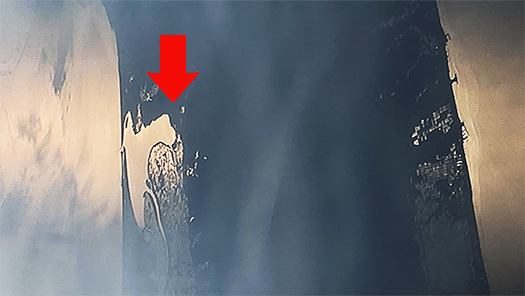
 空の散歩道の景観と天候具合・自然の表情の合わせ技で織りなされる光景は、非常に「音楽的」と感じられます。音楽鑑賞でその「テーマ性」に思いを巡らせるのと同様に、空から見た地形からその地域を「同定」させるのはそこそこ想像力とか、地理の知識などを活用する領域ではないかと。

●お知らせ
拙書「作家と住空間」幻冬舎から電子書籍で発刊
お求めはAmazonで。
https://amzn.asia/d/eUiv9yO

English version⬇

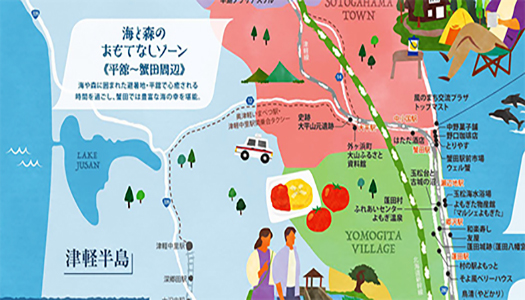
The Sky Walk – Identified as “Lake Jusan” on the Tsugaru Peninsula?
The experience of “walking in the sky,” which is becoming more and more common among modern people, is quite “musical. The brain work of “identifying” a familiar place from the sky is unexpectedly interesting. …….

 Yesterday evening, I returned from a tour from Tokyo to the Mt.
 During the trip, I was reading a book by Hideki Wada, a clinical doctor who is currently a hot topic in Japan, titled “70 is the turning point of aging. As for myself, I read mostly books on natural sciences, and I am not biased toward so-called “literary works. Basically, I am attracted to “factual” works of expression.
 I myself am approaching the age described in this book, and I have been strongly influenced by health care, or even more beyond that, “management of one’s own life style”. Well, it is only natural. I would like to practice a positive way of life, if possible, while keeping a close watch on my own vitality on a daily basis. His writings on such matters were very easy to understand. I found it to be a useful reference. I myself would like to live a “vigorous life” while interacting with some pathologies, so I can say that this is a reference opinion on such matters.
 However, this doctor seems to be in the political spotlight at the moment, and I am not sure about that, so I would like to be cautious.
 I want to be cautious because I am not sure about that point, but I was genuinely interested in what was written.
 On the return flight yesterday, I shared the same flight with some tourists from the Philippines, and we had a pleasant exchange, even though we were speaking only one language. However, I didn’t want to get too deep into the topic of conversation, as it would be too much of a strain on my linguistic brain, so I basically enjoyed the “aerial walk” visual tour from the “window seat,” which has been a staple of my recent flights. I’m getting more and more interested in this kind of thing, like yesterday’s blog on Mt.
 In the course of my life, the experience of “air travel” has become a considerable time stacking experience, and unlike the writers of the past, people today have a greater experiential knowledge of this environment. It may be a surprisingly interesting “field of deep exploration ”. I myself am just at the beginning of the field of publishing expression, with the publication of the e-book mentioned at the end of this article, so I may be at the stage of exploring various things unconsciously.
 I feel that the scenery woven together by the combination of the landscape of the sky walk and the expression of nature, such as the weather conditions along the way, is very “musical. In the same way that music makes you think about the “thematic nature” of the music, I think that “identifying” an area from its topography as seen from the sky is an area where you can utilize your imagination and knowledge of geography.

My book “Writers and Residential Space” is published by Gentosha as an e-book.
Please visit Amazon to purchase the e-book.
For more information, please visit Amazon.com.

【富士山、ああ、富士山】


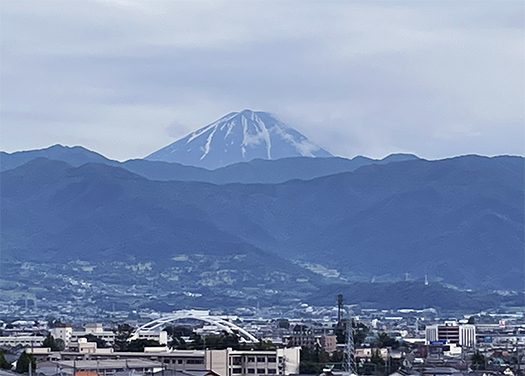
 北海道人はめったに富士山を仰ぎ見る機会がないので、ニセコの羊蹄山をときどき見に行く(笑)。まぁそれでも「だいたい似た感じ」なので「ま、いっか」と自分を納得させて過ごしている。そういうことなので、たまたまホンモノの富士山を見ることができる地域に来ると興奮する。「あ、ココではこういう風だ」「ほえ〜、こんなとこからでも見てくれている」などと無性によろこぶ。
 津軽人の太宰治は「富士には月見草」と、甲府に在住の頃に書き記してそれが一気に日本人に染みわたって行った。テレビなどのメディア出現以前の社会での「作家」の影響力の強さを教える逸話。その刷り込みから月見草どころではなく北海道人なので、できれば「イタドリ」を合わせ見てみたいと思ったりする。今時期、札幌の散歩道では旺盛にこの雑草が道端を埋め尽くしてくれている。しかし、富士山が見える場所では、わたしは見たことはない。農作地か整備された道端からの美しい立派な光景ばかり、さすが富士。
 昨日は伊豆半島付け根の沼津から静岡経由で山梨県・甲府に移動してちょうどグルッと富士山を回って観察するような行程を移動。たまに富士山を遙拝する日本人として、1日中そのご尊顔を拝し続けていました。まことに言うことなし。
 そんな行程を過ごしてレンタカーを運転していて亡き母にせがまれて富士を見に行ったことが回想されていた。東京の大学生だった50年以上前の頃、母が単身で上京してきた。すぐ上の兄も大阪で働いているので両方の顔を久しぶりに確認したいという旅。わたしは学生で時間に余裕もあるので、東京から大阪まで同行。その途次「富士山が見たい」という母の懇願。で、静岡で新幹線を降りレンタカーを借りて「日本平」という北海道人にすると「いかにも富士山がくっきりと見えそうな」ところまで移動する運転手をさせられた。50年以上前の頃で、はじめて借りたレンタカーで途中いろいろなドタバタも記憶が再生されていた。カーナビもない時代のはじめての道行き。普段運転していたクルマとサイドブレーキが違う形状だったことに気付かず、なんと運転中「黒煙」が立ち上ったりした(泣/笑)。摩擦熱だったのだけれど、サイドブレーキを引いているのに運転できていたのも不思議。まぁ、引きが甘かったのでしょうが・・・。天国の母の心配顔を思い出して、オカシくて不思議な邂逅感。
 ああ富士山、でありました。

●お知らせ
拙書「作家と住空間」幻冬舎から電子書籍で発刊
お求めはAmazonで。
https://amzn.asia/d/eUiv9yO

English version⬇

Fuji, Oh, Mt. Fuji]
Moonflowers are nice, but Hokkaido people want to see itadori too. Rental car with my late mother, a rare trip to see Mt. Fuji, and a rare road trip with my late mother. Fuji. Fuji

 Since Hokkaido people rarely have a chance to look up at Mt. Fuji, I sometimes go to Niseko to see Mt. Fuji in Niseko. (Laughs.) But even so, since it looks “roughly the same,” I spend my time convincing myself that it’s “okay. So I get excited when I happen to be in an area where I can see the real Mt. I am irresistibly happy when I come to an area where I happen to be able to see the real Mt.
 Osamu Dazai, a Tsugaru native, wrote, “Fuji has evening primrose,” when he was living in Kofu, and it quickly became a part of Japanese culture. This is an anecdote that shows the strong influence of “writers” in the society before the emergence of TV and other media. Because of this imprint, I am a Hokkaido native and would like to see “Itadori (Japanese knotweed)” together with “Tsukimikusa (evening primrose),” if possible. This time of year, this weed vigorously fills the roadsides of Sapporo’s walking trails. However, I have never seen it in places where Mt. Fuji, only beautiful and splendid scenes from farmlands or well-maintained roadsides.
 Yesterday, I traveled from Numazu at the base of the Izu Peninsula to Kofu in Yamanashi Prefecture via Shizuoka, just to observe Mt. As a Japanese who occasionally visits Mt. Fuji, I spent the entire day admiring its majestic face. I really don’t have anything to say.
 He recalled how he spent such an itinerary and drove a rental car to see Fuji at the behest of his late mother. When I was a college student in Tokyo more than 50 years ago, my mother came to Tokyo by herself. My older brother was also working in Osaka, so she wanted to see both of them for the first time in a while. I was a student and had plenty of time to spare, so I accompanied her from Tokyo to Osaka. Fuji,” my mother begged me to go with her. It was more than 50 years ago, and it was the first time for me to rent a car, and I was replaying my memories of the various mishaps that occurred along the way. It was my first road trip in an era when there were no car navigation systems. I didn’t realize that the side brake was different from the one I usually used to drive, and to my surprise, “black smoke” was billowing out while I was driving (tears/smiles). It was frictional heat, but it was strange that I was able to drive the car even though the side brake was pulled. Well, I guess I was not pulling hard enough…. I remembered my mother’s worried face in heaven and had a funny and mysterious encounter with her.
 Ah, Mt. Fuji.

Notice
My book “The Writer and the Living Space” is published as an e-book from Gentosha.
Please visit Amazon to purchase it.


【伊豆半島あちこち 作家・井上靖を探訪】


 北海道人にとって「伊豆」というのは、まことに縁遠い。
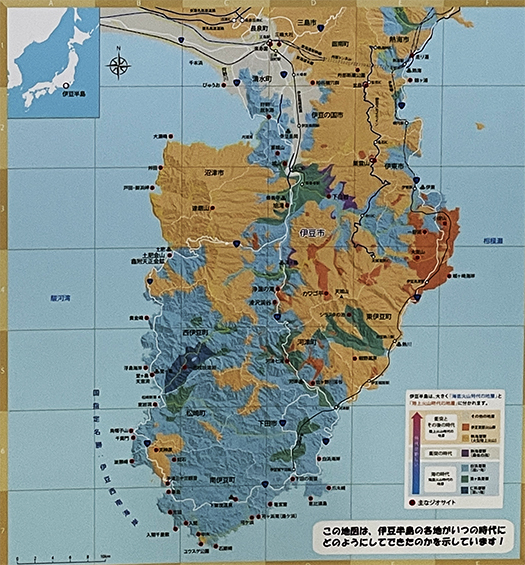
 4月に「作家と住空間」を出版しましたが、月イチほどの関東関西などの訪問機会が別件であるので、そのテーマ領域での探訪をセットする「自由な取材」を継続しています。いわゆる文学好きという種類の興味ではなく、わたしの場合は「人間がそこで暮らした住空間の実相を訪ねる」というのが主体。今回は、旭川で発見した「井上靖文学館」を知ってから、そのかれの人生模様に沿って「そこで生きた」空間を探訪してみた次第。
 人間、いくつになっても生きてきた興味分野というのは面白いもの。こんなふうな行脚を続けていると、深掘りができるようになってきて、だんだんと「対話型」の取材活動にもつながってくる。昨日も、都合4箇所を巡り歩いていましたが、そのうち2箇所ではかなり「話し込む」取材になった。とくに井上家のご親族の方とも偶然にお目にかかれて、さらに「また、今度じっくり訪ねて来てください」と言ってくれるまで、ディープな取材をすることができました。通り一遍の空間取材だけでなく、このような人間取材が加わると理解が一気に深みに入っていく感じがありますね。
 「この窓からから井上靖は富士を見て育っていた、と聞いている。きょうは曇りで見えないけど・・・」という証言もいただいたのですが、取材からの別れ際、ふと見るとなんと富士山が遠く姿を現してくれていた。その旨告げると満面の笑みを返していくれていました。出会いの深まり感。
 作家という存在は、日本社会では非常に存在感が大きい。海外の作家たちはそういう状況を見てたいへん驚き、うらやましがるのだそうです。この列島社会では人間の生き様というような領域についての共通性・共有感が大きいということなのでしょうか。そういう「機縁」で人と人のコミュニケーションが機能するというのは、考えて見ると興味深いことだと思える。
 こういう伊豆半島の隅々にまで海外観光客の姿が多く見られる。
 日本社会でのこのようなコミュニケーションについてまでは理解は難しいだろうと想像しますが、先般は三島由紀夫文学館を山中湖畔に探訪しましたが、そこではある程度海外でも知られている三島らしく、それらしき外人の方もチラホラしていた。そこまでディープに日本を探訪されている様子。
 こういう領域のニーズはそういう対象としても意味があるかも知れませんね、勝手な妄想(笑)。

●お知らせ
拙書「作家と住空間」幻冬舎から電子書籍で発刊
お求めはAmazonで。
https://amzn.asia/d/eUiv9yO

English version⬇

The writer, Yasushi Inoue, was born in 1931 in Izu, Hokkaido.
He once lived in Tokyo, but Hokkaido people have no connection to the depths of Izu. The writer’s visit was a good guide. I was delighted to hear the writer say, “Come again. I am very happy to hear from him again.

 For Hokkaido people, “Izu” is a very remote place.
 I published “Writers and Living Spaces” in April, and since I have other opportunities to visit Kanto, Kansai, etc. about once a month, I am continuing my “free coverage” to set up explorations in that thematic area. My main interest is not the so-called “literature lover” kind of interest, but in my case, “visiting the reality of the living spaces where people have lived there. This time, after learning about the “Yasushi Inoue Literature Museum” in Asahikawa, I decided to visit the space where he “lived there” in accordance with the pattern of his life.
 It is always interesting to know about the fields of interest in which we have lived, no matter how old we are. As I continue to make such trips, I become able to dig deeper, which gradually leads to “interactive” reporting activities. Yesterday, I visited four places, and at two of them, I was able to “talk” with the people I met. In particular, I was able to meet a relative of the Inoue family by chance, and was even able to conduct in-depth interviews until he said, “Please take the time to visit us again next time. I feel that my understanding of the place is deepened when I add this kind of human interview to my coverage, rather than just covering the space in general.
 I heard that Yasushi Inoue grew up watching Fuji from this window. Fuji appeared in the distance when we were parting from the interview. When I told him this, he gave me a big smile. It was a deepening sense of encounter.
 Writers have a very strong presence in Japanese society. Writers from overseas are very surprised and envious of such a situation. Perhaps it is because there is a great deal of commonality and shared understanding of the human way of life in this archipelagic society. It is interesting to think that communication between people functions through such “kiki-en” (opportunity).
 Many foreign tourists can be seen in every corner of the Izu Peninsula like this.
 I imagine it would be difficult to understand up to this kind of communication in Japanese society, but I recently explored the Yukio Mishima Literature Museum by Lake Yamanaka, and there were a few foreigners who seemed to be Mishima, who is known overseas to some extent, there. They seemed to be exploring Japan that deeply.
 I think the needs in this area may be meaningful as a target for such a visit.

●Notice
My book “Writers and Residential Space” is published by Gentosha as an e-book.
Please visit Amazon to purchase it.