本文へジャンプ

【くずし字書簡に「眼光紙背」を念じて、牛歩対話の日々】


 ことし5月に長兄の本家でなにげに発見の古文書。ひとつは江戸期1803年時点の東広島市河内町入野の地域史とも関わる内容だったので、広島県立文書館に訪問し解析をお願いして、無事に公的な解析結果が判明した。江戸後期の地域社会のひとつの実相記録としてアーカイブされた次第。
 一方、1905年日本専売公社によって国内での塩業が国家独占とされたことによって、わが家系は江戸期からの広島県福山市松永で生産される塩の生産流通管理事業の存立基盤を喪失した。この経緯の中でどのような国家独占側との交渉などの経緯があったかは不明だけれど、このプロセスを当主として実体験したわたしの祖父は、そこから北海道へと拠点を移動させてきた。
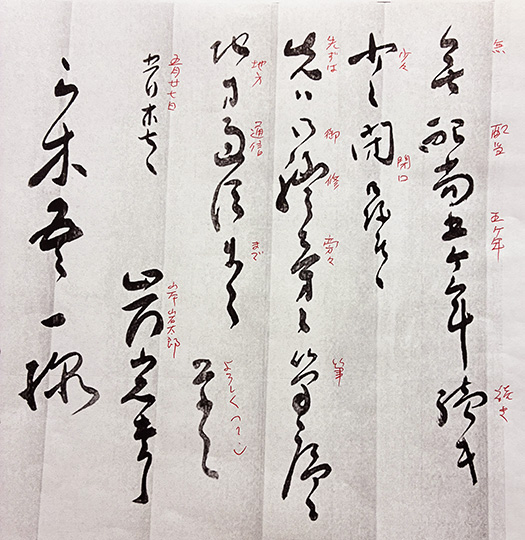
 その時期の消息を発掘するのに、江戸末期に縁戚関係を結んでビジネス的にも強固な関係であった岡山県井原市の「庄屋」家である岸岩太郎氏からの「書簡」が2通発見されたのだ。が、こちらについては地域社会との関わりより、やはり家系史の資料と判断できたので、個人としてその解析作業に向き合うこととした。
 親族のなかの書の知識もある長老に意見も求め、書簡のコピーを渡してみたけれど「これはさっぱり・・・」との回答で、困難な局面に立ち至っていた。
 「古文書解析」について民間で請け負うサービスはWEBなどで発見されるけれど、その解析結果の信憑性ではイマイチと思えるし、さらに親族の背景事情について詳細に情報を共有させなければ、到底不可能だと思われた。結果2ヶ月以上、古文書とにらめっこしてきていた。
 祖父の性格までわきまえた親族でなければ,手紙のやり取りでの「息づかい」の部分までは判読できないということがわかってくる。牛歩のような日々を過ごしてきたのですが、TOPPANの開発した古文書解析環境「古文書カメラ〜ふみのは」なども活用し、徐々に実相が浮かび上がってきている。
 結局は正面から向き合って、徐々に判読できてくるくずし字の単語の積層から文意を掴んでいくしかない。  昭和元年時点の社会動向も踏まえると、上の写真部分(赤字は判断結果)でも戦前期の「資本家層」と思える差出人・岸岩太郎さんのため息が聞こえてくる。
 「無配当」が「5年も続いていて少々閉口」している実感が見えてくる。
 先日、歴史家の磯田道史さんがテレビ番組で語っていましたが、くずし字判読についてはやはりその文章と正面から向き合うしかないのですね。ふ〜む、辛抱強く頑張るしかありません。

●お知らせ
拙書「作家と住空間」幻冬舎から電子書籍で発刊
お求めはAmazonで。
https://amzn.asia/d/eUiv9yO
English version⬇

[Days of Slow-Moving Dialogue, Meditating on “Gankō Shihai” While Deciphering Letters Written in Cursive Script]
As demonstrated by TOPPAN’s development of the “Ancient Document Camera—Fuminoha,” there is a market for deciphering ancient documents. The potential for new business areas in an aging society. …

 In May of this year, I casually discovered some old documents at my eldest brother’s family home. One of them contained information related to the local history of Irino in Kawachi-cho, Higashi-Hiroshima City, dating back to 1803 during the Edo period. I visited the Hiroshima Prefectural Archives to request an analysis, and the official results were successfully determined. It has now been archived as a record of the reality of a local community during the late Edo period.
 Meanwhile, in 1905, when the Japan Monopoly Corporation established a state monopoly on the domestic salt industry, my family lost the foundation for our business—the production and distribution of salt in Matsunaga, Fukuyama City, Hiroshima Prefecture, which had been in operation since the Edo period. Although the details of any negotiations with the state monopoly at that time remain unclear, my grandfather, who experienced this process firsthand as the head of the family, subsequently relocated the family’s base of operations to Hokkaido.
 In my efforts to uncover information from that period, I discovered two “letters” from Mr. Iwataro Kishi of the “Shōya” family in Ibara City, Okayama Prefecture—a family with whom we had formed kinship ties in the late Edo period and maintained strong business relations. However, since these letters were more relevant to our family history than to our ties with the local community, I decided to undertake their analysis on my own.
 I sought the opinion of an elder relative who was knowledgeable about calligraphy and gave him copies of the letters, but his response was, “I’m completely lost…,” leaving me at an impasse.
 While private services for “historical document analysis” can be found online, I found the reliability of their results to be lacking; moreover, I felt it would be impossible without sharing detailed information about our family’s background. As a result, I’ve been poring over these ancient documents for over two months.
 I’ve come to realize that unless you’re a relative who truly understands my grandfather’s personality, it’s impossible to decipher the “subtle nuances” in the correspondence. It’s been a painstakingly slow process, but by utilizing tools like “Fumino-ha,” an ancient document analysis environment developed by TOPPAN, the true nature of the letters is gradually coming into focus.
 Ultimately, there’s no choice but to face the text head-on and grasp the meaning of the text layer by layer as I gradually decipher the words written in cursive script. Considering the social trends at the start of the Showa era, even in the portion of the photo above (the red text indicates the analysis results), I can almost hear the sigh of the sender, Iwataro Kishi—who appears to have been part of the pre-war “capitalist class.”
You can sense his genuine frustration that “no dividends” have “continued for five years, which is a bit of a headache.”
 As historian Michifumi Isoda mentioned on a TV program the other day, when it comes to deciphering cursive script, there really is no choice but to confront the text head-on. Hmm, I guess I’ll just have to be patient and keep at it.

● Announcement
My book, *Writers and Living Spaces*, has been published as an e-book by Gentosha.
Available on Amazon.

【陶磁器とともに時間が積層している「有田」の街】


 有田焼とは、佐賀県有田町とその周辺地域で製造される磁器を指す。
17世紀初頭、朝鮮人陶工である初代金ヶ江三兵衛(通称:李参平)によって磁器の原料となる陶石が発見され、日本で初めて磁器が焼かれた。以来400年間、この地は食器や美術工芸品など、ものづくりの歴史を連綿と紡ぎ続けている。
 かれは豊臣秀吉の朝鮮出兵(1592年、1597年)の際、特殊技能技術者として身柄を確保され、強制的に来日させられた経緯を持つ。そのような過酷な運命にありながら、新天地にその技術を伝え、地道に原材料を発見・開発した功績は大きい。まさに、この地にとっての「厚恩のひと」。
 そもそも陶器とは陶土(土)を主な原料としてやや低めの温度で焼いたものであり、ざらっとした質感と吸水性を持つ。信楽焼や備前焼がその代表例。一方、磁器は陶石を砕いたものを原料にし、極限の高温で焼き上げられる。白く硬く、つるりとした表面を持ち、吸水性はない。その代表格こそが有田焼や九谷焼。
 有田で「色絵(上絵付け)」が始まったのは1640年代、初代酒井田柿右衛門による成功が端緒。陶磁器用の絵の具で釉薬(ゆうやく)の上に彩色を施す。この技法によりそれまでの染付のみの単色世界から、多彩色の華やかな世界へと飛躍を遂げた。
 1650年代からはオランダ東インド会社を介して東南アジアやヨーロッパ諸国への輸出が開始され、ヨーロッパの王侯貴族の間では、有田の磁器を持つことが最高のステータスシンボルとなった。日本の「製造業」が欧米世界を震撼させた嚆矢(こうし)であり、肥前鍋島藩が明治維新期に開明的な雄藩として主導的役割を果たせた背景には、間違いなくこの世界水準の産業的「下地」があった。
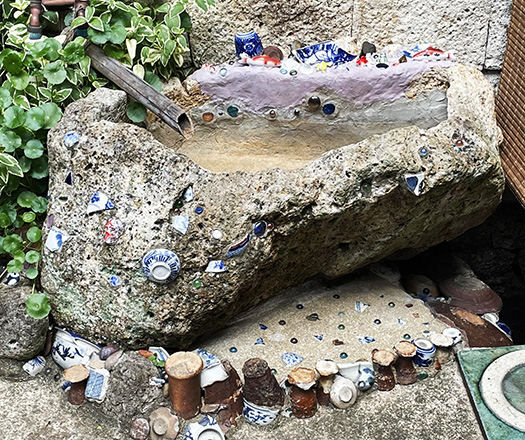
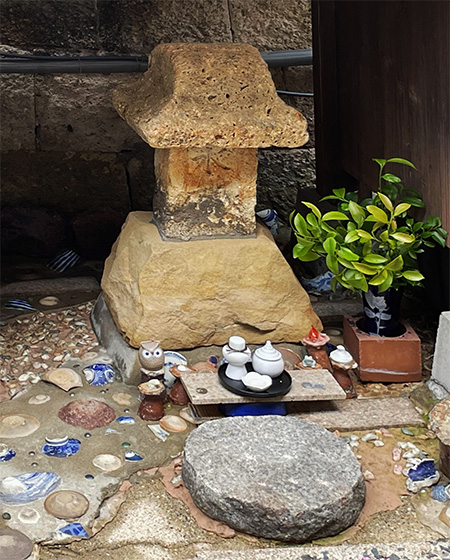
 ・・・写真は、有田の街並みを歩いていてカミさんは美しい工芸美術に当然ながら目が行く(笑)のに対して、わたしは路傍に鎮座されている「お社」に惹き付けられていた。いかにも庶民の日常の「ものづくり」での祈りを受け止め続けてこられた素朴な存在。そして、焼き物の街らしく、割れた食器類が断片となっても「役に立てられている」様子。
 この有田で暮らす職人さんたち、その世帯の親子たちが手を合わせていた様子が目に浮かんだ。
 自分たちの暮らしを支えてくれる磁器に対して素朴に神仏に感謝するこころ。いかにも日本的な「心情」がそこに込められているように感じられ、しばしその「美感」に佇ませていただいていた。

●お知らせ
拙書「作家と住空間」幻冬舎から電子書籍で発刊
お求めはAmazonで。
https://amzn.asia/d/eUiv9yO

English version⬇

[The Town of “Arita,” Where Time Has Layered Itself Alongside Porcelain]
From its very beginnings, porcelain production in Arita has been conducted with an international perspective. Among European royalty and nobility, owning Arita porcelain became a status symbol. …

 Arita ware refers to porcelain produced in Arita Town, Saga Prefecture, and its surrounding areas.
In the early 17th century, the first-generation Kanegae Sanbei (commonly known as Lee Sanpei), a Korean potter, discovered the porcelain stone used as raw material for porcelain, and porcelain was fired in Japan for the first time. For the past 400 years, this region has continued to weave an unbroken history of craftsmanship, producing tableware, art objects, and other crafts.
 He had been taken into custody as a specialist craftsman during Toyotomi Hideyoshi’s invasions of Korea (1592 and 1597) and was forcibly brought to Japan. Despite such a harsh fate, his achievements—in passing on his skills to this new land and diligently discovering and developing raw materials—were immense. He is truly a “man of great benevolence” to this region.
 To begin with, earthenware is made primarily from clay and fired at a relatively low temperature, resulting in a rough texture and water absorption. Shigaraki-yaki and Bizen-yaki are prime examples. Porcelain, on the other hand, is made from crushed porcelain stone and fired at extremely high temperatures. It is white, hard, and has a smooth surface, with no water absorption. Arita-yaki and Kutani-yaki are the quintessential examples of porcelain.
 The practice of “iro-e” (overglaze decoration) began in Arita in the 1640s, pioneered by the first-generation Sakaieda Kakiemon. This technique involves applying colors over the glaze using pigments specifically designed for ceramics. Thanks to this technique, the world of ceramics made a quantum leap from the monochromatic realm of traditional blue-and-white (sometsuke) to a vibrant, multicolored world.
 Starting in the 1650s, exports to Southeast Asia and European countries began via the Dutch East India Company, and among European royalty and nobility, owning Arita porcelain became the ultimate status symbol. This marked the beginning of Japan’s “manufacturing industry” that shook the Western world, and there is no doubt that this world-class industrial “foundation” was the reason the Hizen Nabeshima Domain was able to play a leading role as an enlightened and powerful domain during the Meiji Restoration.
 …In the photo, while my wife’s eyes were naturally drawn to the beautiful arts and crafts as we walked through the streets of Arita (laughs), I was captivated by the “shrine” enshrined by the roadside. It was a simple presence that had continued to receive the prayers of ordinary people engaged in their daily “craftsmanship.” And, as befits a town of pottery, even broken tableware, reduced to fragments, seemed to be “serving a purpose.”
 I could picture the artisans living here in Arita—and the parents and children in their households—joining their hands in prayer.
A simple heart of gratitude toward the gods and Buddhas for the porcelain that sustains their lives. I felt that a quintessentially Japanese “sentiment” was imbued there, and I lingered for a while, absorbed in that “aesthetic beauty.”

● Announcement
My book, *Artists and Living Spaces*, has been published as an e-book by Gentosha.
Available on Amazon.


【TOTO第5代社長の「窯場を抱く」有田の生家】


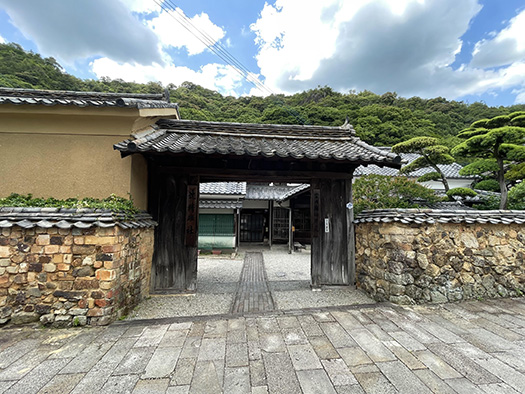
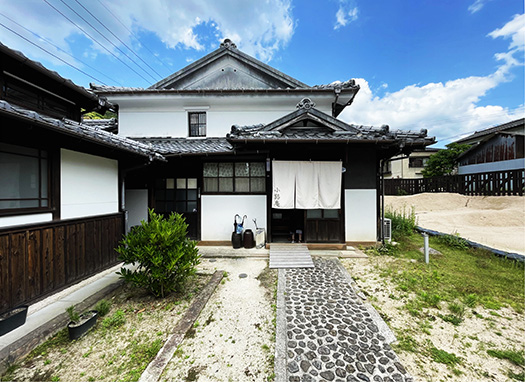
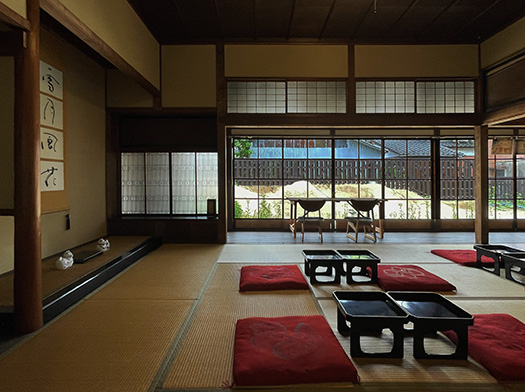
 有田の伝統的街並みのなかに佇む公開されている住宅「小路庵」〜しゅうじあん〜(江副孫右衛門旧家)を探訪した。<現在は喫茶店として営業>この建物はTOTO第5代社長にして公選初代町長だった江副孫右衛門(1885~1964)年)の生家という旧家。大正14(1925)年に建設。有田では町なかの狭い通りを小路と呼び、この家の前の道は「柿の木小路」と呼ばれ、そこから「小路庵」と名付けられたという。
 幼友達から「マゴエンシャン」と呼ばれていたかれの生家は祖父から続く窯焼きの家。父八蔵の理解のもと、明治33(1900)年に佐賀県立工業学校有田分校に入学後、東京高等工業学校の窯業科へ進学。
 しかし八蔵は石炭窯の導入に失敗し継ぐべき窯を失ったマゴエンシャンは創立早々の「日本陶器合名会社」に就職。そこでディナーセットの開発に成功し、高圧碍子や点火碍子、耐酸磁器の創製にも成功し、戦時中「日本碍子」や「日本特殊陶業」の社長を歴任した。
 しかし、軍部とのあつれきが原因で社長を辞任し、窯業界の第一線からは退いたが、とはいえ各窯業企業のご意見番として多忙を極め、その上「月の半分くらいしか有田にはいられないが」という事情をわかってもらった上で昭和22(1947)年、有田町長に就任したのだという。・・・
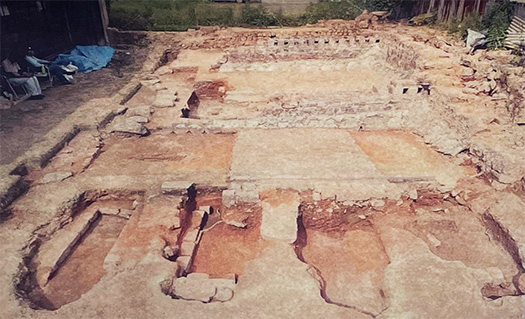
 上の写真は昨日紹介した有田の街のランドマーク「トンバイ塀」に囲まれ、窯場を抱え込んだような配置で建てられている住宅の様子。いまはうっすらと痕跡が残っているだけだが、窯場の写真は展示資料からその様子を転載してみた。焼き物から片時も目を離さないぞという窯業家の魂魄が伝わってくる。

 南面した窯場を朝夕、丹念に観察し日々の生産を思う暮らしぶりだったのだろう。
 そして、この有田の窯場産業は、佐賀藩の反射炉完成のための技術的要素を供給していたことは先日のブログでも触れたとおりだけれど、その幕末期からかれが生きた戦前・戦中期には当然、軍部との関係性も強まったことと想像できる。そのあたりは詳細にまで立ち入りたくはないが、あつれきとはそういったことの絡みなのだろう。
 有田という、日本の製造業・日本人全般にとっても重要な地域での「生産者の息づかい」が具体的に感受できる家だと思われた。

●お知らせ
拙書「作家と住空間」幻冬舎から電子書籍で発刊
お求めはAmazonで。
https://amzn.asia/d/eUiv9yO

English version⬇

[The Birthplace of TOTO’s Fifth President in Arita: “Embracing the Kiln”]
A home in Arita where you can feel the “breath of a potter” still lingering. The way of life and mindset of someone who fired pottery as part of daily life come to life here. …

 I visited “Shuji-an” (the former home of Magobei Ezoe), a private residence open to the public nestled within Arita’s traditional townscape. This historic house is the birthplace of Magobei Ezoe (1885–1964), the fifth president of TOTO and the first popularly elected mayor of Arita. It was built in Taisho 14 (1925). In Arita, the narrow streets in town are called “koji” (alleys), and the street in front of this house is known as “Kakinoki Koji” (Persimmon Tree Alley), which is said to be the origin of the name “Shuji-an.”
 His childhood friends called him “Magoenshan,” and his family home was a pottery-firing business passed down from his grandfather. With the support of his father, Hachizō, he enrolled in the Arita Branch of the Saga Prefectural Industrial School in Meiji 33 (1900) and later advanced to the Ceramics Department at the Tokyo Higher Technical School.
 However, after Hachizō failed to introduce coal-fired kilns and Magōenshan lost the kiln he was supposed to inherit, he joined the “Nippon Toki Gomei Kaisha” shortly after its founding. There, he successfully developed a dinner set and pioneered the creation of high-voltage insulators, ignition insulators, and acid-resistant porcelain; during the war, he served as president of both “Nippon Insulators” and “Nippon Special Ceramics.”
 However, due to friction with the military, he resigned as president and stepped back from the forefront of the pottery industry. Nevertheless, he remained extremely busy as a trusted advisor to various ceramics companies. Furthermore, after ensuring that people understood his situation—namely, that “I can only stay in Arita for about half the month”—he reportedly assumed the position of mayor of Arita Town in Showa 22 (1947). …
The photo above shows a residence built in a layout that seems to envelop the kiln, surrounded by the “Tonbai Wall”—a landmark of Arita that I introduced yesterday. Although only faint traces remain today, I’ve reproduced a photo of the kiln from the exhibition materials to illustrate its appearance. You can sense the spirit of a family dedicated to the pottery trade—one that never takes its eyes off the ceramics for even a moment.

 His daily life must have revolved around carefully observing the ruins of the south-facing kiln site every morning and evening, while reflecting on the day’s production.
 As I mentioned in a recent blog post, the Arita kiln industry supplied the technical expertise needed for the completion of the Saga Domain’s reverberatory furnace; naturally, one can imagine that his ties to the military grew stronger from the late Edo period through the pre-war and mid-war years in which he lived. I don’t wish to delve into the details of that, but the tensions likely stemmed from such entanglements.
 It struck me as a house where one can tangibly sense the “breath of the producers” in Arita—a region of great importance to both Japanese manufacturing and the Japanese people as a whole.

【陶芸の極地・有田で「トンバイ塀」に目が釘付け・・・】


 佐賀県の探訪記、いよいよ日本有数の「陶芸産業の地」有田に没入。
 そう、気分的には「沈殿」してしまう街並み。歴史を経た日本的産業基盤としての「陶芸」のひとつの極地のように思えていた。以前、愛知空港の近くの常滑を街歩きしていて、はじめはカミさんの強い興味に付き合うという心理だったモノが、徐々にその陶芸の作り手たちの歴史積層の「空気感」に心象世界が満たされていって、日本人的な「ものづくり」のコアに近づく感覚に浸っていた。
 有田では、その空気感に再度、脳内が満たされてしまった。
 溺れてしまう、というような表現がいちばんふさわしい。
 佐賀城探訪で、江戸末期に独自に高性能な大砲を独自開発できた素地として反射炉製鉄の様子を知ったが、その独自技術開発では、この有田の陶器焼成技術がその基盤を担っていた事実を知らされた。江戸期社会から明治の文明開化に至るには、こうした日本的な技術集積があったことが沁みてきた。
 まことに先人たちの努力の巨大蓄積を思い知らされる。
 江戸時代に設けられた上の番所(泉山)から、下の番所(岩谷川内)の大通り沿いを中心とする約2kmの細長いこの町並みは、平成3(1991)年に「有田内山伝統的建造物群保存地区【製磁町】」として選定された。江戸時代から昭和初期に至る漆喰塗の町家や洋館など、江戸、明治、大正、昭和というそれぞれの時代の特徴を持つ、質の高い建物が混在し焼物の町らしい町並みを形成している。
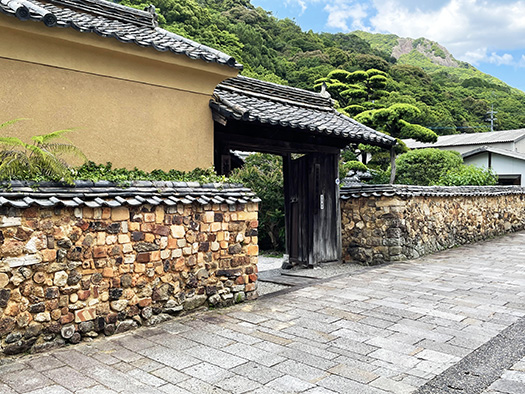
 そしてその街並みの中に、まるでデザインコードのように「トンバイ塀」が地低音を響かせている。
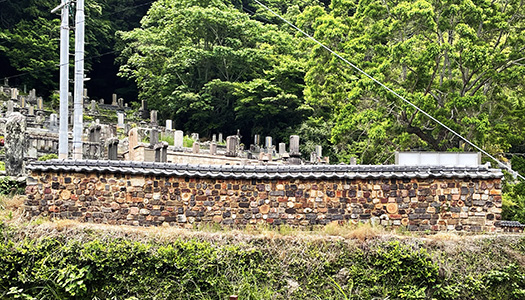
 「トンバイ」とは窯壁に使用する耐火レンガのこと。古窯の耐火レンガや窯道具を再利用した土が「トンバイ」と呼ばれる。これは窯の中で高温に熱せられ様々な釉薬が付着してできた微妙な色合いをもち、有田独特の景観を表現している。
 わたしは北海道人として、自宅を建てたとき基本素材としてコンクリートブロックを使い、最後の表層外壁には道庁建築を象徴するレンガを積むことにこだわった。自分という人間は、ある時間の走り手として生きるけれど、それは多くの先人たちからのバトンを受け継ぐのだという漠然とした思いがあって、北海道での暮らしが始まったときの先人たちへのリスペクトが大きかった。
 このトンバイ壁には、その時間感覚をはるかに超える積層感があった。・・・

●お知らせ
拙書「作家と住空間」幻冬舎から電子書籍で発刊
お求めはAmazonで。
https://amzn.asia/d/eUiv9yO

English version⬇

[In Arita, the Mecca of Ceramics, My Eyes Were Glazed on the “Tonbai Wall”…]
My wife seems to be interested in the aesthetic beauty of the ceramics, but I found myself deeply “immersed” in the marks of time etched into this Tonbai wall. …

 In my travelogue of Saga Prefecture, I finally immersed myself in Arita—one of Japan’s leading “centers of the ceramics industry.”
Yes, it’s a townscape that makes you feel as if you’re “sinking” into it. It struck me as the very epitome of “ceramics” as a time-honored Japanese industrial foundation. Previously, while strolling through Tokoname near Aichi Airport, I initially went along simply to accommodate my wife’s keen interest. But gradually, my inner world became filled with the “atmosphere” layered with the history of those ceramic artisans, and I found myself immersed in a sense of drawing closer to the very core of Japanese “craftsmanship.”
 In Arita, my mind was once again completely filled with that same atmosphere.
 “Drowning” is probably the most fitting way to describe it.
 During my visit to Saga Castle, I learned about the reflection furnace ironmaking process—the foundation that enabled the independent development of high-performance cannons in the late Edo period—but I was also made aware that Arita’s pottery firing techniques served as the bedrock for that independent technological development. It really sank in that this accumulation of Japanese technology was essential for the transition from Edo-period society to the Meiji era’s “Civilization and Enlightenment.”
 I am truly struck by the immense accumulation of effort made by our predecessors.
 This narrow, approximately 2-kilometer-long stretch of townscape—centered along the main street running from the Upper Checkpoint (Izuyama), established during the Edo period, to the Lower Checkpoint (Iwaya-gawauchi)—was designated in Heisei 3 (1991) as the “Arita Uchiyama Traditional Buildings Preservation District [Ceramic Town].” A mix of high-quality buildings—including plaster-walled townhouses and Western-style buildings dating from the Edo period to the early Showa era—each embodying the characteristics of the Edo, Meiji, Taisho, and Showa periods, forms a streetscape befitting a town renowned for its pottery.
 And within that streetscape, “Tonbai walls” resonate like a design code.
 “Tonbai” refers to the firebricks used in kiln walls. The clay created by reusing refractory bricks and kiln tools from old kilns is called “Tonbai.” Heated to high temperatures inside the kiln, it takes on subtle hues from the various glazes that adhere to it, embodying Arita’s unique landscape.
As a native of Hokkaido, when I built my own home, I used concrete blocks as the base material but was determined to lay bricks—symbolic of the Hokkaido Government Building—on the final outer layer of the exterior walls. I have a vague sense that, while I live as a runner through time, I am actually passing the baton handed down from many predecessors, and I felt a deep respect for those who came before me when I first began my life in Hokkaido.
 This Tonbai wall possessed a sense of layered depth that far transcended that sense of time. …

● Announcement
My book, *The Writer and Living Space*, has been published as an e-book by Gentosha.
Available on Amazon.


【わが家系を「甲子夜話」で紹介・松浦静山の平戸城訪問】


 さて九州全周の旅、佐賀県という自分にとって「未踏の地」を歩きながら、ずっと気になっていた場所があった。
 それは、平戸(ひらど)のこと。
 わが家系は江戸後期、広島県福山市の西、尾道に隣接する今津で「商家・あが屋」を営んでいた。当時この地は参勤交代の大名たちが泊まる宿場町として機能しており、薩摩藩をはじめとする雄藩もここを利用していた歴史がある。わが家は本陣職を司る河本氏と強い縁戚関係だったことから本陣・脇本陣の用向きを「手代(てだい)」的な立場で受託し、実務を取り仕切っていたと伝承されている。当然、宿泊する大名たちと直接言葉を交わす機会も多くあった。
 そうした大名の一人が、平戸藩主の松浦(まつら)氏。
 幕末期、当主であり希代の文人・随筆家として名高い松浦静山がその膨大なエッセイ集『甲子夜話(かっしやわ)』の中で、1800年頃のわが家の当主・寛蔵(静山は「勘蔵」と記述)一家の様子を書き残してくれている。以下、その登場部分の引用。

〜29日 夜にいれば雨ふりたれど、つよからで、暁にはやむ。
宿立いで、流れにそひ提の上行に、けさはあたたかに覚え、夜も明、
安芸の国をも出て、備後の国三原の城もあとになし、
糸崎なる八幡の宮をふし拝み、磯辺ゆきつつながむれば、海路
は波も平かなれど、嶋山は霧を帯、雲冠て日も晴やかならず。
尾の道の塩焼くはまの冬げしき、煙もたえだえ心も慰まで、
坂こえ行けば一里あまり、今津村にいたり、ここに宿る。
家はこだかきところにて、河本保平という圧屋(庄屋)なり。
この家一室に男女群居して、妻のごとき者多しと聞けば、
家内いかほどか住ると問に、いふ。主人保平年四十余、妻も
また四十余、妾は三十ばかり京の人、養子材太二十三、材太の
妻は保平女ニ十ニ、その妹十ー、弟八十吉八、其妹は妾の子年ニ、
『手代 勘蔵三十余、其妻年詳ならず、子正二郎十』
婢三人僕六人、ともに二十人住居ける。これ和睦友愛の家というべきか。
抑男女無別の室か。何にせよ父子夫婦兄弟臣妾、めでたき栄なり。〜

 この『』で表記された部分がわが三木家の先祖。三木寛蔵とその子である10歳の正二郎(のちの三木文蔵)の記述部分。
 各自の年齢までこれほど詳細に記載されるのは、殿様と先祖との間に直に言葉を交わす昵懇な会話があったことの何よりの例証ではと。とくに「其妻年詳ならず(妻の年齢は詳しく分からない)」というあたり「いやぁ、あたしの歳まではちょっと・・・」なんていう、旅宿の夜の笑顔混じりの会話の残響が聞こえてくるよう(笑)。
 歴史に名を残す文人大名にこうして記録されていたおかげで、わが家のルーツ調査は大きな手がかりと確信を得ることができた。まさに一族にとっての厚恩。
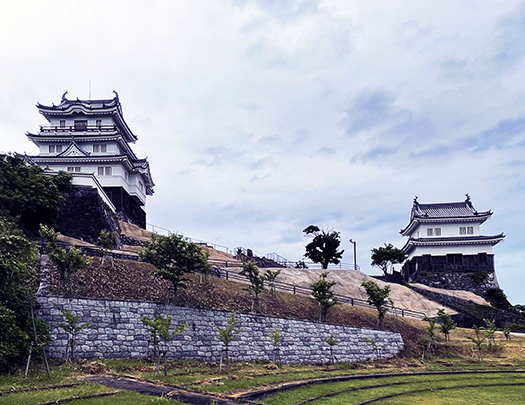
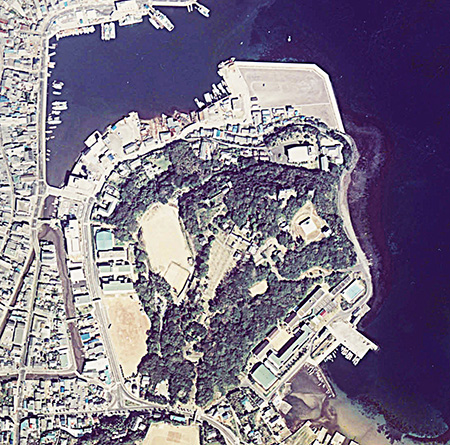
 そんなわけで、今回の九州旅ではどうしても「静山公へのお礼参り」として平戸城に行きたかったワケ。2枚目の空撮写真(出典: 国土画像情報 )が示す通り、平戸城は海に突き出た見事な天然の要害。1枚目の写真の堂々たる城郭を仰ぎながら、はるばる瀬戸内海を渡りわが先祖の暮らす今津宿に泊まり温かい文章を書いてくれたと、深い感謝の念。
 ・・・なんですが、てっきり地理的に「佐賀県」と思い込んでいたら、実は「長崎県」だったことが判明。直前になって自分の無知ぶりに再度驚かされることとなりました(笑)。
 県を勘違いとは。われながら困った無知ぶり(泣)。

●お知らせ
拙書「作家と住空間」幻冬舎から電子書籍で発刊
お求めはAmazonで。
https://amzn.asia/d/eUiv9yO

English version⬇

[Introducing My Family Lineage in *Koshiya-wa*: Seizan Matsuura’s Visit to Hirado Castle]
My exploration of my family history was greatly encouraged by a passage written by a prominent literary figure of the late Edo period—a man of humble origins himself. This visit was a gesture of deep gratitude for his kindness. …

 Now, on my journey around Kyushu, as I walked through Saga Prefecture—a “land I had never set foot in” for me—there was one place that had always been on my mind.
That place was Hirado.
In the late Edo period, my family ran a merchant house called “Aga-ya” in Imazu, located west of Fukuyama City in Hiroshima Prefecture and adjacent to Onomichi. At that time, this area served as a post town where daimyo on their sankin-kōtai journeys would stay, and it has a history of being used by powerful domains, including the Satsuma Domain. According to family tradition, because our family had strong kinship ties with the Kawamoto clan—who held the position of honjin (main inn) administrator—we were entrusted with managing the operations of the honjin and waki-honjin in a “tedai” (clerk) capacity, handling the day-to-day affairs. Naturally, we had many opportunities to speak directly with the daimyo staying there.
One such daimyo was the Matsuura clan, lords of the Hirado Domain.
Toward the end of the Edo period, Matsuura Seizan—the head of the clan and a renowned literary figure and essayist of his time—recorded the circumstances of my family’s head, Kanzo (whom Seizan refers to as “Kanzō”), and his household around the year 1800 in his vast collection of essays, *Kasshi Yawa*. The following is an excerpt from that passage.

~On the 29th: It rained during the night, but the rain was heavy and stopped by dawn.
Leaving our lodgings, we walked along the embankment beside the river; the morning felt warm, and as dawn broke,
we left the province of Aki behind, and the castle of Mihara in the province of Bingo was now far behind us.
We paid our respects at the Hachiman Shrine in Itosaki, and as we traveled along the coast, we observed that, though the sea
was calm, but the islands and mountains were shrouded in mist, and with clouds crowning them, the sun did not shine brightly.
The winter scene of the salt-baking beach along the O-no-michi road—the smoke rising intermittently soothed my heart—
After crossing a hill and traveling a little over one ri, I arrived at Imazu Village, where I spent the night.
The house stood in a secluded spot and belonged to Kawamoto Hohei, the village headman.
I heard that men and women lived together in one room of this house, and that there were many women who seemed to be his wives,
so when I asked how many people lived there, he replied: The master, Yasuhira, is over forty; his wife is
also over forty; his concubine, a woman from Kyoto, is about thirty; his adopted son, Zaitaro, is twenty-three; Zaitaro’s
wife is Yasuhira’s daughter, aged twenty-two; her younger sister is eleven; his younger brother is Yachikichi, and his younger sister is the concubine’s child, aged two;
“The steward, Kanzo, is over thirty; his wife’s age is unknown; their son, Shojiro, is ten.”
Three maidservants and six male servants—a total of twenty people lived there. Should this be called a household of harmony and brotherly love?
Or is it a household where men and women live without distinction? In any case, the relationship between father and son, husband and wife, brothers, and master and concubine is a glorious and auspicious sight. ~

The section enclosed in these “” marks the ancestors of our Miki family. It describes Miki Kanzo and his 10-year-old son, Shojiro (later Miki Bunzo).
The fact that even their ages are recorded in such detail is, I believe, the best evidence of the warm, intimate conversations that took place between the lord and our ancestors. Especially the line, “The age of his wife is unknown,” makes me feel as if I can almost hear the echoes of a smiling conversation from a night at an inn, with her saying something like, “Oh, well, I’d rather not reveal my age…” (laughs).


【軟弱地盤対応型「木組み」と維新期・佐賀の英傑たち】


 きのうに続き、佐賀城の「構造」についての現地説明の補足。
 いわゆる「在来工法」といえば、室内空気と構造材からの「除湿」を最優先するその通風重視の思想に対して、北海道においては積雪寒冷条件に適合させるため「高断熱高気密化」の方向へと大きく技術進化させてきた歴史。いわばこれが北方圏の常識だけれど、ここ佐賀で出会ったのは明治までの木造技術の一断面として、日本の風土の基本的な難題である「軟弱地盤」対応に特化した、性能技術的な進化内容だった。
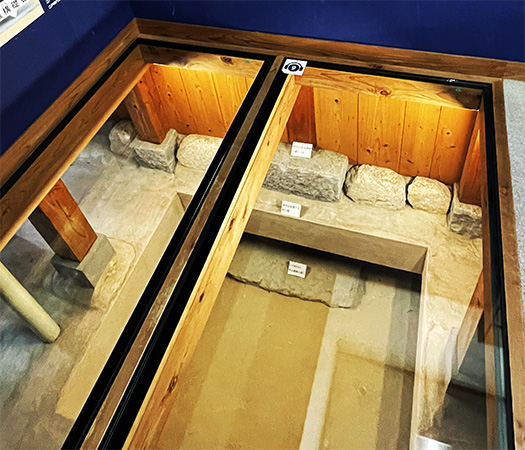
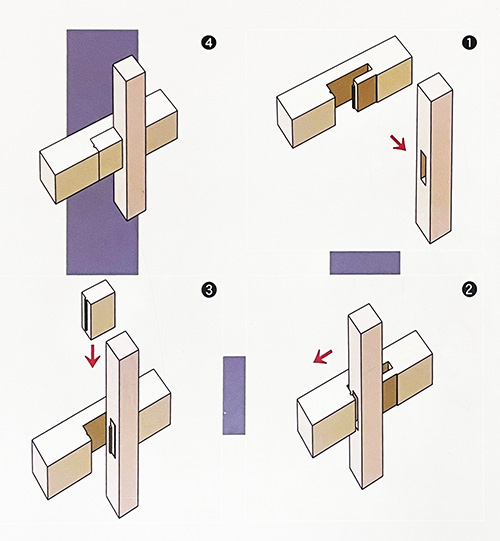
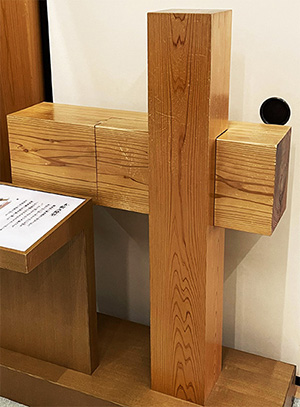
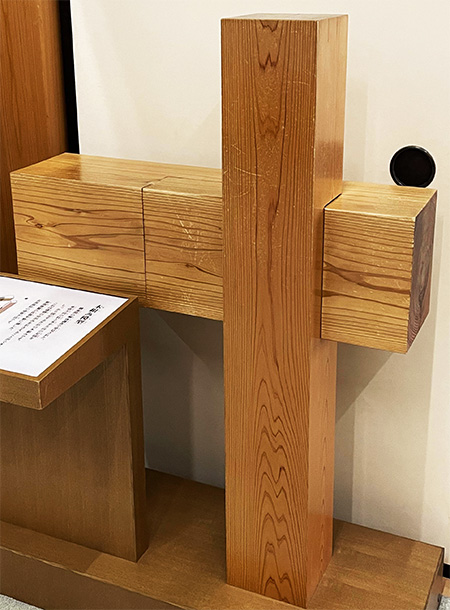
 1枚目の写真のように礎石を保護して建設された床下の上で、垂直方向の柱と水平方向の足固(あしがため)をガッチリと固定する独特の木組み技術。
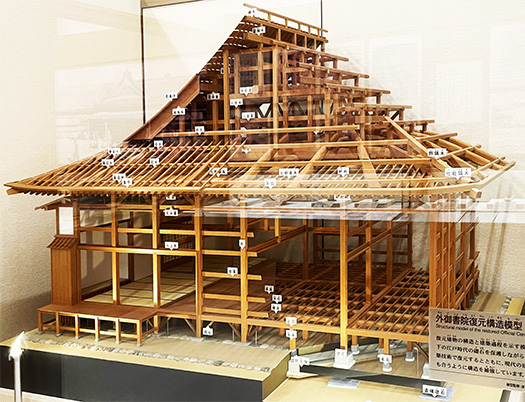
 2枚目のイラストと3枚目の模型が見せてくれる精緻な仕口(しぐち)は、建物のゆがみを極限まで抑え込み、泥深い佐賀平野の土壌を克服するための「佐賀独特」の工夫なのだということ。
 伝統工法の職人さんたちもまた、この佐賀藩という開明的で進歩的な風土の中で、果敢なチャレンジを行っていた。地元の建築関係者による地域特有の条件への飽くなき対応努力の痕跡に、専門外ながら非常に知的好奇心を揺さぶられてしまった。実に興味深い。

 そして、こうした「課題解決型」の開明的な風土が、維新期に驚くほど多くの社会変革人材を輩出したという事実に、不勉強ながらガツンと頭を叩き込まれたような衝撃を受けた。館内では藩主・鍋島直正、島義勇のほかに、佐賀が誇る「五人の英傑」たちが鮮やかに紹介されていた。
 ●佐野常民:藩精煉方の主任として先端科学を極め、のちに海軍創建や日本赤十字社の創設を成し遂げた男。
 ●副島種臣:外務卿として高い国際外交評価を得、のちに民撰議院設立建白書を提出した硬骨漢。
 ●大木喬任:東京府知事や初代文部卿を歴任し、近代日本の法体制と近代教育(学制)の基礎を確立した立役者。
 ●江藤新平:初代司法卿として司法権の独立と人権擁護の法制化に情熱を注ぎ、最期は島義勇と共に佐賀の乱で散った先駆者。
 ●大隈重信:早稲田大学の創立者であり、日本初の政党内閣を組織して内閣総理大臣に上り詰めた巨人。
 科学技術による軍事や建築のイノベーション(自己改革)を徹底的にやり抜いた佐賀藩だからこそ、その延長線上で、明治ニッポンの「法・教育・外交・医療」の骨格をデザインする天才たちが同時に育ったということか。
 明治維新という大転換が武家社会による壮大な「自己革命」の結果として達成された事実が、この佐賀城で非常にわかりやすいカタチで脳裏に焼き付けられた。この年齢にして、実に「基礎」学習をさせてもらった気分。
 

●お知らせ
拙書「作家と住空間」幻冬舎から電子書籍で発刊
お求めはAmazonで。
https://amzn.asia/d/eUiv9yO

English version⬇

[“Timber-Frame” Construction for Soft Soil and the Heroes of Saga During the Restoration Era]
Efforts to advance traditional construction techniques in the progressive Saga Domain. And it was this region’s innovative spirit that nurtured the key figures of Meiji-era Japan’s reforms. …

 Following up on yesterday’s post, here are some additional notes on the on-site explanation regarding the “structure” of Saga Castle.
While the so-called “traditional construction methods” prioritize ventilation—with the primary goal of “dehumidifying” indoor air and structural materials—Hokkaido has a history of significantly advancing its technology toward “high insulation and airtightness” to adapt to snowy and cold conditions. While this is, so to speak, standard practice in northern regions, what I encountered here in Saga was a specific aspect of wooden construction techniques dating back to the Meiji era—a performance-oriented technological evolution specifically tailored to address “soft ground,” a fundamental challenge of Japan’s climate and terrain.
 As shown in the first photo, this unique timber-framing technique firmly secures vertical posts and horizontal bracing to a raised floor constructed to protect the foundation stones.
 The intricate joints shown in the second illustration and the third model represent a “Saga-specific” innovation designed to minimize building distortion to the utmost extent and overcome the muddy soil of the Saga Plain.
 Craftsmen practicing traditional construction methods also took on bold challenges within the enlightened and progressive culture of the Saga Domain. Although I am not an expert in the field, I found my intellectual curiosity deeply piqued by the traces of the relentless efforts made by local architects to adapt to the region’s unique conditions. It is truly fascinating.

 Furthermore, I was struck—as if I’d been hit over the head—by the fact that this “problem-solving” and enlightened culture produced an astonishing number of leaders of social reform during the Meiji Restoration era, despite my own lack of knowledge on the subject. Inside the museum, alongside the feudal lord Naomasa Nabeshima and Yoshiyuki Shima, the “Five Heroes” of whom Saga is so proud were vividly introduced.
 ● Tsunehito Sano: A man who mastered cutting-edge science as the head of the domain’s refining department and later achieved the establishment of the Imperial Japanese Navy and the founding of the Japanese Red Cross Society.
 ● Taneomi Soejima: A man of unyielding character who earned high international acclaim as Minister for Foreign Affairs and later submitted a petition calling for the establishment of a popularly elected parliament.
 ● Takatoshi Ōki: A key figure who served as Governor of Tokyo Prefecture and the first Minister of Education, laying the foundations for modern Japan’s legal system and modern education (the School System).
 ● Shinpei Eto: A pioneer who, as the first Minister of Justice, devoted himself passionately to the independence of the judiciary and the legal protection of human rights, and who ultimately fell alongside Yoshitake Shima in the Saga Rebellion.
 ● Shigenobu Ōkuma: A giant of a figure who founded Waseda University and rose to become Prime Minister after organizing Japan’s first party-based cabinet.
 Perhaps it was precisely because the Saga Domain thoroughly pursued innovation (self-reform) in military affairs and architecture through science and technology that, as a natural extension of that spirit, geniuses capable of designing the framework of “law, education, diplomacy, and medicine” for Meiji Japan emerged simultaneously.
 The fact that the Meiji Restoration—a massive transformation—was achieved as the result of a grand “self-revolution” by samurai society was etched into my mind in a very clear and tangible way right here at Saga Castle. At my age, I feel as though I’ve truly been given a lesson in the “fundamentals.”
 

● Announcement
My book, *Writers and Living Spaces*, has been published as an e-book by Gentosha.
Available on Amazon.

【天保9(1838)年再建時の復元建築・佐賀城の構造】


 幕末から明治の動乱期に大きな影響力を与えた肥前佐賀藩。36万石余という外様藩のなかで8番目の石高という雄藩であり、藩主・鍋島直正は幕末屈指の名君として知られる。長崎からの海外情報にいち早く接することで経済を活性化させ、医学・科学技術・軍事技術などの近代化を驚異的なスピードで推し進めた。その先見性と実績が、のちの明治帝からの強い信頼へと繋がっていったのだろう。
 かれは明治政府でも議定や初代の「北海道開拓使長官」を務めたが、明治4年に早逝してしまう。もしもう少し長命であれば、その後の日本史、ひいてはわが北海道の歴史も少し違ったものになっていたかもしれない――そんな思いが頭をよぎることがある。
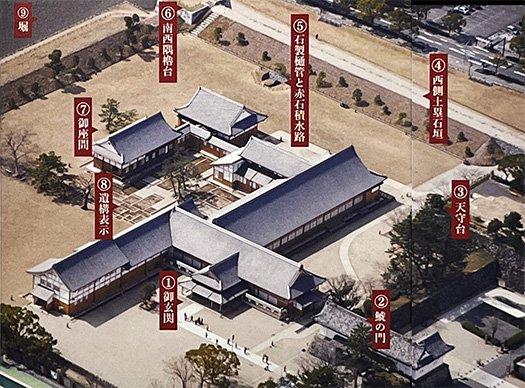
 現在に残る佐賀城本丸歴史館は、かれが天保9(1838)年に再建した本丸御殿の建物を忠実に復元させたものとされる。実地で見てみると、その建築構造としての完成度の高さに圧倒される思い。
 1枚目の写真は展示されている外御書院の復元構造模型。礎石を保護して建設された床下や、複雑にからみあった天井裏の小屋組、防水の役目をする土居(どい)葺きの上に瓦を載せる仕組みなど、当時の知恵が視覚的に実によく理解できる展示になっていた。
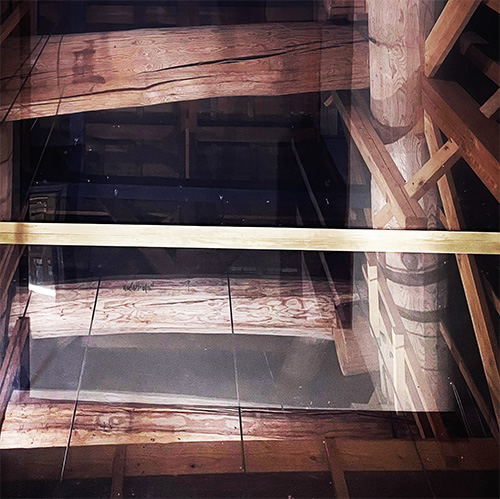
 2枚目の写真は大きな屋根を支える実際の「小屋組」で、館内では天井をガラス張りにして見せてくれていた。天井裏の木組みには周囲2m、長さ10mもの楠や杉の巨大丸太梁が縦横に組まれて、その迫力に息を呑む。
 さらに3枚目の写真のように、垂直方向の柱と水平方向の足固めを強固に固定する独自の木組み模型もあった。建物のゆがみを極限まで抑えるというこの工法は、軟弱地盤である佐賀平野特有の知恵なのだという。こうした合理的かつ強靭な建築工法を見ていると、のちに薩摩藩が技術を「教わりに来た」という、あの製鉄「反射炉」を完成させた佐賀藩の先端的な科学精神が、そのまま木造建築の構造にも息づいているように思えてならない。
 開拓使の初代長官である鍋島直正の病に伴って家臣・島義勇が「判官」となり、開拓の基本方針、首府・札幌の都市計画のグランドデザインを領導したわけですが、その後の「佐賀の乱」を経て、開拓のヘゲモニー(主導権)は薩摩閥へと握られていくことになっていく。

 4枚目の写真に広がる壮大な本丸の縄張りを眺めながら、もし鍋島直正がそのまま生きて長命であったなら、私たちの北海道は今ごろどんな風景を残していただろうか、と。
 佐賀城の端正な空間の中で、そんな歴史の異次元を静かに彷徨っていた。

●お知らせ
拙書「作家と住空間」幻冬舎から電子書籍で発刊
お求めはAmazonで。
https://amzn.asia/d/eUiv9yO

English version⬇

[The Structure of Saga Castle: A Reconstruction Based on the Design from Its Rebuilding in Tenpō 9 (1838)]
As a Hokkaido native with deep ties to the region, I found myself deep in thought, reflecting on the Saga Domain’s progressive spirit—evidenced by, among other things, the success of the “reflecting furnace,” a steel-making process directly linked to innovations in cannon technology. …

 The Hizen Saga Domain exerted significant influence during the turbulent period from the end of the Edo period through the Meiji era. It was a powerful domain, ranking eighth in kokudaka (rice yield) among the outer domains, with a kokudaka of over 360,000 koku; its lord, Naomasa Nabeshima, is known as one of the most renowned rulers of the late Edo period. By being among the first to access information from overseas via Nagasaki, he revitalized the domain’s economy and drove forward modernization in fields such as medicine, science and technology, and military technology at an astonishing pace. It was likely this foresight and track record that led to the strong trust he later earned from Emperor Meiji.
He served as a councilor in the Meiji government and as the first “Commissioner-General of the Hokkaido Development Commission,” but he passed away prematurely in Meiji 4. Sometimes the thought crosses my mind that if he had lived a little longer, the subsequent history of Japan—and by extension, the history of our Hokkaido—might have unfolded somewhat differently.
 The Saga Castle Honmaru History Museum that stands today is said to be a faithful reconstruction of the Honmaru Palace, which he rebuilt in Tenpō 9 (1838). Seeing it in person, one is overwhelmed by the high level of craftsmanship in its architectural structure.
 The first photo shows a scale model of the reconstructed Otsu-no-Shoin on display. The exhibition provided a visually clear understanding of the wisdom of the time—from the floor structure built to protect the foundation stones, to the intricately interwoven roof trusses in the ceiling cavity, and the system of laying roof tiles over the “doi” that serves as a waterproof layer.
 The second photo shows the actual “roof trusses” supporting the large roof; inside the museum, the ceiling was made of glass to allow visitors to view them. The wooden framework in the attic features massive round beams of camphor and cedar—2 meters in circumference and 10 meters long—arranged in a crisscross pattern, and their sheer scale is breathtaking.
 Furthermore, as shown in the third photo, there was a model of a unique timber-framing technique that firmly secures the vertical posts to the horizontal bracing. This construction method, designed to minimize building distortion to the utmost extent, is said to be a unique solution developed specifically for the Saga Plain, which is characterized by soft ground. Observing such rational and robust architectural techniques, I cannot help but feel that the cutting-edge scientific spirit of the Saga Domain—which later enabled them to complete the iron-smelting “reflecting furnace” that the Satsuma Domain came to “learn” from—is very much alive in the structure of this wooden architecture.
 When Naomasa Nabeshima, the first Commissioner of the Development Commission, fell ill, his retainer, Yoshiyuki Shima, assumed the role of “Vice-Commissioner” and led the formulation of the basic policies for the development project as well as the grand design for the urban planning of the capital, Sapporo. However, following the subsequent “Saga Rebellion,” hegemony (leadership) over the development project gradually shifted into the hands of the Satsuma faction.

As I gazed at the vast grounds of the Honmaru spread out in the fourth photograph, I wondered: if Naomasa Nabeshima had lived a long life, what kind of landscape would our Hokkaido have retained by now?
 Amid the elegant spaces of Saga Castle, I quietly wandered through that alternate dimension of history.

● Announcement
My book, *Writers and Living Spaces*, has been published as an e-book by Gentosha.
Available on Amazon.


【薩長土肥の維新主導/佐賀藩の実力】


 北海道は明治維新によって欧米列強に学び、同時にその脅威と対峙することになった日本社会にとって、「北門の鎖鑰(さやく)」とされ、ロシア南下政策の脅威への最前線地域とされた歴史があります。
 その明治維新は、いわゆる「薩長土肥」勢力が主体となって江戸幕府を倒しました。最後の「肥」こそが肥前・鍋島藩であり、先日も書いたように、その維新の主力人材・島義勇が明治帝の詔勅と開拓三神を背負って札幌にやってきたことをもって、わが街の始原としています。
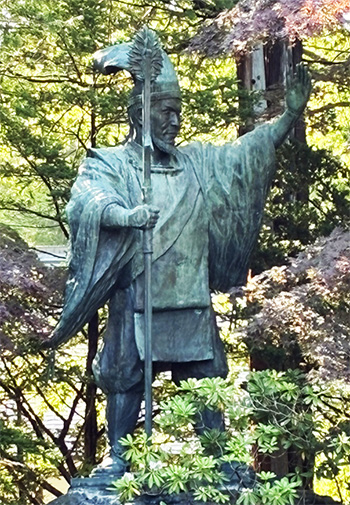
 1枚目の写真は、わたしの朝の散歩道である北海道神宮にいまも残されている島義勇の像。こころなしか「やぁ、北海道でヨロシクね(笑)」とでも挨拶されているようで、個人的に大好きな像であります。
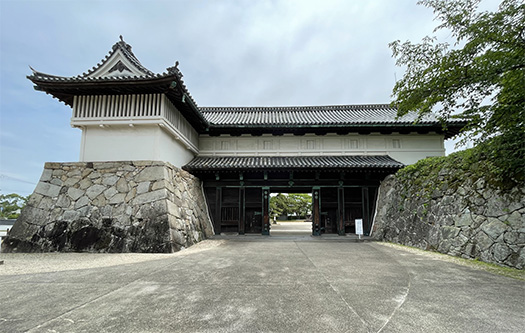
 今回、その彼の故地である佐賀市中心部の佐賀城(4枚目の写真・40407-04-1.jpg)を訪ね、城内の展示を参観していたときのこと。案内の方が同伴して色々と解説をしてくださったのですが、わたしが「この島義勇さんには、札幌で毎日のように会っていますよ」と話したところ、「おお、よくぞ言ってくれた!」とばかりに歓喜爆発。
 ついついこちらもテンションが上がって「いやぁ、薩長土肥と一緒にされるけれど、薩摩は実に奸佞(かんねい)で……」と案内の方のホンネが大爆発(笑)。
 案内人の方には「それはまぁ……」と差し障りのない対応をさせていただいたものの、歴史の熱が伝わったのか、どんどんと口舌が激されていく。北海道からの旅人・異邦人としては、内心「同じ九州なんだから仲良く、よろしく(笑)」と思うのですが、それだけ島義勇や江藤新平を誇りに思い、悼む気持ちが、いまも佐賀の人々の胸の奥に深く納められているのだなと、こちらも居住まいを正される思いでした。
 幕末期の肥前佐賀藩は、長崎に近くいち早く西洋の科学技術や産業を取り入れ、近代国家の基盤となる制度作りに貢献しました。大隈重信、江藤新平、そして島義勇。島は1874年(明治7年)2月の「佐賀の乱」で非業の死を遂げることになりますが、彼らを生んだ佐賀の地力は凄まじいものがあります。


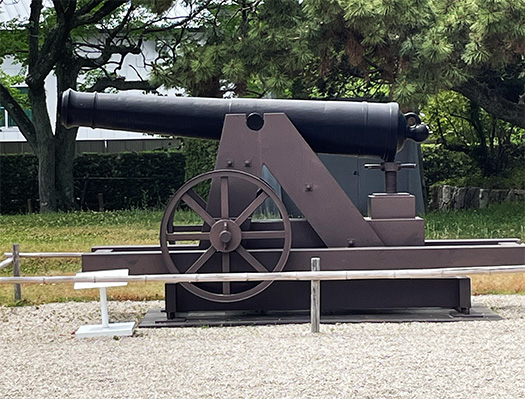
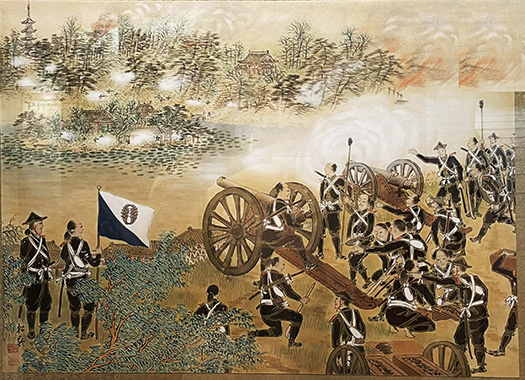
 この写真の大砲や、錦絵が語るように、肥前は近代的な製鉄技術である「反射炉」を国内でいち早く完成させ、そこから製造した強力な大砲によって幕府軍を凌駕していったとされています。
 そして驚いたのは、その極限の高温に耐えるレンガや鋳造技術の基礎には、有田や唐津などの「焼き物・陶器」の伝統技術が下支えしていたのだという事実。
 伝統の美意識が、巡り巡って近代国家の軍事力と、北海道の開拓へと繋がっていく。
 「そうか、そこか!」と、腑に落ちる感動に満ちた佐賀城探訪でありました。

●お知らせ
拙書「作家と住空間」幻冬舎から電子書籍で発刊
お求めはAmazonで。
https://amzn.asia/d/eUiv9yO

English version⬇

[The Satsuma-Chōshū-Tosa-Higo Leadership of the Meiji Restoration / The Power of the Saga Domain]
This is the final stop on my tour of the four domains that served as the driving force behind the Meiji Restoration. I’m finally visiting the birthplace of Shima Yoshiyuki, the “Pioneer Magistrate,” whom I often encounter on my daily walks…

 Hokkaido has a history of being regarded as the “key to the northern gate” for Japanese society—a society that, following the Meiji Restoration, sought to learn from the Western powers while simultaneously confronting the threats they posed—and was considered the frontline region against the threat of Russia’s southward expansion.
 The Meiji Restoration was led primarily by the so-called “Satsuma-Chōshū-Tosa-Higo” factions, which overthrew the Edo Shogunate. The final “H” in that acronym refers to the Hizen-Nabeshima Domain, and as I wrote the other day, the founding of our city is traced back to the arrival in Sapporo of Shima Yoshiyuki—a key figure in the Restoration—who came bearing the imperial edict of Emperor Meiji and the “Three Gods of Land Development.”
 The first photo (40407-4-4.jpg) shows the statue of Yoshiyuki Shima that still stands at Hokkaido Jingu, which is part of my morning walking route. It almost feels as if he’s saying, “Hey, nice to meet you here in Hokkaido (laughs),” and it’s a statue I personally love very much.
 On this trip, I visited Saga Castle (fourth photo: 40407-04-1.jpg) in central Saga City, his hometown, and was touring the exhibits inside the castle grounds. A guide accompanied me and provided various explanations, but when I mentioned, “I see this statue of Yoshiyuki Shima almost every day in Sapporo,” the guide burst into joy, as if to say, “Oh, I’m so glad you said that!”
 I couldn’t help but get caught up in the excitement myself, and before I knew it, the guide’s true feelings came pouring out: “Well, he’s often grouped with the Satsuma-Chōshū-Tosa-Higo alliance, but Satsuma was truly treacherous…” (laughs).
Although I responded to the guide with a diplomatic “Well, that’s…” to avoid causing any trouble, perhaps my passion for history came through, because his words grew increasingly impassioned. As a traveler and outsider from Hokkaido, I found myself thinking inwardly, “We’re all from Kyushu, so let’s get along (laughs),” but I was also struck by the realization that the pride in and grief for figures like Shima Yoshiyuki and Eto Shinpei are still deeply rooted in the hearts of the people of Saga—a realization that made me sit up straight with renewed respect.
 During the late Edo period, the Hizen Saga Domain—located near Nagasaki—was quick to adopt Western science, technology, and industry, contributing to the creation of the institutional foundations of a modern nation. Shigenobu Ōkuma, Shinpei Eto, and Yoshiyuki Shima. Although Shima met a tragic end during the “Saga Rebellion” in February 1874 (Meiji 7), the strength of Saga—the land that gave birth to these men—is truly remarkable.

 As the cannons and ukiyo-e prints in this photograph suggest, Hizen is said to have been one of the first regions in Japan to successfully develop the “reflecting furnace”—a modern iron-smelting technology—and to have gained the upper hand over the shogunate’s forces with the powerful cannons produced using this technology.
 What was surprising, however, was the fact that the traditional techniques of “pottery and ceramics” from places like Arita and Karatsu formed the foundation for the bricks and casting techniques capable of withstanding those extreme temperatures.
 The aesthetic sensibilities of tradition, in a full circle, led to the military power of a modern nation and the development of Hokkaido.
It was a visit to Saga Castle filled with a sense of deep understanding and emotion—I found myself thinking, “Ah, so that’s it!”

● Announcement
My book, *Writers and Living Spaces*, has been published as an e-book by Gentosha.
Available on Amazon.
 

【唐津から佐賀市へは山道の一般国道一択、むむむ】


 さて、唐津という魅力的な街に別れを告げ、県庁所在都市・佐賀市のお城見物へ向かった。
書いてきた通り、九州全県を回るのが今回のツアーの初心であり、その中でも佐賀県というのは大分県と並んで、全国でなぜかこれまで一度も来たことがなかった。まぁ北海道人としては特別に用事がなければ、九州では福岡中心に、鹿児島までの中央部縦断型の旅路が一般的でしょうね。
 そういうこともあって、佐賀県という存在への知見はまったくないに等しい。
 有田や唐津といった「焼き物・陶芸」というイメージがある程度で、あとは北海道の開拓期に「肥前(佐賀)」の島義勇が、北海道神宮の主祭3神を天皇の命令で背中にくくりつけて(背負って)持ってきてくれたことへの感謝の念を持っているというところだろうか。これはわたしのふだんの散歩道として、北海道神宮を朝、参拝するのが日課になっていることが大きい。わたし以外の人は、あまり縁を感じないかも知れない。
 わたしもその程度しか知識がなく、佐賀県についての正確なMAP感すら持っていなかった。事前に訪問先を調べておくこともカミさんにすべてお任せで、せいぜい縁づいた福岡県久留米市周辺について、すこし知識を得ていた程度。まぁ成り行き任せ、カーナビ任せのノー天気旅(笑)。

 まぁでも、そういうカラッポが無垢にその土地を感じられ、ジワジワとくる感じが楽しい。
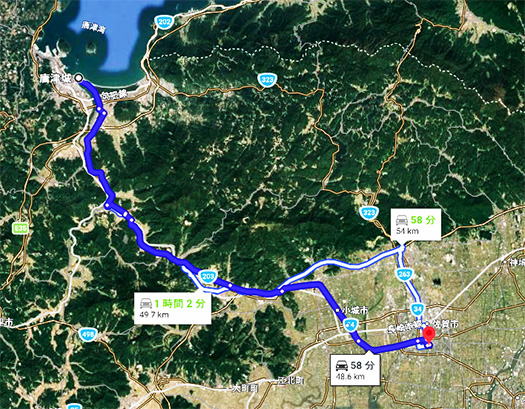
 ・・・なんですが、2泊した唐津から早朝に佐賀市の中心部に向かって走り始めて、カーナビに任せていたルートなのに、どこまでも一般道を走っていることに気付く。自分でもそれくらいは事前に調べろよ、と思うのですが、高速道路になかなかたどりつかない。
 2枚のMAPの通り、一応断続的に高速道路はあるのだけれど、かえって遠回り(一般道で48.6km、高速併用で54km)になっていた。ナビが選んだのは山林を縦断する国道203号線。日本海・玄界灘から県庁所在地への重要動線とは思えないほどの見事な「山道」ぶりでした。
 北海道で札幌から各主要都市に行くのに、メインが高速道路ではないというのはなかなか遭遇しないので、ちょっと驚き半分の道中体験。佐賀市というのは県の各地域の「中心」的な交通動線とは言い切れないのだなぁ、という実体験。
 でもそれが九州の地形や風土、そして地域の歴史の縮尺を感じさせてもらったドライブで、非常に印象深いモノがありました。

●お知らせ
拙書「作家と住空間」幻冬舎から電子書籍で発刊
お求めはAmazonで。
https://amzn.asia/d/eUiv9yO

English version⬇

[The only way from Karatsu to Saga City is via a mountain road on a national highway—hmm…]
This is a carefree trip where I’ve left all the travel planning to my wife. It’s nice to be spontaneous, but we’ve reached the point where I’m thinking, “Wait, aren’t we on the highway yet?” …

 Well, after bidding farewell to the charming town of Karatsu, I headed to Saga City, the prefectural capital, to visit the castle.
As I’ve mentioned before, the original goal of this tour was to visit every prefecture in Kyushu, and among them, Saga Prefecture—along with Oita Prefecture—was one of the few places in the country I, for some reason, had never visited before. Well, as someone from Hokkaido, unless I have a specific reason to go elsewhere, my typical trip to Kyushu usually centers on Fukuoka and follows a route running north-south through the central region all the way to Kagoshima.
 For that reason, my knowledge of Saga Prefecture was practically nonexistent.
 My impression was limited to the “pottery and ceramics” associated with places like Arita and Karatsu, and perhaps a sense of gratitude for the fact that during Hokkaido’s pioneering era, Shima Yoshiyuki of “Hizen (Saga)” brought the three principal deities of Hokkaido Jingu Shrine to Hokkaido by tying them to his back (carrying them) on the Emperor’s orders. This is largely because visiting Hokkaido Jingu in the morning has become part of my daily routine—it’s my usual walking route. Other people might not feel much of a connection to the place.
 My knowledge was limited to that extent as well; I didn’t even have a clear mental map of Saga Prefecture. I left all the research on where to visit to my wife beforehand, and at most, I’d gained a little knowledge about the Kurume area in Fukuoka Prefecture, which I had some connection to. Well, it was a carefree trip where I just went with the flow and relied on the car’s GPS (lol).

 But actually, that kind of blank slate allows me to experience the land with a pure, innocent eye, and I enjoy the way the feeling gradually sinks in.
 …That said, after spending two nights in Karatsu, I set off early in the morning toward the center of Saga City. Even though I was following the route the GPS suggested, I realized I was driving on local roads with no end in sight. I thought to myself, “You should’ve checked that much beforehand,” but I just couldn’t seem to get onto the expressway.
As shown on the two maps, there are expressways here and there, but taking them actually made for a longer route (48.6 km on local roads vs. 54 km using a mix of local and expressways). The navigation system had chosen National Route 203, which cuts straight through the mountains and forests. It was such a spectacular “mountain road” that it was hard to believe it was a major route connecting the Sea of Japan and the Genkai Sea to the prefectural capital.
 In Hokkaido, it’s quite rare to travel from Sapporo to major cities without using the expressway as the main route, so this was a journey that left me half surprised. It was a firsthand experience that made me realize Saga City cannot be described as the “central” transportation hub for all regions of the prefecture.
 However, it was a drive that allowed me to get a sense of the scale of Kyushu’s topography, climate, and regional history, and it left a very deep impression on me.

● Announcement
My book, *Writers and Living Spaces*, has been published as an e-book by Gentosha.
Available on Amazon.

【玄界灘・日本海/江戸期までの日本史の主舞台】


 九州佐賀県・唐津探訪篇であります。
 北海道の人間として長く生きてきたのですが、一線を離れたこともあって近年は四国や近畿、中国地方などを巡り歩くことが「数寄」になってきています。とくに島根県や鳥取県、さらには「海の京町家」として知られる「伊根の舟屋」などを探訪してからは、その都市集落形成に深く「日本海交易」が関わっていたことが遠雷のように響いてきて、日本人としての心象をえぐられるような思いに深く沈殿させられています。
 北海道もたしかに小樽・函館など、主に日本海を舞台とする交易圏で生かされてきた歴史があります。
しかし、戦後以降の社会を生きてきた実感からすると、千歳空港からひとまたぎで移動できる「東京とのつながり」が最大のものになっていったなかで生きてきたように思っている。事実としてビジネスを考えれば、現代では東京とのつながりをどう担保し続けるかがキモでしょうね。
なんだけれど、いわば日本人的なこころの底部には、この環日本海的な景観が胸に迫ってくる(笑)。
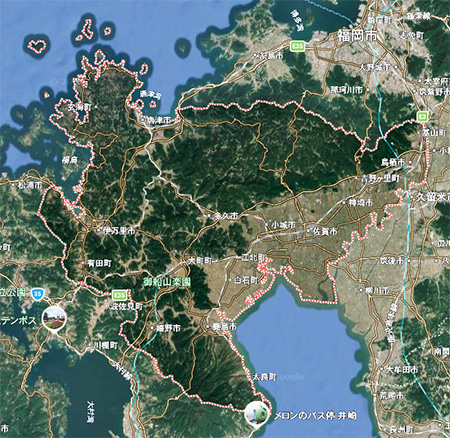
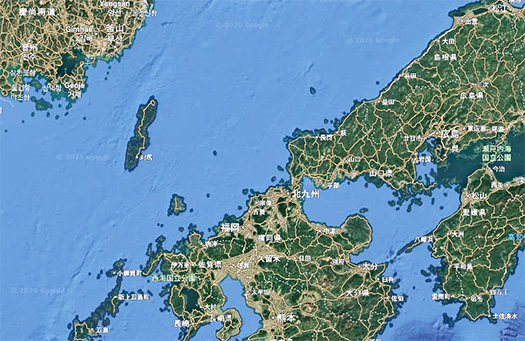
 2枚目の広域地図を見ても分かる通り、この海は地続きのようにして北陸、東北、そして北海道へと繋がっています。イマドキは忘却されはじめた「演歌」の世界があるけれど、あの短調の旋律はいかにもこの日本海で生きてきた日本人の生き様が反映しているように感じられてならない。
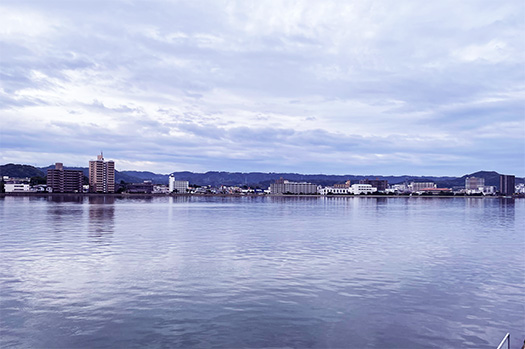
 1枚目の写真は、九州唐津の「内海」的な水面に面した街並みの様子。滞在したホテルはこういう静謐な臨海景観を見せてくれていたので、そういう歴史のリズム感に浸っていました。

 司馬遼太郎さんは江戸期の日本人で誰に会いたいか、と自ら問うて「高田屋嘉兵衛」を挙げていた。
 瀬戸内海海運の世界に生まれた彼は、独立して北前交易の世界を縦横に生き切った男のように思っている。最後にはたったひとりで日本社会の商道徳のようなものでロシア人と「相互理解」を創造して、硬直した幕府の外交を強制的に変更させたのだと思う。そういう人間を生み出したのが、環日本海の交易が持つ「開明性」だったのだと思える。
 その交易圏の最西端とも思える唐津の臨海ぶりを見て、湧き上がってくるロマンチズムがある。ながく日本社会の物流を支え、アジア世界との関係性の主要ルートでもあった。とくに北九州・玄界灘に面したこうした風景は、魏志倭人伝の頃からの連綿とした交流をも呼び覚まされる。すべてを包み込んできた歴史の「母性」を感じてたまらなかった・・・。

●お知らせ
拙書「作家と住空間」幻冬舎から電子書籍で発刊
お求めはAmazonで。
https://amzn.asia/d/eUiv9yO

English version⬇

[Genkai Sea and Sea of Japan / The Main Stage of Japanese History Through the Edo Period]
The scenery of the westernmost stretch of sea along Hokkaido’s Sea of Japan coast, which has long been connected through trade. I can’t help but feel the melodies of enka welling up inside me (laughs). …

 This is the Karatsu Exploration Edition from Saga Prefecture, Kyushu.
Although I’ve lived most of my life in Hokkaido, having stepped back from the front lines of my career, traveling around Shikoku, the Kinki region, and the Chugoku region has become a “passion” of mine in recent years. Especially since visiting Shimane and Tottori Prefectures—and in particular the “Ine Funaya,” known as the “Kyoto-style townhouses of the sea”—the realization that “trade across the Sea of Japan” was deeply involved in the formation of these urban settlements has resonated with me like a distant thunderclap, leaving a profound impression that cuts deep into my identity as a Japanese person.
 Hokkaido, too, certainly has a history of being sustained by trade circles centered primarily on the Sea of Japan, such as those in Otaru and Hakodate.
However, based on my personal experience of living in postwar society, I feel as though I’ve lived in an era where the “connection to Tokyo”—accessible in a single leap from Chitose Airport—has become the most significant factor. As a matter of fact, from a business perspective, the key issue today is how to continue securing that connection with Tokyo.
And yet, deep down in the Japanese psyche, so to speak, this panoramic view of the Sea of Japan really tugs at my heartstrings (laughs).
 As you can see from the second wide-area map, this sea connects seamlessly to the Hokuriku, Tohoku, and Hokkaido regions. There’s a world of “enka” music that’s starting to fade from memory these days, but I can’t help but feel that those melancholic melodies truly reflect the way of life of the Japanese people who have lived by the Sea of Japan.
The first photo shows the townscape of Karatsu, Kyushu, facing a “landlocked sea”-like body of water. The hotel where I stayed offered this kind of serene seaside view, so I found myself immersed in that sense of historical rhythm.

 When asked whom he would most like to meet from Edo-period Japan, Ryotaro Shiba named “Kabe Takadaya.”
 Born into the world of Seto Inland Sea shipping, I see him as a man who struck out on his own and lived life to the fullest, crisscrossing the world of the Kitamae trade. In the end, I believe he single-handedly forged “mutual understanding” with the Russians—based on a kind of Japanese business ethics—and forced the rigid shogunate to change its diplomatic stance. I feel that it was the “enlightened spirit” inherent in trade around the Sea of Japan that gave rise to such a man.
 Looking at the seaside scenery of Karatsu—which seems to mark the westernmost edge of that trade sphere—a sense of romanticism wells up within me. For a long time, it supported the logistics of Japanese society and served as a major route for relations with the Asian world. In particular, these landscapes facing the Genkai Sea in Northern Kyushu evoke memories of the unbroken exchange that has continued since the time of the “Record of the Wa People” in the *Wei Zhi*. I couldn’t help but feel the “motherly warmth” of history that has embraced it all…

● Announcement
My book, *Writers and Living Spaces*, has been published as an e-book by Gentosha.
Available on Amazon.