
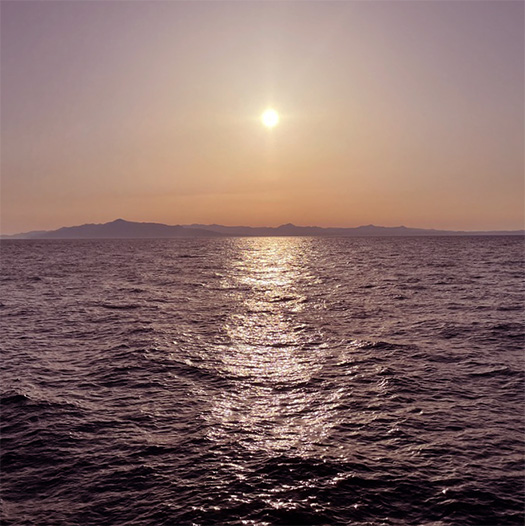
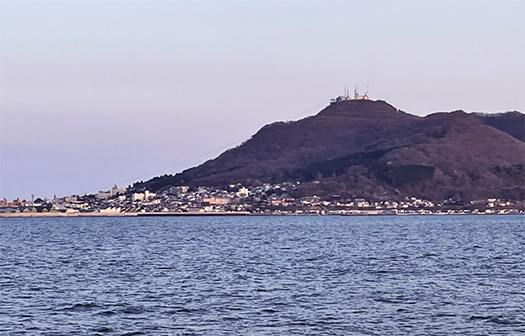
さて、サクラを追う旅、昨日フェリーで北海道に上陸いたしました。帰還であります。
函館は毎年必ず花見に来ているし、非常に縁が深かった母の弟、叔父が永く住んでいた土地なので札幌以外の北海道の都市としては馴染みがもっとも深い。なので「帰って来た」感がいつも強い。加齢するほどにこうした「思い」というのは深まってくる。
土地と人間の関係性というものについて、この叔父とのことが忘れられない。
いまはもう世を去っているけれど、叔父からわたしは「養子」として望まれていた。母からそのことについて強い決意と共に、正面から見つめられて問われたとき、末っ子のわたしは、生きてきていちばん強烈な内発の言葉として「拒否」していた。「いやだ、絶対に!」と。
その瞬間の強烈な「内発」ぶりはいまでも体感としてカラダが記憶している。叫び声。
しかし同時に、叔父に対しては深い「縁」を感じさせられていた。
日本社会で近しい縁戚関係においての養子縁組ということは、いわば民族の「知恵」習俗として繰り返されてきた。たぶん多くの兄姉のいる家とそうではない血縁関係のなかでは、こうした習俗はごく普通のものとしてあったのだと思う。当然だろう。子宝に恵まれなかった人間として、せめて肉親・姉の末の子をと願う心情は痛いほどにわかる。そのときから叔父のことは血肉化されてきていたのだと思う。その深い願いがひしひしとわかる。叶わなかった近しい縁の人間の心の奥底からの地鳴り。
その後の人生で「もし違う人生があるとすれば」と考えるとき、いつもこのことが原点だった。
そして多くの近親者・母も父も叔父も世を去ってきて、残される「土地・空間と人間」のようなものの重たい「かさなり」としてこの函館の地のことが強く残響し続けている。不思議な結節点感覚。
いまはただただ「懐かしい」と思えてならない。もちろんふりかえって違う人生を生きたかったということではなく、ただただ懐かしく感じられるのだ。人間のこころというものは、さまざまな生き様をその舞台としての土地・空間に刻みつけて感じるものかも知れない。
人間と空間というものとのはるかな旅路は、まだまだ続いていく。
●お知らせ
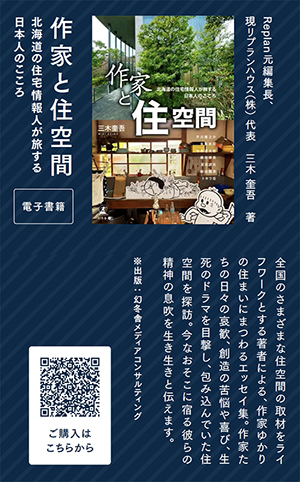
拙書「作家と住空間」幻冬舎から電子書籍で発刊
お求めはAmazonで。
https://amzn.asia/d/eUiv9yO
English version⬇
[Back from Tohoku to Hokkaido: The Land and a Sense of Nostalgia]
It is the intertwining of human connections that makes me feel I have truly returned. The lingering echoes of the cries of various ways of life—“land, space, and people.” …
Well, on my journey in pursuit of the cherry blossoms, I arrived in Hokkaido by ferry yesterday. I have returned.
I come to Hakodate every year for cherry blossom viewing, and since it’s the place where my mother’s younger brother—my uncle, with whom I shared a very deep bond—lived for many years, it’s the Hokkaido city I feel most familiar with, aside from Sapporo. That’s why I always have a strong sense of “coming home.” As I grow older, these kinds of “feelings” only deepen.
When it comes to the relationship between a place and a person, I can’t forget what happened with this uncle.
He has since passed away, but my uncle had wanted me to be his “adopted son.” When my mother looked me straight in the eye with unwavering resolve and asked me about it, I—the youngest child—rejected the idea with the most intense, spontaneous words I had ever uttered in my life: “No, absolutely not!”
My body still physically remembers the intensity of that spontaneous reaction from that moment. A scream.
Yet at the same time, I felt a deep “bond” with my uncle.
In Japanese society, adoption within close family ties has been repeated as a kind of traditional “wisdom” or custom. I imagine that in families with many older siblings—or in the absence of such blood ties—this custom was considered perfectly ordinary. It stands to reason. As someone who was not blessed with children, I understand all too well the heart-wrenching desire to at least have the youngest child of a blood relative—my sister. I think that from that moment on, my uncle became a part of my very being. I can feel that deep longing acutely. It is the rumbling from the depths of the heart of a close relative whose wish went unfulfilled.
In the rest of my life, whenever I thought, “If there were a different life,” this was always the starting point.
And as many close relatives—my mother, father, and uncle—have passed away, this place, Hakodate, continues to resonate strongly within me as a heavy “layering” of “land, space, and people.” It feels like a mysterious point of convergence.
Now, I simply cannot help but feel “nostalgic.” Of course, this isn’t to say that, looking back, I wish I had lived a different life; I simply feel a deep sense of nostalgia. Perhaps the human heart is something that feels and imprints various ways of living onto the land and space that serve as their stage.
The long journey of humans and space continues on and on.
● Announcement
My book, “Writers and Living Spaces,” has been published as an e-book by Gentosha.
Available on Amazon.
共有:

Posted on 4月 20th, 2026 by 三木 奎吾
Filed under: 未分類


コメントを投稿
「※誹謗中傷や、悪意のある書き込み、営利目的などのコメントを防ぐために、投稿された全てのコメントは一時的に保留されますのでご了承ください。」
You must be logged in to post a comment.