
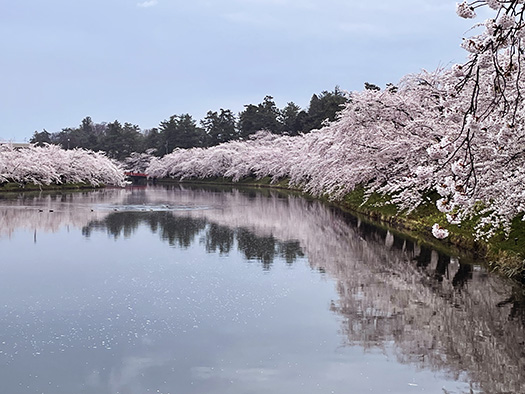
写真は昨日の「観桜スポット」弘前城周辺のサクラのトンネル。
今回の北東北観桜旅で気付くのはインバウンドの多さ。ときに周囲から日本語が聞かれなかったりする。これまでも京都などでスポット的に盛り上がってはいたけれど、北東北などではごくマレだった。
この調子で行ったら、函館五稜郭や松前さらには二十間道路など北海道内の観桜スポットまでインバウンドが押し寄せてくるのだろうかと、やや驚かされる。で、宿泊ホテルロビーは海外人に独占されている。やむなく片言イングリッシュ+表情付き北海道弁で応答しているけれど、笑いながら多少はコミュニケーションになる。とくに北海道弁の不明ぶりは、かえって好評のように勝手に思える(笑)。
きのうの弘前は時折強い雨に見舞われるコンディションだったので、早めに戻ってWEBで調べてみたら、関西大学 宮本勝浩名誉教授が2025年のお花見の経済効果を約1兆3,878億万円あまりと分析との情報に接した。さらにAIに「日本の観桜文化は世界にどのように波及するか?」と質問すると,以下の概要返答。
◎巨大な経済圏の創出(インバウンド効果)
◎世界への波及とブランド化
◎新たな課題:オーバーツーリズムの発生〜というような3ポイントでのまとめ。
円安状況からインバウンドの増加趨勢は加速しているけれど、このことは観桜文化そのものがどのように「世界化」していくのか、という位相の視点も生み出すのかも。その分析のためにはインバウンドの心理「市場分析」が不可欠だが、それはどのように調査可能かと深掘りされつつあるに違いない。
上の3つのポイントのなかでわたし自身は2番目のポイントが気になる。要するに観桜という日本オリジナルと思える文化現象が、本当に世界標準になっていくのだろうか、という点。1と3はそれこそ目先部分なので、長期的にはこれが核心的部分。
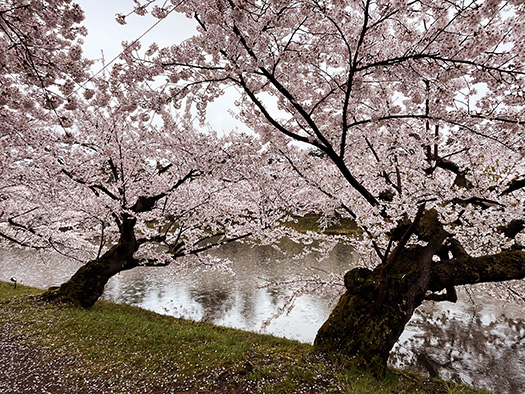
このポイントではわたしたち自身の「価値観」の基底的分析が必要。なぜ、わたしたちはこんなにもサクラに惹かれ続けているのか?それこそ「コノハナサクヤ姫」の古代からの感受性解析を迫られてくるのだと思う。写真はわたしが「いいなぁ」と思ったサクラ風景だけれど、観桜スポットではそれぞれの人がそれぞれの「美感」に即して撮影している。
サクラ画像の全日本人的深層分析。日本人的な感受性自体が徹底解析される必要性。
●お知らせ
拙書「作家と住空間」幻冬舎から電子書籍で発刊
お求めはAmazonで。
https://amzn.asia/d/eUiv9yO
English version⬇
[Economic Impact: 1.3878 Trillion Yen (2025) – The “Globalization” of Cherry Blossom Culture]
An in-depth analysis of the “culture of cherry blossom appreciation,” deeply rooted in the Japanese psyche. If this culture were to become a global standard, what exactly would be globalized? …
The photo shows the cherry blossom tunnel around Hirosaki Castle, a popular “cherry blossom viewing spot” from yesterday.
What strikes me on this cherry blossom viewing trip through Northern Tohoku is the sheer number of international tourists. At times, I don’t even hear any Japanese spoken around me. While there have been pockets of popularity in places like Kyoto in the past, this was extremely rare in areas like Northern Tohoku.
If this trend continues, I’m a bit surprised to think that inbound tourists might even start flocking to cherry blossom spots in Hokkaido, such as Hakodate’s Goryokaku, Matsumae, and the Nijukan Road. As a result, the lobby of my hotel is completely taken over by foreign visitors. I’m forced to respond with broken English mixed with expressive Hokkaido dialect, but we manage to communicate a bit while laughing. I even get the feeling that my clumsy Hokkaido dialect is actually quite popular (lol).
Yesterday in Hirosaki, we were hit by occasional heavy rain, so I returned early and looked it up online. I came across information stating that Professor Emeritus Katsuhiro Miyamoto of Kansai University had analyzed the economic impact of cherry blossom viewing in 2025 to be approximately 1.3878 trillion yen. Furthermore, when I asked an AI, “How will Japan’s cherry blossom viewing culture spread worldwide?” it provided the following summary:
◎ Creation of a massive economic zone (inbound tourism effect)
◎ Global spread and branding
◎ New challenge: The emergence of overtourism — a summary in three points like that.
While the trend of increasing inbound tourism is accelerating due to the weak yen, this might also give rise to a perspective on how the culture of cherry blossom viewing itself will “globalize.” To analyze this, a “market analysis” of inbound tourists’ psychology is essential, and I’m sure researchers are already delving into how to conduct such a study.
Among the three points above, I’m personally most interested in the second one. In short, will cherry blossom viewing—a cultural phenomenon that seems uniquely Japanese—truly become a global standard? Points 1 and 3 are merely superficial aspects; in the long term, this is the core issue.
This point requires a fundamental analysis of our own “values.” Why do we continue to be so drawn to cherry blossoms? I believe this compels us to analyze the sensibilities that have existed since ancient times, as embodied by “Princess Konohanasakuya.” The photo is a cherry blossom scene I found particularly lovely, but at cherry blossom viewing spots, each person takes photos based on their own sense of beauty.
A deep analysis of cherry blossom imagery from a pan-Japanese perspective. The need for a thorough analysis of Japanese sensibilities themselves.
● Announcement
My book, “Writers and Living Spaces,” has been published as an e-book by Gentosha.
Available on Amazon.
共有:

Posted on 4月 19th, 2026 by 三木 奎吾
Filed under: 未分類





コメントを投稿
「※誹謗中傷や、悪意のある書き込み、営利目的などのコメントを防ぐために、投稿された全てのコメントは一時的に保留されますのでご了承ください。」
You must be logged in to post a comment.