

わたしの好きな風景。って言ってもなんのことはないごく普通の札幌の風景なんですが、3才からこの地で育ってきた感性から言うと、やはり「素」の光景の残滓に思いが向くものです。そう、人間の都市開発がはじめられる以前のこの地の残響を聞きたくなってくるのですね。
わたしは現在の札幌市中央区北3条西11丁目の北大植物園に面した家で3歳頃を過ごしていた。
当時すでに北海道地元の「エゾオオカミ」は絶滅寸前で植物園の檻に収容されていた個体が、月夜になると月に向かって高く咆哮をあげるその声を聞きながら寝入っていた。・・・いま考えるとなんとも夢のように豪奢な「子守歌」を聞いて寝ていたのだと驚かされる(笑)。いや、マジで。その高く余韻を残して発せられる叫び声には、種を超えて共鳴してくるものがたしかにあったと思う。その性別までは知らなかったけれど、まるではるかな「母性」がなにかに訴えかけてくるように感じられていた。
そして植物園自体も、北海道開拓の中核都市として完全な計画都市として造営された札幌のなかにあって、太古からの森の樹相が保全されていた。円山公園緑地一帯も、開拓技術者として来日していたアメリカの人びとが主導して自然林保護したと伝わる。開拓期のひとびとのこの地の自然へのリスペクトを感じていた。
ほかの日本列島各地域とはまったく違う「自然相」の片鱗が感じられていたのだ。幼年期以来、どうしてもそういう喪失された風景に対しての憧憬の思いがわたしには強くあるのだ。
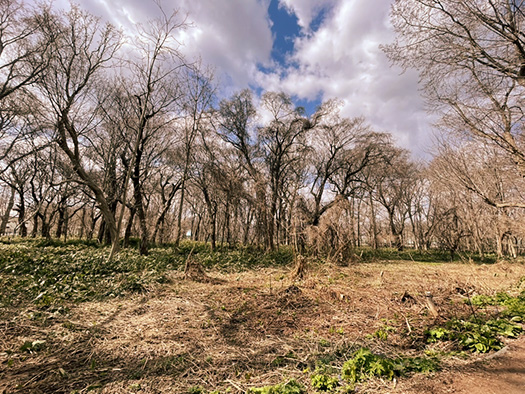
この北海道大学構内が好きなのは、そういった土地の空気感がそのままに近い形で保全されていることが大きい。写真は、北大構内のメイン道路から「恵迪寮」方向に向かっての歩道沿いにある光景。この場所には「原始の札幌の自然」が色濃く残されていると案内板が置かれている。
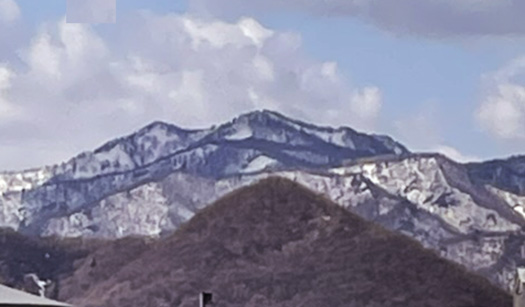
こういった太古以来この地の環境に適合して生き延びてきた木々たちが「語り合って」いたような景色が広がっていたのだろう。次の写真は市内で特徴的な「三角山」の奥に「百松沢山」がそびえている光景。
エゾオオカミはいま絶滅していないけれど、通りすがると面白い鳴き声の鳥たちがさざめいてくれる。
そういう瞬間が訪れてくると、こころがしずかに敏感になってきて、そば耳状態になってくる。いまは遠い時の涯になったこの地の在りし日「涅槃」の叫び声が聞こえてくるかのようなのだ。
ヘンな書き方だけれど、加齢してくるとこういう時間を超えた場所感覚に敏感になってくる。
ことしも雪が融けてヒグマの猖獗もあり得るので、そういう心配が少なそうな北大構内は、格好の散歩道として大いに歩きまわってみたいものです。
●お知らせ
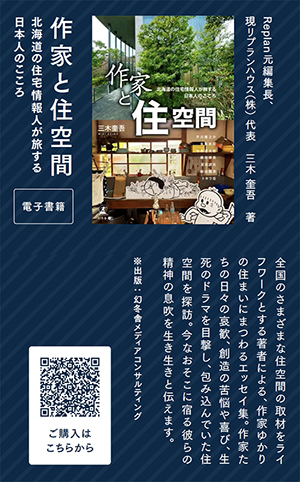
拙書「作家と住空間」幻冬舎から電子書籍で発刊
お求めはAmazonで。
https://amzn.asia/d/eUiv9yO
English version⬇
[Hokkaido University Campus · Sapporo’s Primeval Forest / Mountain Ranges]
Today’s journey begins with a ferry ride from Hachinohe in Tohoku, but my thoughts suddenly turn to the native landscapes of Sapporo, and I’m utterly captivated. Basho, is life truly just a fleeting guest passing through a hundred generations? …
My favorite scenery. Though it’s nothing special—just an ordinary view of Sapporo—from the perspective of someone who grew up here since the age of three, my thoughts naturally drift toward the remnants of this place’s “raw” landscape. Yes, I find myself longing to hear the echoes of this land from before human urban development began.
I spent my early childhood in a house facing the Hokkaido University Botanical Garden, located at Kita 3-jo Nishi 11-chome in Chuo Ward, Sapporo.
At that time, the Ezo wolf was already on the brink of extinction, and I would fall asleep listening to the howls of the individuals kept in the botanical garden’s enclosure as they raised their voices high toward the moon on moonlit nights. … Thinking about it now, I’m amazed that I used to fall asleep to such a dreamlike, opulent “lullaby.”
Moreover, the botanical garden itself, situated within Sapporo—a city built as a fully planned metropolis at the heart of Hokkaido’s development—preserved the tree formations of a primeval forest, with marshes fed by spring-fed ponds known as “memu” dotted throughout.
I could sense a glimpse of a “natural landscape” entirely distinct from that of other regions across the Japanese archipelago. I cannot help but feel a strong longing for those lost landscapes.
I believe a major reason I love the Hokkaido University campus is that the atmosphere of the land has been preserved in a form that remains remarkably close to its original state. The photo shows the view along the sidewalk heading toward “Keidai Dormitory” from the main road on campus. An information board at this spot states that “the natural landscape of early Sapporo” remains strongly preserved here.
A vast landscape must have once stretched out before me, where trees like these seemed to be “conversing” with one another. The next photo shows Mt. Hyakumatsuzawa towering behind Mt. Sankaku, a distinctive landmark in the city.
Although the Ezo wolf has long since gone extinct, as I pass by, birds with interesting calls chirp to me.
When moments like that arrive, my heart grows quietly sensitive, and I find myself listening intently. It’s as if I can hear the “nirvana” cries of this land, which now lies far away.
It’s a strange way to put it, but as I get older, I’ve become more sensitive to that sense of place—that “blending” of the past and present.
Since the snow has melted this year and there’s a possibility of brown bears running rampant, I’d like to explore the Hokkaido University campus—where such concerns seem minimal—as an ideal walking path.
● Announcement
My book, *Writers and Living Spaces*, has been published as an e-book by Gentosha.
Available on Amazon.
共有:

Posted on 4月 15th, 2026 by 三木 奎吾
Filed under: 未分類




コメントを投稿
「※誹謗中傷や、悪意のある書き込み、営利目的などのコメントを防ぐために、投稿された全てのコメントは一時的に保留されますのでご了承ください。」
You must be logged in to post a comment.