
九州あちこち探訪の旅路、本日は南の端・鹿児島県です。以前、熊本の地震災害の折りにその被害状況と復興の状況視察のツアーがあり、日本建築学会の第56代会長の吉野博(東北大学名誉教授)先生たちと同行し参加していました。
その帰路、一行とは別れ北海道人としてはまったくの未踏の地である薩摩国を訪れていた。
そこで見学していたのが、薩摩藩独自の制度:領内を113の区画に分割する「外城(とじょう)制度」の遺構として全人口の約4分の1を占めるという非常に高い武士割合を活かした「麓(ふもと)」と呼ぶ、武士を地方集落に分散配置させ農民として自活させながら、有事には直ちに軍団を形成する地域防衛体制を確立していた。北海道の開拓期の「屯田兵」制度のルーツを見学していた。
そうか、そういう制度が基礎だったのか、ということ。先日の佐賀・鍋島藩の薩摩への反感は、こういった薩摩の独裁的な北海道支配構造への反発だったのでしょう。
北海道人としては直視すべき制度のルーツ。
で、今回はカミさんの周到な事前調査から、薩摩・島津家の「別邸」仙巌園にて、しっかり地域の歴史の推移を学ばせていただいた次第。
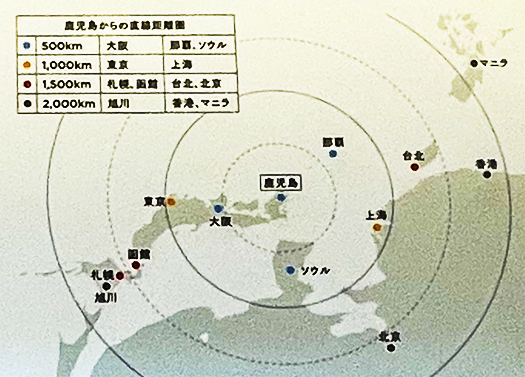
上の図は、海の始まる地・薩摩と題された説明。〜
島津氏が支配した南九州の地理的な重要性は、海外の玄関口としての役割に由来。薩摩の語源は「西(サ)の端(ツマ)」。南九州は政治的中心、奈良・京都からは陸の終わり(辺境)であるとともに「海のはじまり」。鹿児島から大陸までの距離は奈良・京都までの距離とそれほど変わらず、むしろ海を通じて大陸・東南アジアに近い地理的関係とわかる。
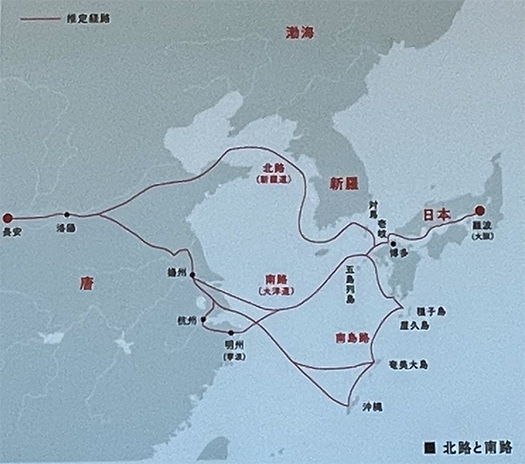
古代から存在する複数海外ルートの中で北島(博多から対馬・朝鮮半島ルート)は、朝鮮半島との外交関係に影響されやすかったため次第に南方ルート(南路・南島路)の重要性が高まった。これは奄美・琉球を経て中国・東南アジアへ至る海路で、南九州の港はその起点として重要となった。
・・・そうか、と素直に腑に落ちる解説。導いてくれたカミさんに完全に脱帽であります(笑)。
こういうグランドデザインから見ていけば、鍋島藩の反発はそれとして、たしかに薩摩の重要性は理解できる。こうした「事始め」から1日、たっぷりと学ばせていただいた次第。ふむふむ。
●お知らせ
拙書「作家と住空間」幻冬舎から電子書籍で発刊
お求めはAmazonで。
https://amzn.asia/d/eUiv9yO
English version⬇
[Learning About the Origins of Satsuma Province at Sengan-en]
In Saga, we were all on the same page that “Satsuma is treacherous,” but once I got to know the true nature of Satsuma, I started to feel like we had “differing perspectives” (lol). Satsuma, the “gateway to the sea” of the Japanese archipelago…
On my journey exploring various parts of Kyushu, today I’m in Kagoshima Prefecture, at the southern tip of the region. Some time ago, following the earthquake disaster in Kumamoto, I participated in a tour to inspect the damage and reconstruction efforts, accompanying Professor Hiroshi Yoshino (Professor Emeritus at Tohoku University), the 56th President of the Architectural Institute of Japan, and others.
On the return trip, I parted ways with the group and visited Satsuma Province—a region that, as a native of Hokkaido, was completely uncharted territory for me.
There, I observed the remnants of the Satsuma Domain’s unique system: the “Tojō System,” which divided the domain into 113 districts. Leveraging the domain’s exceptionally high proportion of samurai—said to account for about a quarter of the total population—this system established a regional defense structure known as “Fumoto.” Under this system, samurai were dispersed to local villages and made to support themselves as farmers, yet could immediately form military units in times of emergency. I was observing the roots of the “Tondenhei” system from Hokkaido’s pioneering era.
Ah, so that system was the foundation. The resentment the Nabeshima clan of Saga felt toward Satsuma the other day was likely a reaction against this kind of authoritarian Hokkaido governance structure.
As a Hokkaido native, these are the roots of the system I must confront head-on.
So, thanks to my wife’s thorough advance research, I was able to gain a solid understanding of the region’s historical evolution at Sengan-en, the “country estate” of the Satsuma Shimazu clan.
The image above is an explanation titled “Satsuma: Where the Sea Begins.” ~
The geographical importance of southern Kyushu, ruled by the Shimazu clan, stems from its role as a gateway to the outside world. The word “Satsuma” derives from “Sa” (west) and “tsuma” (edge). Southern Kyushu was a political center; from Nara and Kyoto, it was both the “end of the land” (the frontier) and the “beginning of the sea.” The distance from Kagoshima to the mainland is not much different from the distance to Nara and Kyoto; in fact, it reveals a geographical relationship that is closer to the mainland and Southeast Asia via the sea.
Among the multiple overseas routes that have existed since ancient times, the Northern Route (from Hakata to Tsushima and the Korean Peninsula) was easily influenced by diplomatic relations with the Korean Peninsula, so the importance of the Southern Route (Nanro and Nanjiro) gradually increased. This was a sea route passing through Amami and the Ryukyu Islands to reach China and Southeast Asia, and the ports of southern Kyushu became important as its starting point.
…Ah, I see—an explanation that makes perfect sense. I take my hat off to my wife, who guided me here (lol).
Looking at it from this broader perspective, setting aside the Nabeshima clan’s resistance, I can certainly understand Satsuma’s importance. It’s been a day since we started this “introduction,” and I’ve learned a great deal. Hmm, hmm.
● Announcement
My book, “Writers and Living Spaces,” has been published as an e-book by Gentosha.
Available on Amazon.
共有:

Posted on 5月 29th, 2026 by 三木 奎吾
Filed under: 未分類



コメントを投稿
「※誹謗中傷や、悪意のある書き込み、営利目的などのコメントを防ぐために、投稿された全てのコメントは一時的に保留されますのでご了承ください。」
You must be logged in to post a comment.