
さて本日北海道に帰還予定。
北海道への「仏壇背負って」の移住であったわたしの家系の本州・福山市周辺での「故地探訪」についてある確信を得ることができました。
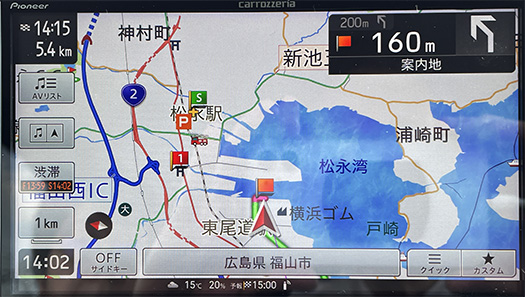
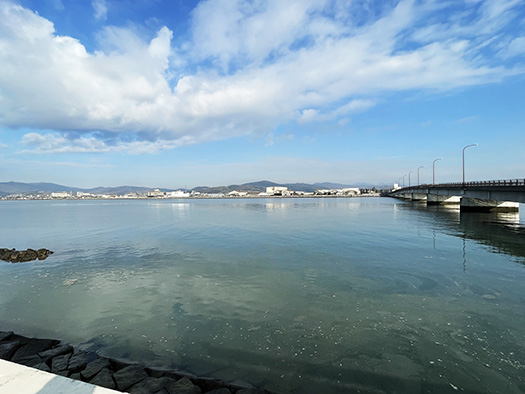
写真は、現代ではその痕跡を直接確認することができない江戸後期の「松永塩田」づくりの痕跡を求めて、その「地形土木改造」の様子を確認したワンショット。上はレンタカーのカーナビ画面ショット。この「松永地区」は、江戸期の最先端土木技術を集中して「入り浜塩田」を遠浅の海岸地域で造作していった象徴的エリアの図解。人間目線での探訪だと、どうしても水平目線ばかりになりますが、上空からの地図的な目線が欲しくなったので、とっさに案内させていたカーナビ画面をスクショした。そして風景写真は、その場所から福山市松永の方向を見返した様子。
手前側に広がっている海水域は、江戸期由来の土木作業の結果、造成されたものと思えます。
江戸期は大名家の城郭建築が戦国期以来の土木技術発展の先端と思われていますが、この塩田造作という事業も、非常に大きなプロジェクトであったに違いない。広島浅野藩の縁戚である播州赤穂藩が塩田について「入浜式塩田」を最先端で開発採用し巨額の財政基盤を獲得していた。その富裕ぶりを幕府の高家・吉良上野介に目をつけられて、幕府内での用向きの際に、相当の「袖の下」を要求されたのだろうと思っています。その賄賂要求のド派手ぶりに怒った浅野内匠頭が刃傷に及んだのではないかと推測。
そういう江戸期の最先端土木技術痕跡だと思います。
松永地区では、現代ではまったくその痕跡も発見しにくい塩田経営についての古記録が資料として展示されていて、これから札幌に帰還してから、詳細な分析・整理整頓をしたいと思っています。
また、松永地域は塩田の開発に当たって必然的に大量の加熱エネルギーとして雑木の需要が高まって、国内は言うに及ばず、明治期にはアメリカから材木が輸入されていたという。
その木材をさらに有効活用すべく「下駄」生産が国内シェアの6−7割にまで達していた。その産業にまつわる記録なども得られました。やはり用は用を呼ぶ市場経済原則が、この地域で江戸後期に盛り上がっていた状況が確認できた。探訪の成果、大いに生かしていきたいです。
●お知らせ
拙書「作家と住空間」幻冬舎から電子書籍で発刊
お求めはAmazonで。
https://amzn.asia/d/eUiv9yO
English version⬇
【Traces of Terrain Modification at Edo-Period Fukuyama and Matsunaga Salt Fields】
Castle construction during the Warring States period was based on agricultural civil engineering for creating rice paddies. By the Edo period, this evolved into castle construction techniques, while simultaneously accelerating market economy development through projects like salt field construction. …
Well, I’m scheduled to return to Hokkaido today.
I’ve gained some certainty regarding my family’s “homesteading” migration to Hokkaido—carrying a Buddhist altar on our backs—and my recent “homestead exploration” around Fukuyama City in Honshu.
The photo shows a snapshot confirming the “terrain and civil engineering modifications” made in search of traces of the late Edo period “Matsunaga Salt Fields,” whose direct remnants cannot be seen today. Above is a screenshot of the rental car’s navigation screen. This diagram illustrates the “Matsunaga District” as a symbolic area where cutting-edge Edo period civil engineering techniques were concentrated to construct “inlet salt fields” in the shallow coastal zone. Exploring from a human perspective inevitably focuses on the horizontal view, but I suddenly wanted a map-like aerial perspective, so I quickly took a screenshot of the car navigation screen I was using for guidance. The landscape photo shows the view looking back towards Matsunaga in Fukuyama City from that location.
The expansive seawater area in the foreground appears to be the result of civil engineering work originating in the Edo period.
While Edo-period daimyo castle construction is often seen as the pinnacle of civil engineering development since the Warring States period, this salt field construction project must also have been a massive undertaking. The Banshu Akō Domain, related to the Hiroshima Asano Domain, had developed and adopted the cutting-edge “inlet-style salt fields,” securing a massive financial foundation. Their wealth likely caught the eye of Kira Kozukenosuke, a high-ranking shogunate official. When the domain had business before the shogunate, they were probably demanded substantial “under-the-table payments.” It’s speculated that Lord Asano Naganori, enraged by the blatant nature of these bribery demands, resorted to drawing his sword.
I believe this is a trace of the cutting-edge civil engineering technology of the Edo period.
In the Matsunaga area, ancient records about salt field management—traces of which are nearly impossible to find today—are displayed as reference materials. I plan to conduct detailed analysis and organization upon returning to Sapporo.
Furthermore, the Matsunaga region saw a high demand for firewood as a massive heating energy source during salt field development. This demand was so great that, beyond domestic sources, timber was even imported from America during the Meiji period.
To further utilize this timber, geta sandal production reached a domestic market share of 60-70%. I also obtained records related to this industry. This confirms how the market economy principle of one need leading to another flourished in this region during the late Edo period. I intend to make full use of the fruits of this exploration.
●Notice
My book “Writers and Living Spaces” published as an e-book by Gentosha
Available on Amazon.
共有:

Posted on 12月 23rd, 2025 by 三木 奎吾
Filed under: 未分類



コメントを投稿
「※誹謗中傷や、悪意のある書き込み、営利目的などのコメントを防ぐために、投稿された全てのコメントは一時的に保留されますのでご了承ください。」
You must be logged in to post a comment.