


写真はわが家に遺された6代前先祖(六世の祖)の「ほぼバイブル」の文書末尾の肉筆署名と巻物。
文化12年は西暦で1815年・江戸後期。いまから210年ほど前の記述になる。この当主・寛蔵さん45歳のときの文書。わが家系はこの当時、広島県福山市の西部・今津という地域にいたことが確実にわかっている。地域を支配していた福山藩阿部家はこの今津の南方・松永地域で「塩田」を藩の重要事業として位置づけて塩生産を行わせていた。各種の調査ではこの当時のわが家系は、そうした藩の経済政策に沿って尾道の商家株を入手して、生産者でありつつ同時に流通販売にも関わっていた。
江戸期の地方「商家」のありようとして考えれば支配層・藩との深い関係が垣間見える。一種の「政商」的な役割を担っていたと思える。六世の祖はこの今津で大名たち用の「本陣宿」の縁戚として、その用にも与っていたことがわかっている。江戸期九州の大名家・松浦静山の記録文にこの先祖のことが記述もされている。
そのような家業として比較的に「安定」していた時期、家系の故地を探訪した記録を書き記した。故地は広島県東広島市河内町入野と比定している。この「入野」に慶長年中(1596〜1615年間)に「紀州」から移動して来たという家系故事を確認してきているのだ。この文書記述時点から200年以上前の時代のことを確認に行っていることになる。
いまから顧みれば家系の文書上で確認できる400年以上のほぼ中間点で、書き記してくれた文書。
もちろんこの当時の家屋や屋敷地などは確認できないけれど、おおむね「西国街道」の尾道の次・今津宿の中心とされる「蓮華寺」の対面側にあったと推測している。いまのところ現物「証拠」としてはこの巻物と筆跡情報がわたしの世代に遺されてきているワケだ。
江戸期の紙の生産・消費の記録を「長野県史」に見れば、長野県内の古文書は総数7万点に対して1624年以前は1%にも満たないとされ、そこから1661年までの期間で急増し、その後30年ごとに対前期比、倍増を続けているとのこと。たぶん全国で同様だったと推認出来るが、この1815年段階でこうした巻物を記し、しかもやや「文学的」な祖先探索記録を記すというのは用紙の利用と目的両面で、興味深い書き手の心象。
筆跡心理学という解析領域があるそうだが、科学的手法とは言えないらしい。ただ肉親的な視点ではなにか血肉感は感じる。「蔵」の字の最後の「跳ね上げ」具合には、なにか心理が残影する(笑)。
六世の祖はどんな心理を、伝えたかったのかなぁ・・・
お知らせ
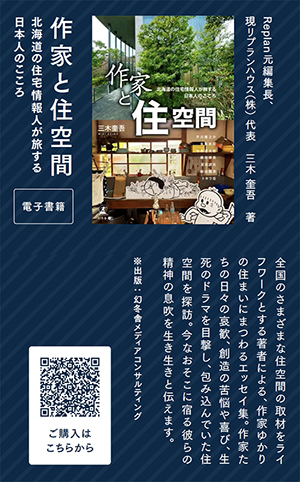
拙書「作家と住空間」幻冬舎から電子書籍で発刊
お求めはAmazonで。
https://amzn.asia/d/eUiv9yO
English version⬇
【Scroll Document and Signature Written by the Sixth Ancestor in 1815】
Tracing family roots. A scroll document recorded 210 years ago. And tracing ancestors from over 200 years before that. Is this itself proof of blood? …
The photograph shows the handwritten signature at the end of the document and the scroll of the “almost Bible” left in our family home by our sixth-generation ancestor (the sixth-generation progenitor).
The year Bunka 12 corresponds to 1815 in the Western calendar, the late Edo period. This document is approximately 210 years old. It was written when the head of the household, Kanzo, was 45 years old. It is certain that our family lineage resided in the Imazu area, west of Fukuyama City, Hiroshima Prefecture, at this time. The Abe clan of the Fukuyama domain, which ruled the region, designated salt fields in the Matsunaga area south of Imazu as a key domain enterprise and oversaw salt production there. Various investigations indicate that our family line at that time, aligning with the domain’s economic policies, acquired merchant shares in Onomichi. This allowed them to be producers while simultaneously engaging in distribution and sales.
Considering the nature of local “merchant houses” during the Edo period, this reveals a deep relationship with the ruling class and the domain. It seems they played a kind of “political merchant” role. It is known that the sixth-generation ancestor, as a relative of the “honjin inn” for daimyo in Imazu, was also involved in its operations. Records from the Kyushu daimyo family Matsuura Seizan during the Edo period also mention this ancestor.
During this relatively “stable” period for such a family business, I wrote down records of visiting the ancestral homeland. The ancestral home is identified as Irino, Kawachi-cho, Higashi-Hiroshima City, Hiroshima Prefecture. I have confirmed the family tradition that they moved to this “Irino” from “Kishu” during the Keicho era (1596-1615). This means he was confirming events from over 200 years prior to the time of writing this document.
Looking back now, this document was written at roughly the midpoint of the over 400 years verifiable in our family records.
Of course, the actual houses and land from that time cannot be confirmed, but it is generally presumed to have been located opposite “Rengeji Temple,” considered the center of Imazu-juku, the next post station after Onomichi on the “Saigoku Highway.” For now, the only tangible “evidence” passed down to my generation is this scroll and the information about the handwriting.
Looking at records of Edo-period paper production and consumption in the “History of Nagano Prefecture,” it states that out of a total of 70,000 ancient documents within Nagano Prefecture, those from before 1624 account for less than 1%. From then until 1661, the number increased sharply, and thereafter, every 30 years, it continued to double compared to the previous period. It’s likely similar patterns occurred nationwide. Yet, at this 1815 stage, the act of writing such a scroll—and one that records a somewhat “literary” search for ancestors—reveals an intriguing mindset of the writer, both in terms of paper usage and purpose.
I hear there’s a field called graphology, but it doesn’t seem to be a scientific method. Still, from a familial perspective, I sense something visceral. The way the final stroke of the character for “storehouse” is flicked upward seems to leave some psychological residue (laugh).
I wonder what kind of feelings the sixth-generation ancestor wanted to convey…
Notice
My book “Writers and Living Spaces” published as an e-book by Gentosha
Available on Amazon.
共有:

Posted on 12月 16th, 2025 by 三木 奎吾
Filed under: 未分類




コメントを投稿
「※誹謗中傷や、悪意のある書き込み、営利目的などのコメントを防ぐために、投稿された全てのコメントは一時的に保留されますのでご了承ください。」
You must be logged in to post a comment.