
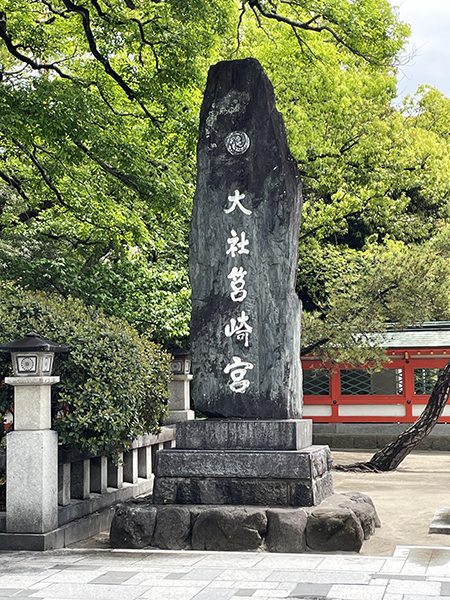
日本には数少ないとされる「戦争記念館」として福岡市の「元寇史料館」を参観しての記録を書いていましたが、そこで知った日本三大八幡宮という「筥﨑宮」に興味を持って参観しました。
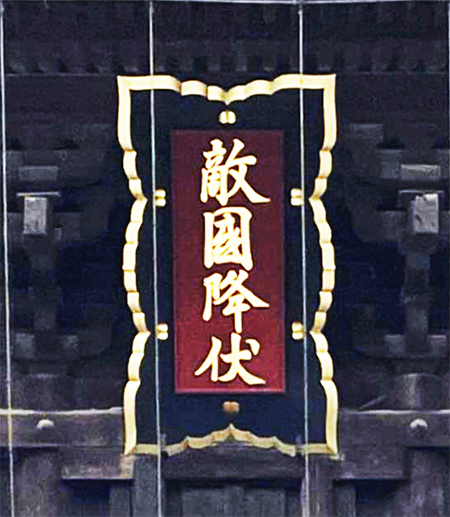
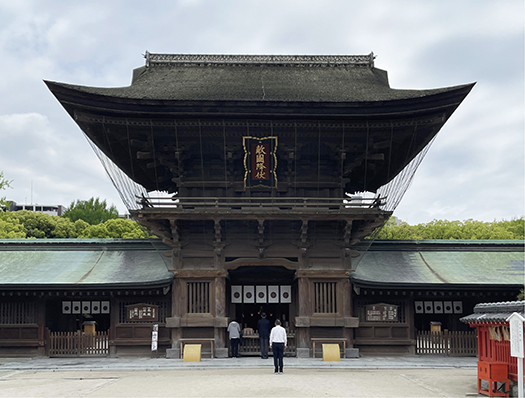
驚いたのは、中央の「拝殿」建築の正面に掲額されていた願文に写真のように「敵国降伏」という文言が掲げられていること。八幡さん自体が武家・源氏の象徴のような神域なのですが、それにしてもストレートに戦争にまつわるコトバが明示されていることは神域表示としては驚かされる。同宮のHPによる由緒は以下のように書かれている<要旨>。
〜筥崎宮の由緒 筥崎宮は筥崎八幡宮とも称し、宇佐、石清水両宮とともに日本三大八幡宮。 御祭神は筑紫国蚊田(かだ)の里、現在の福岡県宇美町に生まれた応神天皇(第十五代天皇)を主祭神とし、神功皇后、玉依姫命がお祀りされています。創建の時期については諸説あり断定することは困難ですが、古録によれば、平安時代の中頃である延喜21年(西暦921)醍醐天皇が神勅により「敵国降伏」(てきこくこうふく)の宸筆(しんぴつ)を下賜され、この地に壮麗な御社殿を建立し延長元年(923)筑前大分(だいぶ)宮(穂波宮)より遷座したことになっております。創建後は祈りの場として朝野を問わず篤い崇敬を集めるとともに、海外との交流の門戸として重要な役割を果たしました。〜
〜 鎌倉中期、蒙古襲来(元寇)のおり、俗に云う神風が吹き未曾有の困難に打ち勝ったことから、厄除・勝運の神としても有名。後世には足利尊氏、大内義隆、小早川隆景、豊臣秀吉など歴史に名だたる武将が参詣、武功・文教にすぐれた八幡大神の御神徳を仰ぎ筥崎宮は隆盛を辿りました。江戸時代には福岡藩初代藩主黒田長政、以下歴代藩主も崇敬を怠ることはありませんでした。明治以降は同18年には官幣中社に、大正3年には官幣大社に社格を進められ、近年では全国より崇敬を集めるとともに、玉取祭や放生会大祭などの福博の四季を彩る杜として広く親しまれています。〜
・・・ということで、この「敵国降伏」は醍醐天皇自らの墨書なのだという。元寇の記事の中でも、この宮は第1次侵攻で焼失させられた記録があると記しましたが、元寇(1274年)に遡ること353年前にすでにこういう意識が国家意志としてこの北部九州の地には刻印されていたことになる。ときは平安時代の安定期であるので、国防最前線意識がこの宮には伝統として託されていたということなのでしょう。
対アジア世界の窓口としてこういう伝統意識を九州北部は持っていることに打たれていた。北海道もまた、対ロシアの国防意識が大きな地政学的位置であり、国民意識の共通性を感じさせられる。
English version⬇
The symbolic plaque at the Hakozaki-gu Shrine in Fukuoka, Japan, which reads “Surrender to the Enemy,” is a bizarre piece of writing. The inscription is said to have been written in the emperor’s capital. This is the “national will” of the emperor 353 years before the Genko invasion. The “national will” of 353 years before the Genko invasion.
I had written about my visit to the Genko Historical Museum in Fukuoka City, which is said to be one of the few “war memorial museums” in Japan, and I visited Hakozaki-gu Shrine, one of the three largest Hachimangu shrines in Japan, with great interest.
I was surprised to see the phrase “surrender to the enemy” posted on the prayer plaque in front of the central “hall of worship” building, as shown in the photo. Hachiman-san itself is a Shinto shrine that symbolizes the samurai and Genji clans, but even so, the fact that a word related to war was clearly displayed in a straightforward manner was surprising for a Shinto shrine display. The shrine’s website describes the shrine’s history as follows
〜Hakozaki-gu Shrine, also called Hakozaki-Hachimangu Shrine, is one of the three largest Hachimangu shrines in Japan, along with Usa and Ishimizu shrines. The main deity is Emperor Ojin (the 15th emperor), who was born in the village of Kada in Tsukushi Province, present-day Umi Town, Fukuoka Prefecture, and is worshipped by Empress Jingu and Princess Tamayori no Mikoto. According to ancient records, in 921, in the middle of the Heian period, Emperor Daigo gave the shrine a shinpitsu (imperial inscription) stating “Surrender to the enemy” and built a magnificent shrine building on the site. (The shrine was relocated from the Daibu Shrine (Honamiya Shrine) in Tsukizen Oita in 923. After its construction, the shrine was revered as a place of prayer and played an important role as a gateway for exchange with foreign countries. 〜
~ In the middle of the Kamakura period (1185-1333), during the Mongolian invasion (Genko), a kamikaze, as it is commonly called, blew and the god overcame unprecedented difficulties, making the shrine famous as a god of good luck and protection from bad luck. In later times, Ashikaga Takauji, Ouchi Yoshitaka, Kobayakawa Takakage, Toyotomi Hideyoshi, and other famous military commanders paid homage to the shrine, and Hakozaki Shrine prospered due to the divine virtues of Hachiman, a god of military prowess, literature, and education. In the Edo period, Nagamasa Kuroda, the first lord of the Fukuoka domain, and successive lords of the domain never neglected to revere the shrine. In recent years, the shrine has been widely respected as a shrine that is revered throughout Japan and as a forest that graces the four seasons of Fukuhaku, including the Tamatori Festival and the Housoge Grand Festival. ~
・・・ So, this “Surrender to the Enemy” was written in ink by Emperor Daigo himself. In the article about the Genko invasion, I mentioned that this palace was burnt down in the first invasion, which means that 353 years before the Genko invasion (1274), this kind of awareness was already stamped as the national will in this northern Kyushu region. Since the Heian period (794-1185) was a period of stability, it is likely that this palace was entrusted with a sense of the front line of national defense as a tradition.
Northern Kyushu was struck by this sense of tradition as a window to the Asian world. Hokkaido, too, is a geopolitical location with a great sense of national defense against Russia, and one is struck by the commonality of national consciousness.
共有:

Posted on 5月 20th, 2025 by 三木 奎吾
Filed under: 歴史探訪



コメントを投稿
「※誹謗中傷や、悪意のある書き込み、営利目的などのコメントを防ぐために、投稿された全てのコメントは一時的に保留されますのでご了承ください。」
You must be logged in to post a comment.