本文へジャンプ

【広島藩浅野家「侍帳」に家禄2200石重臣「原勘兵衛」名】


 「四百年間のいのちの履歴書」シリーズ。
 家系史探究というのは直球的ドンピシャ感はなかなか得られにくい。あってもたまに、程度。
 約300年前に家系6代前先祖が、紀州から広島藩浅野家の転封と同時期に移入してきていることを掘り起こしてくれたので、これは確定。
 紀州からこの地へ藩主の転封と時期が一致していることから、当然「蓋然性」として藩との関係が解明ポイントとして出てくる。それが「紀州以前」というそれ以前の家系史探究のカギになる。
 そこで「急がば回れ」。言わば証拠固め的に広島・浅野藩のことを調査している次第。
 最近は「地域史」研究が盛んで浅野藩と重なる「広島県史」を図書館ネットワークで遠距離借り上げして熟読している。特に調べたかったのが「浅野長晟侍帳」という藩公式の家臣団記録。浅野長晟は紀州から広島に転封したときの藩主であり、この「侍帳」は1619年に記録された。
 そこに「原 勘兵衛」という重臣の名前を確認することができた。
 かれは、家臣団のなかでの「組頭」の位置付けで「原 勘兵衛組」の統率者として2,200石の家禄で記載されている。「組」とは家臣を機能的・身分的にまとめた軍事・日常業務の単位組織。戦時の部隊を基盤にしつつ平時は藩行政・警備・秩序維持を担う役割を持っていた。
 ちなみに記録されている組数は11組で45万石の大名家のなかの重臣クラス。浅野と名の付く一門衆を除けば上位数人の重臣。同組のなかには同じ「原姓」の縁者とおぼしき一統も名を連ねている。
 さらにこの浅野家成立過程での出仕時期は紀州に来る前の文禄年中の「旧臣録」でも名前が出ていたという。原氏が浅野家に仕えたのは甲斐の国主だった1592-3年頃との記述。その後1600年の関ヶ原の戦いで徳川方に味方し同年に紀州を領地として与えられた。
 そこから藩の転封でこの地にやってきた経緯。
 こういう背景情報の中で、この同姓の武家・原氏とわが家系の「関係性」を考えることになる・・・。

●お知らせ
拙書「作家と住空間」幻冬舎から電子書籍で発刊
お求めはAmazonで。
https://amzn.asia/d/eUiv9yO
English version⬇

【Hiroshima Domain Asano Clan “Samurai Register” lists senior retainer “Hara Kanbee” with 2,200 koku stipend】
Solidifying circumstantial evidence of the “connection” between the domain organization governing the region and my family lineage. Discovery of a senior domain retainer with the same surname. What is the connection between this samurai family and my lineage? …

 The “Four Hundred Years of Life’s Resume” Series.
Genealogical research rarely delivers that direct, spot-on feeling. If it does, it’s only occasionally.
It was confirmed that about 300 years ago, my sixth-generation ancestor moved here from Kishu around the same time the Asano clan was transferred to the Hiroshima domain.
 Given the timing coincides with the domain lord’s transfer from Kishu to this region, the relationship with the domain naturally emerges as a key point to clarify, based on probability. This becomes the key to exploring the family history “before Kishu.”
So, “Haste makes waste.” I’m currently investigating the Hiroshima Asano domain, essentially to solidify the evidence.
 Recently, “regional history” research has flourished. I’m thoroughly reading the “History of Hiroshima Prefecture,” which overlaps with the Asano domain, by borrowing it remotely through the library network. What I particularly wanted to examine was the “Asano Nagamasa Samurai Register,” the domain’s official record of retainers. Asano Nagamasa was the domain lord when they were transferred from Kishu to Hiroshima, and this “Samurai Register” was recorded in 1619.
 There, I was able to confirm the name of a senior retainer, “Hara Kanbee.”
 He is listed as a “group leader” (組頭) within the retainer corps, commanding the “Hara Kanbee Group” with a stipend of 2,200 koku. A “group” (組) was a functional and hierarchical unit organizing retainers for military and daily duties. Based on wartime units, they handled domain administration, security, and maintaining order during peacetime.
 Incidentally, the number of groups recorded was 11, placing him among the senior retainers of a 450,000-koku daimyo household. Excluding the Asano-named clan members, he was among the top few senior retainers. Within his group, individuals bearing the same “Hara” surname, likely relatives, were also listed.
Furthermore, his period of service during the formation of the Asano clan appeared in the “Old Retainers Register” from the Bunroku era, before his arrival in Kishu. They became retainers around 1592-3. The Hara clan served the Asano family when they were lords of Kai Province. Later, in the Battle of Sekigahara in 1600, they sided with the Tokugawa faction and were granted Kishu as their domain that same year.
 From there, they came to this region through domain transfers.
Against this backdrop, I find myself contemplating the “relationship” between this same-surnamed warrior family, the Haras, and my own lineage…

●Notice
My book “Writers and Living Spaces” published as an e-book by Gentosha
Available on Amazon.

【広島・竹原市田万里に「原」地名多数/故地探訪】


 昨日はようやく大雪一段落。友人から「やり過ぎ、歳も考えろ」と厳重注意。ごもっとも。
 さて「四百年間のいのちの履歴書」シリーズ。本日は今から400年以上前頃の家系と地域の状況。
 伝承ではわたしの家系は東広島市河内町「入野」地域に1600年代初期に入地したのですが、夫婦と男女4人の子どものうち「女子」はすぐに隣村の「田万里」に嫁さんに行って、その婚家は当時のわが家の氏である「原」を名乗っている。実際にこの田万里では江戸期を通してこの原家が庄屋をずっと続けていた記録が残っている。
 で、明治以降の1958年に竹原市に行政区画で編入されて以降の地図(上図)を見ると、字(あざ)名でたくさんの「原」地名が発見できる。砂原・岡野原・前河原・東西の鋳師原・奥野原・天神原・白井原・南ヶ原などとなっている。この田万里地域自体が〜名前の由来:「たまり」という地名は、賀茂川周辺の土砂堆積や入浜式塩田開発などと関連がある(竹原の歴史的風致より)〜ということなのですが、どうも地形の土木的改良の歴史的痕跡が、地名に残されていることが明らかと思える。
 そしてやがて「竹原の塩田開発(1650年頃から開始)」への技術的な伝播が推測されてくる。時期も符合する。実際に古文書の記述で田万里から竹原の塩田造作へ、労働力供給があった記録も残っている。
 こういった情報を総合すると、入野に入村した家系は紀州由来の土木技術・知見から隣村の田万里の農地改良・河川土木に経営的に関与し、そこからさらにその進化形と思える竹原の塩田づくりにも深く関与したという推論が浮かび上がってくるのです。
 紀州から転封の浅野家の領国経営動態と、わが家系の活動領域の一端が垣間見えてくる。・・・

●お知らせ
拙書「作家と住空間」幻冬舎から電子書籍で発刊
お求めはAmazonで。
https://amzn.asia/d/eUiv9yO

English version⬇

【Hiroshima: Numerous “Hara” Place Names in Tamari, Takehara City / Exploring Ancestral Lands】
Place names containing “Hara” in Tamari, a neighboring village of Irino where settlers from Kishu entered the land, preserve traces of terrain modification and farmland development. From there, involvement in the Takehara salt field development that began in 1650 also emerged. …

 Yesterday the heavy snow finally let up. A friend sternly warned me, “You’re overdoing it—think about your age.” They’re absolutely right.
Now, for the “Four Hundred Years of Life’s Resume” series. Today covers my family lineage and the local situation over 400 years ago.
 According to tradition, my family settled in the “Iri-no” area of Kawachi-cho, Higashi-Hiroshima City in the early 1600s. Of the couple and their four children (two sons and two daughters), the daughters quickly married into the neighboring village of “Tamari.” Their marital families adopted the surname “Hara,” which was our family name at the time. Records show that this Hara family continuously held the position of village headman (shoya) in Tamari throughout the Edo period.
 Looking at maps from after 1958, when the area was administratively incorporated into Takehara City, numerous place names containing “Hara” can be found in the azaname (subdivision names). These include Sunahara, Okanohara, Maekawara, Higashi-Nishi Iushihara, Okuhara, Tenjinbara, Shiraihara, and Minamigahara. The Tamari region itself—Origin of the Name: The place name “Tamari” is associated with sediment accumulation around the Kamo River and the development of inlet-type salt fields (from The Historical Scenery of Takehara)—clearly reveals that historical traces of civil engineering improvements to the terrain are preserved in the place names.
 This suggests a likely technological transmission to the “Takahara Salt Field Development” (starting around 1650). The timing aligns. Historical documents actually record labor supply from Tamari to the construction of Takahara’s salt fields.
 Synthesizing this information, a hypothesis emerges: the lineage that settled in Irino utilized civil engineering techniques and knowledge originating from Kishu to become involved in the agricultural land improvement and river engineering projects of neighboring Tamari. From there, they likely became deeply involved in the development of Takahara’s salt fields, seen as an evolved form of these earlier projects.
 This offers a glimpse into the domain management dynamics of the Asano clan, transferred from Kishu, and a facet of my family lineage’s sphere of activity. …

●Notice
My book “Writers and Living Spaces” published as an e-book by Gentosha
Available on Amazon.


【1日3回除雪「大雪直撃札幌」ヘトヘトサンデー】


 いやはや、さすがに完全にやられました。
 昨日の札幌は完全に降雪による都市マヒ状態。札幌市西区山の手のわが家では、清田区里塚のもうひとつの家の方で「法事」の予定でしたが、朝1番6時〜7時台の雪かき中も全然降雪が止まず、その時点ですでに都市高速道路が「通行止め」ということもあり午前9時段階で法事の予定断念を決断し、お坊さんと連絡を取り期日を順延。その旨早急に親族に連絡していました。
 まだその段階ではどの程度の「大雪」か見通せなかったのですが「安全側」の判断。結果として大正解。
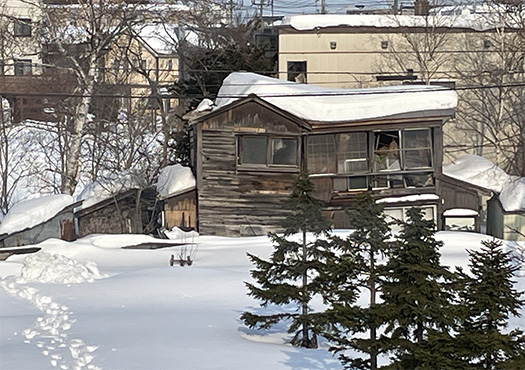
 写真は本日のわが家前のヒマラヤ山脈(笑)と、きのうのわたしの「歩数計」状況。昨日は朝1番の除雪にひき続き、昼前12時前ころ、そして夕方16:00頃と合計3回の雪かき作業に没入。ほかに散歩はしていないどころか、雪かき以外は外にも出ていません。歩数は雪かきのみ。運動量的には歩数換算で2-3倍ということなので、1.6万から2.4万歩ほどに相当。う〜む、さすがにキビシイ。
 最後の除雪後おかげさまでようやく降雪が収まって、本日朝4時くらいまで降雪は確認されていません。
 きのうの札幌はほとんど都市マヒで高速道路は本日朝になっても通行止めが続いているし、JRや都市間バスも終日ほぼマヒ。みんな集中せざるを得ない一般道も除雪がまったく追いつかずに、超渋滞ノロノロ。
 わたしは自宅除雪防衛一択で、ムリに動くべきではないという北国人としての直感的な判断でした。
 運動量に見合ってバタンキュー状態。めざめて本日早朝4時頃にクルマ給油で周辺状況を確認してきましたが、道路脇はうずたかく雪山が絶壁を構成して、道路幅は2車線道路がほぼ全部1車線のみ。わが家のすぐ近くの繁華街「琴似」では大量の除雪車が活動していました。出勤時間に合わせて大車輪ぶり。
 本日は週初め月曜日ですが、さてどこまで都市機能が復元できるか、という札幌です。

●お知らせ
拙書「作家と住空間」幻冬舎から電子書籍で発刊
お求めはAmazonで。
https://amzn.asia/d/eUiv9yO

English version⬇

【Snow Removal Three Times a Day: “Heavy Snow Hits Sapporo” Exhausting Sunday】
Record-breaking snow has completely paralyzed this city of 2 million. While snowfall has eased today, safety must remain the top priority when going out. Don’t push yourself. …

 Well, well, I was completely caught off guard.
Yesterday, Sapporo was completely paralyzed by the snowfall. At my home in Yamate, Nishi Ward, Sapporo, we had a memorial service scheduled at my other home in Satotsuka, Kiyota Ward. But even while shoveling snow first thing in the morning between 6 and 7 AM, the snowfall showed no sign of stopping. By that point, the city expressway was already closed to traffic. So, by 9 AM, we decided to cancel the memorial service, contacted the priest, and rescheduled the date. I promptly notified the relatives of this change.
 At that stage, we couldn’t yet gauge the full extent of the “heavy snow,” but we made a “safety-first” judgment. In hindsight, it was absolutely the right call.
The photos show today’s Himalayan mountain range (lol) in front of my house and yesterday’s status on my “pedometer.” Yesterday, following the first snow removal in the morning, I immersed myself in snow shoveling three times total: again around noon, and then around 4:00 PM. Not only did I not go for a walk, I didn’t even go outside for anything other than shoveling. My step count came solely from shoveling. In terms of exercise, shoveling counts as 2-3 times the steps, so that’s equivalent to about 16,000 to 24,000 steps. Hmm, that’s pretty tough.
After the last shoveling session, thankfully the snow finally stopped, and no new snowfall has been confirmed until around 4:00 AM this morning.
 Sapporo was practically paralyzed yesterday. The expressways remained closed even this morning, and JR trains and intercity buses were nearly shut down all day. Everyone had no choice but to use local roads, but snow removal couldn’t keep up at all, causing massive, slow-moving traffic jams.
My instinct as a northern resident was clear: stay home and focus solely on clearing my own driveway. Forcing myself to go out wasn’t an option.
I’m completely wiped out, matching my physical exertion. Waking up around 4 a.m. today, I went out to refuel my car and check the surroundings. Snowbanks piled high along the roadside formed sheer cliffs, reducing the two-lane road to barely one lane. In the bustling district of “Kotoni” right near my home, numerous snowplows were hard at work. They were operating at full throttle to coincide with the morning commute.
Today is Monday, the start of the week. The question is, how much of the city’s functions can Sapporo restore?

●Notice
My book “Writers and Living Spaces” published as an e-book by Gentosha
Available on Amazon.


【父系6代先祖の「母と嫁」由縁の地・中津原〜母性の残響】


 さて「四百年間のいのちの履歴書」シリーズに徐々に復元努力。
 400年間にわたっての血脈の生き様の解明となると、さすがに心理的に興奮が高まらざるを得ない。手法としてはどうしても「父系」をたどるのがわかりやすい。父母両系をたどるとなると幾何級数的に拡散してしまって、すぐに全人口を上回ってしまうのだという。
 その点、父系一系の場合には絞り込めて、それも「代数」で個人まで特定できるので過去のその人生にまで思いを至らせることが可能になる。DNAが近しいことから心理まで慮りやすい。
 わたしの家系ではわたしを1代として数えて6代前の祖先が、この広島県福山市の北方4-5kmの、芦田川が石鎚山周縁を回り込むこの中津原地域に深い因縁がある。その後も3代前の祖父も、この地域の家に嫁さんの由縁がある。
 6代前の祖先は7代の父が尾道の商家を8代の祖父から継承して営みながら、なんと28歳の若さで他界してしまい生後1歳で母に連れられ、この中津原の母の実家に移ってきている。そこで育ちこの地で生まれた女性と婚姻した。その上で祖母の兄・大伯父の家が福山市今津町で「本陣」を務めていた家に「世話に」なっている〜まぁ「手代」として現代風に言えば「就職」したと言えるだろうか。
 1歳の小児を育て上げてくれ、しかも母系の縁から嫁取りまでさせてもらったワケだ。
 つくづくと母性のありがたさを感じさせられる。それも祖母+母という2代の母性。
 先述したように父系でたどるのがわかりやすく絞り込みやすいけれど、しかし一方で男性の人生は、母系の「母性」に導かれていると思える。深い愛情。
 昨年11月にこの地を訪れたときの風景写真が、ずっと残響し続けてならない。

●お知らせ
拙書「作家と住空間」幻冬舎から電子書籍で発刊
お求めはAmazonで。
https://amzn.asia/d/eUiv9yO

English version⬇

【The Land of Nakatsuhara: Birthplace of My Sixth-Generation Ancestor’s “Mother and Bride” ~ Echoes of Motherhood】
A landscape deeply embedded in my family history. The land where my sixth-generation ancestor was raised, and where his bride was raised too. Echoes of motherhood. …

 Now, gradually restoring the “Four Hundred Years of Life’s Resume” series.
Unraveling the lived history of a bloodline spanning four centuries inevitably stirs intense psychological excitement. Methodologically, tracing the paternal line proves far clearer. Tracing both parental lines leads to exponential dispersion, quickly exceeding the entire population.
 In contrast, focusing solely on the paternal line allows for narrowing down the scope. Moreover, using “generations” enables identification down to specific individuals, making it possible to contemplate their past lives. The closeness of DNA also makes it easier to consider psychological connections.
 In my family line, counting me as the first generation, my ancestor six generations back had deep ties to this Nakatsuhara region. It lies 4-5 km north of Fukuyama City, Hiroshima Prefecture, where the Ashida River curves around the base of Mount Ishizuchi. Later, my grandfather three generations back also had connections to this area through his wife’s family.
 My sixth-generation ancestor inherited a merchant house in Onomichi from his grandfather. Tragically, he passed away at the young age of 28. At just one year old, he was brought by his mother to her family home in Nakatsuhara. He grew up there and married a woman born in this very place. Furthermore, he came to work at the home of his grandmother’s brother—his great-uncle—in Imazu-cho, Fukuyama City, a house that served as a “honjin” (main inn for travelers). He was taken in to “help out”—well, in modern terms, perhaps you could say he “got a job” as a clerk.
They raised him from a one-year-old infant, and moreover, through this maternal connection, they even allowed him to marry into the family.
It makes one deeply appreciate the grace of motherhood. And that of two generations—grandmother and mother.
 As mentioned earlier, tracing the paternal line is clearer and easier to narrow down. Yet, at the same time, a man’s life seems guided by the maternal love of his mother’s lineage. Deep affection.
The landscape photos I took when visiting this place last November continue to resonate within me.

●Notice
My book “Writers and Living Spaces” published as an e-book by Gentosha
Available on Amazon.

【わが家前、通学路につき完璧除雪、惚れ惚れ・・・】


 「四百年間のいのちの履歴書」はただいま原資料精読&収集中。内容が深掘りになってくるほどに「芸藩通志」など地域的で歴史的な古典籍類での調査活動が大きくなって来ます。一方で身近な「読者」が増えてきてその対応にも追われる(泣)。高齢になると日々のブログ参照にも手ほどきが必要になる場合がある・・・。
 というところで本日も北国の身近な雪の話題・続篇。写真はわが家の目の前の「完璧除排雪」ぶり。
 昨日の写真報告では、高々&膨らみ気味の雪山が、一気にシャープなお姿(笑)に。わが家前は中学校の通学路に面しておりますので冬休みが終わって3学期が始まると、除排雪が「優先的に」実施されるのです。
 こういうきれいな除排雪ぶりに吊られて勢い自宅前の除排雪も、やる気が膨らんでくる。
 って、わが家の敷地を選択するときに、旧地主さんとの話し合いで北面道路付きのこっち側敷地と裏側の南面6m道路側との選択になった。わたしは迷わず即座にこの北面側を選んでいました。
 南面・北面という意味ではマイナスだけれど、配置環境的「温暖差」については設計対応で補えるし、そもそも高断熱住宅仕様であれば十分に克服可能。一方で、除排雪などの公共交通的な利便性サービスについては「通学路に面している」ことによるメリットは未来永劫的に価値観が高い。
 もちろん職住一体という用途としてもこの選択には合理性があったと思います。
 そして密かにですが、こういう除排雪「アート」って、好きなんですね(笑)。もちろん除排雪の作業のみなさんは業務に忠実なだけなのですが、そういう日本人的な「マジメさ」が生み出すカタチは魅せられる。
 こういう風に「感謝&ありがたい気持ち」を持ち続けられることも精神衛生として有益。
 除排雪作業が始められると、内心で手を合わせながら応援し続けております。

●お知らせ
拙書「作家と住空間」幻冬舎から電子書籍で発刊
お求めはAmazonで。
https://amzn.asia/d/eUiv9yO

English version⬇

Perfect snow removal on my home’s front walkway—absolutely stunning…
Currently engrossed in meticulously reading and collecting original historical texts and classical works. Amidst this intellectual immersion, the flawless snow clearance before my home presents a beautiful sight…

 “The 400-Year Life Resume” is currently in the phase of meticulously reading and collecting primary sources. As the content deepens, research activities in regional and historical classical texts like the “Geihan Tsūshi” become increasingly significant. Meanwhile, the number of “readers” close to home is growing, and I’m swamped keeping up with them (sigh). As people age, they sometimes need guidance just to check the daily blog…
 So, today’s topic continues with snow in the northern region. The photo shows the “perfectly cleared snow” right in front of my house.
Yesterday’s photo showed tall, bulging snowbanks, but today they’ve transformed into sharp, defined shapes (laugh). Since my house faces a middle school commuting route, snow removal is “prioritized” once winter break ends and the third term begins.
 Seeing such a clean snow removal job like this makes me feel motivated to tackle the snow removal in front of my own house too.
When choosing our property, discussions with the previous owner led to a choice between this north-facing lot with a road on the north side and the lot on the south side with a 6m road. I chose this north-facing lot without hesitation.
 While it’s a disadvantage in terms of south/north orientation, the design can compensate for the environmental “temperature difference,” and high insulation specifications can easily overcome it anyway. On the other hand, the convenience of public services like snow removal, especially since it’s “facing the school route,” holds immense, lasting value.
Of course, this choice also made sense for the purpose of integrating work and residence.
 And secretly, I actually like this kind of snow removal “art” (laugh). Of course, the snow removal workers are just doing their jobs diligently, but the shapes created by that Japanese “seriousness” are captivating.
Maintaining this kind of “gratitude & appreciation” is also beneficial for mental health.
When snow removal starts, I silently clasp my hands together and cheer them on.

●Notice
My book “Writers and Living Spaces” published as an e-book by Gentosha
Available on Amazon.

【大雪で道路脇に雪山だらけ・札幌らしさ】


 ブログ「四百年間のいのちの履歴書」シリーズに復帰したいのですが、天気が許してくれない(泣)。
 冬まっ盛りの大雪でさすがに体力消耗気味。だいたい1時間程度で延べ200㎡ほどを片付けるのですが、さすがに連日の大雪到来で、カラダから疲労感が湧き上がってくる。
 天気予報では今日明日は小休止してくれそうとのこと。探査・執筆まとめに意識集中できるかと期待。
 写真は毎日の散歩で参拝させていただく地元の「琴似神社」。きのう行ったら神殿のヨコにある「屯田兵屋」への通路が久しぶりに開いていた。札幌の始原開拓期に建てられた住建築。こちらの兵屋では明治帝の肖像画が掛けられています。屯田兵は制度発足と同時期に「西南戦争」に出陣した経緯が込められているかのよう。
 寒冷地なのに囲炉裏暖房でその天井には排気口が開けられている。マイナス10度を超え日中でもマイナス5度程度の厳寒期、この住宅環境で過ごしていたのだと感慨深い。北海道は150年程度のスパンで歴史時間が刻まれているので、この時期に見てみるとまだ開拓の血肉感までが伝わってくる。
 ただ今の札幌の「積雪深」は73cm。平年は62cmなので2割くらいの多雪ぶり。わが家前の「雪山」は誇らしげに「オラオラ、ドヤぁ」と見下ろしてきます。こちらは、なんとかこの辺でお手柔らかにと、へりくだっておりますが、さてどこまでお聞き届けくださるか、深く念じております。

●お知らせ
拙書「作家と住空間」幻冬舎から電子書籍で発刊
お求めはAmazonで。
https://amzn.asia/d/eUiv9yO

English version⬇
 
Heavy snow piles up roadside mountains—that’s Sapporo for you.
Ooh la la, look at that! Winter’s cold grip looms overhead.
This season’s “just endure it” spirit—that’s the Hokkaido way, I guess.

 I’d like to return to my blog series “Four Hundred Years of Life’s Resume,” but the weather won’t let me (sob).
The heavy snowfall in the dead of winter is really taking its toll on my stamina. I usually clear about 200 square meters in roughly an hour, but with the heavy snow arriving day after day, fatigue is well and truly setting in.
The weather forecast says it might give us a break today and tomorrow. I’m hoping I can focus my mind on research and writing.
 The photo shows the local “Kotoni Shrine,” which I visit daily during my walks. When I went yesterday, the path to the “Tonden Heiya” (Settler’s Barracks) beside the main shrine building was open for the first time in a while. This residential structure was built during Sapporo’s pioneering settlement period. Inside this barracks, a portrait of Emperor Meiji hangs. It seems to encapsulate the history of the Tonden Hei (Settler Soldiers), who were deployed to the Seinan War around the same time the system was established.
 Despite the cold climate, it uses a hearth for heating, with an exhaust vent in the ceiling. It’s deeply moving to think they lived in this housing environment during the harshest winter months, when temperatures drop below minus 10 degrees Celsius and stay around minus 5 degrees even during the day. Hokkaido’s history is carved into spans of about 150 years, so seeing this now still conveys the palpable sense of the pioneering spirit.
 Sapporo’s current snow depth is 73cm. With an average of 62cm, this is about 20% heavier than usual. The “snow mountain” in front of my house proudly looks down, as if saying, “Ooh-rah, look at me!” I humbly hope it will go easy on us around here, but I deeply pray to see how far it will grant my wish.

【札幌に大雪警報/2026冬、最盛期到来か?】


 昨日は朝と午後3時頃の2回、除雪作業。
 その除雪運動も含めて歩数は10,054歩。除雪の際の歩数はおおむね4,000歩程度だったので、運動量としては、12,000〜14,000歩程度なのでしょう。冬本番。
 結果、早々に19時頃に寝てしまって約7時間後、午前2時に起きたらわが家前は写真のような状況。
 本格的な2026年の最強冬将軍さま、降臨されてきているようです。
 北国住民としてはそのご威光にひれ伏しつつ、身の回りの安寧を願ってふたたび除雪に向かいます。
 きのう1/21現在での気象台データを見るとことしの降雪状況はここまでかなり多めのペース。平年の238cmに対して317cmなので約133%ほどのペース。そして本日は大雪警報発令(午前1:39)なので、さらに上回る。
 全国的にも日本海側、北海道・東北・北陸から昨日触れた松江などの山陰まで、日本海側各地で激しい降雪が続いているようです。北海道はまったくの「平常運転」ですが、ふだんそれほどでもない地域のみなさん、十分にご注意されるように願います。
 しかしさすがに雪かきの積層疲労は、カラダ各所からの骨の「ポキポキ音」で知ることになる(笑)。排雪場所の「雪山」がどんどん高くなってきているので、なかなか厳しい体動を強いられるのですね。
 ・・・ということで「ロードヒーティング、スイッチ入れようかなぁ」とふとアタマをよぎったりしますが、ロードヒーティングは「即効性」は乏しい。スイッチを入れてから積雪の減少という効果を確認できるのはほぼ48時間くらいかかるのですね。常時運転させている必要がある。コスパ的に難がある。
 北海道での合理性の高い雪対策、それぞれのライフスタイルの違いもあって、最適解は一様ではない。
 めげずに前向きに雪かきに。記事アップ後、これから除雪出動です。頑張ります。

●お知らせ
拙書「作家と住空間」幻冬舎から電子書籍で発刊
お求めはAmazonで。
https://amzn.asia/d/eUiv9yO

English version⬇

【Heavy Snow Warning for Sapporo / Winter 2026: Peak Season Arriving?】
Sapporo’s snowfall is about 133% of the annual average. Is the mightiest winter storm of the season descending? As northerners, we can only respectfully welcome it and calmly hope for its early departure. …

Yesterday I shoveled snow twice, once in the morning and again around 3 PM.
Including that snow removal, my step count was 10,054 steps. Since shoveling itself was roughly 4,000 steps, my total activity was probably around 12,000 to 14,000 steps. Winter is in full swing.
 As a result, I went to bed early around 7 PM. When I woke up about seven hours later at 2 AM, the situation in front of my house was like the photo.
It seems the full force of the mighty Winter General of 2026 has descended upon us.
 As a northern resident, I bow to its majesty while praying for peace around me, then head out to shovel snow once more.
Looking at the meteorological observatory data as of yesterday, January 21st, this year’s snowfall pace has been significantly higher than usual. Compared to the average of 238cm, we’re at 317cm, about 133% of the average. And today, a heavy snow warning was issued (at 1:39 AM), so it will surpass that.
 Nationally, heavy snow continues across the Japan Sea side—from Hokkaido, Tohoku, and Hokuriku to the San’in region like Matsue mentioned yesterday. While Hokkaido is operating as usual, I urge everyone in areas not typically hit this hard to take extra caution.
But honestly, the cumulative fatigue from shoveling snow makes itself known through the “cracking sounds” coming from bones all over your body (laugh). The “snow mountains” at the disposal sites keep getting higher, forcing some pretty tough physical movements.
…Which makes me think, “Maybe I should turn on the road heating?” But road heating lacks “immediate effectiveness.” It takes about 48 hours after switching it on to see any reduction in snow accumulation. It needs to run constantly. Cost-wise, it’s problematic.
 The most rational snow countermeasures in Hokkaido vary depending on individual lifestyles, so there’s no one-size-fits-all solution.
Undeterred, I’ll keep shoveling with a positive attitude. After posting this article, I’m heading out for snow removal duty. I’ll do my best.

●Notice
My book “Writers and Living Spaces” published as an e-book by Gentosha
Available on Amazon.


【夕陽に癒され人生後期を思う、宍道湖の涅槃】


 北海道人には山陽・山陰地方は遠い。
 東京・関東や広域関西圏には馴染みが深くなるのが多くの現代日本人の人生模様の趨勢。仕事中心の環境の中ではそれが自然でしょうね。わたしも北海道に生まれて育ち、やがて東京で生涯の仕事領域とめぐり会って、ほぼ人生時間は北海道と東京・大阪圏を往復するような仕事人生だった。
 結婚して子どもが出来てからは、家族旅は北海道と対比的で温暖な沖縄が大好きだった。
 そんな経緯で過ごしてきて現役リタイア以降は不思議と、四国とか山陽・山陰に惹かれてきている。
 山陽地域については家系の「故地」であることから、調査もあり頻繁に往復するようになって来た。
 親族の中には福山市今津の由縁のあるお寺に墓を建て「終の住み処」とする家もある。わたしの場合は、父が北海道の地で眠ることを決めたので、その流れになるだろうけれど、そういう気持ちはわかる。
 山陽地域を頻繁に訪れるようになって、写真の山陰・松江の「宍道湖の夕陽」にまったく心を奪われ続けている。こころの「鼓動」が吸い取られるような夕陽の時間に、深く沈殿させられている。
 あちこち訪ね歩く旅行計画なのに、この夕陽をただただ3時間以上見続けていたこともある。
 宍道湖というのは東西方向に長大なカタチなので、松江市内側の「夕陽スポット」からは、湖面に夕陽が落ちていって、しかも落ちてからの空を焦がす「残照」が深く心に刺さってきてしまうのだ。
 アジアに至った人類の末裔として遠く出アフリカの人類史を想起する機縁なのか。宗教的には仏教的な「西方浄土」が、毎日の夕景に映し出されてきたものだろうか。
 とにかく夕陽という人類原初的な心象風景にメロメロであります。・・・

●お知らせ
拙書「作家と住空間」幻冬舎から電子書籍で発刊
お求めはAmazonで。
https://amzn.asia/d/eUiv9yO

English version⬇
 
Healed by the Sunset, Contemplating Life’s Later Years: Lake Shinjiko’s Nirvana
The sunset is the simple beauty of Earth and Sun, where humanity has been relentlessly battered throughout time. Time simply settling into the landscape…

 For Hokkaido natives, the Sanyo and Sanin regions feel distant.
For many modern Japanese, life tends to center around familiarity with Tokyo/Kanto or the greater Kansai area. In a work-focused environment, that’s only natural. I too was born and raised in Hokkaido, eventually finding my lifelong career path in Tokyo. My working life was spent shuttling between Hokkaido and the Tokyo/Osaka areas.
 After marrying and having children, our family trips often took us to Okinawa, which we loved for its warmth in contrast to Hokkaido.
Having lived this way, it’s curious that since retiring from active work, I’ve found myself drawn to Shikoku and the Sanyo/Sanin regions.
Regarding the Sanyo region, it’s the ancestral home of my family line, leading me to research it and travel there frequently.
Some relatives have built graves at a temple with ties to Imazu, Fukuyama City, designating it as their final resting place. In my case, since my father decided to be laid to rest in Hokkaido, that will likely be my path too, but I understand that sentiment.
Since I started visiting the Sanyo region often, I’ve been utterly captivated by the sunset over Lake Shinji in Sanin, Matsue, as seen in the photo. During those sunset hours, it feels like my heart’s “pulse” is being drawn in, deeply settling within me.
 Even on trips planned to visit many places, I’ve sometimes spent over three hours simply watching this sunset.
Lake Shinji stretches long from east to west. From the “sunset spots” on the Matsue city side, the sun sinks into the lake surface, and the “afterglow” that scorches the sky after it sets pierces my heart deeply.
 Is this a chance to recall the distant human history of our African ancestors, as descendants of humanity who reached Asia? Or is it the Buddhist concept of the “Western Pure Land” reflected in the daily evening scenery?
In any case, I am utterly captivated by the sunset, this primal landscape of the human heart. …

●Notice
My book “Writers and Living Spaces” published as an e-book by Gentosha
Available on Amazon.
 

【地名の誤読発見。右“原”山城跡は「右京山城跡」と訂正】


 広島県東広島市河内町入野について、何回か触れ続けてきていました。
 わたしの六世の祖が1815年に訪れて200年前当時の家系の「故地探訪」でこの入野を訪れ詳細調査し先祖の墓地参詣もした旨の記録文書を残してくれていた。そこでその先祖の足跡をたどってわたしもそこからほぼ200年後に入野を訪ねていた次第。
 その経験を元に現代で可能な調査を重ね当時の広島藩浅野家の公式記録「芸藩通志」の当該地域図を参照したところ、やや不鮮明な「ルビ」で故地周辺の地名が表示されていた。そこで、拡大〜シャープなどの修正をPhotoshopアプリで繰り返した結果「右 原山城跡」と読み込んでしまった。
 当時のわが家系の「姓」は原氏であって、記録では「往昔紀州にて仕官たるところ」という記述。紀州から広島への浅野藩転封時期と時を同じくして、祖先はこの入野に入植したと記述されている。そこで「現地でゆかりのある地名」の残る地域に「地域の管理者」の役割を持たせて地域に根付かせたという推測を持ったのです。
 率直に言って古記録に基づく調査ではやはり「試行錯誤」が発生してしまう。
 本日、再確認してみたところ、公式記録「芸藩通志」ではしっかり「右京山城跡」と解読された。
 1/14付けの拙ブログ記事中の当該部分を訂正させていただきます。申し訳ありませんでした。
 この発表後、数日経過した段階で、1/14ブログについても修正しますのでよろしくお願いします。
 今後も慎重に故実を検討しつつ、家系史探訪は深めて行きたいと思っています。

English version⬇

【Correction of misread place name. The “Ura” Yamashiro ruins should be corrected to “Ukyo Yamashiro ruins.”】
We regretfully acknowledge that we spread this error. We sincerely apologize to our readers and have made the correction. We are deeply ashamed. …

 I have mentioned several times the area of Irino in Kawachi-cho, Higashihiroshima City, Hiroshima Prefecture.
My sixth-generation ancestor visited this Irino in 1815, two hundred years ago, as part of a “homestead visit” by the family lineage at that time. He left behind a written record stating he conducted detailed research and also visited the ancestral graves. Following in that ancestor’s footsteps, I too visited Irino roughly two hundred years later.
 Based on that experience, I conducted further research possible in modern times. Referencing the relevant regional map in the official records of the Hiroshima Domain’s Asano family, the “Geihan Tsūshi,” I found the place names around the ancestral home displayed in somewhat indistinct ruby characters. After repeatedly applying enlargement and sharpening adjustments using the Photoshop app, I misread it as “Right: Harayama Castle Ruins.”
 At that time, my family’s surname was Hara, and the records state, “In days of old, they served as officials in Kishu.” It is written that my ancestors settled in this Ino area around the same time the Asano clan was transferred from Kishu to Hiroshima. This led me to speculate that they were given the role of “local administrators” in areas where place names connected to their lineage remained, thereby rooting them in the community.
 Frankly, research based on ancient records inevitably involves trial and error.
Upon rechecking today, the official record “Geihan Tsūshi” clearly reads it as “Ukyō Yamajō-ato.”
 I hereby correct the relevant section in my blog post dated January 14th. My apologies.
After a few days following this announcement, I will also revise the January 14th blog post. Thank you for your understanding.
Moving forward, I intend to continue exploring family history while carefully examining historical precedents.

【北国の「厳冬期」を親子で楽しむ/雪だるまつくり】


 写真は、昨日の散歩道で近隣の発寒川河畔公園でみかけた雪像。
 どうやら土曜日に作り上げた「作品」のようでした。札幌の直近の雪質は必ずしも雪像つくりには適さない乾燥した雪なのですが、ちょっと重くなった「下の方の雪」を力を込めて丸めた感じがあって、そこから親子での、それも父子での作品と想像していました。
 たぶんお父さんも子ども時代に返った気分で、子どものまっすぐで茶目な「ものづくり」心理と完全同心して転げ回っている風景が想像されてしまっていた。あったかい・・・。
 どうもこういう光景に極端にヨワくなってしまっている(笑)。高齢化。
 
 さて、懸案の家系史探索「四百年間のいのちの履歴書」はるかな旅路・・・格闘中。
 先日記述した河内町教育委員会による江戸中期までのわが家系と同姓の家系調査記録。そこでわかったその家の「系図」に触れたのですが、やはり「面白いし、調査するべき対象」ではあるけれど、すぐに準拠しうるとは思われない。
 そこで「急がば回れ」ということで、わが家の六世の祖が書き残してくれた「原氏由来の事」文書内容に立ち返って、再度筋道を整理。AI時代には「資料検索」など秘書的な「アシスタント」としてGoogle-Geminiなどの生成AIツールが重宝します。
 しばしAIとの対話で焦点を再度絞っていって、ある頓悟にたどりついた次第。
 家系に関わる400年以上前の事柄なのですが、最近は各地の「地域史」が充実してきているので、司馬遼太郎さんの時代などからは格段の進歩発展が見られる。おかげさまで400年からさらにさかのぼり得る、有力な原典候補がおぼろげながらその後ろ姿が見えてきたようです。
 ただ、そういう原典参照には時間も掛かるし読みこなしの努力も必要。
 しかし、最近「念ずれば通ず」みたいに古文書の「てにをは」が見えても来ている。それなりの「楽しさ」も感じられるようになってきたのであります。習い性か?
 ものごとの進展には「緩急」があるのでしょう。それが当然の筋道・・・。

●お知らせ
拙書「作家と住空間」幻冬舎から電子書籍で発刊
お求めはAmazonで。
https://amzn.asia/d/eUiv9yO

English version⬇
 
Enjoying the Harsh Winter Season in the North with Your Family / Making Snowmen
Just imagining a father and son building a snowman together fills my head with dreamlike joy. Am I getting old? (laughs). Restoring my energy to explore my family history…

 The photo shows a snow sculpture I spotted yesterday during my walk at the nearby Hassamu River Riverside Park.
It seemed to be a “creation” made over the weekend. While Sapporo’s recent snow isn’t always ideal for sculpting—it’s rather dry—this one had a feel of being rolled with force using the heavier “lower layer of snow.” That led me to imagine it was a father-son project.
 I could picture the father, feeling like a child again, rolling around in perfect harmony with his child’s straightforward, playful “creative” spirit. So heartwarming…
I’m hopelessly weak for scenes like this (laugh). Aging.
 
 Now, regarding the long-pending family history exploration, “Four Hundred Years of Life’s Resume”—a distant journey… still wrestling with it.
The other day I mentioned the Kawachi Town Board of Education’s records tracing our family line and other families with the same surname back to the mid-Edo period. I touched on the “genealogy” of that family discovered there. While it is indeed “interesting and worth investigating,” I don’t think it can be immediately relied upon as a reference.
 So, taking the “make haste slowly” approach, I returned to the document “On the Origins of the Hara Clan” left behind by my sixth-generation ancestor to reorganize the timeline. In the AI era, generative AI tools like Google-Gemini are invaluable as secretarial ‘assistants’ for tasks like “document searches.”
After some dialogue with the AI to refocus, I arrived at a sudden realization.
 Though these are matters concerning our family lineage over 400 years ago, recent advancements in regional histories across various areas show remarkable progress compared to the era of authors like Ryotaro Shiba. Thanks to this, I now glimpse the faint outline of a promising candidate for primary sources that may extend even further back than 400 years.
However, consulting such primary sources takes time and requires effort to decipher.
 Yet lately, as if “persistence pays off,” I’ve started to discern the particles of classical Japanese in these old documents. I’ve even begun to find a certain “enjoyment” in it. Is it just habit?
Progress in things naturally has its “ups and downs.” That’s the way it should be…

●Notice
My book “Writers and Living Spaces” published as an e-book by Gentosha
Available on Amazon.