

四百年間のいのちの履歴書シリーズ。おおむねの400年間(以上)の登場人物が特定されてきて、いま深掘り的な探索を継続していますが、その手段としては現代のツールであるAIとの対話が非常に効率的。
というか、道標的な俯瞰装置として効率がいい。
そしてプロンプトの書き方がいちばん大切だけれど、AIはそれぞれで「クセ」の違いがあるので、そういう反応の違いということにも気付かされる。いまわたしはGeminiとChatGPTを交互に使っているけれど、前者がちょっと「忖度」具合が強く感じられる。一方後者はちょっと「堂々巡り」的な反応を感じさせられたりする。そういう「個性」への留意が必要だとも思う。
で、そのように探究をしていると「読書」一択であった時代との「相違」を痛感させられる。
AI利用の場合には「プロンプトの書き方」に深く自分の考えの「まとめ」をしっかり明確化して叩き込む必要があって、その習慣化から「能動的な探究」に近づいていくと思える。そして検証は大量の古文書など先人の知識体系の「原典にあたる」ことになる。
しかし一方で旧来型の「読書」からは非常に「重層的な理解」が伝わってくる。たぶん個人としての書き手の人間性総体が「血が通って」くるように腑に落ちてくるということか。
そういったふたつの「流儀」が並立しているように思えてきている。
たぶん現代人が歴史的にもはじめて遭遇している「知的環境の変貌」なのでしょう。
自分自身の「四百年間のいのちの履歴書」という主要テーマ領域だけに限らず、否応なく現代人はこういう環境変貌に立ち合っている。そのときに、あらたな「作法」の必要性があるのではないかと気付かされてきています。
前述のAIごとの「相違」なども気付かされる部分。
まぁこういう環境での「深掘り」可能時代には、逆に「現場で考える」というリアリズムも大きく浮かび上がってきますね。来週は本州地域、東京から広島県までスケジューリングしていますが、現場で感じることがキモだとも思っています。
AI対話・読書・現地取材。この三つを往復する知的環境は、歴史探究の作法そのものを変えつつあるのかもしれない。この環境変位を興味深く感じています。
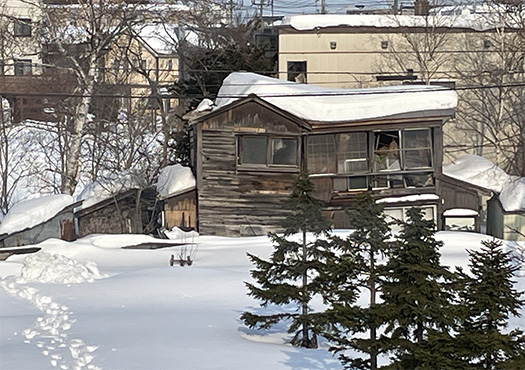
<写真は大好きな「廃屋」風景。崩れゆく構造の美観?>
●お知らせ
拙書「作家と住空間」幻冬舎から電子書籍で発刊
お求めはAmazonで。
https://amzn.asia/d/eUiv9yO
English version⬇
【AI Dialogue & Document Verification VS Reading: A Modern Coexistence】
AI possesses “personality” too. Is the modern thrill found in independently delving into original sources? Yet reading for its personal connection remains compelling. …
The 400-Year Life History Series. We’ve identified most characters spanning roughly 400 years (or more), and are now continuing in-depth exploration. Using modern tools like AI for dialogue is incredibly efficient for this purpose.
Or rather, it’s highly efficient as a guiding overview device.
And while crafting the prompt is most crucial, each AI has its own distinct “quirks,” making you aware of these differences in response. Currently, I alternate between Gemini and ChatGPT. The former feels a bit too prone to “guessing my intentions,” while the latter sometimes gives responses that feel like “going around in circles.” Paying attention to these “personalities” is essential.
Engaging in this kind of exploration makes me keenly aware of the “difference” compared to the era when “reading” was the only option.
When using AI, you must deeply internalize and clearly articulate your thoughts into the “prompt writing” process. Cultivating this habit brings you closer to “active inquiry.” Verification then involves consulting the “primary sources” of vast ancient texts and the knowledge systems of predecessors.
Yet, traditional “reading” conveys a profoundly “layered understanding.” Perhaps it’s because the writer’s entire human essence, as an individual, comes alive and resonates deeply.
It seems these two distinct “approaches” now coexist.
This is likely the first time in history that modern people are encountering such a “transformation of the intellectual environment.”
Not limited to my own primary theme area of “a four-hundred-year life resume,” modern people are inevitably witnessing this environmental shift. This makes me realize there’s a need for new “methods” in such times.
It also highlights differences between specific AI systems, as mentioned earlier.
Well, in this era where deep exploration is possible, the realism of “thinking on-site” conversely comes sharply into focus. Next week, I’m scheduled to cover the Honshu region from Tokyo to Hiroshima Prefecture, and I believe what I feel on-site will be crucial.
AI dialogue, reading, field research. This intellectual environment, oscillating between these three, may be transforming the very methodology of historical inquiry itself. I find this shift in environment fascinating.
●Notice
My book “Writers and Living Spaces” published as an e-book by Gentosha
Available on Amazon.
共有:

Posted on 3月 6th, 2026 by 三木 奎吾
Filed under: 未分類





コメントを投稿
「※誹謗中傷や、悪意のある書き込み、営利目的などのコメントを防ぐために、投稿された全てのコメントは一時的に保留されますのでご了承ください。」
You must be logged in to post a comment.