本文へジャンプ

【天安門弾圧中共の側なの?左派への日本人「巨大民意」】


 どうしても昨晩から選挙報道に集中してしまった・・・みなさん、お疲れさまです。
 民主国家では選挙は主権者である国民自身が国の方向性を決める最高の意思決定手段。その「民意」はきわめて重い。今回ほど明確に国民の意思が示された結果も珍しいと思える。
 安倍暗殺以降の政権の左傾化への強い反発から相次いだ国政選挙での自由民主党の大敗。そしてなにを言っているのかわからない「ねばねば」前総理をようやく交代させ、最後の最後になってようやく民意に近しい女性総理を選出した。そこからの彼女の真摯な執政の姿勢は、多くの国民に共感を呼んでいた。また女性財務相もよき一体ぶりだったと思う。その上で女性総理は外交の舞台で明確なメッセージを発信した。
 対して共産中国は中華皇帝的な上から意識丸出しで、日本に対して脅迫的な外交対応を見せてきた。
 そしてそれに対して野党勢力やマスコミは、およそ日本人らしからぬ迎合的な姿をさらけ出し続けた。
 天安門事件という許しがたい独裁圧政の黒歴史を、人権を声高に叫ぶ勢力側であるのに、すべて忘却したかのように振る舞い続けてきたのだ。え、日本の人権左派って一度も自国の民意を問うていない独裁に屈服するの?・・・日本の民衆は今回まさに「民主的に」こうした勢力に完全なるNOを突き付けた。
 〜ということなのだろう。そういう巨視把握を持たなければ理解できないほど巨大な国民意志。
 そして2/1には、ついに深海底6000mからレアアースの採取に成功した。また、日本の領海で自噴する「燃える氷」次世代エネルギー資源・メタンハイドレートの商業利用も目前に迫ってきている。日本らしく先端科学技術を活用して「海洋資源大国化」という国の未来形も現出し始めて来ている。
 今回の国民意志には、未来を開きたいという強い願いが込められている。
 さて、朝日新聞・共同通信たちよ、あなた方はこの国民意志にどう対応するつもりなの?

●お知らせ
拙書「作家と住空間」幻冬舎から電子書籍で発刊
お求めはAmazonで。
https://amzn.asia/d/eUiv9yO
English version⬇

【Are You on the CCP’s Side in the Tiananmen Crackdown? Japan’s “Massive Public Sentiment” Against the Left】
The true nature of the “postwar left” is becoming visible. The massive public sentiment of the Japanese people as a whole is now demanding awakening. So, Asahi, which side will you take tomorrow? …

 I just couldn’t help focusing on election coverage since last night… Everyone, you’ve worked hard.
In a democracy, elections are the supreme means by which the sovereign people themselves determine the nation’s direction. That “public will” carries immense weight. It’s rare to see results that so clearly demonstrate the people’s will as this time.
 The Liberal Democratic Party’s successive crushing defeats in national elections stemmed from strong backlash against the government’s leftward shift following the assassination of Abe. Finally, they replaced the incomprehensible, “sticky” former Prime Minister and, at the very last moment, elected a female Prime Minister closely aligned with public sentiment. Her sincere approach to governance since then resonated deeply with many citizens. The female finance minister also demonstrated commendable unity. Building on this, the female prime minister delivered clear messages on the diplomatic stage.
In contrast, Communist China has displayed an overtly imperial, top-down consciousness, engaging in threatening diplomatic maneuvers toward Japan.
Meanwhile, opposition forces and the media have persistently exposed an uncharacteristically Japanese-like, accommodating posture.
 Despite being the very forces that loudly champion human rights, they have acted as if they had completely forgotten the unforgivable dark history of dictatorial oppression known as the Tiananmen Square incident. Wait, are Japan’s human rights leftists really going to bow down to a dictatorship that has never once consulted its own people? …This time, the Japanese populace has delivered a resounding, “democratic” NO to these forces.
 That’s what it means. The sheer magnitude of this national will is impossible to grasp without such a macro perspective.
Then, on February 1st, Japan finally succeeded in extracting rare earth elements from the deep sea floor at 6,000 meters. Furthermore, the commercial utilization of methane hydrate, the next-generation energy resource known as “burning ice” that naturally flows in Japan’s territorial waters, is now imminent. True to Japan’s character, the nation’s future form as a “maritime resource powerhouse” utilizing cutting-edge science and technology is beginning to emerge.
This national will embodies a strong desire to open up the future.
Now then, Asahi Shimbun, Kyodo News, and others—how do you intend to respond to this national will?

●Notice
My book “Writers and Living Spaces” published as an e-book by Gentosha
Available on Amazon.
 

【冬来たりなば春遠からじ、光の春へ】


 昨日、育児支援で大忙しのカミさんと久しぶり息抜きに夫婦水入らずで、クルマを走らせて海辺の温泉へ。
 やはり北海道の自然は季節の微妙なうつろいを感じさせて、癒してくれる。つい先日までの大雪では高速道路もしばらく不通だったのですが、除雪も完璧にされていて、みなさんの努力に頭が下がりますね。
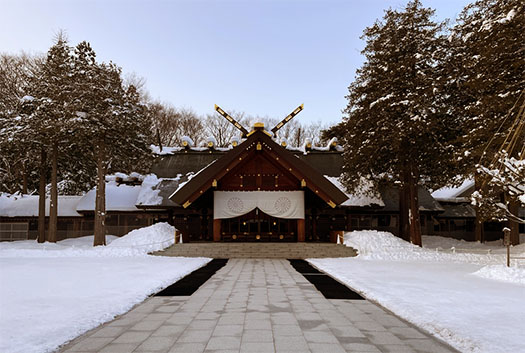
 この時期の北海道は雪がたっぷり降り積もっていますが、太陽光は徐々に明るさが増してくる。一種の「季語」として光の春というコトバが北海道にはあるのですが、そんな季節感。
 たしかに雪は多く寒冷は最高潮に達してくるのですが、この光の春の陽光が、白い雪原に反射して視界の明度が格段に上がってくるのですね。それでトンネルの暗転で眼の調節機能が「びっくり」してしまう(笑)。
 そういうことも含めて「季語感」が迫ってきますね。
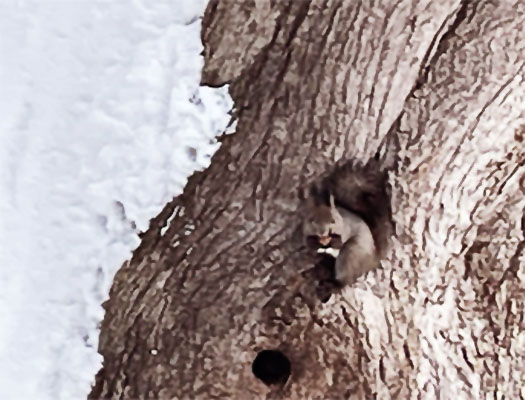
 写真は、北海道神宮本殿から300mほどの森の中でいつも出会うリス。
 久しぶりに顔を覗きに行ったのですが、かれもこっちを凝視してくる。「お、なんかコイツ見たことあるな。なんだよ、エサでオレを自由に操ろうとするのか?」みたいな波動を伝えてくる(笑)。
 「いやいや、動物虐待である餌やりなどは絶対しないよ。」
 「なんだ、写真撮るだけかよ。オレにも肖像権はあるからな」。
 「いや、ブログでだけくらいだから許してくれよ」
 「う〜む、ワルげはなさそうだから許してやるか、ふむ」
 ・・・みたいな妄想対話が楽しい。
 さて本日は投票日。わたしたち夫婦は高齢者らしく天候悪化での危険を避けて期日前投票を済ませていますが、親族の投票の支援のために「留守番」役をしてきます。札幌はいまのところはそう荒天にはならないようですので、未来へのきちんとした意思表示を。

●お知らせ
拙書「作家と住空間」幻冬舎から電子書籍で発刊
お求めはAmazonで。
https://amzn.asia/d/eUiv9yO

English version⬇

When winter comes, spring cannot be far behind—toward the light of spring.
“The light of spring”—perhaps a seasonal phrase unique to Hokkaido.
Snow stretches as far as the eye can see, and the sun sparkles brightly upon it.
I pray for fine weather today.

 Yesterday, my wife, who’s been swamped with childcare duties, and I took a rare break for some couple time alone. We drove to a seaside hot spring.
Hokkaido’s nature truly makes you feel the subtle shifts of the seasons and heals you. Just the other day, heavy snow closed the expressway for a while, but the snow removal was perfect. I’m truly impressed by everyone’s efforts.
 Hokkaido at this time of year is blanketed in deep snow, yet the sunlight gradually grows brighter. There’s a term in Hokkaido, a sort of seasonal word, called “light spring” (hikari no haru) – that’s the feeling of the season.
True, the snow is deep and the cold reaches its peak, but the sunlight of this light spring reflects off the white snowfields, dramatically increasing the brightness of the landscape. That’s why when you enter a tunnel, your eyes get a real shock adjusting to the darkness (laugh).
 That sensation, along with everything else, really brings home the feeling of a seasonal word.
The photo shows a squirrel I always encounter in the woods about 300 meters from the main hall of Hokkaido Jingu Shrine.
I went to peek at him after a long time, and he stared right back at me. He seemed to be sending off vibes like, “Oh, I’ve seen this guy before. What’s up? Trying to manipulate me with food?” (laughs).
 “No, no, I’d never do something cruel like feeding animals.”
“Oh, you just want a picture? I’ve got portrait rights too, you know.”
“Come on, it’s just for my blog. Cut me some slack.”
“Hmm… You don’t seem too shady. I guess I’ll let you off. Hmm.”
…That kind of imaginary dialogue is fun.
 Today is election day. Being the responsible seniors we are, my wife and I already voted early to avoid the dangers of worsening weather. But now we’re heading out to “hold down the fort” while helping relatives cast their votes. Sapporo doesn’t seem to be getting hit too hard by the storm just yet, so let’s make sure our voices are heard for the future.

●Notice
My book “Writers and Living Spaces” is now available as an e-book from Gentosha.
Available on Amazon.

【癒されます。寒中のアマテラス「慈母観音」さん】


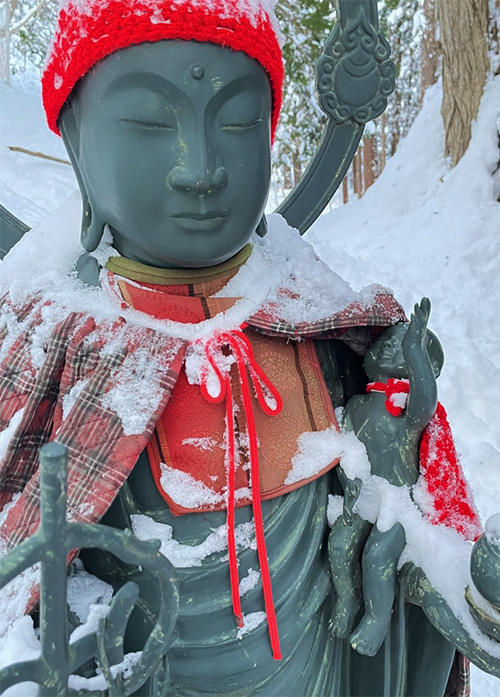
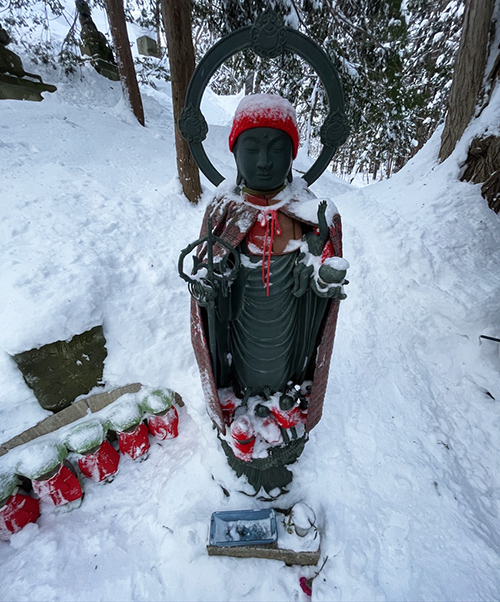
 写真は散歩道の円山登山口に立ち尽くされている慈母観音さん。
 札幌の人たちに人気があるようでこの雪景色の中、帽子をかぶりコートをまとわれている。市民有志が「お寒い」だろうと心配されてこのようなお姿。
 左手には嬰児をしっかり抱かれ、足下にはたくさんの子どもたちがその徳と愛情を慕ってすがりついている。なんとも神々しいお姿にいつも散歩の時、心中で「般若心経」を唱えさせていただいています。
 急いでいるときには参詣の2−3分前くらいから唱え始めてちょうど終わるころに対面できるように計算してお目に掛かったりしております。
 日本人はアマテラス神話を祖先神文化として大切にしてきている。
 仏教が伝来し神仏習合などを経て、この慈母観音という存在は文化的に重なって続いてきた。
 北海道札幌は最北の日本文化地域。積雪寒冷のこの時期にも日本文化らしさを感じるお姿。
 最近家族に慶事があり、自然とこの観音さんに深い「慈愛」を見させていただいています。
 世は選挙一色でありますが、家族への愛の祈りをしずかに捧げ続けております。あ、わたしは特定宗教に入れ込んでいるものではまったくありません(笑)。わが家近くには基督教関係の集会所もあり、そのリーダーの方とも親しい隣人ですが「わが家は無垢な真言宗徒なので、ぜひ仲良く」とお願いし、こころよく「良き隣人関係」を続けさせていただいています。人間愛に垣根はない。
 今回の選挙は「戦後世界」という体制が崩壊し、むき出しの独裁者たちが日本に対してもあからさまにキバを見せている最中に行われている。そして戦後体制の中で国民言論を「操作していた」メディアという存在にも民の側で大きな疑問の気付きが起こっている。こうしたことは自覚すべきでしょう。
 未来を担う嬰児たちの安寧のために、考えて行動したいですね。

●お知らせ
拙書「作家と住空間」幻冬舎から電子書籍で発刊
お求めはAmazonで。
https://amzn.asia/d/eUiv9yO

English version⬇

Healing. Amaterasu in the Cold: “Compassionate Mother Kannon”
In northern Japan’s cultural region, the divine power that heals life amidst the harsh cold seeps into one’s very being. Through the Heart Sutra in the heart, prayers for the future. …

 The photo shows the Compassionate Mother Kannon statue standing at the Maruyama trailhead along the walking path.
She seems popular with Sapporo residents, dressed in a hat and coat amidst this snowy scene. Concerned citizens, thinking she must be cold, dressed her this way.
In her left hand, she holds an infant securely, while at her feet, many children cling to her, drawn by her virtue and love. Her truly divine presence always moves me to silently chant the Heart Sutra during my walks.
When in a hurry, I start chanting about two or three minutes before reaching the shrine, timing it so I finish just as I arrive to pay my respects.
 The Japanese have cherished the Amaterasu myth as a foundational ancestral deity culture.
Through the introduction of Buddhism and syncretism, this figure of the Compassionate Mother Kannon has culturally overlapped and endured.
Sapporo, Hokkaido, is the northernmost region of Japanese culture. Even in this snowy, frigid season, her presence embodies quintessential Japanese culture.
Recently, my family experienced a joyous occasion, and I naturally found myself witnessing this Kannon’s profound “compassion.”
 While the world is consumed by election fever, I continue to quietly offer prayers of love for my family. Ah, I am absolutely not deeply involved in any specific religion (laughs). Near my home is a Christian gathering place, and I am close neighbors with its leader. I asked, “My family are pure Shingon Buddhists, so please let us be good neighbors,” and we kindly continue our “good neighborly relationship.” Human love knows no barriers.
 This election is taking place as the “postwar world” system collapses, with exposed dictators openly baring their fangs toward Japan. Simultaneously, the public is becoming acutely aware of the media’s role in “manipulating” public discourse within that postwar framework. We should be conscious of these realities.
For the peace of mind of the infants who will bear the future, I want to think and act.

●Notice
My book “Writers and Living Spaces” published as an e-book by Gentosha
Available on Amazon.

Translated with DeepL.com (free version)


【打ち毀された「所務役」、一揆側は「獄門から顕彰へ」】


 昨日に引き続き1718年の広島浅野藩領での「亨保の百姓一揆」について。
 江戸時代も中頃になると各藩財政が苦境に至っていた。幕府は将軍吉宗が享保の改革を打ち出し財政再建を図るけれど、数年前から広島藩も農民に対して倹約令を出し貢租の増徴を計っていた。五代藩主浅野吉長は正徳2年(1712年)に徴税強化のため「正徳新格」を発布し財政改革に着手した。従来の「郡奉行ー代官ー大割庄屋ー庄屋ー組頭」という徴税組織を「郡奉行ー郡支配ー所務役人ー頭庄屋ー庄屋ー組頭」に改編。従来形では庄屋や農民の抵抗で財政改革が進まないので、有力庄屋から所務役人を抜擢して苗字帯刀を許し俸給も与え徴税強化推進役にして改革を推進しようというもの。
 この改革によって貢租が強化され、藩全体に農民の不満が当然溜まった。
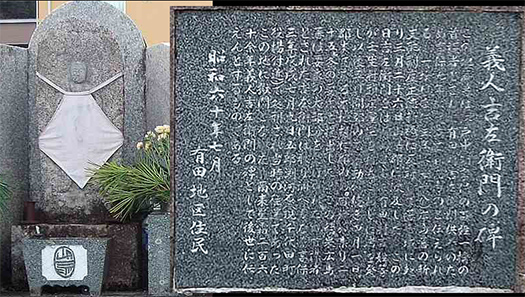
 上の写真は現在の広島県山県郡北広島町有田に残されている一揆首謀者のひとり吉左衛門さんの「顕彰碑」クローズアップ。義民という尊称。一揆は1718年に勃発し藩全体で30万人が立ち上がった。藩は一揆側の要求を丸呑みし、課税強化策として導入した「所務役」制度をすぐに制度撤回し旧来に戻し行政対応のまずさを是認した。一揆側の政治的勝利。
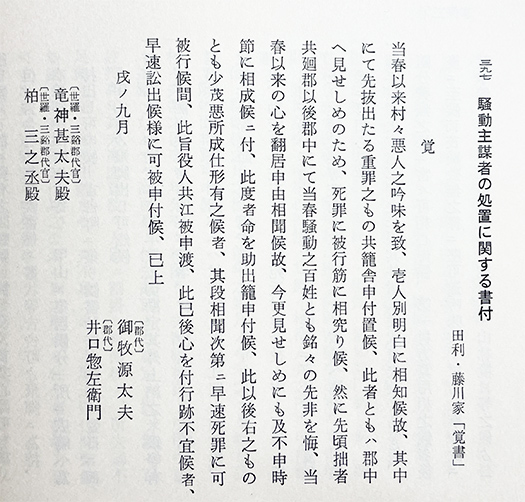
 しかし一方で騒動のほとぼりが冷めた1ヶ月後、一揆首謀者は藩全体で49名が斬首・獄門の極刑に処せられ入牢などが129名、その他逐電逃亡したもの多数に及んだとされる。2枚目の古文書翻刻文は藩の一揆首謀者への処分対応記録文。「即刻死罪」と武家独裁らしい残獄さ。現代世界まで残る「独裁」の無能・無惨。
・・・わが家系の原平七さんはこの渦中のど真ん中にいた。それも藩と百姓一揆側のど真ん中(泣)。
 「有力庄屋から所務役人を抜擢」され俸給も受けていた以上、封建制社会の中での「最適解」として生きてきたことが社会的に認証されたに等しい。その境遇に対し謙虚であるのは、子孫として理解できる。
 しかし結果、理不尽という言葉の前で、現代のわたしでも立ち止まってしまう。
 まさか所務役という抜擢指名を拒否することは、それ自体が反逆行為で「即刻死罪」だろう。
 日本社会ではやむを得ない「流れ」と言えるだろうか。一方で一揆後5−6年で首謀者は「義民」として尊称される。一時期高校生の少年期、新左翼運動に関わった自分自身としても、DNAの不思議な邂逅に驚かされざるを得ない。・・・

●お知らせ
拙書「作家と住空間」幻冬舎から電子書籍で発刊
お求めはAmazonで。
https://amzn.asia/d/eUiv9yO

English version⬇
 
【The “School Administrator” Who Was Beaten to Death: The Rebels’ Call to “From the Gallows to Commemoration”】
In the late 1960s and early 1970s, as I became deeply involved in the New Left movement in high school, I was forced to confront the DNA of ancestors caught between the cracks of social systems. An encounter with injustice. …

 Continuing from yesterday, regarding the “Kyōhō Peasants’ Uprising” in the Hiroshima Asano domain in 1718.
By the mid-Edo period, the finances of various domains had reached a critical state. Although the shogunate, under Shōgun Yoshimune, implemented the Kyōhō Reforms to rebuild the finances, the Hiroshima domain had also been issuing austerity decrees to its peasants and attempting to increase tribute taxes for several years. The fifth domain lord, Asano Yoshichō, initiated fiscal reforms in 1712 (Shōtoku 2) by enacting the “Shōtoku New Regulations” to strengthen tax collection. He reorganized the traditional tax collection hierarchy—“District Magistrate → Deputy Magistrate → Major Tax Collector → Village Headman → Group Leader”—into “District Magistrate → District Administrator → Office Clerk → Chief Village Headman → Village Headman → Group Leader.” The previous system stalled fiscal reforms due to resistance from village headmen and peasants. Therefore, influential village headmen were promoted to office clerks, granted the privilege of wearing surnames and swords, and given stipends to serve as tax collection enforcers and drive the reforms forward.
This reform strengthened tribute and tax collection, naturally causing discontent among peasants throughout the domain.
 The photo above shows a close-up of the “Commemorative Monument” for Kichizaemon, one of the leaders of the uprising, preserved in Arita, Kitahiroshima Town, Yamagata District, Hiroshima Prefecture. Honored as righteous citizens. The uprising erupted in 1718, mobilizing 300,000 people across the entire domain. The domain government fully accepted the rebels’ demands, immediately repealing the “administrative officer” system introduced as a tax-strengthening measure and reverting to the old system, thereby acknowledging its poor administrative handling. A political victory for the rebels.
 However, one month later, once the turmoil had subsided, 49 uprising leaders across the domain were executed by beheading or impalement. Another 129 were imprisoned, and many others fled into exile. The second ancient document is a transcript of the domain’s record of punishments for the uprising leaders. The phrase “immediate death penalty” reflects the ruthless cruelty typical of samurai autocracy. The incompetence and cruelty of “dictatorship” that lingers into the modern world.
…My ancestor, Genpei Shichi, was right in the thick of this turmoil. Right in the thick of it for both the domain and the peasant rebels (weeps).
Having been “promoted from influential village headman to official” and receiving a stipend, his life as the “optimal solution” within feudal society was effectively socially validated. As his descendant, I can understand his humility in that situation.
Yet the outcome, faced with sheer injustice, makes even me today pause.
Refusing such an appointment as a feudal official would surely have been an act of rebellion itself, warranting “immediate death penalty.”
 Could this be called an unavoidable “flow” within Japanese society? On the other hand, within five or six years after the uprising, the ringleaders were honored as “righteous citizens.” As someone who was involved in the new leftist movement during my own teenage years in high school, I cannot help but be astonished by this strange encounter within my DNA. …

●Notice
My book “Writers and Living Spaces” published as an e-book by Gentosha
Available on Amazon.

【浅野藩領・打毀し被災から福山藩領へ隠密的転身?】


 「四百年間のいのちの履歴書」シリーズ。
 わが家系史できわめてナゾ多き人物「原平七」の人生経歴(推定1676-1728年)について。9代前に生きた先祖ですが、伝承の「位牌」にはその名前がない。この人物から約100年後を生きた6代前先祖は、この平七さんの事跡を丹念に調査して古文書として残してくれている。
 平七さんは広島浅野藩の地域支配機構で「所務役」として経済管理機能の中核を担っていた。藩経済の最重点・年貢管理で10000石近い石高相当の責任者で苗字帯刀を許される立場。それが収奪される百姓から「怨嗟」の対象とされ1718年に「一揆・打ち毀し」されてしまう。
 そこでプッツリと消息が消え、その後息子の「源七」が隣藩の備後松永で塩田を営み、そこから政治力を発揮して福山藩武家との縁戚関係をつくると同時に尾道の商家株を入手している。
 常識的に考えて、社会的立場の意識的転換・転身を結婚したての若者が容易にできるとは思えない。やはり父である平七が、きわめて大きな役割を果たしたと思われる。
 そこまでの家系史の大転換を行ったけれど、位牌にすら原平七の名は記録されていない。
 ・・・という謎にひとつの気付き。
 江戸期社会で藩の中核的経済情報を体現している人物が、他藩領に簡単に移転できるかという疑問。
 現代人にはなんの抵抗感もないことだが、江戸期の時代背景を考えたら、藩をまたいで移転するなどは許されない「反逆的行為」だと気付いた次第。
 封建体制社会ではたとえ「打ち毀し」被害者であっても藩をまたいだ転出は許されない脱法反逆的行為。浅野藩にして見れば藩の経済情報が他藩に漏洩するリスクに直結する。
 しかしこういう周囲の状況の中で、打ち毀し被災として武家体制の厳しい限界を悟らされた平七先祖は、知恵を絞って別世界への子孫の解放を意図したのではないか。それが尾道商家株購入で「姓」までも同時に入手して、原姓を捨てて三木姓に転身した大きな動機だったのだと。
 この目的完成のために原平七は、浅野藩領での自らの存在痕跡を消し去る手を打ったのではないか。
 江戸期の庶民階層の、一族生き残り戦略・・・。この方向でさらに深く解明して行きたい。
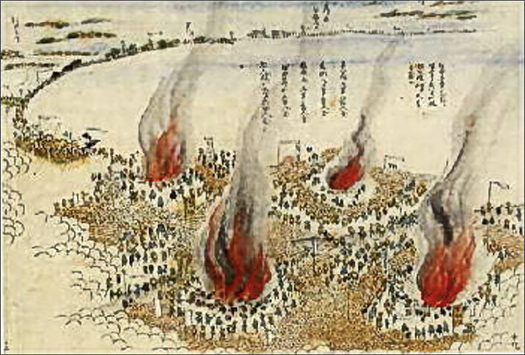
 <イラストは江戸期の百姓一揆絵図>

●お知らせ
拙書「作家と住空間」幻冬舎から電子書籍で発刊
お求めはAmazonで。
https://amzn.asia/d/eUiv9yO

English version⬇

【Asano Domain Territory: Secretly Transforming from Destruction Victim to Fukuyama Domain Resident?】
Having learned the harsh realities of shogunate-domain economic constraints through destruction, they erased their own traces while moving to another domain—a forbidden act—and transforming into merchants. A survival strategy for commoners…?

 The “Four Hundred Years of Life’s Resume” Series.
 The life history (estimated 1676-1728) of Hara Heishichi, an extremely enigmatic figure in our family history. Though he was an ancestor who lived nine generations ago, his name is absent from the traditional memorial tablet. An ancestor who lived about 100 years after him, six generations prior, meticulously investigated Heishichi’s deeds and preserved them as historical documents.
 Heishichi served as a “local administrator” within the regional governance structure of the Hiroshima Asano domain, holding a central role in economic management. He was responsible for managing the domain’s most critical economic function—the collection of annual tribute taxes—equivalent to nearly 10,000 koku of rice yield. His position granted him the privilege of bearing a surname and wearing a sword. However, he became the target of resentment and grievances from the peasants whose resources he extracted. In 1718, he was killed in a peasant uprising.
 His trail then abruptly vanishes. Afterwards, his son, Genjiro, operated salt fields in the neighboring Bingo Matsunaga domain. From there, he wielded political influence to forge kinship ties with the Fukuyama domain’s samurai class while simultaneously acquiring merchant shares in Onomichi.
Common sense suggests it’s unlikely a newlywed youth could easily achieve such a conscious shift in social standing and transformation. It seems his father, Heishichi, played an extremely significant role.
 Despite orchestrating such a major shift in the family lineage, Hira-shichi’s name isn’t even recorded on the memorial tablet.
…This mystery led to a realization.
The question arose: could a figure embodying core economic information within a domain simply relocate to another domain’s territory in Edo period society?
 While this seems perfectly natural to modern people, considering the historical context of the Edo period, I realized that moving across domain lines would have been an unforgivable “treasonous act.”
In a feudal system, even victims of “punishment by execution” were forbidden from moving across domain lines; doing so was an illegal, treasonous act. From the perspective of the Asano domain, it directly posed the risk of leaking the domain’s economic information to another domain.
 Yet, amidst these circumstances, my ancestor Heishichi, having grasped the harsh limitations of the samurai system through his experience as a victim of the “demolition,” may have strained his ingenuity to liberate his descendants into a different world. This was the major motivation behind purchasing shares in an Onomichi merchant house, simultaneously acquiring a new surname, abandoning his original family name, and transforming into the Miki surname.
 To achieve this goal, Hara Heishichi likely took steps to erase all traces of his existence within the Asano domain.
A survival strategy for commoners during the Edo period… I wish to explore this direction further and delve deeper into its implications.

●Notice
My book “Writers and Living Spaces” published as an e-book by Gentosha
Available for purchase on Amazon.

【日本人が書いてきた古文書のわかりやすさ】


 ときどき雪かきなど苦行をしつつ、基本は「広島県史」の丹念な読解作業に沈殿する日々。当然「古語」を読み進めることで、古人と対話する気分。
 わたしの家系に繋がる文書を探すなかで、ときどきよく知られた歴史事象記事も発見する。上の2点の短文記録は、江戸初期に福山藩を支配していた徳川譜代大名・水野家の記録文書より。歴史の大スター織田信長と水野家の主君である徳川家との関係を記録した文書。水野家は徳川(当時は松平)の親戚だけれど桶狭間合戦当時は、織田信長の臣下だった時期に相当している記録。
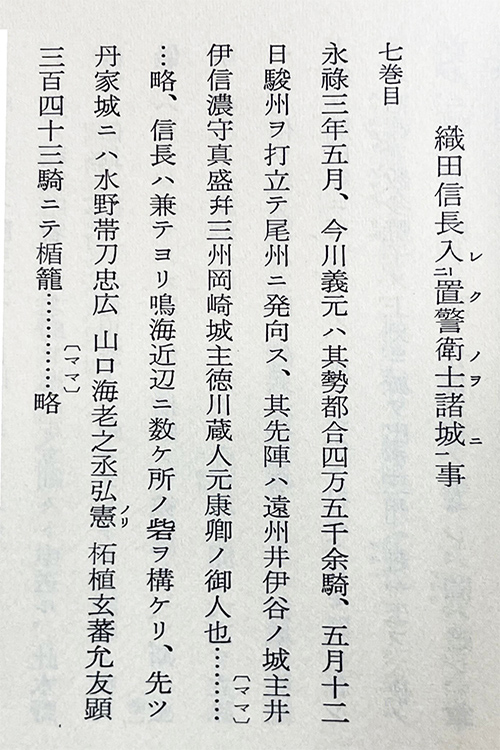
 上は桶狭間合戦当時の軍勢進退についての記述。「織田信長は諸城に警衛の士を入れ置いていた事」というタイトル。永禄3(1560)年、今川義元の軍勢45,000余騎が5月12日に駿河を発って尾張に向かった。先鋒はこれも後に徳川氏に臣従する井伊真盛ならびに三河岡崎城主・徳川蔵人元康。(略)信長は・・・
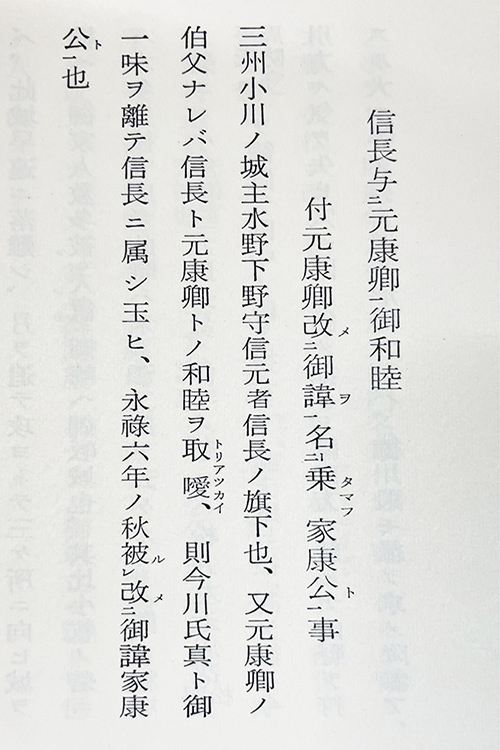
 〜という軍記。徳川期になって書いたのでこの年代本来の松平ではなくて徳川になっている。「忖度」は修飾語など各所に示される。次の文書では水野氏が当時信長に臣従していたので、信長と元康との和睦をとりあつかったと誇らしげに書かれている。これを契機に元康は家康と名をあらためた、という記述。
 ・・・まぁ日本史のなかでも有数のポピュラーな史実箇所なので、読み込むこちらもすっかり「お馴染み」感に満たされる。古文書の「入口」として非常に心強く感じさせられる。さらに「言葉遣い・漢字表現」についての時代感覚に慣れるのにはうってつけの読感と思われた。
 現代日本語とはたしかに表記スタイルが違うし、文書毎に「クセ」はあるけれど、民族文化の同質性を強く感じさせら楽しくなってくる。この古文書を書いた人物が生きていた時代背景も「伝わってくる」。
 ほとんど漢字ばかりで現代語のようなカナ使いではないけれどわかりやすい。
 こういうポピュラリティのある記事をときどき目にすることで時代の「空気感」までもが伝播して、いろいろな符合を発見しやすくなってくるものですね。

●お知らせ
拙書「作家と住空間」幻冬舎から電子書籍で発刊
お求めはAmazonで。
https://amzn.asia/d/eUiv9yO

English version⬇

【The Accessibility of Ancient Documents Written by Japanese People】
A “breather” article for reading ancient documents tracing the footsteps of close relatives and blood ties. Super famous figures like Nobunaga and Ieyasu appear, making the sense of era come alive. …

 Days spent occasionally enduring hardships like shoveling snow, but fundamentally immersed in the painstaking task of reading the “History of Hiroshima Prefecture.” Naturally, reading the “old language” gives me the feeling of conversing with people of the past.
While searching for documents connected to my family lineage, I occasionally discover well-known historical events. The two short records above are from the documents of the Mizuno family, a hereditary Tokugawa daimyo who ruled the Fukuyama domain in the early Edo period. These documents record the relationship between the historical superstar Oda Nobunaga and the Tokugawa clan, the lords of the Mizuno family. Though the Mizunos were relatives of the Tokugawa (then Matsudaira), this record corresponds to a period when they were vassals of Oda Nobunaga during the Battle of Okehazama.
The first describes the movements of armies during the Battle of Okehazama, titled “Oda Nobunaga had placed guards in various castles.” In the 3rd year of Eiroku (1560), Imagawa Yoshimoto’s army of over 45,000 horsemen departed Suruga on May 12th and headed for Owari. The vanguard was led by Ii Masamori, who would later also become a vassal of the Tokugawa clan, along with Tokugawa Motoyasu, lord of Okazaki Castle in Mikawa. (…) Nobunaga…
~ This military chronicle. Written during the Tokugawa period, it uses “Tokugawa” instead of the original Matsudaira of that era. “Consideration” is indicated by modifiers throughout. The next document proudly states that the Mizuno clan, then vassals to Nobunaga, mediated the reconciliation between Nobunaga and Motoyasu. It describes how Motoyasu changed his name to Ieyasu following this event.
 …Well, this is one of the most popular historical events in Japanese history, so even as a reader delving into it, I’m completely filled with a sense of familiarity. It feels incredibly reassuring as an “entry point” into ancient documents. Furthermore, it seemed like the perfect reading experience for getting accustomed to the period sensibilities regarding “word choice and kanji expressions.”
 The writing style certainly differs from modern Japanese, and each document has its own quirks, but it strongly conveys the homogeneity of the ethnic culture, which becomes quite enjoyable. The historical context of the era in which the person who wrote this ancient document lived also “comes through.”
It’s almost entirely kanji, not using kana like modern Japanese, but it’s easy to understand.
Occasionally encountering such popular articles allows the “atmosphere” of the era to permeate, making it easier to discover various connections.

●Notice
My book “Writers and Living Spaces” published as an e-book by Gentosha
Available on Amazon.


【親族協働で家系史探査「AI対話共有」にチャレンジ】


 「四百年間のいのちの履歴書」シリーズに復帰であります。
 っていうか、昨日のAI利用のキーポイントと思える「プロンプト」技術、人間側での論理的思考・伝達の重要性という点への気付き。わたしの場合はビジネス活用ではなく、きわめて情緒性の高い、しかし人間普遍の「DNAの流れへの深い興味」領域では、現代科学発展の粋であるAIを活用するのが最適な方法論だと考えている次第です。
 わたし自身が高齢化してきて、ごく自然に「来し方(先祖の生き様)行く末(子孫の生き方)」に強いテーマ領域を見出してきている。そのとき最新の探究方法を活用するのは、ごく自然でしょう。先人の知見をしっかりと学ばせていただいて、現代、さらに孫子の将来のために生かしたい。
 これまでの時代ではこういった過去研究は「学者」の専門的領域だったのでしょう。しかしすでにたくさんの「地域史」などパブリックな資料データが存在し、それを活用すれば、個人(家系)としてかなりの高確率で過去の「生きた時代、リアルなその時代への対応記録」が蘇生しうる。
 AI活用とは、そういう領域にピッタリだと思う次第です。
 で、わたしに研究を指令してきた次兄ほか親族とSNSで情報交流してきているのですが<これ自体もきわめて新規性>さらにわたしが利用し知識蓄積させてきたAIとの「対話記録・領域」を、親族にも各自に共有的に利用させたいと考えたのです。その方法をAI(Gemini)に問い合わせた答えが以下。
 〜結論から申し上げますと、「現在の知識を丸ごとコピーして、個別に枝分かれ(フォーク)させること」は、技術的に非常に簡単に可能です。〜
 ・・・ということでその方法を各自に伝達しております。各人の子どもたちのヘルプを得て、高齢期のアタマの「過激」体操は、無事に成就するでしょうか、ハラハラしている展開。
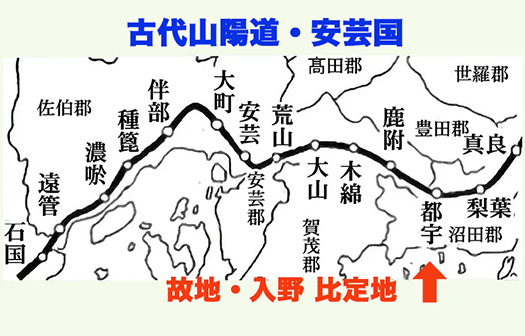
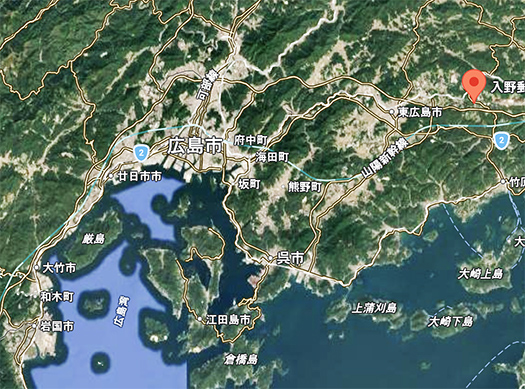
 上図は家系の歴史研究にとって欠かせない地理観の符合研究。故地は広島県の入野郵便局が目印なので現代のGoogleマップで照合させてみた。古代以来、山あいを通るのはごく自然な人間文化ですね・・・。

●お知らせ
拙書「作家と住空間」幻冬舎から電子書籍で発刊
お求めはAmazonで。
https://amzn.asia/d/eUiv9yO

English version⬇

【Challenge: Collaborative Family History Research with Relatives Using “AI Dialogue Sharing”]
A challenge to share the AI tools I’m using with the relatives who asked me to research our family history. I wonder how it will turn out…

 Returning to the “Four Hundred Years of Life’s Resume” series.
Or rather, yesterday’s realization about the “prompt” technique—a key point in AI utilization—and the importance of human logical thinking and communication. In my case, rather than business applications, I see it as a challenge to find the optimal methodology for utilizing AI, the pinnacle of modern scientific advancement, within the highly emotional yet universally human domain of “deep interest in the flow of DNA.”
 As I’ve grown older, I’ve quite naturally found a powerful thematic focus in “the past (how our ancestors lived) and the future (how our descendants will live).” It seems only natural to employ the latest investigative methods for this. I want to thoroughly learn from the insights of our predecessors and apply them for the benefit of the present and our grandchildren’s future.
 In past eras, such historical research was likely the exclusive domain of “scholars.” However, vast amounts of public data, such as “local histories,” now exist. Utilizing this data makes it highly probable that an individual (or family lineage) can revive “living records of past eras and real-world responses to those times.”
I firmly believe AI application is perfectly suited for this domain.
 So, I’ve been exchanging information via SNS with my second eldest brother and other relatives who commissioned this research from me . Furthermore, I wanted to share the “dialogue records and domain” I’ve been accumulating knowledge with through AI usage with each relative for their shared use. The answer I received from AI (Gemini) when I inquired about this method is below.
 ~To put it simply, “copying the entire current knowledge base and creating individual branches (forks)” is technically very straightforward.~
…So I’ve communicated this method to each of them. With help from their children, will this “radical” mental exercise in old age be successfully accomplished? It’s a nerve-wracking development.
 The diagram above shows the essential geographical correlation research for family history studies. Since the ancestral home is marked by Hirono Post Office in Hiroshima Prefecture, I cross-referenced it using modern Google Maps. Since ancient times, traversing mountain valleys has been a perfectly natural part of human culture…

●Notice
My book “Writers and Living Spaces” published as an e-book by Gentosha
Available on Amazon.

【AI対話「プロンプト」は論理思考必須で、入力はPC一択】


 みなさんはAIをどのように利用されているでしょうか?
 最近は「四百年間のいのちの履歴書」シリーズで過去の史的事実関係の掘り起こしをしてきていますが、その情報ツールとしては各県各市がまとめている「地域史」の資料集がいちばんの情報源。
 そしてそういった情報をもとに思考を深めて行くのに、AIを「秘書」役として活用するようにしています。で、AIとの対話は「プロンプト」の書き方が決定的だと思います。その「促し(プロンプト)方法」では冷静に自分の探索興味分野についての「論理的」な条件定義と的確な領域指示が決定的だと思う。そしてそういうAIとの対話をしていると、思わぬ気付きのヒントも得られたりする。それをさらに深掘りして再度質問を繰り返すことで、やりとりのレベルがどんどん向上していく。
 そういう入力において、わたしの場合、スマホからの入力では「アタマがムズくなる」(笑)。
 スマホでは入力するのにどうしても「感覚的」表現とか、非論理的な感情優先型になりやすく、またなるべく「単純化」しての短文入力に流されやすい。
 WEBで「プロンプトの書き方」と問い合わせると以下の回答。
 良いプロンプトの作り方・コツ
 1 具体的に書く: 5W1Hを意識し曖昧を避ける
 (例:「旅行プランを考えて」より「京都、3泊4日、60代夫婦向け」)。
2 役割を与える: 「あなたはわたしの秘書です」など、AIに前提となる役割を与える。
3 制約を設定する: 禁止事項や文字数を指定する。
4 改善の反復(プロンプトエンジニアリング): 回答が期待通りでなければ、指示を微調整して再試行
 ・・・というようなことを入力するにはやはりMac/PCで「考えて自分を整理整頓しながら」が必要。こちらの方ではスマホでの「メンドさ」はほぼ感じない。スマホでも慣れてくれば良いのかも知れないけれど、どうしても移動時・行動時に持参するツールなので、時間短縮型になる必然性があるのでしょうね。

●お知らせ
拙書「作家と住空間」幻冬舎から電子書籍で発刊
お求めはAmazonで。
https://amzn.asia/d/eUiv9yO

English version⬇

【AI Dialogue “Prompts” Require Logical Thinking, Input Must Be Done on a PC】
Research on how to use and engage with AI dialogue—an essential tool for modern people. Tools that facilitate logical thinking still favor Mac/PC over smartphones. …

 How do you all utilize AI?
Recently, I’ve been digging into historical facts for the “Four Hundred Years of Life’s Resume” series. The primary information source for this is the “Regional History” reference materials compiled by each prefecture and city.
Then, to deepen my thinking based on that information, I use AI as a “secretary.” I believe the way you write your “prompts” is crucial for AI dialogue. In this “prompting method,” calmly defining logical conditions and precisely specifying the domain related to your exploration interests is key. Engaging in such dialogue with AI often yields unexpected hints for new insights. Digging deeper and repeating questions then progressively elevates the level of interaction.
 When it comes to such input, in my case, typing on my smartphone makes my “head hurt” (laugh).
On a smartphone, typing inevitably tends toward “sensory” expressions or non-logical, emotion-driven approaches, and I easily get swept into inputting short sentences that are overly “simplified.”
When I searched online for “how to write prompts,” I found the following response.
Tips for Creating Good Prompts
 1. Be specific: Focus on the 5W1H and avoid ambiguity
(Example: “Plan a trip” vs. “Kyoto, 3 nights/4 days, for a couple in their 60s”).
2. Assign a role: Give the AI a premise, like “You are my secretary.”
3. Set constraints: Specify prohibitions or character limits.
4. Iterate for improvement (prompt engineering): If the response isn’t what you expected, tweak the instructions and try again.
…To input something like this, you still need a Mac/PC to “think things through and organize your thoughts.” I hardly feel any “hassle” using my smartphone for this. Maybe it gets easier with practice on a phone, but since it’s a tool you carry while moving or doing things, it naturally needs to be time-saving.

●Notice
My book “Writers and Living Spaces” published as an e-book by Gentosha.
Available on Amazon.

【亨保3(1718)年の所務役・原氏「打毀し」の藩記録】


 「四百年間のいのちの履歴書」シリーズ。
 わが家系の歴史の中での「ターニングポイント」と思える亨保3(1718)年の百姓一揆についての芸州浅野藩の関係記録文書を「広島県史」のなかで発見。
 いわゆる戦後教育を受け続けてきたわたしたち年代では、江戸期の「百姓一揆」は正義の行動、止むにやまれぬ民意の表出というように教育されてきたと思う。家系がこうした百姓一揆によって「打ち毀し」されたという事実は誰からも聞いたことがなかったので、単純にその教育内容を受け入れていた。
 家系史を400年以上遡ってたどってみると、DNAのいのちの連鎖はその時代環境の中で必死に「最適解」を生き抜こうと志向してきたことがわかる。その時代環境がどのように変容してくるかは、個々には見通せる由もない。武家支配体制が強固に確立された時代に、藩による指名を受けて地域の経済を「管掌」する立場に立たされることになって、その職務に向き合うことには余念はなかっただろうと思う。
 しかし極論すれば米作生産の土地支配だけに依拠した武家による経済概念は、経済発展への不適応が顕在化してくることになる。封建独裁体制から市場経済社会への移行の「きしみ」。
 わが家系はこの年、百姓一揆の蜂起によって家屋敷を打ち壊された。史実資料を見てみると百姓一揆には「掟」があって、その村の庄屋や、それを束ねる浅野藩での役職・所務役宅への攻撃・打ち毀しには、他村の民が「けっして放火はしない」という倫理基準に基づいて整然と打ち壊していたとされる。
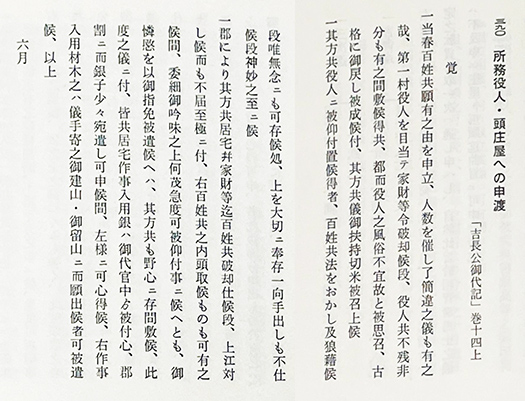
 上の文書は、この一揆後の打ち壊された所務役などへの慰撫策として、屋敷建築の再建に当たってその費用の一部に「憐れみの心を持って」対応する旨が記載されている。「人数を催し、了簡違いで村役人を目当て家財などを破却」されたことに対して(取り締まるべき)役人ども(たぶん武士たち)が役に立たなかったことを認め「古格に戻す」(建て直す)に際して「御扶持・切米」を渡すという文意。
 武家社会の矛盾を一身に受ける「散華」感に、無念無常を感じる。
 家系はこの惨禍から、塩浜づくり〜商家への転身を企図していくことになる。・・・

●お知らせ
拙書「作家と住空間」幻冬舎から電子書籍で発刊
お求めはAmazonで。
https://amzn.asia/d/eUiv9yO

English version⬇

[1718 Domain Records: Village Official Hara’s “Destruction”]
The injustice of village headmen becoming targets for attacks on the economic contradictions of samurai rule. The darkening of efforts to find the best way to live within society, a journey through the night. …

 The “Four Hundred Years of Life’s Resume” Series.
Within the “History of Hiroshima Prefecture,” I discovered documents related to the Asano Domain of Aki Province concerning the peasant uprising of Kyōhō 3 (1718), which I consider a turning point in my family’s history.
 For those of us who grew up under the so-called postwar education system, I believe we were taught that Edo-period “peasant uprisings” were righteous actions, unavoidable expressions of popular will. Since I had never heard from anyone that my family lineage had been “destroyed” by such a peasant uprising, I simply accepted that educational narrative.
 Tracing my family history back over 400 years reveals that the chain of life in our DNA has always strived to find the “optimal solution” for survival within the circumstances of each era. How those circumstances would change was something no individual could foresee. During the era when the samurai-dominated system was firmly established, our family was appointed by the domain to oversee the local economy. I imagine they devoted themselves entirely to this duty.
However, to put it bluntly, the samurai’s economic concept, relying solely on land control for rice production, became increasingly ill-suited for economic development. It was the “creaking” of transition from a feudal autocracy to a market economy.
 That year, my family’s residence was destroyed by a peasant uprising. Historical records indicate these uprisings followed strict “rules”: attacks were directed only at the village headman’s house and the official residences of the Asano domain’s administrators overseeing the village. Based on an ethical standard that “under no circumstances should arson be used,” they systematically demolished these structures while refraining from burning other villagers’ homes.
 The document above describes a consolation measure following this uprising, where the authorities agreed to cover part of the reconstruction costs for the destroyed administrative offices “with a compassionate heart.” It acknowledges that the officials (likely samurai) who should have enforced order were ineffective against the mob (“gathering in numbers, targeting village officials and destroying their property due to minor disputes”), and states that “support and rice allowances” would be provided when rebuilding “to restore the old order.”
One feels a sense of futility and impermanence in this “scattering of petals,” embodying the contradictions of samurai society.
 Following this calamity, the family lineage would plot a transition from salt field cultivation to becoming merchants. …

●Notice
My book “Writers and Living Spaces” published as an e-book by Gentosha
Available for purchase on Amazon.

【戦国末期の土木戦争と家系「原氏」のリンク】


 「四百年間のいのちの履歴書」シリーズ。
 先般、広島藩の重臣としての武家・原氏について掘り下げて見ましたが、浅野氏との関わりは浅野氏の甲斐国支配時期に相当しているという記録の発掘へ至った。そうすると自然と武田氏の有力軍団長としての「原氏」が当然のように浮かび上がってくる。武田の遺臣があらたな仕官先として浅野氏を選択したという筋立て。
 そして調べている内に、この家系の甲州・原氏(原昌胤)は「戦場の地形観察把握」に優れた武家として知られていたという記述があったのです。武田二十四将の有力武将として名が挙げられてもいる。
 そしてさらに今回、戦国末期の戦争革命であった「土木工事戦争」の実相を探ってみたら、肥前国を中心に活躍した「原宗伯」という原姓の「土木専門家」の情報が浮かんできた。
 この人物は江戸時代初期長崎の都市計画・土木技術で決定的な役割を果たした、長崎都市計画の先駆者。彼のオリジナリティは「原流(宗伯流)」という独自の測量・土木術を持っていた点。築城や新田開発(新開)に欠かせない高低差測定や面積算出で、高度な数学的・技術的知見を持っていた。岬の先端に作られた長崎の町の埋め立てや護岸工事に知見が投影されている。
 ・・・どうも「原姓」にはこうした才覚要素が強く感じられるのです。わたしの家系の紀州から広島移転当時の河川管理・土木改良の痕跡、さらに竹原塩田との関わり・・・。もちろん原姓一般と捉えられないことは明らかだけれど、どうもこの辺に「縁」が強く感じられる。
 しかし内心「オレは雑誌を創刊してイメージ表現の世界に生きてきたのに、そんな土木なんて・・・」という、同意しにくいなぁという内語が木霊してくる(笑)。まぁしかし、こういう家系史を「掘り起こして、その時代の中での意味合いを突き詰める」という作業も、ある意味「同質性」はあるのかも知れない。
 自分自身のことはともかくとして、このような原氏のDNA的共通性が場合によっては血脈的つながりにも立ち至るのかも知れない。
 「線路は続くよ、どこまでも」であります。 迷宮かなぁ・・・。

●お知らせ
拙書「作家と住空間」幻冬舎から電子書籍で発刊
お求めはAmazonで。
https://amzn.asia/d/eUiv9yO

English version⬇

【The Link Between Civil Engineering Warfare in the Late Sengoku Period and the Hara Clan】
I myself have lived in the world of expression, founding magazines and such. Yet in my family history, I somehow end up closely related to the “civil engineering improvement” bloodline. I’m speechless (lol)…

 The “Four Hundred Years of Life’s Resume” Series.
Recently, we delved into the samurai clan, the Hara family, who served as senior retainers of the Hiroshima domain. This research led to the discovery of records indicating their association with the Asano clan coincided with the Asano’s period of control over Kai Province. This naturally brings to light the Hara family’s role as a powerful military commander under the Takeda clan. The narrative suggests that retainers of the Takeda chose the Asano clan as their new patron.
During my research, I also found descriptions stating that this branch of the Kōshū Hara clan (Hara Masatane) was known as a samurai family excelling in “observing and understanding battlefield terrain.” He is also named among the prominent generals of the Takeda Twenty-Four Generals.
Furthermore, while exploring the reality of the “civil engineering warfare” revolution in late Sengoku warfare, information surfaced about a civil engineering specialist named “Hara Munehira” (Hara clan) who was active primarily in Hizen Province.
This figure played a decisive role in Nagasaki’s urban planning and civil engineering technology during the early Edo period, becoming a pioneer of Nagasaki’s city planning. His originality lay in possessing a unique surveying and civil engineering technique known as the “Hara School (Sōhaku-ryū)”. He possessed advanced mathematical and technical expertise in measuring elevation differences and calculating areas, essential for castle construction and new land development (reclamation). His expertise is reflected in the reclamation and revetment works for the town of Nagasaki built on the tip of a cape.
…Indeed, the “Hara” surname strongly suggests such elements of talent. Traces of river management and civil engineering improvements from when my family relocated from Kishu to Hiroshima, plus connections to the Takehara salt fields… Of course, this clearly can’t be generalized to the Hara surname as a whole, but somehow I feel a strong “connection” in these areas.
But deep down, a voice echoes: “I’ve spent my life creating magazines and living in the world of visual expression… why civil engineering of all things?” It’s hard to agree with that inner voice (laughs). Well, perhaps the work of “unearthing this family history and delving into its meaning within that era” shares a certain “homogeneity” in its own way.
Setting aside my own case, this kind of shared DNA among the Haras might, in some instances, even lead to bloodline connections.
“The tracks go on and on, forever.” Is this a labyrinth…?

●Notice
My book “Writers and Living Spaces” published as an e-book by Gentosha
Available on Amazon.