本文へジャンプ

【幕末明治期の富豪➡資本家層/北海道人・松浦武四郎-3】


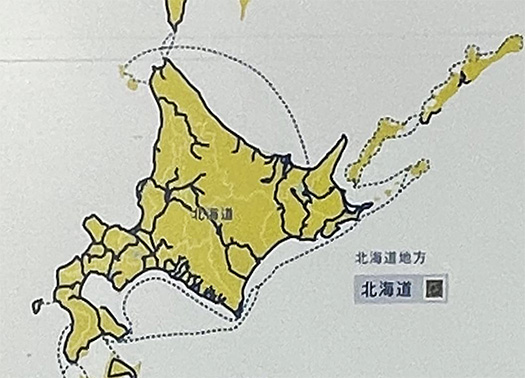
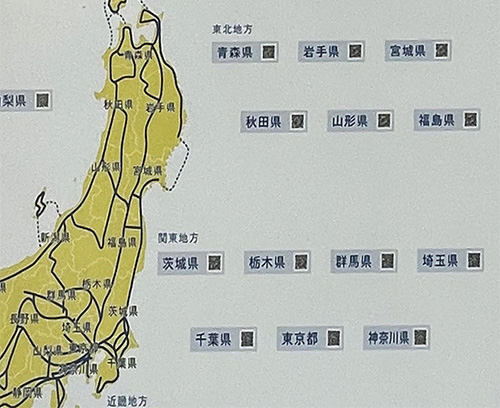
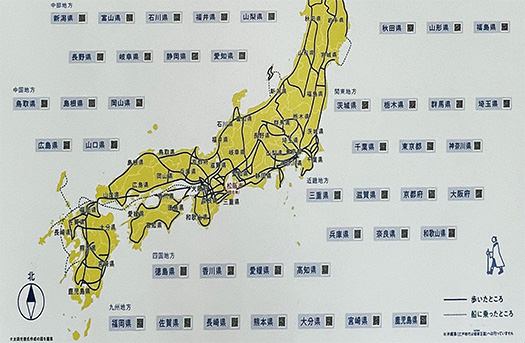
 松浦武四郎の生家は伊勢街道沿いの三重県松阪市の小野江町にあり、庄屋を営む裕福な家であり図のような広大な全国への旅の資金に困ることはなかった。父・時春は庄屋を務めていた。武四郎の兄・佐七が家督を継ぎ基本の生業としては農業を営んでいた。仕事は年貢の取り立てや村のまとめ役など村の経済の管理者という立場。ここが重要だと思えるけれど、空前の「伊勢参り」大ブームによってこの地域には巨万の資力が蓄積されたことは間違いがないだろう。その上現代とは違って税務署機能すら自分たちが担っていたことになるのだ。経済の仕切りの専従家系としてその利益を享受した。幕末から明治にかけての時代相にあっては後の「資本家」になっていく典型的な階層にあたると言えるだろう。
 わたしは作家を中心にして先人の家系の「素性」を見ることが多いのだけれど、明治以降の日本の経済的骨格はこうした層が担っていたことがあきらか。坂本龍馬などの明治の政争の志士たちが、三菱財閥の創始者・岩崎家などに「経済はおまえたちがやれ」と政経を分離させた「時代の雰囲気」を強く感じる。
 作家・太宰治の生家なども明治になって「土地の私有」が公的に認められて、それまでの貸金業から広大な農地私有に舵を切って、大地主・富豪層になっていった。これは日本の近代化の大きな側面だろう。この政経分離ができたことが日本と中国ほかのアジア世界が大きく乖離していった根源だろうか。そういう意味では武士という支配層の強い倫理感・自己認識力が発揮されたこの歴史的経験が、欧米の価値観からしても妥当性があるとされて世界に受容されていったと思えるのだ。
 松浦家というのはその先祖伝承をたどると現在の佐賀県・長崎県である肥前国「松浦」地方を拠点とした松浦水軍の流れを汲むとされている。南北朝時代には南朝方の武将であった北畠氏に仕え、伊勢国に移り住んだと伝えられる。江戸時代には御三家の紀州藩領となり、松浦家は代々「地士」として、村をまとめる役割を担っていた。地士とは有力農民層であり同時に武士身分を獲得した人々を指す。在地の有力な名主や百姓層出身で、土地を支配しつつ戦時には武士として活動した家系。階層的な特権として名字を名乗ることや刀を帯びることを許されていた。こういった背景事情が松浦武四郎という人物を生んだ。ただしかれ自身は旅の途中で手に入れた品々を売買することで、旅費を捻出したりもしたという。
 
●お知らせ
拙書「作家と住空間」幻冬舎から電子書籍で発刊
お求めはAmazonで。
https://amzn.asia/d/eUiv9yO
English version⬇

[Wealthy individuals in the late Edo and early Meiji periods ➡ Capitalist class / Takashiro Matsuura, a native of Hokkaido – 3]
The capitalist class of modern Japan was formed on the basis of the “shoya” class of the Edo period. A class that could control the flow of money emerged. …

 Matsuura Takashiro’s birthplace was located in Onoe-cho, Matsusaka City, Mie Prefecture, along the Ise Kaido Road. His family was wealthy, running a village headman’s office, and had no trouble funding his extensive travels across the country, as shown in the diagram. His father, Tokiharu, served as the village headman. Takashiro’s older brother, Sashichi, inherited the family estate and primarily engaged in agriculture as his main occupation. His work involved collecting taxes, managing village affairs, and overseeing the village’s economy. This is an important point, but there is no doubt that the unprecedented “Ise Pilgrimage” boom led to the accumulation of immense wealth in this region. Furthermore, unlike in modern times, they even handled tax collection functions themselves. As a family dedicated to managing the economy, they reaped the benefits of this system. In the context of the late Edo to Meiji periods, they represent a typical class that would later evolve into “capitalists.”
 I often examine the “background” of the family lineages of writers, but it is clear that the economic framework of Japan after the Meiji era was supported by such groups. I strongly sense the “atmosphere of the times” in which Meiji-era political figures like Sakamoto Ryoma separated politics and economics, telling the Iwasaki family, founders of the Mitsubishi zaibatsu, “You handle the economy.”
 The birthplace of writer Osamu Dazai also shifted from lending money to owning vast tracts of farmland after the Meiji era, when private ownership of land was officially recognized, becoming a large landowner and wealthy class. This is a major aspect of Japan’s modernization. Could this separation of politics and economics be the root cause of the significant divergence between Japan and other Asian countries like China? In that sense, I believe that the strong sense of ethics and self-awareness of the samurai ruling class, as demonstrated in this historical experience, was accepted by the world as being consistent with Western values.
The Matsura family is said to trace its ancestry back to the Matsura naval forces based in the Matsura region of Hizen Province, which is now part of Saga and Nagasaki Prefectures. During the Nanbokucho period, they served the Kitabatake clan, who were generals of the Southern Court, and are said to have moved to Ise Province. During the Edo period, they became part of the Kishu domain, one of the three major domains, and the Matsuura family served as “jishi” (local lords) for generations, playing a role in managing the village. Jishi refers to influential farmers who also obtained samurai status. They were a lineage of powerful local landowners and peasants who ruled the land and served as samurai in times of war. They were granted the hierarchical privilege of using surnames and carrying swords. These circumstances gave rise to the figure of Matsura Takeshiro. However, he himself is said to have earned travel expenses by buying and selling items he acquired along the way.
 
●Notice
My book “Writers and Living Spaces” has been published as an e-book by Gentosha.
Available for purchase on Amazon.

【人口約3000万 「伊勢参り」年500万人/北海道人・松浦武四郎-2】


さて「北海道」の名付け親として広く知れ渡っている松浦武四郎さんの素性を考えるシリーズ。昨日のイントロにひきつづき実質的な第1回です。読者のSさんからさっそくの反応。「どうしてあの時代に、あのように全国を旅しまくるようなことが可能だったのか」と素朴な疑問。まったくその通りであります。どんな「時代背景状況」だったのか。
 松浦さんは1818年3月12日に生まれ、1888年2月10日に亡くなっている。「北海道人」というのはかれ自身が自分の「号」として用いていたのですが、命名としてはかれは第1号の北海道人であるわけです。はるかな民族の後輩としてまたこの地に暮らす人間として、かれの生き様について深掘りさせていただく因果のようなものを自覚している。かれもまた深くそのことは許していただけると内意してその生誕の地を探訪した次第。
 時代は134年違うけれど誕生日もわたしと1日しか違わない。人間の誕生日・星座占いなどにどれほど科学性があるかはわからないけれど、同じ「魚座」生まれとして性格的な部分では同質性があるものか。松浦さんは「旅」というもの、旅するということに深くこだわった人生を歩まれた。わたしも同じように風来坊的に日本語が通じる地域を歩きたい思いは共有しているように思う。まぁケタが違いすぎるけれど(笑)。
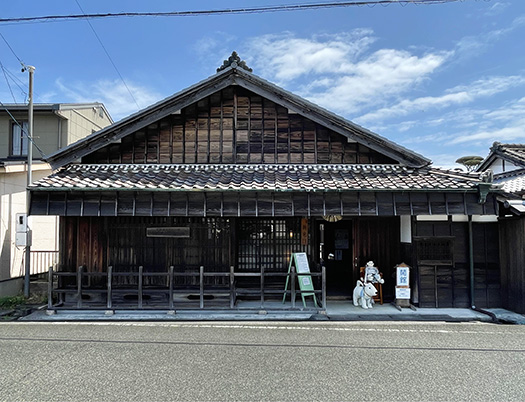
 で、写真はかれの生家の正面クローズアップと、その家の中から「表通り」を見た様子。
 この生家は「伊勢参り」の参詣道(伊勢街道)のど真ん前に位置していた。南に行けば伊勢神宮、北に行けば四日市・日永(ひなが)で東海道につながり、古来「おかげ参り」の旅人が行き交った場所とされる。この家は「松阪市指定史跡・松浦武四郎誕生地」として保存公開。きっと北海道からもその名号を慕って(笑)多くのひとが訪れているに違いない。
 この伊勢街道において武四郎13歳の頃「文政のおかげ参り」大ブームが惹起して、なんと年間400-500万人がこの生家の前の道を参詣に往来していたのだという。往復と考えれば年間1,000万人ほどの通行。人口については各種の調査資料があるが、おおむねこの当時は全国3,000万人程度。となれば日本全体人口の1/3程度がこの前を通行していたことになる。驚異的。
 こういう「環境性」が多感な人間にどのように影響を性格形成として与えるか、一種の実験に近い。この大ブームは日本社会の歴史的にも奇跡的な事象だったので、それが多感な少年にどう人格形成するかはきわめて興味深い。ヘタをすると病理のレベルで精神に影響した可能性が捨てられない。
 わたし自身とまた比べるのは恐縮だけれどわたしも少年期3-15歳くらいまで札幌市内最大の「自動車通行路・ハイウェイ」とされた「石山通」という幹線道路に面して暮らしていた。自転車乗り練習であやうく轢かれ死にそうな体験もしている。だけれど、その道路を見つめ続けて、じっとその南方のはるか先に「日本社会」があるのだと憧憬の念を育ててもいた。
 そのような一種、精神病理に似た「作用」が松浦武四郎さんに残影したのではと妄想している・・・。

●お知らせ
拙書「作家と住空間」幻冬舎から電子書籍で発刊
お求めはAmazonで。
https://amzn.asia/d/eUiv9yO

English version⬇

[Population: approx. 30 million; 5 million visitors annually for the Ise pilgrimage / Takashiro Matsuura, Hokkaido resident – 2]
The interrelationship between the environment and the human heart. How did the visual experience of a large influx of people, amounting to one-third of the total population, influence the formation of the spirit during a sensitive period? …

Now, let’s continue our series on the life of Matsura Takashiro, widely known as the person who named Hokkaido. Following yesterday’s introduction, this is the first installment of the series. We have already received a response from reader S, who asked a simple question: “How was it possible to travel around the country so extensively in those days?” That is exactly right. What was the historical context at that time?
 Matsuura was born on March 12, 1818, and died on February 10, 1888. He used the name “Hokkaido-jin” as his own pen name, but in terms of naming, he was the first Hokkaido-jin. As a distant descendant of his people and as someone who lives in this land, I feel a sense of karmic obligation to delve deeper into his life. I visited his birthplace with the understanding that he would forgive me for doing so.
The era is 134 years different, but our birthdays are only one day apart. I don’t know how scientific birthdays and zodiac signs are, but as fellow Pisces, I wonder if we share similar personality traits. Mr. Matsura lived a life deeply committed to “travel.” I share his desire to wander freely through regions where Japanese is spoken. Though, of course, the scale is entirely different (laughs).
The photos show a close-up of the front of his birthplace and the view of the “main street” from inside the house.
 This birthplace was located right in the middle of the pilgrimage route to Ise (Ise Kaido). To the south lies Ise Shrine, and to the north lies Yokkaichi and Hinaga, which connect to the Tokaido Road. It is said to have been a place where pilgrims on the “Okage Pilgrimage” have passed through since ancient times. This house is preserved and open to the public as the “Matsusaka City Designated Historic Site: Birthplace of Matsura Takashiro.” I’m sure many people from Hokkaido also visit, drawn by its reputation (laughs).
During Takashiro’s 13th year, the “Bunsei Pilgrimage” boom erupted along the Ise Kaido, with an astonishing 4 to 5 million people passing through the road in front of this birthplace annually. Considering round trips, this amounts to approximately 10 million people per year. Various survey data on population exist, but at that time, the national population was roughly 30 million. This means that approximately one-third of the entire Japanese population passed through this area. It is astonishing.
How such an “environmental factor” influences the character formation of a sensitive individual is akin to an experiment. This massive boom was a miraculous event in Japanese history, so how it shaped the personality of a sensitive young boy is extremely intriguing. It is possible that it may have had a pathological level of influence on the mind.
While it may be presumptuous to compare myself to others, I too lived along “Ishiyama-dori,” the largest “automobile thoroughfare/highway” in Sapporo, from the age of 3 to 15. I also had a close call where I nearly got hit by a car while practicing cycling. However, by staring at that road, I also nurtured a sense of longing for the “Japanese society” that lay far to the south.
I speculate that such a kind of “effect,” resembling a mental pathology, may have left a lingering impression on Matsura Takushiro…

●Notice
My book “Writers and Living Spaces” has been published as an e-book by Gentosha.
Available for purchase on Amazon.

【わたしのNEXTライフテーマ/昔人の生きざまを巡る旅】


 現代人は寿命が延びてきて、わたしの年代の男性平均寿命はだいたい82歳前後と言われます。一方の仕事上の「定年」概念はおおむね65歳。こうした「世間常識」は自由業的な立場で仕事してきた自分も尊重し意識してきた。人間はひとりで生きていけないので、当然多くの関わりもある。判断にはある責任も伴ってくる。
 そういうことで、一定の年齢範囲で「けじめ」を付けることが常識的。
 そうするとその後の「余生」のような時間が生じてくる。比較的元気で健康にある程度の余裕がある高齢者階層が出来てくる。これまでそう大きくは見なされなかった属性集団が出現してきている。経済構造的にも、こうした「層」は新たな人間属性として考えられる必要がある。
 そういうとき「人はいかに生きるべきか」みたいなテーマは浮かび上がってこざるを得ない。自分自身がそういった選択をしそのように行動して相対しているテーマ。
 そういうことに直面して考えたのが松尾芭蕉さんの「奥の細道」冒頭の句。
 「月日は百代の過客にして、行きかふ年もまた旅人なり」〜過ぎゆく月日は永遠の旅人のようで、巡り来る年もまた旅人のように、人生は旅のようなものだという解釈が一般的。
 そんな思いが沸いてきてわたし自身としては、その作品に触れ断片的とはいえ「人間性」理解を持っている昔人、「作家」と言われる人たちの事跡を探訪したいと思ってきた。事跡のなかでも当然ながら「どういう空間で生きていたか」という誰もが持つ素朴な興味を抱き、そのことを「縦軸」にして探訪をしてきています。その断章は「作家と住空間」幻冬舎刊で触れてみたのですが、いま現在もどんどん重層してきている。
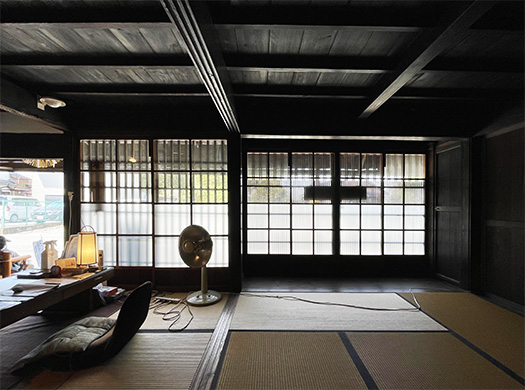
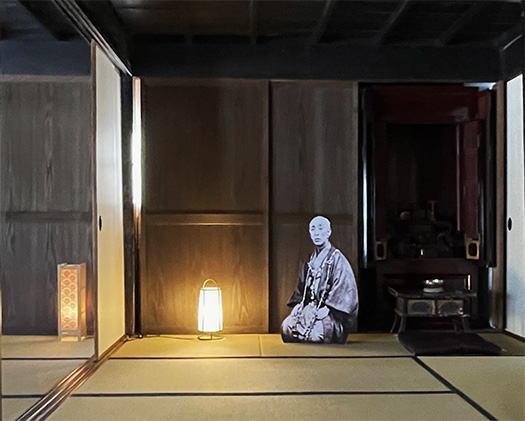
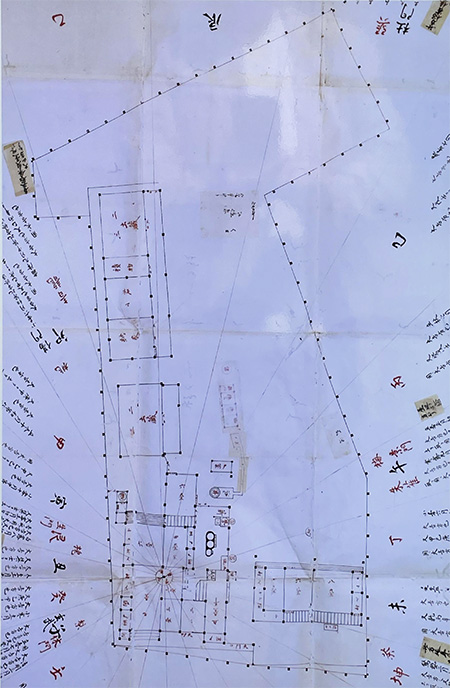
 自分自身のNEXT領域。まだまだ「途上」なのですが実に多くの思いが積層してきている。写真は「北海道」の名付け親・松浦武四郎の保存されている「生家」のワンシーンと、間取り図(家相図)。北海道各地でかれの事跡に遭遇するけれど、こういう経験も重なって松浦さんの生き様が生々しく想起されてくるのですね。
 資料類があふれてきているので、順不同ながら徐々に触れていきたいと思います。どうぞよろしく。
 
●お知らせ
拙書「作家と住空間」幻冬舎から電子書籍で発刊
お求めはAmazonで。
https://amzn.asia/d/eUiv9yO

English version⬇

[My NEXT Life Theme: A Journey Exploring the Lives of People from the Past]
Matsura Takashiro, the man who coined the name “Hokkaido.” In return, I’d like to see the house where you were born (laughs). My second life journey…

 Modern people are living longer, and the average life expectancy for men of my generation is said to be around 82 years old. On the other hand, the concept of “retirement age” in the workplace is generally 65 years old. I have respected and been conscious of these “social norms” even though I have worked as a freelancer. Humans cannot live alone, so naturally, we have many relationships. Judgment comes with a certain amount of responsibility.
For this reason, it is common sense to draw a line at a certain age range.
 This gives rise to a period of “leftover life.” A group of elderly people who are relatively healthy and have some financial leeway begins to emerge. This is a demographic group that has not been given much attention until now. From an economic structural perspective, this “layer” of society needs to be considered as a new human attribute.
At such times, the theme of “how one should live” inevitably comes to the forefront. This is a theme that I myself have faced through my own choices and actions.
 It was in the face of such considerations that Matsuo Basho’s opening verse from “The Narrow Road to the Deep North” came to mind.
“The days and months are eternal travelers, and the years that pass are also travelers.”—The passing days and months are like eternal travelers, and the years that come around are also like travelers; life is like a journey. This interpretation is generally accepted.
 With such thoughts arising, I have come to want to explore the lives of those who, though fragmentary, have a understanding of “humanity” through their works, the so-called ‘writers’ of the past. Among their lives, I naturally harbor a simple curiosity about “what kind of space they lived in,” and I have been exploring this as the “vertical axis.” I touched on this in a chapter titled “Writers and Living Spaces” published by Gentosha, but it continues to grow in complexity even now.
My own “next domain.” Though it is still very much a work in progress, a great many thoughts have accumulated. The photo shows a scene from the preserved “birthplace” of Matsura Takashiro, the man who named Hokkaido, along with a floor plan (house layout diagram). I encounter traces of his life throughout Hokkaido, and such experiences vividly bring to mind Matsura’s way of life.
With an abundance of materials available, I plan to gradually explore them in no particular order. Please stay tuned.

●Announcement
My book “Writers and Living Spaces” has been published as an e-book by Gentosha.
Available for purchase on Amazon.

【味と建築〜「味わい方」の郷愁訴求スタイル】


 みなさんは外食するとき、どんな基準で店舗を選択するでしょうか?
 建築の大きな領域として店舗建築、それも食事のための店舗ってそのアピールについて多様な価値観が存在している。わたしなど実際の食味とはまったく別にそういう興味分野が大きくなっている。
 昨日はカミさんと札幌近郊の「道の駅」長沼で周辺の農家から出荷されている野菜類を購入するドライブに出ておりました。最近の高温ぶりでそれが野菜類に「大型化」をもたらせているようで、巨大なナスがとくに目に付いていた。気候が反映した野菜類の様子をたっぷりと楽しんでいました。
 わたしは3歳まで農家風景の中で育っていた人間なので、根っからの都会人であるカミさんとは違って農家の田畑風景に深く郷愁を呼び起こされる。自然環境が生み出す温湿度のなかでその土地の持っている地力を生かして、どういう作物ならば適合するか、という農家の試行錯誤が集約されていて、経済面と重ね合わせて見るのが好きなのです。
 しかしカミさんはこういう風景にはまったく無関心。「海辺の景色が片方にあればね・・・」。
 まぁ、育った環境によってこういった相違はあるのでしょうね。
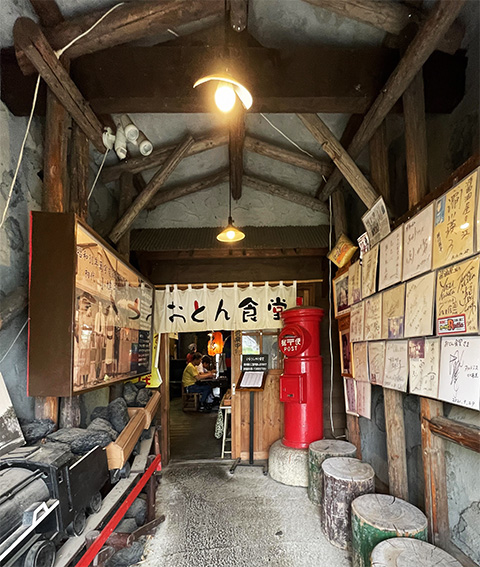
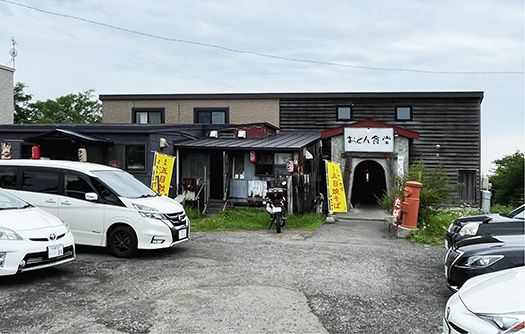
 で、きのうは昼食はジンギスカンのおいしい店で食べたあと、ふと写真のような郊外店の外観風景に誘われて、満腹だったのに、その店舗デザインに興味を惹かれて「どうしようかなぁ」的な客としてオモテだけ参観していた。
 この店の「萬字炭坑」という名前はわたしの育った栗沢町での近隣集落であり父母たちの会話に頻出していた耳覚えのある地名。炭坑という言い方ではなく「炭山」だったなぁと思いつつ、その店舗写真に見入っていた。
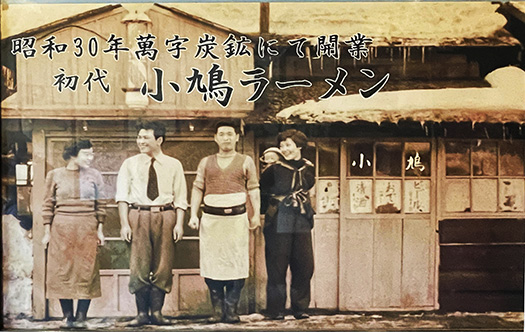
 いま現在はそこから移転して、交通量の多い高速道路入口への幹線道路に面した位置ですが、店舗デザインとしては旧所在地での雰囲気を再生させている様子。初代の店主の方とそのご家族とおぼしき写真がエントランスに誇らしく飾ってあって、微笑ましい。
 こういう「タイムスリップ」感にイマドキの顧客は反応するように思われる。

 見ていると駐車場には立派なクルマがびっしり。「スジの良い客層」というのがカミさんの見立て。なかなか鋭い観察力。たしかにこの写真で訴求されるようなノスタルジーは、現代人に「刺さる」。残念ながらわたしはラーメンについては自分で調理する一択で外食はムリなのですが、しかし、建築と味覚についての「感受性」は深く根がらみのように訴求されてきておりました。

●お知らせ
拙書「作家と住空間」幻冬舎から電子書籍で発刊
お求めはAmazonで。
https://amzn.asia/d/eUiv9yO

English version⬇

[Taste and Architecture: Nostalgic Appeal of “How to Enjoy Food”]
Restaurants interact with customers through their design. The appeal of time travel and nostalgia is closely related to taste. The deep relationship between architecture and humans. …

 When you eat out, what criteria do you use to choose a restaurant?
As a major field of architecture, restaurant architecture, especially for dining establishments, has a wide range of values in terms of its appeal. For me, I have become very interested in this field, quite apart from the actual taste of the food.
 Yesterday, my wife and I went on a drive to the “Michi-no-Eki” (roadside station) in Nagano, near Sapporo, to purchase vegetables from local farmers. Due to the recent high temperatures, the vegetables have apparently grown larger, with giant eggplants particularly catching my eye. We thoroughly enjoyed observing how the climate has influenced the appearance of the vegetables.
 I grew up in a farming environment until I was three years old, so unlike my wife, who is a true city dweller, I feel a deep sense of nostalgia for the sight of farmland. I enjoy observing how farmers experiment with what crops are suitable for the land, utilizing its natural fertility within the temperature and humidity created by the natural environment, and considering this in conjunction with economic factors.
 However, my wife is completely indifferent to such scenery. “If there were a seaside view on one side…”
Well, such differences are probably due to the environments in which we were raised.
Yesterday, after having lunch at a delicious lamb barbecue restaurant, I was drawn to the suburban store’s exterior scenery, as seen in the photo, and despite being full, I was intrigued by the store’s design and ended up just peeking in as a customer, thinking, “What should I do?”
 The store’s name, “Manji Coal Mine,” is a familiar place name from the neighboring village in Kurisawa Town where I grew up, often mentioned in my parents’ conversations. I thought to myself, “It was called ‘coal mountain’ instead of ‘coal mine,’” as I stared at the store photo.
 Currently, the store has moved to a location along a major road leading to a busy highway entrance, but the store design seems to recreate the atmosphere of its former location. A photo of the first-generation owner and their family is proudly displayed at the entrance, which is heartwarming.
Such a “time-travel” feel seems to resonate with modern customers.

 Looking at the parking lot, it is filled with impressive cars. My wife’s assessment is that they are “high-class customers.” She has quite keen observation skills. Certainly, the nostalgia conveyed in this photo resonates with modern people. Unfortunately, when it comes to ramen, I can only cook it myself and cannot eat out, but my “sensitivity” to architecture and taste has been deeply rooted in me.

●Announcement
My book “Writers and Living Spaces” has been published as an e-book by Gentosha.
Available for purchase on Amazon.

【40度超え(!)ここ数日の札幌の体感気温】


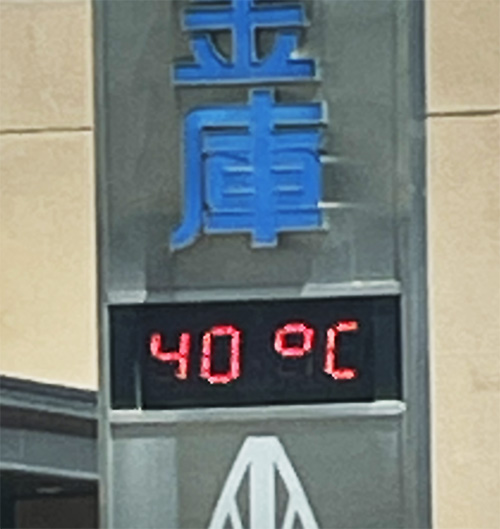
 写真は札幌市西区のわが家から数分の場所にある金融機関の外部に設置の「温度計」。今週23日の昼頃にクルマで外出していたときに驚いて、クルマを停車させて撮影したもの。
 最近の猛暑ぶりには呆れていますが、さすがに北海道なのでまぁ他地域ほどまでは、・・・と思っていたのですが、そういう既成概念をあっさりと突破してくれているではありませんか。40度って、たぶんわたしの73年間の北海道−関東−東北仙台と連続している居住体験としても、まったく初体験。
 わが家はコンクリートブロック+木造の混構造・外断熱仕様で外気温の影響からは比較的自由ですが、事務所兼用でもあり、関連会社も入居している建物。さらに大型の複写機装置などもあることから、エアコンも合計6箇所設置し適時運転しているので、室内気候は安定しております。そういった「備え」があるので、健康に過ごしていますが、公共の広報では熱中症対策として冷房の完備している公的建築に「避難」することを勧奨しているようです。
 真冬の寒さが主要な建築性能テーマの北海道ですが、ことしの盛夏の気温上昇はすごい。
 みなさま、ご自愛ください。
 ・・・というなか、高校の同級生女性の訃報が舞い込んできていた。最近は仕事上の面談機会などもほとんどないので、ひさしぶりに正装、それも黒服を着込んで葬儀参列。僧侶の読経って以前はただただ環境音として聞いていたのですが、瞠目して聞いていると経文も徐々に「意味合い」が伝わってくる実感。
 おかげさまで高校の同期は仲間意識が強く、また彼女のおおらかな性格があって多くの同期と顔を合わせることが出来ました。それぞれのいま現在を確認。よく暑さ寒さの極限時期とひとのいのちの結界性がなぞらえられますが、そういうことなのかも知れません。
 徐々に「戦列を離れる」同時代人を送ることが増え、身近に輪廻が意識されてくる。
 さまざまな思いが去来してくる機縁。ただ目をつむり手を合わせておりました。 合掌。
 
●お知らせ
拙書「作家と住空間」幻冬舎から電子書籍で発刊
お求めはAmazonで。
https://amzn.asia/d/eUiv9yO

English version⬇

[Over 40 degrees Celsius (!) The perceived temperature in Sapporo over the past few days]
The intense heat of midsummer challenges the stereotypical perception of Hokkaido. Amidst the impermanence of life, I received news of the death of a friend of the same age. I calmly bowed my head and clasped my hands together. …

 The photo shows a thermometer installed outside a financial institution located a few minutes from my home in Nishi Ward, Sapporo. I was surprised when I saw it while driving around noon on the 23rd of this week, so I stopped the car and took a picture.
I am amazed by the recent heat wave, but I thought that since this is Hokkaido, it wouldn’t be as hot as other regions… but it has easily surpassed my preconceived notions. 40 degrees Celsius is probably a first for me in my 73 years of living in Hokkaido, Kanto, and Sendai in Tohoku.
My home is a mixed-structure building with concrete blocks and wood, and it has exterior insulation, so it is relatively unaffected by outside temperatures. However, it is also used as an office, and there are related companies in the building. Additionally, there are large photocopiers and other equipment, so we have six air conditioners installed and run them as needed to maintain a stable indoor climate. Thanks to these “preparations,” we are able to stay healthy, but public announcements are recommending that people seek refuge in public buildings with air conditioning as a heatstroke prevention measure.
In Hokkaido, where extreme cold in winter is the primary focus of building performance, this summer’s temperature rise has been remarkable.
Please take care of yourselves.
…In the midst of this, I received the news of the passing of a female classmate from high school. Since I rarely have work-related meetings these days, I dressed formally in black attire for the funeral. Previously, I had only heard the monks’ chanting as background noise, but as I listened intently, I gradually began to grasp the meaning of the sutras.
Thanks to the strong sense of camaraderie among my high school classmates and her generous personality, I was able to reunite with many of them. We exchanged updates on our current lives. It is often said that the extremes of heat and cold are akin to the boundaries of human life, and perhaps that is the case.
As I increasingly bid farewell to contemporaries who have “left the ranks,” the cycle of reincarnation becomes more tangible.
Various thoughts come to mind. I simply closed my eyes and joined my hands in prayer. Gassho.
 
●Announcement
My book, “Writers and Living Spaces,” has been published as an e-book by Gentosha.
Available on Amazon.

【地形整形できた駐車場/玉砂利敷き込み完了】


 日本史の中で、1905年から1945年までというきわめて短時間ながら日本領となっていた樺太との人流・物流の拠点となっていた稚内。その地域性と樺太との社会的動線の掘り起こしは非常に重要な示唆を現代にも与えてくれる。わたし自身、北海道人であるのにこうした視点について気付くことがなさすぎた。
 列島島嶼部でのさまざまな「歴史経緯」も同時に蘇ってくるけれど、戦後80年を経過してきてこうした視点についての探究は、現代社会に意義があると思えてきています。折から参議院選挙が行われ、既存体制への大きな変革の民意が示されているなかでこういう視点は必要性が高まってくるとも思われる。大量の記録を整理してきてそういう実感が非常に大きい。まぁ、じっくりと時間を掛けて情報内容を整理して取り組みたい。ブログでのシリーズと言うよりも、ひとつの探究領域として取り組んでみたいと思っています。
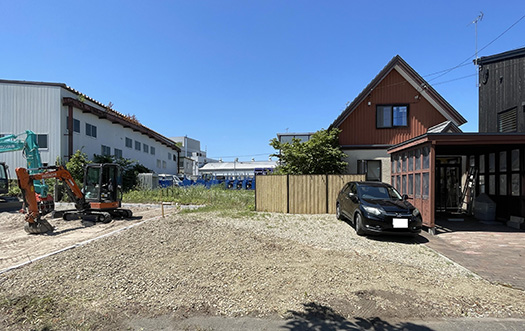
 さて、そういうなかで同時並行していたのが亡き義父が取り組んでいた土地の「不整形」の是正。昨年来の「交渉」が最終的に決着して土地の交換が実現。その該当部について隣地側の土地利用の再計画が工事着工されてきています。国道36号線と清田区里塚ー新札幌間の幹線道路の交差点という市内有数の交通要衝としての立地環境から、周辺は大きく「商業地利用」が進展してきている。道央高速道・北広島ICにもほど近く、三井アウトレットパーク・COSTCOなどの自家用車利用が前提の大規模店舗が集中してきている。
 そういうワンパートに位置しているので、とりあえず「地形〜じがた」を整形することは、非常に重要な基礎的な要件。当面すぐには利用計画はありませんが、まずはわが家の家族全員が利用できるように入口間口を15m幅で確保でき駐車場の整理が必要になっていたものが昨日、玉砂利による整地作業が完了できた。
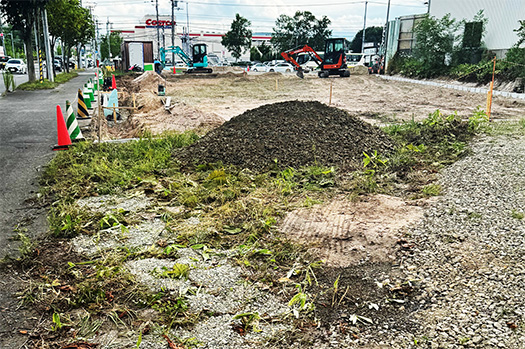
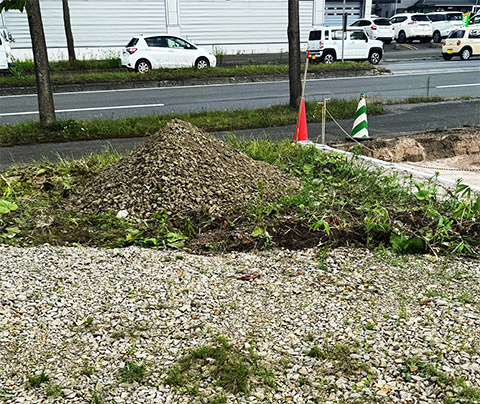
 昨年中に整地していた部分(上の写真の奥側3角形)に対して手前側の3角形敷地に玉砂利敷き込み。写真のようにクルマが5−6台、余裕を持って駐車できるようになった。土木DIY作業を覚悟していたけれど、隣地の工事関係者のご好意で工事重機利用によって処理出来たのです。
 今後じっくりと時間を掛けて、亡き義父の思いをどのように進展させられるか、取り組んでみたい。

●お知らせ
拙書「作家と住空間」幻冬舎から電子書籍で発刊
お求めはAmazonで。
https://amzn.asia/d/eUiv9yO

English version⬇

[Parking lot terrain leveling complete / gravel paving complete]
Close to the expressway interchange. Located in a transportation hub in Kiyota Ward, Sapporo City. Site preparation and leveling work complete. We hope to optimize utilization efficiency. …

 Wakkanai served as a hub for human and material flows between Japan and Sakhalin, which was under Japanese control for a very short period from 1905 to 1945. Exploring the regional characteristics and social connections between Wakkanai and Sakhalin offers significant insights for the present day. As a native of Hokkaido, I had not previously considered this perspective.
 Various “historical circumstances” in the archipelago also come to mind, but after 80 years since the end of the war, I feel that exploring such perspectives is meaningful for modern society. With the Upper House election underway and the public expressing a strong desire for major changes to the existing system, I believe that such perspectives are becoming increasingly necessary. After organizing a large amount of records, I feel this very strongly. Well, I would like to take my time to organize the information and work on it. Rather than a series of blog posts, I would like to approach this as a single area of research.
Meanwhile, another project I have been working on in parallel is the correction of the “irregular shape” of the land that my late father-in-law was working on. After a year of negotiations, the land exchange was finally settled, and construction has begun on the re-planning of the neighboring land use for the relevant area. Given its location at the intersection of National Route 36 and the main road between Seika Ward Satotsuka and New Sapporo—one of the city’s major transportation hubs—the surrounding area has seen significant development toward commercial use. It is also close to the Hokkaido Expressway and Kitahiroshima IC, with large-scale stores like Mitsui Outlet Park and Costco, which rely on private vehicle use, clustering in the area.
 Given this strategic location, shaping the terrain is a crucial foundational requirement. Although there are no immediate plans for use, we first needed to ensure a 15-meter-wide entrance for family use and organize the parking lot. Yesterday, the gravel grading work was completed.
The gravel was laid on the triangular plot in front of the area that was graded last year (the triangular area in the back of the photo above). As shown in the photo, the area now accommodates 5–6 cars with ample space. Although I had prepared for DIY civil engineering work, the kindness of construction workers from the neighboring site allowed us to complete the work using construction machinery.
Going forward, I aim to carefully consider how to advance the vision of my late father-in-law over time.

●Notice
My book “Writers and Living Spaces” has been published as an e-book by Gentosha.
Available for purchase on Amazon.

【稚内−樺太航路/戦前期の起点「稚内桟橋駅」】


 責任を一切無視して居座ろうとする権力者をめぐっての参議院選挙後の混乱状況。これは予測不能な事態が発生する可能性も出てきていますね。一方で、わが家2.0の隣地での工事進捗とその伴走的な事態対応などに追われております。こちらは楽しい事態の進行。悲喜こもごも。
 ということですが、稚内ー樺太についての不勉強だった戦前〜戦後直後時期の交通と建築の探訪シリーズに復帰したいと思います。
 稚内で歴史的写真類を情報収集し学習させていただくことで「罪滅ぼし」的に、埋もれていた北海道の歴史に敬意を払う時間を過ごさせていただいています。たいへん喜ばしい。そして関連してわたしの家系のなかで樺太の戦場から復員できた親類の消息なども再確認することができた。ある年長の従兄弟は、終戦を樺太の日露国境線付近で迎え、そこから「密航」で稚内着岸。鉄道を乗り継いで当時のわが家・空知郡栗沢町に「復員」してきていた。わたしが生まれる7年前のことだけれど、点と線が繋がってきて生々しい実感として迫ってくる。
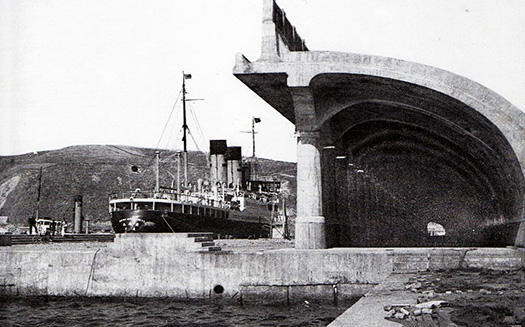
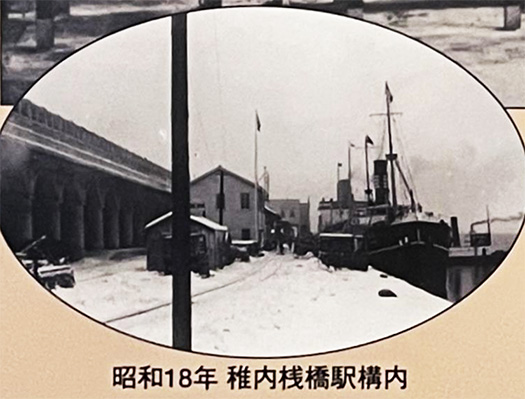
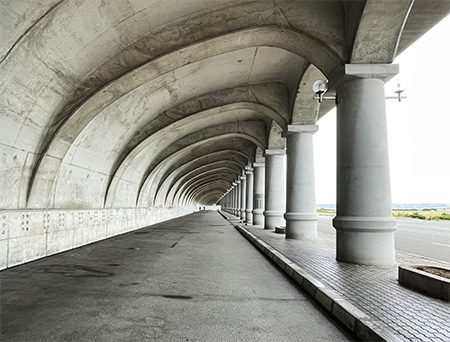
 で、やはり住宅とか建築とかにメイン領域を定めていた人間としては、可視化された情報をさがしてその歴史時間の実像を掘り起こしたくなった。上の写真は樺太への航路の稚内でのポイント「稚内桟橋駅」施設の状況。
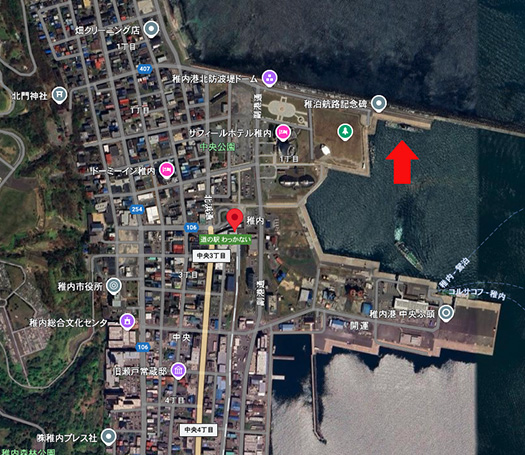
 いまは遺産的建造物と思える防波堤ドームだけれど、このように実用されていた。(Wikki情報転用)わかりやすい。下の写真は現在のGoogle Mapでの地点把握と上の写真の反対側・陸地側からの目線。
 大量に収集してきた写真情報と現稚内駅周辺での「体感情報」を整理整頓しながら、これらの情報を復元してみた次第ですが、時間を交叉させた情報の掘り起こしってまことにオモシロい。そしてこういう施設群を戦争という大惨禍のなか「密航」通過してきた近縁者の肉声文章をも重ねると、感慨が深い。つい80年ほど前に、わたしたち社会はこのような時空を体験をしていたのですね。

●お知らせ
拙書「作家と住空間」幻冬舎から電子書籍で発刊
お求めはAmazonで。
https://amzn.asia/d/eUiv9yO

English version⬇

Wakkanai-Karafuto Shipping Route / Wakkanai Pier Station, the starting point of the prewar period]
The transportation route between Karafuto and Wakkanai, which is connected to our “flesh and blood” as Hokkaido people. The realities of time and space are reconstructed with vivid photographic information. ・・・・・・.

 The chaotic situation after the Upper House election regarding those in power who are trying to stay in office with total disregard for their responsibilities. This is starting to create the possibility of an unpredictable situation. On the other hand, we are busy with the progress of the construction work at the lot next to our house 2.0 and its accompanying situation. This one is a pleasant progression of events. It’s a sad and joyful time.
 I would like to return to the series of exploration of transportation and architecture in the prewar to immediately postwar period, which I have been uninformed about Wakkanai-Kabaruto.
 By gathering information and learning from historical photographs in Wakkanai, I have been able to spend time paying respect to Hokkaido’s history, which was buried in the past, as if to “atone” for my sins. It is a great pleasure. In addition, I have been able to reconfirm the whereabouts of relatives in my family who were demobilized from the battlefields of Sakhalin. One of my older cousins came to the end of the war near the Russo-Japanese border in Karafuto, and “smuggled” himself ashore in Wakkanai. He had been “demobilized” to his home town of Kurisawa, Sorachi-gun, after taking a train. It was seven years before I was born, but the dots and lines are now connected, and I can feel it vividly.
 As a person whose main field of work is housing and architecture, I wanted to search for visualized information and dig up the actual image of that historical time. The photo above shows the “Wakkanai Pier Station” facility, a point in Wakkanai on the route to Sakhalin Island.
 The breakwater dome now seems to be a heritage structure, but it was used in this way. (Adapted from Wikki information) It is easy to understand. The photo below shows the current Google Map location and the view from the opposite side of the above photo.
 I have restored this information by organizing the large amount of photographic information I have collected and the “sensory information” from the area around the current Wakkanai Station, and it is very interesting to dig up information that crosses time. And when I lay on top of it the voices of those who “smuggled” their relatives through these facilities in the midst of the catastrophe of war, I am deeply moved. We, as a society, experienced this kind of time and space just 80 years ago.

Notice
My book “The Writer and the Living Space” is published by Gentosha as an e-book.
Please visit Amazon to purchase it.

【工事開始の隣地からわが家2.0へ砂利おすそ分け(笑)】


さて稚内探訪シリーズでわたしとして初めて意識することになった北方樺太のことですが、明治以降・近代国家時代になって日本社会に大きな「影響」があったのは北方のロシア・ソ連国家との強い緊張関係。
 敗戦から数日後、ソ連国家は日本領の南樺太に侵略してきた。その後、日本も彼の地の領有権を公式に放棄し現在に至っている。国境に関わることなので、慎重にならざるを得ないけれど、戦後の日本社会はこうしたことがらからなるべく目を背けてきていることも事実。わたしのような典型的な戦後世代人間はそうした「常識」の世界で生きてきた。さて、今回の参院選の結果はそのことに変化を生じさせるのだろうか。
 ・・・ということですが、身の回りでは同時並行で札幌市清田区のわが家2.0敷地についての環境変化が進行してきております。一所懸命、という土地を巡ることがらは古代日本社会の成立以降、その境界について強い関心を持ち続けてきたのが日本人の「本然」。
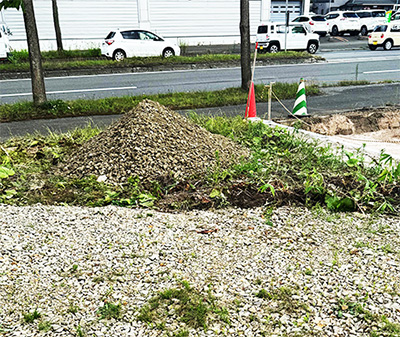
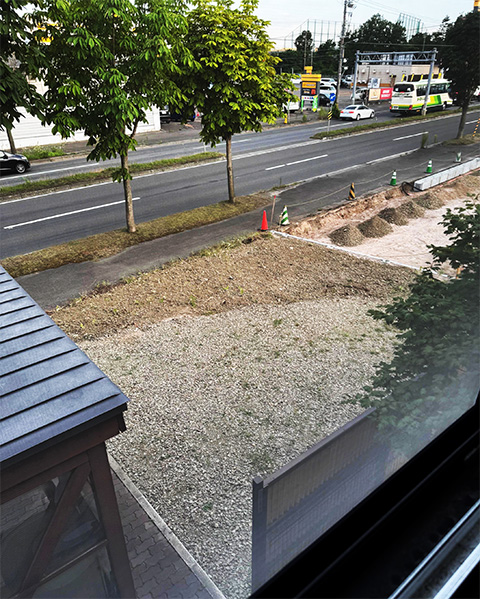
 わが家の場合、隣地境界が非常に「変形」だったので隣地の利用変化のタイミングに合わせ所有者の全国企業と対話をこころみて、無事交渉が成立。写真はそのあらたな「領域」のいまの様子。これまでの隣地域(土面露出箇所)には樹木が数本あったのけれど、先方で伐採してくれてその場所は野草が繁茂状況。
 で、当面は5-6台程度の駐車場として活用するため若干DIY的に整地しようかと考えていたら、工事に入っていた隣地側の工事担当者から、工事用砂利を「おすそ分け」いただいた(笑)。まぁきわめて平和友好的な関係を維持していることもあって、カミさんの交渉力で実現。
 本格的には掘り込んで整地して砂利入れとなるところでしょうが、当面利用計画は定まってもいないので、シロウトDIYで砂利を敷き詰める予定。折からの高温ですが、さらなる健康増進を兼ねて、本日、整地作業に取り組みたいと思っています。
 樺太での日露「国境交渉」取材記事執筆・掲載中ですが、本日はわが家の国境状況の話題でした(笑)。あしたは樺太・稚内に復帰予定。よろしく。

●お知らせ
拙書「作家と住空間」幻冬舎から電子書籍で発刊
お求めはAmazonで。
https://amzn.asia/d/eUiv9yO

English version⬇

[Gravel sharing from the neighboring land where construction has started to our house 2.0 (laugh)]
It is in the middle of the Wakkanai – Karafuto article where the history of the Japan-Russia border is stacked, but a peaceful situation also occurred at the “border” of the land next to our house (laugh). Thankfully, we received it. Thankfully received.

Now, as for Northern Sakhalin, which I became aware of for the first time in the Wakkanai exploration series, a major “influence” on Japanese society after the Meiji period and in the era of the modern state was the strong tension with the Russian and Soviet states in the north.
 A few days after the defeat in the war, the Soviet state invaded the Japanese territory of southern Sakhalin. Subsequently, Japan also officially renounced its territorial rights to his land, and this has continued to the present day. Although we must be cautious when dealing with border issues, it is also true that postwar Japanese society has avoided these issues as much as possible. Typical postwar generation people like myself have lived in such a world of “common sense. I wonder if the results of this year’s Upper House election will change that.
 However, at the same time, the environment of our house 2.0 site in Kiyota-ku, Sapporo, is changing. Since the establishment of ancient Japanese society, Japanese people have been “naturally” interested in the boundary of the land.
 In the case of our house, the boundary of the neighboring land was very “deformed,” so we tried to have a dialogue with the owner’s nationwide company in accordance with the timing of the change of use of the neighboring land, and we successfully concluded negotiations. The photo shows the new “area” as it is now. There were a few trees on the adjacent land (exposed soil), but they cut them down and the area is now overgrown with wildflowers.
 I was thinking of doing some DIY land preparation in order to use it as a parking lot for about 5-6 cars for the time being, when I received some gravel from a construction worker on the neighbor’s side who was working on the site (laugh). (Laughs) Since we have maintained a very peaceful and friendly relationship, Kami’s bargaining power made it possible.
 In earnest, we will probably dig in, clear the site, and put in gravel, but since we have no definite plan for its use for the time being, we plan to spread the gravel as a DIY project by a novice. It is high temperature from time to time, but I would like to tackle the land clearing work today with the aim of further improving my health.
 I am currently writing and publishing an article covering the Japan-Russia “border negotiations” in Karafuto, but today I was talking about the border situation at our home (laughs). Tomorrow I will be back in Wakkanai, Sakhalin. Best regards.

I am currently writing an article on the Japan-Russia “border negotiations” in Karafuto, and today I am talking about our home border.

【戦前と戦後/日本人の意識変容 北海道から樺太】


 「日本列島の最北」というようにわたしたち戦後の日本人は稚内への意識が形成されているけれど、この地で封印されている地域史を実地学習すると、いかにここが樺太開拓と密接に関係した地域であるかがわかってくる。きのうは9人の女子が樺太の地で終戦後5日の時点で無惨な最期を遂げたことに触れたけれど、そこからも北海道と樺太の深いつながりが地低音のようにこころに響き渡ってくる。
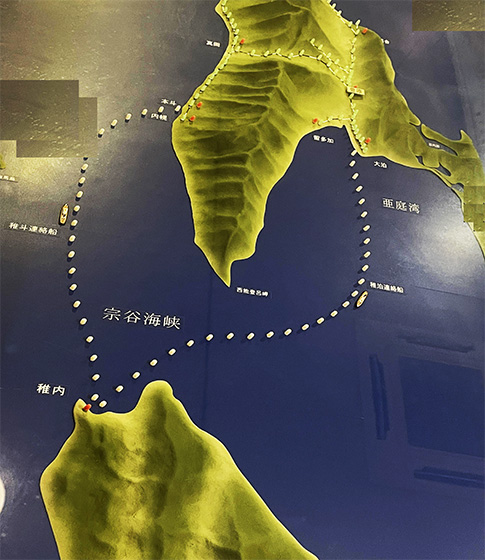
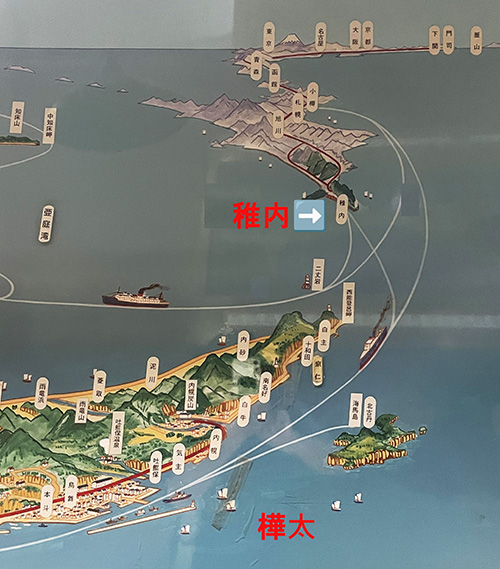
 日本最北と稚内を認識しているけれど戦前の日本人にとって稚内は、樺太開発開拓の最前線連絡港。明治維新の頃の函館-青森のような認識が一般的だったのだと。とくに稚内は冬期には流氷が接岸することで船の航路が影響を受けるオホーツク海側の港町とは違って、北海道最北だけれど日本海側に面していて「不凍港」として貴重な存在だったのだ。戦前には総人口40万人を超えたとされる樺太とその領土経営は、政治・軍事・経済のすべてにおいて北海道・稚内と不可分に結びついていたのだ。ちなみに現在の稚内人口は約3万人ほど。こういう樺太との経済社会関係を想像すれば、そうかと、さまざまに気付けることがある。
 現在青森は青函連絡船が廃止されたのでその港湾としてのにぎわいは減少してきているけれど、函館にはまだそういう国土・国民の流動拠点の文化が色濃く残っている、稚内はそういった機能を本来的に宿命づけられた都市なのだと言える。その建築的遺構がこちら。2番目の写真はいまも残る稚内を象徴する建築である「防波ドーム」だけれど、これは稚内から樺太への航路の駅舎(現在は解体されている)への通路を波濤から守る役割のために造作されたもの。
 地理的な位置関係でも稚内までの鉄道駅舎から徒歩でも10数分でたどりつける港湾施設だった。戦前社会までの活発な「人流・物流」の機能が容易に想像できる。わたしたち戦後社会はこうした「人間社会文化」を忘却し続けているのだと深く驚かされる。というか、それはあり得べき必然でもある。用はすべてを決定づける。
 稚内の都市の基底にこういう港湾人流機能文化は根深く眠っている。

●お知らせ
拙書「作家と住空間」幻冬舎から電子書籍で発刊
お求めはAmazonで。
https://amzn.asia/d/eUiv9yO

English version⬇

Prewar and Postwar / Transformation of Japanese Consciousness Hokkaido to Karafuto]
Wakkanai, an ice-free port city straddling the Soya Strait, which is easier to navigate than the Tsugaru Strait. Karafuto is the front line of new development of the Japanese people. Wakkanai is the starting point of the main artery. The city of Wakkanai is the starting point of a major artery for the new development of the Japanese people.

 We postwar Japanese have formed a consciousness of Wakkanai as “the northernmost of the Japanese archipelago.” However, when we learn about the local history sealed off in Wakkanai, we realize how closely connected this area was to the development of Sakhalin. Yesterday I mentioned that nine girls died tragically in Sakhalin five days after the end of the war, and the deep connection between Hokkaido and Sakhalin resonates in our hearts like a low earth tone.
 Although Wakkanai is recognized as the northernmost point in Japan, for prewar Japanese, Wakkanai was a frontline port for the development of Sakhalin. It is said that the perception of Wakkanai was similar to that of Hakodate-Aomori at the time of the Meiji Restoration. In particular, unlike port towns on the Sea of Okhotsk, which were affected by drift ice in winter, Wakkanai faced the Sea of Japan even though it was the northernmost port in Hokkaido, and was valuable as an “ice-free port. Karafuto, with a total population of over 400,000 before the war, and its territorial management were inseparably linked to Wakkanai, Hokkaido, in all aspects of politics, military affairs, and economics. Incidentally, the current population of Wakkanai is about 30,000. If we imagine this kind of economic and social relationship with Karafuto, we can notice many things.
 Today, Aomori’s bustle as a port has decreased since the Aomori Hakodate ferry was abolished, but Hakodate still retains a strong culture of being a hub for the flow of land and people, and Wakkanai is a city inherently destined for such functions. The second photo shows the “wave breaker dome,” a symbolic structure that still remains in Wakkanai, which was built to protect the passageway to the station building (now demolished) for the route from Wakkanai to Sakhalin from the waves.
 In terms of geographical location, it was a port facility that could be reached in 10 or so minutes on foot from the railroad station building to Wakkanai. It is easy to imagine the function of active “human flow and logistics” in prewar society. I am deeply surprised that our postwar society continues to forget such “human social culture. Or rather, it is an inevitability. Usage determines everything.
 This kind of culture of the port human flow function is deeply rooted in the foundation of Wakkanai city.

I am now publishing my book “Writers and Residential Space” as an e-book from Gentosha.
Please visit Amazon.com for more information

【国境の街・稚内「氷雪の門」で樺太同胞の記録に祈る】


 札幌から稚内は遠い。わたしは人生時間で札幌から小1時間ほどの空知郡栗沢町から札幌に3歳で移転し、一時期8年の東京在住を経て、その後ずっと札幌暮らし。仕事生活では地域住宅雑誌を刊行し続けてきたけれど、稚内の取材機会はなかった。稚内は札幌から316km。その半分距離の旭川までは通常的なビジネス圏だったけれど、そこから北方にはほとんど縁がなかった。
 住宅関連ビジネスということでどうしても人口集中地域が中心にならざるを得ない。仕事の志向性も東北や関東、関西といった地域への「高断熱高気密」住宅技術の波及に合わせたビジネス展開という流れ。
 今回、仕事生活からやや離れての夫婦旅。約10年ぶりに稚内を訪れ、はじめて地域史など博物館施設を探訪出来た。こうした歴史中心行脚は本州以南地域を中心にながく行ってきたけれど、まことに灯台元暗し。はじめてこの「北方の街」を旅した次第。そして知れば知るほど対ロシア・ソ連との「国境の街」であることに深く打たれる。
 同じ北海道人でありながらこうした地域史の重大部分にボーッとしていたことに無念と恥ずかしさを覚えた。
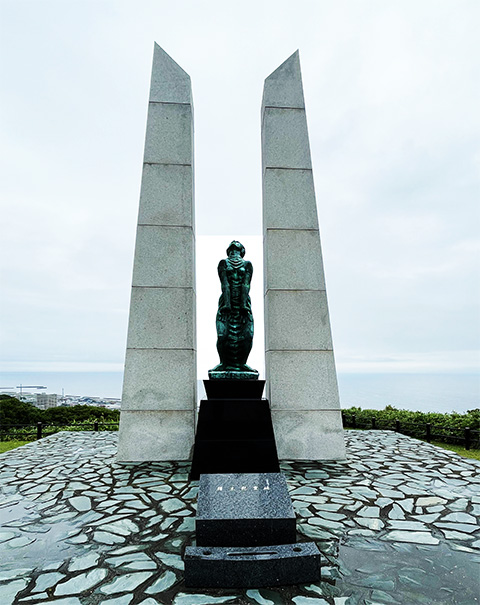
 写真は、稚内の街を見晴らす高台に位置する「氷雪の門」銅像。卒業した高校の大先輩の彫刻家・本郷新氏の力作で樺太での戦前期・戦後直後の動乱期についての記録表現。以下に碑文要約。
 〜「氷雪の門」 人びとはこの地から樺太に渡り樺太からここに帰った。戦後はその門もかたく鎖された。それから18年、望郷の念止みがたく樺太で亡くなった多くの同胞の霊を慰めるべく、肉眼で樺太の見える所縁の地の丘に(中略)祈念碑を造る。氷と雪のなかできびしく生き抜いた人びとを象徴する女人像(中略)が彫刻家・本郷新先生の力作で出来上がった。この祈念碑を「氷雪の門」と命名した。 昭和三十八年八月十五日 稚内市長 浜中辰雄 〜
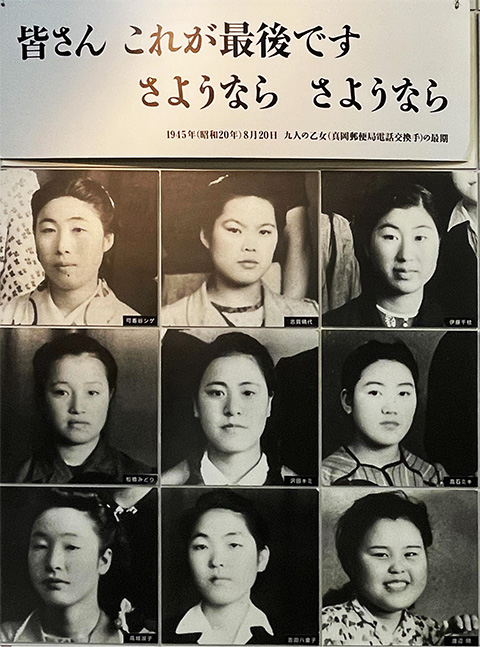
 そして次の写真は、戦争終結5日後ソ連軍によって侵略攻撃された樺太・真岡の町で、電話交換はもっとも大事な仕事と当時の「緊急疎開」にも応じず職務に当たっていて無惨に「自決」した、9人の女性たちの北方記念館での展示写真。
 こういう生々しい「歴史記録」にこころが立ち止まってしまっていた。・・・

●お知らせ
拙書「作家と住空間」幻冬舎から電子書籍で発刊
お求めはAmazonで。
https://amzn.asia/d/eUiv9yO

English version⬇

[Praying for the record of Sakhalin compatriots in the border city of Wakkanai “Ice and Snow Gate”]
I was exposed to the local history of Wakkanai-Karafuto, which I had never learned in my life time. I was made to feel a deep sense of lamentation. Regret and shame. …

 Wakkanai is a long way from Sapporo. I moved to Sapporo at the age of three from Kurisawa-cho, Sorachi-gun, about an hour from Sapporo in my life time, and after living in Tokyo for eight years, I have lived in Sapporo ever since. In my professional life, I have been publishing a local housing magazine, but I have never had the opportunity to cover Wakkanai. Wakkanai is 316 km from Sapporo, and although it is within the normal business zone up to Asahikawa, which is half that distance, I have had little contact with the northern part of the country.
 As a housing-related business, we had no choice but to focus on populated areas. The business orientation of the company is to develop business in line with the spread of “highly insulated and airtight” housing technology to the Tohoku, Kanto, and Kansai regions.
 This time, the couple took a trip to Wakkanai for the first time in about 10 years. We visited Wakkanai for the first time in about 10 years, and were able to explore the local history and other museum facilities for the first time. I have been making such history-centered trips for a long time, mainly to the south of Honshu, but it is truly dark at the lighthouse. This was my first trip to this “northern city. The more I learned about it, the more I was struck by the fact that it is a “border town” with Russia and the Soviet Union.
 I felt regret and embarrassment that I had been unaware of such an important part of the region’s history, even though I am a Hokkaido native.
 The photo shows the “Ice and Snow Gate” bronze statue located on a hill overlooking the city of Wakkanai. It is the work of sculptor Arata Hongo, a senior at the high school from which I graduated, and is a record of the upheaval in Karafuto before and immediately after the war. The following is a summary of the inscription.
 〜People came from this place to Karafuto and returned from Karafuto to this place. After the war, the gate was closed. Eighteen years have passed since then, and in order to comfort the spirits of many of our compatriots who died in Karafuto, we have built a monument on a hill where we can see Karafuto with the naked eye. The sculptor, Mr. Arata Hongo, has created a statue of a woman symbolizing those who survived in the ice and snow. The monument was named “Hyosetsu no Mon (Gate of Ice and Snow). August 15, 1963 Wakkanai Mayor Tatsuo Hamanaka –
The following photos are of nine women who did not accept the “emergency evacuation” at the time and committed suicide while performing their duties as telephone operators, the most important job in the town of Moka, Sakhalin, which was invaded by the Soviet Army five days after the war ended.
 I was stopped in my tracks by these graphic “historical records”. I was stopped in my tracks by these vivid “historical records”.

My book “Writers and Residential Space” is published by Gentosha as an e-book.
Please visit Amazon for more information.