本文へジャンプ

【古民家「半間食品庫」の知恵/日本人のいい家㉗-8】


人間生活とはまずは食べること。
それを準備するということは「いのちを繋ぐ」最大要素。
料理を作る、食べ物を作る基本は食材と調味料の管理。
冷蔵庫が発明される以前の段階の住宅では、この食品庫には
最大の関心が払われたことは間違いないところ。
よく知られている工夫としては地下倉の利用などがある。
以前にこのブログで紹介したのですが、
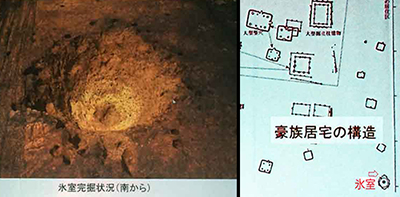
栃木県の8−9世紀の豪族居館からは地下食品庫が発掘され、
なんと「氷室」が常時使われていたと見なせる遺構も発見されている。
山岳地帯から冬場に氷を切りだして、それを河川流通で運搬して
平野部の居館の氷室に収納していたのですね。
祭りなどの馳走としてカキ氷のようにふるまわれた可能性もあるのではと。
<発掘調査に当たった日本考古学学会員の中村信博先生のお話から>
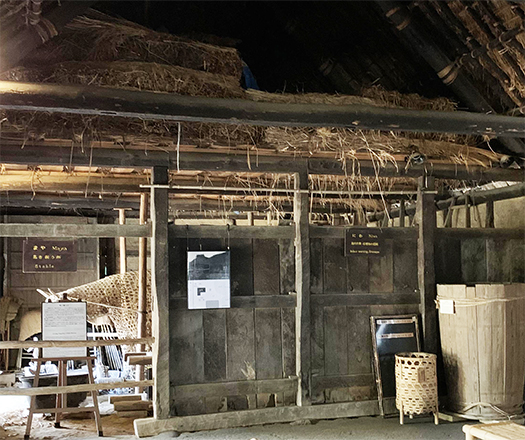
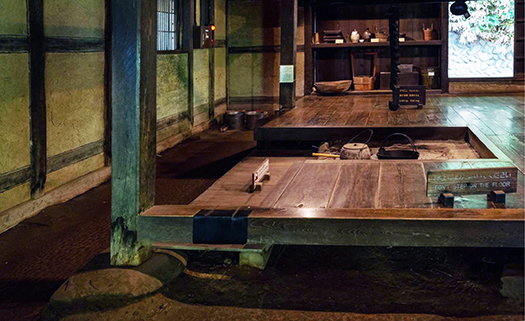
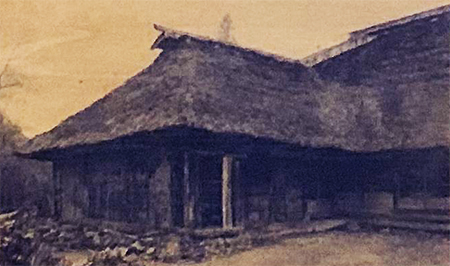
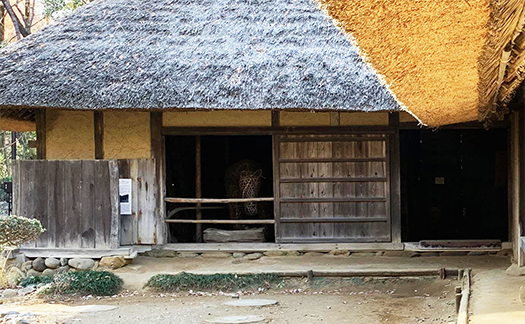
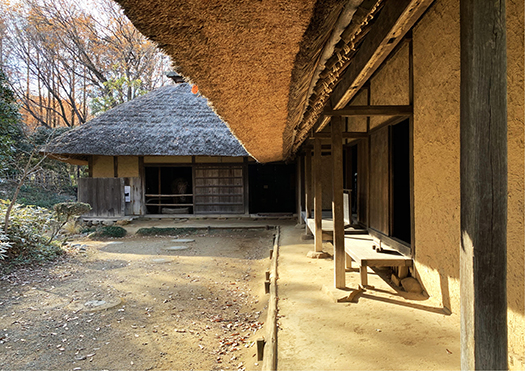
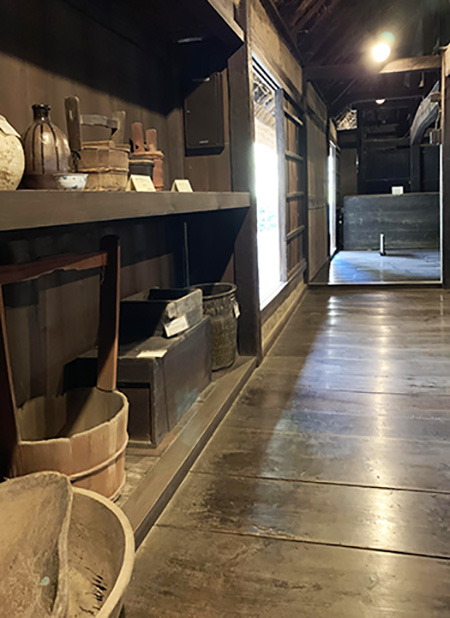
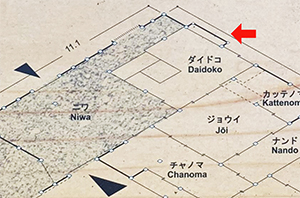
この岩手県・紫波町の南部曲り家でちょっと変わっていると思うのは
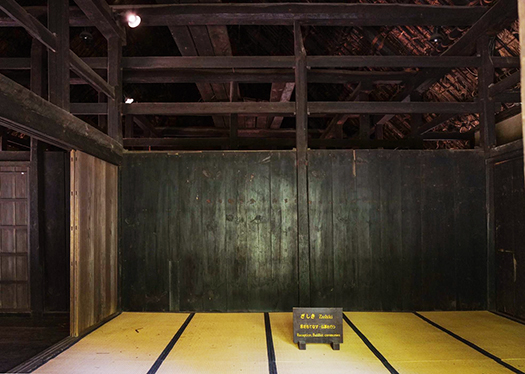
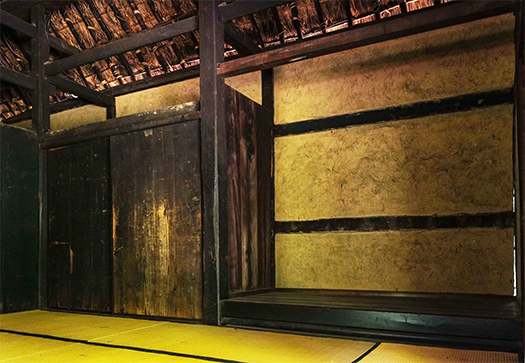
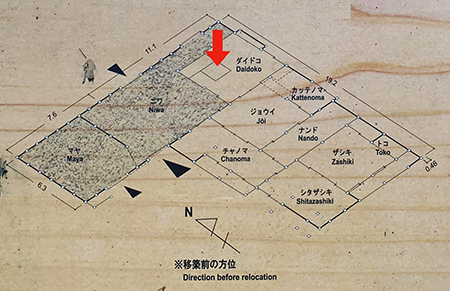
「ダイドコロ」の東側壁面が建物本体から「半間」ほど突き出している空間。
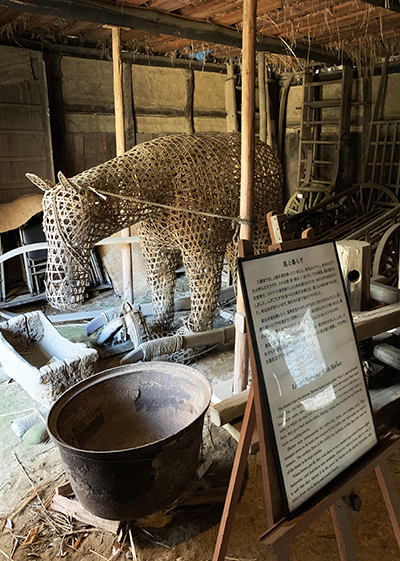
展示としてはこのスペースに常備の食材、たぶん味噌のような類の食品が
保存されている様子が見られていた。
さらに野菜類の一時保存のためと目せるストッカー機能器具もある。
これらの食材の保存のために求められる空間機能は
いわば「保冷」ではないかと思われた。
冬場はこういった食材は外気に接する壁面側で十分だっただろうけれど、
湿潤が及んでくる夏期には腐敗への対策が必要だった。
日射遮蔽して可能な限り通風・保冷を意識することで
この、建物からの半間のセットバック、突き出しを選択した。
そういった対応工夫としてこの「半間空間」が考えられたのではないか。
半間を建物から突き出すように造作するのは
なかなか建築技術的には面倒だったに違いないけれど、
そういう造営・作事の労苦を惜しまずに作った必然性としては
こうした空間の重要性がしっかり認識されていたと思われる。
とくに町場ではない農家住宅では、いのちを繋ぐ基本的保存機能。

現代北海道では断熱気密技術で室内空間全体があたたかくなっているので、
むしろ室内の一部をあえて断熱材で仕切って
「保冷庫」を造作する事例が増えてきている。
建築的な「冷蔵庫」というふうに言えるけれど、
この建物建築の300年ほど以前には、このような建築工夫が
そうした必要用途を満たしていたと考えられるのです。
時代を超えて食を巡っての人間の根源的探究心は興味深い。

English version⬇

[Wisdom of old folk house “Half-ken(0.9m) pantry” / Good Japanese house ㉗-8]
Human life is to eat first.
Preparing it is the biggest element of “connecting life”.
The basis of cooking and making food is the management of ingredients and seasonings.
In homes before the invention of the refrigerator, this pantry
There is no doubt that the greatest interest was paid.
A well-known device is the use of underground storage.
As I introduced in this blog before,
Underground from 8th-9th century Australian residence in Tochigi prefecture A pantry was excavated
The remains that can be regarded as the “ice house” being used all the time have also been discovered.
Cut ice from mountainous areas in winter and transport it by river distribution
It was stored in the ice house of the plains.
It may have been acted like shaved ice as a feast for festivals.

What I think is a little different in this southern bender in Shiwa Town, Iwate Prefecture
A space where the east side wall of “Daidokoro” protrudes “Half-ken(0.9m) pantry” from the building itself.
As an exhibition, there are regular ingredients in this space, probably miso-like foods.
It was seen that it was being preserved.
There is also a stocker function device that can be used for temporary storage of vegetables.
The spatial function required for the preservation of these ingredients is
I thought it was “cold storage”.
In winter, these ingredients would have been enough on the wall side in contact with the outside air,
It was necessary to take measures against rot in the summer when it was getting wet.
By shielding the sunlight and being aware of ventilation and cold insulation as much as possible
I chose this Half-ken(0.9m) pantry setback and protrusion from the building.
I think this “Half-ken(0.9m) pantry” was considered as such a countermeasure.
It ’s not possible to make the Half-ken(0.9m) out from the building.
It must have been quite troublesome in terms of construction technology,
As an inevitability of making such a effort of construction and work
It seems that the importance of such a space was well recognized.
Especially in farmhouses that are not towns, it is a basic preservation function that connects life.

In modern times, in cold regions of Hokkaido, the entire indoor space is warmed by heat insulation and airtight technology.
Rather, I dare to partition a part of the room with heat insulating material.
The number of cases of creating “cooling boxes” is increasing.
It can be called an architectural “refrigerator”,
About 300 years before the construction of this building, such architectural ingenuity
It is believed that it met those required uses.
The fundamental human quest for food over time is interesting.

【小屋裏のグラスウール状藁束/日本人のいい家㉗-7】


岩手県紫波町にあった古民家「南部曲り家」その7回目。
たくさんの写真で「家を紹介する」というクセが抜けずに
けっこうこれまでは古民家シリーズ、1軒は数回の紹介でしたが、
やはり住宅の探究ブログとしてはいろいろに気付くことがあるので、
ちょっと丹念にテーマを絞りつつ掘り下げ型で書いていこうと考えております。
本日は古民家でよく見かける「小屋裏のカヤ束収納」。

こちらの住宅は川崎市の日本民家園に移築保存展示されているので、
こういった小屋裏のようなディテールについては、移築保存前の状態が
参考にされて展示構成されているものと理解します。
この民家園での他の住宅展示でもこれと同様に小屋裏、屋根裏とも言いますが
そこにカヤ束が収納されている様子を見ることがあります。
こちらの住宅では写真でお分かりのように馬屋の上部に分厚く収納されている。
農家住宅では当然、生産物のコメなどから繊維部分が集積される。
コメの種子部分を茎から取り出すとカヤ束が発生する。
それは農家の夜なべ仕事の典型である藁細工生産の原材料となるでしょう。
それはごく自然な成り行きであろうと思います。
秋の収穫期に大量に集積するこのカヤはある程度「束」にされて
長期保存可能なスペースとして小屋裏に上げられていたことでしょう。
その季節実態を考えると秋、それも晩秋から冬場に掛けて
農家住宅の小屋裏はこのカヤ束に大量ストックされていたのではないか。
晩秋から冬にかけては農家の屋外労働が小休止になるので、
その時期に土間・ニワ部分で藁製品の細工がされていった。
これはごく自然な農家の作業輪廻であっただろうと思います。

で、わたしとしてはその光景がちょうど現代住宅の小屋裏断熱、
グラスウールの「充填」とどうもイメージが重なるのであります。
グラスウールとは割れたガラスなどを繊維状に加工再生したもので
断熱性能が期待できるのは、細かい繊維の空隙に「静止空気」を
たっぷりと保存しているからというのが物理法則。
もし自然素材での「代用」を考えたら、このカヤ状繊維は茎部分に
空気を保存しているのであり、気密は当然不作為だったとしても、
全体として一定の断熱機能は果たせるのではないかと妄想させられる。
しかも収納されるのは晩秋から冬場に掛けてで寒さの季節的整合性も高い。
屋根にカヤを施工するのも雨仕舞と並んでこの性能を期待したと思える。

写真のようにカヤ束のない小屋裏の光景は素寒貧を訴求してくるけれど、
カヤ束がたっぷりとある小屋裏部分は、視覚的にも暖かさが感じられる。
そもそもカヤ類は馬の「寝わら」で寝具の役割も果たしていた。
こういったカヤ束「断熱」についての研究を探しているけれど
たぶん、グラスウールが開発された現代になっては研究目的が成立しないと思われ
目に触れる機会がありません。
しかし、こういった古民家での「生活実感」が人類記憶から消えてしまう前に
科学的にチェックして見ることは有益ではないだろうか?
そんな思いがこうした古民家探訪で頭をよぎり続けています。

English version⬇

[Glass wool-like straw bundle in the back of the hut / Good Japanese house ㉗-7]
The 7th time of the old folk house “Southern Curved House” in Shiwa Town, Iwate Prefecture.
The habit of “introducing a house” is not lost in many photos
So far, I have introduced the old folk house series several times,
After all, as a housing exploration blog, there are many things to notice, so
I’m thinking of writing in a digging style while narrowing down the theme a little carefully.
Today, we often see “Kaya bundle storage in the back of a hut” in an old folk house.

This house has been relocated and preserved and exhibited at the Japanese Folk House Garden in Kawasaki City, so
For details such as the back of the cabin, the state before relocation and preservation is
I understand that the exhibition is organized with reference.
In other housing exhibitions at this private house, it is also called the hut or attic.
You may see a bunch of kaya stored there.
As you can see in the photo, this house is thickly stored in the upper part of the barn.
Naturally, in farm houses, fiber parts are accumulated from rice and other products.
When the seed part of rice is taken out from the stem, a kaya bundle is generated.
It will be the raw material for straw production, which is typical of farmer night pot work.
I think it’s a very natural process.
This kaya, which accumulates in large quantities during the autumn harvest season, is bundled to some extent.
It would have been raised in the back of the hut as a space that could be stored for a long time.
Considering the actual situation of the season, autumn, from late autumn to winter
The back of the hut of the farmhouse may have been stocked in large quantities in this bundle of kaya.
From late autumn to winter, the farmer’s outdoor work is a short break, so
At that time, straw products were being worked on in the soil and niwa areas.
I think this would have been a very natural farmer’s work cycle.

So, for me, the scene is just the insulation behind the cabin of a modern house.
The image overlaps with the “filling” of glass wool.
Glass wool is made by reusing broken glass into fibers.
Insulation performance can be expected by creating “static air” in the voids of fine fibers.
The law of physics is that it is well preserved.
If you think of it as a “substitute” for natural materials, this kaya-like fiber is on the stem.
It preserves air, even if airtightness is of course omission.
I am delusional that a certain heat insulation function can be achieved as a whole.
It seems that the construction of Kaya on the roof expected this performance as well as the rain.

As you can see in the picture, the scene behind the hut without a bunch of kaya appeals to the poor.
The back of the hut, which has plenty of kaya bundles, is visually warm.
In the first place, kaya also played a role as bedding as “sleeping straw” for horses.

I’m looking for research on this kind of Kaya bundle insulation.
Probably, the research purpose will not be established in the present age when glass wool was developed.
I have no chance to see it.
However, before the “feeling of life” in such an old folk house disappears from human memory.
Isn’t it useful to check and see scientifically?
Such thoughts continue to graze my head during this kind of exploration of old folk houses.

【木造建築の名脇役「貫」/日本人のいい家㉗-6】


貫(ぬき)とは木造建築で柱等の垂直材間に通す水平材。
日本の建築常識としてあり続けたこの構造材について、
西洋建築の考え方をベースにした現代的構造計算には不整合とされる。
貫には意味がないということが近代木造建築の桎梏として続いてきている。
伝統建築の立場からは、このことへの異議申し立てが続いている。

この貫は鎌倉時代の俊乗坊・重源が大仏殿建造のために中国から
最新技術として伝え、その構造の強固さから急速に日本全国に広まった。
木造建築では水平方向の固定に用いる。壁・床下の補強に使われるという。
その由来・来歴を知ったときから、気になり続けてきている。
大仏殿の再建という事跡でわたしはこの重源さんを深くリスペクトしています。
源平騒乱期の戦乱で奈良の大仏殿が焼失してしまったときに
全国を行脚して再建のための「勧進」を行っていたという。
戦乱の最終勝利者・勢力を率いた頼朝政権とも交渉し、
再建の費用を集めることに成功し運慶などの国宝彫刻も造営した。
建築プロデューサーとして日本文化のReplanに命を賭けた先達だと思っています。
言うまでもなく奈良大仏はその開眼会が天平奈良期の世界的大イベントであり、
そのことを日本人として深く認識し再建に奔走し大型木造の構造強化として
招来させた最先端の木造技術だった。
その再建時に大陸の木造技術の最先端技術としてこの「貫」は導入された。
きっとそれまでの日本古来の木造技術で発生していた弱点を正視し、
日本民族の建築進化へ強い思いを持って当時の技術者たちが導入したと思う。
東アジア世界の木造技術は中国からその多くが伝来したし、
在来の出雲大社社殿などの技術と混淆して豊かになっていったものでしょう。
現代中国は木造の技術伝統をほぼ失っていたが、保存していた日本から
ふたたび海を渡って「返す波」のようになっている状況からも、
非常に興味深い建築文化を感じさせてくれると思うのです。
貫にはこういった世界的な技術文化の粋が感じられる。

わたしのような住宅雑誌人としては、貫が作り出す建築構造の風景が
なんとも根がらみな奥行きを感じさせてくれるのであります。
こういう美感はながく後世にも伝えられていくべきでしょうね。

English version⬇

[Wooden supporting role “Nuki” / Japanese good house ㉗-6]
Nuki is a horizontal material that is passed between vertical materials such as pillars in a wooden building.
About this structural material that has been a common sense in Japanese architecture
It is said that it does not match the modern structural calculation based on the idea of ​​Western architecture.
The fact that Kan has no meaning continues like a modern architecture.
From the standpoint of traditional architecture, this continues to be challenged.

At one point, this Nuki was sent to Japan by Shunjobo Chogen from the Kamakura period to build the Great Buddha Hall from China.
It was introduced as the latest technology and rapidly spread throughout Japan due to its strong structure.
In wooden construction, it is used for horizontal fixing. It is said that it is used for reinforcement of walls and underfloor
I’ve been worried about it since I learned about it.
I have a deep respect for this Chogen because of the reconstruction of the Great Buddha Hall.
When the Great Buddha Hall in Nara was destroyed by the war during the Genpei turmoil
He is said to have traveled all over the country to “promote” reconstruction.
He also negotiated with the Yoritomo administration, who led the final victor of the war.
He succeeded in collecting the cost of reconstruction and built national treasure sculptures such as Unkei.
As an architectural producer, he respects Replan as a life-threatening pioneer.
At the time of its reconstruction, this “Kan” was introduced as the cutting edge of the wooden technology of the continent.
The Great Buddha Opening Party was a national big event during the Tenpyo Nara period.
The largest cultural asset in which Buddhism and the national idea of ​​protection have taken root in Japan.
It was a wooden technique that was deeply aware of this and rushed to rebuild it.
Many of the wooden techniques in the East Asian world came from China,
It must have become richer by being mixed with the technology of the traditional Izumo Taisha Shrine.
What modern China has almost lost its wooden tradition is from Japan, which was preserved
Even from the situation where it looks like a “returning wave” across the sea again
I think it makes me feel a very interesting culture.
You can feel the essence of this kind of technical culture in Nuki.

As a housing magazine person like me, the landscape of the architectural structure created by Nuki.
It makes me feel the depth from the roots.
This kind of beauty should be passed down to future generations.

【結界より自然融合の木造思想/日本人のいい家㉗-5】


きのうはケの空間、南部曲り家の家族のぬくもり空間を解析してみた。
本日はやっぱり日本人という伝統的「ハレ」空間であります。
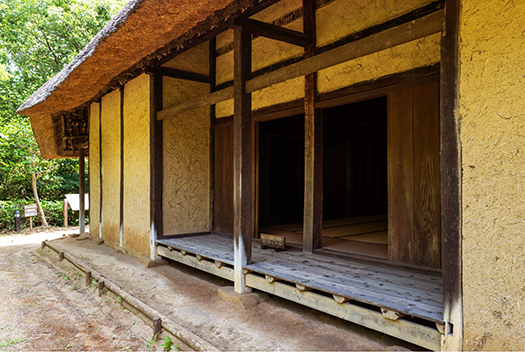
縁側は完全に南面に正対して、可能な限りの日射取得を目指している。
真壁は土塗り壁として、陽当たりの良さから蓄熱も期待できたと思います。
縁側はしかし、控えめに2間ほどの間口で袖壁で区切られ、
建物内部に引き込むようにデザインされている。
縁側というのは外部に接するのに「まるで外にいるように」
とデザインされるのが日本家屋の基本スタイルだと思うけれど、
この曲り家の座敷に面した縁側は、左右が堅牢な塗り壁で囲われ、
また天井も重厚な萱葺きの軒が張り出していて、一見すると
室内の延長っぽい空間で、半内部とでも言った方が似合っている。
また、開口部は板戸の引き戸が重厚な作りで構えられている。
やはり寒冷地域ということで、抑えられた開口ぶり。

縁側がそのまま、出入り口機能を持っていると思われる。
板戸の引き戸が座敷の結界として機能していますが、
言ってみれば「衝立」の代用とも言えるのでしょうか?
縁側に面した開口部の建具といえば、ふつうは障子が宛てられるけれど、
板戸と言うことで軽快感というよりも密閉性重視なのだと思われます。
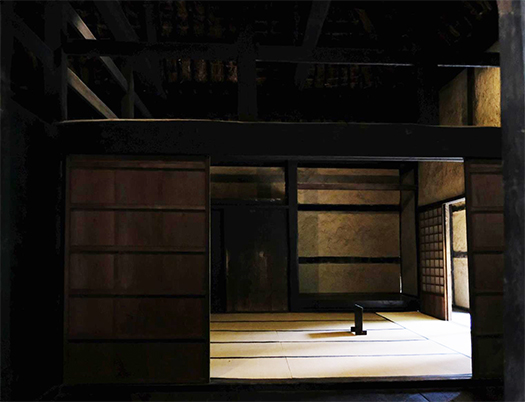
で、座敷に入ると高い天井高でそれが屋根まで吹き抜けている。
ほかの諸室では柱と横架材での枠だけの「壁」でしたが、
この座敷ではさすがに立派な「板壁」が空間を仕切っている。
これも考えてみれば、開口部への重厚な衝立が2重に立てられているとも見える。
一方で、重厚な板壁と吹き抜けが不思議な感覚でもある。
あるいはタテの柱に対して「貫」が通っている様子が、
壁の「見立て」ということなのだろうか。

外界との結界は屋根の萱葺きがその中心的な防衛ラインであって
その内部側はあくまでも「内側」という認識だったのだろうか。
そういう意識が普遍的な日本人的感覚だとすれば、
それではどういう動機で天井を張ったり、内壁に塗り壁を導入したりしたのか。
やはり動機の最大のものは、よりいごこちのいい空間ということだっただろう。
住宅の内部気候という考え方は江戸期の人間にはなかなか受容しがたかった。
西洋文化では建築はより硬質な石造りがベースとされるけれど
日本は基本は木造であることが、人間の意識で「自然と一体」という
基本思想を育みウチとソトを明確に分離する考え方が育ちにくかった。
現実に日本の気候風土においては放って置いても木は繁茂し、
緑が旺盛に土地を覆いつくす力強さがあるので、
それと一体となるという考え方が長く優勢であり続けたことはわかる。
日本人の意識の中で、木造建築はその旺盛な植物パワーを
そのごく一部を利用する、させていただくというメンタリティが優勢で
「結界を築く」という意識はやや認識が弱かったのではないか。
木造で家を作ることで、ウチとソトの結界意識が希薄化したのは、
大いに理解出来ることだと思える。結果として、寒冷地に建つ住宅でありながら
内部空間がここまで開放的であることを自然だと受け取られた。
寒いのはそれは自然そのものの輪廻であり、従順に受け入れる心理が強かった。
そういう意味では高断熱高気密というのは、西欧的価値感のようにも思う。
そのまま受容してはいのちに関わる北海道にまで居住エリアを広げたことで
はじめて日本人は「激しくめざめ」て、一気にその解決に立ち向かった。
なにやら日本史の流れ、江戸から明治の文明開化での急傾斜ぶりと
どうも似ているように思えてならない。

English version⬇

[Wooden thought of natural fusion from the barrier / Good Japanese house ㉗-5]
Yesterday, I analyzed the space of informal and the warmth of the family of the Southern Curved House.
Today is the traditional “formal” space of Japanese people.
The porch is completely facing the south side, aiming to obtain as much solar radiation as possible.
As Makabe is a plastered wall, I think we could expect heat storage due to the good sunlight.
The porch, however, was conservatively separated by a sleeve wall with a frontage of about two kens.
It is designed to be pulled inside the building.
The porch is “as if you were outside” to touch the outside
I think that the basic style of Japanese houses is designed as
The porch facing the tatami room of this bender is surrounded by solid plaster walls on the left and right.
In addition, the ceiling is also overhanging with a heavy thatched eave, and at first glance
It’s an extension of the room, and it’s more suitable to say that it’s half-inside.
In addition, the sliding door of the board door is made heavy in the opening.
After all it is a cold region, so the opening is suppressed.

It seems that the porch has the doorway function as it is.
The sliding door of Itado functions as a barrier for the tatami room,
Is it a substitute for “tsuitate”?
Speaking of fittings with openings facing the porch, shoji are usually addressed, but
It seems that it is more about airtightness than lightness.
Then, when you enter the tatami room, it has a high ceiling height and it blows through to the roof.
In the other rooms, it was a “wall” with only columns and frames made of horizontal members,
In this tatami room, a magnificent “board wall” divides the space.
Considering this as well, it seems that there are double stakes against the opening.
On the other hand, the heavy board wall and the atrium are also a mysterious feeling.
Or the appearance of “Kan” passing through the vertical pillars
Is it a “look” of the wall?

The thatched roof is the central line of defense for the barrier to the outside world.
Was the inner side just the recognition of “inside”?
If that kind of consciousness is a universal Japanese feeling,
Then, what was the motive for putting up the ceiling and introducing plaster walls on the inner walls?
After all, the biggest motivation would have been a more cozy space.
The idea of ​​the internal climate of a house was difficult for humans in the Edo period to accept.
In Western culture, architecture is based on harder stones
The fact that Japan is basically made of wood is said to be “integrated with nature” by human consciousness.
It was difficult to grow the idea of ​​nurturing the basic idea and clearly separating Uchi and Soto.
In reality, in Japan’s climate, trees grow thick even if left alone,
Because the green has the power to cover the land vigorously,
It can be seen that the idea of ​​being one with it has long been dominant.
In the Japanese consciousness, wooden architecture has its vigorous plant power.
The mentality of using only a small part of it is predominant.
Perhaps the awareness of “building a barrier” was a little weak.
By building a house out of wood, the consciousness of the barrier between Uchi and Soto was diluted.
I think it’s very understandable. As a result, even though it is a house built in a cold region
It was taken as natural that the interior space was so open.
It was the reincarnation of nature itself that was cold, and the psychology of accepting it obediently was strong.
In that sense, high heat insulation and high airtightness seems to be a Western European value.
By accepting it as it is and expanding the living area to Hokkaido, which is related to life
For the first time, the Japanese “awakened violently” and faced the solution at once.
Somehow, the flow of Japanese history, the steep slope from Edo to the Meiji era civilization
It must seem similar.

【南部曲り家・暖のオアシス/日本人のいい家㉗-4】


岩手県紫波町にあった古民家・南部曲り家の4回目です。
古民家のチェックポイントとしては「囲炉裏の位置」は大きい。
また、その使い勝手にそれぞれの個性が表現されて面白い。
きのう馬屋にいる馬の体温はヒトよりも高いので、
就寝時に湯たんぽのように機能させる生活文化に触れたら、
読者の方から「ご存じの通り遠野の人は裸で寝たそうですね」というご指摘。
馬の体温は平熱37.0~37.8度くらいと言われる。
そう考えると、南部曲り家とはやはり北国住宅としての
「暖房性能」を近代科学以前のいわば人類知のレベルで実現したものかも。
ヒトが動物と共生を始めた根拠にはこういう理由も大きかったのかも知れない。
恒温動物同士の「いのちのぬくもり」での共助思想。
人類はグレートジャーニーでアラスカ・ベーリング海峡を越えて
アメリカ大陸をも制覇した稀有なイキモノとされるけれど、
北方圏民族と犬ぞり文化などを考え合わせると
極北の寒さの中で肌身を寄せ合い、いのちの熱を伝え合って
人類はこの偉業を成し遂げたのかも知れないと思えてくる。
先日のブログでは春耕の時間を節約するために牛ではなく馬を使ったことに
大きく注目していわば生産性向上という側面を見たけれど、
越冬のためにかれらの体温を意図的・計画的に利用したと考えると、
まことに「地域住宅」としての真髄をそこに見るような思い。

しかしそれとはまた別に、囲炉裏の配置と切り方、
囲む床面のありようにも奥の深い設計意図が感じられます。
上の配置図のように建物入口は南面しており、そこからすぐ左手に馬屋。
土間のニワを介して北東側に寄せた、ほぼ建物の利用中心に切られている。
囲炉裏火場の周囲には石材で四角く枠が囲まれていて、
薪の燃焼熱が蓄熱される工夫もされている。
馬屋の土間側から直接上がれる位置にはたぶん2人ほどの座席余裕。
四周それぞれ2人ずつが席を囲めると視認できる。小児がいれば+1。
北側土間に面した側は、設置後座面を足したのか、
あるいは食材の配膳運搬のために土間を使って忙しく食事の世話をしたのか。
そのために動きやすいようにか、一段床面が下がっている。
暮らしやすいというか、食事の団欒ぶりがまざまざと伝わるというか、
まことに「いい場所」という空気感が伝わってくる。
日々の労働は大変だっただろうけれど、
夕餉のいっとき、家族の屈託のない笑い顔がなによりの疲労回復剤。

たぶん現代住宅の食卓設計よりも
はるかに人間的で豊かなコミュニケーションが成立したのではないか。
インターネットもテレビもない囲炉裏での会話。
そこで交わされる家族のぬくもりこそが、実は性能を越えた北国住宅の「暖」
であるのかもしれないと思い至った。

English version⬇

[Warm oasis / hearth layout design / Japanese good house ㉗-4]
This is the 4th time for an old folk house and a southern bent house in Shiwa Town, Iwate Prefecture.
As a checkpoint for an old folk house, the “position of the hearth” is large.
In addition, it is interesting that each individuality is expressed in its usability.
Horses in the horse shop yesterday have a higher body temperature than humans,
If you come into contact with a lifestyle that makes you function like a hot water bottle at bedtime,
A reader pointed out, “As you know, people in Tono slept naked.”
The body temperature of horses is said to be about 37.0 to 37.8 degrees Celsius.
With that in mind, the Southern Curved House is still a northern house.
It may be that “heating performance” was realized at the level of human knowledge before modern science.
This may have been a major reason why humans began to live in harmony with animals.
The idea of ​​mutual assistance in the “warmth of life” between homeothermic animals.
Mankind crosses the Alaska Bering Strait on the Great Journey
Although it is said to be a rare creature that has conquered the Americas,
Considering the northern peoples and dog sledding culture
Bring your skin together in the cold of the far north and transfer the heat of life
It seems that humankind may have accomplished this feat.
In my blog the other day, I decided to use horses instead of cows to save time in spring cultivation.
I paid a lot of attention to the aspect of improving productivity, but
Considering that they used their body temperature intentionally and systematically for wintering,
I really feel like seeing the essence of a “community housing” there.

But apart from that, how to arrange and cut the hearth,
You can feel the deep design intent of the surrounding floor.
As shown in the layout above, the entrance to the building faces south, and the horse shop is on the immediate left.
It is cut to the center of use of the building, which is located on the northeast side through the dirt floor.
A square frame is surrounded by stone around the hearth fireplace,
It is also devised to store the heat of combustion of firewood.
There is probably enough seating space for two people in a position where you can go up directly from the dirt floor side of the horse shop.
It can be seen when two people surround the seat on each of the four laps. +1 if there are children.
Did the side facing the dirt floor on the north side add the seating surface after installation?
Or did you spend a lot of time taking care of your meals using the dirt floor to transport the food?
For that reason, the floor surface has been lowered to make it easier to move.
It’s easy to live in, or it conveys the cohesiveness of meals.
It really conveys the atmosphere of a “good place”.
Daily labor would have been hard, but
At dinner, the carefree laughing face of the family is the best remedy for fatigue.

Maybe more than the dining table design of a modern home
Perhaps a far more human and rich communication has been established.
Conversation in the hearth without internet or TV.
The warmth of the family exchanged there is actually the “warmth” of a northern house that exceeds its performance.
I realized that it might be.

【塗装外壁・室内木壁・空洞天井/日本人のいい家㉗-3】


南部曲り家・岩手の家ということで、寒冷地住宅を期待させられるけれど、
やはりというか、江戸期の建築技術では外壁に塗り壁程度が限界。
紫波町は降雪はそれほどでもないだろうけれど、
寒さはハンパなく底冷えする凍結感を体感させられる。
現代でも札幌から出張していって大差のない寒さに閉口する。
曲り家はどうしても馬屋には大きな開口部ができるし馬の出入り口は
人間とは比較にならないほど大きい。
馬は臆病な動物なので外界が見えている方が情緒が安定する。
そういう開口優先の棟を取り込んでいるため人間居住域の方はほぼ開口のない
塗り壁仕様の外壁が連続している。
その外観側はまだしも重厚感があるが内部の空洞感は冷涼感がただよう。
どういった理由でか、土間に面した諸室でも板壁間仕切りが多い。
寒さに叶わぬまでも空間を仕切って温度を逃がさぬように工夫したか。

とくに驚かされるのが間仕切り壁は木で造作しているけれど
それは「枠組み」だけということ。
さらにどういう意味か不明だけれど、開放された土間と囲炉裏空間の間に
引き戸建具が設置されている。
どう考えてもあまり意味がなく天井はおろか壁すらもないので、
視線的にも完全開放されている。
この引き戸の開閉に一体どういう意味があるのか、判断に惑う。
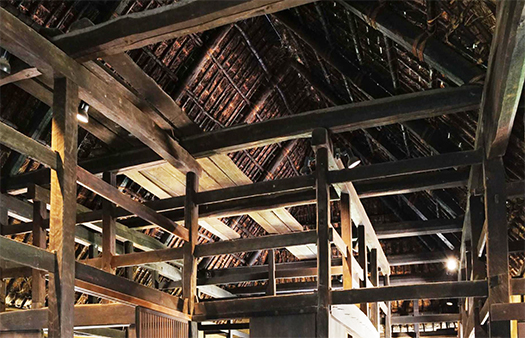
天井はまったく屋根まで開放しているので、
この気積分を暖房するには囲炉裏の薪では熱量が不足だろう。
建築歴史的には民家建築でも徐々に天井が張られていくのが流れだけれど、
豪快な木組みがあらわされ寒さへの無防備感が強調される。
防寒的な工夫はひたすら屋根の萱葺きの重厚さだけに頼ることになる。

東北人の「我慢強さ」はやはりこういう空間での暮らしが
その心情を育んだものに違いないと思う。
こういう空間仕様でせめてもということで他の地域とは違って
家の間取りを細かく間仕切りしたか。
とくに寝室は家族が身を寄せ合って寒さをしのいだと思える。
一方で馬屋の上部を見ると、なにやら飼い葉とおぼしき繊維質。
屋根の萱もそうだけれど、ストロー状の空洞部に空気を保持して
多少は断熱的効果に繋がるようなかすかな期待感も持つ。
馬は人間よりも多少体温が高いと言われ、
その体温放熱も心理的には「ぬくもり」要素は提供した可能性もある。
遠野の民話などで馬との共生で徐々に馬が擬人化されていく根拠は
こういった「体温」がそのきっかけだったのではないかと想像力が沸く。
馬と人間がお互いの体温を伝え合ってきたのだと。

English version⬇

[Painted outer wall / indoor wooden wall / hollow ceiling / Japanese good house ㉗-3]
Because it’s a house in Iwate, you can expect a house in a cold region,
After all, in the construction technology of the Edo period, the limit is the plastered wall on the outer wall.
Shiwa Town will not have much snowfall,
The feeling of freezing that the bottom gets cold without hampering the cold.
Even in modern times, I travel from Sapporo and close to the cold, which is not much different.
There is a big opening in the horse shop, and the doorway of the horse is
It is incomparably large compared to humans.
Since such a building is incorporated, there is almost no opening in the human living area.
The outer walls of the plastered wall specifications are continuous.
However, although the exterior side still has a profound feeling, I am surprised at the hollow feeling inside.
For some reason, there are many board wall partitions even in the rooms facing the dirt floor.
Did you devise a way to partition the space so that the temperature would not escape even if it did not come true?

What is surprising is that the partition wall is made of wood.
It’s just a “framework”.
I don’t know what it means, but between the open soil and the hearth space
Sliding door fittings are installed.
It doesn’t make much sense at all, and there are no walls, let alone ceilings.
It is completely open from the line of sight.
I am confused about what it means to open and close this sliding door.
The ceiling is completely open to the roof, so
The amount of heat would be insufficient for the firewood in the hearth to heat this air integral.
Architectural Historically, even in private house construction, the ceiling is gradually stretched, but
A dynamic wooden structure is shown, emphasizing the sense of defenselessness against the cold.
Ingenuity to protect against the cold depends solely on the heavy thatched roof.

Tohoku people’s “patience” is still living in such a space
I think it must have nurtured that feeling.
Unlike other areas, it is different from other areas because it is at least with such space specifications
Did you divide the floor plan of the house into small pieces?
Especially in the bedroom, it seems that the family got together and survived the cold.
On the other hand, if you look at the upper part of the horse shop, you can see some kind of fodder and fiber.
Like the roof 萱, it holds air in the straw-shaped cavity.
It also has a psychology that leads to a somewhat adiabatic effect.
Horses are said to be slightly warmer than humans,
It is possible that the body temperature heat dissipation also provided a psychologically “warmth” element.
The reason why horses are gradually anthropomorphized by coexistence with horses in Tono’s folk tales
I think this kind of “body temperature” was the trigger.
Imagination is boiling. Horses and humans have communicated each other’s body temperature.

【南部曲り家成立の農業革命/日本人のいい家㉗-2】


わたしたちは現代から古民家としてこの紫波町にあったこの工藤家を
南部曲り家の典型として見ている。
しかし歴史的には南部曲り家の成立は比較的に新しいとされ、
意外にも、早くても18世紀前期ごろであろうと考えられている。
初期の南部曲り家は馬屋部分のない、長方形平面の「直屋」に
寄棟の馬屋部分が「増築」されたようなものだったとされる。
それらに対してこの工藤家は解体の結果、新築当初から一体の
曲屋として建てられた最も早い時期に属しているのだという。

ということは、南部地域での馬との共生というものが、
ライフスタイルとして確立したのは、18世紀前期ごろとなる。
きのうも書いたとおり、春耕の時期をなるべく早く作業するには
それまでの常識であった牛に代えて俊敏な馬の方が適しているという
いかにも東北北部地方特有の地域気候対応。
自然条件と生産条件のクロスする理由から農家住宅に
それらを一気に解決するライフスタイル革命として出来上がった。
こう考えていくと、江戸時代初期からの人口増加、
おおむね人口規模が倍増近い進展を見せたという国土開発の進展と
どうも軌を一にしていると考えられますね。
<ときどき引用の鬼頭宏先生の歴史人口研究より>
農業生産力の飛躍的向上のために東北北部地域では
このような生業増産方法を編み出し、住宅として独自性を遺した。
農業生産起動力の牛と馬の比較まで考える必要があるのでしょう。
このような「南部曲り家」形式が農家住宅として飛躍的に
生産性が高いという客観的事実が当時の人々に認定された。
だから多くの農家が一気にこのような建て方を選択したのでしょう。
今日でたとえて考えれば、トラクターなどの機械力を管理するのに
ある建築的な知恵と工夫が圧倒的な生産向上に結びつくのではというのと
ほぼ同様の成立事情からだったのでしょうか。
われわれは住宅歴史の側から古民家として南部曲り家を見ているけれど
その実際の建築成立過程では、産業構造進化が原動力だった。
住宅はそのイレモノとして特異化したのだということ。

きのう、この南部曲り家について書き始めたら、
ある方からその「地域型住宅」が現在ほとんど残っていないと
ため息交じりのご意見コメントが寄せられましたが、
その成立根拠を考えて行くと、ある意味では透明に受け止められる。
いま現代の住宅が全国画一化の方向に至っているのも
現代に至るまでの社会がそのような方向を是認してきたのだとも
考えることができるのだと思われるのです。
逆に言うとたとえばコロナ禍によって人々のライフスタイルがどのように
変化して行くのか、それに対してどう知恵を出していくか、
そういう視点が住宅建築にも求められると考えられるのです。
家は世に連れ、世は家に連れ、であります。

English version⬇

[Agricultural Revolution of Southern Curved Shop / Good Japanese House ㉗-2]
We have this Kudo family in this Shiwa town as an old folk house from the present age
It is seen as a typical example of a southern bender.
However, historically, the establishment of the Southern Curver is relatively new,
Surprisingly, it is believed that it will be around the early 18th century at the earliest.
The early southern benders became “Naoya” on a rectangular plane without a barn.
It is said that the hipped roof was “extended”.
As a result of the dismantling of the Kudo family, they have been integrated since the beginning of the new construction.
It is said that it belongs to the earliest period when it was built as a music store.

That means that coexistence with horses in the southern region is
It was established as a lifestyle around the early 18th century.
As I wrote yesterday, how to work as soon as possible during the spring cultivation period
It is said that agile horses are more suitable than cows, which was common sense until then.
Corresponding to the regional climate peculiar to the northern Tohoku region.
For farmhouses because of the crossing of natural and production conditions
It was completed as a lifestyle revolution that solves them all at once.
Thinking this way, the population has increased since the early Edo period.
With the progress of national land development that the population scale has almost doubled
It seems that they are on the same track.

In the northern Tohoku region to dramatically improve agricultural productivity
By devising such a method of increasing the production of livelihoods, it left its uniqueness as a house.
It may be necessary to consider the comparison between cows and horses, which have the ability to start agricultural production.
Such a “southern bender” style dramatically becomes a farmhouse
The objective fact of high productivity was recognized by the people of the time.
That’s why many farmers chose this kind of construction at once.
If you think about it today, to manage the mechanical force of tractors, etc.
It is said that certain architectural wisdom and ingenuity will lead to overwhelming production improvement.
Was it due to almost the same circumstances?
We see the southern bender as an old folk house from the side of housing history
The evolution of the industrial structure was the driving force in the actual construction process.
The house was specialized as the irrelevant thing.

Yesterday, when I started writing about this southern bender
Someone says that there are almost no “community-type houses” left
We received sighing opinions and comments, but
If you think about the grounds for its establishment, it will be taken transparently in a sense.
The reason why modern houses are now becoming uniform nationwide
Societies up to the present day have endorsed such a direction.
I think I can think about it.
To put it the other way around, for example, how people’s lifestyles are affected by the corona virus.
How to change and how to give wisdom to it
It is thought that such a viewpoint is also required for housing construction.
The house is to the world, the world is to the house.

【南部曲り家という地域型住宅/日本人のいい家㉗-1】


国交省は「地域型住宅」という政策を一時期推進していた。
どうもせっかく政策推進しても、官僚機構なので担当者の交代で
方向転換が頻繁に行われてしまう。
似たような政策推進でも年度が替わると名前が変更になる。
こういうのってどうも官僚機構、その担当者の「やってる感」演出に見える。
民の側からすれば、もうちょっと長期的視野で取り組んで欲しいけれど、
権力機構の「生態」としてどうもそういう傾向にある。
住宅政策などと言うものは2−3年で結果が出るものではない。
新築で建てられそれが暮らしというふるいに掛けられて「熟成」して
最低は10年くらいの年月の結果としてよき「方向性」が見いだせるもの。
全国の住宅の作り手に対して「地域住宅」に取り組め、という考え方は
しごく当然だと思う。その考え方の理の当然だと思えるのですが、
全国一律型の「住宅行政指導」はぜひ止めて欲しい。
地域型住宅を勧める一方で、相変わらず「全国メーカー」の方が事実上有利な
特条認定などの「住宅施策」が行われ続けてきた。
どうも首尾一貫性がないし、そもそも住宅政策でくらしのデザイン部分に
関与できるのかどうか、疑わしいとも思える。
むしろ簡潔に性能要件に絞って基準値を明示し指導を強化するのがまっとう。

さてそういう「地域型」住宅として全国的に知られている
歴史的民家の形態のひとつが「南部曲り家」でしょう。
主屋に対して主に土間を主体とした部分が突き出すように接続して
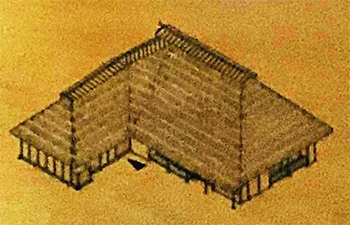
L字型の平面形状になる建物で、主に馬屋として土間部分が使われた。
日本史を通じて「奥州の馬」は馬体も大きく名高い存在だった。
その奥州・南部の馬屋付建築というまことに地域性豊かな住宅スタイル。
地域生活・産業上の不可欠な要件であったことから根付いた地域住宅。
この日本人のいい家シリーズで前回常陸の「分棟」住宅を取り上げましたが
その調査結果から、この南部曲り家との関連性が掘り起こされた。
分棟が人間居住域の棟と生活を支える作業空間・馬屋などの
アクティブな領域の棟とを接合させた住宅だったことと南部曲り家の
成立基盤が共通するし、北関東でも南部曲り家が点在する事実とが
シンクロしていたのです。
分棟での建物の「接合」は室内雨樋を必然化させてその雨水処理
メンテナンスが不可欠になるのが、その合理的解決法として
南部曲り家に発展していったとも考えられるという。
今回は岩手県紫波町にあった南部曲り家を見ていきます。
いまでは南部曲り家はポピュラーなものになっていますが実は、
地域型住宅としての様式の成立は18世紀くらいなのだそうです。
様式成立の過程はやはり馬の飼育が決定的要因。
写真の「工藤家住宅」は、建築年代は江戸時代中期とされます。
内厩形式は北国のもの。春の短い東北地方北部での地域に適した農耕には、
牛よりは動きの俊敏な馬を使う方が好都合だったとされる。
短期間に田畑を「起こす」必要があったということなのでしょう。
しかし馬は癇が強く、その飼育は牛よりもずっと難しいといわれる。
そこで厩を屋内に設け、健康状態を常に把握できるようにしたのが必要性。

このような強い「地域の必要性」こそが地域型住宅の最重要要素。
現代の住宅施策で取り組むとしたらその徹底的な解析が優先すべきだと思う。

English version⬇

[Regional house called Southern Curved House / Good Japanese House ㉗-1]
The Ministry of Land, Infrastructure, Transport and Tourism had been promoting the policy of “regional housing” for a while.
Even if the policy is promoted, the person in charge will change because it is a bureaucracy.
Frequent changes in direction.
Even with similar policy promotion, the name will change when the year changes.
This kind of thing seems to be a “feeling of doing” production of the bureaucracy and its staff.
From the people’s point of view, I would like them to work from a longer-term perspective,
There is such a tendency as the “ecology” of the power organization.
Housing policies and the like do not produce results in 2-3 years.
Built in a new building, it is sifted through the sieve of living and “aged”
At the very least, a good “direction” can be found as a result of about 10 years.
The idea of ​​working on “community housing” for housing makers nationwide
I think it’s quite natural. I think it’s natural to think that way,
I would like you to stop the nationwide uniform “housing administrative guidance”.
While recommending regional housing, many “national manufacturers” still have a de facto advantage
“Housing measures” such as special provision certification have continued to be implemented.
Apparently inconsistent, and in the first place the design part of living due to housing policy
It seems doubtful whether we can get involved.
Rather, it is better to concisely narrow down the performance requirements, clarify the standard values, and strengthen the guidance.

Well, it is known nationwide as such a “regional” house.
One of the forms of a historic private house is the “Southern Curved Shop”.
Connect to the main building so that the part mainly consisting of the dirt floor protrudes
It is an L-shaped flat building, and the dirt floor was mainly used as a barn.
Throughout Japanese history, “Oshu horses” were famous for their large horse bodies.
The residential style with a horsehouse in the southern part of Oshu is truly regional.
Local housing that has taken root because it was an indispensable requirement for local life and industry.
In this “Japanese good house” series, I mentioned the “branch building” house in Hitachi last time.
From the results of the survey, the connection with this southern bender was unearthed.
The branch building is a human living area building and a work space that supports life, a horse shop, etc.
It was a house that joined the ridge of the active area and the southern bender
The foundation is common, and the fact that there are southern benders scattered in Kita-Kantou
It was in sync.
“Joining” of buildings in a branch building makes indoor rain gutters inevitable and treats the rainwater
Maintenance is essential as a rational solution
It is thought that it has developed into a southern bender.
This time, we will look at the southern bender in Shiwa Town, Iwate Prefecture.
Southern benders are now popular, but in fact,
It seems that the style as a regional house was established around the 18th century.
Horse breeding is a decisive factor in the process of establishing the style.
The “Kudo family residence” in the photo is said to have been built in the middle of the Edo period.
The form of the inner house is that of a private house in the north. For farming suitable for the northern part of the Tohoku region where spring is short,
It is said that it was more convenient to use a horse with agility than a cow.
Perhaps it was necessary to “wake up” the fields in a short period of time.
However, horses have a strong temper and are said to be much more difficult to raise than cows.
Therefore, it is necessary to set up a shack indoors so that the health condition can be constantly grasped.

Such a strong “regional need” is the most important factor for regional housing.
I think that thorough “analysis” should be prioritized when working on modern housing policies.

【冬を越えた札幌円山の水鳥たち】


関東までサクラ前線が一気に駆け上がってきています。
昨年に引き続いて、まだコロナ禍のまっただ中で収束が見えない中、
季節は確実に歩みを見せてくれています。
そういう春の息吹はここ北の地でも大きく膨らんできています。
北海道神宮境内地域では冬中活動していたエゾリスたちですが、
その姿がたくさん見られるようになり、その動きもすばやくなってきた。
ややもするとこっちの激突しそうなほどに接近遭遇してきて
踏みつけてはかわいそうと、たのしく逃げ回るような案配であります。

北海道神宮への行き帰りの道からはすっかり雪も消えて
軽快な散歩が楽しめているのですが、
しかし、公園緑地や池周辺などではまだ雪道が残っております。
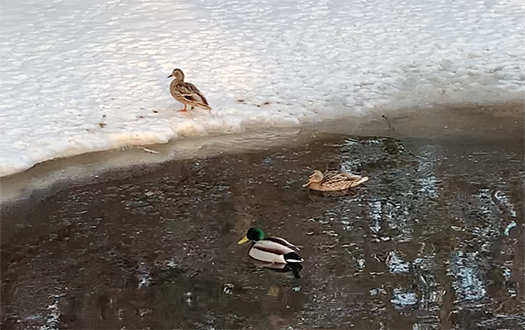
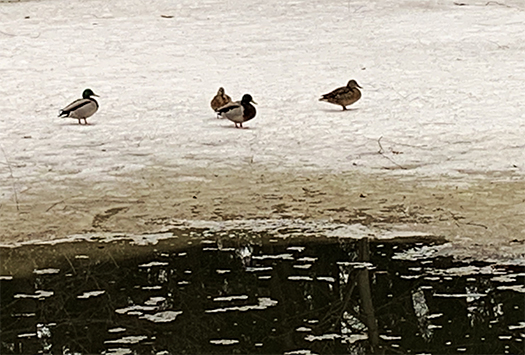
冬の間にはこの池の主たち、カモやオシドリたちはその姿を見ることはなかった。
っていうか、池全体が結氷していたので、かれらもいられなかった。
その間どこにいくのか、という探究心はもっともですが、
ズボラなわたしとしてはそこまでの興味はない。
きっとどこかで冬中いのちを永らえふたたびわたしたちにその姿を見せてくれる。
その自然の季節の移ろいは不変のものだと思われます。
そしてそれなりに厳しい寒さの冬が案に相違して足早に去って行き、
ごらんのように池の氷もぬるみ始めてきたことから、
「きょうあたりは・・・」みたいな期待感で彼らの姿を探す日々でした。

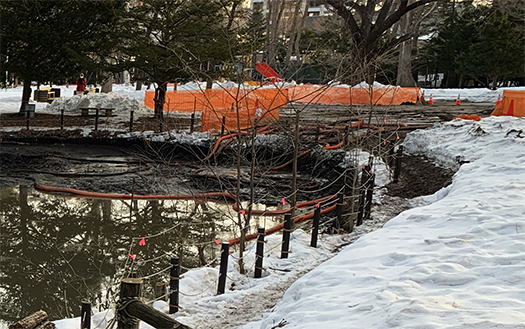
写真は先日遭遇した池の「水抜き」の様子。
小さな川ですが、自然の中を縫って流れてくる。
落ち葉や土壌も流入し続けるため池の底には汚泥が沈殿するので、
カモたちもこの池を避けて別の池に移住する状況が見られていた。
そういうことで市の清掃作業が取り組まれたものだろうか。
大規模な水抜きで底が表れた池の様子であります。

さてようやく池の氷も融けて、いまは数の少ない水鳥たちですが、
これから段々と賑やかになっていくことでしょう。
遅くやってくる北国の春ですが、なかなか社会閉塞の方は先が見えない。
せめても鳥たちのいのち一杯の躍動感を楽しませてもらいたいと思います。

English version⬇

[Waterfowl in Maruyama, Sapporo beyond winter]

The Sakura front is running up to Kanto at once.
Continuing from last year, while we still can’t see the convergence in the midst of the corona disaster,
The seasons are definitely showing progress.
The breath of spring is swelling even here in the north.
Ezoris who were active during the winter in the precincts of Hokkaido Shrine,
Many of them have come to be seen, and their movements have become quicker.
I came across a close encounter so that I could collide with him.
It’s a plan that makes you feel sorry for trampling and runs around happily.

The snow disappeared completely from the way back and forth to Hokkaido Shrine
I am enjoying a light walk,
However, snowy roads still remain around the park green areas and ponds.
During the winter, the owners of this pond, ducks and mandarin ducks, did not see it.
I mean, they couldn’t stay because the whole pond was frozen.
The quest for where to go in the meantime is reasonable,
I’m not so interested in it as a crazy person.
I’m sure that somewhere in the winter, life will last forever and we will see it again.
The transition of the natural season seems to be immutable.
And the harsh cold winter was different from the plan and left quickly,
As you can see, the ice in the pond has begun to become lukewarm.
It was a day to look for their appearance with a sense of expectation like “Today is …”.

The photo shows the pond “draining” that I encountered the other day.
Although it is a small river, it flows through nature.
Since fallen leaves and soil continue to flow in, sludge will settle at the bottom of the pond, so
The ducks were also seen to avoid this pond and move to another pond.
I wonder if the city’s cleaning work was undertaken in that way.
It is a state of a pond whose bottom has appeared due to a large-scale drainage.

Now that the ice in the pond has finally melted, there are only a few waterfowl now,
It will become more and more lively from now on.
It’s spring in the north, which is coming late, but it’s hard to see where the social blockage is.
At the very least, I would like you to enjoy the liveliness of the birds.

【札幌人のほとんどが知らない「札幌岳」】


本日は閑話休題。古民家をちょっと離れて現代の北海道小ネタ。
札幌という街は、明治の開拓と同時に開かれ始めた都市。
まだ150年くらいの歳月しか刻んでいない。
人口規模は北海道の4割近くにまで急増してきているけれど、
根っからの札幌人、土地の人間というのは江戸・東京と同様に
まだまだ多くはないと言えるでしょう。
まぁよく言われた「リトルトーキョー」というのがピッタリ。
わたしは3歳からの札幌人、一時期東京生活があったけれど、
おおむね60年程度の居住時間があります。
そういう人間ですが最近まで「札幌岳」という山を知らなかった(笑)。
札幌は方位的に南側が大きく山岳地帯に囲まれている。
この山岳地帯から石狩平野に向かって扇状地形が広がり、
その山裾のやや高地に札幌の街は展開している。
で、札幌で山と言えば藻岩山・円山・三角山がポピュラーで、手稲山が
市内中心部からはやや離れているけれど高さ的にはいちばんという認識。
わたしの散歩道は円山の麓の北海道神宮周辺であり、やや西部の三角山とが
日常感覚ではごく身近で季節感を見せてくれる存在です。

ところが最近、早朝散歩などで趣向を変えてあちこち歩いていて
南に向かい左手三角山、右手手稲山のほぼ中間方向に高い山を見続けている。
やや遠景なのですが、手稲と遜色のない高さを感じられる。
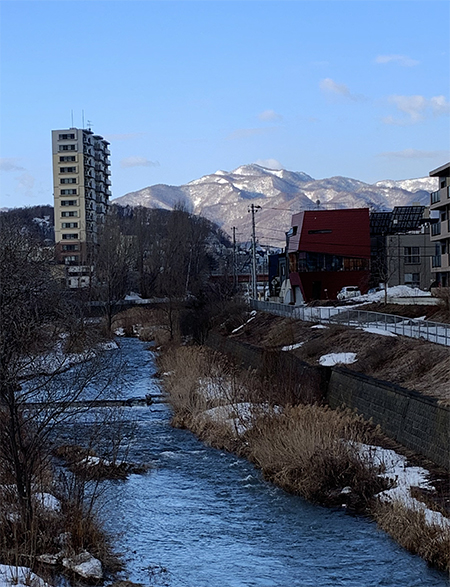
で、この写真の山の名が「札幌岳」なのであります。
先日、この山が見晴らせる通りをクルマを走らせていて
カミさんに「札幌岳」と告げても札幌居住歴わたしとほぼ同様の彼女も
「なにそれ???」という状態。「へえ〜〜〜」

地図で表現するとこのような位置関係。
札幌岳という名前ですが、山頂位置は札幌市中心部から恵庭市同等の距離なので
眺めることは上の写真のように可能だけれど、登ったりするのは
山男・山女でもなければ気軽に登山というようにはならない。
命名の由来は「札幌市の南西部、定山渓温泉の南にある。札幌市を流れる
豊平川はもともとアイヌ語でサッポロ川「水の涸れている大きな川」の意味で、
その上流にある山なので札幌岳の名が冠せられている」。標高 1,293m。
ちなみに手稲山は1023.1m。藻岩山531m、三角山311.3m、円山225m。
都心とはやや離れる手稲山もいいスキー場があって身近。
札幌市街地に近接する藻岩山以下の山々は市民もよく出掛けるし、それこそ
すぐにも登れる気安さがあり、また円山はとくに自然保護林にもなっている。
円山は明治の開拓初期、島義勇開拓判官が市域全域を見渡して
大きく「街割り」したとされる歴史にも名が刻まれる存在であり、
なんといっても北海道神宮が仮の居場所から正式に遷座された聖地。
そういう山々と比べて、高さが超飛び抜けているワケでもないなかで、
名前だけ「札幌岳」と聞かされても、なかなか馴染みが深まらないのですね。
まぁ山に悪気はないのですが、といったところ。

しかし「札幌岳」なので、これからも国際的に発展して欲しい市民としては
どうしたらもっと親しめる山になっていけるのか、
未来を担う若い人たちにわたしらがやらねばならない仕事のようにも思える。
せっかくいい名前を付けているのでそれを生かすべきだ。
逆に言うと先人のみなさんから「おい、なんか知恵を出せや」と
お叱りをいただいているようにも思います(笑)。う〜む。

English version⬇

[Mt. Sapporo, which most Sapporo people do not know]

Quiet talk today. A little away from the old folk house, a modern Hokkaido small story.
The city of Sapporo is a city that began to open at the same time as the development of the Meiji era.
Only about 150 years have passed.
Although the population scale has rapidly increased to nearly 40% of Hokkaido,
The people of Sapporo and the people of the land are the same as in Edo and Tokyo.
It can be said that there are not many yet.
Well, the well-known “Little Tokyo” is perfect.
I’m a Sapporo person from 3 years old, I lived in Tokyo for a while,
I have a living time of about 60 years.
I’m such a person, but until recently I didn’t know the mountain called “Mt. Sapporo” (laughs).
Sapporo is directionally large on the south side and is surrounded by mountainous areas.
An alluvial fan spreads from this mountainous area toward the Ishikari Plain.
The city of Sapporo develops in the highlands at the foot of the mountain.
So, speaking of mountains in Sapporo, Mt. Moiwa, Mt. Maruyama, and Mt.
Although it is a little far from the city center, it is recognized as the tallest.
My walking path is around Hokkaido Shrine at the foot of Maruyama, and there is a slightly western part of Sankakuyama.
In everyday life, he is very familiar and shows a sense of the seasons.

However, recently, I changed my mind by taking a walk in the early morning and walking around.
Heading south, we continue to see high mountains in the middle of Mt. Sankaku on the left and Mt. Teine on the right.
It’s a little distant view, but you can feel the height comparable to Teine.
Teine is a relatively close mountain, so in contrast it feels far and still high.
So, the name of the mountain in this photo is “Mt. Sapporo”.
The other day, I was driving a car on the street overlooking this mountain
Even if I tell Kami “Mt. Sapporo”, she has lived in Sapporo and is almost close to me.
“What is that ???” “Hey ~~~”

This kind of positional relationship can be expressed on a map.
The name is Mt. Sapporo, but the location of the summit is the same distance as Eniwa City from the center of Sapporo City.
You can see it as shown in the picture above, but you can climb it.
If you are not a mountain man or a mountain woman, you cannot easily climb a mountain.
The origin of the name is “Southwest of Sapporo City, south of Jozankei Onsen, and the north side of the summit.
It is a steep cliff with a deep cut. The Toyohira River, which flows through Sapporo, was originally in Ainu.
Sapporo River It means “a big river with water” and it is a mountain upstream of it.
It bears the name of Mt. Sapporo. The reason. Altitude: 1,293m.
By the way, Mt. Teine is 1023.1m. Mt. Moiwa 531m, Mt. Sankaku 311.3m, Mt. Maruyama 225m.
Teineyama, which is a little far from the city center, has a nice ski resort and is close to us.
Citizens often go out to the mountains below Mt. Moiwa, which is close to downtown Sapporo.
It is easy to climb immediately, and Maruyama is especially a nature protection forest.
In Maruyama, in the early days of the Meiji era, Yoshitake Shima, a pioneer judge, overlooked the entire city area.
It is an existence that is engraved in the history that is said to have been largely “divided into land”.
After all, the sacred place where Hokkaido Shrine was officially relocated from its temporary location.
Compared to such mountains, the height is not so high,
Even if you hear only the name “Mt. Sapporo”, it’s hard to get used to it.
Well, there is nothing wrong with the mountains, but that’s the place.

However, since it is “Mt. Sapporo”, as a citizen who wants to continue to develop internationally
How can we become a more familiar mountain?
It seems like a job we have to do for the young people who will bear the future.
I have given it a good name, so I should make use of it.
To put it the other way around, the ancestors said, “Hey, give me some wisdom.”
I think you’re being scolded (laughs). Hmmm.