本文へジャンプ

【常陸の分棟・外観、佇まい/日本人のいい家㉖-8】


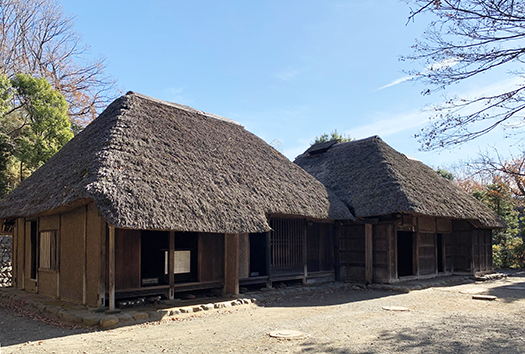
分棟という、2棟の寄棟建物が軒を接して建てられた住宅を見てきた。
本日は外周部、外観的にいくつかの気付きを。
古民家というと、建築用材と手間コストの合理性で外観が決まることから
おおむねシンプルな形状が一般的ですが、
この分棟は各棟はシンプルだけれど、その組み合わせが
たまたまこういう風に組み合わせた、という一期一会感がある。
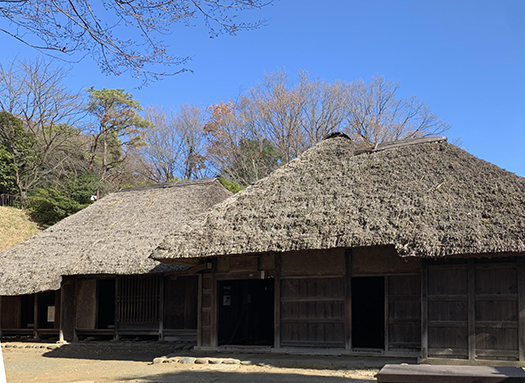
上の写真では右端の「馬屋」突き出し部分も含めると
外形的に「雁行」を見せていて、ハッとするほど変化に富んでいる。
雁行というのは、貴族や武家などの支配階級の住居で
庭との関係での眺望性最優先ということから出てきたものだと思うけれど、
そのルーツは案外この「分棟」がイマジネーションを提供したのかも知れない。
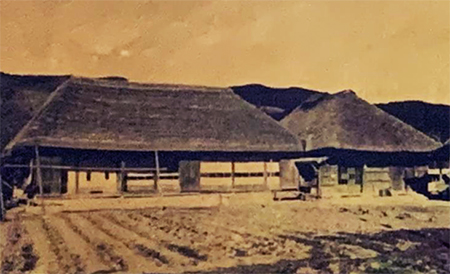
その下の写真は、現在川崎市の日本民家園に移築保存される前の茨城県での
農家住宅だった当時の佇まいであります。
右側の「土間棟」が主屋に対して手前側がせり出していて
側面にも出入り口が開けられている。
農事作業空間としての土間棟の機能性豊かな様子が偲ばれます。
屋根頂部には煙りだしも見られて、能動的な空間性が表れている。

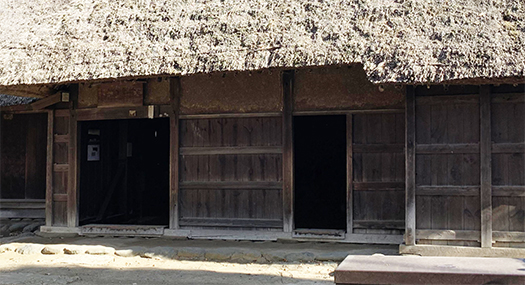
主屋側では手前が南面している。その陽だまり空間で屋根に対して建物が
ややセットバックして大きな屋根が覆い被さる、半外空間を形成しています。
あるいは縁台などが置かれた空間だったのか、
座敷へ上がる入口としても機能していたのかと思われる。
そうした使い勝手の間取り構成を寄棟の大屋根がおおらかに包み込んでいる。
「外縁」とでもいえる空間への意識が日本人には強いのでしょうね。
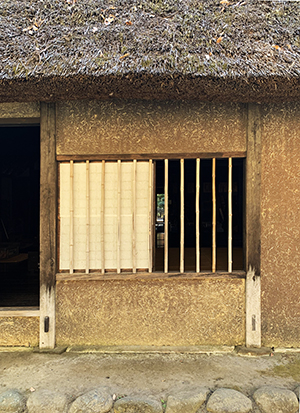
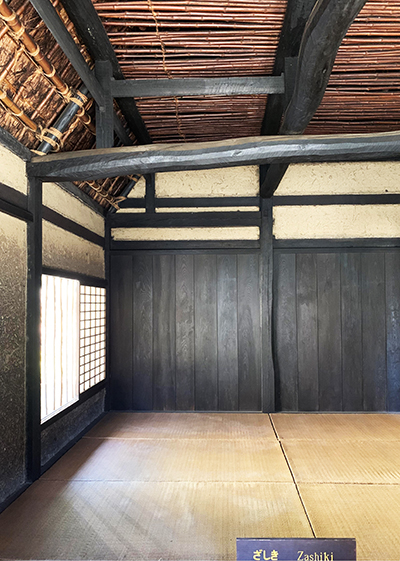
この写真は座敷の奥のあかり取り窓。
こういった開口部では古民家の場合、だいたいは戸袋が付属して
板戸が雨戸として、雨水対応・寒さ対策・防犯対策で仕込まれるケースが多いけれど、
この開口部にはそうした板戸収納がないので、常時このような障子1枚で、
紙一枚で外部と接していたと思われる。
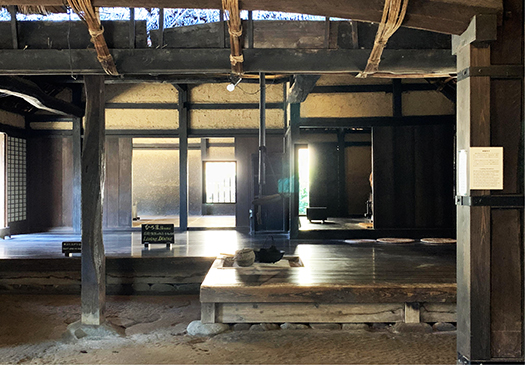
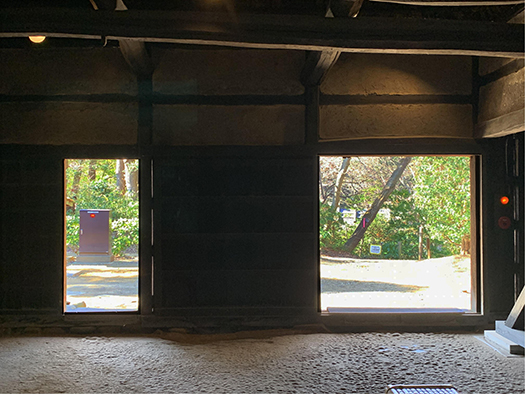
室内側のこの開口部写真は下のもの。
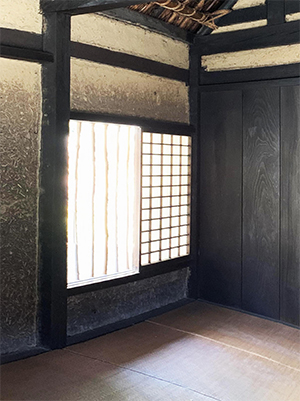
現代住宅では開口部は見慣れた造作だけれど、古民家では
防寒のことも考え合わせれば、こういった仕様はかなり勇気がいるものだったかも。
建築としては隙間だらけで大差はないが、しかし雨戸と障子では心理的に大きく違う。
しかしそういう断熱欠損は別として、こういう開口部の存在は
ウチとソトの結界意識の上では、重要な心理ファクターであったことは疑いない。
位置的には「座敷」に開けられた開口部であり、来客などをもてなす造作として
機能させていたものだろうと思う。
鄙の家だけれど花鳥風月的な文化装置もあるんだよ、的な。
窓・開口部とは外部景観を「切り取る」額縁という文化要素だっただろう。
わたしも60年前ころの少年期、函館の伯父宅に遊びに行ったとき、
とびきりの床の間・縁側付きの座敷で寝させられた経験がつよく印象に残っている。
そしてそこが立派なしつらいだけれど強烈に寒かったことも憶えている(笑)。
日本人は「やせ我慢での接遇」に亭主も客人も慣れていたともいえるだろうか。
もちろん季節のいいときには最適化された日本空間文化受容にはなる。
寒いときにはそれを思い浮かべて「耐え忍べ」と。

English version⬇

[Hitachi branch building / appearance, form / good Japanese house ㉖-8]
I have seen a house built with two hipped roofs called a branch building in contact with the eaves.
Today, I noticed some things on the outer circumference and appearance.
When it comes to old folk houses, the appearance is determined by the rationality of building materials and labor costs.
Generally, a simple shape is common,
Each building is simple, but the combination is
There is a once-in-a-lifetime feeling that it happened to be combined in this way.
In the photo above, including the protruding part of the “Baya” on the far right
The appearance is “Gankou”, and it is surprisingly varied.
Gankou is a residence of the ruling class such as aristocrats and samurai.
I think it came from the fact that the view is the highest priority in relation to the garden.
Its roots may have been unexpectedly provided by this “branch building”.
The photo below is in Ibaraki prefecture, before it was relocated and preserved in a Japanese folk house in Kawasaki City.
It looks like a farmhouse at that time.
The “Doma Building” on the right side is protruding from the main building.
There is also a doorway on the side.
It is reminiscent of the highly functional appearance of the Doma Building as an agricultural work space.
Smoke is also seen on the roof top, showing an active spatiality.

On the main building side, the front is facing south. In that sunny space, the building is against the roof
It forms a semi-outer space with a slightly setback and a large roof covering it.
Or was it a space where a pedestal was placed?
It seems that it also functioned as an entrance to the tatami room.
The large roof of the hipped roof gently envelops such a convenient layout structure.
I think Japanese people have a strong awareness of the space, which can be called the “outer edge.”

This photo is the light window in the back of the tatami room.
In the case of an old folk house, these openings usually come with a door pocket.
Itado is often used as a shutter for rainwater, cold weather, and crime prevention.
Since there is no such board door storage in this opening, you can always use one such shoji.
It seems that he was in contact with the outside with a piece of paper.
The photo of this opening on the indoor side is below.

In modern houses, the openings are familiar, but in old houses
Considering the protection against the cold, these specifications may have been quite courageous.
There are many gaps in the architecture, so there is no big difference, but even so, there is a big psychological difference between shutters and shoji.
But apart from such insulation defects, the existence of such openings
There is no doubt that it was an important psychological factor in the sense of barrier between Uchi and Soto.
Positionally, it is an opening opened in the “Zashiki”, and as a feature to entertain visitors, etc.
I think it was working.
It’s a redneck house, but it also has a cultural device like Kacho Fugetsu.
When I went to visit my uncle’s house in Hakodate when I was a boy about 60 years ago,
The experience of being laid down in a tatami room with an exceptional alcove and veranda left a strong impression on me.
And I remember that it was really hard, but it was extremely cold (laughs).
Is it possible to say that the Japanese are accustomed to “hospitality with thin patience” for both the host and the guests?
Of course, when the season is good, it will be an optimized acceptance of Japanese space culture.
When it’s cold, think of it and say, “Be patient.”

【民家の癒やし・食べると寝る/日本人のいい家㉖-7】


古民家シリーズでの「日本人のいい家」連載継続中。
コロナ禍で「非寛容」的な閉塞状況が続いております。
これから、やや下火になっていったとしても、こういう「閉塞」圧力は
しばらくの間は続くというか、それがアフターコロナ時代の特徴になるかも。
ようやく「緊急事態宣言」は収束したが「見通しが甘い」みたいな批判も出てくる。
こういった論調が果てしなく続くのをある程度、覚悟しなければならない。
安全側で行動していくことを考えたら抑制行動を採用する方が安全ではある。
たぶん、多くの社会人はみなそのような思いを持っているでしょうね。
しかしそんな社会風潮に対しての異議申し立てのように
「うっせぇわ」というシャウト調の流行歌が出てきたという。
YouTubeの再生回数を見たら1億回を超えている。
行動規範、社会常識への従順さを強制する同調圧力に対し
高校生と言われる発信者ははげしくシャウトして反発を示している。
この歌を聴いていると、前述のような社会傾向に対して相当の屈折感が
若者、社会全体として鬱積してきているように思います。
それがある臨界点を越えるのかどうか、ちょっと予測不可能。
おっと、横道ズレまくり(笑)。
やはりブログなので、個人としての感覚、気付くことは書きたくなる。
このあたり個人名と組織名を冠したブログというのは加減が難しい。

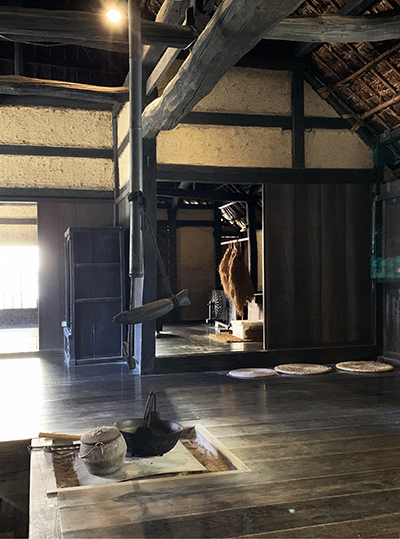
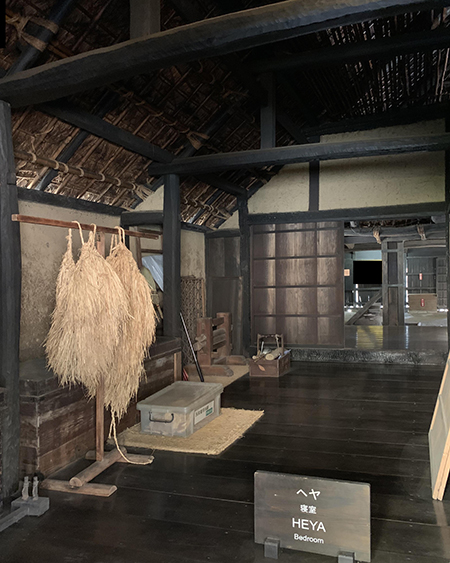
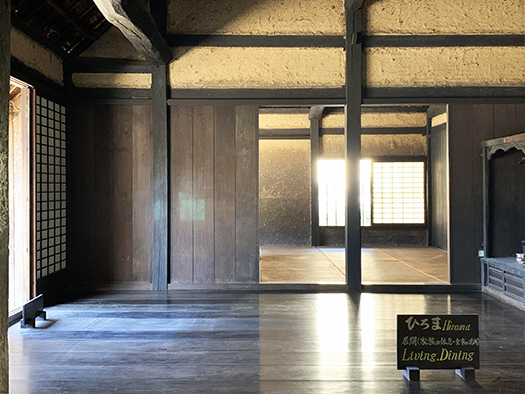
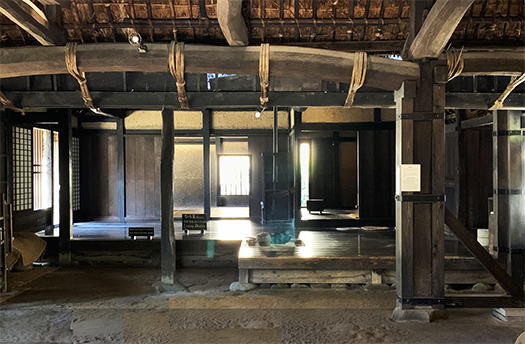
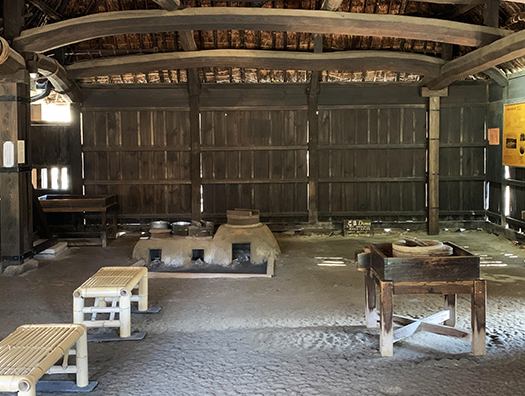
本日は常陸・旧太田家の食卓・囲炉裏端と寝室「へや」の様子。
この家では調理火力がこの囲炉裏と土間のかまどの2つです。
囲炉裏はかまどからの「輻射熱」も感じられる位置、
土間との接点、端部に装置されています。
ちょうどそれは室内雨樋が屋根の谷を通っている位置にも当たっている。

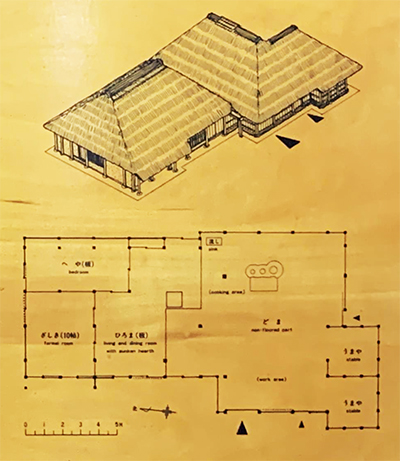
間取り図で見たらちょうど家の真ん中、分棟の中間に配置とわかる。
囲炉裏は日本では食卓であるのか、採暖装置であるのか微妙な存在。
その中間的な存在とでも言えるのかも知れない。
古民家では西洋式の住宅での「ダイニング」という存在はほぼない。
生活文化として「テーブルマナー」みたいな様式もほぼなかったと思います。
日本の会食機会・食事は膳部で供されることが多いことも一因か。
しかしそれ以上に、普段の家族での会食は「囲炉裏端」であることが大きい。
囲炉裏は意識の上では「暖房」装置だけれど、採暖の用しか足せていない。
採暖と暖房の違いということに日本は「気付かなかった」ともいえる。
世界標準的には暖房とは、空間全体の気温上昇させる目的意識だったのに対して
採暖では、体感、それも火に当たる部位だけの体温上昇を図ってきた。
そして料理も基本はこの囲炉裏火に掛けられた「鍋料理」だった。
その料理スタイルに最適化された「食卓空間」が囲炉裏端だったともいえる。
直火での採暖と鍋料理飲食での体温上昇とが、日本人の快適認識だった。
この認識は非常に興味深いのではないだろうか。
言うまでもないけれど、直火採暖では輻射熱の当たらない背中側は
ただただ熱が逃げていくことになる。
「綿入れ」のような体温維持着衣とワンセットだった。
こういう環境条件ではヒートショック的な健康被害が容易に想像できる。
とくに古民家では屋根までの大空間であり、放熱の「効率」は非常に高かった。
食事という人間社会のもっとも基本的な空間仕様が与えた影響は
さてどういうものだったのか、非常に決定的だったと思いますね。
一方の寝室空間は家族での雑魚寝状態が想像できる1室空間。
見るとおり窓とか採光の工夫などは見られない。
おたがいの体温、ぬくもりを「湯たんぽ」にして気温低下をしのぐ様子がわかる。
ふとんという放熱防止策で、おたがいのぬくもりで支え合う。

熱環境の些細な分析から、日本の生活文化の根源を考えて行くことは、
面白い民族性の再発見機会になって行くかも知れません。

English version⬇

[Healing of private houses / Sleeping when eating / Good Japanese house ㉖-7]
“Good Japanese House” is being serialized in the old folk house series.
The corona-stricken and “intolerant” obstruction continues.
From now on, even if it goes down a little, this kind of “blocking” pressure will be
It will continue for a while, or it may be a feature of the after-corona era.
The “state of emergency” has finally come to an end, but criticisms such as “the outlook is unsatisfactory” have come out.
We must be prepared to some extent that this tone will continue endlessly.
It is safer to adopt restraint behavior when considering acting on the safe side.
Perhaps many working people all have such thoughts.
But like an objection to such a social climate
It is said that a shout-like popular song called “Usseewa” has come out.
Looking at the number of views on YouTube, it has exceeded 100 million times.
Against sympathetic pressure to enforce obedience to the code of conduct, common sense
The caller, who is said to be a high school student, shouts violently and shows a backlash.
When listening to this song, there is a considerable sense of refraction to the social tendencies mentioned above.
I think that youth and society as a whole are getting sick.
It’s a bit unpredictable whether it will cross a certain critical point.
Oops, the side streets are misaligned (laughs).
It’s still a blog, so I want to write about my personal feelings and things I notice.
It is difficult to adjust the blog with the personal name and organization name around here.

Today is the state of the dining table, hearth end and bedroom “Heya” of the Hitachi / former Ota family.
In this house, the cooking firepower is two, the hearth and the earthenware kamado.
The hearth is in a position where you can feel the “radiant heat” from the kamado.
It is installed at the end, which is the point of contact with the soil.
It also hits the position where the indoor gutter passes through the valley of the roof.

If you look at the floor plan, you can see that it is located right in the middle of the house, in the middle of the branch building.
In Japan, the hearth is a delicate existence whether it is a dining table or a heating device.
It may be said that it is an intermediate existence.
In old folk houses, there is almost no “dining” in Western-style houses.
I don’t think there was a style like “table manners” as a living culture.
One of the reasons is that Japanese dinner opportunities and meals are often served at the dining room.
But more than that, the usual family dinner is at the “hearth”.
The hearth is consciously a “heating” device, but it can only be used for heating.
It can be said that Japan “did not notice” the difference between heating and heating.
Whereas the world standard, heating was a sense of purpose to raise the temperature of the entire space.
In the warming, I tried to feel the temperature of the body only in the part that hits the fire.
And the cooking was basically “nabe-dish” that was hung on the hearth.
It can be said that the “dining table space” optimized for the cooking style was the hearth end.
The Japanese people’s perception of comfort was that the temperature was raised by direct fire and the body temperature was raised by eating and drinking hot pot.
Isn’t this recognition very interesting?
Needless to say, on the back side where radiant heat does not hit in direct fire heating
The heat just escapes.
It was a set with body temperature maintenance clothes like “cotton case”.
Under such environmental conditions, heat shock-like health hazards can be easily imagined.
Especially in an old folk house, it was a large space up to the roof, and the “efficiency” of heat dissipation was very high.
The influence of the most basic spatial specification of human society, food, is
Well, I think it was very decisive what it was like.
One bedroom space is a one-room space where you can imagine a family sleeping with small fish.
As you can see, there are no windows or ingenuity in daylighting.
You can see how each person’s body temperature and warmth are made into “hot water bottles” to overcome the temperature drop.
Futon is a heat dissipation prevention measure that supports each other with the warmth of each other.

Thinking about the roots of Japanese living culture from a trivial analysis of the thermal environment
It may be an opportunity to rediscover an interesting ethnicity.

【土間・板間・座敷 ニッポン床文化/日本人のいい家㉖-6】


日本の住文化が世界の中で特異性を持つ部分で大きいのは床。
コロナ禍で注目された「床上げ」での靴脱ぎ習慣。
現代でも玄関は「土間」であり、この結界意識が清浄観念を担保している。
コロナウィルスは公衆的床面の除菌も有効ということから、
日本の靴脱ぎ習慣、土間の面積の小ささが衛生的な面から見直された。
欧米では家の中でも、ベッドに横たわるまでは靴を脱がない社会。
そう考えると、日本人の空間意識で床上げが志向されてきたことには
大いに意味があったということが言えるのでしょうか。
しかし一方で能動的室内空間としての土間面積が減少していったことは、
日本人の基底的な生活文化のある部分を捨象してきたとも思える。

土間から床に上がるとき、日本社会では足をきれいに拭く、洗う習慣がある。
そういう腰掛けに適度な「床高」が一般的に採用されてもきた。
その高さだと一段での踏み越えは容易ではないので、
置き石などがワンステップとして採用もされてきた。
足を洗ったりする作業にも、こういうステップは有効だった。
で、靴を脱ぐということから、床上げ空間では素足で床面と接してきた。
そういう経緯なので、板間もていねいにぞうきん掛け習慣が根付いてきた。
素足の感受力からはていねいな掃除が不可欠なのでしょうね。
それがまた、衛生思想を向上させていくことにも繋がっていく。
そういう素足での床面感受力の発達から、ラグジュアリーな床材として
日本独特な畳という素材が開発されて、広範に普及してきた。
畳という床建材は、まことに繊細な感受性を日本人に涵養した。
コメ文化圏の民族として、ストロー状の繊維質にリスペクトがあり、
その表面質感にはたぶん、日本人の精神性に刷り込まれているものがあると思う。
足の裏側で畳の応力の感じや、表面の滑らかさ、目の細かさが
いろいろに体験記憶として、重なり合ってきているのでしょう。
あるいは、畳の目を数えたりして、その幾何学的な美感も感受していただろう。
コトバとしては「畳の上で死ぬ」というような日本人的憧憬すら存在した。

こうした土間ー板間—座敷というバラエティのある床面が織りなす
意識水面下での「深層心理」が日本人の心理には深く沈殿していると思う。
土間の清潔についても、石灰が定期的に施されたり、
突き固めることでの平滑面の維持努力もあったのだろうと思う。
ただ、北海道では畳敷きの部屋が大きく減少傾向にある。
一時期の「ダニ」対策的な対症療法としての板間全盛になってきている。
また、全館暖房という側面からワンルーム志向が勢いづいて
個室としての「和室」が減少していく傾向にある。
そういう部分が今後どう推移するのか、興味深いと思っております。

English version⬇

[Doma / Itama / Zashiki Nippon Floor Culture / Good Japanese House ㉖-6]
The floor is the biggest part of the world where Japanese living culture is unique.
The habit of taking off shoes by “raising the floor”, which attracted attention due to the corona sickness.
Even in modern times, the entrance is “Doma”, and this sense of barrier guarantees the idea of ​​cleanliness.
Since coronavirus is also effective in disinfecting public floors,
Japan’s habit of taking off shoes and the small area of ​​the soil have been reviewed from a hygienic point of view.
In Europe and the United States, even in a house, a society where you do not take off your shoes until you lie down on the bed.
With that in mind, the fact that Japanese people have been oriented toward raising the floor with a sense of space
Can it be said that it made a lot of sense?
However, on the other hand, the decrease in the soil area as an active indoor space means that
It seems that some parts of the basic Japanese lifestyle have been abstracted.

In Japanese society, it is customary to wipe and wash your feet when you go up from the dirt floor to the floor.
An appropriate “floor height” has been generally adopted for such a stool.
At that height, it is not easy to step over one step, so
Placing stones have also been adopted as one step.
These steps were also effective for washing your feet.
So, because I took off my shoes, I came in contact with the floor with bare feet in the floor-raising space.
That’s why the habit of hanging elephants has taken root in Itama.
Careful cleaning is indispensable from the sensation of bare feet.
It will also lead to the improvement of hygiene ideas.
As a luxury flooring material from the development of floor sensitivity with such bare feet
A material called tatami, which is unique to Japan, has been developed and has become widespread.
The floor building material called tatami has cultivated a delicate sensitivity to the Japanese.
As an ethnic group in the rice culture, there is respect for straw-like fiber,
I think that the surface texture is probably imprinted on the spirituality of the Japanese people.
The feeling of stress on tatami mats on the soles of the feet, the smoothness of the surface, and the fineness of the eyes
It seems that they are overlapping as various experiences.
Or, by counting the eyes of the tatami mats, I would have been impressed with its geometrical beauty.
As Kotoba, there was even a Japanese admiration such as “dying on tatami mats”.

A variety of floors, such as dirt floors, board spaces, and tatami mats, weave together.
I think that “deep psychology” under the surface of consciousness is deeply precipitated in Japanese psychology.
As for the cleanliness of the soil, lime is applied regularly,
I think there was also an effort to maintain a smooth surface by tamping.
However, the number of tatami-matted rooms is decreasing significantly in Hokkaido.
Itama is becoming more and more popular as a symptomatic treatment for “tick” for a period of time.
In addition, one-room orientation is gaining momentum from the aspect of heating the entire building.
The number of “Japanese-style rooms” as private rooms tends to decrease.
I think it will be interesting to see how such a part will change in the future.

【構造素地空間の呼び声/日本人のいい家㉖-5】


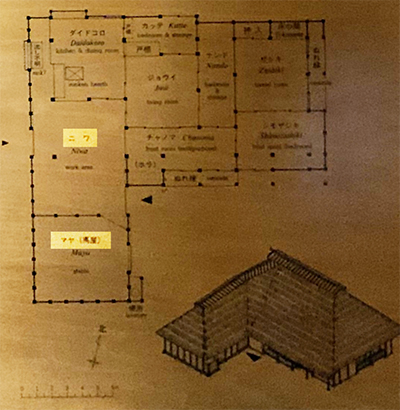
この常陸の分棟の家は、馬屋と農作業、釜屋、台所機能の「土間棟」と
板の間、畳敷きの座敷の「住棟」とが連結された建築構造。
農家住宅として必須の屋内農事作業には、広大な土間が不可欠。
そういう不可欠要素を住専用の棟にくっつけたことで、
梁間と桁行いっぱい可能な限りのワンルーム感覚空間志向。
歴史的にはこの「分棟」スタイルから進んで「曲がり屋」的なもの、
さらに大きなワンルーム・大空間志向で家づくりされていった。
わたしたちの「住む」DNAは、こういう大空間に癒やされるのではないか。

現代住宅と違って、柱や梁の構造材が素材のそのままにあり、
まことにシンプルな架構を見せてくれている。
現代の住宅でも、あるタイプの施主さんは構造軸組だけの建て方段階をみて
思わず「このままにしていてほしい」と口を突くことがある。
だいたいご主人であるケースが多く、奥さんはじめ寄ってたかって抑え込まれる(笑)。
「こんなので引き渡されたら大変だ」ということ。
それは十分にわかるのですが、男性はこういう構造材のパワフルさに惹かれる。
「おお、おれも家を建てたぜ」という密かな歓びに浸れるのでしょう。
考えてみれば、わたしたちの祖先、と言っても1世代×30年と考えて
1500年・50世代くらいさかのぼれば、竪穴住居が普遍的であり、
竪穴は柱と横架材で構造がつくられているばかりだった。
DNAレベルで考えたら、それ以前の住宅空間常識のほうが刷り込まれている。
さらに軸組架構が当然になってからも、床壁をきちんと仕上げるのはマレ。
「そういうのはじっくり」と先延ばしして、必要に応じて仕上げる、
というような生活文化伝統が存在した。
職業としての「大工」は、正確が要求される軸組行程はきちんと施工するが、
そこから先はおおむね建て主側で、ムラの衆の「結」で労働奉仕しあって、
屋根も萱葺き程度は自分たちで仕上げる文化伝統が普遍的だった。
歴史的にはそのような建築方法の方が一般的な民家のありようだった。
現代のように「結」もなく、共同体社会のバックアップがないなかでは、
それらすべての建築工程が「商品化」されてしまっている。
究極的には、商品としての住宅という概念に陥ってしまい、
もっとその傾向が進んでいけば、不信の連鎖に陥ってしまう。

わたしはどっちかというと、「このままにしていてほしい」と
叫んでしまう建て主さんに強いシンパシーを持ってしまいます。
家を建てるという営為について、より主体的だからこういう言葉が出る。
家づくりの本質、その楽しさの本質はそういうこころのありようが基盤ではないか。

English version⬇

[Call from the structural base space / Good Japanese house ㉖-5]
This Hitachi branch house is called the “Doma Building”, which has a horse shop, farm work, a pot shop, and a kitchen function.
An architectural structure in which the tatami-matted tatami mat “residential building” is connected between the boards.
A vast soil floor is indispensable for indoor farming work, which is essential as a farm house.
By attaching such indispensable elements to the building dedicated to housing,
A studio-like space orientation as much as possible between the beams and the girders.
Historically, this “branch building” style has been advanced to a “bend shop” style.
The house was built with a larger studio and large space orientation.
Isn’t our “living” DNA healed in such a large space?

Unlike modern houses, the structural materials of columns and beams are the same as the materials,
It shows a really simple frame.
Even in modern houses, some types of owners look at the construction stage of only the structural framework.
I sometimes hear that I poke my mouth, “I want you to keep it as it is.”
In many cases, he is the master, and he is suppressed because he wants to get close to his wife (laughs).
“It’s hard to be handed over because of this.”
I understand that well, but men are attracted to the power of these structural materials.
You will be immersed in the secret joy of “Oh, I built a house.”
If you think about it, think of our ancestors as one generation x 30 years.
The pit dwelling is universal, dating back to 1500 and 50 generations.
The vertical hole was just made of columns and horizontal members.
If you think at the DNA level, the common sense of residential space before that is imprinted.
Furthermore, even after the frame frame has become a matter of course, it is still a good idea to finish the floor wall properly.
Procrastinate, saying, “That’s awesome,” and finish it as needed.
There was such a lifestyle culture tradition.
As a profession, “carpenter” properly constructs the framework process that requires accuracy,
From that point onward, the owners are generally on the side of the builder, and they serve each other with the “Yui” of the people of Mura.
The roof was also thatched, and the cultural tradition of finishing it by ourselves was universal.
Historically, such a construction method seemed to be a more common private house.
In the absence of “conclusion” and the backup of a community society as in modern times,
All of these construction processes have been “commercialized”.
Ultimately, I fell into the concept of housing as a product,
If that tendency progresses further, we will fall into a chain of distrust.

I’d rather say, “I want you to stay like this.”
I have a strong sympathy for the owner who screams.
These words come out because they are more proactive about the act of building a house.
Isn’t the essence of building a house and the essence of its enjoyment based on such a state of mind?

【馬との共生・曲がり家 in関東/日本人のいい家㉖-4】


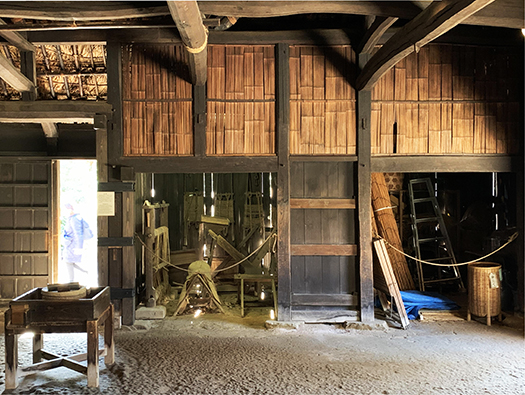
写真上は常陸の分棟の土間にある「馬屋」。
馬と日本史というテーマはきわめてオモシロいのだけれど、
それは置いといて(笑)、馬と農家住宅、建築スタイル編であります。
農家の耕作地が拡大するにつれて、農耕馬の需要は増加したのでしょう。
この家では2頭の馬用に馬屋が整備されている。
この土間棟は18世紀末ころの創建で、住宅棟が建てられてから100年ほど後に
分棟として新築され接合されたとのこと。
また、土間棟から「突き出し」のように馬屋が建てられているので、
たぶん19世紀はじめころにこの家に増築されたのではないかと推定。
田畑の面積拡充、田起こしのような必要性に迫られて馬屋を整備したのではないか。
馬の購入には現金が必要ですから、現金収入源があったか、借金をしたか。
借金をするにも一定の現金収入源が確保されていたのでしょう。
資料によると、農業の作物は米・麦・そば、落花生やサツマイモ。
しかし農業だけでは家計維持はできず、冬場には炭焼きや薪の出荷を行っていた。
炭焼きや薪生産のためには伐採した木材の運搬が不可欠。
あるいは伐採作業自体でも馬を使役したものかも知れない。
炭は萱で編んだ自家製の俵で包装して近郊の笠間市方面に出荷した。
薪はナラやクヌギの木で山で木割りしてソリに乗せて出荷した。
こうした運輸にも馬が活用されたことでしょう。
こういう現金収入・事業拡大を見込んで馬を購入したのでしょう。
一時期は養蚕もやっていたけれど、これはうまくいかなかったようです。
しかしその養蚕のため必需のカゴを利用してサツマイモの「乾燥芋」づくりを
行ったりしたという記録。まことに非常な経営努力。
わたしの父も戦中戦後、馬の購入経験があり、いくつかの逸話も聞いている。
馬と民の経済には多くの悲喜こもごもが込められていると思います。

一方で建築的にはこの「分棟」による土間棟の増築は
南部地域の「曲がり家」のイメージが投影されているとされる。
図面上がこの常陸の分棟の間取り図で、下に南部曲がり家の一例。
左右を反転させると、ほぼ同一の平面計画であることがわかります。
馬の購入を機会にして建築的な「つながり」がそこに見えるような気もする。
太田家当主「馬屋を入れ込んだ家にするのに、どう工夫したらいいべか?」
南部馬・博労「馬は世話が欠かせないので、南部じゃぁ家とくっつけてるんだわ」
「そうか、飼い葉を食わせるのに一々外に出たくないよなぁ」
「そうさ、だから土間の隅っこにくっつけるのがいいべさ」
「それと、馬は糞やしっこするべ、それを堆肥にできるんだ」
「糞はわかっけど、しっこはどうやるのさ?・・・」
というような会話があったか、なかったか(笑)。
馬屋には水勾配と水道が考えられていて、馬の排泄物は堆肥利用されていた。
馬は重要な働き手だったので、朝は飼い葉の草刈りに行ってきて、
水も冷たいままではなく、米のとぎ汁を温めてから与えていたとの記録。
たぶん、こうした「家族の一員」的な扱い方が南部曲がり家の建築思想で、
そのような農家建築が関東の常陸や栃木などまで普及していたとされます。
人間の建築を変えた家畜との共生思想ですね。
北関東は農業発展のためにより北方の建て方を受容したといえる。
いまの時代の高断熱高気密とも通底するものを感じさせられる。

English version⬇

[Coexistence with horses / bent house in Kanto / Japanese good house ㉖-4]
On the photo is the “Baya” in the dirt floor of the Hitachi branch building.
The theme of horses and Japanese history is very interesting, but
Aside from that (laughs), it’s about horses and farmhouses, and architectural styles.
The demand for farm horses may have increased as the farmland expanded.
The house has a horse shop for two horses.
This earthen ridge was built around the end of the 18th century, about 100 years after the residential ridge was built.
It is said that it was newly built as a branch building and joined.
Also, since the horse shop is built like a “protruding” from the dirt floor building,
It is presumed that the house was expanded in the early 19th century.
It seems that the horse shop was built due to the need to expand the area of ​​the rice fields and raise the rice fields.
Since you need cash to buy a horse, did you have a source of cash income or did you borrow money?
Perhaps a certain source of cash income was secured for borrowing.
According to the materials, agricultural crops are rice, wheat, buckwheat, peanuts and sweet potatoes.
However, agriculture alone could not maintain the household budget, and in winter it was grilled with charcoal and shipped firewood.
Transporting logged timber is essential for charcoal grilling and firewood production.
Alternatively, the logging work itself may have used horses.
The charcoal was wrapped in homemade bales woven from straw and shipped to the suburbs of Kasama City.
Firewood was split in the mountains with oak and oak trees and shipped on sleds.
Horses would have been used for such transportation.
Perhaps he bought a horse in anticipation of such cash income and business expansion.
I was also sericulture for a while, but this didn’t seem to work.
However, for the sericulture, the essential basket is used to make “dried potatoes” for sweet potatoes.
A record that I went. Really a great management effort.
My dad also bought horses during and after the war and heard some anecdotes.
I think there is a lot of sadness in the horse and people’s economy.

On the other hand, architecturally, the extension of the earthen building by this “branch building” is
It is said that the image of a “bent house” in the southern region is projected.
The floor plan of this Hitachi branch building is on the drawing, and an example of a southern bent house is below.
If you flip it left and right, you can see that the plan is almost the same.
Taking the opportunity to buy a horse, I feel that an architectural “connection” can be seen there.
Ota family head “How should I devise a house with a horse shop?”
Nanbu Ma, Hakuro “Horse is indispensable to take care of, so in the south, it’s attached to the house.”
“Well, I don’t want to go out one by one to feed the fodder.”
“That’s right, so it’s better to stick it in the corner of the dirt floor.”
“And horses should be dung and pee, and they can be composted.”
“I know the shit, but how do you pee? …”
Was there a conversation like that (laughs)?
Water gradients and water supply were considered in the horse shop, and horse excrement was used as compost.
The horse was an important worker, so in the morning I went to mow the fodder and
It is recorded that the water was not kept cold, but was given after warming the rice juice.
Perhaps this kind of “family member” treatment is the architectural idea of ​​the Nanbu bender.
It is said that such farm buildings were widespread in Hitachi and Tochigi in the Kanto region.
It can be said that Kita-Kantou accepted the northern construction for agricultural development.
It’s a symbiotic idea with livestock that changed human architecture.
You can feel the high heat insulation and high airtightness of this era.

【17世紀末民家・キッチン水回り/日本人のいい家㉖-3】


太田家住宅の旧所在地は茨城県笠間市付近。創建は17世紀末期とのこと。
300年以上、350年くらいの築年の住宅。
こういった古民家を取材していると「流し」の位置が興味深い。
というのは、同時期には「座って」流しに向かうスタイルが多いのです。
キッチンの歴史で言ってもどうも「立ち流し」というのは新しいのだと。
このあたり現代人からは想像しにくいのですが、
土間が基本の住宅から、床上げされた住宅に「進化」するとされているけれど、
そのときに、台所とくに「流し」は床上げ問題が発生したようなのです。
住宅建築としては土間から床上げになるのは「立派になる」ことだったけれど、
その立派さの影で、流し仕事の労役はむしろ重くなった。
なにやら男性優位型の「格式」優先で家事労働の負担が無視された?
よく「敷居が高い」というコトバがあります。「相手に不義理などをしてしまい、行きにくい」
というのが本来日本語の意味だそうですが、
語源的には、高床の建物に「身分の高さ」が掛けられているのでしょう。
戦国期くらいまでは土間・土座が普遍的であった日本の民家が
江戸時代に入る頃から「高度経済成長期」になって人口も拡大し
平和の到来と同時に、経済的に庶民も潤うようになって、
貴族住宅に普及していた床上げ住宅に移行していったとされています。
しかし、それまでの土座住宅ではキッチンの流しは普通に考えれば、
立って家事したと思われるのです。
それが建物が床上げしたことで、座っての料理作業に変化したのではないか。
もちろん300数十年の間、この家のキッチンに変化もあったでしょうが、
確実なことは言えないけれど、興味深いポイントだと思います。
いま復元のキッチン構成でみると、立ち流しになっていて動作的にムリがない。

さらに、昨日書いた「室内雨樋」も流しの上を通っている。
調査記録などをみると、この家では流しの左手の「東出入り口」の外に
貯水槽があって、調理に使う水を運んで水瓶に汲んでいたとのこと。
水くみと室内貯水、流しの位置、そして加熱調理の位置。
調理動作一連の動線にムダがなく整合的だと思えました。
かなり現代のシステムキッチンに近しい配置構成ではないかと。
ポイントは見学時には気付かなかった、貯水槽が装置されているとの解説。
これが室内雨樋の雨水の行き先なのではないかと推測。そうすると
屋根水も無駄なく活かしきる環境適合社会・江戸時代のエコハウスか。
このあたりもう少し調査が必要かと思いますが、オモシロそう。
ただ、この屋根のダム化の役割を果たす室内雨樋、
使用上は多くのメンテナンスが欠かせなかったとされていました。
落ち葉や屋根の萱クズなどが常時溜まり続けるので
屋根に上がって定期的にゴミ掃除をしなければならなかった。
エコな社会とは自然との対話でもあるのでズボラには生きられない。
それとやはり、大雨などのときには室内への越水流入が避けられなかったようです。
分棟という民族的住宅伝統がやがて廃れていく要因なのでしょうか。

English version⬇

[Private house at the end of the 17th century, kitchen water supply / good Japanese house ㉖-3]
The old location of the Ota family residence is near Kasama City, Ibaraki Prefecture. It was founded at the end of the 17th century.
A house built over 300 years ago and about 350 years old.
The position of the “sink” is interesting when covering such old folk houses.
That’s because, at the same time, there are many styles of “sitting” and heading for the sink.
Even in the history of the kitchen, “standing up” is new.
It’s hard to imagine from modern people around here,
It is said that the house will “evolve” from a house with a basic dirt floor to a house with a raised floor.
At that time, it seems that the kitchen, especially the “sink”, was raised or not raised.
For residential construction, I think that raising the floor from the dirt floor was to “become fine.”
In the shadow of its splendor, the labor of the sink work became rather heavy.
Did the burden of domestic work be ignored by giving priority to the male-dominated “formality”?
There is often a saying that “the threshold is high”. “It’s hard to go because I’m unreasonable to the other party.”
It seems that that is the original meaning of Japanese,
Etymologically, “height of status” is probably hung on a high-floor building.
Japanese private houses where Doma and Tsuchiza were universal until the Warring States period
From the beginning of the Edo period, the population expanded during the “high economic growth period”.
At the same time as the arrival of peace, the common people became economically moisturized,
It is said that the house has moved to a raised-floor house.
However, in the Tsuchiza house until then, if you think about the kitchen sink normally,
It seems that he stood up and did the housework.
It may have changed to sit and work as the building raised the floor.
Of course, I don’t think the kitchen space in this house has changed for more than 300 decades.
I can’t say for sure, but I think it’s an interesting point.
Looking at the restored kitchen configuration now, it’s a standing sink and there is no operational stuffiness.

In addition, the “indoor rain gutter” I wrote yesterday also passes over the sink.
Looking at the survey records, in this house, outside the “east entrance” on the left side of the sink
There was a water tank, from which water used for cooking was carried and drawn into a water bottle.
Water pumping and indoor water storage, sink position, and cooking position.
I thought that the flow line of the cooking operation was consistent without waste.
I think the layout is very close to that of a modern system kitchen.
So, I didn’t notice it during the tour, but he explained that a water tank was installed.
I guess this is the destination of the rainwater in the indoor gutter. Then
Is it an eco-house in the Edo period, an environment-friendly society that can make full use of roof water without waste?
I think we need to do a little more research around here, but that’s right.
However, the indoor rain gutter that plays the role of damming this roof.
It was said that a lot of maintenance was indispensable for use.
Because fallen leaves and roof debris are constantly piled up
I had to go up to the roof and clean the trash regularly.
Zubora cannot live in an eco-friendly society because it is also a dialogue with nature.
After all, it seems that flooding into the room was unavoidable during heavy rains.
Is it a factor that the ethnic housing tradition of a branch building will eventually disappear?

【分棟の屋根接合部・室内雨樋/日本人のいい家㉖-2】


常陸の旧太田家住宅その2です。
分棟形式についてはきのうも書いたのですが、写真のように2つの建物が接合している。
外観では手前側の寄棟に奥の寄棟建物がくっついている。
屋根は傾斜屋根なので谷が形成されるため、接合部分は雨が集中する。
こういう建て方は雨樋が室内に露出することが前提になる。
激しい降雨のときでも破綻を来さないように、大口径の雨樋になる。
まぁ、ギリギリの状況というのも起こっただろうと推測できる。
それに冬に降雪となったときに深刻な被害も想定できるだろう。
なので、北国住宅ではありえない建築スタイルだと思われる。
わたしが見たなかでは、南関東が限度だと思う。
ただ、この常陸の家の様子はさらに北上した「南部曲がり家」とも相似する。
土間部分に馬屋があって、人間主体の主屋と土間屋との位置関係も
いかにも曲がり家的な作られようだとも思われる。
むしろ、こういう分棟と曲がり家との類縁性が感じられる。
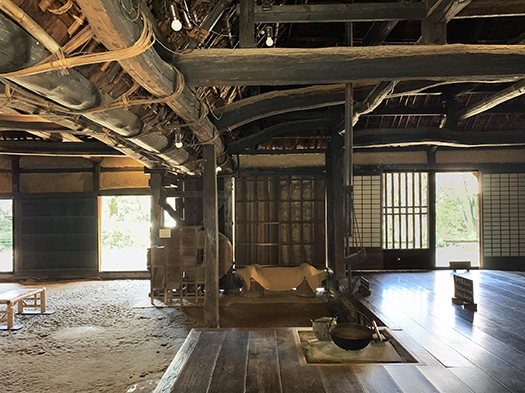
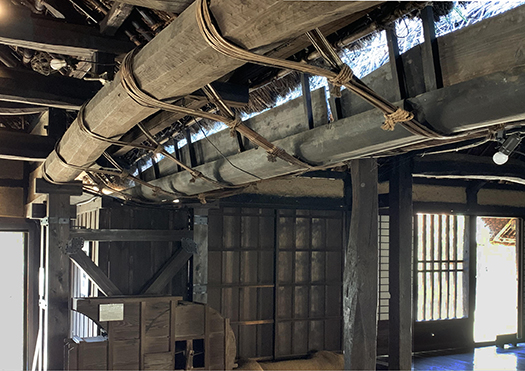
写真の上2枚は室内でのその「雨樋」の様子。
幹の太さが30cmほどの木材の内部をくり抜いて利用している。
それが、軒先を接した棟の中間に渡されている。
双方の棟の横架材に木の皮のようなものでくくりつけられている。
スパンはそこそこに細かいけれど、こういった造作が自然素材だけで
金物などが使われずに施工されている。
こういう仕上げ方で300年を超えて相当の長期間、持ちこたえてきた。
たぶん緊結用の樹皮は一定時間経過毎に更新されたのではないか。
万が一、この雨樋が容量オーバーになったら雨水があふれて
室内に滝のように流れ込んだ可能性もあると思われる。
念のため、その直下は基本的に土間になっているようで、
30cm以上は床上げされた室内空間は保全されていたと思われる。
しかし、この室内雨樋のメンテナンス、保全維持が最大の問題だったのではないか。
この平面利用の利便性を維持しながら、雨水処理の問題を解決したのが
南部曲がり家だったのではないかと想像されてくる。
主体構造として主屋側の桁行をより長く伸ばして一体構造の建物として
分棟の屋根に必然的な「谷」の生起を抑止したと思える。

人類普遍的な空間要素、住と労働の建築対応処理として
こういった構造のプロセス変移が存在したのではないか。
その地域的な分水嶺が、関東と岩手・南部地域の中間線だったのではないか。
こうした分棟構造はその後、廃れていって現代の間取りでも
存続してきていないことを思うと、住宅建築のひとつのミッシングリンクではと。
こういう分棟と雨樋の室内空間で、どんな生活実感があったかと想像すると
まず「雨音」の問題がある。そして雨水の行く末というか、
それをどのように利用したかも興味が深まる。
建築のありようから、昔人の暮らしの様子が「見える化」できる。

English version⬇

[Roof joint of branch building / indoor rain gutter / Japanese good house ㉖-2]

This is Hitachi’s former Ota family residence, part 2.
I wrote about the branch format yesterday, but as you can see in the photo, the two buildings are joined.
On the outside, the hipped roof on the front side is attached to the hipped roof on the back side.
Since the roof is a sloping roof, valleys are formed, so rain concentrates on the joints.
This type of construction is premised on the rain gutter being exposed indoors.
It will be a large-diameter gutter so that it will not collapse even during heavy rainfall.
Well, it can be inferred that the last-minute situation would have happened.
In addition, serious damage can be expected when it snows in winter.
Therefore, it seems that it is an architectural style that cannot be found in northern houses.
From what I’ve seen, I think South Kanto is the limit.
However, the appearance of this Hitachi house is similar to the “Southern bent house” that went further north.
There is a horse shop in the dirt floor, and the positional relationship between the human-dominated main house and the dirt floor
It seems that it seems to be made like a bent house.
Rather, I can feel the connection between such a branch building and a bent house.
The top two photos show the “rain gutter” indoors.
The inside of the wood with a trunk thickness of about 30 cm is hollowed out and used.
It is passed in the middle of the building that borders the eaves.
It is attached to the horizontal members of both buildings with something like a bark.
The span is fairly fine, but these features are made only of natural materials.
It is constructed without using hardware.
With this finishing method, it has lasted for a considerable period of time over 300 years.
Perhaps the bark for binding was renewed at regular intervals.
Should this gutter exceed its capacity, rainwater will overflow.
It is possible that it flowed into the room like a waterfall.
Just in case, it seems that the area directly below it is basically a dirt floor.
It seems that the interior space raised above 30 cm was preserved.
However, maintenance and maintenance of this indoor rain gutter may have been the biggest problem.
While maintaining the convenience of using this flat surface, the problem of rainwater treatment was solved.
It is imagined that it was a southern bender.
As the main structure, the girders on the main building side are extended longer to form an integrated building.
It seems that the inevitable “valley” on the roof of the annex was suppressed.

As a universal spatial element of humankind, as an architectural treatment of housing and labor
Perhaps there was a process transition of such a structure.
The regional watershed may have been the middle line between the Kanto region and the Iwate / Southern region.
After that, such a branch structure became obsolete, even in the modern floor plan.
Given that it hasn’t survived, it’s a missing link in a residential building.
Imagine what kind of life you felt in the indoor space of such a branch building and a rain gutter.
First, there is the problem of “rain noise”. And the end of rainwater
I am also interested in how I used it.
From the state of architecture, it is possible to “visualize” the way people lived in the past.

【常陸の農家土間空間/日本人のいい家㉖-1】


きのう、先行的に「高札」について書いた常陸の旧太田家住宅の土間空間です。
この建物は「分棟」形式という南方由来と目される、いわば用途別の棟が
個別に存在して、その用途にあわせて人間生活の方が移動する
そういったスタイルが見られる住宅とされています。
より南方の沖縄の古民家での、完全に「食堂」と「居間」が分離して
一度は外に出て往還するという「分棟」ではなく棟同士は接合している。
各棟の屋根が合流する地点・谷に盛大な雨樋も存在する。

で、この住宅では主要な入口である棟のほうは
完全に土間だけの空間が広がっている。
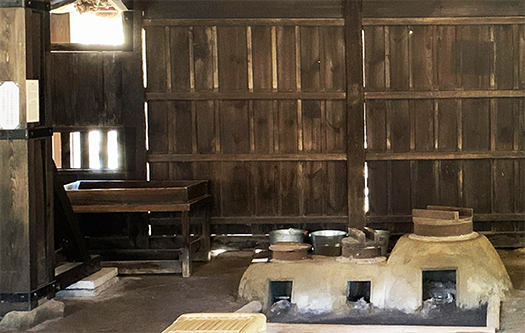
用途としては馬屋が収容されていたり、農作業空間であったり、
かまどが据えられて煮炊きの用途にも使われている空間。
基本的には農作業空間としての必要性に準拠して造作されている。
収穫した穀物類の脱穀や籾すり、選別や精白作業、さらに漬物や
味噌醬油の仕込み作業などがこういう場所で行われてきた。
土間のことを「ニワ」と呼んで、ウチニワ・ソトニワ・カドニワなどと
その場所に対して名称を与えられてきている。
いかにも神聖な仕事場として清浄が保たれる工夫もされてきて、
土間面が傷んできたら、石灰を撒いて固めたり清潔の保持にも努めていた。
ウチのニワはまさに農事作業の最重要な仕上げ工程であり、
いかにも「夜なべ仕事」の中核的な場所だったのだと思います。

都市部の商家などでも同様にこうした空間が日本人に普遍的に利用された。
まさに根がらみの民族性を涵養した空間なのだと思える。
日本人の働く場所として、基底的に刷り込まれているものがある。
現代に至って、この普遍的空間性は日本人の空間から消えつつある。
いわゆる「住宅」は労働の場という側面をほぼ喪失したか、
あるいは労働の概念が変容してパソコンに向かってのデスクワーク主体になった。
土間から「事務室」空間に様変わりしたといえるのでしょう。
現代のテレワーク・リモートワークでまた仕事の場としての機能が
住宅に求められるようになって、変化のきっかけは生まれてきている。
現代の土間、仕事空間がどう生成されていくのか、いまがリアルタイムだと思う。
しかし一方でインテリアとしての土間の復権というのも
興味深い分野になるのではないかと思っている。
事実そのような空間が試行されてきていると感じられますね。

さて先日、東日本大震災10年ということで、
災害に対する住まいの「守り」と「備え」というテーマでの記事計画を
ご案内しましたが、ReplanWEBマガジンで記事がアップされました。
家づくりの基本 ‒ もしもの備え2021.3.17
これまでの取材事例などから、うち続く災害へ、誰もが心がけるべきポイントを
まとめた記事になっています。ぜひご一読ください。

English version⬇

[Hitachi farmhouse soil space / good Japanese house ㉖-1]
Yesterday, it is the dirt floor space of the former Ota family residence in Hitachi, where I wrote about “Kosatsu” in advance.
This building is considered to be derived from the south, which is called a “branch building”, so to speak
It exists individually, and human life moves according to its purpose.
It is said that the house has such a style.
The “dining room” and “living room” are completely separated in an old folk house in Okinawa to the south.
The buildings are joined together rather than being a “branch building” where you go out and go back and forth.
There is also a large rain gutter in the valley where the roofs of each building meet.

So, in this house, the main entrance building is
The space is completely open to the dirt floor.
It can be used as a horse shop, as a farm work space, etc.
A space where a kamado is installed and is also used for cooking.
Basically, it is designed according to the necessity as an agricultural work space.
Threshing and hulling of harvested grains, sorting and polishing work, and pickles
Miso soy sauce preparation work has been done in such places.
The dirt floor is called “Niwa”, and it is called Uchiniwa, Sotoniwa, Kadoniwa, etc.
The place has been given a name.
It has been devised to keep it clean as a sacred workplace.
When the soil surface was damaged, I tried to sprinkle lime to harden it and keep it clean.
Our Niwa is exactly the most important finishing process of agricultural work,
I think it was the core place of “night pot work”.

Similarly, such spaces were universally used by Japanese people in urban merchant houses.
It seems that it is a space that cultivates the rooted ethnicity.
Some of the places where Japanese people work are basically imprinted.
In modern times, this universal spatiality is disappearing from the Japanese space.
Did the so-called “housing” almost lose its aspect of a place of work?
Alternatively, the concept of labor has changed, and it has become the subject of desk work toward personal computers.
It can be said that the space has changed from a dirt floor to an “office” space.
Modern telework and remote work can also function as a place of work
With the demand for housing, the opportunity for change is born.
I think it’s real time now to see how modern soil and work spaces are created.
However, on the other hand, the restoration of the dirt floor as an interior is also
I think it will be an interesting field.
In fact, I feel that such a space is being tried.

By the way, the other day, 10 years after the Great East Japan Earthquake,
Article planning on the theme of “protection” and “preparation” of housing against disasters
As I mentioned, an article has been uploaded in Replan WEB magazine.
Basics of building a house-Preparation for what-if 2021.3.17
From the cases of interviews so far, to the disasters that will continue, the points that everyone should keep in mind
It is a summarized article. Please read it.

【メディア革命・最後の高札「五榜の掲示」】


古民家シリーズ「日本人のいい家」その26軒目、常陸旧太田家住宅です。
創建は1600年代後期までさかのぼる古民家とのこと。築300年以上。
・・・なんですが、きょうはこの家に遺されていた江戸時代最後期の
「高札」遺物について考えてみたいと思います。
現代社会は「情報化社会」であって、当たり前のように世界と日本の出来事が
瞬時に多くのひとに知られる。そのことが前提になっている社会ですが、
それは高々150年ほど前の明治維新以降、近代国家として歩み始めてから
急速に進展してきたことであって、
それ以前の江戸期は「由らしむべし知らしむべからず」であり、
為政者は人民を施政に従わせればよいのであり、その道理を人民にわからせる必要はない
というのが基本的な情報へのスタンスだったと言えるでしょう。
そういう社会から明治への移行期、新政府の考え方を民衆に知らせたのが
この「五榜の掲示」という「高札」だったとされている。
いまの茨城県笠間市近郊に住んでいた太田家はムラ社会の庄屋として
新政府側から支給されたこの高札をムラの要地に掲げたものと思います。

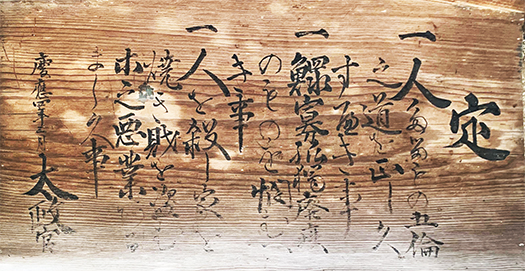
一 人タルモノ五倫ノ道󠄁ヲ正シクスヘキ事
一 鰥寡孤獨癈疾ノモノヲ憫ムヘキ事
一 人ヲ殺󠄀シ家ヲ燒キ財ヲ盜ム等ノ惡業アル間敷󠄁事
慶應四年三月󠄁   太政官
というように読み下せる内容が、民への戒めとして告示されていた。
行政側の末端という庄屋としての立場から、伝達する意を持っていたのか、
この家ではこの高札を大切に保存してきた。
この五榜の掲示は全部で5枚の告諭があったのですが、
たぶん最初の人倫を説いたこの高札が普遍的内容と受け止め
家宝のように保存されてきたものでしょうか。

慶応4年3月というのは1868年3月であり、徳川からの政権交代直後。
新政府の施政方針を、民にわかりやすく説明する意図か。
五箇条の御誓文は支配階級向けの政治方針であり、
この五榜の掲示はいわば「マスメディア」の役割を担わせたというもの。
「鰥」とは61歳以上のやもめ(妻を亡くした夫)
「寡」とは50歳以上の未亡人
「孤(惸)」とは16歳以下の父親のいない子供
「独」は61歳以上の子供がいない者を指した。
「癈疾」は身体が不自由な人のこと。
カンカコドクハイシツというように読むのだそうです。
今日的には「福祉政策」の基本の考え方を開示したものと言えそうですが、
こういった方針自体は江戸幕府の基本を受け継いでいるもの。
むしろ、こういった基本はこれからも変わることはないよと、衆知させた。
この五榜の掲示以降、いろいろなメディアが創設されていって
高札での衆知というスタイルは消え去っていったとされています。
そういう意味では「広く情報を伝える」手段の革命期の記念碑ともいえる。

現代われわれは、新聞などのメディアからインターネットに軸足が移ってきている。
150年前ほどにこういう大転換があったということから、
温故知新すべきこともあるかも知れないと感じております。

English version⬇

[Media Revolution, Last Kosatsu “Posting of the Five Public Notifications”]

The 26th old folk house series “Good Japanese House”, the former Ota family house in Hitachi.
It was built as an old folk house dating back to the late 1600s. Over 300 years old.
… I mean, today was the last day of the Edo period that was left in this house.
I would like to think about “Kosatsu” relics.
The modern society is an “information society”, and the events of the world and Japan are commonplace.
Instantly known to many people. That is the premise of society,
It has been a modern nation since the Meiji Restoration at most 150 years ago.
It ’s a rapid progress,
Before that, the Edo period was “Yurashimubeshi Shimubezu”,
The politician only has to make the people obey the administration, and it is not necessary for the people to understand the reason.
It can be said that it was a stance on basic information.
During the transition from such a society to the Meiji era, it was what made the people aware of the new government’s thinking.
It is said that it was a “kosatsu” called “the bulletin board of the Five Public Notifications”.
The Ota family, who lived in the suburbs of Kasama City, Ibaraki Prefecture, is now a shoya in Mura society.
I think that this Kosatsu, which was provided by the new government, was put up at the key point of Mura.
Samadhi
One person Talmono Five Relationships 󠄁
I.
I. Killing people 󠄀 Shiya wo burning goods wo 盜, etc.
March, 4th year of Keio 󠄁 Daijo-kan
The content that can be read down was announced as a commandment to the people.
Did you intend to convey it from the standpoint of Shoya, the end of the administration?
This house has carefully preserved this kosatsu.
There were a total of 5 notices on this Five Public Notifications, but
Perhaps this Kosatsu, which preached the first humanity, is regarded as universal content
Is it preserved like a heirloom?

March 1868 is March 1868, immediately after the change of government from Tokugawa.
Is it the intention to explain the new government’s policy to the people in an easy-to-understand manner?
The Charter Oath is a political policy for the ruling class,
This bulletin board of the Five Public Notifications played the role of “mass media”.
“Husband” is a widow over 61 years old (husband who lost his wife)
“Widow” is a widow over 50 years old
“Solitary” is a child under the age of 16 without a father
“Germany” refers to those who have no children over the age of 61.
“Human” is a person with a physical disability.
It is said that it is read as “Kankakodokuhaishitsu”.
Today, it can be said that it disclosed the basic idea of ​​”welfare policy”.
These policies themselves inherit the basics of the Edo Shogunate.
Rather, he made people aware that these basics will not change in the future.
Since the posting of the Five Public Notifications, various media have been created.
It is said that the style of public knowledge on Kosatsu has disappeared.
In that sense, it can be said to be a monument to the revolutionary period of the means of “widely disseminating information.”

Today, we are shifting our focus from newspapers and other media to the Internet.
Since there was such a big change about 150 years ago,
I feel that there may be something that needs to be renewed.

【なんか最近、山並みがクッキリきれいかなぁ】


春近しの今日この頃の札幌市内でありますが、
コロナ禍から散歩に健康法を求める人は多いようです。
ときどき同年代の方(だいたい60代以上)と話すとみな異口同音。
昔とは違ってイマドキの高齢者はWEBにも親和していると同時に
健康への関心度の高さもハンパないように思われます。
たぶん長寿命社会は今後とも進展していくのは間違いがなさそう。
ピンピンコロリのススメは広く行き渡っているように思います。
社会の発展は人間にシアワセをもたらすことが目的だと思いますが、
こと寿命というわかりやすい指標では現代社会は優れている。
ということで、わたしも毎日の散歩コースを工夫してきているのですが、
最近はもうすぐ春分ということで、朝がどんどん早くなってきている。
札幌の場合、平野部は北側、東側に広がっていて、南側は大きく山塊が囲んでいる。
ちなみに西側は小樽方面にあたり、こちらも山並みにすぼんでいく地形。
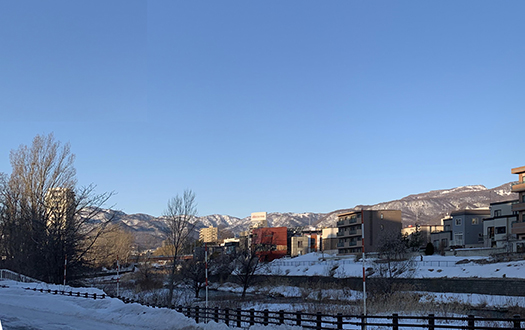
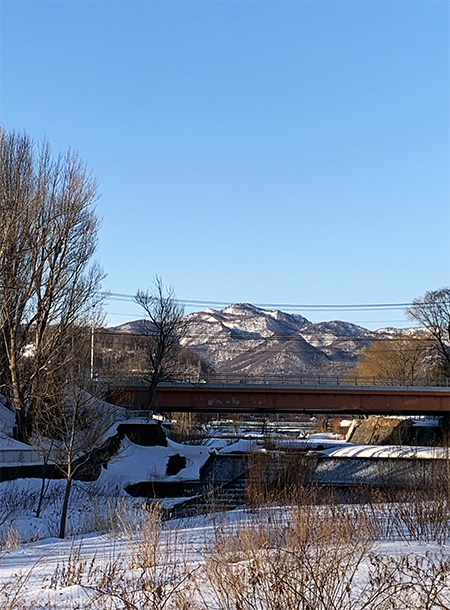
やや西向きに角度が振れている山塊が朝日を受けて朝から神々しい。
ちょっと開けた場所では雄大なパノラマ模様が広がってくれる。
この山並みの美しさに最近再発見の思いが強くしております。
これは家の近くの「発寒川」河畔を散歩することが多く、
山並みにほぼ正対するようなコースを選択することが増えてきて、
雪をいただく景色のコントラストが明瞭なのと、もうひとつ気付いているのが
コロナ禍での人間活動の低下の結果、
空気の透明感が増してきていることが、影響しているように思われるのです。

そういえば日本各地で「こんなところまで見晴らせるようになった」という
自然景観回復の様子が伝えられることが多くなっている。
世界の製造産業が集中してきた中国などの工場群からのCO2輩出が、
2020年昨年のデータだけれど3月1日までの4週間で、中国のCO2排出量は
前年同期比で2億トン減少した、という報道を確認していた。
偏西風の影響を考えれば、日本列島はそうした影響をじかに受けることになる。
この調査のその後は追っていませんが、全世界的にCO2排出量削減は疑いがない。
札幌の南側の山並みに低い角度からの日射が当たるのは早朝なので、
このように空気の透明感が増してくることで、
クッキリ感が倍増するのではないでしょうか。

先日札幌の自然巨視的環境は、京都を南北にひっくり返したものと書きましたが、
碁盤の目の街並み区画の北側に山並みが続いている京都に対して
札幌はこの写真のような山並みが「南側」に展開している。
その山並みがちょうど美しい「屏風」のような景観を見せてくれている。
コロナ禍でのちょっとユニークな側面ではないか、これを札幌の魅力に
あらたに付け加えることはできないだろうか、と妄想を膨らませております(笑)。
早朝の高い位置からの札幌「外輪山」、といったような風景要素。・・・
そろそろ、コロナ禍も出口を探って、その評価・総括を始めるべき時期に
差し掛かってくるのではないでしょうか?

English version⬇

[I wonder if the mountains are clear and beautiful these days]

It’s near spring today in Sapporo city around this time,
It seems that there are many people who seek a health method for a walk from the corona sickness.
Sometimes when I talk to people of the same age (generally over 60s), they all have the same sound.
Unlike in the past, the elderly people of Imadoki have an affinity for the WEB at the same time.
It seems that there is no high level of interest in health.
There is no doubt that a long-lived society will continue to develop in the future.
I think that the recommendation of pin pin korori is widespread.
I think that the purpose of social development is to bring human beings to life,
Modern society is superior in terms of the easy-to-understand index of lifespan.
So, I have been devising a daily walk course, too.
Lately, the spring equinox is just around the corner, so the morning is getting faster and faster.
In the case of Sapporo, the plains extend to the north and east, and the south is surrounded by a large massif.
By the way, the west side is in the direction of Otaru, and this is also a terrain that shrinks into the mountains.
The mountain massif, which has a slightly westward angle, is divine from the morning in response to the rising sun.
A magnificent panoramic pattern spreads out in a slightly open place.
Recently, I have a strong desire to rediscover the beauty of this mountain range.
This is often a walk along the banks of the “Kankan River” near my house.
Increasingly, we are choosing a course that almost faces the mountains,
Another thing I noticed is that the contrast of the snow-covered landscape is clear.
As a result of reduced human activity in the corona sickness
The increasing transparency of the air seems to have an effect.

Speaking of which, all over Japan says, “I’ve come to see this kind of place.”
The state of restoration of the natural landscape is often reported.
CO2 production from factories such as China, where the world’s manufacturing industry has been concentrated,
2020 Last year’s data, but in the four weeks until March 1, China’s CO2 emissions
It was confirmed that it had decreased by 200 million tons compared to the same period of the previous year.
Given the effects of westerlies, the Japanese archipelago will be directly affected.
We haven’t followed up since this survey, but there is no doubt that CO2 emissions will be reduced globally.
It is early in the morning that the mountains on the south side of Sapporo are exposed to sunlight from a low angle, so
By increasing the transparency of the air in this way,
I think the feeling of clarity will be doubled.

The other day, I wrote that in the macroscopic environment of Sapporo’s nature, Kyoto is turned upside down from north to south.
For Kyoto, where the mountains continue to the north of the grid-shaped cityscape section
In Sapporo, the mountains like this photo are on the “south side”.
The mountain range shows a beautiful “folding screen” -like landscape.
Isn’t it a little unique aspect of the corona virus, which makes Sapporo attractive?
I’m wondering if I can add something new (laughs).
Landscape elements such as Sapporo “Outer Ring Mountain” from a high position in the early morning.・ ・ ・
It’s time to start evaluating and summarizing the corona virus by searching for an exit.
Isn’t it coming soon?