本文へジャンプ

【眠っていたロードヒーティング「一気融雪」活用】


3月5日に札幌市によるわが家周辺住宅地域除排雪の実施以降、
札幌地方は順調に好天が続いていて、主要道路路面からも積雪が消えてきた。
しかし住宅地域道路などでは固い岩盤状の氷雪が残っている。
例年だと、除排雪があってもまたぶり返しの降雪があるのですが、
ことしはどうも春への進行が順調そうなのであります。
わが家は北入りで接道しているので、駐車スペースには固い氷雪が、
それこそ4月上旬くらいまで残って、そこから人力で雪割りする。
思った以上にことしの天候がいいので、
ことしは一計を立て敷設してあるロードヒーティング(灯油ボイラー熱源)で
高温連続運転を仕掛けて、「一気に融雪させる」というプランを立てた。
ロードヒーティングは新築の30年前から敷設してあったけれど、
灯油代がかかるということ以上に、だんだん兼用事務所程度の建築で
そういう融雪まで行うことに心理的抵抗が湧き上がってきていた次第。
ということで、ここ十年以上は運転しておりませんでした。

で、ボイラーや温水の状態も確認する意味で試しに運転してみたけれど
これがまったく順調に起動し、問題なく動作してくれました。
それならばと、温水の温度設定をやや高温設定にして運転させることにした次第。
たしか先週月曜日、8日に運転開始させて、9日に運転休止した。
都合、1.5日程度のロードヒーティング運用です。
運用8−9時間くらいで最大厚み30cm程度あった氷雪岩盤層が、
全般的に薄く変化してきたので、その段階から氷割り作業開始。
これが思った以上に作業が順調に推移した。
やはりロードヒーティングで厚みが顕著に減衰し、やや中空状態になったので、
雪割りの割れっぷりがハンパなく好適なレスポンスなのです。
そうやって割った雪氷はそのまま、レンガ面にのっけたまんまにしておいた。
ロードヒーティングの熱でゆっくりだけれど、確実に小型化し、
やがて消えていってくれた。
途中では雪氷のかたまりをクルマで「ボスボス」と砕いた。
というような雪国人的年中行事をジミジミと続けてくること3−4日。
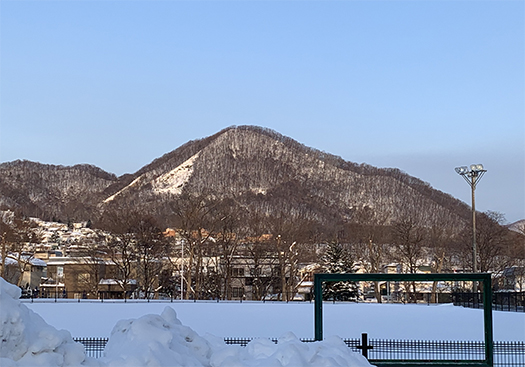
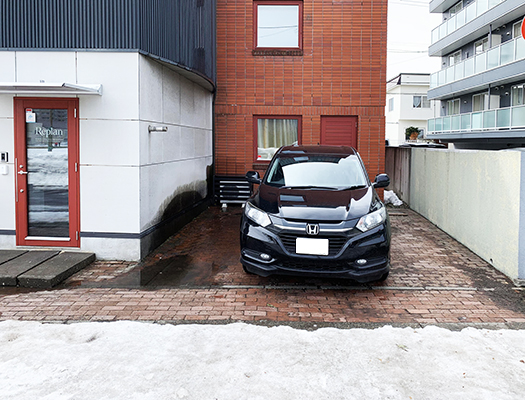
写真がけさのわが家レンガ地面スペースの様子であります。
公道面にはまだ20cm近くの厚みで氷雪岩盤が残っていますが、
ロードヒーティング側ではキレイに雪が消えていってくれた。
この1.5日のロードヒーティング運転でどの程度の石油消費になるのかは
まだ確認できませんが、まぁ2-3,000円分くらい以上は使ったと思います。
しかし、これからまだ高齢化が進展していきますので
せっかく敷設してあるロードヒーティングの「効果的・効率的」運用スタイルとして
この乗り切り手法をわが物にするのは価値がある。
ジミに「やったぜ」とうれしがっております(笑)。

English version⬇

[Utilization of sleeping road heating “snow melting”]
Since the snow removal in the residential area around my house by Sapporo City on March 5th
The weather in Sapporo has been steadily good, and snow has disappeared from the main roads.
However, hard rock-like ice and snow remain on residential area roads.
In the usual year, even if there is snow removal, there will be snowfall again, but
It seems that the progress to spring is going well this year.
Since my house is on the north side, there is hard ice and snow in the parking space.
It will remain until the beginning of April, and then the snow will be split manually.
The weather is better than I expected, so
This is the road heating (kerosene boiler heat source) that has been laid upright.
We set up a high-temperature continuous operation and made a plan to “melt snow at once”.
Road heating has been laid 30 years before the new construction,
More than it costs kerosene, it’s gradually built like a dual-purpose office.
As soon as psychological resistance was rising to do such snow melting.
So I haven’t been driving for more than 10 years.

So, I tried driving to check the condition of the boiler and hot water.
It started quite fine and worked fine.
In that case, I decided to set the temperature of the hot water to a slightly higher temperature and operate it.
It is true that the operation started on the 8th last Monday and stopped on the 9th.
For convenience, it is a road heating operation of about 1.5 days.
The ice and snow bedrock layer, which had a maximum thickness of about 30 cm in about 8-9 hours of operation,
Since it has changed slightly in general, the ice breaking work started from that stage.
The work went smoothly than I expected.
After all, the thickness was significantly attenuated by road heating, and it became a little hollow, so
The cracks in the snow are a good response without any bumps.
The snow and ice that was broken in this way was left on the brick surface as it was.
Slowly but surely downsized by the heat of road heating
Eventually it disappeared.
On the way, I crushed a lump of snow and ice with a car as “boss boss”.
It’s 3-4 days to continue such a snow country annual event with Jimi Jimi.
It is a state of the brick ground space of my house in Keisa.
There is still ice and snow bedrock with a thickness of 20 cm or more on the public road surface,
On the road heating side, the snow disappeared cleanly.
How much oil will be consumed by this 1.5-day road heating operation?
I can’t confirm it yet, but I think I spent more than 1,000 yen.
However, the aging of the population will continue to progress.
As an “effective and efficient” operation style for road heating that has been laid down
It is worthwhile to own this survival method.
I’m happy that Jimi said “I did it” (laughs).

【天井気積と暖房火力/日本人のいい家㉕-5】


日本の民家では天井を張るのは、歴史的にはまだ数百年なのだという。

基本的には家というのは、外界との間を結界する、
内部空間を生み出すことがその機縁なのでしょう。
そのために柱を立て地盤面を仕切り、屋根を掛けることが人間社会で先行した。
ある程度の文化段階に至って、そういう「巣作り」がイキモノとしての人間に
普遍的に進化を見せてきたと言えるのでしょう。
次の段階で、壁をどう作るのかというテーマが生起して、
木を張ったり、土壁を造作したりした。
人間の体温維持のための暖房は、平行的に随伴したけれど、
ある段階までは、その家の周辺で採取されるバイオマス・薪が役立てられ
このことは、それこそ定住以前からの人類伝統だった。
この暖房エネルギーに革命が起こるのは、エネルギー革命が進行した
日本で言えば明治期以降なのでしょう、高々150年程度。
薪を焚いて得られる暖房の火力というのはどれくらいのモノであるのか、
たしかそういった研究もあったように思うけれど、定かではない。
・・・と書き終わったときに、三浦秀一東北芸工大教授の
以下のFacebook投稿に遭遇したので、引用します(許諾済み)。
〜冬に容量5kWh蓄電池でエアコンの暖房を動かせるのは3~4時間。
電気のいらない薪ストーブでいうならば、薪3~4本分の暖房熱量です。
100万円ぐらいする蓄電池が薪3~4本分の力しかないのです。
少し電気を使いますが、ペレットだと3.7kg。
薪やペレットといった木のエネルギー貯蔵力がいかに大きいかが分かる。
エアコンを蓄電池で動かそうなどと考えない方がいいと言うことでもある。
震災の時、薪ストーブは大活躍でした。その後蓄電池は普及してきましたが、
今も薪を超えるものではありません。
拙著「研究者が本気で建てた ゼロエネルギー住宅」に詳述。〜引用以上。
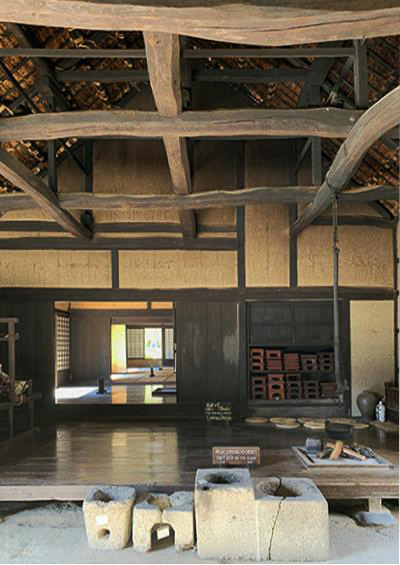
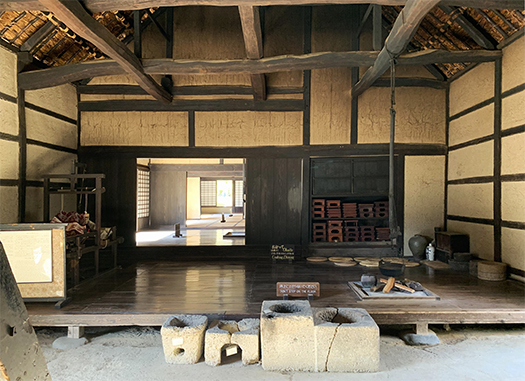
しかし写真の、この気積空間では圧倒的に非力であったことは疑いがない。
日本では貴族住宅などでこうした木造架構空間に「天井」が張られてきた。
その初期には、いごこちの優位性が根拠だったに違いない。
床には畳がしつらえられ壁には土塗り壁がほどこされ、
そして天井には「木の板」が張られるようになる、という進化プロセスは
やはりどう考えても「居住性能」がその目的根拠だったと思われる。

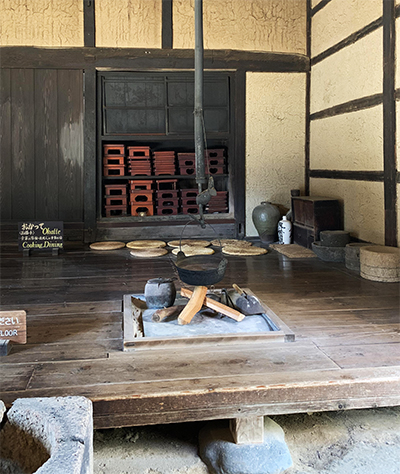
写真のような巨大気積の空間の暖房火力として用意されているのは
手前側の石をくり抜いたかまど類と、囲炉裏。
この信州・佐久の家、冬期には容赦のない冷気が襲ってくる地域環境。
最低気温は当然零下であろうし、場合によっては零下10度前後も考えられる。
〜寝ていると布団の口のまわりが凍ってしまうので、ホオッカムリ(頭と顔を布で
くるむこと)をして寝ました。吹雪の日は屋根の煙り抜け部分から
雪が吹き込んできた。〜という状況。
こういった造作自体は北海道の初期規格住宅といえる屯田兵屋でも同様だから、
ごく最近まで天井のない空間で日本人は暮らしていたと言えるのでしょう。
そう考えてくると、国防的な理由から開拓が進んだ北海道が
その厳しい気候条件を提供して、ようやく知恵と工夫をまとめ上げた
「高断熱高気密」は、歴史的な進化の契機だったといえるのでしょう。

ただ一方で、この広大な屋根の下の空間は、
ノスタルジックであり、また美的にも魅力的だともいえる。
天井断熱からさらに屋根断熱へと至っていく動機でもあるのかも知れません。

English version⬇

[Ceiling air volume and heating / heating power / Japanese good house ㉕-4]
It is said that it has been hundreds of years since the ceiling of a Japanese private house has been erected.

Basically, a house is a barrier to the outside world.
Probably the reason is to create an internal space.
For that purpose, pillars were erected to partition the ground surface, and roofing was preceded in human society.
At a certain level of culture, such “nesting” becomes a human being as a living thing.
It can be said that it has evolved universally.
At the next stage, the theme of how to make a wall arose,
I put up trees and made earthen walls.
Heating to maintain human body temperature was accompanied in parallel,
Until a certain stage, the biomass and firewood collected around the house will be useful.
This was a human tradition before settling.
This heating energy revolution occurs because various energy revolutions have progressed
In Japan, it’s probably after the Meiji era, about 150 years at the most.
How much is the heating power obtained by burning firewood?
I think there was such research, but I’m not sure.
However, there is no doubt that it was overwhelmingly powerless.
In Japan, “ceilings” have been put up in such wooden frame spaces in aristocratic houses.
In the early days, it must have been based on the superiority of the ruggedness.
The floor is tatami-matted and the walls are plastered with earthen walls.
And the evolutionary process of putting “wooden boards” on the ceiling
After all, it seems that “living performance” was the basis for that purpose.

What is prepared as a heating power for a space with a huge air volume as shown in the photo
Kamados with hollowed out stones on the front side and the hearth.
This Shinshu / Saku house is a local environment where merciless cold air strikes in winter.
The lowest temperature will naturally be below zero, and in some cases around 10 degrees below zero.
~ When I sleep, the area around the mouth of the futon freezes, so I used a cloth to cover my head and face.
I did (wrapping) and went to bed. On a snowstorm day, from the smoke-through part of the roof
Snow has blown in. The situation.
This kind of structure itself is the same at Tonda Hyoya, which can be said to be an early standard house in Hokkaido.
It can be said that the Japanese lived in a space without a ceiling until very recently.
When I think about it, Hokkaido, which has been cultivated for national defense reasons,
Providing the harsh climatic conditions, we finally put together wisdom and ingenuity
It can be said that “high heat insulation and high airtightness” was an opportunity for historical evolution.

On the other hand, the space under this vast roof is
It’s nostalgic and aesthetically pleasing.
It may also be the motivation to move from ceiling insulation to roof insulation.

【武家応接・身分制のムダ空間/日本人のいい家㉕-4】


江戸時代というのは身分性社会を選択していた。
その意味合いを考えると軍事的・政治的安定を保全するために
江戸時代スタート時点での権力関係を固定化して
まずなによりも国内平和を実現させること、というのが積極的理由だっただろう。
このことは民の側としても、まずは必要な「社会改革」の第1歩だっただろう。
徳川氏、その周辺の権力が固定化長期化することだから、
かれらに巨大なメリットがあることは、やむを得ない副作用と受忍したといえる。
そしてその「平和」の固定化のためにその時点で社会をも固定化する圧力が加わった。
それが貫徹して行ったのが身分の固定化ということだった。
ごく一部の人口部分である武士という存在が権力全権を握り
労働を「命令監督」するという立場が固定化されることになった。
具体的にはこの信州佐久の庄屋宅に、武家の支配監督のために
武権でもって「君臨」することが定常化していた。
庄屋の家とは、同時に公儀の役所でもあったので、
おもに税金の徴収事務にかかわる役儀を果たす目的であった。

この「おっかない人斬り包丁」を腰にぶら下げた連中の機嫌を損ねないように
庄屋宅側では、応接に気を使って行かざるを得ない。
ひたすらバイオマス自然エネルギー・薪炭に依存している社会にとって
風呂を家で沸かすというのは大変な労役であり、エネルギーの用途としても
貴重なものであったけれど、家風呂をかれら武家の休息用に装置した。
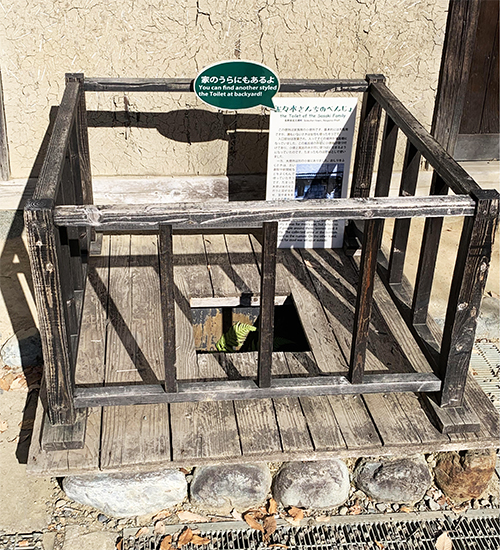
ちなみに下の写真はこの家の家族用のトイレ。
入口の外に装置された小便器で、通常は男性用だがひとがいないときには
女性も使っていたとされる。

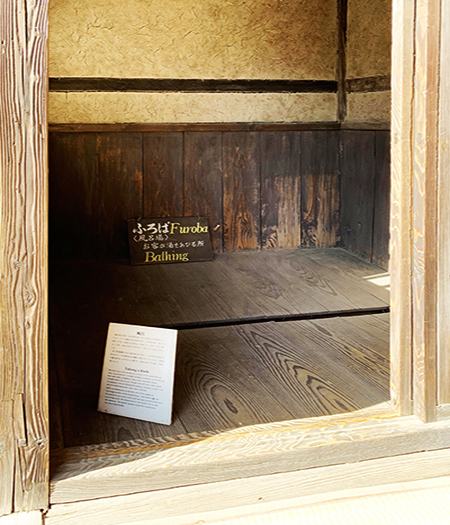
このトイレの家の壁を挟んだ反対側には、家族用に土間に風呂がしつらえられ
あたたかい時期には行水として使われ、寒季には湯が沸かされた。
その湯水は貴重で、こういう風呂のある家に近隣から「もらい湯」に来ていたとされる。
そしてその使った湯水は、トイレの糞尿とともに蓄えられて
田畑の肥料として活用されていたという。
糞尿は当然として、汗水まで貴重なエネルギー源として見ていた。
エネルギーに対して、徹底的に節約し貴重なものとして活かしきっていた。
そういった社会の中で、応接を受ける武家の心情はどうであったか。

こういう貴重なエネルギー消費を当然と受け取っていたのか、
彼ら自身の住宅においても、こういう家風呂のような贅沢はできなかっただろう。
「役得」として喜ぶというのが自然な対応だろうけれど、
こういう制度を300年近く続けていることに
ふと、疑問と罪悪感の片鱗も持たなかったものだろうか?
風呂を上がって食事の接待を受け酒まで飲んでいただろうけれど、
いごこちのいい役得機会としてウキウキしていたものだろうか?
はるかな後世人として特段の感慨を持つものではないけれど、
こういうことが心のビョーキ化していっただろうことは想像に難くない。
・・・ちょっと目くじらだとは思うけど(笑)。

English version⬇

[Waste space of samurai reception / identification system / Good Japanese house ㉕-4]
In the Edo period, the identity society was selected.
Given its implications, to preserve military and political stability
Fixed power relations at the start of the Edo period
First and foremost, the realization of domestic peace would have been a positive reason.
This would have been the first step in the necessary “social reform” on the part of the people.
Mr. Tokugawa, because the power around it will be fixed and prolonged.
It can be said that their enormous merit was an unavoidable side effect.
And because of the immobilization of “peace”, pressure was applied to immobilize the society at that time.
It was the immobilization of status that went through.
The existence of a samurai, a small part of the population, has full power
The position of “command supervision” of labor has been fixed.
Specifically, at the Shoya’s house in Saku, Shinshu, for the control and supervision of the samurai family.
“Reigning” with military power had become a regular practice.
Shoya’s house was also a public office at the same time, so
The main purpose was to fulfill the role of being involved in tax collection work.

Don’t let the guys who hang this “Funny Hitokiri Knife” on their waists get in the mood
On the Shoya’s house side, we have to be careful about the reception.
For a society that is solely dependent on biomass renewable energy and fuelwood
Boiling a bath at home is a daunting task, and it can also be used as an energy source.
Although valuable, they set up a home bath for the rest of their samurai family.
By the way, the photo below is a family toilet in this house.
Urinals installed outside the entrance, usually for men but when there are no people
It is said that women also used it.

On the other side of the wall of this toilet house, there is a bath in the dirt floor for the family.
It was used as Gyozui during the warm season, and the water was boiled during the cold season.
The hot water is precious, and it is said that a house with such a bath came to “Takeyu” from the neighborhood.
And the used hot water is stored together with the excrement of the toilet.
It is said that it was used as fertilizer in the fields.
As a matter of course, manure was seen as a valuable energy source even for sweat.
It saved energy thoroughly and made full use of it as a valuable item.
How was the feeling of the samurai who received the reception in such a society?

Did you take such precious energy consumption as a matter of course?
Even in their own homes, they would not have been able to afford the luxury of a home bath like this.
It would be a natural response to be pleased as a “profit”, but
To have continued such a system for nearly 300 years
Suddenly, did he have no doubts and feelings of guilt?
I would have gone out of the bath, received food entertainment, and even drank alcohol,
Was it exciting as a good opportunity to play a role?
I don’t have any particular feelings as a far posterity,
It’s not hard to imagine that this kind of thing would have turned into a ghost. … I think it’s a bit of a wrinkle (laughs).

【寺子屋まであるムラ共同体空間/日本人のいい家㉕-3】


昨日は震災のメモリアルだったので連載中断。
ふたたび信州佐久の古民家取材・探究記事であります。
この家は庄屋を交代制で務めていたという存在なのですが、
江戸期の庄屋、その住宅というのは公的な性格を持っている。
その地域の経済活動の中心であり、ムラ共同体の中核的運営主体。
武家の権力機構との相関性で社会を実質的に運営していた。
江戸時代が300年近く維持されてきたのには、こういう社会構造が
一定の民主的正統性も持っていたと思えてくる。

江戸期では家というのは、けっして血縁的な血のつながり最優先ではなく、
むしろ家という公的な立場の維持、存続保証の方に力点が置かれて
息子にその能力がないと見定めたら、娘に「よい婿」を取って
いわば法人としての家存続をはるかに優先させていた社会だと思う。
こういう考え方がムラ共同体の基本的認識だったと。
いちばん大切なのは、幕府の将軍や幕閣の政治運営ではなく、
こうした地域のムラ共同体の主体者が公益を優先していたかどうか、でしょう。
この佐々木家住宅では、ムラの衆が一堂に会するような土間+板の間空間があって
日常の農事作業空間であると同時に、ムラ社会の集会所的機能もある。
そして、土間の中2階では寺子屋まで運営されていたという。
社会にとって子どもたちは未来を担っていく宝物。
地域社会運営者として、その教育のために自分の家を供用した。
子どもたちが集う空間では、権威性とかでの支配というのは通用しない。
純粋なかれらにはそういう小手先のコケ脅かしは通用しない。
愛情と、自由の保障のようなものが全てに優先する。
そういう、地域として「育む」という心情を子どもたちはただしく受け止める。
社会の役に立とうとする公徳心の揺りかご。
地域が永く存続していくための基盤というのはそういう部分だと思います。
そして江戸の体制はそういう「民主主義」がある意味では
成立していた側面があったのだろうと思われるのです。
読み書き算盤を教えられる子どもたちの屈託のない表情があればあるほど、
その地域には「未来」があったのではないかと思える。
この広間の空間で、子どもたちが学びの時間をすごし、
そして子ども同士、あるいは大人たちとの交流の時間を過ごしていたことが
遙かな時間を越え、地域の大切な記憶として立ち上ってくるように思う。

そういう空間機能として過不足のない場所。
江戸期の「農家」住宅としては座敷が4間もある大型住宅だけれど、
地域に対して「支配する」的な権威圧迫感ではなく、
むしろ「公共意識」の揺りかごのような側面がみえる気がしています。

English version⬇

[Mura community space with a terakoya / a nice Japanese house ㉕-3]
Since it was a memorial of the earthquake yesterday, the serialization was interrupted.
This is an article about an old folk house in Saku, Shinshu.
This house is said to have taken turns serving Shoya,
Shoya in the Edo period, the house has a public character.
It is the center of economic activity in the region and the core operator of the Mura community.
It actually operated the society in correlation with the power mechanism of the samurai family.
This kind of social structure has been maintained for nearly 300 years in the Edo period.
It seems that it also had a certain degree of democratic legitimacy.

In the Edo period, the house was never the highest priority for blood-related blood connections.
Rather, the emphasis is on maintaining the public position of the house and guaranteeing its survival.
If you decide that your son doesn’t have that ability, take a “good son-in-law” to his daughter
So to speak, I think it is a society that prioritizes the survival of the family as a corporation.
This way of thinking was the basic recognition of the Mura community.
The most important thing is not the shogun of the shogunate or the political management of the shogunate.
I wonder if the actors of the Mura community in these areas prioritized the public interest.
In this Sasaki family residence, there is a space between the dirt floor and the board where the people of Mura can meet together.
At the same time as a daily agricultural work space, it also functions as a meeting place for Mura society.
And it is said that the terakoya was operated on the mezzanine floor of the dirt floor.
Children are a treasure for society to carry the future.
As a community operator, I used my home for that education.
In a space where children gather, domination by authority does not work.
Such a moss threat of a small hand does not work for them purely.
Something like love and the guarantee of freedom takes precedence over everything.
Children properly accept the feeling of “nurturing” as a community.
A cradle of public morality that tries to be useful to society.
I think that is the foundation for the long-term survival of the region.
And the system of Edo has such “democracy” in a sense
It seems that there was an aspect that had been established.
The more carefree facial expressions of children who can teach literacy abacus, the more
It seems that there was a “future” in that area.
Children spend their learning time in this hall space
And spending time interacting with children or adults
I think that it will rise as an important memory of the region beyond a long time.

A place where there is no excess or deficiency as such a spatial function.
As a “farmer” house in the Edo period, it is a large house with 4 tatami rooms,
Rather than a sense of authority that “dominates” the region
Rather, I feel that I can see the cradle-like aspect of “public consciousness.”

【うち続く未曾有災害 東日本大震災10年】


きょうは東日本大震災勃発から10年です。
わたしは会社のデスクに座っていたときに、はるかな遠雷のようなものを受け止め、
あの独特の揺れを感じていました。
南向きに開けられた窓を見ながら、札幌から「南の方かなぁ」と思いながら
それまで感じたことのない揺れの状況のなかにいた。
収まって、そこからの流れは一気呵成の動きだった。
北海道と東北・関東を縦断して発行する地域密着の住宅雑誌として、
いま、なにができるのかと考えて行動してきました。
2011年6月には写真のようなボランティア的な住宅情報誌を発行。
以下は発行について書いた2011.6.3ブログの要旨です。

〜東北全域で出版活動を行っている住宅雑誌として
今回の東日本大震災を受けて、ボランティア活動として取り組んできた
無料配布雑誌「東北の住まい再生」が刊行されました。
この雑誌は、東北の6県県庁から公的なルートを通して
また、東北全域に支店営業所ネットワークを有する東北電力の窓口からも
住まいの被害に遭われたみなさんを対象に無料で配布されます。
各県担当窓口には、昨日までには配布が完了しました。
今後、一般配布。どうぞご活用いただきたいと願っております。内容は・・・
・国土交通省の応急仮設住宅担当の、国の取り組みの報告
・国や県の住宅再建支援の基本になる「り災証明」についての詳細説明、
・国が進めている住宅や生活再生への支援策のまとめ、
・お金に関する情報のまとめなど、基本条件のまとめ。
その上で、今後の住まい再建のために地域の住宅への提言として、
・住まいと環境東北フォーラム・吉野博理事長インタビュー。
東北の気候風土、さらに被災の時期が冬期であったことを踏まえ断熱を
いかに強化すべきかという主要テーマが語られ、以下このテーマに沿って、
・東北各地での震災時以降の取り組みやルポルタージュを掲載。
・震災後、無暖房で過ごした住宅の温熱データの詳細や、
そこから導き出される自然エネルギー活用の実例。
ライフラインが絶たれる中で岩手県大槌町で、津波被害から生き残り、
さらに高断熱住宅が暮らしを守り、残されていた自然活用装置としての
地下水くみ上げポンプやかまどなどを活用して
自立的な生活を維持させた事例などを取材しています。
・住宅建築に関わるネットワークの活動も紹介。
・応急危険度判定・罹災証明に必要な判定作業などの取り組みから
どのような被害が起こっていたかの実態も紹介。
・沿岸地域でRCの1階を残して居住部分の2〜3階木造を流失した建築家による
自ら避難所まで沢水を引っ張った応急水道づくりなどの地域再生活動も取材。
・今後の復興に向けて、阪神淡路大震災からの復興の経験を
その中心的活動を行った建築家から寄稿していただいています。
・街をいかに再生させるか、その住民参加による再生のプロセスも。
さらに、住まいのチェックポイントとして、各部位別補修や改修の注意点などを
全国の住設企業のご協力でまとめました。東北各県窓口からの情報も掲載。〜

こうした情報提供活動を年2回6号まで発刊しました。
10年という節目の日ですが、いま現在、コロナ禍の最中にわれわれはいます。
安全安心の最終的な砦として、住宅に求められるものは大きい。
あくまでも住む立場を最優先した誌面づくりを心がけながら、
今後とも少しでも役立つ情報を丹念に掘り起こし、発信していきたいと思います。

なお、弊社メディアサイト「Replan WEBマガジン」では、震災10年を機に
改めて住まいの役割を考え、これからの家づくりの参考にしていただけるよう、
「守る家」をテーマにした記事を近日公開予定です。
また誌面でも引き続き、暮らしを守る器としての住まいの機能やデザインについて、
情報発信してまいります。

English version⬇

[Unprecedented disaster that continues for 10 years after the Great East Japan Earthquake]

Today is 10 years since the outbreak of the Great East Japan Earthquake.
When I was sitting at the office desk, I caught something like a far distant thunder,
I felt that peculiar shaking.
While looking at the window that opened to the south, thinking “Is it the south?” From Sapporo
I was in a shaking situation that I had never felt before.
Once it was settled, the flow from there was a quick move.
As a community-based housing magazine published across Hokkaido and Tohoku / Kanto
Now, I have been thinking about what I can do.
In June 2011, we published a volunteer housing information magazine like the one in the photo.
The following is a summary of the 2011.6.3 blog I wrote about publishing.

~ As a housing magazine that publishes throughout Tohoku
Following the Great East Japan Earthquake, we have been working as a volunteer activity.
The free distribution magazine “Tohoku’s Home Regeneration” has been published.
This magazine is published through public routes from the 6 prefectural offices in Tohoku.
Also, from the Tohoku Electric Power window, which has a network of branch offices throughout Tohoku.
It will be distributed free of charge to everyone who has suffered damage to their home.
Distribution was completed by yesterday at each prefecture office.
It will be distributed to the general public in the future. We hope you will take advantage of it. Contents···
・ Report on national efforts by the Ministry of Land, Infrastructure, Transport and Tourism in charge of emergency temporary housing
・ Detailed explanation about “Certificate of Disaster”, which is the basis of housing reconstruction support in the national and prefectural governments,
・ Summary of support measures for housing and living revitalization that the country is promoting,
・ Summary of basic conditions such as summary of information about money.
On top of that, as a proposal for local housing for future housing reconstruction,
・ Housing and Environment Tohoku Forum ・ Interview with President Hiroshi Yoshino.
Insulation based on the climate of Tohoku and the fact that the disaster was in winter
The main theme of how to strengthen it was talked about, and in line with this theme,
・ Posted the efforts and reportages since the earthquake in various parts of Tohoku.
・ Details of thermal data of houses spent without heating after the earthquake,
An example of the utilization of natural energy derived from it.
Survived from the tsunami damage in Otsuchi Town, Iwate Prefecture, while the lifeline was cut off.
Furthermore, a highly insulated house protects people’s lives and is left as a natural utilization device.
Utilizing groundwater pumps and kamado
We are covering cases such as maintaining an independent life.
・ Introducing network activities related to housing construction.
・ From efforts such as emergency risk judgment and judgment work necessary for proof of damage
Introducing the actual situation of what kind of damage was occurring.
・ By an architect who washed away the wooden structure on the 2nd and 3rd floors of the residential area, leaving the 1st floor of RC in the coastal area
We also covered regional revitalization activities such as creating an emergency water supply that pulled water to the evacuation center.
・ For future reconstruction, experience of reconstruction from the Great Hanshin-Awaji Earthquake
Contributed by the architect who carried out the core activity.
・ How to revitalize the city, and the process of revitalization with the participation of the residents.
In addition, as a checkpoint for your home, you can check the points to be noted for repairs and repairs for each part.
It was compiled with the cooperation of housing companies nationwide. Information from each prefecture window in Tohoku is also posted. ~

We published up to 6 issues of this information provision activity twice a year.
It’s a milestone day of 10 years, but we are still in the midst of the corona wreck.
As the ultimate bastion of safety and security, there is a great demand for housing.
While trying to create a magazine that gives top priority to the position of living
I would like to continue to carefully dig up and disseminate useful information as much as possible.

In addition, on our media site “Replan WEB Magazine“, 10 years after the earthquake,
We hope that you will reconsider the role of your home and use it as a reference for future home building.
An article on the theme of “Protecting House” will be published soon.Also, in the magazine, we will continue to talk about the function and design of the house as a vessel to protect our lives.
We will disseminate information.

【縁側大好きDNA in信州佐久/日本人のいい家㉕-2】


日本人の縁側大好きぶりは本州の古民家を見ればよくわかるけれど、
北海道人として縁側ってだんだんと「見たこともない空間」になってきている。
たとえばイマドキの高校生以下くらいの年齢層の子どもたちにしたら、
エンガワというのは魚の部位の方がポピュラーかも知れない。

家づくりの思想というか、基本的な間取り感覚では、
日本民家では各室への移動は居室外周部を利用してきた。
いわゆる「田の字」プランが基本的な考え方で
部屋の間は襖などの建具で仕切られる場合が多く、
室内廊下というのはきわめて稀な造作であったように思います。
基本的に建物外周部の縁側空間をたどって空間移動してきた。
そうするとウチとソトの中間領域的な空間意識が発達した。
屋根は差し掛かっているけれど、戸外と空気環境は一体である場所。
国際的にも日本人を特徴付けるとされる「あいまいさ」。
どうもその資質を涵養してきたのは、この縁側空間がきわめてあやしい。
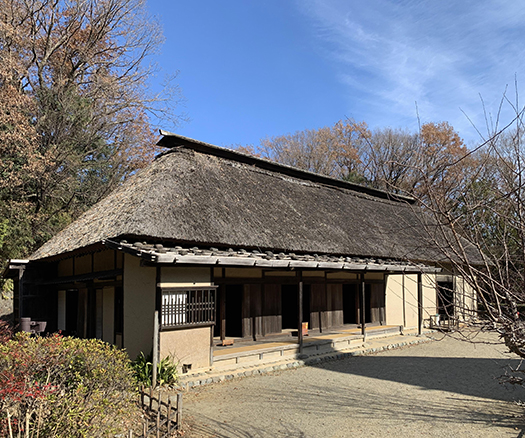
この縁側自体にやがて日本人は特別な嗜好を発展させたのではないか。
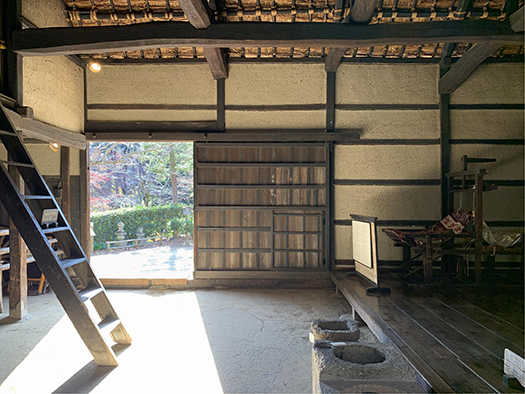
この信州佐久の佐々木家住宅では南面する方位に大きく縁側。
写真の右手側居室は主に座敷空間であり、
日常生活の「あらたまった場所」であったり、完全な応接空間であったりする。
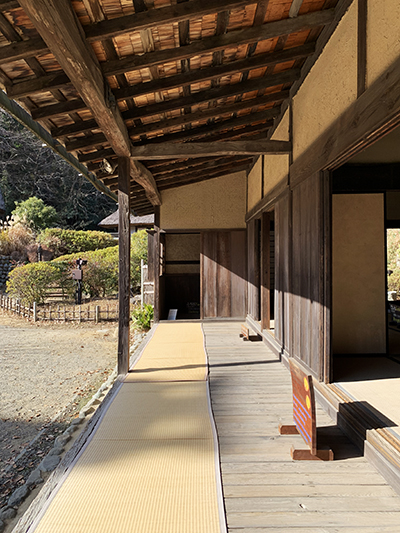
1枚目の写真は完全応接空間の外周部だけれど、
左右幅が1間に相当して、まるで畳のようなゴザ床空間までしつらえられている。
晴天時にはこの場所が最高の体感的温熱空間、
いわゆる一番「いごこちのいい場所」だったことは一目で知れる。
こういう空間で「ちょっとお邪魔して」縁に座り、自家製漬物と茶などを喫する。
亭主側が縁に座って、訪問者は縁に腰掛けてそのふるまいをたのしむ。
そこから日常的な情報交換機会が生まれて、話が盛り上がっていく。
そうすると「まぁ、上がれや」と亭主側が客に本格対話を誘う。さらに、
「これはもう、酒の方がいいか?」というように応接が進んでいく・・・。
しかしそこが「日本人的・空気読み呼吸ポイント」で、
そのなにげない「言い方」で辞するべきか、素直に従うか、選択の時が訪れる。
たぶん、このあたりの双方の空気認識感がいちばん「日本的」。

建築としてのこうした中間領域、縁側が、しかし
北海道では一番最初に民族的消滅危機を迎え、そしてほぼ消えていった。
半年におよぶ寒冷気候は従来の「襖・障子」建具での外界との接点では
人間生活を保守し得なくなっていき、より重厚な外皮構成に向かっていった。
断熱し気密化させる方向に大きく向かっていった。
そしてそれは欧米的「ウチとソト」空間認識により近づいていくことでもあった。
同時に日本人としては「空間丸ごとの温湿度管理可能性」を初めて知った。
さらに「いごこち」についての意識の再構成が始められたのではないかと。
たぶん温暖地域ではこの意識変革が大きく社会に導入される前段がいま現代か。
わたしは北海道に生まれ育った者として、
むしろこの写真のような縁側空間には温熱装置の側面も見たりする。
高断熱高気密住宅が縁側をどうするのか、きわめて新鮮な興味として、
その成り行き、行く末を見届けたいと思っています。

English version⬇

[I love the porch DNA in Saku Shinshu / Japanese good house ㉕-2]
You can see how Japanese people love the porch by looking at the old folk houses in Honshu.
As a Hokkaido person, the porch is gradually becoming a “space I have never seen”.
For example, for children in the age group of Imadoki’s high school students and younger,
The porch may be more popular in the fish part.

The idea of ​​building a house, or the basic sense of floor plan,
In Japanese private houses, the outer periphery of the living room has been used to move to each room.
The so-called “rice field” plan is the basic idea
The rooms are often separated by fittings such as sliding doors.
I think the indoor corridor was an extremely rare feature.
Basically, the space has moved by following the veranda space on the outer periphery of the building.
Then, the spatial consciousness in the intermediate region between Uchi and Soto developed.
The roof is approaching, but the outdoors and the air environment are one.
“Ambiguity” is said to characterize Japanese people internationally.
It is very suspicious that this veranda space has cultivated that quality.
Perhaps the Japanese eventually developed a special taste on this porch itself.
This Sasaki family residence in Saku, Shinshu, has a large veranda in the south facing direction.
The living room on the right side of the photo is mainly a tatami room,
It may be a “new place” in daily life, or it may be a complete reception space.
The first photo is the outer circumference of the complete reception space,
The width of the left and right is equivalent to 1 ken, and the floor space is like a tatami mat.
In fine weather, this place is the best sensational thermal space,
It can be seen at a glance that it was the so-called “comfortable place”.
In such a space, “a little disturbing” sits on the edge and enjoys homemade pickles and tea.
The host side sits on the rim, and the visitor sits on the rim and enjoys its behavior.
From there, daily information exchange opportunities are created, and the story becomes lively.
Then, the owner invites the customer to have a full-scale dialogue, saying, “Well, go up.” further,
The reception goes on like, “Is this better for sake?”
However, that is the “Japanese-style air reading breathing point”.
It’s time to choose whether to quit in that casual “word” or to obediently follow.
Probably, the feeling of air recognition on both sides around here is the most “Japanese”.

These intermediate areas as architecture, the porch, but
In Hokkaido, it was the first to face an ethnic extinction crisis, and then almost disappeared.
The cold climate that lasts for half a year is the point of contact with the outside world with conventional “fusuma / shoji” fittings.
It became impossible to maintain human life, and it went toward a heavier exodermis composition.
It went in the direction of heat insulation and airtightness.
And it was also to get closer to the Western-style “Uchi-soto” spatial perception.
At the same time, for the first time as a Japanese, I learned about the possibility of controlling the temperature and humidity of the entire space.
Furthermore, it seems that the restructuring of consciousness about “Igokochi” has begun.
Perhaps in warm regions, the first stage of this change of consciousness being introduced into society is nowadays.
As a person born and raised in Hokkaido
Rather, you can see the side of the heating device in the veranda space like this picture.
As a very fresh interest in what a highly insulated and airtight house will do on the porch,
I would like to see the outcome and the future.

【信州佐久の「建築確認済」豪農家/日本人のいい家㉕-1】


古民家として残り続ける住宅とはやはりエクセレントな住宅事例が多い。
いかにも小作のような貧農の住宅というのは残りようがないのかも知れないし、
保存し維持するような住宅というのは一定の目利きもあるのだと思う。
この佐久の旧佐々木家は交代制の庄屋だったという。
興味深いことに「建築確認申請」書きが残っているとされる。
江戸時代1732年創建ということだけれど、
「古材を使って(質素倹約に勤めますが)カラマツなど新材を使うこともお許し願いたい」
みたいな「普請願書」書類が残されている住宅なのだという。
興味を覚えたので、江戸期の「建築確認申請」について調べたら以下の記述。
「出城之内南方方角大和境ヨリ浜辺木津川両側二住居仕候四拾六ヶ村百姓家作之儀
先規ヨリ百姓家作藁葺地木ヲ以建来候故、貞享年中迄者何
方へも御願不申上候、然者貞享年中ヨリ以来新規之作事ハ御
代官所へ御願申上、軽キ普請之分ハ御願も不申上百姓心任
セニ仕候御事」
〜この書類は上山城の相楽郡・綴喜郡・久世郡の幕府直轄領地及び朝廷領地
(以下、上山城3郡の代官所支配地)で代官所への申請が始まった時期について、
「貞享年中」(1684−−87)と明記する。それ以前は「何方」へも申請せず、
代官所への申講も新規の建築行為に限られたとする。〜
このように申請の開始時期を記す史料は珍しく、
全国の代官所支配地の申請を考える上でも重要な史料」
というように日本建築学会計画系論文集 第561号
「江戸時代前期の京都代官所への建築許可申請」丸山俊明論文に記載があった。

畿内、とくに京都警護の主務機関である京都代官所は幕府機構の
かなり重要な政務機関であり、山城国全域にわたっての民政を管掌している。
その役務の一部として建築の管理業務があったとされている。
この写真の建物は信州佐久の豪農家住宅だけれど、
譜代大名が多く支配した信州地域なので、同様の支配体制が機能していたと
想像されるし、おおむね全国各藩でも同様の建築行政が行われたと想定できる。
現代の建築確認申請のように事細かな面積制限や建材制限などは
書かれていない。この願書の書き方に、古材を使って(質素倹約に勤めますが)
とあるように、百姓への贅沢禁忌思想管理が目的のように思える。
新築の作事にあたっては近隣の村役人などが立ち会って
申請書に連署するように求めたりもする記述がある。
このあたりは「五人組」みたいな相互監視システム的な匂いも感じられる。
思想管理、風俗管理というような側面に幕府側は興味があったようだとわかる。

庄屋階層というのは、その地域の「有力者」が世襲に近い形で
引き継いできていた社会的存在だけれど、そもそもが中世の「地侍」層が
そのままスライドしてきた階層で、大地主・豪農が占めている。
江戸時代のスタート時点では、武士階級が大坂の陣などで大幅にリストラされ
そうした被リストラ層が地方に「帰農」して庄屋階層になったように思える。
わが家家系の様子を見ても、行政機構側の「郡奉行」などと
連携しながら地域支配機構の実態を担っていた。
もちろんムラ社会側の要求や立場に即したムラの代表という側面もあっただろう。
支配機構の末端と被支配者代表という相反する存在だと思う。
「普請願書」とは、その建物がある意味で公的役務機構である側面から
「ちゃんとする」みたいな意図から行われた事例と思える。
それ以前には事実上届け出、願書を出すようなことがなかったとも記載されている。
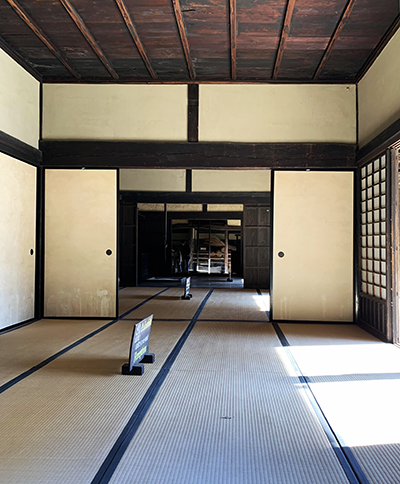
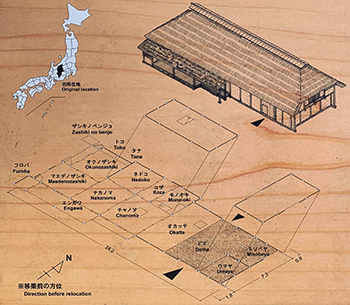
間取り図的にも地方管理のために出張してくる武家官吏の応接のために
座敷が整備されているし、なんとかれらのための特別なトイレも作られている。

江戸期の地方行政の実態の一断面がわかる。
こういう「建築確認申請の系譜」のような部分、研究を進めてみたい。

English version⬇

[Saku Shinshu’s “Confirmed Building” Large-scale Farmhouse / Good Japanese House ㉕-1]
There are many excellent examples of houses that continue to remain as old folk houses.
Poor farming houses like peasants may not remain,
I think that a house that preserves and maintains has a certain connoisseur.
It is said that the former Sasaki family in Saku was a shift-based shoya.
Interestingly, it is said that the “building confirmation application” is left.
It was built in 1732 during the Edo period,
“Please forgive me for using new materials such as larch (although I work for frugality) using the old.”
It is said that it is a house where “general application” documents like this are left.
I was interested in it, so I looked up the “building confirmation application” in the Edo period and found the following description.
“Joey Wheeler, southward direction, Yamato border, Yori beach, Kizugawa, two houses on both sides
Because of the fact that the thatched-roof tree was built by the Yori peasant family, who is until the middle of the Jokyo year?
A request was not made to the people, and since the end of the year of Jokyo, a new work has been done.
Appeal to the Daikan office, and the request for light-hearted peasant is also unsuccessful.
“Seni weather affair”
~ This document is the territory under the direct control of the Shogunate and the imperial court territory of Soraku-gun, Tsuzuki-gun, and Kuse-gun of Kaminoyama-jo.
Regarding the time when the application to the daikan office started in (hereinafter, the territory controlled by the daikan office in Kaminoyama-jo 3 counties)
It is clearly stated as “during the year of Jokyo” (1684-87). Before that, I didn’t apply to “anyone”
It is assumed that the application to the daikan office is also limited to new construction activities. ~
In this way, historical materials that indicate the start time of application are rare,
Important historical materials when considering applications for daikan-controlled territories nationwide. ”
Architectural Institute of Japan Planning Proceedings No. 561
“Application for building permit to Kyoto Daikansho in the early Edo period” was described in Toshiaki Maruyama’s treatise.

Kinai, especially the Kyoto Daikansho, which is the main body of the Kyoto guard, is of the Shogunate Organization.
It is a fairly important political institution and is in charge of civil affairs throughout Yamashiro Province.
It is said that there was construction management work as part of that service.
The building in this photo is a wealthy farmhouse in Saku, Shinshu.
Since the Shinshu area was dominated by many Fudai Daimyo, it was said that a similar control system was functioning.
It can be imagined that similar building administration was carried out in each clan nationwide.
Detailed area restrictions and building material restrictions like modern building confirmation applications
Unwritten. Use Kozai to write this application (although I work for frugality)
As you can see, it seems that the purpose is to manage the idea of ​​luxury contraindications to peasants.
Neighboring village officials are present when constructing a new building
There is also a statement that asks you to co-sign the application.
You can feel the smell of a mutual surveillance system like “Gonin Gumi” around here.
It turns out that the Shogunate side seemed to be interested in aspects such as ideological management and customs management.

The Shoya hierarchy is a form in which the “influential people” in the area are close to hereditary succession.
Although it is a social existence that has been inherited, the medieval “Jizamurai” layer was originally
The landowners and wealthy farmers occupy the hierarchy that has slid as it is.
At the start of the Edo period, the samurai class was significantly restructured by the Siege of Osaka.
It seems that such restructuring groups “returned to farming” in rural areas and became the Shoya class.
Even if you look at the state of my family, it says “gun servant” on the administrative organization side.
It was responsible for the actual situation of the regional control mechanism while cooperating.
Of course, there must have been an aspect of being a representative of Mura in line with the demands and positions of the Mura society.
I think that there are conflicting existences, the end of the control mechanism and the representative of the controlled person.
“Public application” is from the aspect that the building is a public service organization in a sense.
It seems to be an example that was done with the intention of “getting it right”.
It is also stated that before that, there was virtually no notification or application.
For the reception of samurai officials who are on business trips for local management in terms of floor plan
The tatami rooms are in place and somehow a special toilet is built for them.

You can see a cross section of the actual situation of local administration during the Edo period.
I would like to proceed with research on such a part like the “genealogy of building confirmation application”.

【弥生の札幌、寒さの中「光の春」到来】


3月になってReplan北海道春の号も制作順調に進行中で、今月半ばに下版。
コロナ禍ではありますが、確実に時間の針は進んできていると実感します。

わたしの早朝散歩も、どうやら厳冬期を終えて継続中。
ついにことしは散歩の「冬眠」入りもなく、真冬を踏破した気分であります。
ここのところ、最低気温も一時期の零下15-6度レベルから
零下5−6度程度まで上昇基調になってきました。
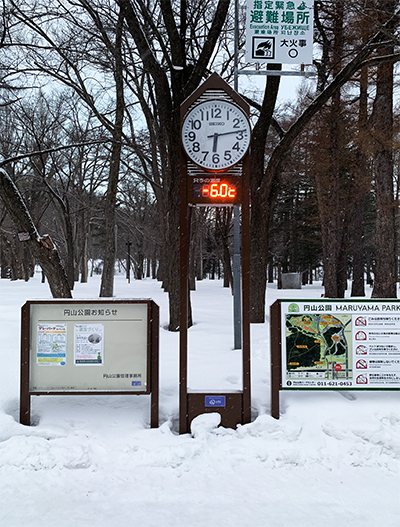
写真は日曜日早朝の札幌円山公園設置の温度計・時計で、
午前6時過ぎ、零下6度の状況を報せてくれている。
10度くらい最寒期からは脱出して来たとはいえ、
散歩の装備は厳重警備の真冬模様には変わりなし。
雪融けや除雪排雪が進んでいるので、道路の氷状化がハンパなく、
足下はスパイク仕様の運動靴が大活躍であります。
この冬は一度だけ転倒しましたが、
とにかく年寄りの散歩には、足下の注意が最大のポイント。
慎重に足下を確認しながら、できるだけ早足で運動量を上げるのが、
毎日のTO DOであります。

ということですが、確実に春の足音は近づいてきている。
北海道の冬から春への移行ではまずは「光の春」が実感されます。
早朝明るくなる時間が、すごい早さで早まっていくのが実感できます。
今時期だと、だいたい⒌時半には明るくなってくる。
東京などの都市部では水平線視界が取りにくいので
光の総量がストレートに感受しにくいけれど、
北海道は「視線の抜け」が大きいのと、
背景になる地面が雪に基本色が覆われているので太陽光反射が
圧倒的に大きく乱反射してくれる。
また札幌は石狩平野部全体の中ではやや里山的な高台地域にあるので、
そういった条件が倍加するのではないかと思います。
光の抜け、地表と空との光の乱反射が特徴的なのではないかと。
・・・おっと、これは感覚的なものですので、自然科学的にどうかは不明。
手前味噌、ふるさと自慢の戯れ言とお笑いください。
でも、暖かさの前に、この光の春の洪水ぶりは楽しい。
白い地平面を見続けると網膜に残像し、室内に目を向けても調節が効かない。
そういう副作用もあるほどに光の乱舞が体感されます。

3月という月は北海道にとって「予感」のときであるのかもしれない。
春を呼ぶのは人の営為。日々できることを着実に、ですね。

English version⬇

[Yayoi’s Sapporo, “Spring of Light” has arrived in the cold]

In March, the production of the Replan Hokkaido Spring issue went smoothly, and the editing work was completed last week.
Although it is a corona wreck, I feel that the time hand is definitely advancing.

Apparently, my early morning walk is continuing after the midwinter.
At last, I feel like I’ve gone through midwinter without going into the “hibernation” of the walk.
Recently, the lowest temperature is also from the level of 15-6 degrees below zero for a while.
It has been on an upward trend to about 5-6 degrees below zero.
The photo shows a thermometer / clock installed at Sapporo Maruyama Park on early Sunday morning.
After 6 am, he reported the situation at 6 degrees below zero.
Even though I escaped from the coldest season of about 10 degrees
The equipment for the walk is the same as the midwinter pattern of strict security.
As snow melts and snow is removed, there is no icing on the road.
Spike-type athletic shoes are very useful for your feet.
I fell only once this winter,
Anyway, the most important point to pay attention to is your feet when taking a walk for the elderly.
It is best to increase the amount of exercise as quickly as possible while carefully checking your feet.
It is a daily TO DO.

That being said, the footsteps of spring are definitely approaching.
In the transition from winter to spring in Hokkaido, you will first feel the “spring of light”.
You can feel that the time when it gets brighter in the early morning is getting faster and faster.
At this time of year, it will be brighter at about ⒌:30.
Because it is difficult to get a horizon view in urban areas such as Tokyo
The total amount of light is hard to feel straight, but
In Hokkaido, there is a big “missing line of sight”
Since the background ground is covered with snow in the basic color, sunlight reflection
It reflects overwhelmingly large diffusely.
Also, Sapporo is located on a slightly satoyama-like hill in the entire Ishikari Plain, so
I think that such conditions will be doubled.
It may be characterized by light escape and diffused reflection of light between the surface of the earth and the sky.
… Oops, this is a sensory thing, so it’s unclear if it’s natural science.
Please laugh with the miso in the foreground and the playful words that you are proud of.
But before the warmth, this spring flood of light is fun.
If you keep looking at the white ground plane, an afterimage will appear on the retina, and even if you look indoors, the adjustment will not work.
The more you have such side effects, the more you can experience the turbulence of light.

The month of March may be a “premonition” for Hokkaido.
It is human activity to call spring. Steadily doing what you can do every day.

【働く空間の再来は住宅を進化させるか?】


現代でふつうに建てられる住宅には、「作業する」空間はあまりない。
生業の場、あるいは生産に関わる空間は他の建築、
工場のような純粋な機能性空間に置き換わっていって、
住宅は基本的な生存、食べる場、寝る場、憩う場、育つ場という機能に
ほぼ集約された空間として構想され、作られてきている。
農家住宅などでも現代では都市住宅とそう変わらない間取り設計が主流。
働く場としての機能性は別のプレハブなどに置き換わっているので、
住居にはそういう機能性は考えられなくなっている。
そしてそれは全国均一型の「暮らし方」になっていたかも知れない。
いわゆる「戦後」という75年を超えた長い時代、一貫してきたのは、
こういう「均一化」の流れであったように思う。
テレビや新聞といった「マスメディア」の発達も連動していて、
全国一律の金太郎アメ的な社会が目指されてきたのでしょう。
それが意図的だったのか、世界的にも同様のことが進行したのは事実。
住宅建築の世界で言えば世界的に稀有な全国一律型の
「ハウスメーカー」という存在が地域工務店をはるかに凌駕してきた。
しかし実態としてはまことに「プレハブ」だったことは当然。
それがマスメディアを使っての「宣伝の力」によって有無を言わせず、
市場を占有する勢いで制圧してきた。
宣伝によって、企業イメージというヌエのような「価値」までまとってきていた。
建てられる住宅とはまったく無縁な価値感だったといえるでしょう。

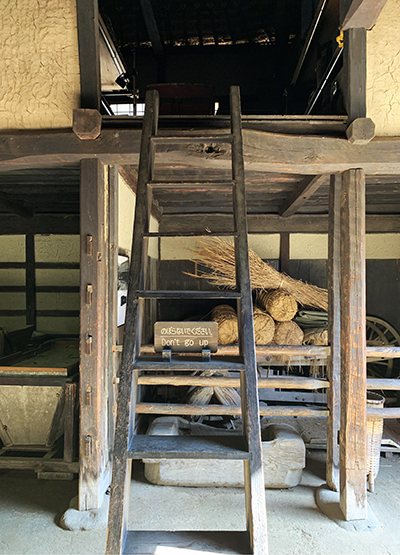
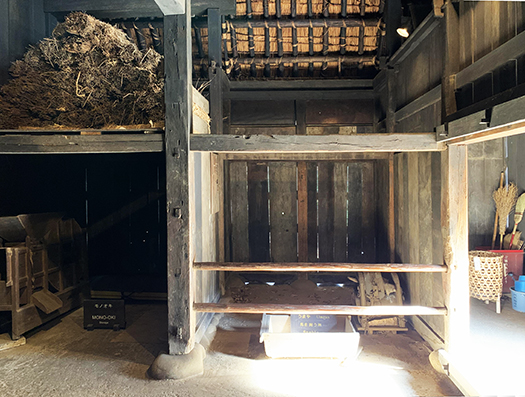
写真のような土間の空間には、馬のための空間すらも考えられて
その(馬の)生き方、暮らし方まで丹念に設計されて作られてきている。
左右幅は1間ほどのスペースで、上部には床は張られていない。
馬の背高を考えれば、大きくあくびをしたとしても過不足のない空間。
写真左手には「藁」も積み上げられていて馬の世話に最適化されている。
人間労働のしっかりとした解析、もっといえば馬の生態もよく勘案して
建築が、ちょうどよくフィットするように調整されている。
製造業の側が、人間の暮らし・労働をわきまえて、最適解をその場その場で
しっかりと実現している様があきらかだと思います。
こういった製造業の仕事ぶりが、「地域工務店」という作り手の本質。
その地域、土地、そして建て主の生業から暮らし方まで
透徹した把握分析能力で掴み取って、発注者の想像力を越えるような
最適空間を作り出していったのでしょう。
まことに「オーダーメイド」の建築だけれど、だからこそ地域に根ざすことができた。

いま、WEB時代になり、Amazonとかの出現によって
ロングテール型の、きわめて特殊解型の需要への対応が
最適化コストで可能な社会が実現しつつある。
それは規格大量生産型の超発展形とも思えるけれど、一方での見方とすれば、
オーダーメイド型の受発注が可能になってきている側面もある。
セミオーダーの超発展形というようにも考えられる。
規格大量生産型社会での「画一化」はこれからも進むのかどうか、
よくわからないけれど、ツールとしてのWEBは
そうした社会の不都合・デメリットを緩和出来る可能性はある。
さて、住宅建築では、今後とも暮らし方の「画一化」は進むのだろうか?
わたしとしては「テレワーク」によって家に「働く場」が再来するのは、
住宅業界にとって千載一遇のチャンスかも知れないと思っています。
いろいろな業種の人々のテレワークに似合った、オーダーメイド型の
オモシロく創造的な住宅建築が出現する可能性がある。
WEBデザイナーの家とか、個性的Youtuberの家とか、
これまでの職業類型とはまったく違うありようが出現するのではないか・・・。

English version⬇

【Will the return of working space evolve housing? 】

There is not much space to “work” in a house that is normally built in modern times.
The place of livelihood or the space related to production is another architecture,
It has been replaced by a pure functional space like a factory.
Housing has the functions of basic survival, eating place, sleeping place, resting place, and growing place.
It has been conceived and created as an almost integrated space.
Even in farm houses, the floor plan design that is not so different from urban houses is the mainstream in modern times.
Since the functionality as a work place has been replaced by another prefab etc.,
Such functionality is no longer conceivable in homes.
And it may have become a nationwide uniform “lifestyle”.
In the so-called “postwar” era of over 75 years, what has been consistent is
I think it was such a flow of “uniformization”.
The development of “mass media” such as television and newspapers is also linked,
Perhaps the nationwide uniform Kintaro-ame society has been aimed at.
Whether it was intentional or not, it is true that the same thing has happened worldwide.
Speaking of the world of residential construction, it is a nationwide uniform type that is rare in the world
The existence of a “house maker” has far surpassed that of local construction shops.
However, it is natural that it was really a “prefab” in reality.
Whether or not it is due to the “power of promotion” using the mass media,
It has been suppressed with the momentum to occupy the market.
Through the promotion, the corporate image, which is a nue-like “value”, has been acquired.
It can be said that the value was completely unrelated to the house to be built.

In the dirt floor space like the picture, even a space for horses can be considered
The (horse’s) way of life and way of life have been carefully designed and made.
The width of the left and right is about 1 ken, and there is no floor on the top.
Considering the height of the horse, it is a space that is just right even if you yawn big.
“Straw” is also piled up on the left side of the photo, which is optimized for horse care.
A solid analysis of human labor, more specifically considering the ecology of horses
The architecture has been adjusted to fit just right.
The manufacturing industry understands human life and labor and finds the optimal solution on the spot.
I think it is clear that it has been realized firmly.
This kind of work in the manufacturing industry is the essence of the creator of a “regional construction shop.”
From the area, the land, and the owner’s livelihood to the way of life
Grasp with clear grasp analysis ability and exceed the imagination of the orderer
Probably it created the optimum space.
It’s really a “made-to-order” architecture, but that’s why it was able to take root in the community.

Now, in the WEB era, with the advent of Amazon and so on
Responding to the demand for long tail type and extremely special solution type
A society where optimization costs are possible is being realized.
It seems to be a super-developed version of the standard mass production type, but from one perspective,
There is also an aspect that custom-made orders are becoming possible.
It can be thought of as a semi-order super-developed form.
Whether “uniformization” in a standard mass production society will continue to progress
I’m not sure, but the WEB as a tool
There is a possibility that such inconveniences and disadvantages of society can be alleviated.
By the way, will housing construction continue to “uniformize” the way of life?
For me, “telework” will bring back a “working place” to my house.
I think it may be a chance for the housing industry.
Made-to-order type that suits the telework of people in various industries
Funny and creative residential architecture may emerge.
WEB designer’s house, unique Youtuber’s house,
I think there will be a completely different form of occupation from the past …

【江戸時代の商家・業種の実態研究】


江戸時代のわが家系ビジネスの研究をジミに進めております。
わが家は遡れる範囲では、1700年代中期にはいまの尾道・福山周辺で
商業を営んでおり、主要な扱い品は「塩」ではなかったかと推定されます。
いまから約300年前の頃であります。
瀬戸内海地域は温暖な気候から製塩業が伝統的に盛んであった。
忠臣蔵の赤穂藩は塩で有名でそれをネタに吉良上野介に賄賂をせがまれた
というのもありますね。瀬戸内海地域全般、製塩にはふさわしかったのでしょう。
以前能登を旅していたとき、ふと製塩業を訪問する機会があり、
なにか「胸騒ぎ」していたことを思い出します。
わが家系は松永という、いまは福山市に統合された海浜地域で
塩浜を営んでいた時期もあって、商人としても塩がメインであったと。
北前船交易は北海道から大坂までの航路になるけれど、
北海道の漁業産品を「塩引き」にして航海で運んできた。
その流通産業の大動脈が瀬戸内海地域なので、そういう産地ビジネスが
大きい部分だったのだと思います。
こういった地方でのビジネスと、江戸のような消費都市でのビジネスは
大きく環境条件が違うと思いますが、先に見た「大江戸商い白書」を参照すると
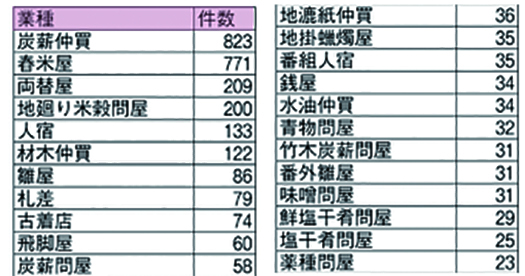
上の表のような調査結果が報告されています。
地方での「製造業」関連とは違って、まことに生活密着型であります。

そのなかでも群を抜いて多いのが「炭薪仲買」業であります。
一昨日も若干触れたのですが、エネルギービジネスは人間生活の基盤。
今日で言えば、電力・ガスといった生活産業ということになります。
地域の社会経済共同体であるムラが全国の山林などで炭焼き製造業を営み
それを流通させていた。自らはそういった資源から縁遠い都市生活者たちは
銭を消費して、エネルギー源を購っていた。
2位には「春米屋」という精米業者。
春という字に似ているけどちょっと違う字のようなのですが、
お米を玄米から精米するというのが基本の商いのようです。
この両者でそれ以下を4倍くらい上回っている。
主食とその煮炊きのエネルギーというまさに生活そのもの。
地方の場合には、煮炊きエネルギーは家の周囲、里山など入会地で
自力更生が基本だろうし、農家の場合には食べ物はごく近い環境。
もちろん四公六民とか五公五民とか、税率の問題もあるだろうし
豊作不作ということもあったし、各藩での仕置きの違いもあっただろう。
そういうことを勘案して考えると地方は都市とは大いに状況が違ったのだろう。
わが家系に伝わっている「商い商品」にはこうした
生活必需品はほとんど消息が確認できない。
たしかに米を扱うことはあっても、それはいわば大阪での相場取引のような
一種の投機性をもったもののように思われる。
塩にしても、それは相当大量の扱いの、卸に近いものだったと推定される。
同じ江戸期の「商家」といっても、地域性による違いが大きかったのですね。

表を見ていると、いくつか、興味深い仕事領域がある。
人宿、というのはいまで言えば「人材紹介業」のような存在だという。
武家や大店などでの奉公人をあっせんするというのが主業務だったとのこと。
人間の職業は結構流動性を持っていたのだとわかりますね。
両替屋や札差は金融事業なので、まぁ銀行や証券業みたいな存在。
こういう職業の彩りを見ていると、想像力が非常に沸き立ってきます。
社会の中で「需要」をにらんで生き抜いていこうとするビジネスマインド。・・・

English version⬇

[Study on the actual conditions of merchant houses and industries in the Edo period]

I am advancing research on my family business in the Edo period.
As far as my home can be traced back, in the mid-1700s around the present Onomichi and Fukuyama
It is presumed that it was a commercial product and its main product was “salt.”
It was about 300 years ago.
Due to the warm climate, the Seto Inland Sea region has traditionally been a thriving salt industry.
The Akaho clan of Tadaomizo is famous for salt, and Kira Uenosuke was asked to bribe it.
There is also that. It was probably suitable for salt production in the entire Seto Inland Sea area.
When I was traveling in Noto before, I had the opportunity to visit the salt industry.
I remember that I was in a “fuss”.
My family is Matsunaga, a beach area that is now integrated into Fukuyama City.
There was a time when he ran Shiohama, and as a merchant, salt was the main thing.
Kitamaebune trade is a route from Hokkaido to Osaka,
Hokkaido’s fishery products have been “salted” and transported by voyage.
Since the main artery of the distribution industry is the Seto Inland Sea area, such a production area business
I think it was a big part.
Business in these regions and business in consumer cities like Edo
I think that the environmental conditions are significantly different, but if you refer to the “White Paper on Oedo Business” that you saw earlier,
The survey results shown in the table above are reported.
Unlike the “manufacturing industry” related in rural areas, it is truly life-oriented.

Among them, the “charcoal-firewood brokerage” business is by far the most common.
As I mentioned a little the day before yesterday, the energy business is the foundation of human life.
Today, it is a living industry such as electricity and gas.
Mura, a local socio-economic community, operates a charcoal-grilling industry in forests nationwide.
It was in circulation. Urban dwellers who are far from such resources
I was spending money to buy an energy source.
In second place is a rice miller called “Spring Rice Shop”.
It’s similar to the word spring, but it looks a little different,
It seems that the basic business is to polish rice from brown rice.
Both of these are about four times higher than that.
The energy of the staple food and its cooking is exactly the life itself.
In the case of rural areas, the energy for cooking is around the house, in the satoyama, etc.
Basically, self-rehabilitation is the norm, and in the case of farmers, food is very close.
Of course, there may be problems with tax rates, such as the four public and six people and the five public and five people.
There was a bad harvest, and there may have been differences in the punishment of each clan.
Considering such things, the situation in rural areas may be very different from that in cities.
These are the “commercial products” that have been passed down to my family.
The whereabouts of daily necessities can hardly be confirmed.
It’s true that we handle rice, but it’s like a market transaction in Osaka.
It seems to have a kind of speculativeness.
Even with salt, it is presumed that it was a fairly large amount of salt, close to wholesale.
Even if you say “merchant” in the same Edo period, there was a big difference depending on the region.

Looking at the table, there are some interesting work areas.
It is said that a mansion is like a “recruiting business”.
It is said that the main business was to mediate servants at samurai houses and large stores.
You can see that the human profession was quite fluid.
Money changers and FCM are financial businesses, so they are like banks and securities businesses.
Looking at the colors of these professions makes my imagination very exciting.
A business mindset that seeks to survive in society with a view to “demand.”・ ・ ・