本文へジャンプ

【元の「国書」と世界情勢 元寇史料館-6】


 さて一段落させて、ふたたび「元寇」シリーズ復帰。
 前後2回に及んだ元と高麗の軍船団による九州北部への侵攻。東アジア世界においては中国大陸が中華としていわば中枢の位置を占めているけれど、そこでの戦いはいかにも「大陸」的な陸上戦的な権力抗争であって、その周辺の国家社会にとってそうした国家は交易の対象であって、さまざまな文化的な往来交流が基調的な関係性ということになる。そのなかでも最大の「交易」国家として日本列島社会が存在してきた。海を挟んでの社会同士の関係としては、そうなるのが自然だろうし、事実日本社会は、大陸国家との関係で経済文化そして、政治制度などでも交易的にそれらを受け入れてきた。
 この元寇の時代は以前からの「日宋関係」という活発な交易が対「南宋」間で継続的に展開していた。日本側からは旧・奥州藤原氏の支配地域から産出する黄金が輸出されていた。日宋交易では日本側からは金・真珠・硫黄・木材などが輸出され、宋からは香料・錦・磁器・書籍などが輸入されていた。この鎌倉期には禅の人材や文化などの輸入が活発だった。多くの禅僧が渡海してきている。
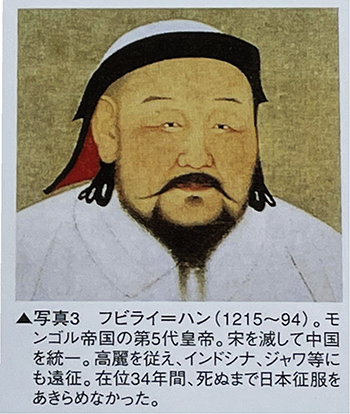
 そのなかでも大陸国家にとっては金の魅力が絶大だったとされる。当時の金と銀の交換比率が日本では1:5なのに大陸国家では1:13という現実があった。「日本からは金が安く入手できる」というのが、最大の関心事だったことがわかりやすい。マルコポーロはこの時代人であり元の皇帝・フビライにも謁見しているが、その「黄金の国ジパング」の想像力は共有されていたと思われる。
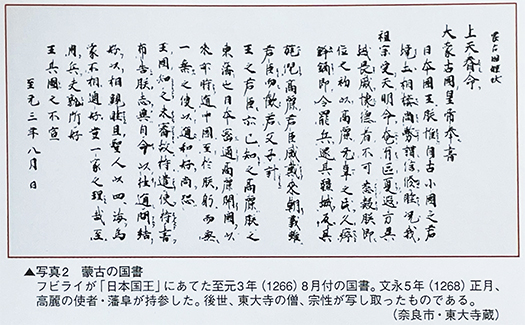
 上の写真は元から日本側に送られた「国書」。最近の文書研究では元の皇帝が送った国書としては「前例のない鄭重さ」と解されている。国書冒頭に、日本国王に対して「奉る」とあり礼を尽くしている。さらに文末に「不宣」の文字があることが注目されている。これは「友人間」の定型句であってなお「臣下」としない意思を示した語句だと蒙古の文書「経世大典」に明記されているとのこと。
 また受け取った国書に対して、それを翻訳解釈したと考えられるのは当時の社会での「大学教授」=禅宗高僧たちだろうが、かれらは「宋」から渡って来た人々であり、漢文の解釈に当たって元に対して否定的だった可能性が非常に高いと思われる。
 国書では「武力を使いたくはない」という表現もあったとされている。元の派遣軍・指揮官たちにはこうした「戦略」判断が大きなウェートを占めていたのではないか。そう考えてくると、第1波の文永の役で一定の打撃を与えたことで戦略的「役割」は終わったと考えた可能性が高い。多数の軍船団が狭い博多湾にビッシリと集結している中、荒天も予測されるような状況。早期に撤収という方針に決したと考えられる。文永の役での撤収に「神風」は無関係で意図的な撤収だったのだと思われる。

English version⬇

[Yuan’s ‘Statements of State’ and World Affairs Yuan Enemy History Museum – 6]
The latest research interprets this as unprecedented zhengjing as a world state. Even a friendly call. Yuan’s strategy at the time of the Wen-Yong War was a friendly attitude. Is kamikaze irrelevant? …

 Now that we’ve put a stop to this, we’re back to the “Genko” series.
 The invasion of northern Kyushu by the Yuan and Koryo fleets, which took place twice before and after the invasion. In the East Asian world, the Chinese continent occupies the central position as China, but the battles there were land-based power struggles in a ‘continental’ style, and for the surrounding states and societies, these states were objects of trade, and various cultural exchanges were the key relationship between them. The Japanese archipelagic societies have been the largest “trading” states among these. This is a natural relationship between societies across the sea, and Japanese society has, in fact, accepted trade in economic, cultural and political systems in relation to continental states.
 In the period of the Genko Incident, active trade between Japan and the Southern Song dynasty (960-1279) had been ongoing. From the Japanese side, gold produced from the former Oshu Fujiwara clan-controlled areas was exported. In the Japan-Song trade, gold, pearls, sulphur and timber were exported from the Japanese side, while perfumes, brocade, porcelain and books were imported from the Song. Imports of Zen personnel and culture were active during this Kamakura period. Many Zen monks travelled to the sea.
 Among these, it is said that gold was immensely attractive to the continental states. The exchange ratio of gold to silver at the time was 1:5 in Japan, but 1:13 in the continental countries. It is easy to see that the main concern was that ‘gold could be obtained cheaply from Japan.’ Marco Polo was a man of the period and had an audience with the Yuan emperor, Hubilai, whose imagination of the “golden land of Zipangu” seems to have been shared.
 The photo above shows the “Kokusho”, a letter of state sent from Yuan to the Japanese side. Recent research into the document has shown it to be ‘unprecedentedly Zheng-weight’ for a state letter sent by the Yuan emperors. The first sentence of the Kokusho states that it is ‘dedicated’ to the King of Japan, which is an act of courtesy. Furthermore, it is noted that at the end of the text there is the character ‘Fusen’. The Mongolian document “Keisei Dajiten” clearly states that this is a standard phrase for “between friends” and indicates the intention not to treat the person as a “vassal”.
 The people who are thought to have translated and interpreted the Kokusho are thought to have been the “university professors” of the society of the time, i.e. the high priests of the Zen sect, but they were from the Song dynasty, and it is highly likely that they were negative towards the Yuan when interpreting the Chinese text.
 In the Kokusho, it is said that they expressed that they did not want to use force. Such “strategic” judgements may have been of great importance to the Yuan’s dispatched forces and commanders. In this light, it is highly likely that they considered their strategic “role” to have ended with the first wave of the Bunyong War, which dealt a certain amount of blows. With a large number of military convoys tightly concentrated in the narrow Hakata Bay, and stormy weather predicted, the situation was such that they were likely to have decided on a policy of early withdrawal. It is thought that they decided on a policy of early withdrawal. It is thought that the “kamikaze” had nothing to do with the withdrawal from the Bun’ei no Yakuwari, and that it was a deliberate withdrawal.

【北国の春〜道央圏の観桜、春の風情を巡る】


 さて本日は「元寇史料館」シリーズひと休み。
 ひとつのテーマで連載的に書くというのは、ブログという表現手法が生み出した習慣性を利用した手法ですが、面白い脳味噌活性化作戦だと思いますね。文章を書くという人間社会が生み出した独特の営為にとっての「新展開・機縁」だろうと思います。
 たぶんこれまでの「書き手」のひとたちはある限られた参考文献・資料などをかき集めて、その表出してくる特定領域の「空気感」を感じ取りながら、自分の脳味噌に刺激を与えて、言の葉を生み出し続けたのでしょう。「作家と住空間」執筆ではそういう現場写真からインスピレーションを感じ続けていた。それに対して現代ではいわば「WEB文法」とでも言えるようなスタイルが成立しつつある。
 ブログという表現ツール・契機はある独特の環境を生み出しているということ。
 一方ブログは「日記」である側面も大きいので、日々いろいろ生起する体感も書き留めておきたい。そういう「バランス」も現代人の日常生活の大切な要素だと思います。いまはChatGPTの利用もしてみたいとは思っていますが、そういった現代的なツール環境が、どういう新しい文章執筆環境と気付きを生み出していくのか、興味は尽きませんね。でも、人生時間にはおのずと限りがある。いろいろな試行錯誤を積み重ねながら、今日よりも明日、という姿勢で向かっていくしかない。
 さて、4月中は北国の春を求めて東京にチョコチョコ行ったり、夫婦旅で青森・弘前〜道南と旅してきましたが、ついにサクラ最終盤前線は完全に北海道を縦断中。ことしは仕事から半ばはリタイヤしてから本格的には初めて迎える行楽日和シーズンであります。カミさんもわたしも健康留意のためもあって、連日の1万歩超の歩数を記録しておりまして、北海道内各地を歩いています。
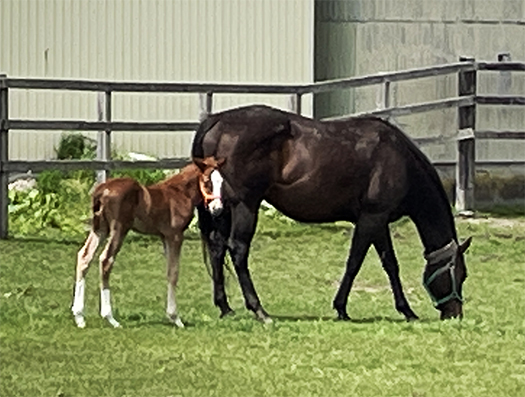
 写真は先般、静内(現在は新ひだか町の一地域)のサクラの名所「二十間道路」散策の帰り道、あちこちうれしく見ていた親子のお馬さんたち。どうも加齢と共に、イキモノとの心理的交流がこころに大きく兆してきている。サクラを見ていてもその樹間に見え隠れしてさえずりを聞かせてくれる鳥たちに語りかけたくなったりする。そういう心情がここ日高では、当然ながら道路脇に見える馬さんたちに向かう。
 こういう写真のような景色は、この時期の北海道の風物詩でしょうね。他地域ではなかなか見られない光景に違いない。ごく自然な親子の情愛の様子に深く癒され続けております。

English version⬇

[Spring in the North – Cherry blossom viewing in the Hokkaido area, a tour of the spring atmosphere]
The cherry blossom front is in its final stage, traversing Hokkaido. In the midst of this, the cherry blossom viewing route in Hidaka shows the affection between parents and children. The emotions of the living are slowly seeping in. …

 Today we take a break from the Genko Historical Museum series.
 Writing a series of articles on a single theme is a method that makes use of the habitual nature of the expressive technique of blogging, but I think it is an interesting strategy for activating the brain. I think it is a “new development and opportunity” for the unique activity of writing that human society has created.
 Until now, writers have probably gathered a limited number of references and materials, sensed the “atmosphere” of a particular area that emerged, stimulated their brains and continued to produce words. In “Writers and Living Space” writing, I continued to feel inspiration from such on-site photographs. In contrast, today, a style of writing that could be described as “web grammar” is being established.
 The expressive tool and opportunity of the blog has created a unique environment.
 On the other hand, a blog is also largely a “diary”, so it is important to write down the various experiences that occur on a daily basis. I think such a “balance” is also an important element of modern people’s daily lives. I would like to try using ChatGPT now, but I am interested to see what kind of new writing environment and realisations such a modern tool environment will produce. But there is a natural limit to the amount of time I have in my life. We have no choice but to face tomorrow with the attitude that tomorrow is better than today, while accumulating various trial-and-error experiences.
 During April, I went to Tokyo in search of spring in the north and travelled to Aomori, Hirosaki and Donan as a couple, but finally the last front of the cherry blossom season is completely across Hokkaido. This is the first full-fledged holiday season since I retired from work halfway through this year. My wife and I have been walking all over Hokkaido, recording more than 10,000 steps every day, partly to keep fit.
 The photo shows a father-and-son horse family that we happily saw here and there on our way back from a walk along Nijukan Road, a famous cherry blossom spot in Shizunai (now part of the town of Shin-hidaka). As I age, my psychological interaction with animals is becoming a major sign in my mind. When I look at the cherry blossoms, I sometimes feel like talking to the birds that are chirping among the trees. Here in Hidaka, such feelings naturally go to the horses that can be seen on the side of the road.
 Scenes like the one in these photos are probably a Hokkaido tradition at this time of year. It must be a scene that is not easily seen in other regions. We continue to be deeply healed by the very natural affection between parent and child.


【元の海外派兵に「戦略」はあったのか? 元寇史料館-5】


 さてきのうまでは元の軍装備、その戦闘衣について考えて見た。これ自体は当時の日本に対してはるかに優位性をもった「戦略価値」の高いポイントだったと言える。こうした装備についての先進性に遭遇して、個人戦での勇猛さを絶対評価尺度としていた当時の日本側の軍事思想では太刀打ちできていなかったのだろうと推測できる。
 しかし、戦争は単に装備の先進性だけでは勝敗の帰趨は決しない。
 元軍は第1派の文永の役において10月20日の上陸地上戦では幕府・御家人軍に勝利して、博多の街を焼き払い、筥﨑の宮をも焼失させる「戦果」を得ている。通常の「征服戦争」であれば、こうした戦果を確保して、そこで征服地域の支配を確実化させるように動くだろう。それは支配=政治体制の確立と言ったことがらの着手ということになる。
 しかし元軍は初戦に勝って橋頭堡を確保できたと思われるのに、軍勢は乗ってきた軍船団に帰還していたという。このことは、兵站という機能が十分に果たされていなかった可能性を示唆する。そしてこういう渡海してまで派遣した大遠征軍の「基本戦略」の不明、政治常識の不在を証明する。
 この大遠征軍の戦略的位置付けに、緻密な「兵站計画」が伴っていないことが明らか。戦争をするのに勝利後の計画がない。当たり前であれば、多くの犠牲を払って獲得した初戦の勝利からすぐに「陣地」を構築して、占領地の政治的支配の意思を露わにして行くのが当然だろう。しかしそこまでの戦略性・政治性が見られていない。
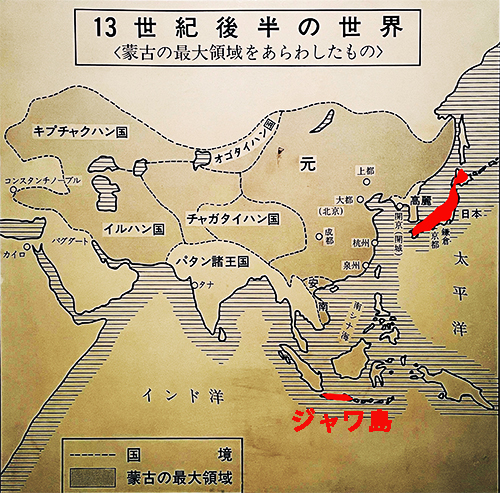
 元軍の海外派兵の類似例として、ジャワ島への侵攻がある。以下、Wikiの記述概要。
〜元軍のジャワ侵攻は1293年にジャワ島に侵攻した元軍が引き起こした。皇帝クビライが派遣した使者がジャワのシンガサリ王クルタナガラによって入墨をされて返されるという事件を切掛けとして始まったジャワ遠征。元軍がジャワ島に到着するまでに当地ジャワでは内戦的状況があって、当のクルタナガラ王はジャヤカトワン王によって弑逆されていた。元軍はクルタナガラ王の女婿・ウィジャヤの計略に誘導されジャヤカトワン王を討ったものの、その後ウィジャヤの裏切りにあってジャワ島からの敗退を余儀なくされた。全くの失敗に終わった遠征。しかし遠征失敗にもかかわらず、ジャワ遠征以後中国大陸とジャワ島の貿易交流は増大し東南アジア島嶼部歴史の大転換点の事件であった。〜
 この歴史事実を見ると、元軍には武力としての海外派兵はできてもその地の政権奪取ということはムリであり、その地域の政争のテコに利用されるのが関の山、ということが浮かび上がってくる。
 日本史研究ではこのジャワの事例との対比研究という目線が不足しているように思える。そのように見ていけば、文永の役での元軍の戦略性の乏しい動きも理解できるのではないだろうか?
 さて「神風」は吹いたのかどうか? <あした以降につづく>

English version⬇

[Was there a “strategy” in Yuan’s overseas deployment? Genkou Historiography – 5]
1274, the Battle of Bun’ei 20 Oct. Unknown strategy to turn the army back to warships even though they had achieved great successes in the first battle. What about the invasion of Java by the same Yuan army? …

 Until yesterday, we looked at the original military equipment and its combat clothing. This in itself was a point of high “strategic value” with a far superiority over the Japanese of the time. It can be assumed that the Japanese military philosophy of the time, which used valour in individual battles as the absolute evaluation scale, was not able to compete with such advanced equipment.
 However, the outcome of a war is not determined simply by the advanced nature of equipment.
 In the first phase of the Bun’ei no Yakuwari, the Yuan forces defeated the Shogunate and the Gokenjin forces in a ground battle on 20 October, burning the city of Hakata and the Hakozaki Palace to the ground. In a normal “war of conquest”, the Shogunate would have secured such a result and moved there to secure control of the conquered area. This would be the start of establishing a political system of rule.
 However, while the Yuan forces were thought to have won the first battle and secured a bridgehead, they were returning to the military fleet they had boarded. This suggests that the function of logistics may not have been fully fulfilled. It also proves the lack of a ‘basic strategy’ and absence of political common sense as a large expeditionary force that was sent across the sea like this.
 It is clear that the strategic positioning of this great expeditionary force was not accompanied by a detailed “logistics plan”. There is no post-victory plan for waging war. If it were a matter of course, it would be natural to build “positions” immediately after the first victory, which was won at great cost, and go on to reveal the intention of political control of the occupied territories. However, we have not seen that much strategising and politicking.
 A similar example of ex-military deployment abroad is the invasion of Java. The following is a summary of the Wiki description.
〜˜The Yuan invasion of Java was caused by Yuan troops invading the island of Java in 1293. The Javanese expedition began with an incident in which an envoy sent by Emperor Kubilai was inked and returned by the Javanese king Singhasari Kultanagara. By the time the Yuan army arrived in Java, there was a civil war situation in Java and King Krutanagara had been murdered by King Jayakatwan. The Yuan army was led by Wijaya, the son-in-law of King Kirtanagara, to defeat King Jayakatwan, but was then betrayed by Wijaya and forced to retreat from Java. The expedition was an utter failure. However, despite the failure of the expedition, trade exchanges between the Chinese mainland and Java increased after the Java expedition, and it was an incident that marked a major turning point in the history of the islands of South East Asia. 〜
This historical fact shows that, although the Yuan army could deploy overseas as an armed force, it was unable to seize power in the region and could only be used as a lever in political disputes in the region.
 Japanese historical research seems to lack the perspective of contrasting this with the case of Java. If we look at it in this way, we can understand the poor strategic moves of the Yuan army in the Bun’ei no Yakuza.
 So, did the “kamikaze” blow or not? <To be continued from tomorrow.


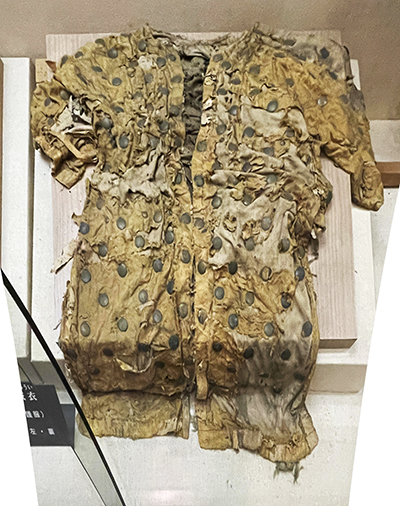
【元軍兵士の高断熱高性能「皮鎧」 元寇史料館-4】


 このシリーズで元軍の兵士の戦闘衣が展示されていた様子を書いたけれど、その増補資料も整理できたので追記したい。また前回「真綿」という表記をしたけれど、そのコトバは以下のような意味合いを持つことも確認のために前提として記したい。
 <真綿:真綿(まわた)とは、絹の一種で蚕の繭を煮た物を引き伸ばして綿にした物。日本においては、室町時代に木綿の生産が始まる以前は、綿(わた)という単語は即ち真綿の事を指した。白くて光沢があり、柔らかく保温性にも富んでいるため、昔から布団や綿帽子、防寒着の中に詰め込む素材として、又はそのまま服の間に挟んで使用〈背負い真綿〉利用されてきた。〜Wiki要旨>
 中国では古くから養蚕が行われていたけれど、北方のモンゴル族支配地域ではそういう生産活動が行われず、漢民族国家からの贈与によってはじめてこうした「衣類による断熱効果」を知ったのだという。それを契機にして体温維持についての「高断熱化」がモングル民族において発達して、民族間・士族間での弱肉強食が展開した大陸国家・中国で「元」という大帝国を誕生させたことになる。
 まことに技術発展と権力抗争の相関性がわかる逸話だと思われる。
 そして、その高断熱高武装「戦闘衣」革命によってユーラシア大陸を制圧した元軍が、海洋国家ニッポンを襲撃したことになる。この戦闘衣は同時に重厚な鉄板の利用で、刀での攻撃にも矢による殺傷攻撃にも抜群の性能を誇っていた。
 第1波の侵略攻撃において、乗馬しての機動性を備えた個別武士による「名を上げる」型の戦闘を仕掛けた日本軍に対して、こうした革命的戦闘衣によって敵勢からの刀と矢での攻撃にはシステムとして完璧に上回っていた元軍が、はるかに優勢だったことは非常にわかりやすい。その上、数において大きく上回っていたのだから、戦闘局面の展開はその性能差が如実に表れた結果と言える。
 また弓矢についても日本軍の射程距離が100mだったのに対して敵勢は220mだったことから、いったん戦闘が始まった途端に趨勢は明らかだったことだろう。
 このような戦争の現実の中で、日本側の作戦としては、敵軍の弱点に絞って攻撃するしかないだろう。元軍の弱点は、それまでの征服戦争とまったく違う「海軍による侵略戦争」だったこと。その上、日本の周辺海域についての詳細な「海底地形」調査などまではムリだっただろうから、そういう反撃が効果的だったとふつうに想像できる。
 そして日本武士たちは、船で「夜襲」を掛けたのだという。<以下、あした以降>

English version⬇

[High performance “leather armour” of Yuan soldiers Yuan Pirates Historical Museum-4]
Silkworm cocoons – “cotton” brings armed revolution to Northern Mongolia. Highly insulated high “armoured” revolution of high defence and combat clothing against swords and bows and arrows. It created a dictatorial and powerful state. …

 In this series, I wrote about the display of ex-army soldiers’ combat uniforms, and now that I have organised the additional material, I would like to add to it. In addition, I mentioned the word ‘mawata’ in the previous article, but I would like to note that the word has the following connotations.
 <Mawata: Mawata is a type of silk made from silkworm cocoons, which are boiled and then stretched into cotton. In Japan, before cotton production began in the Muromachi period (1336-1573), the word ‘wadding’ referred to cotton. Because it is white, shiny, soft and insulating, it has long been used as a material for stuffing into bedding, cotton hats and winter clothing, or as ‘backpack cotton’, which is placed directly between clothes. 〜The silkworm was first discovered as a gift from the Han Chinese state, which led to the development of the ‘thermal insulation effect of clothing’. This led to the development of ‘high insulation’ for maintaining body temperature among the Mongols, and the birth of the great empire of Yuan in China, a continental state where the weak and strong were the rule among ethnic groups and warlords.
 It is an anecdote that truly illustrates the correlation between technological development and power struggles.
 The Yuan army, which had conquered the Eurasian continent through its highly insulated, highly armed “battle dress” revolution, then attacked the maritime nation of Nippon. This battle garment simultaneously boasted outstanding performance in both sword attacks and killing attacks with arrows, thanks to the use of heavy steel plates.
 It is very easy to see that in the first wave of invasion attacks, the Yuan forces were far superior to the Japanese forces, which had set up a “make a name for themselves” type of battle by individual warriors with mobility on horseback, and were perfectly superior as a system to sword and arrow attacks from the enemy forces due to these revolutionary fighting garments. In addition, since they were greatly superior in numbers, the development of the battle phase was the result of the difference in performance.
 In terms of bow and arrow, the Japanese forces had a range of 100 metres, while the enemy forces had a range of 220 metres, so once the battle began, the trend was clear.
 In this reality of war, the only strategy for the Japanese side would have been to focus on the weak points of the enemy forces and attack them. The weakness of the Yuan forces was that it was a “naval war of aggression”, completely different from the previous wars of conquest. Moreover, it would have been impossible to conduct a detailed survey of the ‘underwater topography’ of the seas surrounding Japan, so such a counter-attack could normally be imagined to have been effective.
 The Japanese warriors then made a “night attack” with their ships. <The following is from tomorrow onwards.


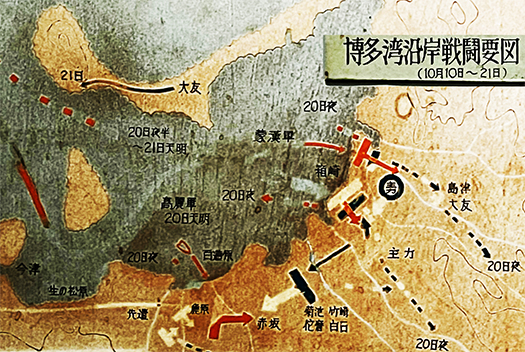
【第1波「文永の役」戦況図 元寇史料館にて-3】


 今回「作家と住空間」という電子書籍を出版して以降、昔人の考えたこと、やってきたことへの思いが強くなってきます。芥川龍之介とか、司馬遼太郎などの作品と住空間に触れることで、その「場所で」かれらはどんな心象に至っていたのか、という想像力に加速度が付いてくる。人生時間に能動的に関われる期間内に、そういう過去の人びととの対話を心がけたい。「高齢期」の生き甲斐としてそのことに集中したい。一般的には「歴史数寄」ということになる。
 元寇っていう大きな歴史事実について、もうちょっと深い事実を探査してみたくなった心理的起点。よく「神風なんて国粋主義的な刷り込みに過ぎない」という考えから元寇という歴史事実そのものの発掘をスルーさせるような「圧」がありますが、なんかおかしい。この元寇史料館もその存在自体がまったく知られていない。そもそも管理運営すら公共ではなく、公共から日蓮の開いた宗派寺院に「委託」されているようなのだ。受付窓口は僧侶の方。そろそろ平明に事実の解明・一般化に向かうべきではないか?
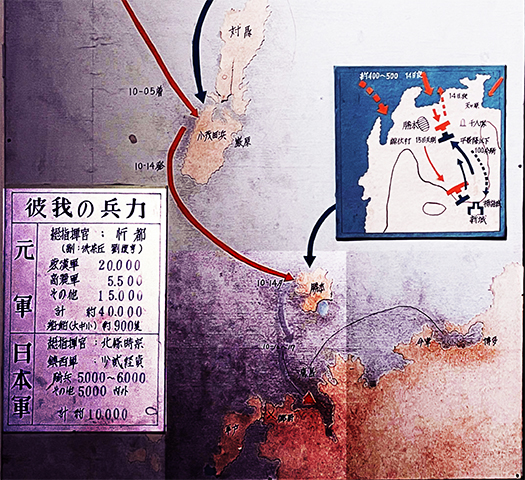
 上の図は、展示資料の断片的図柄からPhotoshopで復元再生させたデータ。この資料に寄れば元寇第1波での彼我の兵力は敵勢40,000に対し、九州の御家人たちの動員兵力が10,000程度になっている。
 博多の町衆・市民たちは当然さまざまに日本軍に協力しただろうから、そういう総体としての防衛勢力は元軍に対して必ずしも劣勢だったとは思えないが、純軍事勢力では格差があった。結果として1274年10月20日の戦闘においては、数において圧倒的優勢な元軍の跳梁跋扈を許してしまう。薩摩の島津や豊後の大友などの日本側は敗退を繰り返した。きのう見たようにそもそも軍装において大きな技術格差まで存在した。その上、弓矢の弾道距離も2倍程度の格差であり、さらに矢には毒が塗ってあったので損害は甚大だった。「てつはう」といわれる火薬兵器もその威圧力で圧倒されたという。
 しかし元軍の「士気」はどの程度だったかは不明。そもそも海軍的な戦争は元としてもはじめての経験。というか海軍をいくら大人数で派遣しても、その地域に根ざす勢力の裏切り協力などが得られなければ、食糧物資の確保など非常に困難だったことだろう。日本国内の内戦でも木曽義仲の失敗などを見れば、あきらかだと思う。強盗のように物資を現地で巻き上げるというのでは民心を把握することは到底ムリ。そういう教訓に踏まえ信長は、初上洛時、軍の非道行為を厳禁し、違反者は発見時に即座に死刑に処している。
 その程度のことを元軍が理解していないハズはない。かれらは軍事作戦的には圧倒して博多の街を炎上潰滅させたが焼いてしまっては略奪も不可能。その後全軍が海上の軍船に帰還していたという。<以下、あした以降に>

English version⬇

The first wave of the battle of Bun’ei no Yakuwari, at the Museum of Genko History – 3]
On 20 October 1274, the Yuan forces landed in Hakata, overwhelmed the armies of the Imperialists in Kyushu, and set the city of Hakata ablaze. But was naval “conquest” essentially possible? …

Since the publication of the e-book “Writers and Living Space”, my thoughts about what people thought and did in the past have grown stronger. By coming into contact with the works and living spaces of Ryunosuke Akutagawa, Ryotaro Shiba and others, my imagination about what kind of mental images they had in those “places” has been accelerated. I would like to try to have a dialogue with these people of the past during the period when I can actively engage in the time of my life. I want to concentrate on this as the purpose of living in my “old age”. Generally speaking, this is called “historical pondering”.
 This is the psychological starting point of my desire to explore more in-depth facts about the great historical fact of the Genko. There is often a “pressure” to let people go through the excavation of the historical fact of the Genko, based on the idea that “kamikaze is just a nationalistic imprinting”, which is something strange. The existence of this museum itself is not known at all. In the first place, even the management and operation of the museum is not public, but seems to have been “entrusted” by the public to a sectarian temple founded by Nichiren Shoshu. The reception desk is staffed by priests. Isn’t it time to start clarifying and generalising the facts in plain sight?
 The figure above is data reconstructed and reproduced by Photoshop from fragmentary patterns in the exhibition material. According to this data, the number of troops mobilised by the Imperialists in Kyushu in the first wave of the Genko was around 10,000 compared to 40,000 by the enemy.
 The townspeople and citizens of Hakata would naturally have cooperated with the Japanese in various ways, so it does not seem that the defence force as a whole was necessarily inferior to the Yuan forces, but there was a disparity in terms of pure military strength. As a result, in the battle of 20 October 1274, they allowed the Yuan forces, which had an overwhelming superiority in numbers, to ransack the city. The Japanese side, including Shimazu of Satsuma and Otomo of Bungo, were repeatedly defeated. As we saw yesterday, there was even a large technology gap in military equipment. In addition, the ballistic range of their bows and arrows was about twice as great, and the arrows were coated with poison, so the damage was enormous. The explosive weapons known as “tetsu-hau” were also said to have been overwhelmed by their overpowering power.
 However, the extent of the “morale” of the Yuan forces is unknown. In the first place, this was the first experience of naval warfare for the Yuan. In fact, no matter how large a navy was dispatched, it would have been extremely difficult to secure food supplies without the treacherous cooperation of forces rooted in the area. The failure of Kiso Yoshinaka in the Japanese Civil War is a clear example of this. It would have been impossible to grasp the people’s mindset if they were to collect supplies on the spot, like robbers. Based on this lesson, Nobunaga strictly forbade any atrocities committed by his troops when they first arrived in Kyoto, and immediately executed those who violated the law on discovery.
 There is no reason to believe that the Yuan forces did not understand this. They overwhelmed the city of Hakata in terms of military operations and destroyed it in flames, but looting was impossible once the city was burnt to the ground. Afterwards, the entire army returned to their warships at sea. <

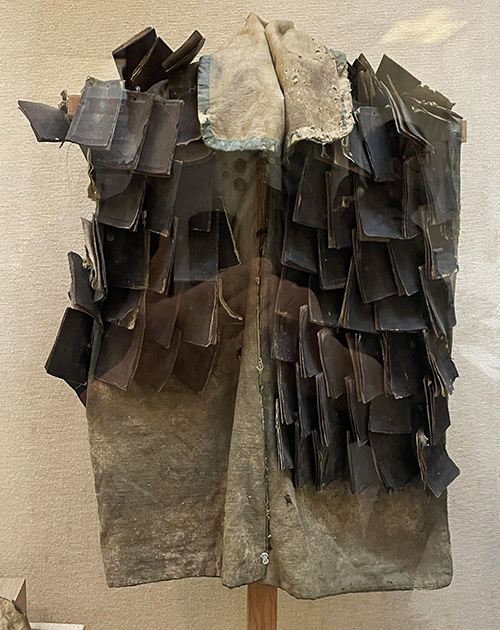
【伝・元軍兵士の「鎧兜」姿 元寇史料館にて-2】


 さて「元寇史料館」探訪記に復帰です。
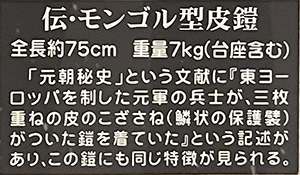
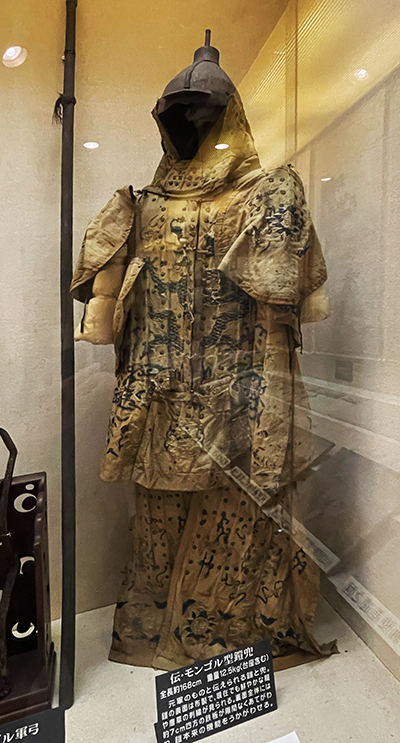
 この稀有な「戦争史料館」という珍しい存在で、もっとも目を懲らされたのは、上の写真の元軍兵士の鎧兜。但し書きとして「伝」と付けられているのは、実物として当時から保存され続けてきたものだろうけれど、その事実を証明できる周辺的な解明が出来ずに、その後、元という国家そのものが滅亡してしまったことに起因するだろうと思われた。現代ではそうした解明も可能だろうけれど機微な外交関係下では、そうした軍事にも通じる情報探索は難しいことは容易に想像できる。
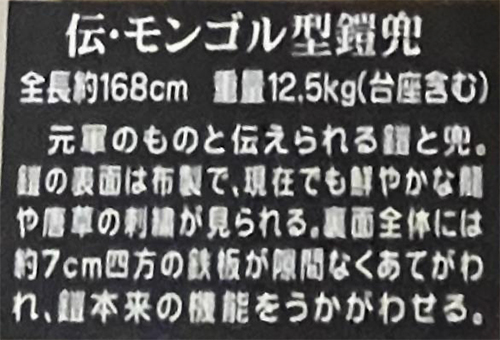
 2枚目の写真の通り、168cmの長さ・12.5kgの重量。鎧〜よろい〜の表面は布製で今に至っても色鮮やかな龍や唐草の刺繍デザインが施されている。裏面全体に7cm四方の鉄板が隙間なく装備され、鎧としての優れた機能性をうかがわせる。〜という解説。
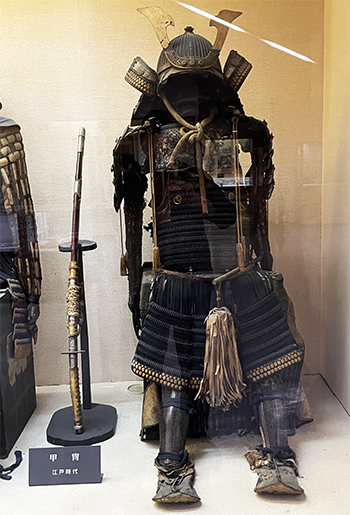
 他方日本兵の方は、この時期のものではなく江戸期の日本の武士の装備写真が参考に展示されていた。

 この鎧兜について、展示に付けられた説明文の該当部分を以下に引用する。
 〜「漢」代の中国はたいへん経済的・文化的に充実した国力を誇っていたが、一方で絶えず北方民族などからの征服脅威にさらされていた。そのため匈奴と呼ばれた勢力に対してはもっぱら物品贈与の外交を持って懐柔手段に当たっていた。そういう物品の中に「真綿」が存在した。北方民族の匈奴にしてみると真綿はほかの豪華な「錦」などの製品よりもその「防寒性」から必需品であったという。さらに真綿は「軽くてあたたかく」しかも矢弾を防ぎ身を守る効果のあることに気づき、やがて「戦闘衣」として用いるようになったのである。このことはヨーロッパのローマ帝国でも知られて中国製のこうした戦闘衣を着て戦わせたところ、敵矢をよく防いだと言われている。┈┈濡れると真綿のその性能はさらに強化された。真綿は最強の「防弾チョッキ」だった。〜
 一方日本における真綿の生産歴史は検索では以下の通り。
 〜真綿の生産史の概要: 古代:弥生時代後半頃に真綿が日本に伝来し、神話にも養蚕に関する記述があります。 古代から中世:真綿は交易品や衣服、また寝具としても使われました。特に中世には生糸技術が失われたため、養蚕は真綿生産に専念しました。 江戸時代:木綿の栽培が普及し、生糸技術が復活したため、真綿の生産は衰退し始めましたが、近江地方では真綿の生産が盛んに行われていました。〜
 こうした歴史を通じた戦争と戦闘衣の進化過程の彼我の相違が、大きく影響した側面があった。元寇についての教科書の図でも、元軍兵士の戦闘衣にはやや奇異を感じたけれど、大きな「性能差」を生み出していたことが理解できた次第。<以下、明日以降につづく>

English version⬇

Biographies of Yuan soldiers in “armour” at the Yuan Enemy Museum – 2]
Various continental states have fought each other since the beginning of history. As a result of this history, there has been a rational development in terms of military equipment. Historical clarification from physical evidence. …

 Now back to the exploration of the ‘Genko Historical Museum’.
 The most eye-catching thing in this rare ‘war archive’ is the armour helmet of a Yuan soldier in the photo above. The reason why it is labelled as a “legend” is probably due to the fact that it has been preserved as an actual item since that time, but the nation of Yuan itself was destroyed afterwards without any peripheral clarification that could prove the fact. Such clarification may be possible in modern times, but it is easy to imagine that under sensitive diplomatic relations, it would be difficult to search for information that could be used for military purposes.
 As shown in the second photo, it is 168 cm long and weighs 12/5 kg. The surface of the armour – yoroi – is made of cloth and is still decorated with colourful dragon and arabesque embroidery designs to this day. The entire reverse side is equipped with a 7 cm square iron plate with no gaps, suggesting the armour’s superior functionality. 〜Commentary.
 The following is a quote from the relevant part of the description of this armour attached to the exhibition.
 〜During the Han dynasty, China was a powerful and economically and culturally rich country, but at the same time it was constantly threatened by conquests from northern tribes. For this reason, the Xiongnu were exclusively treated with the diplomacy of gifts of goods as a means of nostalgia. Among these goods was cotton. For the northern Xiongnu, cotton was more essential than other luxurious products such as brocade because of its ‘cold-proofing’ properties. They also realised that cotton was “light and warm” and also effective in protecting them from arrows and bullets, and eventually began to use it as “fighting clothes”. This was also known in the Roman Empire in Europe, and it is said that when the Romans made their warriors wear such garments made in China, they were able to defend themselves against enemy arrows. When wet, the performance of cotton was further enhanced. Cotton was the strongest “bulletproof vest”. ~
Meanwhile, the history of cotton production in Japan is as follows in the search.
 〜˜ Overview of the history of cotton production: Ancient times: cotton was introduced to Japan around the late Yayoi period, and there are also descriptions of sericulture in mythology. Ancient times to the Middle Ages: Cotton was used for trading goods, clothing and bedding. Especially in the Middle Ages, sericulturalists concentrated on cotton production due to the loss of raw silk technology. Edo period: Cotton production began to decline as cotton cultivation became widespread and raw silk technology was restored, but cotton production continued to flourish in the Omi region. ~
These differences between him and herself in the evolutionary process of warfare and combat clothing throughout history were a major aspect of the impact of the war. In the textbook’s illustration of the Genko, I felt that the battle dress of the Yuan soldiers was a little strange, but I could understand that it created a big “performance difference”. <Continued from tomorrow.

【母の命日供養で兄姉たちに正式新刊案内】


 さて昨日は身内の兄弟が集まっての「母の命日」の法事供養。もう39年前のことなのですが、肉親のことはどんなに時間が経っても、いわばルーツのことなので、集まれることは喜ばしい。
 ちょうどわたしの書いた電子書籍「作家と住空間」発刊からはじめての家族の集まりなので、あらためてその話題が。その一節で書いた部分についていつも来ていただいているお坊さんも交えて懇談。事前に郵送していた兄姉たちはありがたいことに本文の局所部分について、お坊さんに紹介するとして話題として振ってくれていました。
 書いた人間からするとその詳細部分について「よく読解してくれている」ことがまっすぐに伝わってきて非常にうれしい。住所が正確でなかったので未送付になっていた兄2人にも無事にプリントアウトした「電子書籍」本を手渡すことが出来ました。
 出版関係人であったわたしからすると、いまは紙の書籍の長期的低落傾向が顕著であり、今後の「単行本」出版は電子形態一択、という常識理解だった。しかしそう考える自分の認識は、兄姉たち、あるいはわたしの同期たちにすら、まだまだムリっぽいこともよく理解できてきました。
 こういう状況は出版関係人には非常に困難な局面だと言うことも身を以て知らされる。・・・
 ということですが、電子書籍「作家と住空間」中の自分自身の体験に触れたソウルフルなシーンについて、いわば専門領域人であるお坊さんとの会話は、非常に面白かった(笑)。具体的にはわたし自身の手術体験とそのとき現実感強く浮かんでいた母のイメージについての告白。
 言ってみれば彼岸への旅路の最終局面がだんだんと近づいてきて、そこにリアリティを徐々に感じつつあると言うことなのですが、しかしこうした領域も量子科学的には、だんだんとニアヒアな領域になってきているのが科学の最前線の現実でもある。人類知の進化が、ついにここまで科学的解明に近づいていることの証であるのかも知れません。
 ちょうど今、元寇史料館での掘り起こしを体験したばかりで、あの時代に元寇を予言したとされた日蓮の事跡、その当時の社会の中での位置、宗教と時代との具体的な関わりを見ていますが、そういうこととも相通じている部分なのかも知れません。

English version⬇

[Formal new book information for my brothers and sisters at my mother’s death anniversary memorial service]
Conversation about the quantum scientific experience part of my book after 39 years of my mother’s death anniversary memorial service. As a writer, I am very happy that such depths are being talked about. …

 Well, yesterday, my immediate siblings gathered for a “mother’s death anniversary” Buddhist memorial service. It was 39 years ago, but no matter how much time has passed, it is always a joy to get together with my immediate family, because it is about our roots, so to speak.
 It is just the first family gathering since the publication of my e-book ‘Writers and Living Space’, so again the topic is about that. We had a discussion about the part I wrote about in the passage with a monk who always comes to our meetings. Thankfully, the brothers and sisters who had mailed the book to the monks in advance were able to talk about the topical part of the text as an introduction to the monks.
 From the point of view of the writer, I was very happy to know straight away that they had “read and understood” the details of the text very well. I was also able to hand over the print-out of the “e-book” to my two brothers, who had not yet received it because their addresses were not correct.
 As a former publisher, it was my common sense that the long-term decline of paper books was now so pronounced that the electronic format would be the only way to publish “single books” in the future. However, I have come to understand that my perception of this is still not good enough for my brothers and sisters, or even my peers.
 I am also learning that this is a very difficult situation for people in publishing. …
But it was very interesting to have a conversation with a monk, a specialist in the field, so to speak, about the soulful scenes in the e-book “Writers and Living Space” that touched on my own experiences (laughs). Specifically, I confessed about my own surgical experience and the image of my mother that was floating in my mind with a strong sense of reality at the time.
 In other words, the final stage of my journey to the other shore is gradually approaching, and I am gradually feeling a sense of reality there, but the reality at the forefront of science is that these areas are also gradually becoming near-hierarchical in quantum scientific terms. It may be a proof that the evolution of human knowledge has finally come this close to scientific clarification.
 I have just experienced the excavation of the Genko Historical Museum, where I am looking at the traces of Nichiren, who was said to have predicted the Genko invasion in that era, his position in the society of that time, and the concrete relationship between religion and the era, which may be a part of the same thing.


【侵略を経験し歴史的に外圧を体感する〜北部九州】


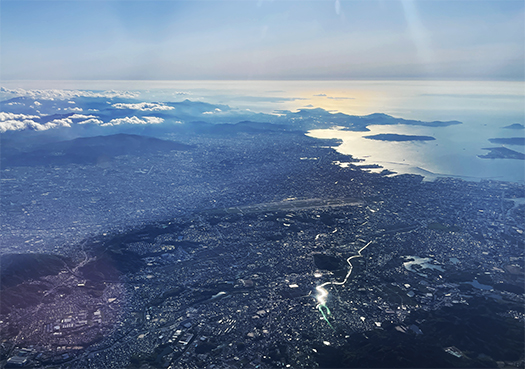
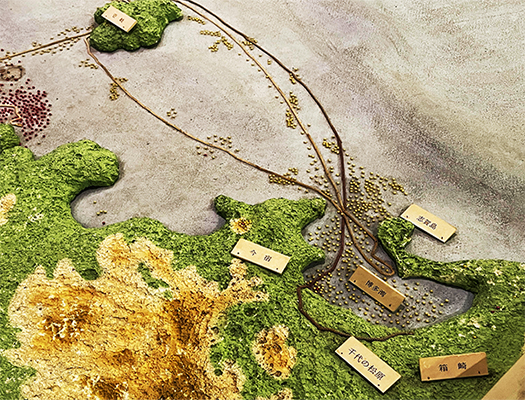
 上の写真は昨日も紹介した博多と博多湾を一望できる上空写真と、今回はじめて参観できた「元寇史料館」で確認できた元軍船舶の「侵略」状況ジオラマ。この状況は元寇の1回目、1274年の「文永の役」のときのものです。13世紀において日本社会はこういう惨禍を実体験した。
 わたしたち北海道もその開拓殖民に当たっては、「北門の鎖鑰〜さやく」(鎖鑰というのは「戸締まり・用心」のような意味)という国家意志・目的が大きな要素として行われてきた歴史経緯。北方からのロシアの侵略脅威に対して、日本社会が立ち上がって国土開発努力が傾けられてきた。
 しかし明治以前の江戸時代という一国平和体制が国民意識に深く沈殿してなのか、日本人は対外的な外交とか、国家戦略的な自らの立ち位置という論議には「熱しやすく冷めやすい」側面が大きいのではないか。とくに戦後社会ではある意味タブーとまでしてきたように思う。
 そういった流れの中で、元寇についての国民としての深い認識というものも欠けている。
 なんとなく「神風が吹いて、侵略勢力軍は船が難破して崩壊した」という認識。わたし自身も、それほどリアリティを持って認識していなかった。記録を見てみると元の軍兵が着ていた鎧の実物、兜などの戦闘具の現物などが保存されていて、実際的な「戦況」も解明されている。
 博多の街は上陸した元軍・侵略者によって一夜にして灰燼に帰した事実もわかる。国家としての侵略軍兵に対してほぼ1/3程度、総数10,000程度の九州各地域の武士層によって「抵抗した」というのが実態のように思える。当時の戦闘スタイルでは日本側武士層は単騎で敵前に進出し「名乗りを上げて」戦おうとしたという。鎌倉期の武士の意識として「武名を上げる」ことが最優先とされ個人戦優位の考え方が良く現れている。一方侵略軍は当然ながら数を頼んでの集団戦で、そうした鎌倉武士を各個撃破してきていた。指揮命令系統的にも「日本国家防衛軍」的な集団指導が為されていたとは言い難い。日本の「武士」というのは「国土防衛戦争」という概念自体を持てなかったのだ。一所懸命の「自分自身の領地」を保守し、そのなかでの権力を志向するのみの存在だった。言ってみれば国家観を持っていない状態。
 結果として侵略軍の上陸を許し、博多の市街地を炎上・灰燼にさせてしまった。「文永の役」の段階では日本人の意識としては、そのようだったと言えるのだろう。元寇の研究、明日以降につづく。

English version⬇

[Experiencing invasion and historically experiencing external pressure – Northern Kyushu]
The invading army occupied and attacked Japan with national will. The Kamakura warriors, on the other hand, were “single-minded” and “name first” in their outposts. They had no clear national defence strategy. …

 The photo above shows the aerial view of Hakata and Hakata Bay introduced yesterday, and a diorama of the ‘invasion’ of Yuan ships, which we were able to see at the Yuan Pirates Historical Museum for the first time. This situation is from the first invasion, the “Bun’ei no Yaku” in 1274, when Japanese society experienced this kind of devastation in the 13th century.
 In Hokkaido, too, the key to the northern gate was a major element of the state’s will and purpose in the development and colonisation of the island. In response to the threat of Russian aggression from the north, Japanese society rose to the occasion and efforts were made to develop the country.
 However, perhaps because of the one nation peace system of the Edo period (pre-Meiji period) that was deeply ingrained in the national consciousness, Japanese people tend to ‘easily cool down’ when discussing foreign diplomacy and their own position in terms of national strategy. Especially in post-war society, it seems to have been taboo in a sense.
 In this context, there is also a lack of a deep national awareness of the Genko.
 The perception is that ‘a kamikaze blew and the invading force’s army collapsed after their ships were wrecked’. I myself was not aware of it with that much reality. The records show that the actual armour worn by the original soldiers and actual battle gear such as helmets have been preserved, and the actual “battle situation” has also been clarified.
 It also shows the fact that the city of Hakata was burnt to ashes overnight by the landed Yuan troops and invaders. The actual situation seems to be that about 1/3 of the invading army as a nation was “resisted” by a total of about 10,000 samurai from the various regions of Kyushu. According to the fighting style of the time, the samurai on the Japanese side advanced into the enemy’s front line single-handedly and attempted to fight ‘by making a name for themselves’. In the awareness of the samurai of the Kamakura period, the highest priority was given to “raising one’s name”, and the idea of the superiority of individual warfare is well expressed. The invading army, on the other hand, naturally fought in groups, and defeated the Kamakura warriors individually. In terms of the chain of command, it is difficult to say that the group leadership of the “Japanese National Defence Force” was being implemented. The Japanese “warriors” were incapable of the concept of a “war of national defence”. They were only interested in maintaining their own territory and power within it. In other words, they had no national outlook.
 As a result, they allowed the invading army to land and burn the city of Hakata to the ground. The Japanese people’s consciousness at the time of the Bun’ei no Yaku could be described as such. Research on the Genko, to be continued tomorrow onwards.


【地下鉄で空港へ、街中からすぐフライトの博多】


 昨日夕方、博多の街から帰還しました。
 昨年にも家族で訪れていたのですが、約1年ぶりの訪問。街のサイズ感としてわたしのホームの札幌と近似している街ですが、そのせいなのか、歩いていて不思議と親近感を感じる。今回は急に日程したこともあってレンタカーなどは借りずに、もっとも街の雰囲気を感じられる「徒歩+地下鉄などの都市交通」という移動手段で都市居住体験をしてみたかった。
 おかげさまで昨日もトータル13,500歩超という歩数であちこちと散策してみていました。知人から勧められた「元寇史料館」から「筥﨑宮」など。やっぱりわたしの数寄としては歴史・ひとのいとなみ系のテーマでの散策が非常に性に合っている。とくに「元寇史料館」での元の軍兵たちが全身にまとっていた「モンゴル型・鎧」の現物展示には深く驚かされていた。
 知人によるとこうした展示、いわば「戦争記念館」のようなものは、世界中どの国でも、たとえその国が敗北した戦争についてであっても必ず「民族の運命」共同体意識のために設置されているけれど、わが国では、そういう先人たちの「血の記憶」の永続装置がない、と指摘していた。
 そういうなかでこの「元寇史料館」は数少ない民族史の貴重な「ナマ証言」だと思いました。
 ・・・というようなことでしたが、そういったテーマについては怒濤の4月にたくさん体験(取材)してきたので、別に記述していきたいと思います。
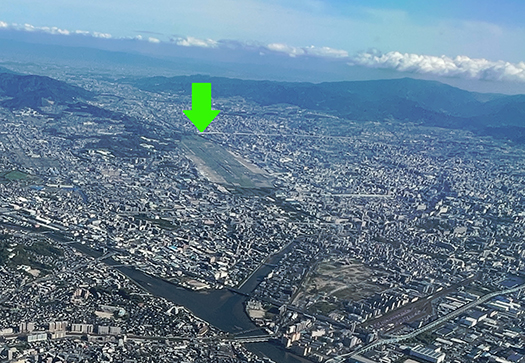
 で、午後3時過ぎには博多の街から福岡空港に地下鉄で移動。博多駅から2駅で到着するという全国的にも珍しい「街中空港」なんですね。伊丹よりも都心的な便利さ。写真はフライト早々に飛行場を「見返した」アングルで⬇を付けましたが、周囲にはびっしりと住宅地が立ち並んでいる。こういう環境でも大過なく運用されてきている関係のみなさんのご努力に深く敬意を持ちます。
 利用者側としては、このような感覚で飛行機移動を利用できるのはありがたい。そういえば土曜日に到着したときには街中で「花火大会」が開催されていたようで、空の上から幻想的な花火の様子を観覧させていただいていた。日本人的な伝統的美感と現代交通が調和していて、目がさめるような体験。そんな体験が、この街への「なんとなくスキ」という思いを深めてくれる。
 本日はさすがにカラダの疲れの積層感があって、高齢者としては「寝坊」(笑)。明日以降、怒濤の4月の探訪をまとめてみたいと思います。

English version⬇

[Hakata with an underground to the airport and flights right from the city]
This kind of travel environment is appreciated by users and creates a positive impression that leads to attachment to the city. Fukuoka (Hakata) is a modern, friendly city without the feeling of going out of your way. …

 I returned from the city of Hakata yesterday evening.
 I had visited the city with my family last year, but it had been about a year since my last visit. The city is similar in size to my home city of Sapporo, and perhaps because of this, I felt a strange sense of familiarity when I walked around the city. This time, because of my sudden schedule, I did not rent a car and wanted to experience urban living by walking + urban transport (e.g. underground), which is the best way to feel the atmosphere of the city.
 Thanks to this, I walked a total of more than 13,500 steps yesterday and tried walking here and there. From the Genko Historical Museum, which was recommended by an acquaintance, to the Hakozaki Palace. As I said, walking around with a theme of history and people’s lives suits me very well. In particular, I was deeply surprised by the display of the actual Mongolian-style armour worn by the Yuan soldiers at the Genko Historical Museum.
 An acquaintance of mine pointed out that such exhibitions, or “war memorials” as it were, are always set up in every country in the world, even in wars in which the country was defeated, for a sense of community and “national destiny”, but in Japan there is no such perpetuating device for the “blood memory” of our ancestors.
 In this context, I thought that this ‘Genko Historical Museum’ was one of the few precious ‘first-hand testimonies’ of national history.
 I would like to write about such themes separately, as I experienced (interviewed) a lot in April.
 So, after 3pm, I travelled by underground from the city of Hakata to Fukuoka Airport. It’s a “city airport”, which is rare in Japan, being only two stops from Hakata Station. It is more city-centre convenient than Itami. The photo was taken early in the flight from an angle “looking back” at the airfield ⬇ but the surrounding area is lined with residential areas. I have deep respect for the efforts of everyone involved, who have managed to operate in such an environment without any major problems.
 On the user side, I am grateful to be able to use air travel with this kind of feeling. By the way, when I arrived on Saturday, a “fireworks display” was being held in the city, and I was allowed to watch the fantastic fireworks display from the sky. An eye-opening experience, where the traditional Japanese sense of beauty and modern traffic are in harmony. Such an experience deepens my “somehow suki” feeling towards this city.
 Today, as expected, I had a layered feeling of fatigue in my body, and as an elderly person, I ‘overslept’ (laughs). From tomorrow onwards, I will try to summarise my exploration of the raging April.


【怒濤の日程だった4月の最後は博多・櫛田神社】


 この4月は電子書籍の「作家と住空間」発刊から始まって、その関連での3月末からの東京滞在があり、その後中旬には「AI人工知能EXPO」参加でふたたび東京晴海のビッグサイトでの説明員役務、その出張が終わってすぐに青森県・道南観桜旅。そこから帰ってすぐに博多にトンボ飛びして知人との会合参加などの日程を過ごしておりました。本日札幌帰還予定。
 こういういろいろな動きがあったので、それを整理整頓して次のステップに準備していかなければなりませんが、5月にはいまのところそういう動きを入れずに、落ち着いて過ごしたいと思います。
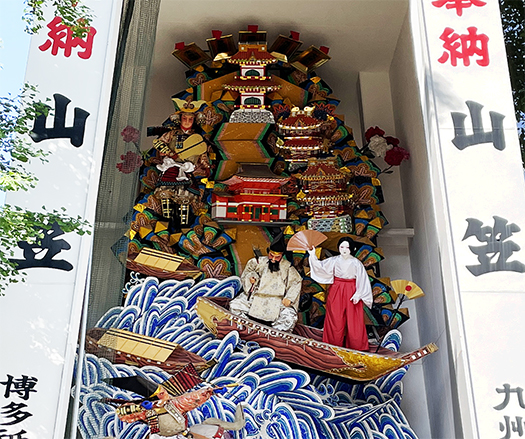
 写真は昨日撮影した櫛田神社の「山笠」。なぜか福岡ではこの櫛田神社周辺にご縁があるようで、昨年もこの近くに宿泊していましたが、今回も同様。よく福岡市は外部からの制服権力である黒田家の「福岡城」と市井の民衆の街である「博多」がバランスしている都市と言われますが、櫛田神社周辺というのがそういう「博多」らしさを残しているのでしょうか。空気感がスキです。
 青森の「ねぶた」にもやや似た祭典である「山笠」ですが、その山車のカラフルな人形群にはねぶたの極彩色感が共有されている。こういうデザインを嗜好する庶民感覚がいろいろなアートなどにも投影されていく部分なのでしょう。オモシロい。青森ではねぶた文化から棟方志功の版画世界や、先日触れた現代作家の奈良美智などのユニークな感覚が生成されたけれど、さて博多では?というところですが、北海道人としては、食文化や歴史性などの「総合性」文化に圧倒されるばかり。
 ・・・どうも福岡・博多とはわりと縁の近い事になってきたので、これからもその地域文化にとっぷりと浸っていきたいと思っております。

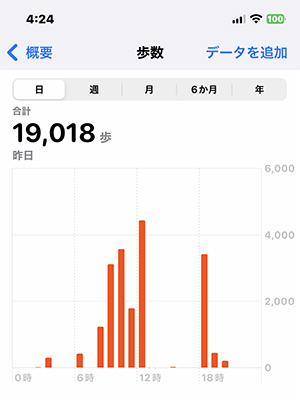
こういう行動活発化に根源的パワーを与えてくれるのは健康体力。きのうは博多の街をたっぷり味わいたいということで、1日中交通機関を使わずにひたすら歩いておりました。最近は出張先、東京で連日10,000歩超だったのですが、昨日は大きく超えて2万歩に迫る勢いでした。これはあきらかに過ぎたるはなお、ではありますが、ひとつの「鍛錬」にはなると思います。しかし、さすがに歩き方は「ゆったり」気味で推移していました(笑)。まぁ、ムリせず健康第一を心がけたい。

English version⬇

The last of April, which was a raging schedule, was at Kushida Shrine in Hakata.
In a completely spring-coloured landscape, I walked and walked and walked, walking a little less than 20,000 steps. I walked a little less than 20,000 steps in the spring scenery. I’m going to cultivate my health and fitness without being too strenuous. …

 This April started with the publication of the e-book ‘Writers and Living Space’, followed by a stay in Tokyo from the end of March in connection with the publication, then in mid-March I participated in the ‘AI Artificial Intelligence EXPO’, again as a briefing officer at Big Sight in Harumi, Tokyo, and immediately after that business trip I went on a cherry blossom viewing trip in Aomori and Donan prefectures. After that, I immediately flew to Hakata to attend a meeting with acquaintances. I am scheduled to return to Sapporo today.
 I need to sort out these various activities and prepare for the next step, but I would like to spend a calm time in May without such activities at the moment.
 The photo shows the Yamakasa festival at Kushida Shrine, taken yesterday. For some reason, Fukuoka seems to have a connection with this area around Kushida Shrine, and we stayed near here last year, and this time is no different. It is often said that Fukuoka City is a city where the uniformed power of the Kuroda family from the outside, the “Fukuoka Castle”, and the city of the common people, “Hakata”, are in balance, and I wonder if the area around Kushida Shrine retains that kind of “Hakata” character. I like the atmosphere.
 Yamakasa is a festival somewhat similar to Aomori’s Nebuta, but the colourful dolls on the floats share Nebuta’s extreme colourfulness. The sense of the common people’s preference for this kind of design is probably a part of what is projected onto various art forms. Interesting. In Aomori, the Nebuta culture has given rise to the unique sensibilities of Munakata Shiko’s print world and the contemporary artist Nara Yoshitomo, whom I mentioned the other day. As a Hokkaido resident, I am overwhelmed by the “totality” of the culture, including the food culture and historical aspects.
 I am very much looking forward to immersing myself in the local culture of Fukuoka and Hakata, which I have come to know very well.

It is health and fitness that provides the fundamental power for this kind of activation. Yesterday, I spent the whole day walking without using public transport in order to fully enjoy the city of Hakata. Recently, I have been walking more than 10,000 steps every day on my business trips to Tokyo, but yesterday I exceeded that number by a wide margin and was close to 20,000 steps. This is obviously too much, but I think it’s a good ‘workout’. However, as expected, I was walking in a “relaxed” way (laughs). Well, I want to put my health first.