
さて歴史学習についてのまったくのシロートによる「四百年間のいのちの履歴書」探索での故地・広島県地域への今次2026年5月の旅路。
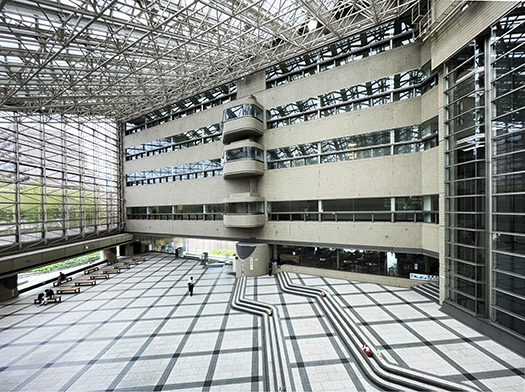
かねて家系での一連の古文書解明でお世話になっている広島県立文書館を訪問させていただきました。江戸期初期からの複数の古文書について、いわば藩政における「地方史」として資料的価値に着目いただいている次第。深く感謝であります。今回は事前にわが家本家の仏壇にて新発見されていた「ナゾの古文書」について、公的にその解明を依頼した次第です。
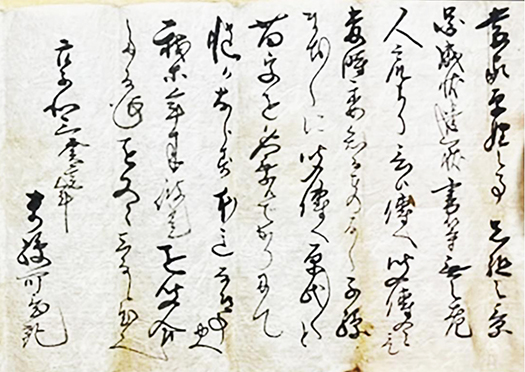
上の写真は、その資料の最初の部分。辛うじて享和3年という年代がわかる。西暦では1803年ということ。時代相はAIでは以下のよう。〜享和3年(1803年)は、西暦では1803年にあたり、江戸時代後期の11代将軍・徳川家斉の治世。常陸国(現在の茨城県)の海岸に謎の漂着物「うつろ舟」が流れ着いたという伝説や、大奥でイケメン僧侶と大奥女中とのスキャンダル「延命院事件」が起きた年。〜 引用以上。
この文書が今年5月1日に偶然、わが家本家で発見された。そこで書類をお送りして解析を依頼した。その内容が,以下のようなものとして提示された次第。
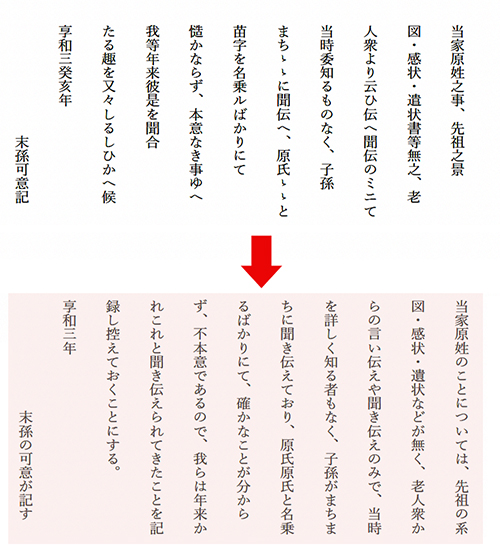
解明された書き手の「末孫の可意」という人物は故地・入野の庄屋家系である「原氏」から枝分かれした隣村・田万里の「原氏」の人物。この当時はわが家は尾道の商家へと身分変容させた「三木氏」。けれど血脈への思いは強く当主(三木寛蔵)がすでに「先祖探索」行動をしていた。その一族事跡探究の一環で、同族と推認された田万里のこの家系に対して情報確認を依頼して、その返信封書であった事実が明らかになった次第。
以下に同族としての先祖の推移についての具体的な内容が続いているのですが、そのあたりは四百年間のいのちの履歴書のコアな部分であり、究極的な「個人情報」とも考えられるので、今後さらに確実性を高めていきたいと思っている部分であります。
それにしても、こういう「やり取り」が公的な解析によって浮かび上がってくることで、先人たち同士の肉声の「生々しさ」に驚かされる。
また、日本語の表記仕様が明治以降の「文化大革命」によって大変貌している日本社会。そのなかに生きている人間として深く痛感させられる思いであります。前日記載の「竹林」ドロ沼道事件から、即座に前向きに立ち直らされました(笑)。
●お知らせ
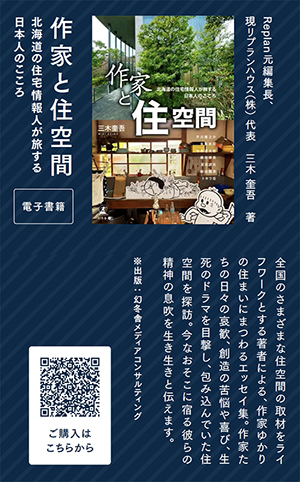
拙書「作家と住空間」幻冬舎から電子書籍で発刊
お求めはAmazonで。
https://amzn.asia/d/eUiv9yO
English version⬇
[Public Support for Historical Document Research from the Hiroshima Prefectural Archives (Acknowledgment)]
The footsteps of our ancestors are vividly captured in the very handwriting of these historical documents. Their deep resonance stirs a visceral response within us. Even sighs and emotions seem to rise from the pages…
Now, as a complete novice in the study of history, I embarked on a journey to my ancestral home in Hiroshima Prefecture this past May 2026 to explore the “400-Year History of Life.”
I had the opportunity to visit the Hiroshima Prefectural Archives, which has long assisted me in deciphering a series of ancient documents related to my family lineage. They are currently focusing on the documentary value of several ancient documents dating back to the early Edo period, viewing them as a form of “local history” within the context of feudal domain governance. I am deeply grateful. On this occasion, I formally requested their assistance in deciphering a “mysterious ancient document” that had recently been discovered at the family altar of my ancestral home.
The photo above shows the opening section of that document. Barely legible is the date “Kyōwa 3”—which corresponds to 1803 in the Gregorian calendar. According to AI analysis, the historical context is as follows: ~The 3rd year of Kyowa (1803) corresponds to the year 1803 in the Gregorian calendar and falls during the reign of Tokugawa Ienari, the 11th shogun of the late Edo period. It was the year of the legend that a mysterious drifting object, the “Utsuro-bune,” washed ashore on the coast of Hitachi Province (present-day Ibaraki Prefecture), as well as the year of the “Enmei-in Incident,” a scandal involving a handsome monk and a lady-in-waiting in the Ooku.~ End of quote.
This document was discovered by chance at my family’s ancestral home on May 1 of this year. I therefore sent the document to be analyzed. The results were presented as follows.
The author’s “descendant” mentioned in the document was a member of the “Hara” clan from the neighboring village of Tamari, a branch of the “Hara” clan from the village of Irino, where the family’s ancestral home was located. At that time, our family had changed its social status to become the “Miki” clan, a merchant family in Onomichi. However, our attachment to our bloodline remained strong, and the head of the family (Kanzo Miki) had already begun searching for our ancestors. As part of this investigation into the family’s history, a request was made to verify information regarding this Tamari lineage, which was presumed to be related, and it has now been revealed that this letter was the reply to that request.
The specific details regarding the lineage of our ancestors as relatives follow below; however, as this constitutes the core of a 400-year-long “biography of life” and can be considered the ultimate form of “personal information,” it is an area where we intend to further verify its accuracy in the future.
That said, seeing this kind of “exchange” emerge through public analysis really strikes me with the raw, vivid authenticity of the voices of our forebears.
Moreover, Japanese society has undergone a dramatic transformation in its writing conventions due to the “cultural revolution” that began in the Meiji era. As someone living within that context, I feel this deeply. It immediately helped me bounce back from the “Bamboo Grove” quagmire incident I wrote about yesterday (laughs).
● Announcement
My book, “Writers and Living Spaces,” has been published as an e-book by Gentosha.
Available on Amazon.
共有:

Posted on 6月 7th, 2026 by 三木 奎吾
Filed under: 未分類




コメントを投稿
「※誹謗中傷や、悪意のある書き込み、営利目的などのコメントを防ぐために、投稿された全てのコメントは一時的に保留されますのでご了承ください。」
You must be logged in to post a comment.