
さて、ようやくわが家の「庵」に帰還して今回の長期にわたる「現地取材」についての分析作業に着手しはじめております。取材は、縁づいた福岡県久留米市を中心に九州全域と、家系史の故地である広島県東広島市河内町入野地域など多岐にわたります。それぞれ興味ありすぎ(笑)。
純粋に事実の掘り起こしや、歴史探訪の部分が基本ですが故地に関わる文化的な興味もワクワク。
で、入野地域の全国的な有名人伝承として「小野篁」がいてその「産湯の池」という浪漫のネタが存在しているのですね。面白すぎて、時間をやり繰りして探訪しておりました。
この人物は、wikiでは以下の要旨。〜小野篁(おののたかむら 802〜853年)は平安時代初期の公卿、文人。参議・小野岑守の長男。官位は従三位参議。異名は野相公。その反骨精神から野狂とも称された。小倉百人一首では参議篁。なかなかに波瀾万丈の人生の平安期の著名人。『令義解』の編纂にも深く関与するなど明法道に明るく政務能力に優れていた。一方で、昼間は朝廷で官吏、夜は冥府で閻魔大王のもとで裁判補佐をしていたという伝説が平安時代末期から鎌倉時代にかけての説話集に紹介される。そのような伝承が伝えられるほどに「人間としての魅力」を持っていたかと想像できる。〜
この人物が家系の故地出身の伝承を持っているので、その「産湯の地」を探訪してみた次第。
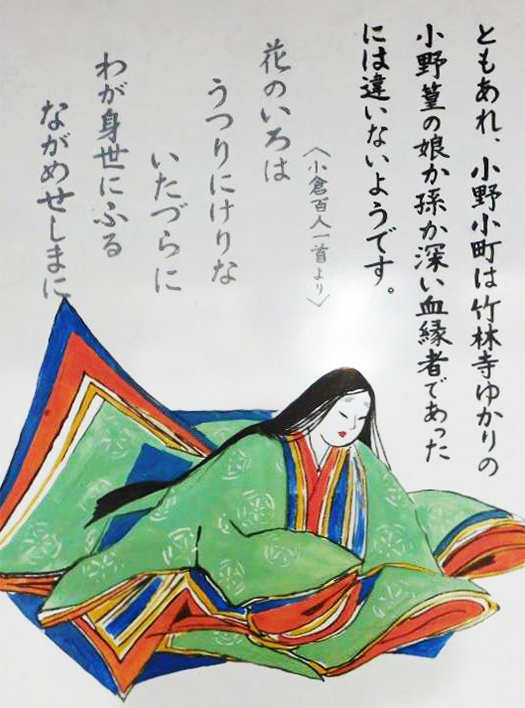
さらにあの日本三大美女とされる小野小町はかれの孫、いや子どもとも言われているのですね。以下、現地での案内文よりキャプチャー。〜篁と小野小町 小野小町は誰もが知る絶世の美女であり、又六歌仙の一人に選ばれた日本史上最高の教養ある女性。通説では小町は出羽(秋田県)の生れで郡司・小野良実の娘で参議・小野篁の孫にあたると。しかし京都随心院に伝わる資料等によると年代・年齢等から父は小野篁であるとされ篁の娘「小野吉子」の別名(小町とは宮中に仕える役職名)ではないか、と。〜
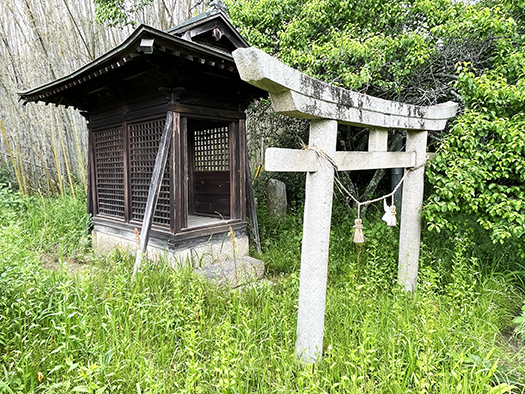
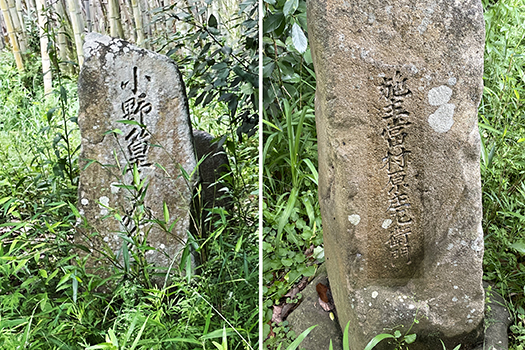
ということで、かれの「産湯の池」には社が建てられ、石碑もあった。その石碑の「施主」としてこの「當(当)村」=入野の「原 庄右(?)衛門」の刻印が確認された。年代は不明ながらそういう文脈かと。原氏はわが家系で出自とされている・・・。
北海道とはまったく違う歴史と人間の積層ぶりがまざまざと迫ってきて、刺激的。
平安期のことすら、このように土地の共通伝承化して廃れていないことに、驚かされていた。
●お知らせ
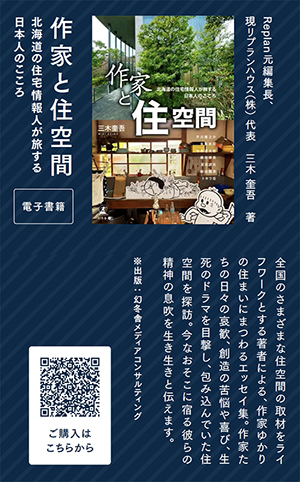
拙書「作家と住空間」幻冬舎から電子書籍で発刊
お求めはAmazonで。
https://amzn.asia/d/eUiv9yO
English version⬇
[The Birthplace of Ono no Takamura—Ono no Komachi’s Father?—in His Family’s Hometown]
The fact that people in Hokkaido—a region with a relatively short history—are so deeply moved by the way this figure from the Heian period, who lived 1,200 years ago, is treated as a source of local pride and that his legacy is still passed down today…
Well, I’ve finally returned to my “hermitage” and have begun analyzing the findings from this extended “field research” trip. My research spanned a wide range of areas, centered on Kurume City in Fukuoka Prefecture—where I’ve developed a connection—as well as the entire Kyushu region, and the Irino area of Kawachi Town in Higashi-Hiroshima City, Hiroshima Prefecture, the ancestral home of my family. I’m just so fascinated by all of it (lol).
While the core of the work involves purely unearthing facts and exploring history, I’m also thrilled by the cultural aspects related to these ancestral lands.
So, regarding the Irino area, there’s a nationally famous figure named “Ono no Takamura,” and there’s this romantic tale that it’s the “place where he was bathed as a newborn.” It was just too fascinating, so I made time to go and explore it.
Here’s a summary of this figure from Wikipedia: ~Ono no Takamura (802–853) was a court noble and scholar of the early Heian period. He was the eldest son of Sangi Ono no Minamoto no Morimori. His official rank was Ju-sanmi Sangi. He was also known as “Noso-ko.” Due to his rebellious spirit, he was also called “Nokyo.” In the Ogura Hyakunin Isshu, he is known as Sangi Takamura. He was a prominent figure of the Heian period who led a truly eventful life. He was well-versed in Buddhist law and excelled in political affairs, having been deeply involved in the compilation of the *Reigi-kai*. On the other hand, legends appearing in story collections from the late Heian to the Kamakura periods describe him as a court official by day and an assistant judge under King Yama in the underworld by night. One can imagine that he possessed such “human charm” that such folklore was passed down. ~
Since this figure is associated with folklore from his ancestral homeland, I decided to visit the “place where he was bathed as an infant.”
Furthermore, it is said that Ono no Komachi—considered one of Japan’s three great beauties—was his granddaughter, or perhaps even his daughter. The following is a screenshot from the on-site guide. ~ Takamichi and Ono no Komachi: Ono no Komachi was a peerless beauty known to all, and the most cultured woman in Japanese history, selected as one of the Six Poets of the Imperial Court. According to conventional wisdom, Komachi was born in Dewa (Akita Prefecture), the daughter of the district magistrate Ono no Yoshimi and the granddaughter of the Councilor Ono no Takamura. However, based on documents preserved at Zuishin-in Temple in Kyoto, as well as chronological and age-related evidence, it is believed that her father was actually Ono no Takamura, and that “Komachi” may have been an alias for Takamura’s daughter, “Ono no Yoshiko” (Komachi being the title of a court position). ~
So, a shrine was built at the site of his “birth bath,” and there was also a stone monument. The inscription on that monument identified “Hara Shōemon” of this ‘Tōmura’ (Iri no) as the “patron.” Although the exact date is unknown, that seems to be the context. The Hara clan is said to be the origin of my family line…
The layers of history and people here, so completely different from Hokkaido, come vividly to life, making it truly stimulating.
Even events from the Heian period are preserved in this land in such a way…
Consequently, a shrine was built at the site of his “birth bath,” and there was also a stone monument. Engraved on that monument as the “patron” was the name “Hara Shōemon (?)” from this “Tōmura” (Iri no). Although the exact date is unknown, that seems to be the context. The Hara clan is said to be the origin of my family line…
The layers of history and human life here, so completely different from those of Hokkaido, come vividly to life, making for a truly stimulating experience.
I was amazed to find that even events from the Heian period have been preserved in this way as local folklore and have not faded into obscurity.
● Announcement
My book, “Writers and Living Spaces,” has been published as an e-book by Gentosha.
Available on Amazon.
共有:

Posted on 6月 4th, 2026 by 三木 奎吾
Filed under: 未分類




コメントを投稿
「※誹謗中傷や、悪意のある書き込み、営利目的などのコメントを防ぐために、投稿された全てのコメントは一時的に保留されますのでご了承ください。」
You must be logged in to post a comment.