
北海道人は一般的に、あんまり「先祖」意識は強く持ってはいない。
そもそもがほぼ明治以降、本州社会からの「スピンアウト」型の動機の移住が多数派で、あんまり「ふりかえりたくない」意識が強いのかと思える。「仏壇を背負って」というコトバがあるけれど、そういう移住経緯の家は多くはないのだと思います。
そういうなか、わたしの家系は比較的にこの意識が強い。仏壇を背負って来たのにはいろいろな経緯もあったようですが先祖についての意識は強い。けれどさすがに遠く離れてしまったので、情報の「縁」は遠い。そんな意識から多くの血縁が度々、出身の故地を訪問し情報のすき間を埋めてきている。わたしはそういう知見を共有させてもらってきた。
・・・という経緯ですが仕事の現職をやや離れたことから、わたしもときどき自分なりに家系伝承の探訪をしています。情報探索の結果、1770-1836年を生きた先祖の事跡はかなり明瞭で、しかもかれはそこから遡ること150-60年前の「慶長年中」のことを書き記している。500年以上前のわが家系状況・・・。
で、現代のわたしとしては少し知見が出来たAI技術を活用してみたいと思った次第。AI技術では「古文書・記録」のような著作権の発生しない文字情報の検索力は超絶にすばらしい。これまでは各地方に残っている古文書や民間伝承・歴史書はその地域に足を運ばなければ探索できなかったけれど、AI技術活用では一気に達成できる。
それも知りたい情報のピンポイントを「上手に指示すれば」即座に答えてくれる。まぁその的確な情報検索には「足で集めた」情報内容が深く生きる。端的で、情報検索がしやすいキーワードの「想像力」が大切なのだと痛感させられます。
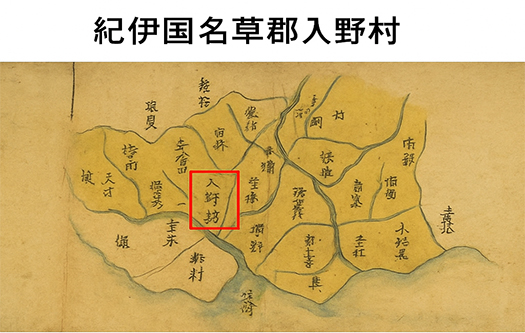
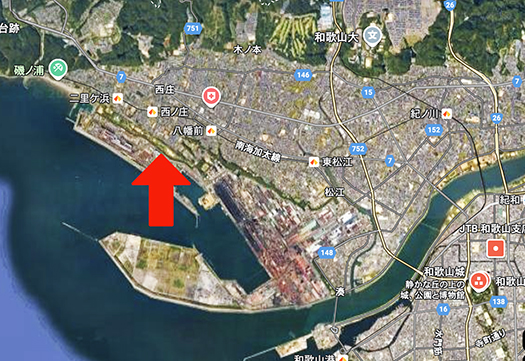
ということで上はAIがたたき出してくれたわが家系の「故地」の古地図。英語圏で発達したAI技術なので文字表記に不明がありますが、地図以外の文字情報と対照することで問題ない。その下にGoogleMap。どうも和歌山城からほど近いこのあたりに500年以上前、家系は生存していたようなのですね。
う〜む、であります。
●お知らせ
拙書「作家と住空間」幻冬舎から電子書籍で発刊
お求めはAmazonで。
https://amzn.asia/d/eUiv9yO
English version⬇
【AI Search Reveals the Whereabouts of My Ancestors from 500 Years Ago (!)】
An AI technology capable of exploring distant records of my family lineage that migrated to Hokkaido. Selecting the right “search keywords” seems to be the key. …
People from Hokkaido generally don’t hold a particularly strong sense of “ancestry.”
Fundamentally, the majority of migration here since the Meiji period has been a “spin-off” type motivated by escape from Honshu society, so perhaps there’s a strong desire to “not look back.” While there’s the phrase “carrying the Buddhist altar on one’s back,” I don’t think many families migrated with that kind of history.
Within this context, my own family lineage holds a comparatively strong sense of ancestry. While there were various circumstances surrounding the literal act of “carrying the Buddhist altar,” the awareness of our ancestors remains profound. However, the physical distance has inevitably made the “connections” for information scarce. Driven by this awareness, many blood relatives frequently visit their ancestral hometowns to fill in the gaps in our knowledge. I have been fortunate to share in these insights.
…That’s the background. Now that I’ve stepped back somewhat from my current job, I occasionally explore my family history on my own. My research has revealed quite clear details about an ancestor who lived from 1770 to 1836. Moreover, he recorded events from the Keicho era, about 150-60 years before his own time. That’s over 500 years ago, detailing our family’s circumstances…
So, as a modern individual, I thought I’d like to try utilizing the AI technology I’ve gained some insight into. AI technology has an absolutely superb search capability for textual information like “ancient documents and records” where copyright doesn’t apply. Until now, exploring ancient documents, folk traditions, and historical texts preserved in various regions required physically traveling there, but with AI technology, it can be achieved all at once.
Moreover, if you “skillfully specify” the exact point of information you seek, it provides an immediate answer. Well, the depth of information gathered “on foot” truly comes alive in this precise information retrieval. It really drives home how crucial the “imagination” for concise, easily searchable keywords is.
So, above is an ancient map of my family’s “ancestral lands” that AI generated. Since this AI technology developed in the English-speaking world, the text notation is unclear, but cross-referencing with non-map textual information resolves any issues. Below that is Google Maps. It seems our family resided in this area, quite close to Wakayama Castle, over 500 years ago.
Hmm, indeed.
●Notice
My book “Writers and Living Spaces” published as an e-book by Gentosha
Available for purchase on Amazon.
共有:

Posted on 11月 1st, 2025 by 三木 奎吾
Filed under: 未分類




コメントを投稿
「※誹謗中傷や、悪意のある書き込み、営利目的などのコメントを防ぐために、投稿された全てのコメントは一時的に保留されますのでご了承ください。」
You must be logged in to post a comment.