

政権交代にともなう各社の世論調査報道が相次いでいる。軒並み6割を超える支持率。今回の自由民主党の女性総裁誕生から、連立政権発足を日本社会はいま、好意的に受け止めていると見て取れる。
「支持率下げてやる」ホンネ発言から「死んだらいい」田原聡一郎発言など既存メディア勢力と民意の乖離ぶりも鮮明に。連立協議プロセスでの既存「労働組合」系勢力の劣化露呈もわかりやすい。
どうもこれまでの政治が抱えてきた問題点が噴出し「解脱」した政局だったのだと思える。
ここから史上初の女性首班による政治がどのような変化の「見える化」をできるのか、国民の期待感はごく自然に高まってきていると思う。評価はその「仕事ぶり」如何に真摯に掛かっている。
こういう「女性活躍」と日本人、日本社会というものは非常に興味深い。
海外からも男性優位社会という対日観が大きく崩れ、好意的な見方が出ている報道。ガラスの天井をアメリカに先駆けて突き破った意義は国際政治上も大きい。そしてすぐに来日するトランプとの外交対話で、どのような展開が示されるかも注目点になるだろう。
総じて日本社会に久々の「期待感」が高まっていると思う。
わたし的には、この女性活躍日本社会の根源として女性神・アマテラス神話に思いが向いている。
世界のなかで創成神として女性がシンボルになる神話は特異。
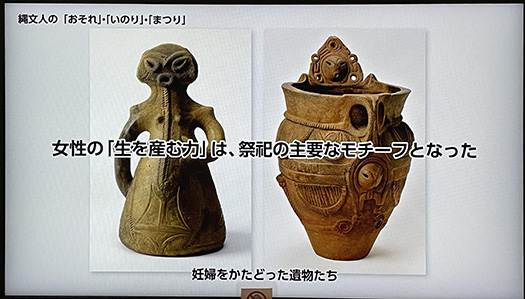
女性を太陽として尊崇する日本社会は超「LGBT」の平和性を感じる。女性がトップになることを支持する日本社会の根源には、列島社会での精神文化伝統がある。そしてさらにその根っこには、縄文の世の女性の「生む力」への自然な崇拝があるのではないかと。
AIに聞いてみてもあんまりそういう推論は見かけないけれど、海外の「陸生動物・狩猟」主流の原始ライフスタイルと、この日本列島社会での「漁労採集&定住」ライフスタイルの違いがあると思うのだ。
海外社会では陸生動物に主要タンパク源を求め、それは獰猛な勇猛さに力点を置く社会だけれど、一方の漁労採集ではより平和的なカタチでタンパク源を得られたことが大きいと思えるのです。
そういう社会では生産力の中核は「人間」マンパワー。そしてそれを「生産」する女性に対して神性を感じる精神性基盤が形成されてきたのではないだろうか。
このことがアマテラス神話に反映していると思われてならない。・・・まぁ、歴史研究などでもそういう意見はあんまり見かけないけれど、わたし的には強く感じられている。
〜下の画像は歴史民俗博「縄文史」展示より〜
●お知らせ
拙書「作家と住空間」幻冬舎から電子書籍で発刊
お求めはAmazonで。
https://amzn.asia/d/eUiv9yO
English version⬇
Women’s Political Participation and the “Amaterasu” Mythology in Japan
Japan is a uniquely peaceful society worldwide, founded upon the female creator deity Amaterasu. The eruption of Japan’s “public sentiment” shattering the degraded media…
Following the change in government, various media outlets have been reporting on public opinion polls. Support rates consistently exceed 60%. From the election of the Liberal Democratic Party’s first female president to the formation of the coalition government, it appears Japanese society is now viewing these developments favorably.
The gap between established media forces and public sentiment is also starkly evident, from candid remarks like “I’ll make sure his approval ratings drop” to comments like “He should just die” by Soichiro Tahara. The deterioration of existing “labor union”-affiliated forces during coalition negotiations is also readily apparent.
It seems this political situation has erupted with the problems long inherent in past politics, achieving a kind of “liberation.”
From here, public expectations are naturally rising regarding what kind of visible changes the first female prime minister in history can bring to politics. Her evaluation hinges entirely on how sincerely she performs her duties.
This phenomenon of “women’s empowerment” and its relationship with Japanese people and society is profoundly intriguing.
Reports from abroad indicate a significant shift in the perception of Japan as a male-dominated society, with increasingly favorable views emerging. The significance of breaking through the glass ceiling ahead of the United States is substantial in international politics. The diplomatic dialogue with Trump, who will visit Japan soon, will also be a point of focus to see what developments unfold.
Overall, I feel a long-awaited sense of “expectation” is rising in Japanese society.
Personally, my thoughts turn to the myth of the female deity Amaterasu as the root of this female empowerment in Japanese society.
It’s unique in the world for a myth to symbolize creation with a woman as the deity.
Japanese society, which reveres women as the sun, feels inherently peaceful, transcending even “LGBT” issues. The roots of Japanese society’s support for women reaching leadership positions lie in the spiritual and cultural traditions of island society. And at the very core of that, I suspect, is the natural reverence for women’s “power to give birth” from the Jomon era.
Even when I ask AI, I don’t see much of that kind of reasoning, but I think there’s a difference between the mainstream primitive lifestyle of “terrestrial animals and hunting” overseas and the “fishing, gathering, and settled” lifestyle here in the Japanese archipelago society.
Overseas societies sought their primary protein source from land animals, creating cultures emphasizing fierce bravery and strength. In contrast, fishing and gathering allowed for a more peaceful acquisition of protein, which seems significant.
In such societies, the core of productive power was “human” manpower. Couldn’t it be that this formed a spiritual foundation where women, who “produced” this power, were perceived as divine?
I can’t help but feel this is reflected in the Amaterasu myth. …Well, you don’t see this opinion much in historical research, but I feel it strongly.
~Image below from the History & Folklore Museum’s “Jomon History” exhibit~
●Notice
My book “Writers and Living Spaces” published as an e-book by Gentosha
Available on Amazon.
共有:

Posted on 10月 23rd, 2025 by 三木 奎吾
Filed under: 未分類





コメントを投稿
「※誹謗中傷や、悪意のある書き込み、営利目的などのコメントを防ぐために、投稿された全てのコメントは一時的に保留されますのでご了承ください。」
You must be logged in to post a comment.