
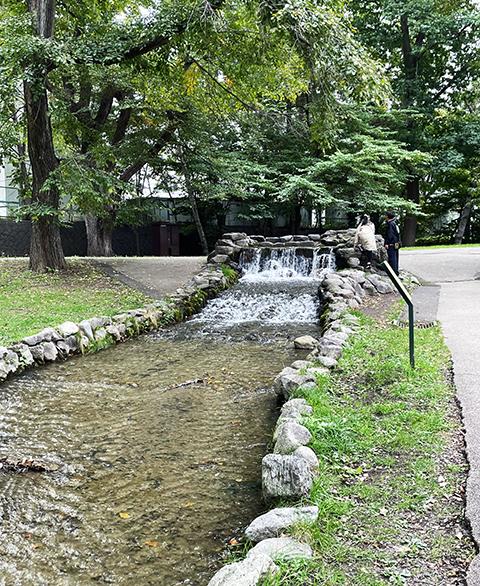
北大構内でのウォーキング途中での景観。
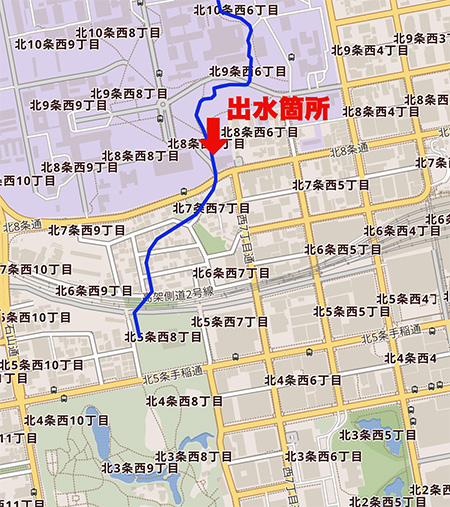
札幌の北大植物園の西側隣接地にわが家が移転してきたのは1955年ころで70年ほど前。そこでわたしは3歳から高校1年までの十数年を過ごした経験が原風景。札幌の原始の自然風景を保存している「植物園」は、北海道大学北方生物圏フィールド科学センター。上の地図の下方にこの北大植物園があり、その東側には北海道庁敷地もありますがそのどちらにも「メム(アイヌ語で「湧き出る泉」)」表記がある。
札幌の地名語源は主にアイヌ語の「サリ・ポロ・ペッ」(葦原が広大な川)または「サッ・ポロ・ペッ」(乾いた大きな川)の2つの説が有力とされるけれど、たくさんの小川が流れあるいはメムとして池を作っているような光景が展開していた様子が植物園では確認できる。
そういう自然風景の中でガキとしての幼少年期を過ごしていたので、復元された写真の北大構内「サクシュコトニ川」の地上への「出水」場所は格別に好きな場所。原札幌と思える。いま現在のふだんの散歩道・札幌円山公園にもこういったメムがあって、カモやオシドリ観察箇所。札幌はこういった小川とメムに覆われた大きな「葦原」だったのだろうと思えます。
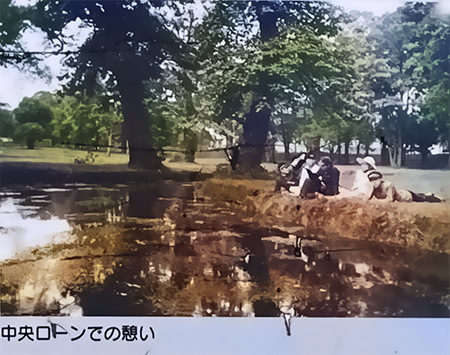
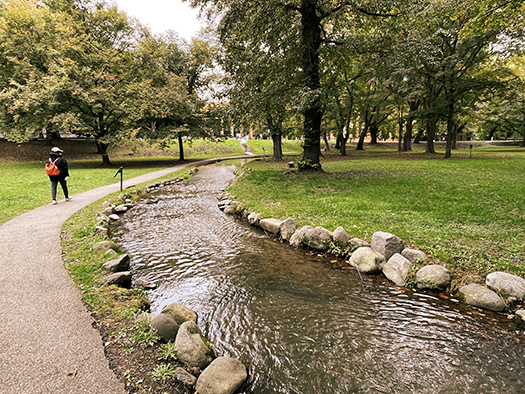
こちらは札幌の古写真でこの出水箇所から広がっている広場〔中央ローン)での人びとの様子と、一昨日の散策時点の風景。モノクロ画像をカラー化させたけれど、時間経過がゆったりとしている様子で、たのしい。こういう「なんでもない風景」が札幌には広がっていたのでしょう。
この出水箇所は、枯れていたサクシュコトニ川に対して札幌市と北大が協力して人為的に「地下伏流水」として導水して復元させたモノだという。さっぽろっことして、共感できる。写真には若いアベックさんたちも後ろ姿モデルになってくれているけれど、さりげなく原札幌を感じ伝えて欲しいもの。
さて、政治的には混沌とした日本の情勢。今週からトランプ来日までがひとつの山場になるのでしょう。なんとか次なる進歩社会が達成されるようにと願ってやみません。
●お知らせ
拙書「作家と住空間」幻冬舎から電子書籍で発刊
お求めはAmazonで。
https://amzn.asia/d/eUiv9yO
English version⬇
【Traces of Primitive Sapporo’s Nature: The Sakušukotoni River on Hokkaido University Campus】
In ancient Sapporo, small streams likely flowed throughout the land, dotted with marshes and vast reed beds. Remnants of this primordial Sapporo remain preserved within Hokkaido University and its Botanical Garden. …
A view encountered while walking on the Hokkaido University campus.
My family moved to the land adjacent to the west of Sapporo’s Hokkaido University Botanical Garden around 1955, about 70 years ago. Thus, my formative landscape is the experience of spending over a decade there, from age three until my first year of high school. The “Botanical Garden,” preserving Sapporo’s original natural landscape, is the Hokkaido University Northern Biosphere Field Science Center. This Hokkaido University Botanical Garden is located at the bottom of the map above. To its east lies the Hokkaido Government Office grounds, and both locations feature the notation ‘Mem’ (meaning “spring” in the Ainu language).
While the primary theories for Sapporo’s name origin are the Ainu words “Sari-Poro-Pett” (vast river of reeds) or “Sapp-Poro-Pett” (dry, large river), the Botanical Garden clearly shows how the landscape once featured numerous small streams flowing or forming ponds as Mem.
Having spent my childhood in such natural surroundings, the restored photo of the “Sakushukotoni River” on the University of Hokkaido campus, specifically where it emerges above ground, is a place I particularly love. It feels like the original Sapporo. Even now, my usual walking path through Sapporo Maruyama Park has such mem, serving as a spot to observe ducks and mandarin ducks. It makes me think Sapporo must have been a vast “reed plain” covered in these small streams and mem.
This is an old photo of Sapporo showing people at the plaza (Central Lawn) spreading out from this overflow point, and the scene during my stroll the day before yesterday. I colorized the monochrome image, but it feels pleasantly relaxed, as if time flows gently. Such “ordinary scenes” must have spread throughout Sapporo.
This water feature was restored through a collaborative effort between Sapporo City and Hokkaido University. They artificially channeled “underground seepage water” to revive the once-dried-up Saku-shukotoni River. As a Sapporo native, I can relate to that. Young couples also appear in the background of the photo, serving as models. I hope they subtly convey the essence of old Sapporo.
Now, politically, Japan’s situation is chaotic. The period leading up to Trump’s visit this week will likely be a critical juncture. I can’t help but hope that somehow, the next progressive society will be achieved.
●Notice
My book “Writers and Living Spaces” published as an e-book by Gentosha
Available on Amazon.
共有:

Posted on 10月 14th, 2025 by 三木 奎吾
Filed under: 未分類




コメントを投稿
「※誹謗中傷や、悪意のある書き込み、営利目的などのコメントを防ぐために、投稿された全てのコメントは一時的に保留されますのでご了承ください。」
You must be logged in to post a comment.