
さて今回の旅路は知己との京都での再会会合が主たる用件で、それは昨日午後いっぱいの時間に無事果たすことができました。これはライフワークの建築探訪とは一応は別件であります。
なんですがまぁせっかくの旅なので、一昨日は大阪府堺市で大好きな利休さんの足跡と再会。わたしは茶道には遠くから「すごいなぁ」と思っているだけで、その建築文化「茶室」の方にはるかに興味が強くあれこれと参観を繰り返しています。人間のカラダの寸法から来る「空間の合理性」という知恵の結晶があると思っています。
で、昨日は早朝からその堺を発って、ひさしぶりにスマホナビを使いまくって「電車乗り継ぎ」で、京都の下鴨神社までの旅路。これが、いつものレンタカー旅とはまた格別の楽しさ(笑)。
南海鉄道の堺から「なんば」で大阪地下鉄・御堂筋線に乗り換え淀屋橋でさらに京阪電車という初めて乗った私鉄線に乗り換え。で、途中乗り換え駅周辺で朝のトイレも済ませられて、ウキウキと京都下鴨神社〔出町柳駅)まで快適移動旅。これも超たのしいi.5時間。
・・・どうも枝葉のイントロ部分の話が長い(笑)。
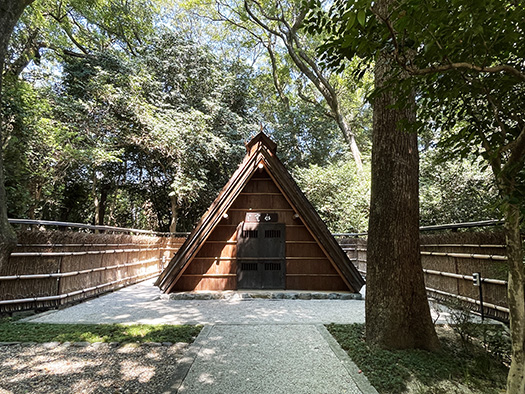
本日の主題は写真の京都下鴨神社本殿脇で特別公開されていた神事用の台所施設「大炊殿〜おおいでん」。その重要な付帯施設である「氷室〜ひむろ」の参観というか「発見」であります。
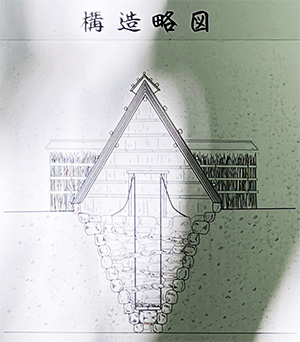
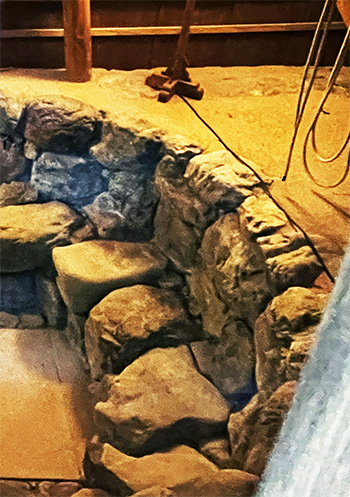
本当はまた別の建築が主たる探訪先でそれはそれで充実していたのですが、この「氷室」施設があるという情報が現地到着後、徐々にあきらかになってきて心惹かれまくっていた。ようやく足を向けたら、いちばん上の魅惑的な建築外観にめぐり会ってしまっていたのです。おお、であります。コトバを失う環境調和のシンプルな造形美。そしてさらに、この氷室の「内観撮影」(下の石造の井戸状地下構造」参照)など、構造仕様も確認できた。
以下説明文。
〜「鴨の氷室」 重要文化財・大炊殿において年中行事のお供えを調理するため、京ことばで「おくどさん」というカマドと「氷室」「井戸屋」が設けられていました。現在は機能の充実した冷蔵庫がありますが、古い時代は魚介類など生鮮食品の保存にはたいへんな苦労がありました。そこで神地「糺の森」のなかでも清浄の地を選び霊水として名高い湧水を地中深くより汲み上げ、冬の間に凍らせて、氷室の底を年中、摂氏12-3度に保ち、冷凍保存する方法を編み出して「千有余年」にわたり活用されてきました。〔以下略)〜
現代の寒冷地の建築技術・断熱気密技法の発展に随伴してきた人間にしてみると京都文化「千有余年」の連綿とした知恵が対話を仕掛けてきてくれているようで、超魅惑的。神事を語り伝え保守してきた先人たちの知恵のいとなみに深く「癒される」気分に沈殿しておりました・・・「蓄冷技術」。ふーむ。
●お知らせ
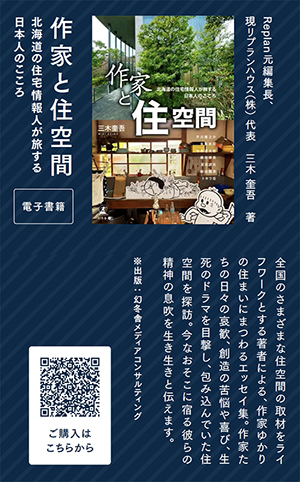
拙書「作家と住空間」幻冬舎から電子書籍で発刊
お求めはAmazonで。
https://amzn.asia/d/eUiv9yO
English version⬇
【A Thousand-Year-Old Ritual “Cold Storage Technology” — The Ice Cellar / Shimogamo Shrine, Kyoto】
Developed alongside thermal environment technologies in cold regions, this “cold storage technology” encountered in humid, hot climates. Deep respect for the spirit behind this environmental technology. …
This journey’s main purpose was a reunion with an old friend in Kyoto, which we successfully accomplished yesterday afternoon. This is separate from my lifelong pursuit of architectural exploration.
Still, since I was traveling anyway, the day before yesterday I revisited the beloved footsteps of Rikyu in Sakai City, Osaka Prefecture. While I’m only a distant admirer of the tea ceremony itself, thinking “Wow, that’s amazing,” I’m far more fascinated by its architectural culture, the “teahouse.” I find it a crystallization of wisdom, embodying the “rationality of space” derived from the dimensions of the human body.
So, yesterday, I left Sakai early in the morning. After using my smartphone navigation extensively for the first time in ages, I made my way via train transfers to Shimogamo Shrine in Kyoto. This was a different kind of fun compared to my usual rental car trips (laugh).
From Sakai on the Nankai Railway, I transferred to the Osaka Metro Midosuji Line at Namba, then switched to the Keihan Railway at Yodoyabashi – my first time riding this private railway line. I even managed to use the restroom near the transfer station along the way, making for a comfortable, cheerful journey to Kyoto’s Shimogamo Shrine (Demachiyanagi Station). This was also super fun – about 1.5 hours.
…Seems like I’m rambling too much in this introductory tangent (laugh).
Today’s main topic is the “Oiden” (Great Kitchen Hall), a special-use kitchen facility for Shinto rituals, located beside the main hall of Kyoto’s Shimogamo Shrine, which was open for special viewing. More specifically, it’s about visiting, or rather “discovering,” its important auxiliary facility, the “Himuro” (Ice House).
Truthfully, another building was my primary destination, and that visit was thoroughly satisfying. But upon arriving, information about this “Himuro” facility gradually surfaced, captivating me completely. When I finally made my way there, I encountered its most enchanting architectural exterior. Oh, my. A simple, harmonious beauty that left me speechless. Moreover, I was able to confirm the structural specifications, including the “interior photography” of this ice house (see the stone-built well-like underground structure below).
Explanation follows.
~ “The Duck Ice House”
Within the Important Cultural Property, the Ōsiriden (Grand Kitchen), a hearth known in Kyoto dialect as “okudo-san,” along with an “ice house” and a “well house,” were established to prepare offerings for the year-round ceremonies. While modern refrigerators now provide ample functionality, preserving fresh foods like seafood was extremely difficult in ancient times. Therefore, a method was devised to draw water from a renowned sacred spring deep within the purest part of the sacred Tadasu no Mori forest. This water was frozen during winter, maintaining the ice house’s floor at a constant 12-13 degrees Celsius year-round for frozen storage. This technique was utilized for over a thousand years. [Omitted]~
For us, whose world has evolved alongside modern cold-climate construction techniques and advanced insulation methods, the continuous wisdom of Kyoto culture spanning over a thousand years seems to initiate a dialogue with us—utterly captivating. I found myself deeply immersed in a sense of profound healing, contemplating the wisdom and labor of our ancestors who preserved and passed down these sacred rites… “Cold Storage Technology.” Hmm.
●Notice
My book “Writers and Living Spaces” published as an e-book by Gentosha
Available on Amazon.
共有:

Posted on 9月 1st, 2025 by 三木 奎吾
Filed under: 住宅性能・設備



コメントを投稿
「※誹謗中傷や、悪意のある書き込み、営利目的などのコメントを防ぐために、投稿された全てのコメントは一時的に保留されますのでご了承ください。」
You must be logged in to post a comment.