本文へジャンプ

【北方アジア民族「オホーツク文化」 人生再学習 in北大】


 北海道にはアムール川河口地域からオホーツク海岸線地域に南下してきた民族の痕跡が残っている。ひろく見れば日本には中国大陸や朝鮮半島地域からの民族移動が繰り返されてきた歴史だけれど、北方の北海道島でも、そういう歴史痕跡は残されている。
 北大での歴史研究でもこの「オホーツク文化人」についてコーナーが設けられて展示されていた。
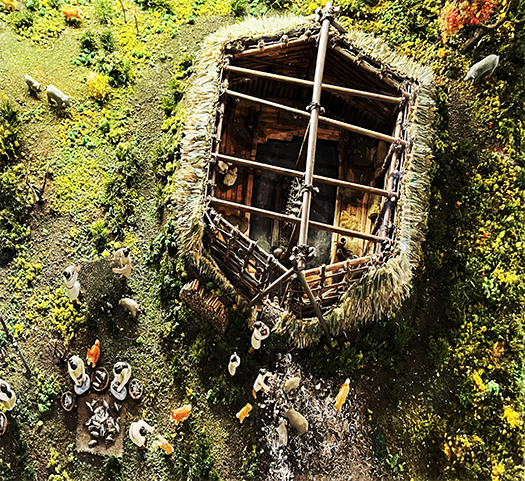
 わたしも、このひとびとに深く興味を持っていたので、ジオラマなどに見入っておりました。この人びとはその住居に特徴があって、平面形が6角形や5角形が取られて、その規模が大きいこと。ジオラマでは6角形住居で、その屋根の部分を外して内部の様子もわかる展示。またもうひとつの特徴として、室内の奥まった位置に、ヒグマの頭骨が一種の宗教性を感じさせる祭壇のようなカタチで祀られていること。いわば素の「宗教」、そうした人類の「精神文化」の原初的なカタチを見せてくれる。
 658年から660年にかけてとされるヤマト王権側の阿倍比羅夫の古代における北海道島への出兵は、このオホーツク人と、在来の北海道島の住人、その後のアイヌ民族と想定できる人びととの相克状況に対して、ヤマト政権としてアイヌ民族側に助成するような軍事行動だったと推定されている。奥尻島と想定できる「戦場」で阿倍比羅夫軍の副将が戦死してその墓地の伝承が残されているという。
 そういった経緯があった後、やがて民族融合が起こって、アイヌ民族文化に収斂していったとされている。その過程でこの「ヒグマ信仰」が生き延びていった。
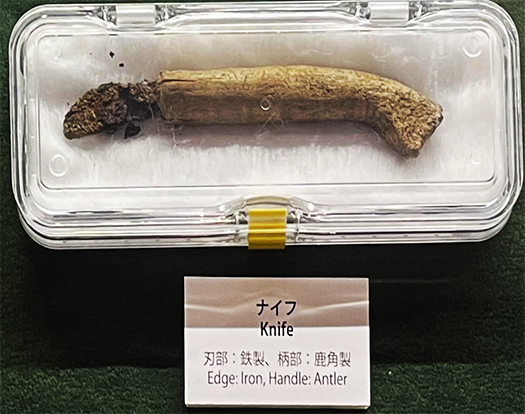
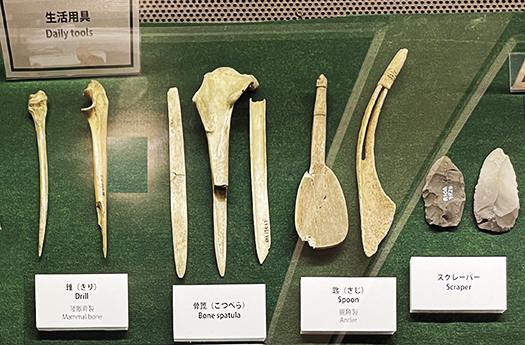
 展示されていた遺物には、ヤマト社会との交易を示す鉄器の刃の部分と、魚類の骨格を組み合わせた持ち手のナイフも示されていて、はじめて参照させていただけた。非常に興味深い「歴史遺物」。ほかの漁業の用具では骨角器が主流。大型海獣採集という生業がかれらの生命線、その根拠を示している。
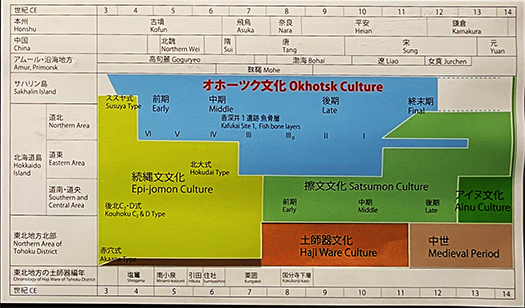
 こちらが日本列島での民族交流を示す年表になるけれど、このオホーツク人の文化について、最近の最前線的な知見が開示されている。こういう展示からはいまの北海道の最新歴史研究の様子が推し量れる。わたしたち民間の数寄には非常にありがたいご教授。今後とも最新知見をよろしく。

●お知らせ
拙書「作家と住空間」幻冬舎から電子書籍で発刊
お求めはAmazonで。
https://amzn.asia/d/eUiv9yO
English version⬇ 

【Northern Asian Ethnic Group “Okhotsk Culture” Life Re-learning at Hokkaido University】
Since ancient times, the fusion of Asian cultures brought by “naturalized” people and the archipelago society unfolded in a different form in Hokkaido. The joy of encountering the latest findings.・・・

 Traces remain in Hokkaido of peoples who migrated southward from the Amur River estuary region to the Okhotsk coastline. Broadly speaking, Japan’s history involves repeated ethnic migrations from the Chinese mainland and the Korean Peninsula region, and such historical traces are also preserved in the northern island of Hokkaido.
 At Hokkaido University’s historical research center, a dedicated section was set up displaying exhibits about these “Okhotsk people.”
I, too, was deeply interested in these people and found myself engrossed in the dioramas. Their dwellings had distinctive features: hexagonal or pentagonal floor plans and large scale. The diorama displayed a hexagonal dwelling with its roof removed, revealing the interior. Another characteristic was the placement of a brown bear skull at the rear of the dwelling, enshrined in a manner suggesting a religious altar. This revealed a raw form of “religion,” a primitive manifestation of humanity’s “spiritual culture.”
 The ancient expedition to Hokkaido Island by Abe no Hirafu of the Yamato regime, believed to have occurred between 658 and 660, is presumed to have been a military action by the Yamato government supporting the Ainu people against the conflict between the Okhotsk people and the indigenous inhabitants of Hokkaido Island, who can be assumed to be the ancestors of the later Ainu ethnic group. It is said that the deputy commander of Abe no Hirafu’s army died in battle on what is thought to be the “battlefield” of Okushiri Island, and traditions about his burial site remain.
Following these events, ethnic fusion eventually occurred, leading to the convergence into Ainu culture. Within this process, this “brown bear worship” survived.
 The exhibited artifacts included a knife handle combining an iron blade fragment—indicating trade with Yamato society—and fish bones, which I was able to examine for the first time. A highly intriguing “historical artifact.” Among other fishing tools, bone and antler implements were predominant. This demonstrates the basis for their livelihood—the hunting of large marine mammals—as their lifeline.

 This timeline illustrates ethnic interactions across the Japanese archipelago, while cutting-edge findings on Okhotsk culture have recently been disclosed. Such exhibits offer insight into the current state of historical research in Hokkaido. We private enthusiasts are deeply grateful for this enlightenment. We look forward to continued sharing of the latest discoveries.

●Notice
My book “Writers and Living Spaces” published as an e-book by Gentosha
Available on Amazon.

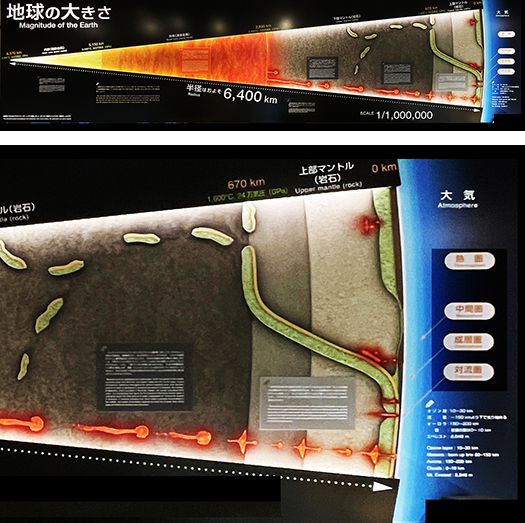
【地球の構造「視覚化」 人生再学習in北大】


 さて夫婦の散歩道で人生の再学習をさせてもらった北大博物館展示。
 さまざまな科学的知見をビジュアル的に「端的に、わかりやすく」見せてくれることで、一般人的知見に最新の情報を「上書き」してくれる効果がありますね。
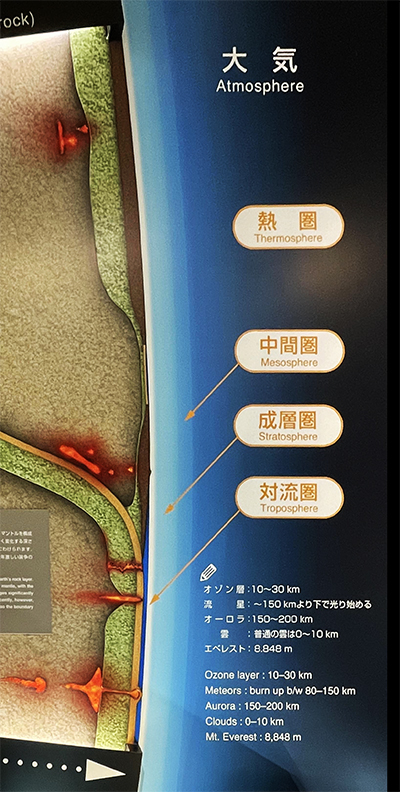
 上の画像で、地球と「生命圏」との配置関係がわかりやすく「腑に落ちて」くれました。自分という存在が「生かされている」人間世界。それが地球によって「生かされている」環境の具体的な配置認識が、映像的に把握できたのですね。
 地球にとってごく上辺の「皮膜」のような世界で人間は「文明圏」を生み出してきて、そのなかで自分たちの「一生」がある。そして世代交代というカタチでいのちを存続させてもらってきている。奇跡のような「ありがたさ」がイメージされてきた次第です。とくにわたしたち夫婦のようにある年齢を超えてくると、このありがたさが無上に強く感じられてくる。この生命圏のなかで、人間は今生だとか、前世や来世だとかの人のいのちについての、宗教的な無限連鎖のイメージを展開している。

 たぶんわたしたちが「わかっている」と思うことは、地球のスパンで見れば、それは地球自身がそのように「生命あるものたち」に思わせているということなのでしょうね。
 深いマグマの中核からこの生命圏に至るまでの「地球の呼吸」のようなものが、人間の世界に「波動」として伝わってくるものという認識の方が正しいのではないか。
 ・・・というような地球と生命のイメージが可視化されていたと思った。
 人間一個の存在はこういう地球圏のなかで、非常に微少な存在として生かされている。しかしそうであるからこそ、大切に生きて行かなければならない。そしてできれば、より大きな「生命感」に導かれるように正直な生き方をすべきだ、みたいな気付き。もうかなり遅いけれど(笑)。
 しかしこういう具体的なイメージ図を認識させられると、日常のほんの小さなことにも驚きやあらたな「発見」も見いだせる気がする。わたし的に非常に「気付かされた」地球図でした。

●お知らせ
拙書「作家と住空間」幻冬舎から電子書籍で発刊
お求めはAmazonで。
https://amzn.asia/d/eUiv9yO

English version⬇ 

Visualizing Earth’s Structure: Life Re-learning at Hokkaido University
A belated “re-learning” opportunity (lol). Yet I’m grateful for this chance. Humans are guided by chance and embraced by the vast life of Earth…

 Well, the Hokkaido University Museum exhibition offered us a chance to relearn life during our couple’s stroll.
By visually presenting various scientific insights in a “concise, easy-to-understand” way, it effectively “overwrites” our common knowledge with the latest information.
The image above made the relationship between Earth and the “biosphere” click into place for me. It visually captured the concrete arrangement of the environment where the human world—where we exist as beings “kept alive”—is itself “kept alive” by the Earth.
Within this world, which is but a thin “membrane” on the Earth’s surface, humans have created the “civilization sphere,” and within it lies our own “lifetime.” And through generational succession, we have been allowed to perpetuate life. This has led me to envision a miraculous sense of profound gratitude. Especially as couples like us pass a certain age, this gratitude becomes overwhelmingly intense. Within this biosphere, humans develop religious concepts of infinite chains concerning human life—this present life, past lives, future lives.

 Perhaps what we think we “understand” is, on Earth’s timescale, simply how the Earth itself makes “living beings” perceive it.
It seems more accurate to recognize that something like the “breathing of the Earth”—from its deep magma core to this biosphere—is transmitted to the human world as “vibrations.”
 …I felt this image of Earth and life was being visualized.
Within this Earth sphere, the existence of a single human being is sustained as an incredibly minute presence. Yet precisely because of this, we must live carefully. And ideally, we should strive to live honestly, guided by a greater sense of “vitality” – that sort of realization. Though it’s quite late now (laugh).
 But when you’re made aware of such concrete imagery, even the smallest things in daily life can spark wonder and new “discoveries.” For me, this was a profoundly “eye-opening” map of the Earth.

●Notice
My book “Writers and Living Spaces” published as an e-book by Gentosha
Available on Amazon.


【「新聞」メディア消滅の人類史視点での研究?】


 っていうふうに咄嗟に思ってしまった(笑)。北海道大学の研究領域開示のワンテーマ。
 タイトルを「新聞という存在がかつてあった」みたいに誤認識。
 わたしは住宅写真雑誌メディアを作ってきた人間なので、北大の学術研究の発表のタイトルを見て、いまの社会の中での「メディア」の状況認識が即、反映したのでしょう。よく読んでみると研究としては、その存続可能性を計量し予測するというものではないようでした。けれど、こういう認識はメディアに関係する人間としては、いま一番センシティブだと思っています。
 現代のIT化の進展でAIなどが一般人でも利用できる環境。一方でSNSなどで個人が情報発信できるようになり、新聞がテレビも「支配」することで形成された「情報の独占」体制が瓦解している。これまでは各新聞社の「報道姿勢」が一般社会の「論調」として反映されやすい土壌を形成してきていた。
 そういう「メディアによる世論形成・独占体制」自体が大きく揺らいできている。先の自由民主党の総裁選挙でのメディアの「完全敗北」が象徴的。(これもわたしは見ていませんが、ほぼすべてで「小泉総裁」を予測報道していたとか・・・)
 そんな経緯が底意に存在しているから、冒頭のような「誤解」を持ったのでしょう。
 しかし自分でも本当にメディアというものが、やがて「歴史的な過去の存在」となる未来が現実化する可能性が高いとも思っています。「昔は、特定のメディアの意見が世論を誘導していた」というように学問の世界で人類史の講義が行われるようになるかも知れない。
 そういう未来が本当にいいのかどうかわからない。
 SNSなどでの魑魅魍魎たるデマっぽい情報に右往左往するという悲しい未来というのもあり得る。またAIの情報もウソや根拠不明な情報が氾濫している。やはりメディアには、果たすべき役割は厳然としてあると思う。情報誘導に偏ることなく、くれぐれも公平性を持った報道姿勢を期待したい。
 社会の進展につねに留意して、SNSなどでの情報交換社会も踏まえて、よどむことなく情報生産の活力を持ち続けていただきたいと願います。

●お知らせ
拙書「作家と住空間」幻冬舎から電子書籍で発刊
お求めはAmazonで。
https://amzn.asia/d/eUiv9yO

English version⬇ 

 That’s what immediately popped into my head (laugh). One theme from Hokkaido University’s research area disclosure.
As someone who’s worked on residential photography magazines, seeing the title of Hokkaido University’s academic research presentation probably made me instantly reflect on the current state of “media” in society. Upon closer reading, it seemed the research wasn’t actually about measuring or predicting its viability. But as someone involved in media, I believe this perception is the most sensitive issue right now.
The advancement of modern IT has created an environment where even ordinary people can use AI. At the same time, platforms like SNS have enabled individuals to disseminate information, causing the “information monopoly” system formed by newspapers and television ‘dominating’ the discourse to collapse. Previously, the “reporting stance” of each newspaper company tended to shape the soil where the “public opinion” of society at large was reflected.
 This very “media-driven public opinion formation and monopoly system” is now significantly shaken. The media’s “complete defeat” in the recent LDP leadership election is symbolic. (I didn’t see it myself, but apparently almost all outlets predicted “Koizumi as president”…)
This underlying context is likely why the “misunderstanding” mentioned at the beginning arose.
 However, I myself also strongly believe it’s highly likely that media as we know it will eventually become a “historical relic.” Academic lectures on human history might one day say, “In the past, the opinions of specific media outlets guided public sentiment.”
But I’m not sure if such a future is truly desirable.
A sad future where people are tossed about by all manner of bogus, rumor-like information on SNS is also possible. Moreover, AI-generated information is also flooded with falsehoods and unverified claims. I firmly believe media still has an indispensable role to fulfill. I earnestly hope for a reporting stance that maintains fairness, without leaning toward information manipulation.
I wish for media to remain constantly attentive to societal progress, to embrace the information exchange society of SNS and other platforms, and to sustain the vitality of information production without stagnation.

●Notice
My book “Writers and Living Spaces” published as an e-book by Gentosha
Available on Amazon.


【原始札幌の自然復元。北大構内「サクシュコトニ川」】


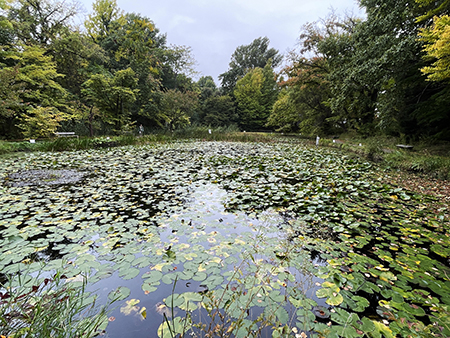
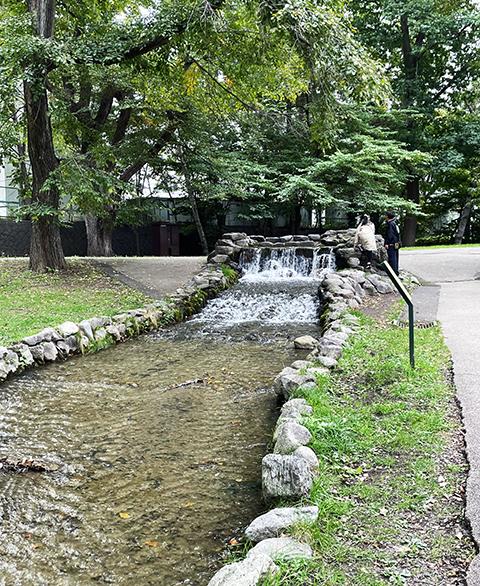
 北大構内でのウォーキング途中での景観。
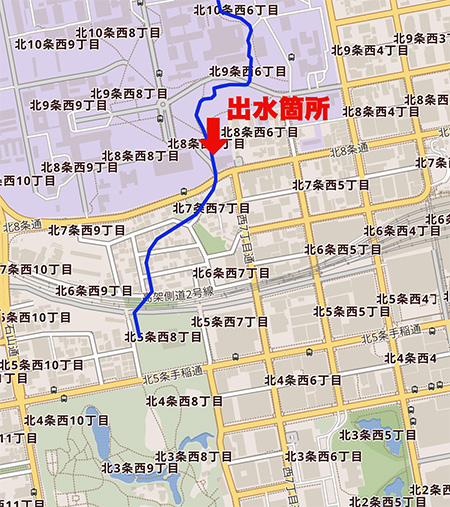
 札幌の北大植物園の西側隣接地にわが家が移転してきたのは1955年ころで70年ほど前。そこでわたしは3歳から高校1年までの十数年を過ごした経験が原風景。札幌の原始の自然風景を保存している「植物園」は、北海道大学北方生物圏フィールド科学センター。上の地図の下方にこの北大植物園があり、その東側には北海道庁敷地もありますがそのどちらにも「メム(アイヌ語で「湧き出る泉」)」表記がある。
 札幌の地名語源は主にアイヌ語の「サリ・ポロ・ペッ」(葦原が広大な川)または「サッ・ポロ・ペッ」(乾いた大きな川)の2つの説が有力とされるけれど、たくさんの小川が流れあるいはメムとして池を作っているような光景が展開していた様子が植物園では確認できる。
 そういう自然風景の中でガキとしての幼少年期を過ごしていたので、復元された写真の北大構内「サクシュコトニ川」の地上への「出水」場所は格別に好きな場所。原札幌と思える。いま現在のふだんの散歩道・札幌円山公園にもこういったメムがあって、カモやオシドリ観察箇所。札幌はこういった小川とメムに覆われた大きな「葦原」だったのだろうと思えます。


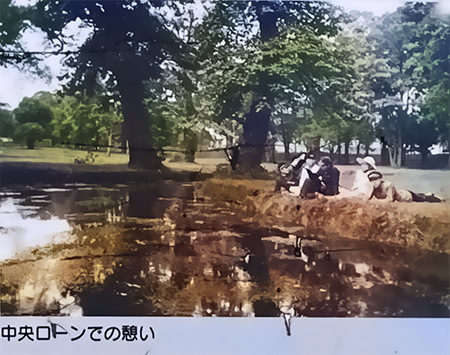
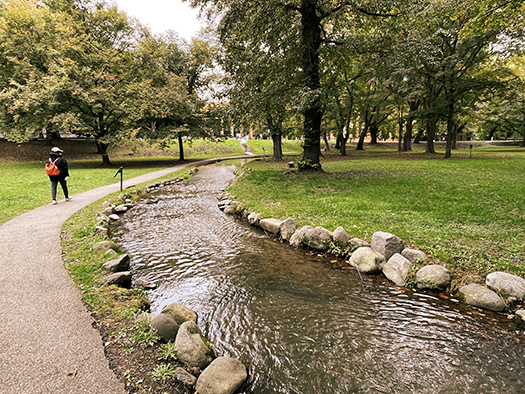
 こちらは札幌の古写真でこの出水箇所から広がっている広場〔中央ローン)での人びとの様子と、一昨日の散策時点の風景。モノクロ画像をカラー化させたけれど、時間経過がゆったりとしている様子で、たのしい。こういう「なんでもない風景」が札幌には広がっていたのでしょう。
 この出水箇所は、枯れていたサクシュコトニ川に対して札幌市と北大が協力して人為的に「地下伏流水」として導水して復元させたモノだという。さっぽろっことして、共感できる。写真には若いアベックさんたちも後ろ姿モデルになってくれているけれど、さりげなく原札幌を感じ伝えて欲しいもの。
 さて、政治的には混沌とした日本の情勢。今週からトランプ来日までがひとつの山場になるのでしょう。なんとか次なる進歩社会が達成されるようにと願ってやみません。

●お知らせ
拙書「作家と住空間」幻冬舎から電子書籍で発刊
お求めはAmazonで。
https://amzn.asia/d/eUiv9yO

English version⬇ 

【Traces of Primitive Sapporo’s Nature: The Sakušukotoni River on Hokkaido University Campus】
In ancient Sapporo, small streams likely flowed throughout the land, dotted with marshes and vast reed beds. Remnants of this primordial Sapporo remain preserved within Hokkaido University and its Botanical Garden. …

 A view encountered while walking on the Hokkaido University campus.
My family moved to the land adjacent to the west of Sapporo’s Hokkaido University Botanical Garden around 1955, about 70 years ago. Thus, my formative landscape is the experience of spending over a decade there, from age three until my first year of high school. The “Botanical Garden,” preserving Sapporo’s original natural landscape, is the Hokkaido University Northern Biosphere Field Science Center. This Hokkaido University Botanical Garden is located at the bottom of the map above. To its east lies the Hokkaido Government Office grounds, and both locations feature the notation ‘Mem’ (meaning “spring” in the Ainu language).
 While the primary theories for Sapporo’s name origin are the Ainu words “Sari-Poro-Pett” (vast river of reeds) or “Sapp-Poro-Pett” (dry, large river), the Botanical Garden clearly shows how the landscape once featured numerous small streams flowing or forming ponds as Mem.
 Having spent my childhood in such natural surroundings, the restored photo of the “Sakushukotoni River” on the University of Hokkaido campus, specifically where it emerges above ground, is a place I particularly love. It feels like the original Sapporo. Even now, my usual walking path through Sapporo Maruyama Park has such mem, serving as a spot to observe ducks and mandarin ducks. It makes me think Sapporo must have been a vast “reed plain” covered in these small streams and mem.

 This is an old photo of Sapporo showing people at the plaza (Central Lawn) spreading out from this overflow point, and the scene during my stroll the day before yesterday. I colorized the monochrome image, but it feels pleasantly relaxed, as if time flows gently. Such “ordinary scenes” must have spread throughout Sapporo.
 This water feature was restored through a collaborative effort between Sapporo City and Hokkaido University. They artificially channeled “underground seepage water” to revive the once-dried-up Saku-shukotoni River. As a Sapporo native, I can relate to that. Young couples also appear in the background of the photo, serving as models. I hope they subtly convey the essence of old Sapporo.
Now, politically, Japan’s situation is chaotic. The period leading up to Trump’s visit this week will likely be a critical juncture. I can’t help but hope that somehow, the next progressive society will be achieved.

●Notice
My book “Writers and Living Spaces” published as an e-book by Gentosha
Available on Amazon.
 

【北海道大学構内で「お勉強」/散歩コース新開発】


 3連休の最終日ということで本日はお寿司を握る予定。娘夫婦が来てくれての会食。
 わたしは料理好きなので喜んで食べてくれて笑顔を見られるのがうれしいのです。そのためにせっせと買い物したり「いいお米」を産地から直接購入したり・・・楽しい(笑)。
 なんですが、もうひとつ健康増進法である毎日の散歩も無上の快楽体験。なんも考えず、カラダが外気に触れてそこから「波動」してくる季節感、風景からのさまざまな「情報」受容に身を委ねている時間が超たのしい。カミさんもいっしょしてくれるとさらに倍増。わたしだけでなく彼女の健康も増進してくる巨大「オマケ」付き。言うことなし、ですね。
 昨日は早朝用事があって自宅から北大構内の「アンダーパス」を経由してクルマ移動していたので、思い立って久しぶりに北大構内散策をコース選択してみた。わたし的にあんまりご縁が無かった(笑)「勉学」の地域空間での象徴的存在です。北海道人はこの大学に明治以来の地域のあゆみを感じる。マジメに勉学して地域と国家の発展に尽くすのだ、みたいな。教育者である北海道内の小中高の先生たちは無言で「北大に入れ」という内心の波動を送ってくる。わたし的には「そんなマジメそのもの人生なんてヤだ」という人生航路。深く反省(笑)。でもキライじゃない。要するに刻苦勉励みたいなのに抵抗感が強かっただけなのですね、若気の至り。

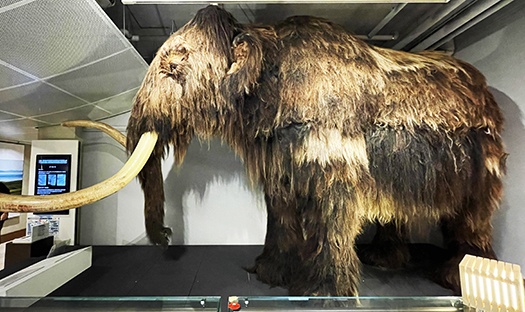
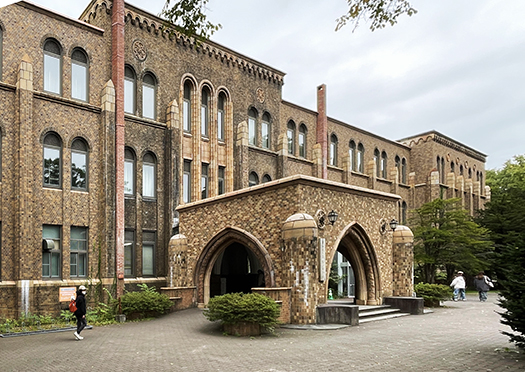
 で、北大では「博物館」として旧理学部校舎があてられ一般に無料開放されている。わたしは北大の先生と面談することが多くて既知でしたが、カミさんは初めてとのこと。超久しぶりに「お勉強」モードで断片的に勝手な学び機会。写真は展示のマンモス立像と、明治を感じる旧理学部校舎外観。
 高齢期を迎えて夫婦での仲良し散歩道としてこういう博物館施設が地元にあるのはうれしい。しかも授業料はまったく無料(笑)。気が向いたとき気が向いた領域知見の「入口」がメッセージされる。領域選択はその時そのときで勝手気まま。よし、学ぶぜ!
 ということで人生最終局面で「お勉強」にハマりそう。時すでに遅いけれど(笑)。 ふ〜む。

●お知らせ
拙書「作家と住空間」幻冬舎から電子書籍で発刊
お求めはAmazonで。
https://amzn.asia/d/eUiv9yO

English version⬇ 

【New Study/Walking Course Developed on Hokkaido University Campus】
Suddenly realized I was strolling through Hokkaido University grounds. Plus, the free museum exhibits radiate “study” encouragement. Though super “late” in my life reflection phase, it’s a welcome invitation (lol). …

 Today marks the final day of the three-day weekend, so I plan to make sushi. My daughter and her husband are coming over for a meal.
I love cooking, so it makes me happy to see them enjoy eating and smile. For that, I happily run errands and buy “good rice” directly from the producer… it’s fun (laugh).
 But another daily pleasure is my health-boosting walk. It’s pure bliss—just letting my body breathe the fresh air, feeling the seasonal rhythms wash over me, absorbing all the “information” from the scenery without a single thought. It’s incredibly enjoyable. When my wife joins me, it doubles the fun. Plus, it comes with a huge bonus: it boosts her health too. What more could you ask for?
 Yesterday, I had an early morning errand and was driving from home through the “underpass” on the Hokkaido University campus. On a whim, I decided to take a stroll around the campus grounds for the first time in ages. It’s a symbolic space for “scholarship” – an area I personally haven’t had much connection with (lol). For Hokkaido residents, this university embodies the region’s journey since the Meiji era. Like, “Study hard and dedicate yourself to the development of the region and the nation.” Educators—elementary, junior high, and high school teachers across Hokkaido—silently send out this inner vibration: “Get into Hokkaido University.” My personal life course? “No way am I living such a serious life.” Deep reflection (laugh). But I don’t dislike it. Basically, I just had a strong resistance to things like hard work and diligence. The folly of youth.

 At Hokkaido University, the old Engineering Department building serves as a “museum” and is open to the public free of charge. I already knew this since I often meet with professors there, but it was my wife’s first time. It was a rare chance to slip into “study mode” and pick up bits of knowledge on my own. The photos show the mammoth statue exhibit and the exterior of the old Engineering Department building, which feels distinctly Meiji-era.
 It’s wonderful to have such museum facilities locally as a pleasant walking path for us as a couple entering our senior years. And the tuition is completely free (laugh). When the mood strikes, it offers an “entry point” to knowledge in whatever field catches my interest. The choice of subject is entirely up to me, whenever I feel like it. Alright, let’s learn!
So, it seems I might get hooked on “studying” in the final phase of my life. It’s a bit late in the game, but oh well (laugh). Hmm.

●Notice
My book “Writers and Living Spaces” published as an e-book by Gentosha
Available on Amazon.

【毎年恒例「観葉」旅だけど・・・ in カムイスキーリンクス】


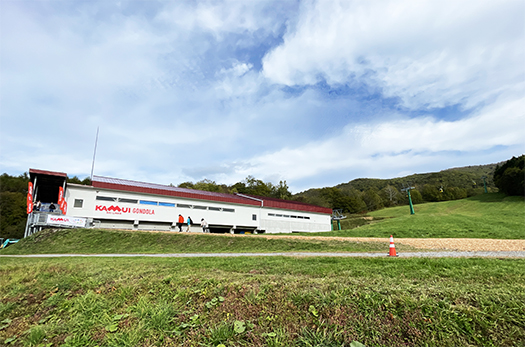
 わが家夫婦の毎年恒例の「自然観察」コースのひとつに、この時期の旭川周辺・カムイスキーリンクスでの「観葉」ゴンドラ見物があります。そこからさらに神居古潭に行って、こちらも川の流路の背景を覆いつくすような紅葉を見物する、というもの。
 カミさんは綿密に事前調査して、毎年この場所での「観葉ゴンドラ」は限定期間をウォッチしていて、昨日がその「オープン日」。
 ・・・ということでしたが、ことしの「紅葉」はほぼまったくハズレ(泣)。
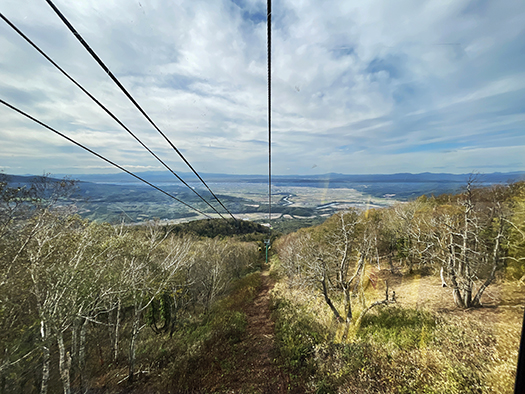
 いつもの年では、ゴンドラに乗り込むときに見上げる樹海が、おおむね遠景で美感を魅せてくれているのですが、今年はまったくの緑で、わずかにそれが「くすんでいる」程度。その「くすみ」は、ほんの少しの「黄葉」と、緑のままの「葉枯れ」というのが実感でした。
 ゴンドラに乗って樹海の中を通って行くのですが、その状況はまさにくすんだ葉枯れそのもの。
 わずかに赤がくすみきった紅葉数本が、ほぼ百にひとつくらいの確率で確認できる程度。こちらではゴンドラを下りたあと、「カムイ山」山頂までおおむね往復5000歩程度の山道がありますが、こちらでもほぼ紅葉・黄葉は見られません。
 毎年の紅葉ぶりは全然違っていることを、このゴンドラ散策で知ってきたのですが、そういう中でもことしの異変ぶりは格別なのだと確認できました。ヒグマが活発に人里にやってくるのは、どうも今年の自然界が高温すぎて、通常の植物のリサイクル輪廻から逸脱しているのではないか、という推測通りの直感に至っておりました。
 高温すぎて植物たちが十分に木の実を生み出せず、ヒグマたちの生存に必要な量が不足して、かれらは押し出されるように人間界への進出を図ってきている可能性。もしそうであれば、かれらはひょっとして今年の冬、森に戻っていけるのかどうかもわからない。
 まぁ、わたしのような門外漢の感想なのですが・・・。不安であります。
 それでもゴンドラから見下ろす景観は美しく、また山頂へのハイキングではたくさんの子どもたちが「オジさん、頑張ってるね〜」みたいな表情で力づけてくれていた(笑)。こちらも「オウ、君たちもがんばれよ〜応援してるぞ」と笑顔を交感しておりました。

●お知らせ
拙書「作家と住空間」幻冬舎から電子書籍で発刊
お求めはAmazonで。
https://amzn.asia/d/eUiv9yO

English version⬇ 

【The Annual “Foliage” Trip… at Kamui Ski Links】
A round-trip drive to enjoy the magnificent autumn colors around Asahikawa and Kamui Kotan. But this year, I was sadly reminded of the harsh reality…

 One of our annual nature observation traditions as a couple is viewing the “leaf-viewing” gondola at Kamui Ski Links near Asahikawa during this season. From there, we head further to Kamikotan to see the autumn leaves that blanket the river’s backdrop.
 My wife meticulously researched beforehand, keeping a close eye on the limited period for the “leaf-viewing gondola” at this spot each year, and yesterday was its “opening day.”
…Or so it was supposed to be, but this year’s “autumn leaves” were almost completely off the mark (sob).
 In a typical year, when boarding the gondola, the forest canopy visible overhead generally offers a beautiful vista in the distance. This year, however, it was entirely green, only slightly “dulled.” That ‘dullness’ felt like a mix of just a few “yellowing leaves” and “leaf decay” where the leaves remained green.
 Riding the gondola through the forest, the view was exactly that dull, withered foliage.
Only a few trees with faint, dull red leaves could be spotted, maybe one in a hundred. After getting off the gondola, there’s a mountain trail to the summit of Mount Kamui, roughly a 5000-step round trip. Here too, there was almost no autumn or yellow foliage to be seen.
 This gondola tour has taught me that autumn foliage varies wildly from year to year, and this year’s anomaly stands out as particularly extreme. My gut feeling, which aligns with my hypothesis, is that brown bears are venturing more actively into human settlements because this year’s excessive heat has disrupted the normal plant recycling cycle.
 It’s too hot for plants to produce enough nuts, potentially leaving brown bears short of the survival resources they need. This might be pushing them into human areas. If that’s the case, who knows if they’ll even be able to return to the forest this winter.
Well, this is just the opinion of an amateur like me… It’s unsettling.
 Even so, the view from the gondola was beautiful, and during the hike to the summit, many children encouraged me with expressions like, “Hey, old man, you’re doing great~” (laugh). I responded with smiles, thinking, “Oh, you guys keep at it too~ I’m rooting for you!”

●Notice
My book “Writers and Living Spaces” published as an e-book by Gentosha
Available on Amazon.
 

【平気で「列割り込み」 残念マナーの某国観光客】


 写真と本文は無関係。札幌・北海道はすっかり秋から初冬の気配が感じられるようになってきた。
 さていま日本中でですが、海外からの観光客が非常に多い。人口減少社会のトバ口での趨勢なのか、とくに観光では日本人客の姿よりもはるかに「騒がしく」海外客の声が響き渡っている。たぶん日本人も多いのだけれど、日本人はそれほど大声で話したり叫んだりしないので、某国海外客の存在が目立つ、ということなのでしょう。シカさんも奈良で蹴られている・・・。
 先日北海道内のある「道の駅」で買い物をしていたら、駐車場に大型バスが数台。予感はしたけれど、案の定、買い物のレジカウンターでは数人の列が出来ていた。レジではこれも某国人らしき人物が財布から1,000円札を出してるけれど、店員さんと金額的会話が不成立で、やたら時間が掛かっている。
 仕方ないなぁと思いつつ列に並んで待っていたら、まったく無遠慮にわたしの直前に割り込んできた中年の某国人らしき女性。あまりにもあからさまな迷惑行為だったので、声を掛けたけれど、全然「聞こえないふり」を決め込んでいるのか、あるいは聞く耳は一切持たないという決意なのか。
 数回声掛けしたが、鉄の女ぶり。
 ようやく1,000円札の人物をレジの人が、ヨコに移動させて次の対応客として、横入り女性を飛ばしてわたしを呼び寄せてくれた。横入り割り込みした女性には「うしろに回ってください」というボディアクション対応。その女性はいかにも「なんだよ」的な表情で棒立ち。ここは日本という国でその国の文化に対して徹底的に「貶めたい」のか、郷に入っても文化を否定してやるということか。
 「これは大変ですね」とレジの方に話すと、「そうなんですよ、マナー以前、ですね」と呆れ気味。淡々と無表情対応するしか無いという方針のようでした。わたしはこういう遭遇はイヤなので、なるべく「関わらない」一択なのですが、さすがに・・・。

●お知らせ
拙書「作家と住空間」幻冬舎から電子書籍で発刊
お求めはAmazonで。
https://amzn.asia/d/eUiv9yO

English version⬇ 

【Tourists from a Certain Country Who Casually Cut in Line: Disappointing Manners】
It’s not something you want to encounter, but if you do, you have no choice but to brace yourself to defend your lifestyle and cultural manners. We want their country’s culture to be respected. …

 The photo is unrelated to the text. Sapporo and Hokkaido have fully embraced the feel of autumn turning to early winter.
Now, all over Japan, there are a tremendous number of tourists from overseas. Whether this is a trend at the threshold of a population decline society, especially in tourism, the voices of foreign visitors echo far more “noisily” than those of Japanese guests. Probably many Japanese are there too, but since Japanese people don’t tend to talk or shout so loudly, the presence of visitors from a certain country stands out. Even deer are getting kicked around in Nara…
The other day, while shopping at a roadside station in Hokkaido, I noticed several large buses in the parking lot. I had a feeling about it, and sure enough, a line had formed at the checkout counter. At the register, someone who appeared to be from a certain country was taking a 1,000-yen bill out of their wallet, but they couldn’t communicate the amount with the clerk, causing an unnecessary delay.
 Thinking “Well, can’t be helped,” I joined the line to wait. Then, a middle-aged woman who appeared to be from a certain country rudely cut right in front of me. It was such an blatant nuisance that I called out to her, but she either completely ignored me or was determined not to listen at all.
I called out several times, but she remained as unyielding as iron.
 Finally, the cashier moved the person holding the 1,000-yen bill sideways, skipping the cut-in woman and calling me forward as the next customer. To the cut-in woman, the cashier gestured with her body, signaling “Please go to the back of the line.” The woman stood there stiffly, wearing an expression that clearly said, “What the hell?” Is this person here in Japan determined to thoroughly “disparage” the country’s culture? Or is it a case of refusing to embrace the local culture even when in the country?
 When I said to the cashier, “This is quite something,” she replied, somewhat exasperated, “Yes, it really is. It’s beyond manners, isn’t it?” It seemed their policy was to respond only with a calm, expressionless demeanor. I dislike these kinds of encounters, so my usual approach is to simply avoid getting involved, but this time…

●Notice
My book “Writers and Living Spaces” published as an e-book by Gentosha
Available on Amazon.


【札幌西区山の手の住宅街にヒグマ わが家から約1km ‼】


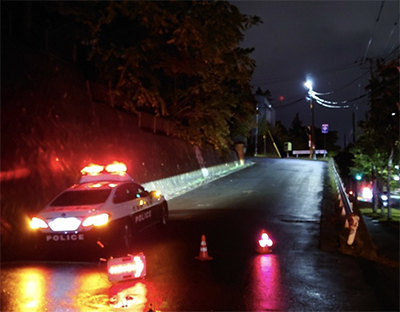
[クマ出没現場 警察による警戒が(9日午後10時15分)]
[10/9(木) 22:00配信 UHB北海道文化放送]

 いやはや、わが家至近距離1kmでヒグマ出没、警察厳重警戒の情報。・・・Yahooニュースから要旨。
 〜【ヒグマ速報】札幌市内の山の手住宅街を歩いて帰宅中の女性の目の前に突然クマが飛び出す―その距離わずか4m―女性は逃げて無事_その後木の実を食べ住宅近くに居座る姿を確認、警察が包囲中<北海道札幌市西区>
 北海道札幌市西区の住宅街で10月9日夜、帰宅途中の女性の目の前にクマが出没し、警察が周辺を警戒しています。クマが目撃されたのは札幌市西区山の手5条10丁目の住宅街の路地。10/9日午後7時30分ごろ、歩いて帰宅していた女性の前にクマが飛び出してきました。警察によりますとクマは体長約1mで女性とはわずか4mの至近距離だった。女性はその場から逃げて無事。
 クマはそのまま北側にある病院側へ走り去りましたが、その後、札幌市西区山の手5条10丁目付近で「自宅裏の林にクマがいてウロウロしている」と住民から通報。クマは木の実を食べながら居座っていて警察が周辺への立ち入りを規制するとともに、札幌市職員が現場に向かうなど対応を進めています。(以下略)〜〜

 昨日は久しぶりにカミさんとクルマで遠出でニセコまでドライブ&新鮮野菜買い出し。夕刻4時ころに帰宅後、いつものようにトータル10,300歩のウォーキングもこなしていたので疲労感を感じて睡眠〜食事〜睡眠、という生活状況。本日は早朝からようやくMacでニュースなど情報検索。・・・で、これです。
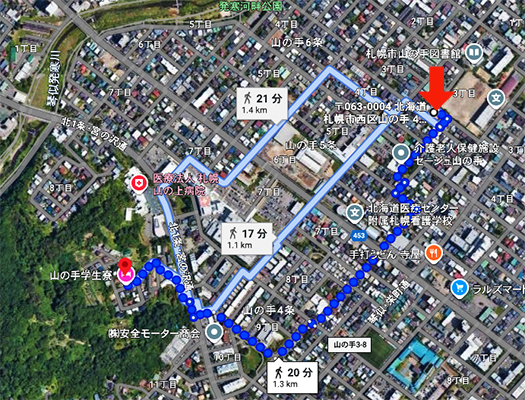
 北海道民・札幌市民はこのところヒグマ情報まみれ。昨日も札幌市発出の「ヒグマLINE情報」は合計10本にも及んでいた。トドメのニュースがこちら。Googleマップ赤矢印がわが家で、現場は赤○印。
 いまのところ(10/10 AM04:39現在)続報はないし、駆除の情報は確認できない。けさの早朝散歩について、こういった情報を勘案しながらルートを考えたいと思います。北海道開拓期の追体験か。 う〜む。
 
●お知らせ
拙書「作家と住空間」幻冬舎から電子書籍で発刊
お求めはAmazonで。
https://amzn.asia/d/eUiv9yO

English version⬇ 

【Brown Bear Spotted in Residential Area of Sapporo’s Nishi Ward, About 1km From My Home‼】
Yesterday, October 9th, Sapporo City issued a total of 10 “Brown Bear LINE Alerts.” We’re literally swamped with brown bears. The patience of citizens is reaching its limit. …

 Good grief, a brown bear sighting just 1km from my house—police on high alert. …Summary from Yahoo News.
〜【Brown Bear Alert】A bear suddenly leaped out in front of a woman walking home through a residential area in Sapporo’s Yamate district—at a mere 4m distance—she escaped unharmed. Later, the bear was confirmed eating nuts and lingering near homes; police are surrounding the area.
 On the evening of October 9th, a bear appeared in front of a woman walking home in a residential area of Nishi Ward, Sapporo City, Hokkaido. Police are patrolling the surrounding area. The bear was spotted in an alley within the residential area of Yamate 5-jo 10-chome, Nishi Ward, Sapporo City. Around 7:30 PM on October 9th, the bear suddenly appeared in front of the woman who was walking home. According to police, the bear was approximately 1 meter long and came within just 4 meters of the woman. She fled the scene and is safe.
The bear then ran off toward a hospital located to the north. Subsequently, residents reported a bear “roaming around in the woods behind their homes” near Yamate 5-jo 10-chome, Nishi Ward, Sapporo. The bear was staying put, eating nuts. Police restricted access to the surrounding area, and Sapporo City officials headed to the scene to handle the situation. (Omitted below)~~

Yesterday, my wife and I took a rare long drive to Niseko for a drive and to buy fresh vegetables. After returning home around 4 PM, I did my usual 10,300-step walk, so I felt tired and went straight into a sleep-eat-sleep cycle. Today, I finally got up early to search for news and information on my Mac. …And this is what I found.
Hokkaido residents and Sapporo citizens have been inundated with brown bear information lately. Yesterday alone, the “Brown Bear LINE Information” issued by Sapporo City totaled 10 messages. The final nail in the coffin is this news. The red arrow on Google Maps is my house, and the scene is marked with a red circle.
 So far (as of 10/10 at 4:39 AM), there’s no follow-up, and I can’t confirm any culling information. Considering this news, I’ll need to plan my route for this morning’s early walk. Is this a re-experience of Hokkaido’s pioneering era? Hmm.

●Notice
My book “Writers and Living Spaces” published as an e-book by Gentosha
Available on Amazon.

【札幌の原始の森の「屯田兵屋」 過去時空間の復元】


 いま、わたしは過去に収集した住宅・建築系の写真を整理中。ある企画に昇華させたいと考えている。
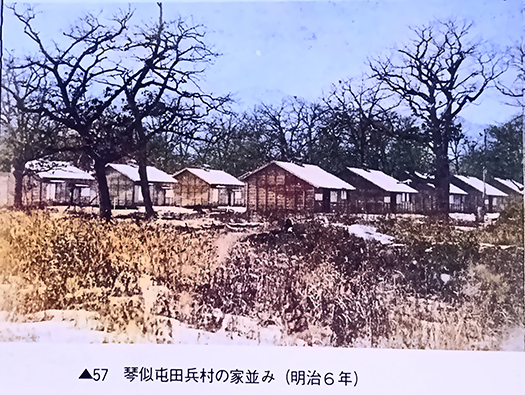
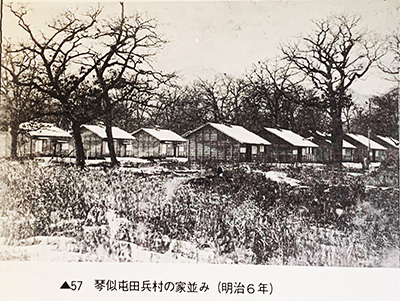
 そういう写真のなかに北大に所蔵される建築歴史写真データがあって、この明治6年の北海道「屯田兵屋」のモノクロ画像記録もあった。この写真はかなり重要な記録でいろいろな北海道史に登場する。
 幕末から明治の時代、日本国家は南下侵略戦略を取るロシアとどう対峙するかが、もっとも大きな国家テーマの時代。また明治の革命によって階級としての武士が消滅した時代でもあった。そういった諸状況のなか昇華した「国策」として、北方の新領土・北海道開拓と対ロシアの国防という国家目的に沿うカタチで「屯田兵」が組織された。高校の友人たちにはその家系子孫という人間も多数いる。
 その第1陣が、北海道の首府とされた札幌の防衛の意味からいまの札幌市西区琴似、当時の「琴似村」に配置され、屯田兵村が「官営住宅」として整備され建設された。ここに集住してすぐ屯田兵は明治10年にははるか西南戦争にも出撃している。上の写真はモノクロ画像を、現代のAI技術で「カラー化」させた。対比的にモノクロ画像も添付した。
 屋根にうっすらと雪が積もっていて周辺の樹木からもすべての葉が落ちている。明治6年晩秋〜初冬。現在のわが家から至近500-600mの距離の場所と推認。いま現在はこの屯田兵屋の場所には札幌市西区役所がある位置か。樹木のなかの1本にはいま車道の真ん中に残された1本の木と似た樹相が感じられる・・・。方向的には先日来このブログで触れている琴似本通りの歩道から西側方向を撮影していたように思われる。ちなみにいまのわが家は、この写真の左側奥地と想像することが出来る。
 ・・・というように時間を隔てた時空間の印象が復元されてくる。
 歴史時間の刻印の少ない北海道民にとってはアマテラス神話とも比肩する創始の存在。そういう時代感が、非常に身近でリアリティをもって蘇ってくる。ごく身近な「天上世界」。

●お知らせ
拙書「作家と住空間」幻冬舎から電子書籍で発刊
お求めはAmazonで。
https://amzn.asia/d/eUiv9yO

English version⬇

【The Tondenhei Houses in Sapporo’s Primeval Forest: Restoring Past Spaces and Times】
The sky is blue, the snow is white… For Hokkaido residents with a short history, it’s a world of founding myths. Here, one can deeply contemplate the ancestors who lived here.

 I am currently organizing my collection of housing and architecture photographs. I hope to elevate them into a new project.
Among these photos are architectural historical images held by Hokkaido University, including this monochrome record of the “Tondenhei House” in Hokkaido from 1873. This photograph is a significant historical document appearing in various accounts of Hokkaido’s history.
 From the late Edo period through the Meiji era, Japan faced its greatest national challenge: how to confront Russia’s southward expansionist strategy. It was also an era where the samurai class vanished due to the Meiji Revolution. Amidst these circumstances, the “settler soldiers” were organized as a national policy, serving the dual state objectives of developing the new northern territory of Hokkaido and defending against Russia. Many of my high school friends are descendants of these settlers.
The first contingent was stationed in what is now Kotoni, Nishi Ward, Sapporo City—then “Kotoni Village”—for the defense of Sapporo, designated as Hokkaido’s capital. A屯田兵 village was developed and constructed as “government housing.” Soon after settling here, these屯田兵 were deployed as early as 1877 to fight in the distant Satsuma Rebellion. The photo above is a monochrome image colorized using modern AI technology. For comparison, the original monochrome image is also attached.
A light dusting of snow covers the roofs, and all leaves have fallen from the surrounding trees. Late autumn to early winter of Meiji 6 (1873). The location is estimated to be within 500-600 meters of my current home. Presumably, the Sapporo City Nishi Ward Office now stands on the site of these屯田兵 houses. One tree among them resembles the solitary tree now left in the middle of the roadway… Directionally, it seems this was shot looking westward from the sidewalk along Kotoni Main Street, which I’ve mentioned in recent blog posts. Incidentally, my current home can be imagined as the area deep in the left background of this photo.
 …In this way, impressions of a spatiotemporal realm separated by time begin to be reconstructed.
For Hokkaido residents, whose historical time bears few imprints, this founding presence rivals the myth of Amaterasu. That sense of era revives with profound immediacy and reality. A “heavenly world” right at hand.

●Notice
My book “Writers and Living Spaces” published as an e-book by Gentosha
Available on Amazon.

【野生への「加虐」〜カモへの虐待「餌付け」証拠発見】


 本日はいつものブログ入力環境にエラーが発生。やむなく発出時間が大幅に遅れました。またちょっと入力のスタイルが変動しているので、もし不具合などありましたら、ご容赦ください。
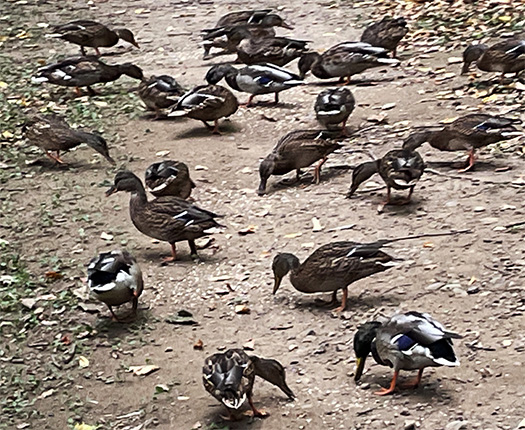
 写真は10/6早朝、札幌の円山公園の「円山川」流路にある池の付近での光景であります。わたしの毎朝の散歩コースのひとつでこの周辺を歩いてきて、池をねぐらとしているカモたちの様子を見させてもらってから、開拓神社〜北海道神宮と参拝して回る順路に当たります。しばらく、この散歩コースはご無沙汰していてたぶん1ヶ月ぶりくらいだと思います。
 で、近づいていくとカモたちの様子に異変が見られた。ふだんは池の周辺であるいは寝ていたり、すこし池に浮かんでいたりするのがかれらの生態なのですが、写真のように多めの数のカモたちが、どうも「エサ」をついばんでいるのです。それも「おお、超ウメエ〜」みたいな嬌声をあげているかのようだったのです。不審に思ってそのかれらに近寄って、写真に収めたのですが、オイオイ、であります。
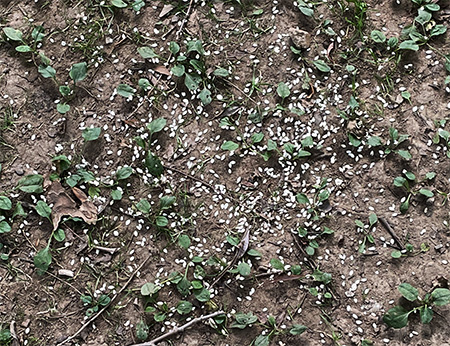
 地面には大量の米粒が散乱されている。
 とんでもない野生動物への禁止行為。たしかにかれらカモたちは人間社会によって改変された自然とは言えない環境に順応しながら、自然動物としての生態を生きている。けれど、それはあくまでかれらが、生き延びる環境として選択した結果であって、人間たちのペットとして生きたいということではない。
 そうであるのに、まことに勝手気ままな人間が、かれらを「餌付け」してしまっている現場だったのです。それも、いま高値で人びとが苦しめられているコメを散乱させてしまっている。
 2重3重に痛苦な現場を見させられてしまった。
 カモたちは「おい、人間どもはこんなウマいものを食っているのか」と大騒動しているように感じられた。最近のヒグマの行動の背景に、無分別な人間の給餌行為が一因としてある、と情報発信されていますが、まことにとんでもない悪行。
 このあと、神社参拝で、この不埒な人間の行為について深く心中で謝っておりました。このように「告発」することで、なにとぞこうした行為について反省されて、悔い改めていただきたいと祈念します。

●お知らせ
拙書「作家と住空間」幻冬舎から電子書籍で発刊
お求めはAmazonで。
https://amzn.asia/d/eUiv9yO

English version⬇

【“Cruelty” to Wildlife: Evidence Found of Duck Abuse Through “Feeding”】
Feeding wild animals is an act that destroys the “rules” between human society and wildlife. It may also impact the brown bear incident. Absolutely unacceptable. …

 Today, an error occurred in my usual blog input environment. This unfortunately caused a significant delay in posting. Also, my input style has changed slightly, so please bear with me if you encounter any issues.
The photo shows the scene near a pond along the Maruyama River channel in Sapporo’s Maruyama Park, taken early on October 6th. This area is part of my regular morning walking route. After observing the ducks that make the pond their roost, I proceed to visit the Kaitaku Shrine and Hokkaido Shrine. I hadn’t taken this route for a while—probably about a month.
As I approached, I noticed something unusual about the ducks. Usually, they’re either around the pond’s edge, sleeping, or floating a bit on the water—that’s their normal behavior. But as you can see in the photo, a larger-than-usual number of ducks were pecking at something. And they seemed to be doing it with what sounded like cries of delight, like “Oh, this is super yummy~!” Feeling suspicious, I approached them and took this photo. But hey, wait a minute.
The ground was littered with a huge amount of rice grains.
 This is an outrageous act of feeding wildlife. True, these ducks have adapted to an environment altered by human society, one that can hardly be called natural, while still living out their natural animal behavior. But that is solely the result of their choice of a survivable environment; it is not that they wish to live as pets for humans.
And yet, this was a scene where truly selfish humans had gone and “fed” them. And what’s more, they were scattering rice—a staple now suffering from high prices that cause people hardship.
I was forced to witness a scene of double, triple suffering.
The ducks seemed to be in an uproar, as if saying, “Hey, are humans eating something this delicious?” Recent reports indicate that reckless human feeding practices are one factor behind the recent bear activity. Truly an outrageous misdeed.
 Afterwards, while visiting the shrine, I deeply apologized in my heart for this unconscionable human behavior. By “exposing” it like this, I pray that people will reflect on such actions and repent.

●Notice
My book “Writers and Living Spaces” published as an e-book by Gentosha
Available on Amazon.

Translated with DeepL.com (free version)