本文へジャンプ

【ハイウェイオアシスと高速SA 迷い子事件 in 美濃加茂】


 今回の旅での「迷子・迷宮入り」事件。
 みなさんは高速道利用のとき、息抜き・食事でPAやSAを利用されるでしょう。その違いってあんまり自覚もないと思います。一応調べてみると「SAはサービスエリア、PAはパーキングエリアの略。SAは一般的に規模が大きくGSやレストラン施設が充実しているのに対し、PAは規模が小さく駐車場とトイレ中心で、売店やGSは控えめに設置される」とある。注意書きで「SAとPAの明確な区別は難しくPAにもGSがある場合や、SAにレストランやGSがない場合もあり、実際には施設の充実度によって判断するのが一般的」。
 ということだそうですが、まぁこのことは漠然と理解はしていた。
 ただ「ハイウェイオアシス」となると「SAのもっと大型のもの」程度の認識。正確な概念特定までの必要性も感じていなかった。たぶん多くの人がそうだろうと思います。一応Wiki情報は概要以下。〜高速道路沿いにありSAやPAと一般道路沿いの「道の駅」を複合させたような施設。地域の味覚や物産を購入できる飲食店や売店があるレクリエーション施設というのが特徴。〜
 今回の旅の途中、美濃加茂といういい響きの地名を冠したエリアに入線。小腹が空いて、休憩がてら軽食をと思ったのですね。で、SAとハイウェイオアシスの両方があるということだった。
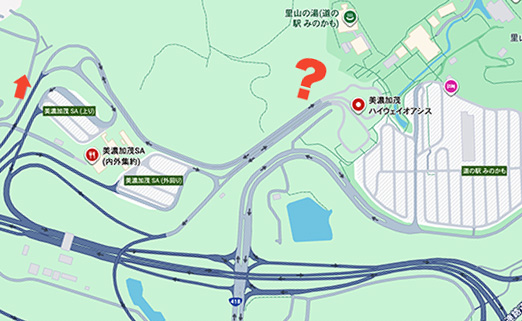
 アプローチ道路の⬆地点で「左・ハイウェイオアシス、右SA」という標識がありちょっと迷った後ハイウェイオアシスを選んで左方向にハンドルを切った。そうするとSAから距離が離れていって左奥にハイウェイオアシスとおぼしき建物が見えた。ところがその建物までの道路はフェンスで区切られていて、クルマ進入出来なくなっていた。
 そのハイウェイオアシスとおぼしき建物に到達するにははるか手前100mほどの駐車場所に停車して歩いて向かう必要があった。仕切りのフェンスだけが目立っていてそこへの歩行通路もすぐには見通すことが出来なかった。ヘンだとは思ったけれどここまで不親切なら、この先もどうなることか不安が募ったので、やむなく引き返すことに。
 で、今度はその車両通路も途中で一方通行・進入禁止なので強制的に急カーブさせられた。「え、マジかよ」であります。ほうほうの体でSAの駐車場に停車して軽食コーナーへ到着。
 こちらでも案内が不在で情報がわかる看板なども発見できなかった。やむなく食堂スタッフに事情を聞いてみたが、どうやらフェンスのごく一部に「出入り口」があってそこから歩いてアクセスするとのこと。
 ムリそれ、というちょっとワケわかんない体験でした。う〜む。

●お知らせ
拙書「作家と住空間」幻冬舎から電子書籍で発刊
お求めはAmazonで。
https://amzn.asia/d/eUiv9yO
English version⬇ 

【Highway Oasis and Expressway Service Area: The Lost Child Incident in Minokamo】
Drawn by the place name, what should have been a relaxing break turned into a series of “Hmm…” moments. Minokamo is undoubtedly a nice place, but…

 The “Getting Lost/Lost in the Labyrinth” Incident on This Trip.
When using the expressway, you probably stop at PAs or SAs for breaks or meals. I don’t think many people are really aware of the difference between them. Looking it up, it says: “SA stands for Service Area, PA for Parking Area. Generally, SAs are larger with more comprehensive gas stations and restaurant facilities, while PAs are smaller, primarily parking lots with restrooms, and have more modest shops and gas stations.” A note adds: “Distinguishing between SA and PA can be tricky. Some PAs have gas stations, while some SAs lack restaurants or gas stations. In practice, it’s usually judged by the level of facilities available.”
Well, I vaguely understood that much.
 However, when it comes to “Highway Oasis,” my understanding was just that it’s “a larger version of an SA.” I never felt the need to pin down the exact concept. I suspect many people feel the same way. Anyway, the Wiki info is below the overview. ~Facilities located along expressways, combining elements of SAs/PAs with the “roadside stations” found along regular roads. Characterized as recreational facilities featuring restaurants and shops where you can purchase local delicacies and products.~
 During this trip, I entered an area named Minokamo, which has a nice ring to it. Feeling a bit peckish, I thought I’d grab a light snack while taking a break. It turned out there was both a SA and a Highway Oasis there.
At the ⬆ point on the approach road, a sign said “Left: Highway Oasis, Right: SA.” After a moment’s hesitation, I chose the Highway Oasis and turned left. As I drove away from the SA, I spotted what looked like the Highway Oasis building far off to the left. However, the road leading to it was blocked off by a fence, preventing vehicle access.
To reach that building resembling the Highway Oasis, I had to park in a lot about 100 meters away and walk the rest of the way. Only the dividing fence stood out prominently, and the pedestrian path to it wasn’t immediately visible. I thought it was odd, but if they were this unhelpful already, I grew anxious about what lay ahead. Reluctantly, I turned back.
Then, on the vehicle access road, I was forced into a sharp curve midway due to a one-way/no entry sign. “Seriously?” I thought. Barely managing, I parked in the SA lot and reached the snack corner.
 Here too, there was no one to guide us, and I couldn’t find any signs with information. I had no choice but to ask the cafeteria staff about the situation. Apparently, there was a tiny “entrance/exit” in a very small part of the fence, and you had to walk through that to access it.
It was a bit of a baffling experience, like, “No way, that’s impossible.” Hmm.

●Notice
My book “Writers and Living Spaces” published as an e-book by Gentosha.
Available on Amazon.
 

【夕陽の幻術に浮かぶ北の大地】


 昨日は帰ってきていくつかの用件が溜まっていて、それを片付けていたら旅行中の体験の整理整頓まで時間が至らなかった。というよりも、まずは写真類の「仕分け」作業、いわば整理の「段取り」に終始。データフォルダにして35個くらいになっていた。やはり脳内整理には直感的な画像データがいちばん最適。
 どうも最近、単純な「夕景」というものにこころ奪われ続けている。
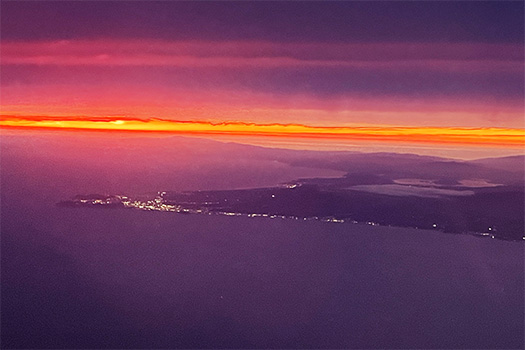
 山陰・宍道湖に沈んでいく夕陽や、出雲の先の日御碕(ひのみさき)神社、そして今回旅でもボーッと岐阜長良川から伊吹山方向に沈んでいく夕陽を見つめ続けていた。そうしたら帰りの飛行機で最終着陸態勢に入ってからふと窓外を見たら、上のような光景が広がっていた。
 だいたいの位置関係や着陸の方角その他を勘案すると、左側に見えるのは「室蘭」の街の灯で、遠く西日は函館方向に落ちていく様子だったようです。一昨日も夕陽と「西方浄土」という概念について触れてみましたが、この地球という環境に生きてきて、なお感受性というものを持つイキモノとして生きてきたものとして、どうもこういう風景には弱い。きっとフーテンの寅さんもかくや。現代人は飛行機多用型の生き方なので、こういう視覚体験も増えていく。地上からの目線での夕陽体験とはまた違う印象の視認体験。
 人生の終わり、ではないけれど終盤であることはたぶん間違いがないだろうから、朝日を見て希望がどんどん広がっていく、ではなく、印象的な夕陽に来し方を想起させられるのだろうか。しかし、一方でそういう局面でも花の咲き方はある、というような心理なのかも知れない。
 芭蕉さんの俳句などに惹かれ続けてきて、しかもこういう視覚体験も積層してきているけれど、なかなか短文系の表出には至らない(泣)。つくづくと才能のなさを痛感(笑)。まぁしかし、すこしづつ体験は積み上げていきたいもの。いつか表出させられる日を夢見て。
 
●お知らせ
拙書「作家と住空間」幻冬舎から電子書籍で発刊
お求めはAmazonで。
https://amzn.asia/d/eUiv9yO

English version⬇ 

【The Northern Lands Floating in the Sunset’s Illusion】
More than the morning sun, the sunset makes me dwell on the past. An inevitability of aging. Do the ways we express ourselves also change, shaped by experiences and environments different from those of our ancestors? …

 Yesterday, I came home to find several tasks piled up, and while I was sorting through them, I didn’t have time to organize my travel experiences. Or rather, I spent all my time just sorting through the photos—essentially, the preliminary steps of organizing. I ended up with about 35 folders of data. Visual data is still the best way to organize things in my mind.
 Lately, I find myself utterly captivated by simple “sunset scenes.”
Whether it’s the sun sinking into Lake Shinji in San’in, the sunset over Hinomisaki Shrine beyond Izumo, or this trip where I just stared blankly at the sunset sinking toward Mount Ibuki from the Nagara River in Gifu—I couldn’t look away. Then, on the return flight, as we entered the final landing approach, I glanced out the window and saw the scene above spread out below.
 Considering the general positions and landing direction, the lights visible on the left seemed to be those of Muroran city, while the distant setting sun appeared to be sinking towards Hakodate. Just the day before yesterday, I touched upon the sunset and the concept of the “Western Pure Land.” Living on this Earth, as a creature that still possesses sensitivity, I find myself utterly vulnerable to such scenery. I’m sure even the vagabond Torasan would feel the same. Modern people live lives heavily reliant on airplanes, so visual experiences like this are becoming more common. It’s a different kind of visual experience from seeing the sunset from the ground.
It’s probably not the end of life, but it’s definitely the latter stages. So, rather than seeing the sunrise and feeling hope expand, perhaps an impressive sunset makes one reflect on the path taken. Yet, even in such a phase, there might be a mindset like, “There’s still a way for flowers to bloom.”
 I’ve long been drawn to Basho’s haiku and have accumulated such visual experiences, yet I struggle to express them concisely (sigh). I keenly feel my lack of talent (laugh). Still, I want to keep building these experiences bit by bit. Dreaming of the day I can finally express them.
 
●Notice
My book “Writers and Living Spaces” published as an e-book by Gentosha
Available on Amazon.

【中部日本の旅路・最後は常滑「土」との会話】


 さて昨日夜に札幌に帰還いたしました。
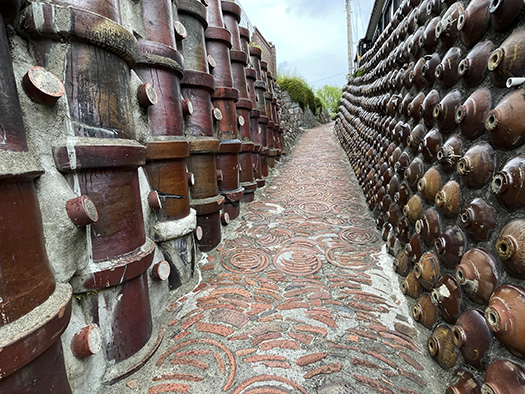
 どこも非常に興味深い立ち寄りであり、また用務だったのですが、夫婦旅に変わってからは不思議とカミさんの選択した場所は、焼き物関係に縁があるところでした。正直、「あ、またかよ」とも思ったのですが、写真の常滑の古窯が集中する「やきもの散歩道」の土管坂を眺めながら、心が癒されていた。
 「おい、もう帰るのかよ」とこの土地の土から物言わぬメッセージが響いてくる気がする。
 瀬戸とか常滑、多治見など陶器の産業集積、その「技術基盤」がこの名古屋圏には多層にわたって集積していることがカラダに叩き込まれてくる。日本的風土環境の中での「ものづくり」としては、もっとも基盤的な土への関与がシンボライズされてくるのかと思えた。
 アップダウンの激しい地域環境のなかで自分たちが生産する陶器を、その耐久性を最大限に発揮させる土留めや舗装材として活用するのは、たしかに合理的で象徴的。先人たちからの透明な叫び声が残響する。
 北海道札幌までの飛行機便は中部国際空港なので、この常滑の地はまことに「最後のふれあい」の地。
 帰りの便の時間をアタマに入れながらなんですが、しかしそういう時間感覚とはまったく違う「空間が刻んでいる時間」沈殿している時間のような感覚に浸っていた。
 たぶん日本人の製造業のコアなこころが反映しているように思えるのですね。まだまだヒグマが猖獗するような「自然からの呼び声」のなかに暮らしている人間としては、ニッポンという民族性が訴えてくるように思う。土管が整然と空間を区画している光景は、そういった「母性」感なのかも知れない。
 堺・京都からうち続いた旅だったけれど、こういう母性にはきわめて弱い(笑)。
 北海道人としてこうして旅路をたどるとどうしても「また、帰ってくるからね」と話しかけている。
 
●お知らせ
拙書「作家と住空間」幻冬舎から電子書籍で発刊
お求めはAmazonで。
https://amzn.asia/d/eUiv9yO

English version⬇ 

Journey Through Central Japan: Final Stop, Tokoname—Conversation with “Earth”
Returning from the sweltering south to the northern land where autumn breezes stir. My heart remains half-filled with that humid air, now felt as a sense of loss. Gratitude to its nurturing embrace…

 Well, I returned to Sapporo last night.
Every stop was incredibly interesting, though it was work-related. Since switching to traveling as a couple, strangely enough, the places my wife chose all had connections to pottery. Honestly, I thought, “Oh, not again,” but gazing at the clay pipe slope along Tokoname’s “Pottery Walking Path,” where old kilns cluster, my heart felt soothed.
 I could almost hear the silent message from this land’s soil: “Hey, you’re leaving already?”
The industrial clusters of ceramics—Seto, Tokoname, Tajimi—and their “technical foundations” are deeply ingrained in this Nagoya region, layered throughout. It struck me as the most fundamental symbol of “craftsmanship” within Japan’s natural environment: the engagement with the very soil itself.
 Using the pottery they produce as retaining walls and paving materials to maximize its durability within this rugged, undulating terrain is both rational and symbolic. The transparent cries of our predecessors still echo here.
Since the flight to Sapporo, Hokkaido departs from Chubu Centrair International Airport, this land of Tokoname truly becomes the place of “final connection.”
 Though mindful of my return flight time, I was immersed in a sense of time entirely different from that temporal awareness – a time inscribed by space, a time that felt settled and sedimented.
It seems to reflect the core spirit of Japanese manufacturing. As someone still living amidst the “call of nature,” where brown bears still roam freely, I feel this is what the Japanese national character appeals to. The sight of clay pipes neatly partitioning the space might embody that sense of “motherhood.”
Though my journey had been relentless since Sakai and Kyoto, I’m utterly vulnerable to this kind of motherly warmth (laugh).
As a native of Hokkaido, following this path inevitably makes me whisper, “I’ll be back again.”
 
●Notice
My book “Writers and Living Spaces” published as an e-book by Gentosha
Available on Amazon.


【旅路の空 in 岐阜&伊吹山】


 ふだんは出張など「ひとり旅」が普通なのですが、夫婦旅ではそれなりに様相が一変。やはり判断基準になる情報がそれぞれあるので、常時「話合い」が必要になる。それなりの楽しさと同時に、自分勝手・風来坊ではあり得ない要因も増えてこざるを得ない。・・・という旅路。
 だいたい男は旅といってもボーッと「空」と対話し続けている。
 人生ではじめて国を出てその空気感に抱かれたイタリアで、地中海気候の温湿度環境と地形風土の中で生成する「雲の造形」に目を奪われていた記憶がある。「へ〜、こんなの見たことない」。
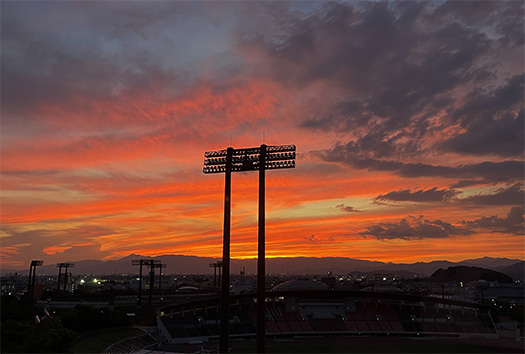
 上の写真は岐阜で泊まっているホテルから。どうも方角的に伊吹山〜関ヶ原方面のようです。視界の前に広がっている「サッカー場」越しに「西方浄土」もかくやと思わせられる夕景。
 人類は毎日の終わりにこういう夕焼けの光景を体験し続けてきた。太陽は毎日西に沈んでいく様子と対面し続けた。その経験に踏まえて人類は宗教思想としても昇華させてきたと確信する。逆に言えば宗教は「西方浄土」というキャッチフレーズでその人類共有体験を深く想起させて強い「納得感」を訴求したのだろう。
 それをさらに加速させたのが、宗教者たちの「遍路」だったかも。
 旅に生きることは、人間の観念をより純粋化させるような効果があるのだろう。

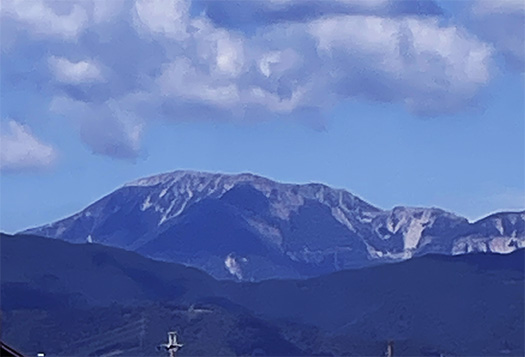
 そういう視覚体験では同時に「山」というものも印象的だった。とくに日本列島では「山岳宗教」的なバイアスが色濃い。島国列島では富士山など特異な視覚体験の山岳が人間意識に深く投影してきたことが間違いない。わたし的にはこの写真の伊吹山に強い印象がある。さざれ石の産地として日本中の神社には展示の一角が設けられている。日頃、わたしも北海道神宮で参観する機会が多い。
 日本史はこの山のふもと地域で3回、世を決する戦いを重ねてきた。東西決戦の地。
 今回の旅でも岐阜の宿から遠くない関ヶ原にも足を向けてみた。2020年新築完成という「関ケ原古戦場記念館」も参観。最新デジタル機器活用による展示で人気とか。たしかに「わかりやすく」というテーマ性は伝わってきた。歴史数寄からすると、あまりにも単純化しすぎとも思えたけれど・・・。
 あちこち行脚の旅が重なってきて、それら情報の「整理整頓」希望が強くなってくる。いくつかの旅路を重ねながら、本日ようやく札幌に帰還予定。ふ〜む。

●お知らせ
拙書「作家と住空間」幻冬舎から電子書籍で発刊
お求めはAmazonで。
https://amzn.asia/d/eUiv9yO

English version⬇ 

【Sky Along the Journey in Gifu & Mt. Ibuki】
A distant ideal world beyond the sunset. The layered visual experiences of the Japanese archipelago’s inhabitants culminate in the Buddhist concept of the “Western Pure Land.” The nation’s unique landforms and mountains, shaped by distinctive processes, also…

 Usually, I travel alone for business trips and such, but when traveling as a couple, things change quite a bit. Since each person has their own criteria for decision-making, constant discussion becomes necessary. Alongside its own kind of enjoyment, factors that make selfishness or recklessness impossible inevitably increase. That’s the nature of this journey.
Generally, even when traveling, men tend to just space out, continuing their silent conversation with the sky.
 I recall being utterly captivated by the “cloud formations” created by the Mediterranean climate’s warmth and humidity, along with the terrain and local conditions, during my first trip abroad to Italy, where I was embraced by that country’s unique atmosphere. “Wow, I’ve never seen anything like this.”
 The photo above is from the hotel where I’m staying in Gifu. Judging by the direction, it seems to be towards Mount Ibuki and Sekigahara. A sunset view stretching beyond the “soccer field” in front of me, making me think, “Could this be the Western Paradise?”
Humanity has continued to experience such sunset scenes at the end of each day. We have continually faced the sun setting in the west each day. I am convinced that based on this experience, humanity has sublimated it into religious thought. Conversely, religion likely appealed to a deep sense of conviction by evoking this shared human experience through the catchphrase “Western Pure Land.”
What may have further accelerated this was the “pilgrimage” undertaken by religious practitioners.
Living through travel seems to have the effect of purifying human concepts.

 In such visual experiences, the concept of “mountains” itself must have been equally striking. Particularly within Japanese society, a strong “mountain-based religion” bias persists. There’s no doubt that in this island nation, mountains like Mount Fuji, offering unique visual experiences, have been deeply imprinted on human consciousness. Personally, Mount Ibuki in this photograph leaves a strong impression on me. As the source of the sacred pebbles, shrines across Japan have dedicated sections to honor it. I often participate in ceremonies at Hokkaido Jingu Shrine.
Japanese history saw three decisive battles fought at the foot of this mountain. It was the site of the decisive battle between East and West.
On this trip, I also visited Sekigahara, not far from my lodging in Gifu. I toured the “Sekigahara Battlefield Memorial Museum,” newly completed in 2020. It seems popular for its exhibits utilizing the latest digital technology. Indeed, the theme of “making it easy to understand” came across clearly. Though, from a historical enthusiast’s perspective, it felt perhaps overly simplified…
With multiple pilgrimage-like journeys piling up, the desire to “organize and tidy up” all this information grows stronger. Today, after overlapping several more legs of the journey, I finally plan to return to Sapporo. Hmm.

●Notice
My book “Writers and Living Spaces” published as an e-book by Gentosha
Available on Amazon.


【デジタル革命期、「歴史文化」情報に求められるものは?】


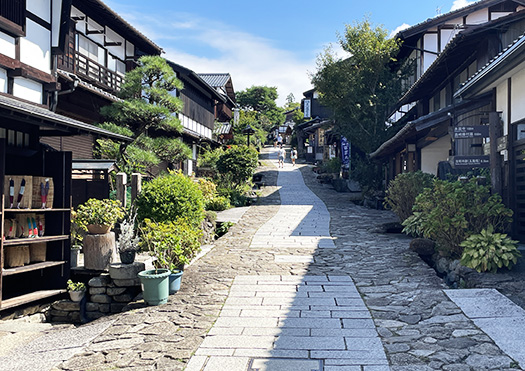
 写真は昨日行脚していた岐阜県の「馬籠宿」の様子。しずかに心理が沈殿しながら、いわば「心の旅」を求めている日本人。そして馬籠宿からさらに妻籠宿までの7kmの道を歩いて「カラダに体感する旅」を志向する欧米人たち。その他、・・・というような観光状況だったように思います。
 わたし的には、ある建物でその家の方とすっかり話し込んでしまって、台所の様子までご案内いただき「家宝」についての踏み込んだお話しまでさせていただいていました。
 やはりその地域のみなさんから、お話を伺うことでその地域の人文の「緒〜いとぐち」が明確に認識できることがいちばん興味深い。馬籠宿については、あんまり事前知識が無く訪問していましたが、地元の方からの肉体化された情報から、生々しいリアリティを受け取らせていただいた。やはりそういった情報は「そこに行ってはじめてわかる」情報なのだと思います。場合によっては、旅から帰ってから、なにごとか、現実にそのことが反映していくこともあり得る。そういう「期待感」も発生する。
 で、最近はとくにその地域に伺うと大量の「アナログ」資料類が「展示」されて、しかもそれらについて情報保護の方針が多数派になっています。その「趣旨」自体はまったく同意できるのですが、一方でそうするとデジタル時代的には、情報の自由を阻害しているとも思える。
 その現地でアナログ的に受容し理解する以外の、現代的な方策を全拒否している。
 その場でしか「体感」できない空間体験情報は当然あるのだけれど、たとえば文字文化としてすでに公開されている情報の内容について、このAI・デジタル対応が求められる時代に不適応なのではないか。
 どうもこのあたりの情報の取扱の中身についての「論議」が不十分だと思える。一方でChatGPTなどは、どういった経緯ですべての言語情報を「収集」しているのか「不明」のまま、場合によっては不正な方法であったとしてもそのことは解明されず、事実上すべての言語文化を全包含することが常識化している。しかし一方で人間個人はそのことに関与することは不法とされる。一種の理不尽。
 情報倫理にについて今後の世界は、どういう方向に進んで行くのだろうか?

●お知らせ
拙書「作家と住空間」幻冬舎から電子書籍で発刊
お求めはAmazonで。
https://amzn.asia/d/eUiv9yO

English version⬇ 

【What is Expected of “History and Culture” Information in the Digital Revolution Era?】
Massive amounts of analog information at tourist spots. Forcing visitors to “read it here.” Impossible for tourists and visitors. What is Japan’s unique digital evolution? …

 The photo shows the scene at Magome-juku in Gifu Prefecture, where I was traveling yesterday. Japanese people seeking a kind of “journey of the heart,” where their minds settle quietly. And Westerners aiming for a “journey experienced physically,” walking the 7km path from Magome-juku to Tsumago-juku. Other than that… I think that was the general tourist situation.
 Personally, I got completely engrossed in conversation with the owner of one house, who even showed me around the kitchen and shared deeply personal stories about their family heirlooms.
What’s truly fascinating is how talking to local people reveals the clearest threads of a region’s human history. I visited Magome-juku with little prior knowledge, but the embodied information from locals gave me a vivid, raw sense of reality. I believe such information is truly something you can only grasp by going there yourself. Sometimes, after returning from a trip, something might actually reflect that experience in reality. That kind of anticipation also arises.
Recently, especially when visiting such areas, I often find vast amounts of “analog” materials “displayed,” and policies prioritizing information protection are becoming the norm. While I fully agree with the underlying intent, it also feels like it hinders the freedom of information in the digital age.
 It seems to reject all modern approaches beyond analog reception and understanding at the site itself.
While there is certainly spatial experiential information that can only be “experienced” on-site, isn’t this approach maladaptive in an era demanding AI and digital solutions, especially for information already publicly available as written culture?
It feels like the “discussion” surrounding the substance of how this information is handled is insufficient. Meanwhile, tools like ChatGPT operate under a shroud of mystery regarding how they “collect” all linguistic information. Even if obtained through questionable means, this remains unexamined, and their de facto inclusion of virtually all linguistic cultures has become commonplace. Yet individual humans engaging in similar collection is deemed illegal. It feels fundamentally unjust.
Where will the world head regarding information ethics?

●Notice
My book “Writers and Living Spaces” published as an e-book by Gentosha
Available on Amazon.

【9/1 名古屋駅前のあかつきから東海の旅へ】


 さて、あわただしく関空〜堺〜京都と過ごして主要な「用務」は8/31京都で終了して、その後、新幹線で夜に名古屋に到着。爆睡してはいたのですが、やはり多少「疲れ」は出てくるようです。
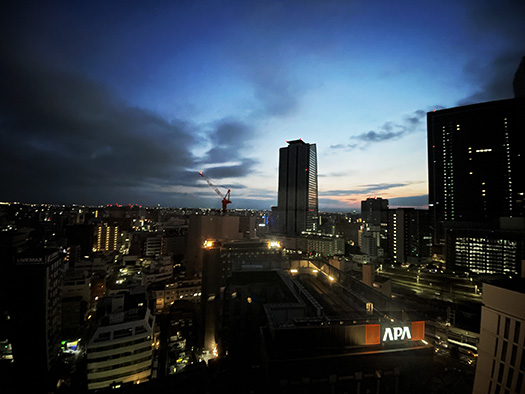
 写真は昨日の名古屋駅前でのあかつきの様子。
 旅に出るといちばんの刺激はやはり、ふだんとはまったく違う風景との一期一会の出会い。この方角から朝日が上がってくるのだなという方向感覚を無意識の領域に刷り込んでくれる。地球的方向感覚。
 いつもの日常生活では、まったく考えるまでもなく日が昇ってくる方角はアタマに固定されているけれど、旅の空はいろいろの環境を見せてくれる。
 そういうなんでもない普遍性が、風景という相貌でこの列島社会でのイマ現在に姿を現してくる。そういう普遍性というもののありがたさに愛情を感じてくるようになるのですね。現代の高速移動手段とか、大都会という発展の様相が、束の間の「現代」を地球環境の「いきづかい」のなかで映し出す。
 日常意識は、その現代社会のなかでうごめいているけれど、旅の空では単純化・相対化して見えてくる。そういう気付きの感覚を味わうことが旅の醍醐味でもあるでしょう。
 こうした地球的環境のなかで人間は「夫婦」というひとつながりの人間関係を多く選択して、生きていく。おかげさまでわたしども夫婦も、ながい年月をいっしょに過ごしてくることができた。そういう夫婦で同じ風景の中を通り過ぎていくことができる、というのもたいへんありがたい。まぁ、あれこれと細かい行き違いは発生せざるを得ませんが(笑)・・・。
 ということで昨日より、わたしは関西から、カミさんは関東方面から移動してきて腰を落ち着けて(?)中部地方あちこち行脚の旅を開始しています。さてどんな体験をすることができるか、元気にめぐり会っていきたいと思っています。

●お知らせ
拙書「作家と住空間」幻冬舎から電子書籍で発刊
お求めはAmazonで。
https://amzn.asia/d/eUiv9yO

English version⬇ 

【September 1: From Akatsuki in front of Nagoya Station to a journey through Tokai】
Health comes first, especially in later life. Cultivating basic physical strength while embracing gratitude for the universality of our Earth’s environment. A couple’s journey of health appreciation.・・・

 Well, after a hectic schedule from Kansai Airport to Sakai to Kyoto, my main “business” wrapped up in Kyoto on August 31st. Then I took the Shinkansen and arrived in Nagoya at night. I slept like a log, but I guess some “tiredness” still crept in.
The photo shows the dawn scene yesterday in front of Nagoya Station.
When traveling, the greatest thrill is undoubtedly those fleeting encounters with scenery completely different from everyday life. It imprints a sense of direction into your subconscious—this is where the morning sun rises. A sense of the Earth’s orientation. In daily life, the direction of sunrise is fixed in your mind without a second thought, but the skies of travel reveal diverse environments.
Such ordinary universality manifests itself in the present moment of this archipelago society through the visage of landscape. You begin to feel affection for the preciousness of that universality. Modern high-speed transportation and the development of megacities reflect the fleeting “modern era” within the “breath” of the Earth’s environment.
While our daily consciousness swirls within that modern society, under the skies of travel, it appears simplified and relativized. Savoring that sense of realization is surely one of the true joys of travel.
 Within this global environment, humans often choose to live through the enduring bond of marriage. Thanks to this, my wife and I have been able to spend many long years together. It is truly a blessing to be able to pass through the same landscapes as such a couple. Well, minor disagreements inevitably arise here and there (laugh)…
 So, starting yesterday, I’ve come from Kansai and my wife from Kanto, settled in (?), and begun our journey traveling around the Chubu region. I look forward to energetically encountering whatever experiences await us.

●Notice
My book “Writers and Living Spaces” published as an e-book by Gentosha
Available on Amazon.


【千有余年の神事用「蓄冷技術」〜氷室 /京都下鴨神社】


 さて今回の旅路は知己との京都での再会会合が主たる用件で、それは昨日午後いっぱいの時間に無事果たすことができました。これはライフワークの建築探訪とは一応は別件であります。
 なんですがまぁせっかくの旅なので、一昨日は大阪府堺市で大好きな利休さんの足跡と再会。わたしは茶道には遠くから「すごいなぁ」と思っているだけで、その建築文化「茶室」の方にはるかに興味が強くあれこれと参観を繰り返しています。人間のカラダの寸法から来る「空間の合理性」という知恵の結晶があると思っています。
 で、昨日は早朝からその堺を発って、ひさしぶりにスマホナビを使いまくって「電車乗り継ぎ」で、京都の下鴨神社までの旅路。これが、いつものレンタカー旅とはまた格別の楽しさ(笑)。
 南海鉄道の堺から「なんば」で大阪地下鉄・御堂筋線に乗り換え淀屋橋でさらに京阪電車という初めて乗った私鉄線に乗り換え。で、途中乗り換え駅周辺で朝のトイレも済ませられて、ウキウキと京都下鴨神社〔出町柳駅)まで快適移動旅。これも超たのしいi.5時間。
 ・・・どうも枝葉のイントロ部分の話が長い(笑)。
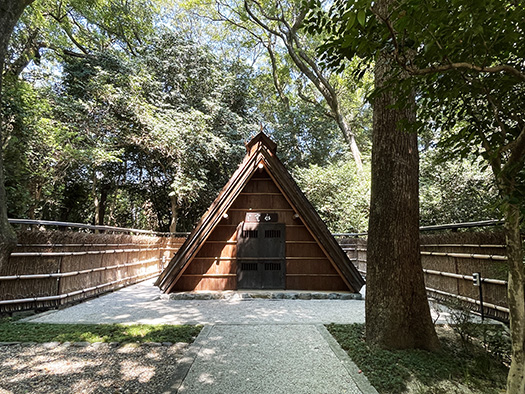
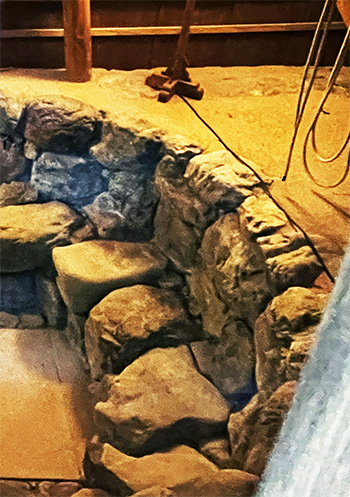
 本日の主題は写真の京都下鴨神社本殿脇で特別公開されていた神事用の台所施設「大炊殿〜おおいでん」。その重要な付帯施設である「氷室〜ひむろ」の参観というか「発見」であります。
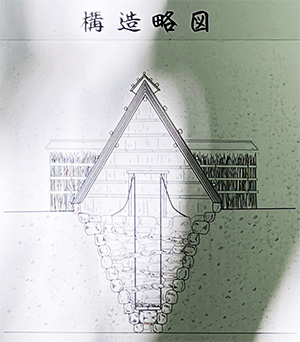
 本当はまた別の建築が主たる探訪先でそれはそれで充実していたのですが、この「氷室」施設があるという情報が現地到着後、徐々にあきらかになってきて心惹かれまくっていた。ようやく足を向けたら、いちばん上の魅惑的な建築外観にめぐり会ってしまっていたのです。おお、であります。コトバを失う環境調和のシンプルな造形美。そしてさらに、この氷室の「内観撮影」(下の石造の井戸状地下構造」参照)など、構造仕様も確認できた。
 以下説明文。
 〜「鴨の氷室」 重要文化財・大炊殿において年中行事のお供えを調理するため、京ことばで「おくどさん」というカマドと「氷室」「井戸屋」が設けられていました。現在は機能の充実した冷蔵庫がありますが、古い時代は魚介類など生鮮食品の保存にはたいへんな苦労がありました。そこで神地「糺の森」のなかでも清浄の地を選び霊水として名高い湧水を地中深くより汲み上げ、冬の間に凍らせて、氷室の底を年中、摂氏12-3度に保ち、冷凍保存する方法を編み出して「千有余年」にわたり活用されてきました。〔以下略)〜
 現代の寒冷地の建築技術・断熱気密技法の発展に随伴してきた人間にしてみると京都文化「千有余年」の連綿とした知恵が対話を仕掛けてきてくれているようで、超魅惑的。神事を語り伝え保守してきた先人たちの知恵のいとなみに深く「癒される」気分に沈殿しておりました・・・「蓄冷技術」。ふーむ。

●お知らせ
拙書「作家と住空間」幻冬舎から電子書籍で発刊
お求めはAmazonで。
https://amzn.asia/d/eUiv9yO

English version⬇ 

【A Thousand-Year-Old Ritual “Cold Storage Technology” — The Ice Cellar / Shimogamo Shrine, Kyoto】
Developed alongside thermal environment technologies in cold regions, this “cold storage technology” encountered in humid, hot climates. Deep respect for the spirit behind this environmental technology. …

 This journey’s main purpose was a reunion with an old friend in Kyoto, which we successfully accomplished yesterday afternoon. This is separate from my lifelong pursuit of architectural exploration.
Still, since I was traveling anyway, the day before yesterday I revisited the beloved footsteps of Rikyu in Sakai City, Osaka Prefecture. While I’m only a distant admirer of the tea ceremony itself, thinking “Wow, that’s amazing,” I’m far more fascinated by its architectural culture, the “teahouse.” I find it a crystallization of wisdom, embodying the “rationality of space” derived from the dimensions of the human body.
So, yesterday, I left Sakai early in the morning. After using my smartphone navigation extensively for the first time in ages, I made my way via train transfers to Shimogamo Shrine in Kyoto. This was a different kind of fun compared to my usual rental car trips (laugh).
From Sakai on the Nankai Railway, I transferred to the Osaka Metro Midosuji Line at Namba, then switched to the Keihan Railway at Yodoyabashi – my first time riding this private railway line. I even managed to use the restroom near the transfer station along the way, making for a comfortable, cheerful journey to Kyoto’s Shimogamo Shrine (Demachiyanagi Station). This was also super fun – about 1.5 hours.
 …Seems like I’m rambling too much in this introductory tangent (laugh).
Today’s main topic is the “Oiden” (Great Kitchen Hall), a special-use kitchen facility for Shinto rituals, located beside the main hall of Kyoto’s Shimogamo Shrine, which was open for special viewing. More specifically, it’s about visiting, or rather “discovering,” its important auxiliary facility, the “Himuro” (Ice House).
 Truthfully, another building was my primary destination, and that visit was thoroughly satisfying. But upon arriving, information about this “Himuro” facility gradually surfaced, captivating me completely. When I finally made my way there, I encountered its most enchanting architectural exterior. Oh, my. A simple, harmonious beauty that left me speechless. Moreover, I was able to confirm the structural specifications, including the “interior photography” of this ice house (see the stone-built well-like underground structure below).
Explanation follows.
~ “The Duck Ice House”
Within the Important Cultural Property, the Ōsiriden (Grand Kitchen), a hearth known in Kyoto dialect as “okudo-san,” along with an “ice house” and a “well house,” were established to prepare offerings for the year-round ceremonies. While modern refrigerators now provide ample functionality, preserving fresh foods like seafood was extremely difficult in ancient times. Therefore, a method was devised to draw water from a renowned sacred spring deep within the purest part of the sacred Tadasu no Mori forest. This water was frozen during winter, maintaining the ice house’s floor at a constant 12-13 degrees Celsius year-round for frozen storage. This technique was utilized for over a thousand years. [Omitted]~
For us, whose world has evolved alongside modern cold-climate construction techniques and advanced insulation methods, the continuous wisdom of Kyoto culture spanning over a thousand years seems to initiate a dialogue with us—utterly captivating. I found myself deeply immersed in a sense of profound healing, contemplating the wisdom and labor of our ancestors who preserved and passed down these sacred rites… “Cold Storage Technology.” Hmm.

●Notice
My book “Writers and Living Spaces” published as an e-book by Gentosha
Available on Amazon.
 

【オノコロ島神話経由で北から現代・関空へ】


 本日わたしは大阪・堺におります。本日所用があって京都に行った後、新幹線経由で名古屋でカミさんと合流し、あしたからは中部地方を夫婦旅予定。帰りは中部国際から帰還予定。で、今回の道行き利用空港は「関空」。
 最近は空路座席指定では「窓際」一択。いまから5−6年前くらいからそれまで通路側一択だったものが、大きく気持ちが変わってしまった。どうしてなのかというと「上空から、来し方行く末を見晴らす」みたいな願望が盛り上がってきたからなのでしょうか。よくわかりません。たしかに雲と海と地上のパノラマを見続けるのが、忘我の瞬間になってきた。不思議な感覚。
 北海道は今回濃密な雨雲の中からの出発だったのですが、ふと眠りから覚めて気付くと「現在は能登半島上空」というアナウンス。で、その通りの富山市上空のような光景が広がり、やがて金沢市上空・・・というように視界が展開して行った。目覚めて直後なので、かねてから関空への空路のアプローチ方法を確認の願望を持っていたので、そこからはそれぞれの地域の地上での風景記憶と対照させながら、航路を目視確認し続けていました。
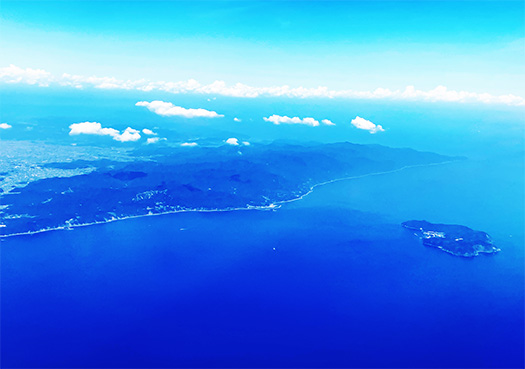
 で、写真いちばん上、もうすぐ5分くらいで関空着陸という時間に見られた光景。
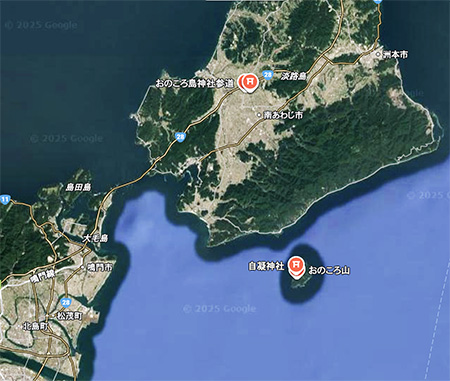
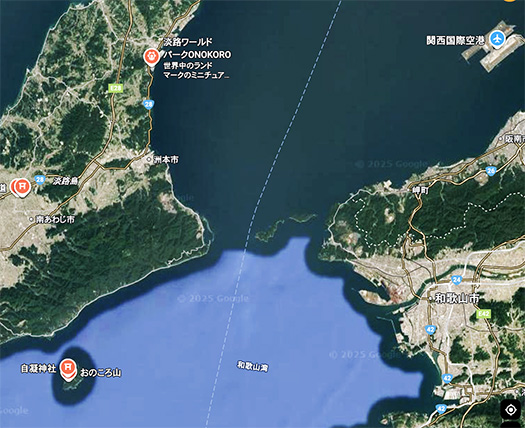
 淡路島は好きで、あちこち記憶がありますが、そのなかで都市部から遠隔でまだ行けていない「オノコロ島」とおぼしき位置関係の島を確認できた。直前には淡路島と徳島の連絡橋、鳴門の渦潮の「鳴門大橋」が確認できていたので、ほぼ間違いないと確信を持った。


 この島はその存在自体が「国生み神話」そのものでイザナギ・イザナミが矛で海をかき回して陸地をつくった創世神話のとき、その矛から落ちたしずくが固まって最初にできたとされる島。その後淡路が生成されていった。この島の名を冠した神社が、なぜか淡路島の陸地の真ん中の高速道路沿線にあって、四国旅大好き夫婦は参拝した経験もあります。たしかブログでも記述。
 そのオノコロ島、上空からの目視初体験(笑)。
 たしか大八洲を生成したという神話では北海道は語られていませんので、現代の北海道人として、それもイザナギ・イザナミの視線に立って、この島を見下ろすことに快感を覚えた(笑)。
 関空への進入経路をつぶさに確認できたのは今回が初経験。って、誰でも至極当たり前の航路体験で、なにがウレシイのか知らないけれど、長生きはウレシイと勝手に感激(笑)。

●お知らせ
拙書「作家と住空間」幻冬舎から電子書籍で発刊
お求めはAmazonで。
https://amzn.asia/d/eUiv9yO

English version⬇ 

【From Onokoro Island Mythology to Modern Kansai Airport via the North】
In the creation myth, Onokoro Island was the starting point for creating the Eight Great Islands. Though Hokkaido’s status remains unclear… From Izanagi and Izanami’s perspective, gazing down upon this island below must have been the ultimate thrill (lol). …

 Today I’m in Sakai, Osaka. After running errands in Kyoto today, I’ll take the Shinkansen to meet my wife in Nagoya. Starting tomorrow, we’re planning a couple’s trip through the Chubu region. We’ll return via Chubu Centrair International Airport. So, the airport for this trip is Kansai International Airport.
Lately, when selecting seats for flights, I only choose window seats. About five or six years ago, I used to only pick aisle seats, but my preference has shifted dramatically. Why? Perhaps it’s because I’ve developed this desire to “survey the path I’ve traveled and the road ahead from above.” I’m not entirely sure. But it’s true that gazing continuously at the panorama of clouds, sea, and land has become a moment of pure immersion. It’s a strange sensation.
Departing Hokkaido this time was amidst dense rain clouds, but I suddenly woke from sleep to hear the announcement: “We are currently flying over the Noto Peninsula.” And just as described, the view spread out below us, resembling the skies over Toyama City, then gradually shifted to the skies over Kanazawa City… and so on. Since I’d just woken up, I’d long wanted to confirm the approach method for Kansai Airport. From there, I kept visually tracking the flight path, comparing it with my memories of the landscapes on the ground in each region.
And then, the view captured in the top photo, seen about five minutes before landing at Kansai Airport.
 I love Awaji Island and have memories of various places there. Among them, I confirmed the position of an island that seemed to be the remote “Onokoro Island” I hadn’t yet visited, located far from the urban areas. Just before that, I had confirmed the Naruto Bridge connecting Awaji Island and Tokushima, along with the Naruto whirlpools, so I was almost certain it was correct.

 This island itself is the very embodiment of the “creation myth.” In the creation myth where Izanagi and Izanami stirred the sea with a spear to form land, it is said to be the first island formed when droplets fell from that spear and solidified. Awaji was then formed afterward. A shrine bearing this island’s name is, for some reason, located along the highway right in the middle of Awaji Island’s landmass. The Shikoku-loving couple has actually visited it. I believe I mentioned it in my blog too.
My first aerial sighting of that Onokoro Island (laugh).
Since the myth of creating the Great Eight Islands doesn’t mention Hokkaido, as a modern Hokkaido resident, I felt a thrill looking down on this island from the perspective of Izanagi and Izanami (laugh).
 This was my first time clearly seeing the approach route to Kansai Airport. I know it’s an utterly ordinary flight path experience for anyone, and I don’t know what’s so exciting about it, but I’m just arbitrarily thrilled that living long is a joy (lol).

●Notice
My book “Writers and Living Spaces” published as an e-book by Gentosha
Available on Amazon.

【短文文化の基礎「ひらかな」の創始/五七調日本語の旅-10】


 明治の日本語革命によって散文表現主体で汎社会的に文化制圧されて以降の近現代社会で教育を受け、日本語を学び使い続けてきた戦後世代人として、今回の松尾芭蕉さんへの「奥の細道」の時代差・随伴走によって、いろいろ気付かされています。
 なにより花鳥風月的な日本人的「心象」の表現、その吟味作業は短文文化が日本歴史を通じてながく担ってきたのだという気付きがもっとも大きい。島国国土で四季変化がきわめて明瞭な、地球環境でも特異な条件下では、花鳥風月という精神文化性はコア部分で「わかりあい」やすい。花鳥風月の自然環境表現には、おなじ列島社会を共有する人間同士の深いコミュニケーションがあるのだと知れるのですね。北海道人は列島社会でいちばん遅れて独特の新・花鳥風月を生きているけれど、根っこの精神性は深く同期している。
 そういったコミュニケーションでは、やはり「打てば響く」ようなやり取りが基本。
 そのツールとして五七調はまことに適切この上ない。芭蕉さんは、句の着想を得てから内面でそれを咀嚼しながら、この花鳥風月の日本人共有知と照らし合わせながら、象徴性とか、簡潔性にこころを研ぎ澄ませていく。そういうなかから、「ここは「を」ではなく「は」にしよう」みたいな推敲に推敲を重ねて行ったことが伝わってくる。いくつか残されている「原案」と最終形との間の「苦吟」ぶりは、非常に興味深い。そしてその選択過程ははるかな後時代人である愚人にも、明白でわかりやすい。うーむと深い同意。
 で、こうした心象表現においては日本語が音節において2音節と3音節で基本構成されていることが、もっとも重要な要因であると気付く。古く、大和コトバというツールがあったなかに漢字文化の導入という巨大な革命があった。八百万〜やおよろず〜分散型社会から共通的な社会を構成するに際し、中国大陸から律令制度を導入し、さらに文化規範としても神道という基盤の上に仏教導入という大革命を行った。
 その「漢字」導入に際して、すぐにも「万葉かな」が必須の翻訳・導入ツールとして開発され、それが飛鳥から平安初期という時間を掛けて「ひらかな」にまで進化発展した。
 安 → あ
 以 → い
 宇 → う
 衣 → え
 於 → お
 このひらかな開発では、列島社会の精神性「柔軟に受容し、果断にシンプル化する」が遺憾なく発揮された。
 そうなのだ、五七調日本語には、この精神性が文化として凝縮されている。芭蕉さんの「苦吟」ぶりには、この列島人のコアなこころが発露している。
 そんな敬虔な思いを、感じさせていただいている。・・・

●お知らせ
拙書「作家と住空間」幻冬舎から電子書籍で発刊
お求めはAmazonで。
https://amzn.asia/d/eUiv9yO

English version⬇ 

The Foundations of Short-Form Culture: The Creation of Hiragana / Journey Through Japanese 5-7 Syllable Poetry – 10
From the introduction of ideographic kanji to the development of Manyōgana and hiragana for integration with Yamato Kotoba, maintaining and advancing phonetic representation. Further evolution toward a 5-7 syllable culture emphasizing phonetics. …

 As a postwar generation raised in modern society—one shaped by the Meiji Japanese language revolution that imposed prose-based cultural dominance across society—and having continuously learned and used Japanese, I find myself struck by many things through this temporal gap and accompanying journey through Matsuo Bashō’s “The Narrow Road to the Deep North.”
 Above all, the most significant realization is that the expression of the Japanese “mental image” of nature’s beauty—and the process of refining it—has long been carried out through a culture of brevity throughout Japanese history. In the unique conditions of an island nation with extremely distinct seasonal changes, the spiritual culture of nature’s beauty is fundamentally easy to “understand” and share. One comes to understand that within the expression of nature through flowers, birds, wind, and moonlight lies a profound communication between people sharing the same archipelago society. While Hokkaido residents live a uniquely new form of this ‘flowers, birds, wind, and moonlight’ culture, the most delayed within the archipelago society, their fundamental spirituality is deeply synchronized.
In such communication, the basic principle remains an exchange where “if you strike, it resonates.”
 The 5-7 syllable structure is truly the most appropriate tool for this. After conceiving a verse, Basho would chew it over internally, comparing it against this shared Japanese knowledge of nature’s beauty, sharpening his focus on symbolism and conciseness. You can sense him refining it through layer upon layer of revision, thinking things like, “Here, let’s use ‘は’ instead of ‘を’.” The agonizing deliberation evident between several surviving “drafts” and the final forms is profoundly fascinating. And this selection process remains clear and understandable even to a fool like me, living so far in the future. Hmm… I deeply agree.
And in this kind of mental imagery expression, I realize the most crucial factor is that Japanese is fundamentally structured around two-syllable and three-syllable units. Long ago, within the tool that was Yamato Kotoba, there occurred the enormous revolution of introducing Chinese characters. Transitioning from a dispersed society of Yaoyorozu (eight million deities) to a unified society, Japan introduced the Ritsuryō system from the Chinese mainland. Furthermore, as a cultural norm, it underwent the great revolution of introducing Buddhism upon the foundation of Shinto.
Upon introducing “kanji,” ‘Manyōgana’ was immediately developed as an essential translation and introduction tool. Over time, spanning from the Asuka to the early Heian periods, it evolved and developed into “hiragana.”

This development of hiragana fully demonstrated the archipelago society’s spirituality: “flexibly accepting and decisively simplifying.”
 Indeed, this spirit is culturally condensed within Japanese poetry’s 5-7 syllable structure. Basho’s agonizing “kugin” reveals the core spirit of the Japanese people.
I feel deeply moved by such reverent sentiment…

●Notice
My book “Writers and Living Spaces” published as an e-book by Gentosha
Available on Amazon. 
 

【芭蕉足跡を集中体感する江戸下町/五七調日本語の旅-9】


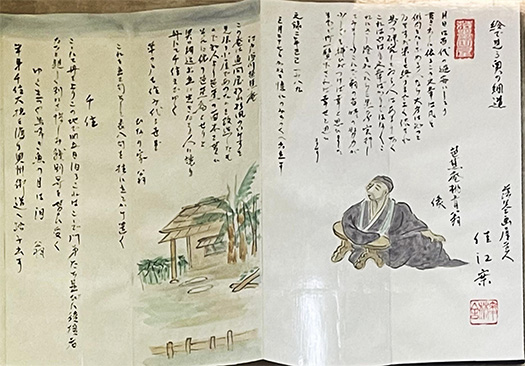
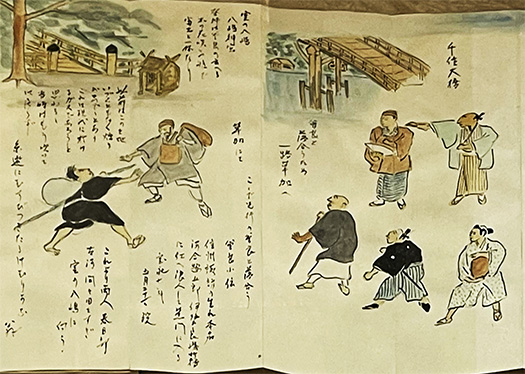
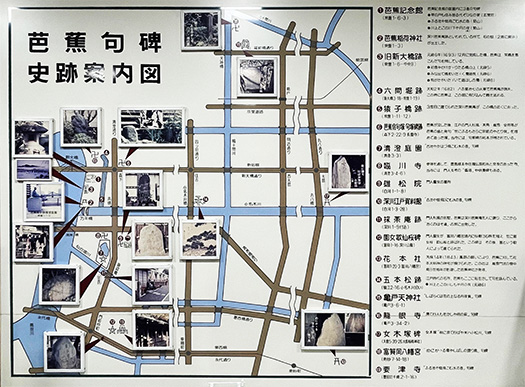
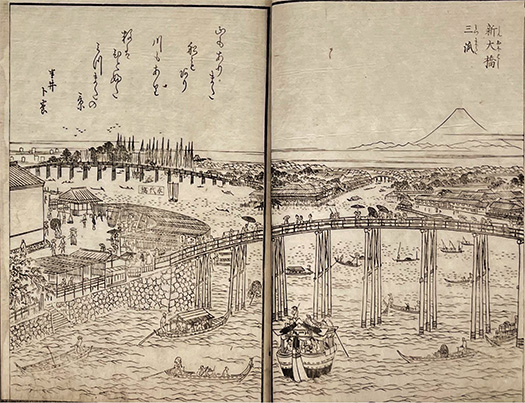
 芭蕉さんが生きた街である江戸隅田川東岸側の「深川」。昔人である松尾芭蕉という人物の行動痕跡が、各所に確認することができる街区になっている。1644年〜1694年を生きた先人から330年ほどを経過して、その人物痕跡がそこかしこに残り続けているのは、その俳句作品がいかに日本人に親しまれてきたか、を明瞭に示していると思う。下に示した絵図はこの芭蕉の庵があった場所にほど近い隅田川に掛かっていた木造の橋の様子。「新」大橋と名付けられていて、時代相をその名からも感じさせてくれる。
 このブログシリーズでは五七調という、日本語独特の音感と意味の融合的な「文学形式」の象徴として松尾芭蕉さんの足跡をあてどなく彷徨っているのだけれど、こういった江戸深川の各所にその痕跡を確認できることから、日本人がそのわかりやすい文学形式にいかに愛情を感じ続けてきたかが伝わってくる。

 330年近い時間は経過しているけれど、例えば芭蕉さんがこの周辺の水辺にあった「庵」で「古池や蛙飛び込む水の音」と詠んだ余韻たっぷりの「作品」が自然に脳裏に沸き立って、深く癒される。奥の細道の道行きを探り随伴してみて、ひとつの句に至るためのコトバの「吟味・格闘」のようなものが、すこしづつ、わたしのような愚人にも、その相貌の一端が見えてくるように思える。
 わたしたち日本人はその後明治以降、いわゆる「文豪」の輩出という文学表現革命を経験するのだけれど、どうも、そういう文豪がいくら束になってかかっても、この短文文学の余韻には太刀打ちできていないのではないか。そもそも文学の成立のために選び取った「出版」という手段と、この五七調短文詩の世界の成立経済構造自体に大きな違いが存在すると思える。そして気になるのは、心中とか自死というようなその後の日本文学作家たちの内面性での自己崩壊感。・・・
 作家と住空間という一種の「ライフテーマ」の道行きを自分勝手に続けているけれど、やはり散文文学では五七調が醸し出す豊穣さには、いまだに手も足も出ていないようにも思われる。夏目漱石が、盟友・正岡子規が目指していた世界とのはざまで、東京大学文学部を率いて世界標準の散文による科学的合理性追求のための「日本語革命」に邁進しつつ、深く「胃痛」を抱え続けていた、ということに惻隠の念を持つ。はるかな後世の日本語文化圏の人間として、その悩みの一端を垣間見る気がする。吾が輩を猫にしてしまったユーモアの底の屈折感。

●お知らせ
拙書「作家と住空間」幻冬舎から電子書籍で発刊
お求めはAmazonで。
https://amzn.asia/d/eUiv9yO

English version⬇ 

【Immersing in Basho’s Footsteps: A Journey Through Edo’s Downtown / The Rhythm of Japanese Haiku-Style Verse-9】
The profound national affection for the culture of brevity, sedimented and manifested in the commoners’ city around the Sumida River. As an expression of the heart, what of the prose culture since the Meiji era? …

 Fukagawa, on the east bank of the Sumida River in Edo, is the town where Basho lived. It is a neighborhood where traces of the actions of Matsuo Basho, a man of the past, can be found in various places. That traces of this man, who lived from 1644 to 1694, remain so vividly some 330 years later clearly demonstrates how deeply his haiku works have been cherished by the Japanese people. The illustration below shows a wooden bridge spanning the Sumida River, located quite close to where Basho’s hermitage once stood. It was named the “New” Bridge, a name that itself evokes the spirit of the times.
In this blog series, I’m aimlessly wandering in search of Matsuo Basho’s footsteps as a symbol of the “literary form” unique to Japanese—the fusion of sound and meaning in the 5-7 syllable rhythm. The fact that traces of him can be found in various places throughout Edo Fukagawa conveys how deeply the Japanese people have continued to cherish this accessible literary form.

 Nearly 330 years have passed, yet when I walk these paths, the lingering resonance of Basho’s masterpiece—composed in a hermitage by the waters here—“An old pond / A frog jumps in / The sound of water”—rises vividly in my mind, deeply soothing me. As I trace the path of The Narrow Road to the Deep North and accompany it, the “careful deliberation and struggle” with words required to arrive at a single verse seems, little by little, to reveal a glimpse of its true nature even to a fool like me.
We Japanese later experienced a literary revolution in the form of the emergence of so-called “literary giants” after the Meiji era. Yet, it seems that even if all these literary giants banded together, they still couldn’t match the lingering resonance of this short-form literature. Fundamentally, I suspect a vast difference exists between the means of “publication” chosen for literature’s establishment and the very economic structure underpinning the world of these five-seven syllable short poems. And what troubles me is the sense of inner collapse—suicide pacts, self-destruction—that permeates the inner lives of subsequent Japanese literary figures. …
While I continue my own arbitrary exploration of the “life theme” of writers and their living spaces, it still seems that prose literature has yet to come close to matching the richness cultivated by the 5-7 rhythm. I feel a pang of sympathy for Natsume Sōseki, who, caught between the world his close friend Masaoka Shiki aspired to and his own pursuit of a “Japanese language revolution” through world-standard prose and scientific rationality while leading the University of Tokyo’s Faculty of Letters, endured deep “stomach pains.” As someone from the distant future within the Japanese cultural sphere, I feel I glimpse a fragment of that anguish. The underlying sense of distortion beneath the humor that turned me into a cat.

●Notice
My book “Writers and Living Spaces” published as an e-book by Gentosha
Available on Amazon.