北海道にはアムール川河口地域からオホーツク海岸線地域に南下してきた民族の痕跡が残っている。ひろく見れば日本には中国大陸や朝鮮半島地域からの民族移動が繰り返されてきた歴史だけれど、北方の北海道島でも、そういう歴史痕跡は残されている。
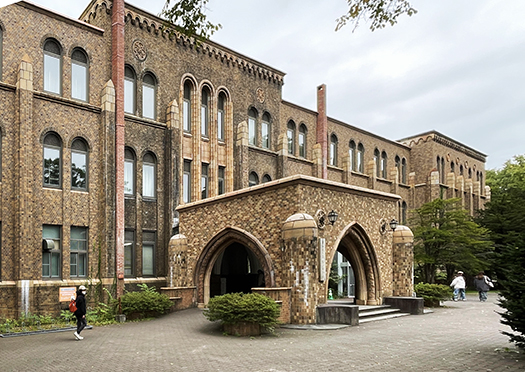
北大での歴史研究でもこの「オホーツク文化人」についてコーナーが設けられて展示されていた。
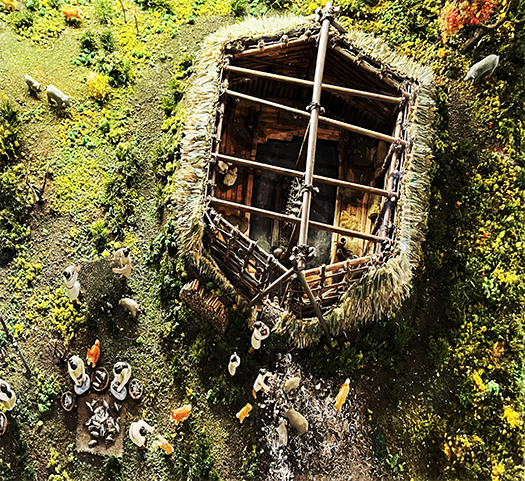
わたしも、このひとびとに深く興味を持っていたので、ジオラマなどに見入っておりました。この人びとはその住居に特徴があって、平面形が6角形や5角形が取られて、その規模が大きいこと。ジオラマでは6角形住居で、その屋根の部分を外して内部の様子もわかる展示。またもうひとつの特徴として、室内の奥まった位置に、ヒグマの頭骨が一種の宗教性を感じさせる祭壇のようなカタチで祀られていること。いわば素の「宗教」、そうした人類の「精神文化」の原初的なカタチを見せてくれる。
658年から660年にかけてとされるヤマト王権側の阿倍比羅夫の古代における北海道島への出兵は、このオホーツク人と、在来の北海道島の住人、その後のアイヌ民族と想定できる人びととの相克状況に対して、ヤマト政権としてアイヌ民族側に助成するような軍事行動だったと推定されている。奥尻島と想定できる「戦場」で阿倍比羅夫軍の副将が戦死してその墓地の伝承が残されているという。
そういった経緯があった後、やがて民族融合が起こって、アイヌ民族文化に収斂していったとされている。その過程でこの「ヒグマ信仰」が生き延びていった。
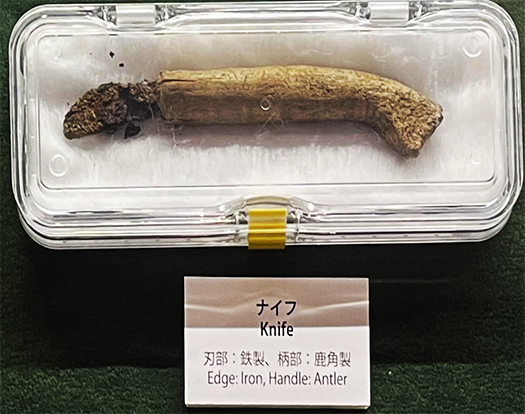
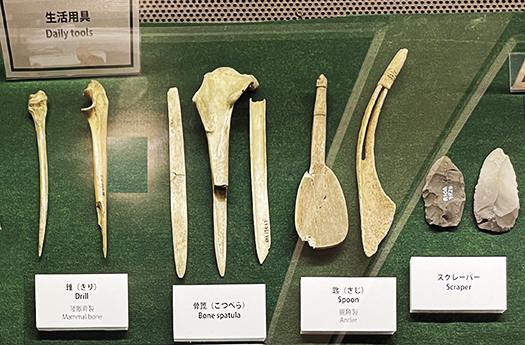
展示されていた遺物には、ヤマト社会との交易を示す鉄器の刃の部分と、魚類の骨格を組み合わせた持ち手のナイフも示されていて、はじめて参照させていただけた。非常に興味深い「歴史遺物」。ほかの漁業の用具では骨角器が主流。大型海獣採集という生業がかれらの生命線、その根拠を示している。
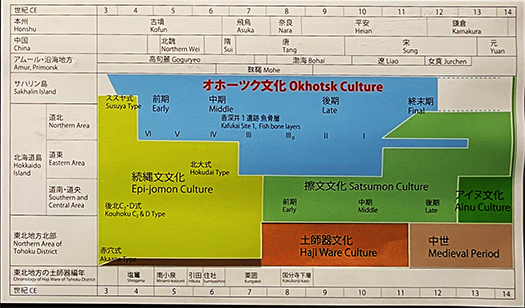
こちらが日本列島での民族交流を示す年表になるけれど、このオホーツク人の文化について、最近の最前線的な知見が開示されている。こういう展示からはいまの北海道の最新歴史研究の様子が推し量れる。わたしたち民間の数寄には非常にありがたいご教授。今後とも最新知見をよろしく。
●お知らせ
拙書「作家と住空間」幻冬舎から電子書籍で発刊
お求めはAmazonで。
https://amzn.asia/d/eUiv9yO
English version⬇
【Northern Asian Ethnic Group “Okhotsk Culture” Life Re-learning at Hokkaido University】
Since ancient times, the fusion of Asian cultures brought by “naturalized” people and the archipelago society unfolded in a different form in Hokkaido. The joy of encountering the latest findings.・・・
Traces remain in Hokkaido of peoples who migrated southward from the Amur River estuary region to the Okhotsk coastline. Broadly speaking, Japan’s history involves repeated ethnic migrations from the Chinese mainland and the Korean Peninsula region, and such historical traces are also preserved in the northern island of Hokkaido.
At Hokkaido University’s historical research center, a dedicated section was set up displaying exhibits about these “Okhotsk people.”
I, too, was deeply interested in these people and found myself engrossed in the dioramas. Their dwellings had distinctive features: hexagonal or pentagonal floor plans and large scale. The diorama displayed a hexagonal dwelling with its roof removed, revealing the interior. Another characteristic was the placement of a brown bear skull at the rear of the dwelling, enshrined in a manner suggesting a religious altar. This revealed a raw form of “religion,” a primitive manifestation of humanity’s “spiritual culture.”
The ancient expedition to Hokkaido Island by Abe no Hirafu of the Yamato regime, believed to have occurred between 658 and 660, is presumed to have been a military action by the Yamato government supporting the Ainu people against the conflict between the Okhotsk people and the indigenous inhabitants of Hokkaido Island, who can be assumed to be the ancestors of the later Ainu ethnic group. It is said that the deputy commander of Abe no Hirafu’s army died in battle on what is thought to be the “battlefield” of Okushiri Island, and traditions about his burial site remain.
Following these events, ethnic fusion eventually occurred, leading to the convergence into Ainu culture. Within this process, this “brown bear worship” survived.
The exhibited artifacts included a knife handle combining an iron blade fragment—indicating trade with Yamato society—and fish bones, which I was able to examine for the first time. A highly intriguing “historical artifact.” Among other fishing tools, bone and antler implements were predominant. This demonstrates the basis for their livelihood—the hunting of large marine mammals—as their lifeline.
This timeline illustrates ethnic interactions across the Japanese archipelago, while cutting-edge findings on Okhotsk culture have recently been disclosed. Such exhibits offer insight into the current state of historical research in Hokkaido. We private enthusiasts are deeply grateful for this enlightenment. We look forward to continued sharing of the latest discoveries.
●Notice
My book “Writers and Living Spaces” published as an e-book by Gentosha
Available on Amazon.
共有:

Posted on 10月 17th, 2025 by 三木 奎吾
Filed under: 未分類 | No Comments »