本文へジャンプ

【小野篁「産湯川神社」・鳥居の年紀に惑乱される】


 さて気分も落ち着いてきて、旅行中撮りためていた写真の整理整頓を進めてきていますが、気にはなっていた写真を再度、じっくり見ていて新発見させられております。
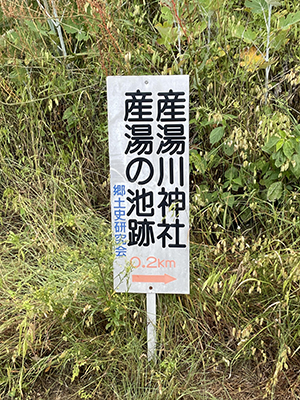
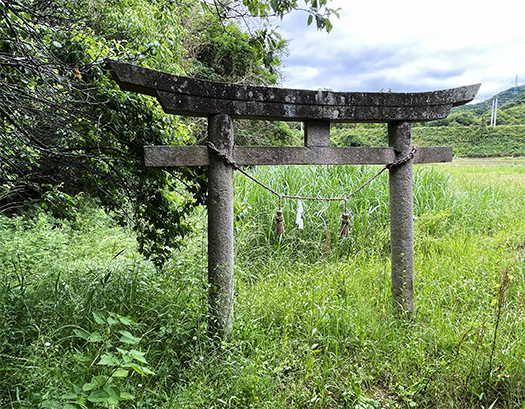
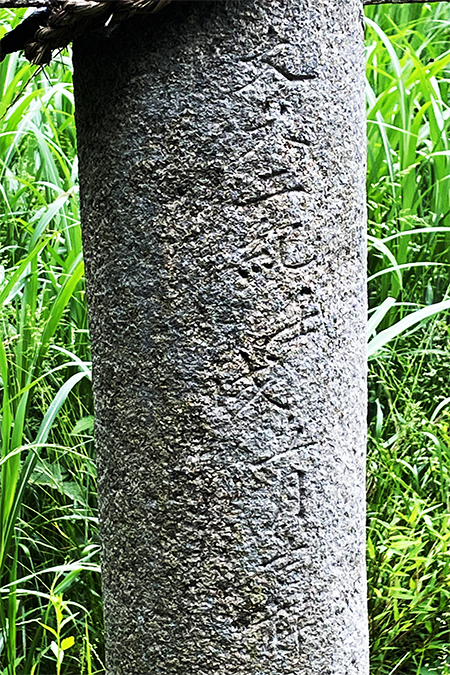
 それは、5/22に九州宗像の宿泊地から電撃の日帰りで訪れていた広島県東広島市河内町入野の、わが家系の故地の寺院「順教寺」訪問時に別に探訪していた小野篁生誕地伝説の地での撮影写真。先日のブログでこの「小野篁産湯の池」に碑が建てられていて、その「施主」として家系に繋がる可能性のある人名として「原 庄左衛門」という名前を確認していましたが、実はその小野篁「産湯川神社」には石造の鳥居が建てられていて、その年紀として、上の2枚目の写真のような刻文が確認できていたのです。そこには「文永二紀」と一瞬読み取れる年代表記があった。常識的に考えると鳥居の建立年は文永2(1265)年と読み取れたのですね。
 そして「施主」として刻印された碑の制作年代もそれと同一である可能性が高い。
 ちょっと想像を超える年代が突然、目の前に出現してしまった。先日のブログ記載時には「要確認」としてこの年代表記には触れなかったのですが、文永2(1265)年を歴史年代照応すれば有名な「文永の役」〜蒙古襲来の直前期、モンゴル帝国から国書がもたらされた年にあたる。
 「え、その当時からこの地域の有力者として、碑文に名を記すほどだったの?」であります。
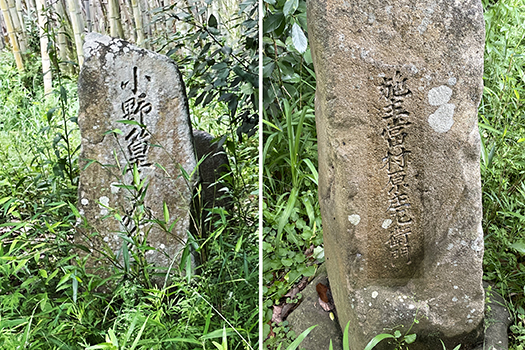

・・・ということでこの写真解析についてさらに調査を進めていたら、文永とみえた部分が実は「文政」であることが徐々に判明してきた。
 この年代は1819年に相当する。この当時は日本中が旅や観光、郷土の歴史ブームに沸いた「化政文化」全盛期にあたる。この解析結果はこの入野村の庄屋・原庄左衛門が「わが村の偉人・小野篁」をブランド化し、観光振興(地域プロデュース)を仕掛けるには最高のタイミング。またこの時期は同時に広島藩の公式歴史書『芸藩通志』発表(1825年)の直前期にあたっていて、目的と非常に整合するタイミングと思えるのだ。
 う〜む。ご先祖さまの「知恵」の無敵ぶりに惑乱させられてしまった(笑)。しかしこの事実はさらなる大きなテーマを必然的に浮かび上がらせてくる。まったく手に負えない重低音の連鎖。・・・

追記:読者の方からこの年紀表記は「文久二年(1862)」干支も壬戌(みずのえいぬ)でこれは碑文解釈としても自然。う〜む、歴史は二転三転であります。本文も含めて再構成したいところですが、その再修正の痕跡も含めてこのままとしておきます。あす以降、再度触れます。

●お知らせ
拙書「作家と住空間」幻冬舎から電子書籍で発刊
お求めはAmazonで。
https://amzn.asia/d/eUiv9yO
English version⬇

[Takahira Ono, “Uyukawa Shrine”: Confused by the Date Inscribed on the Torii]
I calmed myself down and sorted through the photos I’d taken during my research in a quiet, serene setting, but inwardly, I was flustered by an unexpected new discovery. …

 Now that I’ve settled down a bit, I’ve been organizing the photos I took during my trip, and as I’ve been taking another close look at some photos that had caught my eye, I’ve made some new discoveries.
 Specifically, these are photos I took at the site associated with the legend of Ono no Takamura’s birthplace—a location I visited separately during my trip to Junkō-ji Temple in Irino, Kawachi-chō, Higashi-Hiroshima City, Hiroshima Prefecture, on May 22. I had made a whirlwind day trip there from my lodging in Munakata, Kyushu. In a recent blog post, I mentioned that a monument had been erected at this “Ono no Takamura Birth Bath Pond,” and I had noted the name “Hara Shōzaemon” as the “patron”—a name that might be connected to my family lineage. However, I’ve since discovered that a stone torii has actually been erected at the “Ono no Takamura Birth Bath River Shrine,” and I was able to confirm an inscription, as shown in the second photo above, that serves as its date of construction. There was a date inscription that, at first glance, read “Bun’ei 2.” Based on common sense, the year of the torii’s construction could be interpreted as Bun’ei 2 (1265).
 It is also highly likely that the date of creation for the monument inscribed with the “patron’s” name is the same.
 A date that was somewhat beyond my imagination suddenly appeared right before my eyes. When I wrote my blog post the other day, I did not mention this date notation, marking it as “to be confirmed.” However, if we cross-reference the year Bun’ei 2 (1265) with historical records, it corresponds to the period immediately preceding the famous “Bun’ei Campaign”—the Mongol invasions—and the year a diplomatic letter was delivered from the Mongol Empire.
“Wait, was he already such an influential figure in this region back then that his name was inscribed on a monument?” I found myself wondering.

…So, as I continued my investigation into this photo analysis, it gradually became clear that the part that appeared to read “Bun’ei” was actually “Bunsei.”
This corresponds to the year 1819. This period marked the height of the “Kasei Culture,” when all of Japan was abuzz with a boom in travel, tourism, and local history. These analysis results indicate that this was the perfect timing for Hara Shōzaemon, the village headman of Irino Village, to brand “Ono no Takamura, the Great Man of Our Village” and launch a tourism promotion campaign (regional branding). Furthermore, this period coincided with the immediate run-up to the publication of the Hiroshima Domain’s official history, *Geihan Tsūshi* (1825), making it a timing that aligns perfectly with his objectives.
 Hmm. I’ve been completely bewildered by the invincible “wisdom” of my ancestors (laughs). However, this fact inevitably brings an even larger theme to the surface. A chain of deep, unmanageable bass notes…

【見て来た体験リアリティの沸き立ち & 静かな「庵」感】


 5日ほど経ってジワジワと「落ち着き」が戻って来てくれています、ときのう書きましたが、さらに写真整理の静かな時間が加わってくれて最高にうれしい。やはり高齢者には淡々とMacやiPhoneと向き合っている時間が似合っている。先日のブログでMacやiPhoneでの情報摂取が完全なベースになっていく近未来型の住空間について妄想しましたが、やはり現代の利器・IT機器活用型の「庵」生活という、現代の生活実相は住空間を大きく変容させるポイントになるでしょうね。
 たしかにTV画面は家族生活のプラットフォームには生き残り続ける可能性は高い。昭和の時代に「家族団欒」の機縁装置として「戦後社会」イメージのコアにそれはあったのでしょう。そこからその情報提供者・情報独占者としてマスメディア「信仰」が生まれて、それにある程度「コントロール」されるかのようにして、わたしたちは生きてきた。
 そういう生活スタイルが、各個人毎の「パーソナル」情報摂取としてのMacやiPhone主体の情報摂取に変化してきて、カタチだけは残っている家族生活のプラットフォームでのTVは、一定の好みの録画番組再生の機器に変化してきている。しかしマスメディアの側の意識はこれまでの「情報独占者」の意識のままで「化石化」してきている。・・・これが現代の実相なのでしょうね。
 一方でわたしのような人間はMacやiPhoneで体験的リアリティをじっくりと追体験できる環境を楽しみはじめている。これまでは人文的探索についてすら、マスメディアがまるで「規範」的情報提供者ヅラをしてきていた。それに対して「個人的情報ツール」によって、情報の実相、一次情報発信と直接、一般人が対話することが普通になってきたのでしょう。
 こういう変化は非常に刺激的な局面。さてあしたはどうなっていくのか?・・・

 写真は昨日ひさしぶりに朝散歩していた北海道神宮〜円山近辺で多数猖獗していたリスたち。「あれ、オマエ久しぶりだな?」みたいな表情を向けられていた。「おお、元気そうだな」。情報データ・デジタル写真の山に整理整頓で立ち向かっていると、こういう動物の「生命感」がなんとも、迫ってくる感じがありますね。

●お知らせ
拙書「作家と住空間」幻冬舎から電子書籍で発刊
お求めはAmazonで。
https://amzn.asia/d/eUiv9yO

English version⬇

[The Thrill of Firsthand Experience & the Serene Atmosphere of a “Hermitage”]
Is this a case of mass media versus the personal sensory world? In modern life, where Macs and iPhones have overtaken TV as the primary sources of information…

 About five days have passed, and a sense of “calm” is gradually returning. As I wrote yesterday, I’m absolutely delighted that I’ve now been able to add some quiet time spent organizing photos to my routine. After all, for someone my age, spending time quietly working on my Mac or iPhone really suits me. In a recent blog post, I speculated about a futuristic living space where information consumption via Macs and iPhones becomes the foundation of daily life. Indeed, this “hermitage”-style lifestyle—which leverages modern tools and IT devices—reflects the reality of contemporary life and will likely be a key factor in transforming our living spaces.
It’s true that the TV screen is highly likely to survive as a platform for family life. During the Showa era, it was at the core of the “postwar society” image, serving as a catalyst for “family togetherness.” From there, a “faith” in mass media emerged as the provider and monopolizer of information, and we have lived our lives as if, to some extent, “controlled” by it.
 That lifestyle has shifted toward Mac- and iPhone-centered information consumption—a form of “personal” information intake tailored to each individual—and the TV, which remains merely as a platform for family life in name only, has evolved into a device for playing back recorded programs of one’s choice. However, the mindset of the mass media has become “fossilized,” remaining stuck in its old role as the “monopolist of information.” …This, I suppose, is the reality of our times.
 On the other hand, people like me are beginning to enjoy an environment where we can thoroughly relive experiential reality through our Macs and iPhones. Until now, even when it came to humanistic exploration, the mass media acted as if it were the “authoritative” provider of information. In contrast, thanks to “personal information tools,” it has become commonplace for ordinary people to engage directly with the true nature of information—the primary sources themselves.
 This shift is an incredibly stimulating development. I wonder what tomorrow will bring? …

 The photo shows the squirrels running rampant yesterday during my first morning walk in a long time around Hokkaido Jingu and Maruyama. They seemed to be looking at me as if to say, “Hey, it’s been a while, hasn’t it?” “Oh, you look well.” As I tackle the mountain of information data and digital photos by organizing and tidying them up, I feel the “vitality” of animals like these really coming through in a powerful way.

● Announcement
My book, “Writers and Living Spaces,” has been published as an e-book by Gentosha.
Available on Amazon.


【旅から5日〜ようやく「情報の整理整頓」に心理移行】


 昨日書いた「住宅とメディア接触の変容・空間への反映」というテーマへの興味は、そこそこ多数のひとにリーチしてくれているようです。たぶん家づくりのひとつの現在地点の「座標軸」ではありそう。言い出しっぺとして、今後も深掘りしていこうと考えています。よろしく。
 さて、25日間に18日旅先で過ごしていたという体験から帰還して、本日でようやく5日。
 昨日から「心理の整理整頓」作業として、デジタル写真画像の整理整頓に着手できてきた。現代人にとってiPhoneなどのスマホで切り取り続ける写真は、その「場所性」と自分自身の「体験感」とが「立ち上ってくる」機縁なのではないかと思っています。
 わたしの場合は、いろいろな博物館・記念館でその地域を「まなぶ」ことが数寄になっていて、その「痕跡記録」としての写真撮影が多くを占めている。旅を楽しむということと、先人の生き様をたどる、想像力を活性化させることとがニアヒアなのであります。わたしの人生では高校での学生運動からの「離脱」の旅路として最初に、イタリアから始まったヨーロッパ旅行体験があるのですが、そこから帰ってきて「とにかく奈良・京都も浸りたい」と強く導かれていました。
 それなりに海外でも「感情移入」できるでしょうが、わたしの場合はより「日本」に惹かれているのだと強く思い知らされた体験。以来、ときどきは海外にも行ったけれど,それ以上に日本国内で、精神文化的に共通項の多い先人が、どのような「思い」を持って人生時間を過ごしていたか、に深く癒されるような気分がある。
 そういう多様性と「対話」できるためには、その先人たちがどのような生き様だったのか、さまざまな、これも先人たちの思索営為の結集である、博物館・記念館などの展示内容から「学ばされる」のですね。
 たくさんの訪問先があるので、こうした「機縁」は大量の写真画像としてストックされる。そしてそれを「整理整頓する時間」こそが無上の「静止時間」なのですね(笑)。
 その映像を痕跡として残したいと意思した自分自身の「思い」がその空気感と共に再生されてきて、同時にそれを丁寧に「仕上げる」Photoshopなどでの画像「編集」作業が、心理整理の静謐な時間。
 たぶん現代人の「デジタル画像」体験での新感覚ではありそうかと。・・・
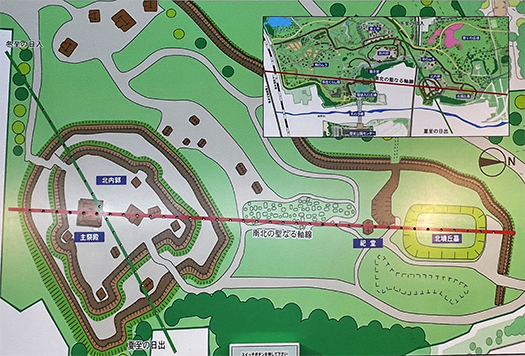
 <写真は吉野ヶ里遺跡での最新研究知見が反映の「地図」>

●お知らせ
拙書「作家と住空間」幻冬舎から電子書籍で発刊
お求めはAmazonで。
https://amzn.asia/d/eUiv9yO

English version⬇

[5 Days After the Trip—Finally Shifting My Mindset to “Organizing Information”]
The “conversation” modern people have with digital selfies—this “new frontier” for humanity may even represent the spiritual evolution of our species. Hmm…

 It seems my post yesterday on the topic “The Transformation of Housing and Media Exposure, and Its Reflection in Space” has reached a fair number of people. It probably represents a current “coordinate” in the process of homebuilding. As the one who brought this up, I plan to continue exploring it in greater depth. Thank you for your support.
Well, it’s finally been five days since I returned from a trip where I spent 18 out of the last 25 days traveling.
 Starting yesterday, as part of my “mental decluttering,” I’ve begun organizing my digital photos. I believe that for modern people, the photos we constantly capture with smartphones like the iPhone serve as opportunities for the “sense of place” and our own “sense of experience” to “emerge.”
 In my case, I’ve developed a passion for “learning” about a region by visiting various museums and memorial halls, and photography—as a “record of those traces”—makes up a large portion of my work. Enjoying travel, tracing the lives of those who came before us, and stimulating the imagination are all closely intertwined. In my own life, my first European travel experience—which began in Italy—served as a journey of “breakaway” from the student movements I’d been involved in during high school. Upon returning from that trip, I felt a strong urge to “immerse myself in Nara and Kyoto, no matter what.”
 While it’s certainly possible to “empathize” with places overseas to some extent, that experience made me keenly realize that, in my case, I am more deeply drawn to “Japan.” Since then, although I’ve traveled abroad from time to time, I find myself feeling even more deeply healed—especially within Japan—by contemplating the “thoughts” with which our predecessors, who share so many spiritual and cultural commonalities with me, spent their lives.
 To engage in such a “dialogue” with that diversity, I must “learn” from the exhibits in museums and memorial halls—which are, in themselves, a distillation of our predecessors’ intellectual endeavors—about the ways in which those predecessors lived their lives.
 Since there are so many places to visit, these “encounters” are stored as a vast collection of photographs. And it is precisely the “time spent organizing and tidying them up” that constitutes the ultimate “moment of stillness” (laughs).
 My own “intention” to preserve those images as traces is replayed along with the atmosphere of the moment, and at the same time, the careful “editing” work in Photoshop—meticulously “polishing” the images—becomes a serene time for psychological reflection.
 I suspect this might be a new sensation in the “digital image” experience for modern people. …
 

● Announcement
My book, *Writers and Living Spaces*, has been published as an e-book by Gentosha.
Available on Amazon. 
 

【TV-WEB メディア接触の構造変化は住空間をどう変えるか?】


 先日の東北行きで知人たちといろいろ話合いをしていた中で、興味深かった話題。
 「住宅の空間への好みをお客さんと話し合うとき、いちばんとっかかりやすいのは、テレビ選び」
 それはわかる。だいたい住宅を新築するとかリノベするとき、テレビは新設するのが一般的。
 「え、そうなんだ。で、どんなこと?」
 「ボクは、テレビはSONY一択で、そのワケを語って共感を引き出すんですよね(笑)」
 「え〜、なにそれ? テレビのメーカー別の特徴でユーザー仕分けするの?」
 「このポイントで話が通じるかどうか、がそのあとの空間への好みづくりの基盤になる」
 ・・・っていうような会話内容(一部単純化)。
 わたしなどの年代では、テレビのメーカー別の「雰囲気」みたいなものって十分想像力を持てなかった。だいたいどこのメーカーも似たり寄ったりで、そのメーカー別の「好み」と住宅空間の相関関係というのは、はじめて気付かされたポイント。
 そう言われてみてはじめて、メディア接触と住空間という関係について再探索プロセスが起動(笑)。
 で、昨日NHKの国民生活時間調査2025年版という最新データが公表されていた。以下AI要約。
 〜NHK放送文化研究所が発表した最新データによると、平日にリアルタイムでテレビを15分以上見る人の割合は、全年齢層で減少傾向。特に30代以下では視聴者が半数を割っており、明確な若年層のテレビ離れと世代間のギャップが浮き彫りに。
 若年層(20代〜30代):20代は7割、30代は6割が「テレビをほとんど見ない」と回答するなど、ネット動画への移行が顕著。高齢層:60代以上は依然として8割以上がテレビを視聴しているが、今回調査では高齢層においても初めて減少が確認。NHK番組の傾向:大河ドラマや連続テレビ小説などの主要番組は、年齢が高いほど視聴率が高くなる傾向があり、女性層の視聴割合が男性を上回ることが多い。〜引用以上。
 この結果からすると、SONYのテレビ云々という選別基準もたぶん、やや時代逆行かもしれない。
 そうではなく、むしろAppleのMac+iPhoneでのSNS動画視聴環境生態系のようなものを、インテリア空間選別のキーポイントに持ってくる方が、より現代的なのかもしれない。
 まだ未整理な事柄だけど、興味深い追究ポイントになっていくと強く思える。

●お知らせ
拙書「作家と住空間」幻冬舎から電子書籍で発刊
お求めはAmazonで。
https://amzn.asia/d/eUiv9yO

English version⬇

[How Will Structural Changes in TV and Web Media Consumption Transform Living Spaces?]
Drawing inspiration for interior design from Sony’s TV selection. Hmm… I wonder if it’s more about the interplay between Mac and iPhone and how we curate our living spaces. …

 During my recent trip to Tohoku, I had various conversations with acquaintances, and one topic in particular caught my interest.
“When discussing clients’ preferences for their living spaces, the easiest place to start is choosing a TV.”
I can see why. Generally, when building a new home or renovating, it’s common to install a new TV.
“Oh, really? So, what’s that like?”
 “For me, Sony is the only choice for TVs, and I explain why to build rapport (laughs).”
“Huh? What’s that about? Do you categorize users based on the characteristics of different TV manufacturers?”
“Whether we’re on the same page about this point becomes the foundation for shaping their preferences for the rest of the space.”
…That’s the gist of the conversation (slightly simplified).
 For people of my generation, it was hard to really imagine the kind of “vibe” associated with different TV manufacturers. Most brands seemed pretty much the same, so the correlation between brand “preferences” and living spaces was something I’d never really noticed before.
 It wasn’t until I heard that I started re-exploring the relationship between media consumption and living spaces (laughs).
 Then, yesterday, the latest data from NHK’s 2025 Survey on People’s Daily Lives was released. Here’s an AI summary:
 ~According to the latest data released by the NHK Broadcasting Culture Research Institute, the percentage of people who watch TV live for 15 minutes or more on weekdays is on a downward trend across all age groups. In particular, among those in their 30s and younger, the number of viewers has fallen below 50%, highlighting a clear shift away from TV among younger generations and a generational gap.
 Younger generations (20s–30s): A notable shift toward online video is evident, with 70% of those in their 20s and 60% of those in their 30s responding that they “hardly watch TV at all.” Older generations: While more than 80% of those in their 60s and older still watch TV, this survey confirmed a decline among this demographic for the first time. Trends in NHK Programming: Major programs such as the Taiga dramas and morning serials tend to have higher viewership ratings among older age groups, and the proportion of female viewers often exceeds that of male viewers. —End of quote.
Based on these results, Sony’s selection criteria centered on TVs may also be somewhat out of step with the times.
 Rather than that, it might be more contemporary to make something like Apple’s ecosystem for watching social media videos on a Mac and iPhone a key factor in selecting interior spaces.
 Although this is still an unorganized idea, I strongly believe it will become an interesting area to explore.

● Announcement
My book, “Writers and Living Spaces,” has been published as an e-book by Gentosha.
Available on Amazon.


【蔵王の山頂で「賽の河原」を積む心理とは】


 先日の仙台行きの帰路、長かった会議と視察から脳味噌を小休止させたいとのブラブラ。
 まぁ、そんな配慮はしなくても脳味噌は完全休止状態なのかも知れませんが(笑)一応疲れもあったので、巌美渓やこの蔵王などの自然造形の場所を彷徨いたくなっておりました。蔵王というのは、北海道人はあんまり馴染みはありませんが、東北中央にあっては一種の「神の領域」的な地域信仰の場なのでしょう。
 本当は遠刈田温泉の「神の湯」のじっと熱さに耐えるしかない湯に浸かって、呆然とするのが主な目的の道行き。午後には飛行機で札幌に帰還する予定だったので、その前にちょっと「どうだったかなぁ」とクルマを走らせ、蔵王の山頂付近を拝んでみようとしたのです。たしか以前にも一度向かった記憶があり、その「消去された風景印象」を追体験して見たかった次第。
 しかし、思った以上にクネクネの急坂道・急カーブの連続。対向車とのすれ違いに厳重注意の難所続き。「おっとっと」とこちら側車線にツッコミ気味の対向車も多数あって気がまったく抜けない。
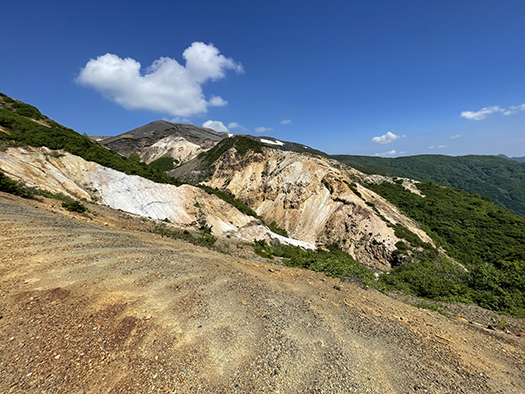
 で、まだ奥には蔵王山神社があるけれど、高齢ドライバーにはもう限界ということで停まった噴火口。場所の名は賽の磧(さいのかわら)ということになるのかどうか、通りすがりの旅人なので不明。ですが、噴火口はまことに「大自然」そのものの迫力で、わが身の小ささを叩き込まれるような思いで過ごしておりました。
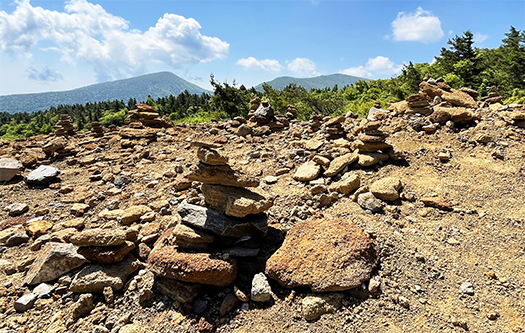
 で、その噴火口を見晴らす場所の山道脇に、ふと見ると「賽の河原」の光景が少々。
 親より先に亡くなった子どもが行くと言われる冥途の三途の川のほとりにある河原。子どもたちが父母供養のために小石を積み上げて塔を作ろうとするが、完成する前に鬼が来て崩してしまうという仏教地蔵信仰。
 150年程度の歴史積層しかない北海道では、まんま「地獄谷」というのが噴火口の代表地点ですが、さすがに蔵王にはこういう光景がマッチしているのでしょうか。つい手を合わさせていただいていた。
 まぁわたしはすでに父母を順序通り送らせていただき、振り向けば自分がNEXTになってきているので、賽の河原というのは本来違うのでしょうが・・・。しかしたくさんの先人がこうした石積みに託しただろう「思い」には自然と手が合わさってしまいます。合わさる、という他力「温顔」的な道産子的表現の方が適切か。

●お知らせ
拙書「作家と住空間」幻冬舎から電子書籍で発刊
お求めはAmazonで。
https://amzn.asia/d/eUiv9yO

English version⬇

[The Psychology Behind Stacking Stones at “Sai no Kawara” on the Summit of Mount Zao]
As a traveler, I was unaware of Mount Zao’s reputation as a “sacred site,” but the human desire to stack stones around the crater—which is likened to a cauldron of hell—in the hope of erecting at least a “memorial for one’s parents”…

 On my way back from Sendai the other day, I felt like taking a leisurely stroll to give my brain a little break after a long series of meetings and site visits.
Well, my brain might have been in complete shutdown mode even without that (lol), but since I was actually feeling a bit tired, I found myself wanting to wander around places with natural formations like the Iwami Gorge and this Zao area. Zao isn’t a place Hokkaido locals are very familiar with, but in central Tohoku, it’s probably a sort of “sacred realm”—a site of local religious veneration.
My main purpose for the trip was actually to soak in the “God’s Hot Spring” at Togatta Onsen, where you have no choice but to endure the intense heat and just zone out. Since I was scheduled to fly back to Sapporo in the afternoon, I decided to drive up to the vicinity of Mount Zao beforehand, just to see what it was like and pay my respects. I distinctly remember having gone there once before, and I wanted to relive that “erased impression of the landscape.”
However, the road was a continuous series of winding, steep inclines and sharp curves—far more so than I had anticipated. It was one perilous stretch after another, requiring extreme caution when passing oncoming traffic. There were also numerous oncoming cars that veered slightly into my lane with a “Whoops!”—so I couldn’t let my guard down for a moment.
 So, although Zao Shrine lies further ahead, I stopped at a crater, deciding that this was the limit for an elderly driver. I’m not sure if the name of this place is “Sainokawara” or not—I’m just a passing traveler, after all. But the crater possessed the sheer power of “Mother Nature” itself, and I spent my time there feeling my own insignificance driven home.
 Then, as I looked around the mountain path overlooking that crater, I caught a glimpse of a scene that reminded me a bit of “Sainokawara.”
It’s a riverbank on the banks of the Sanzu River—the river of the afterlife—where children who died before their parents are said to go. It’s a Buddhist Jizo belief that children try to build towers by piling up small stones to honor their parents, but before they can finish, a demon comes and knocks them down.
 In Hokkaido, with only about 150 years of history, “Hell Valley” is the quintessential volcanic crater site, but perhaps this scene is actually a better fit for Mount Zao. I found myself instinctively folding my hands in prayer.
Well, since I’ve already seen my parents off in the proper order and am now the “next” in line, “Sai no Kawara” isn’t really meant for me… Yet, when I think of the “feelings” that countless predecessors must have entrusted to these stone piles, my hands naturally come together in prayer. Or perhaps the Hokkaido-style expression “warm-faced” (a sense of being supported by others) is more appropriate.

● Announcement
My book, “Writers and Living Spaces,” has been published as an e-book by Gentosha.
Available on Amazon.


【ニシン捌き、キンピラ・・・料理は最高の日常復元(笑)】


 きのうは久しぶりにわが家に戻っての「日常生活復元」。
 まずはカミさんと買い物行脚であります。日常の復元にはさまざまな材料が必要なので、あちこちとまずは必要なモノと食べものの収集から。よく行くお店で食品素材をたくさん購入。
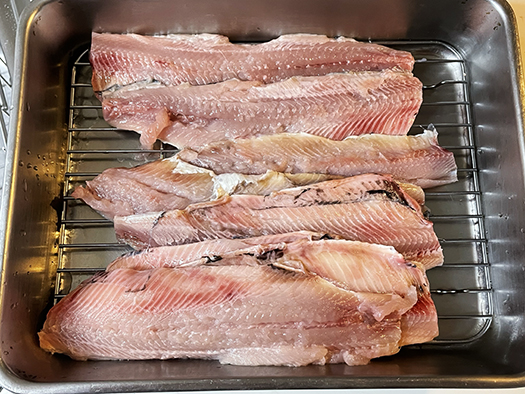
 わが家は取り置き冷凍保存の焼き魚用のお魚としては、ニシンとサケが定番ですが、どちらも欠品寸前ということでした。ニシンはナマを購入しての「捌き」。写真は捌いたあとの三枚下ろし。非日常の旅からの気分の「入れ替え」には、こういう食べもの調理がいちばんピッタリくる。
 まずはきれいにウロコをジャキジャキと飛ばす。カミさんが研ぎに出していてくれていた包丁類はみな元気いっぱいであります(笑)。とくに出刃は「おう、久しぶりだな、どこ行ってたんだよ〜」とでも言いたげな元気ぶり。きのうの買い物ではニシンは比較的小ぶりで、4尾だけの捌き。これからお店の仕入状況に合わせて順次、いろいろなお魚さんと再会していきたい。
 旅先ではりっぱな「おつくり」などを食してきましたが、やはり家庭的な食材のお魚には「帰ってきた」感が強く刺激される。
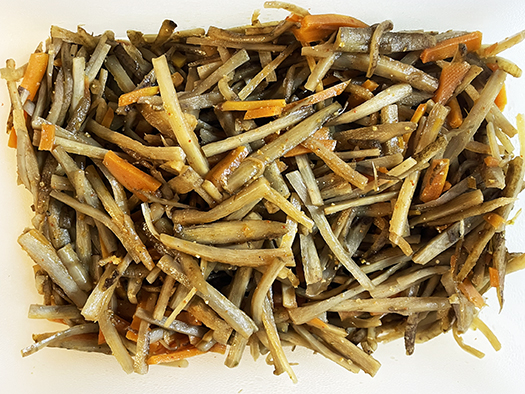
 つづいてはわが家定番の「キンピラ・ドカ作り」。ほぼ主食かとまで思える分量を毎日たべることで、栄養バランスの基点になってくれている。最近は孫育てまっ盛りの子どもたち家庭の分も一挙造作。なので、一度にゴボウ8本ほどを使っております。最大サイズのフライパンで調理するけれど、いつもはじめは超「山盛り」。徐々に山を小さくさせながらの炒め〜味付け工程。
 で、タッパーに保存させて1週間程度は冷蔵保存〜食卓へ。
 ・・・というような家庭料理つくり。りっぱな料理屋さんでの食事もすばらしいですが、やはり身近な食材で工夫をして行く家庭料理は素朴な気分が盛り上がってきてくれます。なにより、食べる自分と身の回りのひとの健康を願う気分が盛り上がってきて、喜ばしいのですね。
 気分が落ち着いてくる、ということの実質は、こういった日常的なことに深く関わっているのではないでしょうか? わたしは大好きであります。

●お知らせ
拙書「作家と住空間」幻冬舎から電子書籍で発刊
お求めはAmazonで。
https://amzn.asia/d/eUiv9yO

English version⬇

[Fileting herring, making kinpira… Cooking is the best way to get back to normal life (lol)]
I focus single-mindedly on our daily meals and engage directly with the ingredients. This unhurried, natural process helps me find my balance…

 Yesterday, I returned home for the first time in a while to “restore my daily routine.”
First up was a shopping spree with my wife. Since restoring daily life requires all sorts of supplies, we started by gathering the necessary items and food from various places. We bought a lot of ingredients at our usual stores.
 At our house, herring and salmon are our go-to fish for freezing and later grilling, but both were almost sold out. I bought some fresh herring and filleted it myself. The photo shows the three fillets after I’d finished. Cooking food like this is the perfect way to “reset” my mood after an extraordinary trip.
 First, I scraped off the scales with a satisfying crunch. The knives my wife had sent out to be sharpened are all in great shape (lol). The deboning knife, in particular, looks so lively it seems to be saying, “Hey, long time no see! Where have you been?” The herring I bought yesterday were relatively small, so I only filleted four of them. From now on, I’d like to gradually reunite with various other fish depending on the store’s inventory.
 While traveling, I’ve enjoyed some impressive sashimi platters, but there’s nothing quite like the home-cooked fish that really makes me feel like I’m “back home.”
Next up is our household staple: “mass-produced kinpira.” We eat such a large amount of it every day that it practically feels like a staple food, serving as the foundation of our nutritional balance. Lately, I’ve been making enough to cover the needs of my children’s families, who are in the thick of raising their own grandchildren. So, I end up using about eight burdock roots at a time. I cook it in my largest frying pan, but it always starts out as a huge “mountain.” I stir-fry and season it while gradually reducing the size of that mountain.
Then, I store it in Tupperware and keep it in the fridge for about a week before serving it at the dinner table.
…That’s the kind of home cooking I do. While dining at fine restaurants is wonderful, home-cooked meals made with simple, familiar ingredients really bring out that down-to-earth feeling. Above all, it’s heartwarming to feel that sense of caring for the health of myself and those around me as I eat.
I think the essence of feeling calm is deeply connected to these everyday things, isn’t it? I absolutely love it.

● Announcement
My book, “Writers and Living Spaces,” has been published as an e-book by Gentosha.
Available on Amazon.

【18日間/25日間の旅行集中からようやく帰還(ホッ)】


 昨日夕刻午後6時過ぎに新千歳空港に着陸。そこからわが家まで約2時間で帰還。
 旅に出るとどうしてもあちこちと「飛び回る」性格をしているので、やはり日常生活よりもずっと「刺激的」な体験が積層してします。知らず知らずのうちにそれが「精神的疲労」として蓄積されてしまう。
 ということで、帰ってきてから若干の整理整頓をして即就寝、元気に目覚めであります。
 で、今回の旅行集中期間、計算してみたら5/20〜6/13までの25日間で18日間旅に出ていたことに気付かされた。チョットなぁ・・・であります。なんですが、今回の東北仙台行きでは、やはり長年の対人関係や地縁にいろいろと呼び止められ、呼び覚まされ、の連続。
 写真は帰りの飛行機から眺められた「雲海」ぶりですが、その下界の地形に目を向けると、そういった呼び覚まされが脳内に頭をもたげてきてたまらない。「あ、あそこのあの人、まだ元気にしているかなぁ」。
 そんな旅路でしたが、いろいろとてんやわんやも出来していた(泣)。
 旅先ではだいたいレンタカーのお世話になるのですが、そうするとカーナビ操作がほぼ日常の最大のヘルプ装置になる。最近のニッポンレンタカーでは、その店舗の電話番号も記載されていないケースが多い。っていうか、全国各地に移動しているので各支店ごとの連絡先などまったくアタマに入っていない。
 そんななか、今回は出発店舗と返却店舗が違ったので、出発店舗の方に最後の返却店舗を入力してもらって最後の「目的地」設定にしていた。その直前まである「てんやわんや」事件があってそれをアタマから整理した後、クルマを走らせたらその目的地はただの空き地。オイオイ。
 で、電話番号情報を必死で探して出発店舗に連絡。
 結果、そこからスタッフが飛行場まで来てくれてようやくレンタカー返却。
 どうも、ユーザーにはまったく不明な「マップコード」(合計11の数字・マーク入力)を利用しているので出発店舗のスタッフにそれを入力してもらっていたのです。どうもそれが入力ミスだった可能性。まぁ、飛行場周辺ではあったので、若干搭乗手続きがギリギリになった程度でなんとか危機はクリアできた。
 ふ〜、であります。この直前の別の「てんやわんや」事件についてはまた別記したい。
 ようやく帰還できたわが家の「庵」暮らしに復帰して、ありがたみにウットリであります。

●お知らせ
拙書「作家と住空間」幻冬舎から電子書籍で発刊
お求めはAmazonで。
https://amzn.asia/d/eUiv9yO

English version⬇

[Finally back from an 18-day/25-day intensive trip (phew)]
On a trip through Tohoku, it’s impossible not to end up adding more and more stops to the itinerary, thinking, “I want to see this and that, and go there too.” Unsurprisingly, things got pretty chaotic along the way (sob)…

 I landed at New Chitose Airport a little after 6:00 p.m. yesterday. It took about two hours to get back home from there.
Since I have a tendency to “flit around” all over the place whenever I travel, I inevitably end up with a much more “exciting” experience than in my daily life. Before I know it, that builds up as “mental fatigue.”
So, after getting back, I did a bit of tidying up and went straight to bed, and I woke up feeling refreshed.
 So, I calculated the duration of this travel period and realized that out of the 25 days from May 20 to June 13, I was actually traveling for 18 of them. That’s a bit much, isn’t it? However, on this trip to Sendai in Tohoku, I was constantly being called back and reminded of long-standing personal relationships and local ties.
 The photo shows the “sea of clouds” I saw from the plane on the way back, but when I looked down at the terrain below, those memories kept popping into my head, and I couldn’t help but think, “Oh, I wonder if that person over there is still doing well.”
It was a trip like that, but there were also plenty of chaotic moments (sigh).
 I usually rely on rental cars when traveling, and when I do, the car navigation system becomes my biggest lifeline. Lately, with Nippon Rent-A-Car, the branch phone number isn’t listed in many cases. Or rather, since I’m moving all over the country, I don’t have the contact information for each branch memorized at all.
 In this case, since the pickup and drop-off locations were different, I had the staff at the pickup location enter the drop-off location as my final “destination.” Right before that, I’d had a bit of a “chaotic” incident, and after sorting that out in my head, I drove off—only to find that the destination was just an empty lot. Come on.
 So, I frantically searched for the phone number and called the rental office.
As a result, a staff member came all the way from there to the airport, and I was finally able to return the rental car.
Apparently, they use a “Map Code” (a combination of 11 numbers and symbols) that’s completely unfamiliar to users, so I had the staff at the rental office enter it for me. It seems there was likely a typo in that entry. Well, since it was still in the vicinity of the airport, I managed to clear the crisis—though my check-in was a bit of a close call.
 Phew. I’ll write about another “chaotic” incident that happened right before this in a separate post.
Now that I’ve finally returned home and resumed life in my little “hermitage,” I’m utterly enchanted by how grateful I feel.

● Announcement
My book, “Writers and Living Spaces,” has been published as an e-book by Gentosha.
Available on Amazon.

【AI依存社会の危険性アラートか? 全日空事件ほか】


 さて昨日は仙台での住宅団体合同研究会の北海道からの参加メンバーとは早朝でお別れ。
 しばしの同行体験でさまざまな情報交換、交流ができたことに深く感謝でありました。しかしみなさんとの会話の中で「帰りの便の予約がまだ確定していない・・・」という不安の声も聞いていた。わたしは事前に仙台入りして、1日後に札幌に帰還するスケジュールを組んでいた。当然、全日空ではない航空会社。
 わたしは移動するだけのほんの数時間についてはコスパ最優先の考え方なので、それに準拠した会社選び。それに対して今回のツアー全体ではフライトスケジュール優先で選択されていたようです。
 結果、例の全日空のシステム変更に伴う大混乱に巻き込まれてしまったようなのです。
 まことに、と同情させていただいていましたが、一方でその料金体系の変更の複雑さぶりをチェックして驚かされてしまった。たぶんユーザー側としては物価高の折から、移動に伴う短時間程度のことについてはコスパ最優先で選択が集中してしまう可能性が高いと思う。で、その場合、1日前にならないと座席確定もできないのだと聞かされた。だから、北海道に帰るその日になっても、みんな浮かない顔だらけ・・・。
 これでは多分、今後みなさんは「全日空だけは・・・」という強烈な体験をされているのだと思う。
 ネット上では、座席の調整についてAIを過信しすぎてしまった過失案件として情報拡散している。その真偽を確認する能力はわたしにはないけれど、そういったユーザー側での情報拡散ぶりには、いまの社会動向としてのAI依存社会への大衆的な「反感」感情が宿り育っているように思われるのですね。
 さらに、わたしはAI利用はあるものを有料版として利用しているけれど、ブラウザに標準装置されているAIに、ふと質問してやり取りしているうちに、わたしが「対話」している内容の実質が、あたかも「公知」の情報として扱われている実相に立ち至ってしまっていた。
 「う〜む・・・」と複雑微妙な心象を抱かされていた。
 社会の流れ自体は、わたしのような高齢者にはとても関与できるものではないけれど、どうも直感として,次の大きな変革は「人間最優先の新・ルネッサンス」ではないかと思えてきている。みなさん、いかがお考えだろうか?・・・
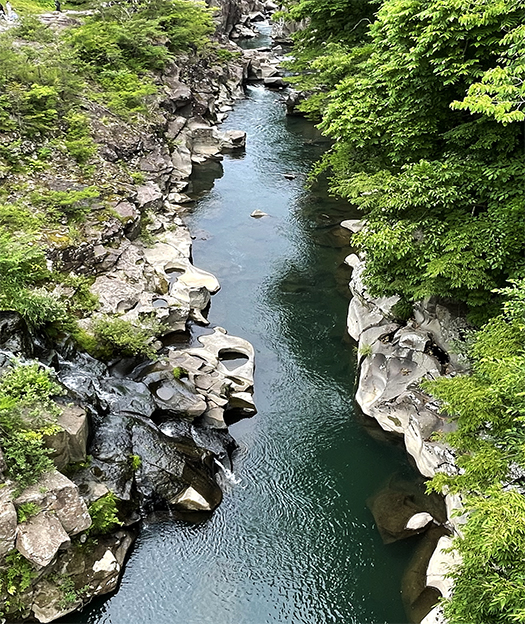
 写真は一関近郊の「巌美渓」。

●お知らせ
拙書「作家と住空間」幻冬舎から電子書籍で発刊
お求めはAmazonで。
https://amzn.asia/d/eUiv9yO

English version⬇

[Is This a Warning About the Dangers of an AI-Dependent Society? The ANA Incident and Others]
The group from the Hokkaido Housing Association that I accompanied in Tohoku still hadn’t secured their seats on the return flight even on the day of departure… Since I was traveling with a different airline on a different itinerary, I had no worries…

 Well, early yesterday morning, I said goodbye to the participants from Hokkaido who had joined the joint housing association study group in Sendai.
I am deeply grateful for the opportunity to travel with them for a while and exchange information and build connections. However, during our conversations, I heard some of them express anxiety, saying, “My return flight hasn’t been confirmed yet…” I had planned to arrive in Sendai ahead of time and return to Sapporo one day later. Naturally, I chose an airline other than ANA.
Since I prioritize cost-effectiveness for the mere few hours of travel, I selected a carrier based on that principle. In contrast, it seems the choice for this tour as a whole was made with flight schedules as the top priority.
As a result, it appears they got caught up in the massive chaos caused by ANA’s system changes.
 I truly felt for them, but at the same time, I was shocked when I looked into just how complex the changes to their pricing structure were. I suspect that, given the current high cost of living, users are highly likely to prioritize cost-effectiveness when making choices for short-duration travel. And in that case, I was told that seat confirmations couldn’t be made until the day before. That’s why, even on the day they were returning to Hokkaido, everyone looked so glum…
 Given this, I suspect that from now on, everyone will have had a powerful experience that makes them think, “Not ANA, please…”
Online, the story is spreading as a case of negligence where the company over-relied on AI for seat adjustments. While I don’t have the ability to verify the truth of this, the way this information is spreading among users seems to reflect a growing public “resentment” toward our current societal trend of AI dependency.
 Furthermore, while I use a paid version of a certain AI service, I found myself casually asking questions and interacting with the AI built into my browser. In the process, I came to realize that the substance of what I was “conversing” about was being treated as if it were “public knowledge.”
 I was left with a complex and subtle sense of unease, thinking, “Hmm…”
While the broader societal trends are not something an elderly person like myself can really influence, my intuition tells me that the next major transformation might be a “New Renaissance that prioritizes humanity.” What do you all think? …
The photo shows “Gamikei” near Ichinoseki.

● Announcement
My book, “Writers and Living Spaces,” has been published as an e-book by Gentosha.
Available on Amazon.

【あの〝無常〟から15年、現代の「奥の細道」旅路】


 人間が生きて行くのには、それぞれの個人の思いというものがあり、それが集積する人間社会のるつぼが存在する。そしてときにそういう営みをはるかに超える地球規模の「無常」が勃発する。
 そういう人間の力の及びえない巨大パワーの前で、人間は立ち止まらされ転身していくことになる。
 この東日本大震災は、わたしという人間の生き様にとって巨大な無常の事態だった。
 札幌の事務所のなかで「なにか遠くから波動が伝わってくるなぁ・・・」と意識が目覚めていた。やや静寂な時間が経過して、そこから一気に情報が飛び込んできて、信じられない光景が映像として、いろいろなメディアを通して爆発してきていた。わたしは翌々日に仙台出張予定で、幾人かとのビジネス上のアポイントを取っていたが、その仙台空港に巨大津波が押し寄せていた。
 「あ、こりゃぁムリ」というアラートが鳴り続けていた。

 今回、あの時間から15年を経て、現在時間との重ね合わせの中で、自分自身も大きな環境変化を経てきて、お誘いを受けたことで、各地を歩かせていただいていた。諸行無常の旅路。東北に来ると松尾芭蕉さんの「奥の細道」という民族精神資産を感じさせられるけれど、現代を生きる多くの人間は、芭蕉さんとはまったく異なった心象を抱き続けてきたに違いない。現代の奥の細道。
 また、そういう現代までの継続した時間を住宅建築の世界で営み続けてきたみなさんとの再会は、これもまた「諸行無常」感にあふれかえさせられた。みなさん元気にこの時間を生き抜いてきた様子が、言葉の端々から交感させられた。住宅建築を担っている現場の感覚とふれあうことで、さまざまに「覚醒」するものがあって、新生する部分も大きかった。
 こうした情報の整理整頓にはちょっと時間を掛けて、札幌の庵空間で取り組みたい。
 多くのみなさんとの道行きであり、さまざまに情報交換が積み上げられて得がたい時間を過ごさせていただいた。多少の飲酒による疲労感もあり、早めにホテルに戻るべく帰ってきたけれど、まったく初めての場所なのに結構正確に帰路選択できていた。まだまだ認知機能は元気そうであります(笑)。
 すこし東北ブラブラ時間を、過ごしていたいです。・・・

●お知らせ
拙書「作家と住空間」幻冬舎から電子書籍で発刊
お求めはAmazonで。
https://amzn.asia/d/eUiv9yO

English version⬇

[Fifteen Years Since That “Impermanence”: A Modern-Day Journey Along the “Narrow Road to the Deep North”]
Come to think of it, even though Hōsai considered Hiraizumi his ultimate destination, his descriptions of the journey through the surrounding areas were rather brief. Where will the epic travelogues of modern people end up? …

 For humans to live, each individual has their own thoughts and feelings, and there exists a melting pot of human society where these accumulate. And then, at times, a global-scale “impermanence” erupts that far surpasses such human endeavors.
Faced with such immense power beyond human reach, we are forced to pause and undergo a transformation.
The Great East Japan Earthquake was a massive event of impermanence for my own way of life.
 Inside my office in Sapporo, I became aware of a sensation: “I feel a vibration coming from far away…” After a brief moment of silence, information suddenly flooded in, and unbelievable scenes exploded onto the screen through various media outlets. I had a business trip scheduled to Sendai two days later, with appointments lined up with several people, but a massive tsunami was surging toward Sendai Airport.
 An alarm kept ringing in my head: “Oh, this is impossible.”

Now, 15 years have passed since that time, and as I overlay that past with the present—having undergone significant changes in my own circumstances myself—I accepted an invitation to travel to various places. A journey of impermanence. When I come to Tohoku, I feel the national spiritual heritage of Matsuo Basho’s *The Narrow Road to the Deep North*, but I’m sure many people living today have held mental images completely different from Basho’s. The Narrow Road to the Deep North of the modern era.
Furthermore, reuniting with everyone who has continued to work in the world of residential architecture through this continuous span of time up to the present day also filled me with a profound sense of “impermanence.” I could sense from every word you spoke that you have all lived through this time with vitality. Coming into contact with the sensibilities of those on the front lines of residential architecture sparked various “awakenings” within me, and I felt a significant sense of renewal.
I plan to take some time to organize and sort through all this information at my studio in Sapporo.
It was a journey shared with so many of you, and I was able to spend a truly invaluable time exchanging a wealth of information. I was feeling a bit tired from having had a few drinks, so I headed back to the hotel early, but even though it was my first time there, I managed to find my way back quite accurately. It seems my cognitive functions are still going strong (laughs).
I’d like to spend a little more time wandering around Tohoku…

● Announcement
My book, “Writers and Living Spaces,” has been published as an e-book by Gentosha.
Available on Amazon.

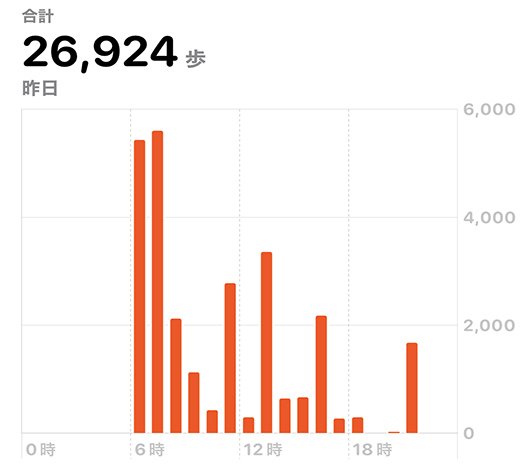
【東日本震災「遺構」再探訪行脚、2.6万歩超】


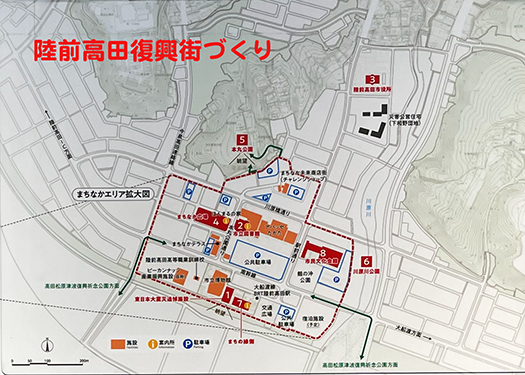
 さて昨日は早朝から仙台空港で、北海道からやってきたソトダン21と、十勝2×4協会の住宅建築団体メンバーと合流してそこから、宮城県内を南から北へと縦断移動してのツアー参加。
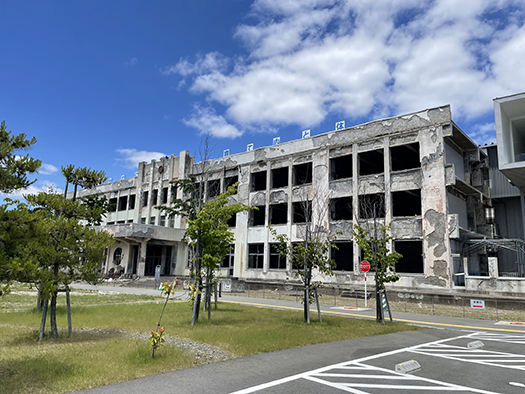
 ひさしぶりのみなさんとの再会、情報交換を車中でしながら震災被災後15年の各地を探訪していました。
 住宅建築を巡る社会環境が大きく変遷する中で、そうした変容した状況について忌憚ない意見交換ができて、たいへん有意義な時間を過ごすことができました。日本社会ではこれまでのように、企業に就職して結婚して身を固め、そこから「自分の巣」としての戸建て住宅を取得するという一種の「常識的生き方」が規範となって来たけれど、それが国際的な経済情勢変化によってほぼ崩壊して、一般性を失ってきている様子が、リアルに情報交換できていました。
 そういう環境の大変化のなかで住宅関係各社とも、生き残り策を掘り下げつつある。
 端的に言って、これまでの戸建て住宅が、上記のような社会構造の中にあったことは、夫婦とこどもという「核家族」社会構造の表現であって、その社会構造が今後、どのように変位していくのか、その動向と現場的に相対しているという様子でした。
 一方でこういう環境の中でも「住宅建築」に意欲を持っている社会的階層は、非常に情報の取捨選択に闌けてきていて、業者選択についてはたいへん選別的であることも伝わってきました。その住宅事業者についてかなり突っ込んだ分析をして、選択条件を厳しくしてきている状況。そのことは、住宅性能要件などについての「実績」をしっかり把握した上で、対話してきているとの証言。
 端的に言えば「ホンモノだけが生き残っていける」という状況が語られていた。
 そういうなかで、どのように企業姿勢を示していけるか、が現在地点かと。
 また、日本の住宅環境の中で住宅建築アカデミズムの果たしてきた,世界的にも特異な関与ぶりについても大いに情報交換することができました。総じて、住宅ジャーナリズムと住宅建築のリアルとの認識について、情報を深めることができたと思った次第。
 そして震災後15年の各地を探訪して、そのありようの変化と実相についての現場感覚を再発見することもできた。現場体験は、本日もより深まっていく。・・・であります。気がついたら2日連続で運動歩数は2万歩越えでさらに増加。ふ〜、まだまだ若さを磨き続けるぞ、と。

●お知らせ
拙書「作家と住空間」幻冬舎から電子書籍で発刊
お求めはAmazonで。
https://amzn.asia/d/eUiv9yO

English version⬇
 
[Revisiting the “Remnants” of the Great East Japan Earthquake: A Pilgrimage of Over 26,000 Steps]
Exchanging insights on the current state of residential construction with professionals on-site in Hokkaido. This journey offers a firsthand experience of how living environments have shifted over the 15 years since the disaster. …

 Yesterday, I met up with Sotodan 21, who had traveled from Hokkaido, and members of the Tokachi 2×4 Association’s housing construction group at Sendai Airport early in the morning. From there, we embarked on a tour that took us across Miyagi Prefecture from south to north.
It was great to reunite with everyone after so long, and we exchanged information in the car as we visited various locations 15 years after the earthquake.
 Amidst the significant shifts in the social environment surrounding housing construction, we were able to have a frank exchange of opinions about these changing circumstances, making for a very meaningful experience. In Japanese society, a certain “conventional way of life”—where one gets a job at a company, marries, settles down, and then acquires a single-family home as one’s “nest”—has long been the norm. However, we were able to realistically discuss how this model has largely collapsed and is losing its universality due to changes in the international economic landscape.
Amid these drastic environmental changes, housing-related companies are all delving deeper into survival strategies.
 To put it simply, the fact that single-family homes have existed within the social structure described above is an expression of the “nuclear family” model consisting of a husband, wife, and children. It seemed that they are now directly confronting the trends of how this social structure will shift in the future.
On the other hand, even in this environment, the social class that remains enthusiastic about “home construction” has become very discerning in selecting information, and it was clear that they are extremely selective when choosing contractors. They are conducting quite in-depth analyses of housing developers and tightening their selection criteria. Testimonies indicate that this involves engaging in dialogue only after thoroughly verifying a developer’s “track record” regarding housing performance requirements and other standards.
To put it simply, the prevailing sentiment was that “only the genuine players will survive.”
 Given this context, the current challenge is how to effectively demonstrate our corporate stance.
We also had a fruitful exchange of information regarding the uniquely significant role that housing architecture academia has played within Japan’s housing environment—a role that is rare even on a global scale. Overall, I feel I was able to deepen my understanding of the gap between housing journalism and the realities of residential construction.
Furthermore, by visiting various regions 15 years after the earthquake, I was able to rediscover a firsthand sense of the changes and true conditions on the ground. My on-site experience continues to deepen today as well. …That is the case. Before I knew it, my daily step count had exceeded 20,000 for two days in a row and is still rising. Phew, I’m going to keep honing my youth for a long time yet.

● Announcement
My book, “Writers and Living Spaces,” has been published as an e-book by Gentosha.
Available on Amazon.