
きのうは「迎え盆」として札幌里塚に集中しているわたしの関わる墓域をめぐっておりました。
墓参がどうしても集中する日なので、早朝からカミさんと用意段取りして自宅を出発し、墓域周辺で子どもたちと合流して墓参。その後、焼き肉パーティ風のヘビー級朝ご飯を里塚霊園にも近い清田区の方の家で楽しみました。現代人、そして子どもたちに「継承」する大切な機縁として「ひと工夫」しているわけです。
無事に終わりましたが、カミさんは前日の買い物から食べものの用意・切り分け段取りと大車輪。わたしもヘルプとしてほぼ全行程に労役しておりました。修行に近いかなぁ(笑)。帰宅後は爆睡、爆睡・・・
まぁそういう特異日なので、写真は最近、移動していた各地での「死生観」関連写真。
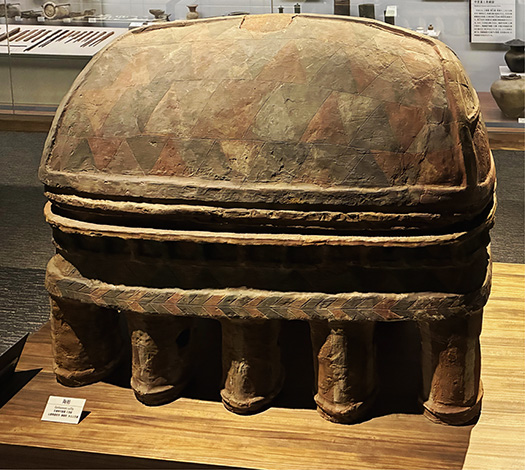
上は、東京都内で参観していた山梨県笛吹市御坂町の古墳から出土の「陶棺」。
〜陶棺は土師質で類例のない形状をしており、蓋や身に連続三角文などを斜線・三角文・方形区画で線刻し彩色を施している。彩色は赤・青・白・緑(?)などで塗り分けられ、九州の装飾古墳にも稀なほどの鮮やかさ。陶棺のつくりは畿内とも異なり、東国の埴輪に見られる彩色に近いとも言えるが、山梨県内では類似する埴輪の出土は極めて少ない。陶棺の長さは111cm、身の高さ49cm、棺蓋の長さ42,5cmを測り10個の脚を有する。陶棺の規模から見て成人にしては小さすぎ、小児用もしくは火葬骨を入れたと考えられる。古墳の時期を確定する遺物は少なく、現地の石室に使われた石材などから古墳時代後期と思われる。〜引用文献:國學院大學『考古学資料紀要』第15輯。
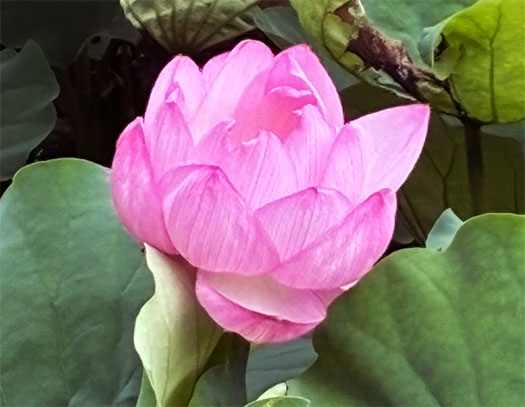
一方、その下の写真はお盆らしい花として「蓮の花」。札幌北大でもサクシュコトニ川の遊水池に咲いていますが、この写真は東京・上野の不忍池のもの。インドが原産地らしい重厚な「ぼってり」感がいかにも蒸暑の気候を伝えてくる。泥水のような環境から育ちながらも美しい花を咲かせる姿が、煩悩に満ちた世の中で悟りを開く仏教の教えと重なるため、聖なる花として寺院などで大切に栽培されてきた、お馴染みのお姿。
仏教という外来宗教の導入以前と以降の、日本人の死生観デザインの分脈が明瞭と思えます。
さて、自分もやがて・・・という年齢に達してきて、わが家系の流れもたどりつつ、墓碑に刻まれた先祖の名前を見ながら、しばし黙然としておりました。合掌。
●お知らせ
拙書「作家と住空間」幻冬舎から電子書籍で発刊
お求めはAmazonで。
https://amzn.asia/d/eUiv9yO
English version⬇
[Lotus Flowers and “Clay Coffins”: The Japanese View of Life and Death]
Setting aside the lotus flowers for a moment, I am struck by the way “ancestral spirits” were venerated before the introduction of Buddhism. My thoughts wander to the sentiment behind adding such “design” elements to a person’s death. …
Yesterday, as part of the “Mukae-bon” (pre-Obon) festivities, I visited the gravesites I’m involved with, which are concentrated in the Satotsuka area of Sapporo.
Since this is a day when grave visits inevitably peak, my wife and I got everything ready early in the morning, left home, met up with the kids near the gravesites, and paid our respects. Afterward, we enjoyed a hearty breakfast—almost like a yakiniku party—at a home in the Kiyota Ward, which is also close to Satotsuka Cemetery. I’m putting a little extra thought into this as an important opportunity to “pass on” traditions to modern people—and especially to the children.
It all went smoothly, but my wife was running around like crazy, from shopping the day before to preparing and portioning out the food. I also pitched in to help with almost every step of the process. It was almost like a spiritual training (laughs). After getting home, I slept like a log, and then some…
Well, since it was such a special day, here are some recent photos related to “views on life and death” that I took while traveling around various places.
The photo above shows a “ceramic coffin” excavated from a burial mound in Misaka-cho, Fuefuki City, Yamanashi Prefecture, which I visited while in Tokyo.
~The earthenware coffin is made of Haji clay and has a unique shape. The lid and body are engraved with continuous triangular patterns, diagonal lines, and square compartments, and then painted. The colors—red, blue, white, and green (?)—are distinctly separated, and the vibrancy is so striking that it is rare even among decorated kofun in Kyushu. The construction of the ceramic coffin differs from that found in the Kinai region; while its coloring is similar to that seen in haniwa from the eastern regions, similar haniwa have been unearthed extremely rarely within Yamanashi Prefecture. The ceramic coffin measures 111 cm in length, 49 cm in height, and the coffin lid measures 42.5 cm in length; it has ten legs. Given its size, the coffin is too small for an adult and is believed to have been intended for a child or to have contained cremated remains. There are few artifacts that can definitively date the burial mound, but based on the stone materials used in the on-site stone chamber, it is believed to date to the Late Kofun Period. — Source: Kokugakuin University, *Bulletin of Archaeological Materials*, Vol. 15.
Meanwhile, the photo below shows a “lotus flower,” which is often associated with the Obon festival. While they also bloom in the flood control basin of the Sakushukotoni River near Hokkaido University in Sapporo, this photo was taken at Shinobazu Pond in Ueno, Tokyo. Native to India, its robust, “plump” appearance perfectly conveys the sweltering, humid climate. The sight of these flowers blooming beautifully despite growing in muddy water mirrors the Buddhist teaching of attaining enlightenment in a world filled with worldly desires; as such, they have long been cherished and cultivated as sacred flowers in temples and other sacred sites—a familiar sight to many.
It seems clear that there is a distinct lineage in the design of Japanese views on life and death, both before and after the introduction of Buddhism, a foreign religion.
Now that I’ve reached an age where I too will eventually… I found myself standing in silence for a while, tracing the lineage of my family and gazing at the names of my ancestors engraved on the tombstones. I clasped my hands in prayer.
● Announcement
My book, *Writers and Living Spaces*, has been published as an e-book by Gentosha.
Available on Amazon.
共有:

Posted on 8月 14th, 2026 by 三木 奎吾
Filed under: 未分類



コメントを投稿
「※誹謗中傷や、悪意のある書き込み、営利目的などのコメントを防ぐために、投稿された全てのコメントは一時的に保留されますのでご了承ください。」
You must be logged in to post a comment.