
先般の九州巡りでは福岡県、佐賀県、大分県、宮崎県などを行脚していた。鹿児島には5/28に熊本に滞在していたときに日帰り往復。カミさんは初めてだったので、彼女の希望に添った訪問先として、島津家の本拠地である仙巌園周辺を探訪していた。昨日書いたように「集成館事業」という幕末期の薩摩の動向についてはじめて学んでいたりした。しかし当日は「全県巡り」の最中だったので、あまり詳しくは脳味噌に痕跡を残していなかった。
ようやく撮影しておいた写真類を整理して見て「おお、こんな事跡だったんだ」と気付かされる次第。
逆に言うと、写真から「追体験」が始まってカラダに残っている「肌感」とを照応させて、面白い時空探訪の追想・確認が始まっていて,新鮮にオモシロさに浸らせてもらえている(笑)。
現代人はこういった旅の味わい方もできていくものかも知れない。
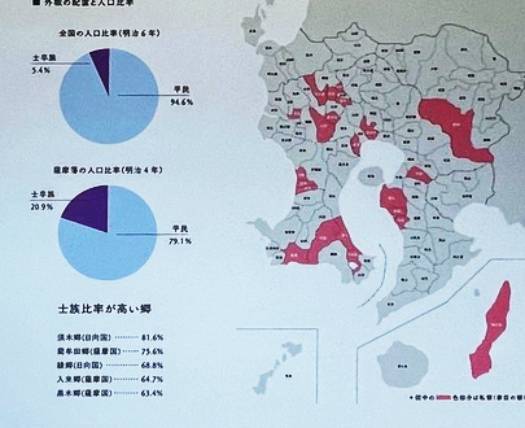
わたしは歴史好きなんですが、薩摩について地方的視点ではない全日本的な視点でしか捉えたことがなかった。それに対して純「地方」的観点を,今回初めて学ばせてもらえる機会になった。以下、展示文から引用。
〜武士の国 薩摩
江戸幕府の治世に順応する一方、薩摩藩は極めて独自性の強い支配体前を維持した。その最大の特徴が「領民の四人に一人が武士」という突出して多い武士の人口。江戸時代の武士の人口割合が全国平均で5~7%だったのに対し、薩摩藩では約26%にも上った。戦国時代に勢力を拡大する中で召し抱えた多くの家臣を、解雇することなくそのまま維持したため。
この膨大な武士団を城下町に集住させることは不可能だったため、宿内各地に武士を分数配置する「外城制度」が採用された。これは藩領を110余りの「外城(のちに郷と改称)」という行政区画に分け、そこに住む武士たちは平時は地方行数を担い有事には防衛および部隊編成を担うというもの。しかし表高に見合わない実収のなか、これら多くの武士に対する俸給支出は、藩財政を常に圧迫する要因となった。〜
「え〜、そんなの知らねえ」であります。こういう地域特性を持った藩が、近代現代の日本社会に深い痕跡を残していたのですね。大きな影響を受けた北海道人として、刮目させられていた・・・。
●お知らせ
拙書「作家と住空間」幻冬舎から電子書籍で発刊
お求めはAmazonで。
https://amzn.asia/d/eUiv9yO
English version⬇
[The Shimazu Domain: A Vast “Samurai Society”—A Retrospective Journey Through Organized Photos]
A whirlwind round-trip from a Kumamoto inn. First, I took photos—only to be surprised by them “later.” A modern journey that brings the past to life in a fascinating way. …
On my recent tour of Kyushu, I traveled through Fukuoka, Saga, Oita, and Miyazaki prefectures, among others. I made a day trip to Kagoshima on May 28 while staying in Kumamoto. Since it was my wife’s first time there, I took her to explore the area around Sengan-en—the former stronghold of the Shimazu clan—as she had requested. As I wrote yesterday, it was my first time learning about the “Shuseikan Project” and the activities of the Satsuma domain during the late Edo period. However, since I was in the middle of a “tour of the entire prefecture” that day, the details didn’t really leave much of an impression on my brain.
It wasn’t until I finally sorted through the photos I’d taken that I realized, “Oh, so that’s what those sites were like.”
In other words, by “reliving” the experience through the photos and comparing them with the “tangible sensations” still lingering in my body, I’ve begun a fascinating process of reminiscing and confirming my journey through time and space—and I’m finding myself immersed in a fresh sense of wonder (laughs).
Perhaps people today are beginning to discover this way of savoring travel as well.
I’m a history buff, but I’d only ever viewed Satsuma from a pan-Japanese perspective, not a regional one. In contrast, this trip gave me my first opportunity to learn about a purely “local” perspective. The following is a quote from the exhibition text.
~ Satsuma: The Land of the Samurai
While adapting to the rule of the Edo Shogunate, the Satsuma Domain maintained a governing structure of exceptional uniqueness. Its most distinctive feature was its remarkably high proportion of samurai—one in every four subjects. While the national average for the samurai population during the Edo period was 5–7%, in the Satsuma Domain it reached approximately 26%. This was because the domain retained the many vassals it had recruited while expanding its power during the Warring States period, rather than dismissing them.
Since it was impossible to concentrate this vast samurai corps in the castle town, the “Otojo system” was adopted, which involved distributing samurai across various locations within the domain. Under this system, the domain’s territory was divided into more than 110 administrative districts called “outer castles” (later renamed “go”), and the samurai living there performed local administrative duties in peacetime while taking charge of defense and troop mobilization in times of emergency. However, with actual revenue falling short of the official tax assessments, the expense of paying stipends to this large number of samurai became a constant strain on the domain’s finances. ~
“Huh? I had no idea about that.” It turns out that domains with such regional characteristics left a deep imprint on modern and contemporary Japanese society. As someone from Hokkaido who was greatly influenced by this, I found myself truly amazed…
● Announcement
My book, *Writers and Living Spaces*, has been published as an e-book by Gentosha.
Available on Amazon.
共有:

Posted on 6月 23rd, 2026 by 三木 奎吾
Filed under: 未分類




コメントを投稿
「※誹謗中傷や、悪意のある書き込み、営利目的などのコメントを防ぐために、投稿された全てのコメントは一時的に保留されますのでご了承ください。」
You must be logged in to post a comment.