
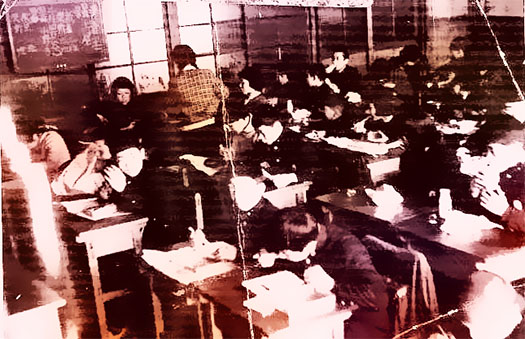
写真はたぶん1960年代初頭の札幌市内の中学校の「昼食時間」の様子。わたし(1952年生まれ)より4才上の兄のクラスのようです。モノクロ写真のカラー化ですが、この写真は光度の設定がおかしかったようで、思ったような効果は得られませんでした。悪しからず。
わたしは第2次大戦の終結から7年後に生まれ、まったくの「戦後教育」によって育てられた世代。戦争はひたすら日本が悪くてアメリカが正義だとされて、憲法も押しつけられたなかでの教育。ある意味、原子爆弾以上の「民族文化破壊」。その思想のなかでわたし自身も高校生時代には新左翼運動に走って散々世間を困らせた。運良くわたしは、父との真摯な対話を経て違う人生価値観で生きてくることができたと思っている。
それは「働いて、よりよく生きたいと考える」と父が訴えてきた生き様の価値観。
父との人生をかけた「対話」のときに、父から発せられたこの言葉で、わたしは自分の内面を深くえぐられていた。「そこかよ・・・」。
まぁ人それぞれなので、あの時代のような狂乱的な「かぶれ」症状のままに生きることを全否定はしないけれど、その後の人生の中で、それを超える全人格的体験を持たなかったのだなと思って見ている。言ってみれば父の発した言葉は日本人庶民の「生き方哲学」だと思えている。
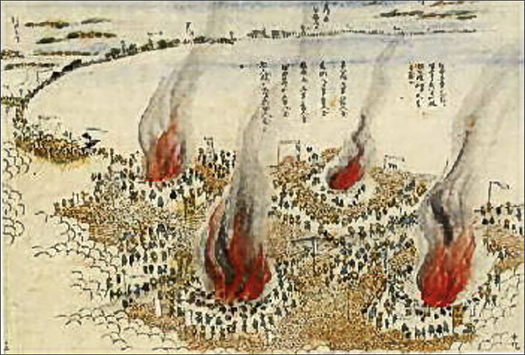
江戸期武家社会でも秩序のある「百姓一揆」というものが庶民の哲学を表していたと思う。わたしの家系が2度も遭遇した江戸−明治の一揆について、その倫理価値の高さに深く頷いてしまう。一方で、戦後反体制運動には連合赤軍事件のように「倫理」の点で巨大な劣化があると思う。少なくともそういう反省や「変革努力」をわたしは知らない。
戦後「反体制」運動というものが、現代に至っていよいよ完全否定されようとしてきている。
今次予算委員会での論議の無内容ぶりは目を疑うばかり。そしてメディアというものが「オールド」という形容詞に対してまったく反論できないことも、明白になってきている。
どうして予算委員会で、政府方針への「良き反提案」がなにひとつ出てこないのか?
およそ「予算」論議とは隔絶した悲しいほどのケチ付けだけ。劣化ぶりだと思わざるを得ない。申し訳ないけれど、江戸期民衆の百姓一揆の世直し的な倫理感に学ぶべきだ。一揆では基本的に「予算(税金・年貢収奪)」の縮減を何度も実現させてきた。
あの一揆ではきちんと民衆は「予算」に対しての意思表示を明確に示した。事実を掘り起こすほどに、日本的民主主義の真実・実相を見る思いがしている。
さて、この国の未来はどう開いていくのだろうか?
●お知らせ
拙書「作家と住空間」幻冬舎から電子書籍で発刊
お求めはAmazonで。
https://amzn.asia/d/eUiv9yO
English version⬇
[What Does the Future Hold for “Postwar Education,” as Experienced by My Generation?]
The “postwar” ideology used for “national reformation”—a process more devastating than the atomic bombs. The ultimate manifestation of postwar education. The result is the reality of modern anti-establishment thought, which falls far short of the ethics of the peasant uprisings. …
This photo likely shows “lunch time” at a junior high school in Sapporo in the early 1960s. It appears to be a class of my older brother, who is four years older than me (born in 1952). I tried to colorize this black-and-white photo, but the brightness settings were off, so I didn’t achieve the effect I was hoping for. Please bear with me.
I was born seven years after the end of World War II and belong to a generation raised entirely on “postwar education.” We were taught that Japan was entirely at fault and the United States was the embodiment of justice, and our education took place under a constitution that had been imposed upon us. In a sense, it was a “destruction of national culture” even greater than the atomic bombs. Influenced by that ideology, I myself got involved in the New Left movement during high school and caused quite a bit of trouble for society. Fortunately, I believe I was able to live by a different set of life values after engaging in sincere dialogue with my father.
That is the value system embodied by my father’s way of life, which he always advocated: “Work and strive to live a better life.”
During those life-defining “conversations” with my father, these words he spoke cut deep into my soul. “Is that what it comes down to…?”
Well, everyone is different, so I don’t completely condemn those who choose to live with that frenzied, “fad-driven” mindset of that era. However, I observe that they never went on to have a holistic, life-changing experience that transcended that phase. In a sense, I believe the words my father spoke embody the “philosophy of life” of ordinary Japanese people.
I believe that even in the Edo-period samurai society, the orderly “peasant uprisings” represented the philosophy of the common people. When I think of the Edo-Meiji uprisings that my family encountered twice, I find myself deeply nodding in agreement with the high ethical value they embodied. On the other hand, I believe that postwar anti-establishment movements, such as the United Red Army incident, suffered a massive decline in terms of “ethics.” At the very least, I am unaware of any such reflection or “efforts at transformation.”
Postwar “anti-establishment” movements are now, in the modern era, on the verge of being completely rejected.
The sheer lack of substance in the recent Budget Committee debates is hard to believe. It is also becoming clear that the media is completely unable to counter the label of “old-fashioned.”
Why is not a single “good counterproposal” to the government’s policy emerging in the Budget Committee?
It is nothing but pitiful nitpicking, completely detached from any actual “budget” debate. I cannot help but see this as a sign of deterioration. I’m sorry to say this, but we should learn from the ethical sense of social reform found in the peasant uprisings of the Edo period. In those uprisings, the people repeatedly succeeded in reducing the “budget” (taxes and tribute levies).
In those uprisings, the common people clearly expressed their will regarding the “budget.” The more I dig into the facts, the more I feel I am seeing the true nature of Japanese democracy.
Now then, how will the future of this country unfold?
● Announcement
My book, “Writers and Living Spaces,” has been published as an e-book by Gentosha.
Available on Amazon.
共有:

Posted on 3月 16th, 2026 by 三木 奎吾
Filed under: 未分類





コメントを投稿
「※誹謗中傷や、悪意のある書き込み、営利目的などのコメントを防ぐために、投稿された全てのコメントは一時的に保留されますのでご了承ください。」
You must be logged in to post a comment.