本文へジャンプ

【ブログなどSNS文章文化の衰退傾向】


 昨日土曜日に東京に移動しております。本日日曜日にある会合があって参加のため。
 先日の投稿で、Facebookの不具合について書きましたが、どうなのでしょうか、どうも「書き文字・文章系文化」の不活性化が徐々に感じられるようになってきたと感じさせられています。他方で動画系のyoutubeには「再生回数」に連動して「広告収入」が約束されるようになってきてSNSでの情報発信では、そちらの方が主流のようになって来ている。さらには「ニコ生」などの直接的な「有料配信」文化も力を伸ばしてきている。どうもSNSという領域に貨幣経済原則が旺盛な活力で浸食を始めていると思われる。SNS動画という領域を「政治」の側で利用する動きも加速している。まぁ、それは現代社会が直面している「変容」を表現しているようです。
 一方で、記憶はあいまいながら(笑)わたしも参加している、とされている「にほんブログ村」というブログ文化の団体からちょっと「大事態発生」みたいにしてご案内をいただいた。その文中に以下の記述。
 「この10年ぐらいブログサービスの終了や縮小が相次いでいます。
ブログ関連サービスを提供する会社がどんどん減っています。
厳しい環境です。」と厳しい現状を正直に吐露されている。
 わたしのブログも数カ所のブログ発信サイトで発信していますが、その代表格であるFacebookページも既報のように失速傾向が見られ、またNTTが関係しているgooブログも10月で終了するというアナウンス。こういう栄枯盛衰はどんな世界でも避けられないとは思います。文章系ではより短文化した「X」が辛うじて存在感を発揮している。これは和歌などの文化伝統もあって、日本人には比較的にわかりやすい。短文文化に世界も目覚めてきたのか、と。
 というような趨勢のなか、わたしの場合は文章を継続的に表出して自分自身の興味領域を掘り下げることが主要な興味なので、そのちょうど良い「場所」として活用してきました。たしかに情報拡散ということもあるけれど、ブログはなんとか継続維持していきたい。文章系のSNS、その存続可能性について話題になってきているようですね。
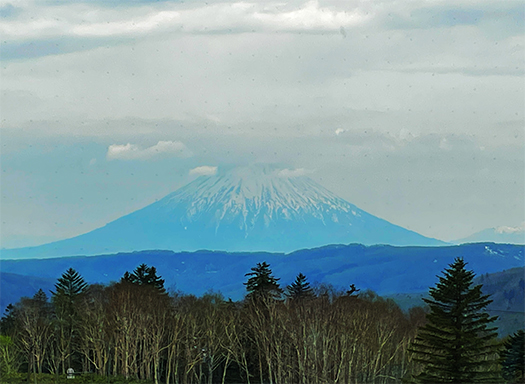
<写真は文と無関係。中山峠から羊蹄山をみる>

●お知らせ
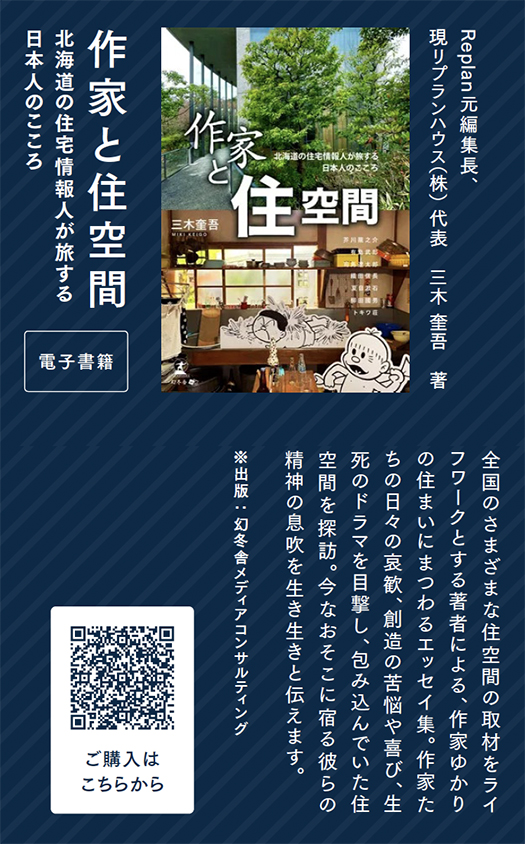
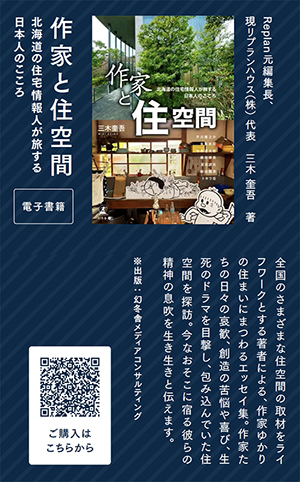
拙書「作家と住空間」幻冬舎から電子書籍で発刊
お求めはAmazonで。
https://amzn.asia/d/eUiv9yO
[The declining trend of blogs and other SNS writing culture]
The growth of the more short-text-based “X” and the oligopoly of the more direct video-based SNS by the monetary economic principle of “ad revenue-ization”. Is this a crisis of long-form blog culture? …

 I moved to Tokyo yesterday, Saturday. Today, Sunday, there is a meeting to attend.
 In my post the other day, I wrote about the problems with Facebook, but I am not sure how it is going, but I am gradually beginning to feel the inactivity of the “written word/writing culture. On the other hand, Youtube, which is a video service, promises “advertising revenue” linked to the “number of views,” and this is becoming more mainstream in the transmission of information on social networking sites. In addition, direct “paid distribution” culture such as “Nico Live” is also gaining strength. It seems that monetary and economic principles are beginning to erode the realm of SNS with vigor and vigor, and the use of SNS video for “politics” is accelerating. Well, that seems to express the “transformation” that contemporary society is facing.
 On the other hand, I received an announcement from a blog culture organization called “Nihon Blog Village,” in which I am a member, although my memory is a little fuzzy (laugh). The following statement is included in the letter.
 In the text of the announcement, the following statement was made: “For the past 10 years, blogging services have been terminated or downsized one after another.
The number of companies offering blog-related services is decreasing rapidly.
It’s a tough environment. He honestly states that the current situation is very difficult.
 My own blog is also posted on several blog transmission sites, but as previously reported, Facebook pages, which are representative of such sites, are also showing signs of slowing down, and goo blog, which is related to NTT, announced that it would end in October. I believe that this kind of rise and fall is inevitable in any world. In the area of writing, “X,” which is a shorter version of “X,” is barely making its presence felt. This is relatively easy for Japanese people to understand, partly because of cultural traditions such as waka poetry. I wonder if the world is waking up to the culture of short sentences.
 In the midst of these trends, my main interest is to delve deeper into my own area of interest by continuously expressing myself in writing, so I have been using the site as a good “place” for this purpose. While it is true that I want to spread information, I also want to keep my blog alive and well. It seems that there has been a lot of talk about the viability of text-based social networking sites.
<The photo is unrelated to the text. Yotei from Nakayama Pass.

Notice
My book “Writers and Living Space” is published in e-book format by Gentosha
Available at Amazon.com.

【設計と建設「一括発注」でコストダウン 古平町新庁舎 Part-2】


 さて公共建築にあんまり馴染みのない仕事人生人間の目に飛び込んできた古平町の庁舎建築その2です。
 わたしたちのように一般木造住宅を基本にした分野で加速度的に取り組まれてきた「省エネ化」手法としての高断熱高気密化や、自然エネルギー活用などはRC建築の分野ではあまり取り組まれてこなかった。
 ZEH基準などの一般化は一般木造住宅での住宅性能革命が運動的なコアを形成してきた。その運動は寒冷地・北海道で「あたたかい暮らし」を希求する庶民が求め、先端的な研究者や建築実務者、その需要に正対した地域公共団体という官・学・民が「協働」してきて普遍化してきたもの。その成果がやがて全国に拡散してきた。
 一方のRC建築では北海道ですらコスト面から、マンション建築でもいわゆる「外断熱」手法などへの取り組みが遅れてきた流れがある。戸建て住宅での実践がはるかに先行してきた。そういう性能進化の動きの中から生み出された手法、窓の性能強化=複層化などがリフォームで部分的に広がってきた程度。それがようやく新築段階でもこの古平町新庁舎のように、RC外断熱を初めとする手法が実践されるようになってきた。北国の公共建築として必然的な性能向上といえるけれど、まだまだ都市部のマンション建築などでは導入されていない。その要因はコストアップが大きい。ZEB化(Net Zero Energy Building〜ネット・ゼロ・エネルギー・ビル〜の略称で、建物のエネルギー消費量を正味でゼロにすることを目指した建築物)の最大の障害となっている。
 その障害を地方公共団体の建築工事において克服したいと考えたとき、設計と建設の「分離発注」が常識とされてきた「専兼(せんけん)の壁」を取り払うことを、この古平町の新庁舎では採択した。ここでは建設会社の設計部門と建設部門が1社でワンストップ的に機能して、性能向上とデザイン性のレベルアップを実現した。戸建て住宅では一般化している手法が公共建築で実現したということ。
 木立ちのようなRC壁柱に組み込んだ輻射暖冷房。これは外断熱で室内側は北海道産カラマツを型枠として使用したコンクリート打ち放し。暖冷房機能も兼ねる。地中熱ヒートポンプによる温冷水を壁柱内に流し室内側の壁を温めたり冷やしたりする「輻射暖冷房」。さらに南東と南西面の開口部には、太陽光発電ガラスを採用し外が見える状態で発電する。住宅レベルの性能技術革新がこうして実現されている。
 久しぶりに公共建築で「面白い」と感じさせられていた次第。

●お知らせ
拙書「作家と住空間」幻冬舎から電子書籍で発刊
お求めはAmazonで。
https://amzn.asia/d/eUiv9yO

English version⬇

Cost Reduction by “Lump-sum Ordering” of Design and Construction Furuhei-cho New Town Hall Part-2]
The “performance improvement” that detached houses have led by far is now beginning to be realized in RC construction as a result of cost reductions. …

 This is the second building in the town of Kodaira, which caught the eye of a person whose work life is not very familiar with public buildings.
 The “energy saving” methods of high thermal insulation, high airtightness, and the use of natural energy, which have been pursued at an accelerated pace in the field of general wooden houses, such as ours, have not been pursued so much in the field of RC buildings.
 The generalization of the ZEH standard and other standards has formed the core of a movement to revolutionize housing performance in general wooden houses. This movement has been universalized through the “collaboration” of the public, academic, and private sectors, including advanced researchers, construction practitioners, and local public organizations that have responded to the demand of the general public for “warm living” in the cold region of Hokkaido. The results of these efforts eventually spread throughout Japan.
 On the other hand, even in Hokkaido, there has been a trend of delayed efforts in RC construction, even in condominium construction, due to cost considerations, such as so-called “exterior insulation” methods. The practice in detached houses has been far ahead. The methods developed in this trend of performance evolution, such as window performance enhancement (i.e., multi-layered windows), have only partially spread to remodeling. Finally, methods such as RC exterior insulation are now being used in new construction, as in the case of the new town hall in Kodaira. Although this is an inevitable performance improvement for public buildings in northern Japan, it has not yet been introduced in condominiums in urban areas. The main reason for this is the cost increase, which is the biggest obstacle to ZEB (Net Zero Energy Building, a building that aims to reduce the net energy consumption of a building to zero).
 In an attempt to overcome this obstacle in building construction by local governments, the Furuhira Town Hall was designed to break down the “Senken Wall,” which had been the common practice of separating the design and construction of a building. Here, the design and construction divisions of the construction company functioned as a one-stop shop to improve performance and design. This means that a method that has become common in detached houses has been realized in public buildings.
 Radiant heating and cooling incorporated into RC wall columns like a grove of trees. The interior is insulated externally with fair-faced concrete using Hokkaido larch as the formwork. It also serves as a heating and cooling system. Geothermal heat pumps are used to heat and cool the walls on the interior side of the building by pouring hot and cold water into the wall columns. In addition, the openings on the southeast and southwest sides of the house are fitted with photovoltaic glass to generate electricity while allowing the outside to be seen. This is how the performance innovation at the residential level is realized.
 For the first time in a long time, I was impressed by a public building that I found interesting.

Notice
My book “The Writer and the Living Space” is published in e-book format by Gentosha.
Available at Amazon.com.

【北海道積丹半島「古平町」新庁舎を参観】


 わたしは住宅雑誌を創刊してながくその出版事業をしてきましたが、類縁的な「建築」公共建築などについては、限定的な興味範囲と認識してきました。建築企業にとっては、こうした公共の仕事というのも住宅と並んで興味分野でしょうが、まぁつかず離れずのスタンス。
 ということなので、ニュース的な建築の動きにもあまり注意を払っておりませんでした。
 わたしは積丹半島地域はよく行く余市の鮮魚店・新岡商店など、馴染みがある。先日、大好きな日帰り温泉「岬の湯」が冬期休業が終わって再開しているということで立ち寄ってきた。その帰り道に面してレトロな雰囲気を漂わせていた「古平町」の庁舎が解体されてしまったことが目に飛び込んできた。「あれ、なくなったの?」
 代わりにちょっとした「道の駅」ができていたので参観。で、そのあと、そこから10数メートルほどの高台に新庁舎が建てられているということを知って参考に見てみようと向かった次第です。
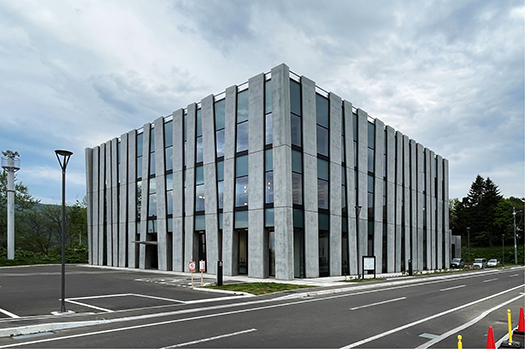
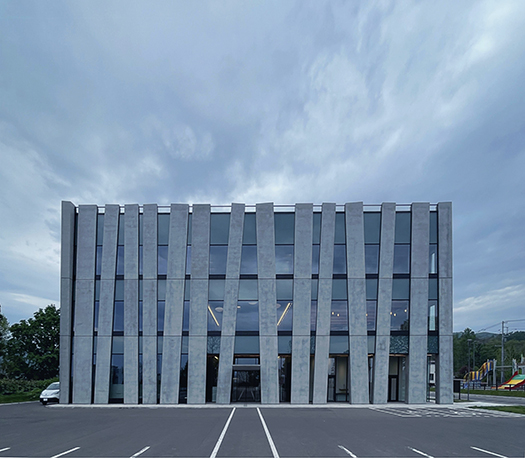
 外観を見て「おお、なんか新鮮」という素朴な印象。単純な四角いボックス形状なのに、その外皮面が変化に富んでいる。ガラス面の外側に不整形な柱とも外壁とも言えない部分が、柱状に張り付いている印象。面白みを感じて土曜日だったけれど見てみたくなって内部に入ってみた。ガラス面でうかがわれる2階の半分程度に照明が点っていたのです。あとでわかったのですが、この部分には「図書館」があって無人だけれど利用可能になっていた。
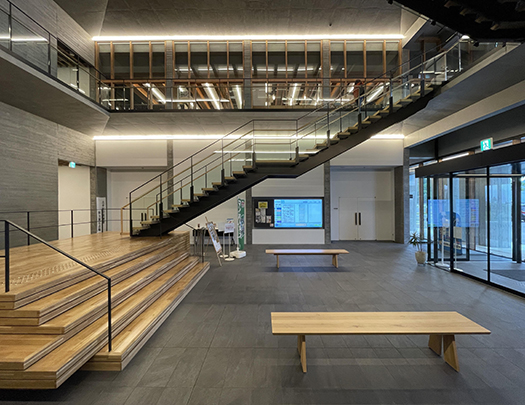
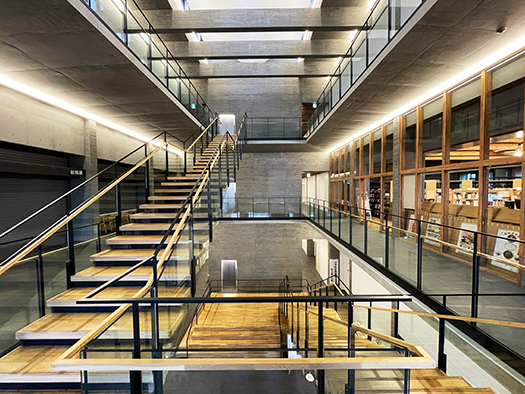
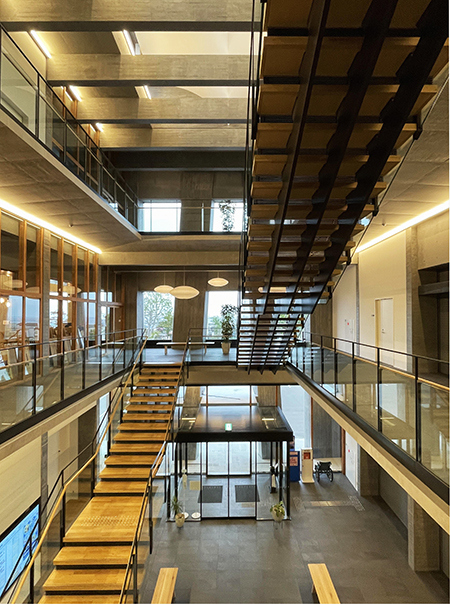
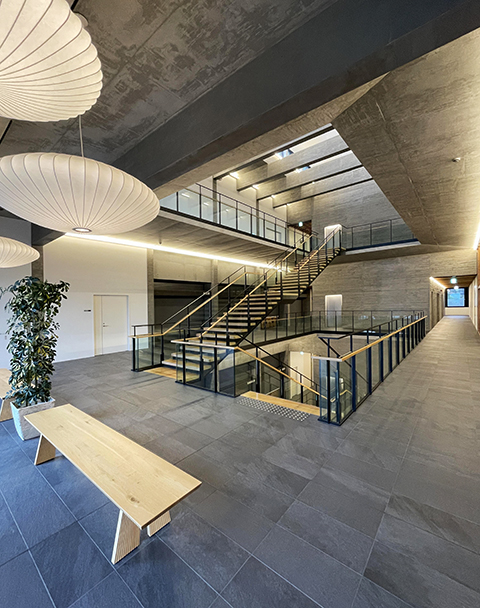
 内観は、小さめの入口を入るとエントランスが大きな吹き抜け空間になっていて天井からも外光が取り入れられていた。内観ではこの吹き抜け部分の各階に回廊が仕掛けられ、また角度がゆったりと造作された木質のステップ面の階段がアクセントになっている。公共の庁舎建築だけれど、なかなか美観デザイン配慮系。
 照明器具選択でも、やわらかさの演出仕掛けが施されていた。ワルくないではありませんか(笑)。
 不勉強にもそこでこちらの建築についてWEBで調査をした。
■建築概要
名称:古平町中心拠点誘導複合施設

建設地:北海道古平郡古平町大字浜町356他

階数:地上3階+塔屋

発注者:古平町

設計・施工:大成建設

延床面積:3887㎡

工期:2020年4月~2022年1月
 という概要の建築。「ZEB化を条件にした設計・施工一括型・公募プロポ」という話題の建築だった。
 単に役場の新庁舎ということではなく「古平町中心拠点誘導複合施設」ということで図書館などが集約されているようです。そういったいくつかの機能性を持たせることで、予算の集約化・効率化を図ったのか?
 また、人口3000人弱の小さな自治体が、新庁舎建設にあたって「設計・施工一括型」の提案競技を行ったということが特徴として挙げられている事例。挑戦的な姿勢がすばらしいと感じた次第。また、2022年と3年前に新築していたのに不勉強であった自分に深く反省しておりました。

●お知らせ
拙書「作家と住空間」幻冬舎から電子書籍で発刊
お求めはAmazonで。
https://amzn.asia/d/eUiv9yO

English version⬇

The new town hall of Furuhira-cho, Shakotan Peninsula, Hokkaido, Japan.
An ambitious new building for a municipality with a population of about 3,000, located 70 km from Sapporo. It is an ambitious new government building of a municipality with a population of about 3,000, about 70 km from Sapporo. The building is a future project called a “central hub induction complex.

 I have been in the publishing business for a long time, having started a housing magazine, and I have always considered the analogous “architecture” and public buildings to be of limited interest. For architectural firms, such public works are probably an area of interest, along with housing, but I have stayed out of it.
 Therefore, I have not been paying much attention to architectural movements in the news.
 I am familiar with the Shakotan Peninsula area, including the Shinoka Shoten, a fresh fish store in Yoichi, which I often visit. The other day, I stopped by my favorite day spa, “Misaki no Yu,” which had reopened after a winter break. On the way back, I noticed that the town hall of Kodaira, which had a retro atmosphere, had been demolished. It’s gone?”
 Instead, a little “roadside station” had been built, so we visited it. After that, I found out that a new government building was being built on a hill about 10 meters from there, so I headed there to take a look for reference.
 When I saw the exterior, I had a simple impression of “Oh, what a fresh look. It is a simple square box shape, but its outer skin surface is rich in variety. I had the impression that the irregularly shaped columns, which could not be called columns or exterior walls, were attached to the outside of the glass surface in the form of pillars. I was intrigued by this building, and even though it was Saturday, I wanted to take a look at it, so I went inside. I found that about half of the second floor, which could be seen through the glass surface, was illuminated. I later found out that there was a “library” in this part of the building, which was unmanned but available for use.
 On the inside, upon entering the smaller entrance, the entrance was a large atrium space with outside light coming in from the ceiling. The interior of the building is accented with a corridor on each floor of the atrium and a staircase with wooden steps built at a generous angle. Although it is a public building, it was designed with aesthetics in mind.
 The choice of lighting fixtures also plays a role in creating a soft atmosphere. It’s not badass at all (laughs).
 I did some research on the web to find out more about this building.
Architectural Outline Name: Furuhira Town Center Guiding Complex

Construction site: 356 Hamacho, Furuhira-cho, Furuhira-gun, Hokkaido, etc.

Number of floors: 3 floors above ground + tower

Client: Kodaira Town

Design/construction: Taisei Corporation

Total floor area: 3887 m2

Construction period: April 2020 – January 2022 The project was a “design-build proposal with ZEB as a condition of construction”.
 It is not simply a new town hall building, but a “Furuhira Town Center Induction Complex,” where the library and other facilities are integrated. Did you try to consolidate and streamline the budget by having several such functionalities?
 Another example cited as a feature of the project is that a small municipality with a population of less than 3,000 held a “lump-sum design/build” proposal competition for the construction of a new government building. I felt that the challenging attitude was wonderful. I also deeply regretted my lack of study of the new building, which had been constructed three years earlier in 2022.

【人生・高齢期での「潮時」の意味とは?】


 潮時、という言葉はいい意味でも、悪い意味でも使われる。「goo辞書」で見てみたら以下のよう。
 <漁師たちは潮の満ち引きをよくみて漁をする。潮の変わり目が実は絶好のタイミングであることからこれを「潮時」と呼んだ。つまり本来の意味は「好機」なのである。しかし時が流れて人々はマイナスの意味での「やめるタイミング」を「潮時」という言葉に重ねてしまった。>とのこと。
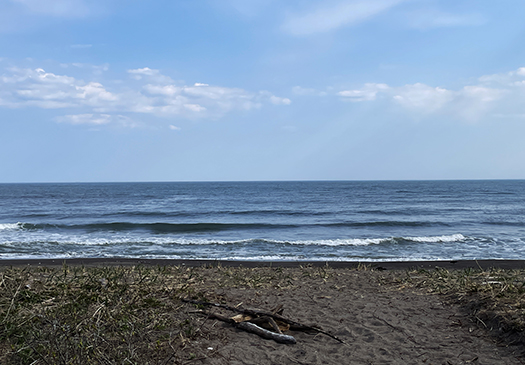
 写真は北海道釧路周辺での太平洋を見晴らした海岸線の光景ですが、こういう海の様子から航路の決断を下していく人びとの洞察力には本当に深く打たれる。そういう「先覚者」たちが時代というものを切り開いていくのでしょう。
 現代の高齢化社会という局面では、国の運営というのはなかなか難しいだろうなぁと思う。わたし自身も高齢者になり、もうすぐ「後期高齢者」にも突入しそう。まぁ自分では可能な限り行動的に、まだまだ「未来投企」的に生きていたいと思ってはいますが、いろいろな外的・内的な環境要因は迫っても来る。やはりカラダからの「叫び声」というものには否応なく従っていく必要がある。輪廻、もしくは「定め」ということでしょう。
 そういう声に耳を傾けながら、できることに取り組む、という一択なのでしょうね。

 そんなことを考えながら、高齢期の自分に可能なこととして、ある特定テーマ、それも自分がこれまでやってきた人生行路の未来形ということで、先人の住宅事例を掘り下げて考えて見るという領域に取り組んでみた次第です。写真はReplan誌次号で告知していただける拙書の案内。「作家と住空間」というテーマ。まぁ「作家」という領域特定は比較的自由に考え、「織田信長と安土城」まで拡張していますが、テーマとしては逸脱はしていないと信じています。
 まぁ自分自身の書籍出版というのははじめてで、高齢期とはいえ「未来投企」的なこころみ。
 芭蕉はあの時代にあっては「高齢期」なのに、全国を巡り歩いてさまざまな句を読み続けていた。その足跡などもすこしづつたどっていますが、強く惹かれている。住宅という特定分野に特化はしていますが自分自身もこういう「表現」の分野で生きてきたので、この分野の先人の事跡がより大きな存在になって来ているのですね。
 まぁムリをせずに、こういうテーマ探究を続けられたら良いなと思い定めている。いい潮時かな(笑)。

English version⬇

What is the meaning of “time of the tide” in life and in old age?
How should the country be steered and how should individuals live amidst the demographic change of an aging population? Is it a certain “time of the tide” for both the nation and human beings? …

 The word “tide” can be used in a good or bad way. The goo dictionary says the following.
 <Fishermen fish by carefully watching the ebb and flow of the tide. The turning of the tide is actually the best time to fish, so they call it “tidal time. In other words, the original meaning of the word was “good opportunity. However, as time went by, people began to use the term “tidal timing” in a negative sense, meaning “the right time to stop fishing. >The photo is from the Kushiro area in Hokkaido, Japan.
 The photo is a view of the coastline overlooking the Pacific Ocean in the Kushiro area of Hokkaido, and I am truly struck by the insight of people who make decisions about navigation based on the state of the sea. Such “pioneers” are the ones who will pave the way for the times.
 In today’s aging society, I think it must be quite difficult to manage a country. I myself have become an elderly person and will soon enter the “late elderly” period. Well, I would like to be as active as possible and still live in a “future-projecting” way, but various external and internal environmental factors are also approaching. I still need to follow the “cries” from my body, whether I like it or not. It may be called samsara, or “predestination.
 I guess the only choice is to work on what we can do while listening to such a voice.

 With this in mind, I have decided to delve into a particular theme as something I can do in my old age, and that is to look into the future of the path I have taken in my life, and to look at the housing examples of my predecessors. The photo is a guide to my book, which will be announced in the next issue of Replan magazine. The theme of the book is “Writers and Living Space. Well, I have taken a relatively liberal approach in specifying the domain of “writers” and extended it to “Nobunaga Oda and Azuchi Castle,” but I do not believe that I have deviated from the theme.
 Well, this is the first time for me to publish my own book, and even though I am in my old age, it is a “future project” of mine.
 Basho was in his “old age” at that time, but he continued to travel around the country and read a variety of haiku. I have been following his footsteps and am strongly attracted to his work. Although I specialize in a specific field of housing, I myself have lived in this field of “expression,” so the traces of my predecessors in this field are becoming more significant to me.
 Well, I have decided that it would be good if I could continue to explore this kind of theme without being unreasonable. I guess it is a good time (laughs).

【鎌倉期の報道「蒙古襲来絵図」 元寇シリーズ-14】


 わたしはメディアという情報の世界で仕事人生を過ごしてきました。
 昭和中期生まれの人間なので小学校に入る頃から自然に毎日届けられる北海道新聞に目を通し始めていた。当然、たくさん「漢字」が目に飛び込んでくる。学んでいないので書かれている内容のすべてがわかるワケではない。ようやく「ひらかな」がわかっていたくらいの段階。しかし世の中というのはどういうものか、という好奇心が強くて、ひらかなで表記されている前後の「筋道」から、アタマのなかで「この漢字はきっとこういう意味ではないだろうか」と想像しながら目を通していた。頭の体操。
 小学校の先生から「三木は新聞を読んでいる」とわたしのことを教室で話題にされた記憶が鮮明に残っている。その時期の、新聞を読んでいるわたしの様子の写真も鮮明な記憶がある。
 文章というものとの出会いにおいて相当早い段階で子ども向けの文学世界ではなく、すぐに新聞メディアに惹かれ大きな興味分野として「社会への興味」に導かれていたのだと思っています。後年、その北海道新聞の「進歩的」な論調が刷り込まれ、新左翼運動に自然に引かれていったという自分自身の心理解析。その論調にはいまでは距離を感じているけれど、でもいまでも北海道新聞のことは好きなのですね(笑)。愛着。
 昭和中期は同時にテレビメディアの出現期でもあったので、メディアへの決定的な思いが形成された。
 そんなことから歴史探索でもいつも「その時代のメディアツール」というものに着目させられている。
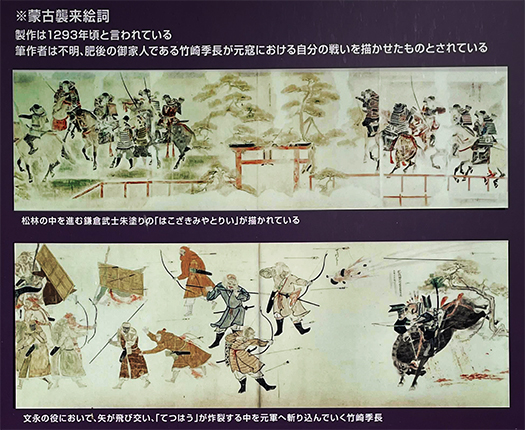
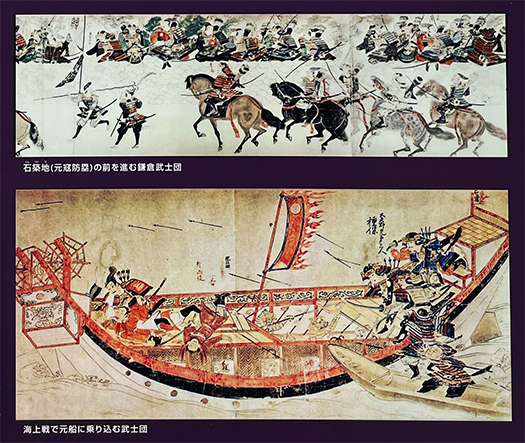
 この日本人にとっての巨大な被侵略体験「元寇」について、よく知られているメディアがこの「蒙古襲来絵図」。制作された動機は、九州・肥後国の御家人竹崎季長が元寇における自分の戦いを描かせたものとされている。御家人の「恩賞」請求先としての鎌倉幕府に対して自分の武勲を「伝える」ために絵師に描かせたとされる。今日で考えれば動機の非常に単純明快な「偏向報道」ではあるけれど、まさか絵空事を描かせるような卑怯ものではないという武士として意地をかけた正々堂々たる態度で信憑性を訴えたものと思われる。
 日本におけるメディアの歴史において、それまでは神社仏閣などの「公共的性格」を持った表現ツールだけだったのに対して「主張するメディア」という意味である始原性を表している。
 あらたに領土が獲得できるわけではない対外的防衛戦という武勲に対し、それでも鎌倉幕府はこの竹崎季長には一定の恩賞を与えたとされているので、メディアの効果はあったと言えるのだろう。さまざまな「リアルタイム」感が現代人にも十分に感受できるなぁと思っています。

English version⬇

[Kamakura Period Press “Illustration of the Mongol Invasion” Genko Series-14]
Japanese History and Media Theory. Japanese media started from the “Engi” of religious institutions like Birds, Animals, and Caricatures. The origin of the purpose of appealing to the beneficence. …

 I have spent my working life in the information world of the media.
 Since I was born in the mid-Showa period, I naturally started reading the daily Hokkaido Shimbun from the time I entered elementary school. Naturally, many “kanji” (Chinese characters) jumped out at me. I did not understand everything that was written in the newspaper because I had not studied it. I was at the stage where I finally understood Hiragana. However, my curiosity about what the world is like was so strong, that I kept looking through the pages, imagining in my mind, “This kanji must mean something like this,” from the “paths” before and after the kanji written in hiragana. It was an exercise for my mind.
 I have a vivid memory of my elementary school teacher saying to me in class, “Miki reads the newspaper. I also have a vivid memory of a photograph of me reading the newspaper during that period.
 I believe that at a very early stage in my encounter with writing, I was immediately drawn not to the literary world for children, but to the newspaper media, which led me to “interest in society” as a major field of interest. In later years, the “progressive” tone of the Hokkaido Shimbun was imprinted on me, and I was naturally drawn to the New Left Wing movement, according to my own psychological analysis. Although I now feel distant from that tone, I still like the Hokkaido Shimbun (laughs). Attachment.
 The mid-Showa period was at the same time the period of the emergence of the TV media, so I formed a definitive feeling toward the media.
 Because of this, I am always made to focus on the “media tools of that era” in my historical search.
 The well-known media about the “Genko” invasion, a huge invasion experience for the Japanese, is this “Picture of the Mongol Invasion”. The motive for its creation is said to be that Sueyoshi Takezaki, a feudal lord in Higo Province, Kyushu, had his own battles in the Mongol Invasion depicted on it. It is said that he had the painter paint the picture in order to “tell” the Kamakura Shogunate about his military deeds as the recipient of the retainer’s “bounty” claim. Although the motive for this “biased reporting” is very simple and straightforward when considered today, it is thought that the artist appealed to the credibility of his work in a fair and honest manner, putting his willpower as a samurai into action, not as a coward who would have his paintings depicted in a fictional manner.
 In the history of the media in Japan, the media had previously only been tools of expression with a “public character,” such as shrines and temples, while this represents the primordial nature of the media as an “assertive medium.
 The Kamakura Shogunate is said to have awarded a certain amount of gratitude to Takezaki Suecho for his military achievements in external defense battles that did not result in the acquisition of any new territory, so it can be said that the media was effective. I think that various “real-time” senses can be fully appreciated by people today.

【福岡・筥﨑宮「敵国降伏」の掲額文 元寇史料館-13】


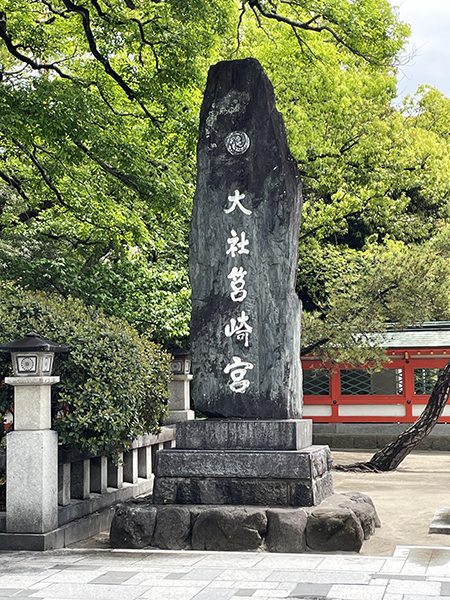
 日本には数少ないとされる「戦争記念館」として福岡市の「元寇史料館」を参観しての記録を書いていましたが、そこで知った日本三大八幡宮という「筥﨑宮」に興味を持って参観しました。
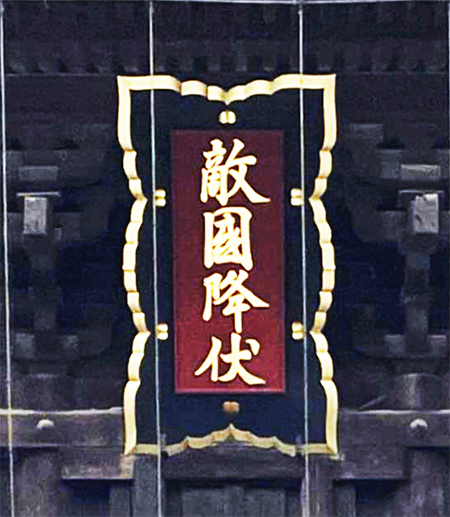
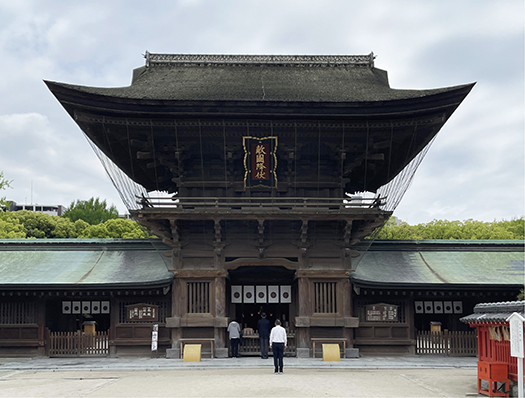
 驚いたのは、中央の「拝殿」建築の正面に掲額されていた願文に写真のように「敵国降伏」という文言が掲げられていること。八幡さん自体が武家・源氏の象徴のような神域なのですが、それにしてもストレートに戦争にまつわるコトバが明示されていることは神域表示としては驚かされる。同宮のHPによる由緒は以下のように書かれている<要旨>。
〜筥崎宮の由緒 筥崎宮は筥崎八幡宮とも称し、宇佐、石清水両宮とともに日本三大八幡宮。 御祭神は筑紫国蚊田(かだ)の里、現在の福岡県宇美町に生まれた応神天皇(第十五代天皇)を主祭神とし、神功皇后、玉依姫命がお祀りされています。創建の時期については諸説あり断定することは困難ですが、古録によれば、平安時代の中頃である延喜21年(西暦921)醍醐天皇が神勅により「敵国降伏」(てきこくこうふく)の宸筆(しんぴつ)を下賜され、この地に壮麗な御社殿を建立し延長元年(923)筑前大分(だいぶ)宮(穂波宮)より遷座したことになっております。創建後は祈りの場として朝野を問わず篤い崇敬を集めるとともに、海外との交流の門戸として重要な役割を果たしました。〜
〜 鎌倉中期、蒙古襲来(元寇)のおり、俗に云う神風が吹き未曾有の困難に打ち勝ったことから、厄除・勝運の神としても有名。後世には足利尊氏、大内義隆、小早川隆景、豊臣秀吉など歴史に名だたる武将が参詣、武功・文教にすぐれた八幡大神の御神徳を仰ぎ筥崎宮は隆盛を辿りました。江戸時代には福岡藩初代藩主黒田長政、以下歴代藩主も崇敬を怠ることはありませんでした。明治以降は同18年には官幣中社に、大正3年には官幣大社に社格を進められ、近年では全国より崇敬を集めるとともに、玉取祭や放生会大祭などの福博の四季を彩る杜として広く親しまれています。〜
 ・・・ということで、この「敵国降伏」は醍醐天皇自らの墨書なのだという。元寇の記事の中でも、この宮は第1次侵攻で焼失させられた記録があると記しましたが、元寇(1274年)に遡ること353年前にすでにこういう意識が国家意志としてこの北部九州の地には刻印されていたことになる。ときは平安時代の安定期であるので、国防最前線意識がこの宮には伝統として託されていたということなのでしょう。
 対アジア世界の窓口としてこういう伝統意識を九州北部は持っていることに打たれていた。北海道もまた、対ロシアの国防意識が大きな地政学的位置であり、国民意識の共通性を感じさせられる。

English version⬇

The symbolic plaque at the Hakozaki-gu Shrine in Fukuoka, Japan, which reads “Surrender to the Enemy,” is a bizarre piece of writing. The inscription is said to have been written in the emperor’s capital. This is the “national will” of the emperor 353 years before the Genko invasion. The “national will” of 353 years before the Genko invasion.

 I had written about my visit to the Genko Historical Museum in Fukuoka City, which is said to be one of the few “war memorial museums” in Japan, and I visited Hakozaki-gu Shrine, one of the three largest Hachimangu shrines in Japan, with great interest.
 I was surprised to see the phrase “surrender to the enemy” posted on the prayer plaque in front of the central “hall of worship” building, as shown in the photo. Hachiman-san itself is a Shinto shrine that symbolizes the samurai and Genji clans, but even so, the fact that a word related to war was clearly displayed in a straightforward manner was surprising for a Shinto shrine display. The shrine’s website describes the shrine’s history as follows

.
〜Hakozaki-gu Shrine, also called Hakozaki-Hachimangu Shrine, is one of the three largest Hachimangu shrines in Japan, along with Usa and Ishimizu shrines. The main deity is Emperor Ojin (the 15th emperor), who was born in the village of Kada in Tsukushi Province, present-day Umi Town, Fukuoka Prefecture, and is worshipped by Empress Jingu and Princess Tamayori no Mikoto. According to ancient records, in 921, in the middle of the Heian period, Emperor Daigo gave the shrine a shinpitsu (imperial inscription) stating “Surrender to the enemy” and built a magnificent shrine building on the site. (The shrine was relocated from the Daibu Shrine (Honamiya Shrine) in Tsukizen Oita in 923. After its construction, the shrine was revered as a place of prayer and played an important role as a gateway for exchange with foreign countries. 〜
~ In the middle of the Kamakura period (1185-1333), during the Mongolian invasion (Genko), a kamikaze, as it is commonly called, blew and the god overcame unprecedented difficulties, making the shrine famous as a god of good luck and protection from bad luck. In later times, Ashikaga Takauji, Ouchi Yoshitaka, Kobayakawa Takakage, Toyotomi Hideyoshi, and other famous military commanders paid homage to the shrine, and Hakozaki Shrine prospered due to the divine virtues of Hachiman, a god of military prowess, literature, and education. In the Edo period, Nagamasa Kuroda, the first lord of the Fukuoka domain, and successive lords of the domain never neglected to revere the shrine. In recent years, the shrine has been widely respected as a shrine that is revered throughout Japan and as a forest that graces the four seasons of Fukuhaku, including the Tamatori Festival and the Housoge Grand Festival. ~
・・・ So, this “Surrender to the Enemy” was written in ink by Emperor Daigo himself. In the article about the Genko invasion, I mentioned that this palace was burnt down in the first invasion, which means that 353 years before the Genko invasion (1274), this kind of awareness was already stamped as the national will in this northern Kyushu region. Since the Heian period (794-1185) was a period of stability, it is likely that this palace was entrusted with a sense of the front line of national defense as a tradition.
 Northern Kyushu was struck by this sense of tradition as a window to the Asian world. Hokkaido, too, is a geopolitical location with a great sense of national defense against Russia, and one is struck by the commonality of national consciousness.

【放置したiPhoneのFaceBookアプリ、自動回復】


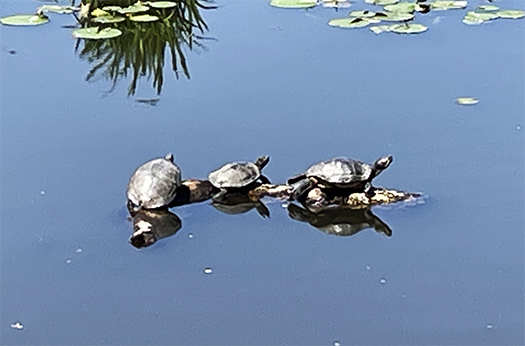
 写真と本文は関係ありません。これは福岡城のお濠のカメさんたち。
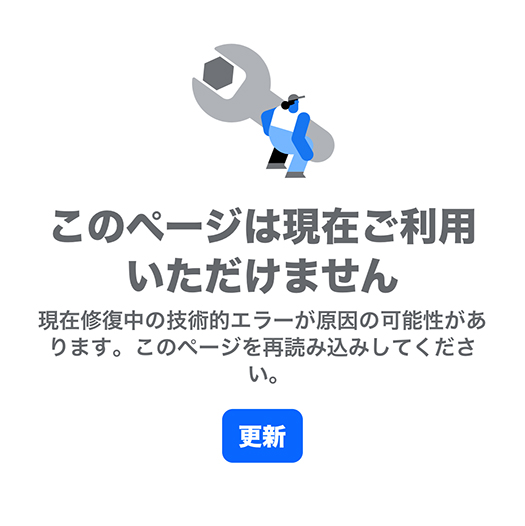
 昨日書いたブログ記事で、iPhoneのFaceBookアプリから「このページは現在ご利用いただけません」というアラートが出て、その下に「更新」という選択ボタンが表示されそこをクリックするように誘導されるけれど、さっぱり無反応で、さてどうするか、という状態を記述させていただきました。
 わたしももう35年以上のパソコン・スマホ利用歴ですが、Macの方であればそれなりにあれこれと設定を確認しながら、総合的に判断を下していくことに慣れています。しかしスマホiPhoneの方は運用操作自体は慣れていても、設定をあれこれいじくり回すのはツラい。なにより視野範囲があれだけしかなくさまざまにアタッチすべき項目があると、正常で冷静な選択判断を下し続ける自信も根気もない。なのでスマホ関係トラブルは、娘にヘルプをお願いしております。
 娘の判断としては最終的にはいったんアプリ自体を削除して入れ替えるというような指示を下してきた。まぁわたしとしてもそういうことになるかなぁと覚悟してはいた。一方パソコンMacでこの状況についてのトラブルシューティング検索でこのアラート画面を入力して検索すると、どうもFaceBook側のトラブルで、ユーザーの側の設定ミスとか使用上のミスではないという案内が多く表示されていた。パソコンMacのトラブルでは札幌市内でも複数箇所で対応してくれる窓口があるけれど、こういったSNSツールでは電話対応窓口も開かれていない<たぶん開設すれば収集がつかないのでしょうね>。娘の判断には妥当性が高いと思えた。
 しかし前述のようにスマホを操作してそのアプリだけのことを考えるのは疲れすぎる。こうした場合、いちばん懸念されるのは不用意に取り組んで逆にウィルス感染したり、乗っ取りとかの悪意の仕掛けに乗せられること。そもそもあのアラート画面自体が怪しい。・・・ということでしたが、ウィルス感染などの兆候は見られなかったのでやはり「放置」ということを選択していました。
 きのう書いたようにこれもひとつのきっかけと考えSNS対応それ自体について再検討しようということ。この考えは継続していきたい。
 で、昨日日中、午前中から徐々にスマホアプリの方で、復元の兆候が見られるようになり、夕方には全般的に自動復元いたしました。FaceBookからはなんの通知もありませんでした。まぁそういうものでしょう。こういうのがWEB環境での「新常識」かと。信頼感とかは皆無のなかでドライに対応して行くべきとつくづくと知らされた次第。
 Macには製造業的な信頼関係を持てるけれど、こういうSNSツールになってくると、個別ユーザーのことなどはまったく無視なんでしょうね。仕方ないのでしょう。よく理解できました。以上。

English version⬇

[Neglected iPhone FaceBook app, auto-recovery]
I was informed that there are maintenance problems with social networking tools. Dry new normal environment. Users should also respond with an open mind. …

 The photos have nothing to do with the text. These are turtles in the moat of Fukuoka Castle.
 In a blog post I wrote yesterday, I described how the FaceBook app on my iPhone alerted me that “This page is currently unavailable,” and then a “refresh” button appeared below it, which led me to click on it, but I had no response at all, so what should I do? I have been using a computer for more than 35 years.
 I have been using PCs and smartphones for more than 35 years now, and I am accustomed to making comprehensive decisions while checking settings on my Mac. However, for iPhone users, even though they are accustomed to the operation itself, it is hard to fiddle with the settings. Above all, they lack the confidence and patience to continue to make normal and calm selection decisions when their field of vision is limited to such a large number of items to be attached to. Therefore, I ask my daughter to help me with my smartphone-related problems.
 My daughter’s final decision was to delete the application and replace it with a new one. Well, I was prepared for that to happen. On the other hand, when I entered this alert screen in the troubleshooting search for this situation on my Macintosh PC, I found that there were many suggestions that this was a trouble on the FaceBook side and not a mistake in settings or use on the part of the user. There are several places in Sapporo that can help with PC-Mac problems, but there is no telephone support for this kind of social networking tool (perhaps it would be difficult to collect the information if it were opened). My daughter’s decision seemed highly reasonable.
 However, as mentioned above, it is too exhausting to operate a smartphone and think only about that application. In such a case, the biggest concern is that the user may inadvertently infect the phone with a virus or be taken advantage of by a malicious device such as a hijacker. In the first place, the alert screen itself is suspicious. However, there was no sign of virus infection, so I chose to “leave it alone”.
 As I wrote yesterday, I decided to reconsider the SNS response itself, considering this as another opportunity. I would like to continue this idea.
 Yesterday morning, the smartphone application gradually began to show signs of restoration, and in the evening, it was automatically restored in general. Well, that’s the way it is, I guess. I guess this is the “new normal” in the web environment. I am now fully aware of the need to deal with these issues in a dry manner, without any sense of trust.
 I can have a manufacturing-like relationship of trust with Macs, but when it comes to this kind of social networking tool, I guess they ignore the individual user at all. I guess it can’t be helped. I understand now. That’s all.

【Facebookの障害から思うこと・・・】


 わたしのブログはFacebookにもリンクされていますが、どうもここ2日程度スマホのiPhoneではFacebookからは参照できない状況になっております。Macからのソフトでは特段問題は発生していない。で、この「メンテナンス不良」マークの意味合いをGoogleで調べてみたら、Facebookの側での障害発生のようであり、ユーザー側としては、待っているのが得策、という案内が導かれていましたので、そのように諦観しております。Facebookには電話で解決を図るということへの対応はない。
 という次第ですが、これはなにかの機縁であるとも思えてきて、徐々にWEBやSNSの利用について本格的に再検討すべきかとも考え始めております。
 ブログを書き始めたのが2005年8月からで、息子と愛知万博に出かけてきたのがきっかけ。その旅行記みたいにはじめてからであります。ことしでちょうど20年になる。まぁ基本的には当時のWEBスタッフから言われて書き始めたのですが、その本拠地ステージからはリタイヤしている.
けれど、個人としての執筆活動の継続性優先で続けてきている。20世紀から21世紀にかけて生きてきている人間として、日々感じていることを日記として書き続けることは、それなりに意味があると考えてきた次第。そして個人としての電子書籍出版ということにもつながった。
 しかしその間で出来上がってきた「環境」であるFacebookも、どうもシステム限界であるのかも知れない。
 同年代の方たちの間でもFacebookで発表してきた人も多いけれどやはり拡散力には大きく陰りが出てきているようです。イマドキの「個人としての情報発信」手段としては主流とは言えないようですね。ブログ自体は今後も自分自身のライフワーク領域「建築と人間」に即して書き続けていきたいのですが、環境の再検討。
 ということですが、イマドキはyoutube動画発信が主流なのでしょうか?
 興味分野に即してのメディア変容をいろいろ考えて行きたい。なにか参考になるようなご意見があれば、コメントなど、ぜひお聞かせいただければ幸いです。

English version

[Thoughts from the Facebook outage…]
The world of social networking is also a contingency situation. We have just encountered a system trouble, so I would like to take this opportunity to reconsider. What should we do now? …
 
 My blog is also linked to Facebook, but apparently I have not been able to refer to it from Facebook on my smartphone iPhone for the past two days. I’ve been trying to find out what the “maintenance failure” symbol means on Google, and it seems to be a failure on Facebook’s part, so I’ve given up on the idea of waiting. There is no response to this.
 I am beginning to think that this is an opportunity and that I should seriously reconsider the use of the Web and social networking services.
 I started writing a blog in August 2005, when my son and I visited the Aichi Expo. I started writing a blog like a travelogue of the trip. This year will be exactly 20 years. Basically, I started writing this blog at the request of the web staff at the time, but I have since retired from the home stage.
As a person who has lived through the 20th and 21st centuries, I have always thought it meaningful to keep writing a diary of my daily feelings. This led to the publication of an e-book as an individual.
 However, Facebook, the “environment” that I have created in the meantime, may be at the limit of its system.
 Many people of the same generation have been publishing their works on Facebook, but it seems that the power of diffusion has been greatly diminished. It does not seem to be the mainstream means of “information dissemination as an individual” in today’s world. I would like to continue to write blogs in line with my own life’s work, “Architecture and People,” but I would like to reconsider the environment.
 I mean, is Youtube video transmission the mainstream in today’s world?
 I would like to consider various media transformations in line with my field of interest. If you have any opinions that would be helpful to us, we would be very happy to hear them in the comments.


【あんまり会いたくない隣人を正視する・・・】


 さて旭山動物園にて、その2であります。
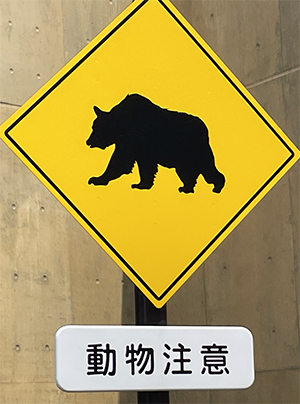
 下の写真の標識は、北海道内をあちこち巡っていると遭遇する交通標識。すっかりお馴染みですが、やはり見る度に「おお」と恐怖がわき上がってくる。で、この標識が動物園の中にまで出現していた次第。案の定、お馴染みのヤツが飼育されておりました。
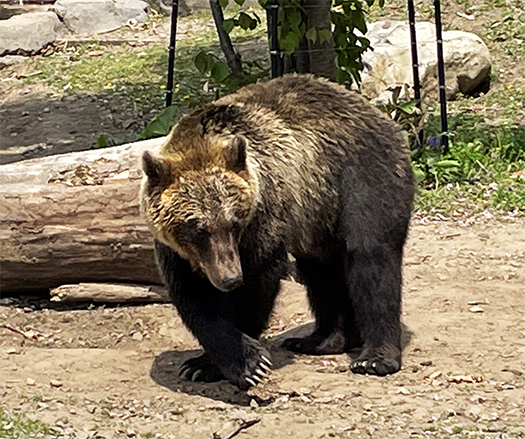
 先日までシリーズで書いてみた「元寇」並みに危険信号的に心理に刷り込まれているヒグマであります。知床をクルマで回っていたときに、自然状態の彼らの姿を目視したことはありますが、やはり通常の生活シーンでは遭遇させられるのは勘弁願いたい。
 ここ数年来、北海道内で人間居住域でヒグマ目撃例が多発している。地震天災情報の即時性などから、わたしのスマホでは札幌市からのLINE通知を受け取る設定にしていますが、最近は「ヒグマ情報」がほぼ専有的に流れてくる。札幌市でも山側に位置する南区やわたしの住む西区などで目撃事例など、ことしもほぼ毎日、流れてきております。市民としてはそのたびに目撃位置の確認をしております。身の回りの安全確保。
 ということでかれらの生息域とはしっかり隔絶された生活圏を確保したいのですが、動物種としてのヒグマ自体は大型哺乳類種として、その動態そのものには親近感はもつ。このように動物園で見ているとその動作ぶりには同じ哺乳類として近縁性を強く感じる。「森の人」という呼び名がかれらに冠されることもよく理解できる。
 園のなかでかれらに給餌しながら解説している様子を見学していたら、ごく自然に「かわいい」という評価がこどもたちから声が挙がっていた。まことに同意できる。
 数日前には札幌市南区で発見され、しかし人間を怖れない様子であったヒグマは駆除されていた。また、数年前には札幌市東区の市街地に出現していた個体も駆除されていた。そういった的確な駆除がされることで、どうも実感としてはヒグマたちの行動エリアに抑制が働いてくるように感じられる。野生動物にはかれらなりの「コミュニケーション」方法があって、人間界からの警告は的確に把握されているように感じる。
 やはり的確な「自衛」権の行使こそが、危険回避には一択選択ではないかと思う。遭遇はこういう管理された中だけにしたいものですね。

English version⬇

[I’m looking squarely at the neighbor I don’t want to see too much…]
I would like to have a reasonable safety boundary in consultation with this animal species. I guess a moderate extermination would be the message to achieve this. …

 Now, at the Asahiyama Zoo, this is No. 2.
 The sign at the bottom of the photo is a traffic sign that you will encounter when traveling around Hokkaido. It is a well-known sign, but it still gives me a sense of dread every time I see it. And then, this sign appeared in a zoo. As expected, a familiar one was being kept there.
 This is a brown bear that has been imprinted in my mind like a danger signal, just like the “Genko” series I wrote about the other day. I have seen them in their natural state when I was driving around Shiretoko, but I do not want to encounter them in my normal daily life.
 Since the past few years, there have been many brown bear sightings in human habitation areas in Hokkaido. Due to the immediacy of earthquake natural disaster information, etc., I have my phone set to receive LINE notifications from the City of Sapporo, and recently “brown bear information” has been flowing almost exclusively. Even in Sapporo City, such as sightings in Minami Ward, which is located on the mountain side, and Nishi Ward, where I live, information on brown bears has been flowing in almost every day this year. As a citizen, I confirm the location of each sighting. To ensure the safety of our surroundings.
 However, as a large mammal species, the brown bear itself has a sense of familiarity with the dynamics of its habitat. Thus, when I see them in the zoo, I feel a strong kinship with them in their behavior as the same mammal. It is easy to understand why they are called “forest people.
 When I observed a zookeeper feeding and explaining to the children about the animals, they naturally said, “They are so cute. I can agree with them.
 A few days ago, a brown bear was found in Minami Ward, Sapporo City, but it was exterminated because it did not seem to be afraid of humans. Also, a few years ago, a brown bear that had appeared in the urban area of Higashi-ku, Sapporo, was also exterminated. Such precise exterminations seem to have restrained the brown bears in their areas of activity. Wild animals have their own “communication” methods, and I feel that they are able to accurately grasp warnings from the human world.
 I believe that the appropriate exercise of the right to “self-defense” is the only way to avoid danger. I would like to keep encounters only in these controlled settings.
 

【ある日、動物園でふと見上げたら・・・】


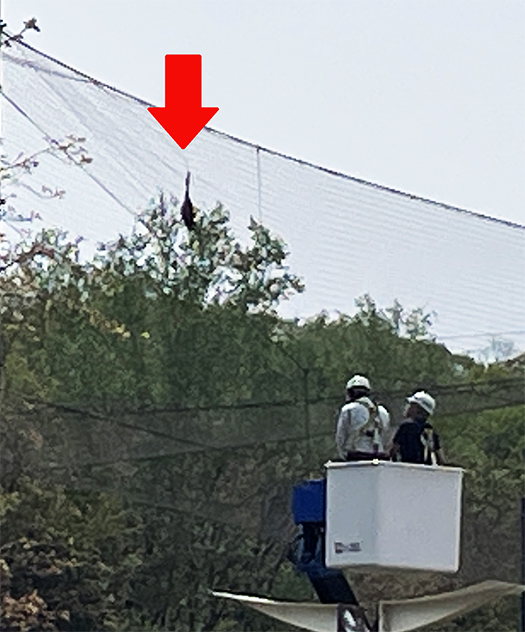
 写真は過日、旭川の「旭山動物園」で見かけた光景。
 わたしは加齢とともに動物たちへの「共感」本能が盛り上がってきて仕方がありません。これまでは「哺乳類系動物」が主要な対象だったのですが、どうも最近は「鳥類」へのシンパシーが高まってきて仕方がない。たぶん数ヶ月前くらいの東北行脚の折に宮城県から岩手県南部にかけての水辺周辺で、大空を駆けているかれらの姿にすっかり感情移入させられてしまった。
 その姿に、日本の創生期神話のヤマトタケルのハクチョウへの変身場面が完全にシンクロしてしまった。そうか、日本人はその心理の奥底で自然崇拝の強い志向性を持っているのだと、深く気付かされたのです。加齢によって世事からは徐々に解放されていくとともに、その背景を作ってくれている自然の風土環境に惹かれてきているのでしょうか。これまでは見向きもしなかった鳥たちの生き様に情動が同期するようになっている。
 しかしそもそもかれらは哺乳類とは違う輪廻を生きている。その表情などからは心理を同期しにくい。
 そんな心象を持っていたところ、最近、丹頂鶴の飼育をされている方から釧路でのかれらの詳細な「生き様」の解説を伺う機会を得ていた。いわば鳥類との具体的な「会話」想像力の手掛かりのようなものが体験されたのです。以来、人間世界と共生しているかれらの様子が、いろいろな情報についての多様なメッセージとして感じられてきた。
 こちらの旭山動物園でも、真っ先に鳥類エリアに入って行っていた。
 で、そこから出るころになってふと見上げたら、エリア境界の網ネットの高所にカモとおぼしき1羽の鳥が、なんと「首を突っ込んで」逃れられなくなっているのでした。人間としては、首つりのような状況であり、非常に危機的な様子と思えた。しかし、時折羽根をばたつかせているので、この状況でもかれらの強靱な首部分は耐久力を持っているようでした。しかし、行動の自由を制限されて、あまり長時間になれば首も耐久限界を超えるかも知れない。動物園の方に通報したら、ご覧のように電柱のメンテナンス作業で使われているようなクレーン装置が出動してこの鳥を救出させていた。
 救出した作業員の方が網越しでの作業だったので、さてどうするかと見ていたら様子を見て大丈夫と判断されたのか、手を放したら無事に鳥は自ら羽ばたいてその直下の池に着水していた。
 思わずこころの中で拍手して、作業に当たっていたみなさんに感謝の気持ちを伝えておりました。
 って、オマエは鳥の親戚か(笑)。

English version⬇

One day, I looked up at the zoo and saw…]
The creation myth of Japan of Yamatotakeru’s transformation into a bird is reminiscent of the “dialogue” between humans and nature in this archipelago. Sympathy for them as they flap their wings in freedom. …

 The photo is a scene I saw at Asahiyama Zoo in Asahikawa, Japan, a few days ago.
 As I get older, my “empathy” instinct for animals is rising. Up until now, my main target has been mammals, but recently my sympathy for birds has been growing. During a trip to the Tohoku region a few months ago, I was completely moved by the sight of them soaring in the sky around the waterfront from Miyagi Prefecture to southern Iwate Prefecture.
 The sight of them was completely synchronized with the transformation of Yamatotakeru into a swan in the mythology of Japan’s early days. I realized deeply that, deep in their psyche, Japanese people have a strong orientation toward nature worship. As they age, they are gradually becoming more liberated from worldly affairs, and at the same time, are they becoming more attracted to the natural climate environment that provides the backdrop for their lives? Emotions are becoming synchronized with the way of life of birds, which we had never paid attention to before.
 However, they are living in a different cycle than mammals. It is difficult to synchronize with their facial expressions.
 I had such an image in my mind when I recently had an opportunity to hear a detailed explanation of the “way of life” of tancho cranes in Kushiro from a person who keeps them. In a manner of speaking, I experienced a kind of concrete “conversation” imaginative clue with the birds. Since then, I have felt their symbiotic relationship with the human world as diverse messages about various information.
 Even here at Asahiyama Zoo, I was the first to go into the bird area.
 As I was leaving the area, I looked up to see a bird, which appeared to be a duck, stuck its head high up in the netting at the boundary of the area and unable to escape. As a human, it seemed to me to be a hanging situation and looked very critical. However, their strong neck parts seemed to have endurance in this situation, as they occasionally flapped their wings. However, if they are restricted in their freedom of movement for too long, their necks may exceed their endurance limit. When we reported the situation to the zoo, as you can see, a crane device like those used for maintenance work on utility poles was dispatched to rescue this bird.
 The worker who rescued the bird was working through a net, so I wondered what he was going to do, but when he saw the bird, he decided that it was okay.
 I clapped my hands in my heart and thanked everyone who was working on the bird.
 I was so grateful to everyone who had been working on the project.